
Treatment Overview

Heart valve replacement surgery in India is an established treatment for patients whose heart valves have become severely narrowed, damaged, infected, malformed, or unable to close properly. Depending on the affected valve, age, symptoms, heart function, anatomy, surgical risk and long-term needs, treatment may involve surgical valve replacement, valve repair, minimally invasive valve surgery, or a transcatheter procedure such as TAVR/TAVI.
India has experienced cardiac surgery teams, advanced cardiac imaging, dedicated cardiac ICUs and hospitals capable of managing complex valve disease. For international patients, treatment can often be coordinated with pre-arrival medical-record review, hospital consultation, surgery, inpatient care, rehabilitation and follow-up.
A catheter aortic valve is a different product. Named TAVR lists sit on TAVR in India. A balloon that only widens the native aortic valve sits on Aortic Balloon Valvuloplasty in India. Combined coronary grafts sit on CABG Surgery in India. Pacing after valve work sits on Pacemaker Implantation in India. This page is the named surgical heart-valve-replacement product. Bentall lists sit on Bentall Procedure in India. Mitral replacement lists sit on Mitral Valve Replacement Surgery in India. Tricuspid repair lists sit on Tricuspid Valve Repair in India. Itemized bypass-cost lists sit on Heart Bypass Surgery Cost in India. LVAD lists sit on Left Ventricular Assist Device (LVAD) Procedure in India. VSD lists sit on Ventricular Septal Defect (VSD) Surgery in India. Aortic dissection lists sit on Aortic Dissection Repair Surgery in India.
GAF Healthcare planning for heart valve replacement is $7,000–$18,000 (typically 8–16 nights). US comparison is $80,000–$220,000. Named aortic valve replacement is $7,000–$18,500 (typically 8–16 nights) when SAVR is the honest product. Neighbouring heart valve repair is $6,500–$16,500 (typically 7–14 nights). Neighbouring mitral valve repair is $7,500–$18,000 (typically 7–14 nights) when a durable repair is feasible. Neighbouring double valve replacement is $12,000–$28,000 (typically 10–18 nights). Neighbouring TAVR/TAVI is $18,000–$42,000 (typically 3–7 nights). Neighbouring minimally invasive cardiac surgery is $8,000–$20,000 (typically 5–12 nights). Neighbouring CABG is $5,500–$14,000 (typically 7–14 nights) when grafts are added in the same sitting. Neighbouring pacemaker implantation is $3,500–$9,000 (typically 1–3 nights) if conduction injury requires pacing. These are planning ranges from partner hospital cost sheets, not hospital quotations. Emergency surgery, extra valves, prolonged ICU, blood products and combined CABG-plus-valve sittings are quoted after echo review.
International patients comparing cardiac surgeons commonly start with Delhi NCR, Mumbai, Bengaluru, Chennai and Hyderabad. Partner cardiac surgery hospitals in Delhi NCR, Mumbai and Bengaluru, and in Chennai and Hyderabad, are a typical first filter because valve surgery needs a cardiac ICU, imaging and emergency backup. City cost sheets include Delhi NCR, Mumbai, Bengaluru, Chennai and Hyderabad. Kolkata, Pune, Ahmedabad, Chandigarh and Kochi may have valve theatres. They are not live GAF catalog cities on this site.
The choice of valve and procedure should not be based on cost alone. Current international guidelines emphasize assessment by a multidisciplinary Heart Team, particularly for patients with severe valve disease and those being considered for intervention.
Important: New or severe chest pain, sudden breathlessness, fainting, sudden weakness or unexplained persistent fever after a prosthetic valve belongs in a local emergency department first. WhatsApp at +91 90443 46292 is for planned coordination, not emergency care.
What is heart valve replacement surgery?
Heart valve replacement surgery is a treatment used when one of the heart's valves is too diseased to function normally and replacement is more appropriate than medication or valve repair.
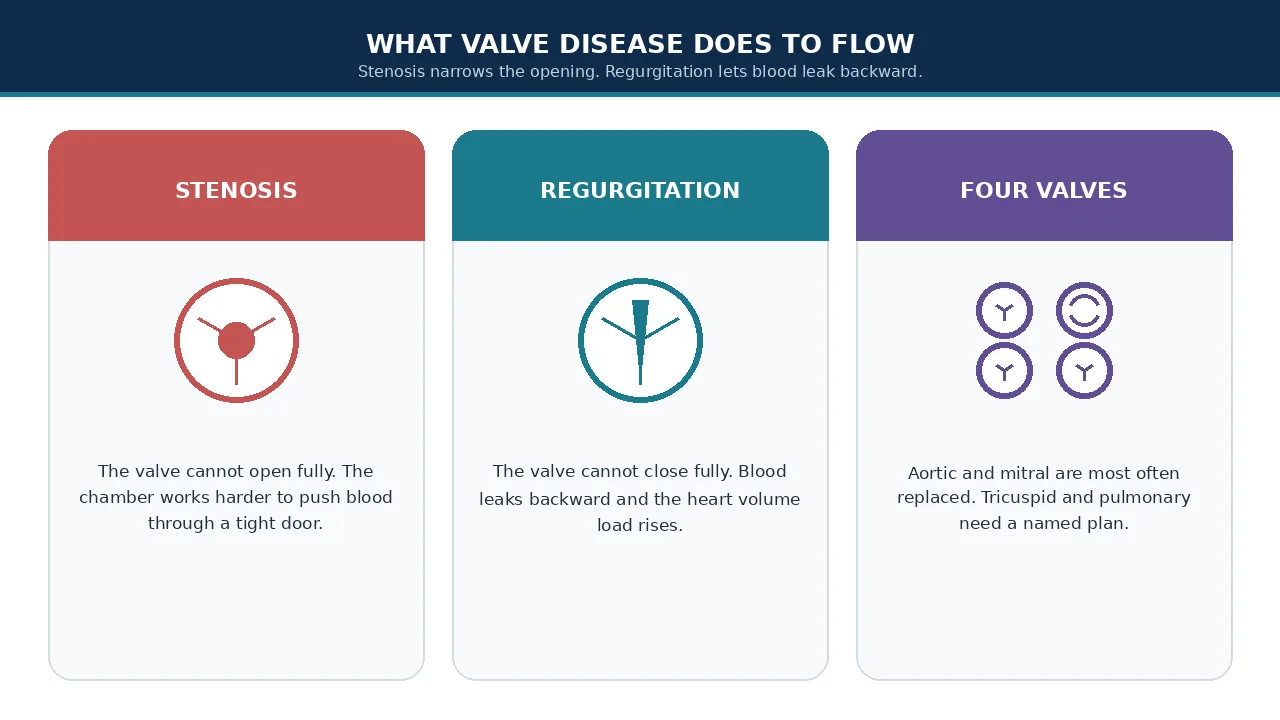
The heart has four valves:
- Aortic valve
- Mitral valve
- Tricuspid valve
- Pulmonary valve
These valves act like one-way doors. They open to allow blood to move forward and close to prevent blood from flowing backward.
When a valve becomes narrowed, it is called stenosis. When it does not close properly and blood leaks backward, it is called regurgitation or insufficiency.
Severe valve disease can make the heart work harder. Over time, untreated disease may contribute to enlargement of the heart chambers, abnormal heart rhythms, pulmonary hypertension, heart failure or other complications.
The objective of valve replacement is to restore more effective forward blood flow, reduce the abnormal workload on the heart and relieve symptoms or prevent further deterioration when intervention is indicated.
Which heart valves can be replaced?
Valve replacement can be performed for all four heart valves, although the frequency and type of intervention differ.
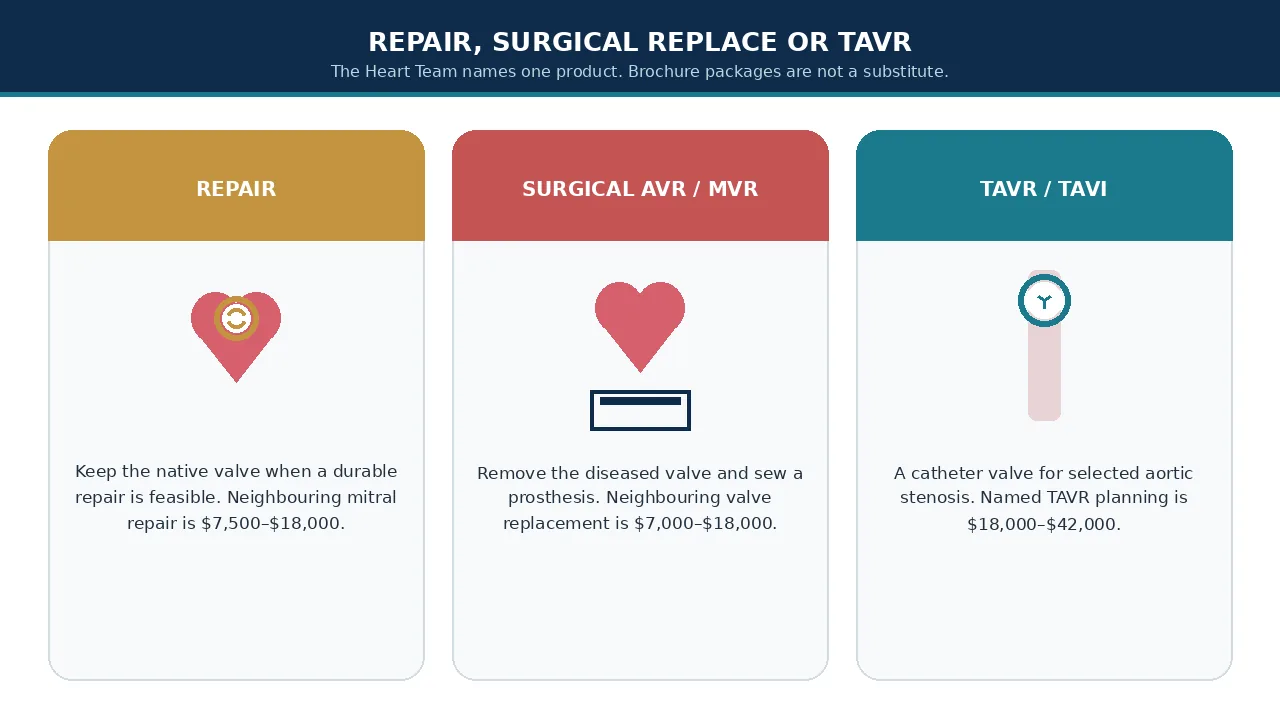
1. Aortic valve replacement. The aortic valve controls blood flow from the left ventricle into the aorta. Replacement may be required for severe aortic stenosis, aortic regurgitation, bicuspid aortic valve disease, degenerative valve disease, certain congenital abnormalities or infection-related damage. Treatment may involve surgical aortic valve replacement (SAVR) or, in selected patients, TAVR/TAVI. Named SAVR lists sit on aortic valve replacement at $7,000–$18,500.
2. Mitral valve replacement. The mitral valve sits between the left atrium and left ventricle. Disease may include stenosis, severe regurgitation, rheumatic disease, degenerative disease, functional regurgitation or endocarditis-related destruction. Whenever a durable repair is possible, neighbouring mitral valve repair at $7,500–$18,000 may be the honest product. When the valve cannot be repaired reliably, replacement may be recommended.
3. Tricuspid valve replacement. The tricuspid valve lies between the right atrium and right ventricle. Disease may follow severe regurgitation, rheumatic disease, congenital abnormalities, previous left-sided valve disease, pacemaker or ICD leads, infective endocarditis or structural degeneration. Right-ventricular function and the condition of other organs influence timing. There is no live GAF tricuspid-only treatment page. Use this pillar page plus the named valve-repair or replacement sheet. Tricuspid replacement lists sit on Tricuspid Valve Replacement Surgery in India.
4. Pulmonary valve replacement. This is less common in adults than aortic or mitral replacement. It may be required after congenital heart disease, previous Tetralogy of Fallot repair, severe pulmonary regurgitation or stenosis, or dysfunction of a previous pulmonary prosthesis. There is no live GAF pulmonary-valve treatment page.
Ask which valve the Heart Team is naming
When is heart valve replacement necessary?
Not every patient with valve disease needs valve replacement.
Mild disease may only require periodic monitoring. Some patients benefit from medication to control symptoms or associated conditions.
Intervention becomes more important when valve disease becomes severe and begins affecting symptoms, heart function, chamber size, pressure inside the heart or lungs, or overall prognosis.
Current guidelines emphasize individualized assessment rather than using symptoms alone. A multidisciplinary Heart Team can assess the valve, heart function, anatomy, procedural risk and the patient's preferences before deciding on intervention.
Valve replacement may be considered when a patient has severe aortic stenosis, severe aortic regurgitation in appropriate circumstances, severe mitral valve disease, selected severe tricuspid disease, a severely damaged valve that cannot be repaired, prosthetic valve failure, valve destruction from infective endocarditis, congenital valve disease, severe symptoms attributable to valve disease, or evidence that delaying treatment could result in irreversible cardiac damage.
The exact indication depends on the specific valve and clinical circumstances.
Symptoms that may indicate severe valve disease
Heart valve disease can develop gradually, and some patients may initially have few symptoms.
Possible symptoms include shortness of breath, breathlessness during exercise, chest discomfort, fatigue, reduced exercise tolerance, dizziness, fainting or near-fainting, palpitations, swelling of the feet or ankles, difficulty sleeping flat, rapid weight gain from fluid retention and reduced ability to perform normal activities.
Some people with severe valve disease may have surprisingly few symptoms. This is one reason regular clinical and echocardiographic assessment is important.
A new or worsening episode of chest pain, severe breathlessness, fainting or other acute symptoms requires urgent medical assessment in a local emergency department.
What causes heart valve disease?
Heart valve disease can have several causes.
Age-related degeneration. Valve tissue can become thickened, stiff or calcified. This is particularly important in aortic stenosis.
Rheumatic heart disease. Rheumatic fever can permanently damage heart valves, especially the mitral valve. Rheumatic valve disease remains an important cause of valve problems in many parts of the world. There is no live GAF rheumatic-heart-disease treatment page.
Congenital valve abnormalities. Some people are born with abnormal valve anatomy. A common example is a bicuspid aortic valve, in which the aortic valve has two leaflets rather than the usual three.
Infective endocarditis. Infection of a heart valve can destroy valve tissue and sometimes result in severe regurgitation.
Degenerative mitral valve disease. The mitral valve can deteriorate because of structural changes in its leaflets or supporting apparatus.
Cardiomyopathy and other heart conditions. Changes in the heart chambers can alter the way a valve functions even when the valve itself is not primarily diseased.
Heart valve replacement vs heart valve repair
Replacement is not automatically the best treatment for every patient.
In some conditions, valve repair can preserve the patient's own valve and avoid implantation of a prosthetic valve. Neighbouring heart valve repair is $6,500–$16,500. Neighbouring mitral valve repair is $7,500–$18,000.
Repair may be particularly relevant for selected patients with mitral regurgitation and certain tricuspid valve conditions.
Replacement may be preferred when the valve is severely damaged, repair is unlikely to be durable, there is extensive calcification, infection has destroyed the valve, the anatomy is unsuitable for repair, previous repair has failed, or the surgical team believes replacement provides a more predictable result.
The decision should be made after detailed imaging and assessment by an experienced valve team.
Ask whether repair is still honest
Types of heart valve replacement
There are two major categories of surgically implanted replacement valves.
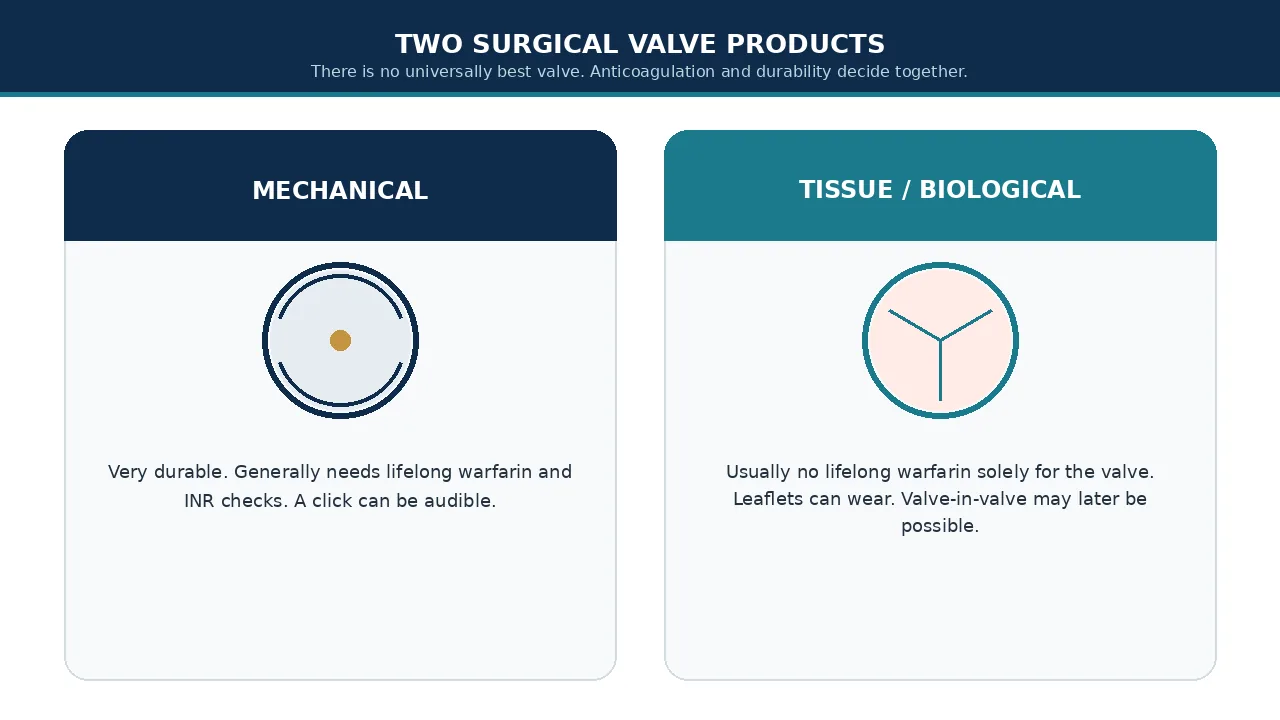
Mechanical heart valve. Mechanical valves are made from durable synthetic materials. They are designed for long-term use and are particularly relevant for some younger patients who may benefit from avoiding structural valve degeneration. Patients with mechanical valves generally require lifelong anticoagulation with a vitamin K antagonist, such as warfarin, and regular INR monitoring. A mechanical valve is therefore not simply a “longer-lasting” option. The patient's ability and willingness to manage lifelong anticoagulation is part of the decision.
Biological or tissue heart valve. A biological valve, also called a bioprosthetic or tissue valve, is made from biological tissue mounted on a supporting frame. It generally does not require lifelong anticoagulation solely because the valve is a tissue valve. Tissue valves can undergo structural deterioration over time. Younger patients may face a greater lifetime probability of needing another intervention. Anticoagulation may still be necessary for other medical reasons such as atrial fibrillation.
The 2025 ESC/EACTS guidelines specifically emphasize patient-centred decision-making and consideration of long-term implications.
Mechanical vs tissue valve: comparison
| Feature | Mechanical valve | Biological / tissue valve |
|---|---|---|
| Material | Synthetic | Biological tissue |
| Durability | Very high | Can deteriorate over time |
| Lifelong anticoagulation | Generally required | Usually not solely because of the valve |
| INR monitoring | Generally required | May be required for another reason |
| Structural valve degeneration | Very low compared with tissue valves | Possible over time |
| Future intervention | Less often needed for structural wear | May be required if the valve deteriorates |
| Best choice | Depends on individual circumstances | Depends on individual circumstances |
There is no universally best valve for every patient. Age, pregnancy considerations, bleeding risk, ability to maintain anticoagulation, lifestyle, expected longevity, anatomy and the possibility of future procedures all matter.
Surgical heart valve replacement: how is it performed?
Traditional surgical valve replacement is performed under general anaesthesia.
1. Anaesthesia. The patient is placed under general anaesthesia and closely monitored.
2. Access to the heart. Traditional surgery commonly involves an incision through the chest and access through the breastbone. Selected patients may be candidates for minimally invasive approaches.
3. Cardiopulmonary bypass. A heart-lung machine temporarily performs the work of the heart and lungs while the surgeon operates on the valve.
4. Removal of the diseased valve. The surgeon exposes the affected valve and removes the damaged valve tissue as appropriate.
5. Prosthetic valve placement. The selected mechanical or tissue valve is positioned and secured.
6. Testing. The surgical team checks valve function and surrounding structures before completing the operation.
7. Recovery in the ICU. The patient is transferred to a cardiac intensive care unit for close monitoring.
The exact surgical technique varies according to the valve involved, anatomy, associated procedures and the surgeon's approach.
Minimally invasive heart valve surgery
Some patients may be candidates for minimally invasive valve surgery using smaller chest incisions.
Potential advantages can include a smaller incision, less disruption of the breastbone, potentially reduced postoperative discomfort, earlier mobility and cosmetic advantages.
Minimally invasive surgery is not suitable for everyone. Complex valve disease, previous cardiac surgery, multiple procedures, anatomical factors and emergency situations may favour conventional surgery.
Neighbouring minimally invasive cardiac surgery is $8,000–$20,000 when a mini approach can honestly complete the valve work. There is no live GAF minimally-invasive-valve treatment page.
Send echo and CT before anyone names a mini approach
TAVR/TAVI: a less invasive alternative for selected aortic valve patients
Transcatheter aortic valve replacement (TAVR), also called TAVI, is different from conventional open-heart aortic valve replacement.
Instead of surgically removing the native valve through open surgery, a replacement valve is delivered through a catheter, commonly from the groin.
TAVR is primarily used for selected patients with aortic valve disease, particularly aortic stenosis. Named TAVR lists sit on TAVR in India. Neighbouring TAVR planning is $18,000–$42,000 (typically 3–7 nights).
A balloon that only widens the native aortic valve is still a different product on Aortic Balloon Valvuloplasty in India.
TAVR vs surgical aortic valve replacement
| Factor | TAVR / TAVI | Surgical AVR |
|---|---|---|
| Access | Catheter-based | Surgical |
| Chest incision | Usually no full sternotomy | Usually yes, although mini approaches exist |
| Hospital recovery | Usually shorter. Neighbouring TAVR is typically 3–7 nights | Usually longer. Named SAVR is typically 8–16 nights |
| Suitability | Selected patients | Broad range of surgical candidates |
| Other cardiac surgery | Limited ability to add surgical procedures | Can combine with CABG or another valve |
| Valve durability | Important, especially in younger patients | Important |
| GAF planning | $18,000–$42,000 | $7,000–$18,500 for named aortic valve replacement |
Neither approach is automatically appropriate for every patient. A Heart Team should assess the individual case.
Tests before heart valve replacement surgery
A detailed evaluation is essential before treatment.
Echocardiography is one of the most important tests. It can assess valve anatomy, opening, leakage, blood-flow velocities, pressure gradients, chamber size, ventricular function and pulmonary pressures. A transesophageal echocardiogram may be required when more detailed imaging is needed.
Electrocardiogram can identify abnormal rhythms.
Chest X-ray may help assess the lungs and heart silhouette.
Cardiac CT can be particularly important when planning transcatheter valve procedures.
Coronary angiography may be required to assess coronary arteries when there is concern about coronary artery disease or when planning surgery. Neighbouring coronary angiography is $400–$1,200. If grafts are needed, that product sits on CABG Surgery in India.
Blood tests may include complete blood count, kidney and liver function, electrolytes, blood glucose, coagulation tests and blood grouping.
Dental evaluation can be relevant because oral infections have implications for infective endocarditis risk after a prosthetic valve.
Send echo, ECG and angiography before travel
What happens during the hospital stay?
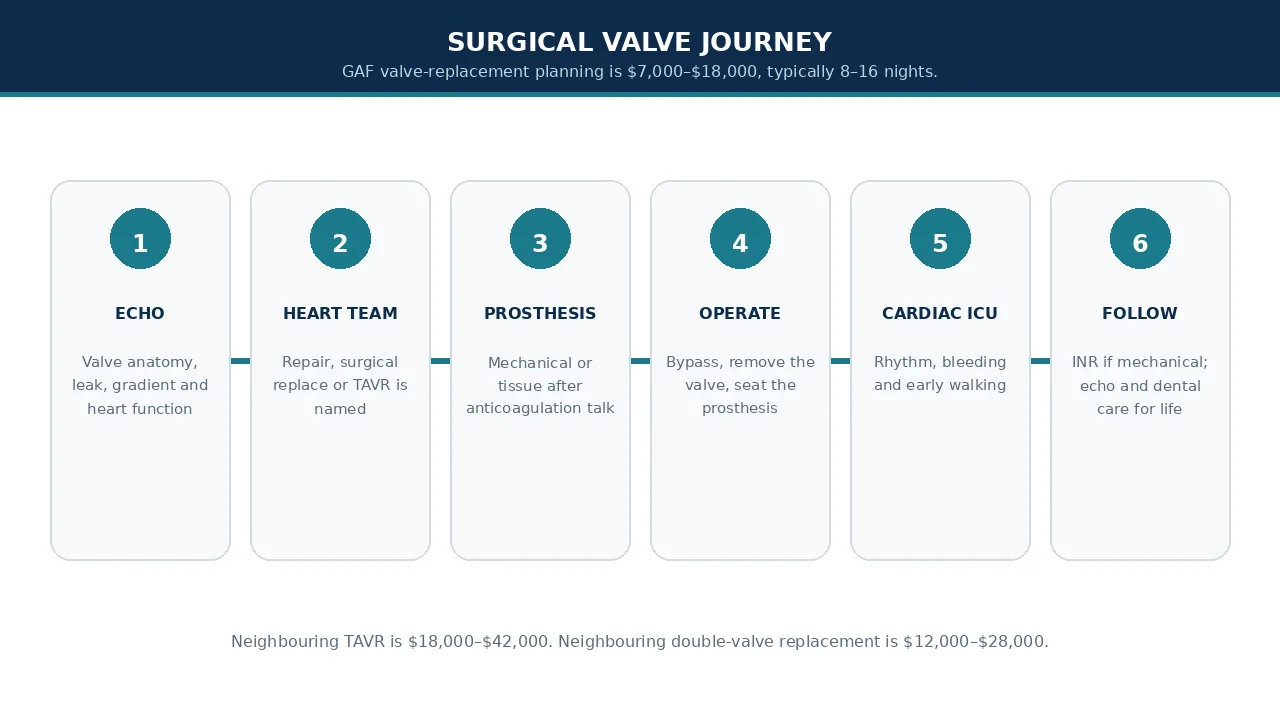
A typical surgical pathway may include preoperative evaluation, surgery, cardiac ICU, step-down or ward, mobilisation, discharge, rehabilitation and follow-up.
After surgery, the patient is monitored for heart rhythm, blood pressure, oxygen levels, bleeding, kidney function, fluid balance, valve function and signs of infection.
Physiotherapy and gradual mobilisation are usually started during the hospital stay.
GAF heart valve replacement planning is typically 8–16 nights. The NHS notes that hospital recovery after conventional valve replacement is often around a week; TAVI patients commonly have a shorter stay.
Heart valve replacement recovery
Recovery depends on the type of procedure and the patient's overall health.
After open or minimally invasive surgery, complete recovery can take approximately 2–3 months, although many patients gradually resume normal activities earlier. TAVI/TAVR generally allows a faster recovery.
First few days. Pain control, breathing exercises, getting out of bed, walking, eating normally, monitoring the surgical wound and managing medications.
First few weeks. Fatigue, mild chest or shoulder discomfort, reduced exercise capacity, sleep disturbances, appetite changes and emotional fluctuations are common.
Around 6–12 weeks. Many patients are progressively returning to routine activities, depending on healing and medical clearance.
The treating cardiac team determines when driving, work, exercise and air travel are appropriate.
Cardiac rehabilitation after valve replacement
Cardiac rehabilitation can form an important part of recovery. It may include supervised physical activity, exercise progression, nutrition advice, risk-factor management, medication education, psychological support and lifestyle counselling.
There is no live GAF cardiac-rehabilitation treatment page. Rehab is usually quoted with the hospital stay or as a separate hospital service.
Medicines after heart valve replacement
The medicines required after surgery vary according to valve type, valve position, heart rhythm, other cardiovascular conditions, history of blood clots, bleeding risk and other medical conditions.
Patients with mechanical valves generally require lifelong vitamin-K-antagonist anticoagulation.
Patients with biological valves may receive anticoagulation for a limited period or may require it for another reason such as atrial fibrillation.
Medication must never be stopped or changed without the treating physician's advice.
INR monitoring after mechanical valve replacement
Patients taking warfarin need regular INR testing.
Too low an INR may increase the risk of valve thrombosis or embolism. Too high an INR may increase bleeding risk.
Indian consensus guidance has specifically emphasized individualized anticoagulation and INR management after prosthetic valve implantation.
Patients travelling internationally should make arrangements for reliable INR testing and communication with their treating cardiologist.
Risks and complications of heart valve replacement
Heart valve replacement is major cardiac treatment and carries risks.
Potential complications include bleeding, infection, blood clots, stroke, abnormal heart rhythms, kidney injury, respiratory complications, need for a pacemaker, prosthetic valve dysfunction, valve thrombosis, paravalvular leakage, reoperation, allergic or medication-related complications and, rarely, death.
The risk varies with age, general health, heart function, kidney function, lung disease, diabetes, previous heart surgery, emergency versus planned surgery, type of valve disease, number of valves involved, coronary artery disease, infection and the surgical or transcatheter approach.
A personalised risk assessment is more meaningful than quoting one universal complication rate. Neighbouring pacemaker implantation is $3,500–$9,000 if conduction injury requires pacing.
How long does a replacement heart valve last?
Valve durability depends on the type of prosthesis, patient's age, valve position, underlying disease and other factors.
Mechanical valves are designed for very long-term durability but require lifelong anticoagulation in most patients.
Biological valves can undergo structural valve deterioration over time. The likelihood and timing of degeneration vary between patients.
Advances in valve-in-valve transcatheter procedures have also changed long-term planning for selected patients with failing biological valves. The 2025 ESC/EACTS guidance includes expanded consideration of transcatheter valve-in-valve approaches in selected patients with prosthetic valve dysfunction. Valve-in-valve sits on the named TAVR product when anatomy allows, not on a separate invented page.
Can a replacement valve fail?
Yes. Prosthetic valve dysfunction can occur because of structural valve deterioration, valve thrombosis, infection, paravalvular leakage, pannus formation, degeneration of tissue leaflets or mechanical obstruction.
Patients with prosthetic valves therefore require long-term follow-up.
A new murmur, unexplained breathlessness, fever, swelling, chest symptoms, fainting or sudden reduction in exercise capacity should be assessed promptly.
Can a failed tissue valve be replaced without open-heart surgery?
In selected patients, a valve-in-valve transcatheter procedure may be possible. This involves placing a new transcatheter valve inside an existing failing biological prosthesis.
Suitability depends on original valve type, valve size, anatomy, coronary artery position, risk of obstruction, surgical risk and expected long-term outcome.
Request an itemised valve estimate
Heart valve replacement surgery cost in India
There is a live GAF heart valve replacement sheet. Planning is $7,000–$18,000, typically 8–16 nights. Comparable US planning is $80,000–$220,000.
This is an indicative planning range, not a guaranteed package price. TAVR is a different product at $18,000–$42,000. Double-valve replacement is a different product at $12,000–$28,000.
| Treatment component | GAF planning range | Typical stay |
|---|---|---|
| Heart valve replacement | $7,000–$18,000 | 8–16 nights |
| Aortic valve replacement | $7,000–$18,500 | 8–16 nights |
| Heart valve repair | $6,500–$16,500 | 7–14 nights |
| Mitral valve repair | $7,500–$18,000 | 7–14 nights |
| Double valve replacement | $12,000–$28,000 | 10–18 nights |
| TAVR/TAVI | $18,000–$42,000 | 3–7 nights |
| Minimally invasive cardiac surgery | $8,000–$20,000 | 5–12 nights |
| CABG | $5,500–$14,000 | 7–14 nights |
For an international patient, a written estimate should separate hospital charges, surgeon fees, the prosthetic valve, ICU nights, blood products, medicines and possible complication-related costs.
The final price can change with valve type, brand and model, single versus double valve replacement, surgical versus transcatheter procedure, ICU duration, length of hospitalisation, additional cardiac procedures and complications.
What is usually included in an international patient package?
Depending on the hospital, a cardiac surgery quotation may include cardiologist and cardiac surgeon consultation, preoperative investigations, echocardiography, blood tests, anaesthesia, operating-room charges, the prosthetic valve, surgeon fees, ICU care, hospital room, nursing, routine medications, routine postoperative investigations and discharge planning.
Some items may be excluded, such as treatment of unrelated medical conditions, extended ICU stay, major complications, additional procedures, special blood products, accommodation outside the hospital, airfare, visa expenses, long-term medication and rehabilitation outside the hospital.
Always request a written inclusions and exclusions document before travelling.
Heart valve replacement surgery for international patients in India
1. Send medical records. Recent echocardiogram, ECG, CT scans, coronary angiography if available, previous medical reports, current medication list, previous surgery records, blood-test results and discharge summaries.
2. Remote specialist review. The cardiac team reviews the history and imaging to determine whether further tests are required.
3. Treatment recommendation. The patient may be advised to undergo valve repair, surgical valve replacement, TAVR/TAVI, another catheter-based intervention, medical management or additional diagnostic testing.
4. Cost estimate. A provisional treatment estimate can be prepared from the available records.
5. Travel and hospital admission. Once the treatment plan is confirmed, arrangements can be made for hospital admission.
6. Surgery or intervention. The patient undergoes the planned procedure under the cardiac team's supervision.
7. Recovery and discharge. The hospital provides postoperative monitoring, medication instructions and follow-up recommendations.
8. Follow-up after returning home. A clear follow-up plan is particularly important for patients who live outside India, including INR arrangements after a mechanical valve.
Why patients consider India for heart valve replacement
Patients considering treatment in India often look for experienced cardiac surgeons, multidisciplinary cardiology teams, advanced cardiac imaging, cardiac intensive care, surgical and transcatheter options, mechanical and biological valves, international-patient services and coordinated treatment planning.
The decision should be based on the suitability of the treating centre and medical team for the individual patient's condition, rather than on marketing claims alone.
Current European guidance emphasizes experienced Heart Valve Centres and multidisciplinary Heart Teams, especially for complex valve disease.
How to choose a heart valve replacement hospital in India
When comparing hospitals, ask whether the centre routinely performs the specific valve procedure required, whether a Heart Team is involved, whether both mechanical and tissue valves are offered, whether TAVR is available if relevant, whether there is a dedicated cardiac ICU, whether advanced echocardiography and cardiac CT are available, and how international-patient follow-up will work.
Start with live GAF cardiac surgery hospitals in the five catalog cities rather than a brochure that lists every Indian metro.
Questions to ask the heart surgeon
- Which valve is diseased?
- How severe is the valve disease?
- Do I need treatment now?
- Can my valve be repaired instead of replaced?
- Why are you recommending replacement?
- Which valve type do you recommend and why?
- What are the advantages and disadvantages of a mechanical valve in my case?
- What are the advantages and disadvantages of a tissue valve?
- Will I need lifelong anticoagulation?
- How often will I need INR testing?
- Am I a candidate for minimally invasive surgery?
- Am I a candidate for TAVR/TAVI?
- Will I need coronary angiography?
- What are my individual surgical risks?
- How long should I expect to stay in hospital?
- How long before I can return to normal activity?
- What symptoms should make me seek urgent medical attention?
- How will my valve be monitored after surgery?
- Will I need cardiac rehabilitation?
- What follow-up will I need after returning to my home country?
Send those answers with the echo
Frequently asked questions about heart valve replacement in India
Is heart valve replacement a major surgery?
Yes. Conventional surgical valve replacement is major cardiac surgery and requires specialised cardiac surgery, anaesthesia and intensive-care facilities. Transcatheter procedures such as TAVR/TAVI are less invasive but are still major medical interventions.
Which heart valve is most commonly replaced?
The aortic and mitral valves are among the most commonly treated valves in adult valve surgery.
Is valve replacement better than valve repair?
Not universally. If a valve can be repaired safely and durably, repair may be preferred. If repair is unlikely to be durable or the valve is severely damaged, replacement may be more appropriate.
Which is better: mechanical or biological valve?
Neither is universally better. Mechanical valves offer excellent durability but usually require lifelong anticoagulation. Biological valves can deteriorate over time but may reduce the need for lifelong anticoagulation solely because of the prosthesis.
How much does valve replacement cost in India?
GAF heart valve replacement planning is $7,000–$18,000. Named aortic valve replacement is $7,000–$18,500. Neighbouring TAVR is $18,000–$42,000. Neighbouring double-valve replacement is $12,000–$28,000.
How long do I need to stay in India after valve replacement?
For an international patient undergoing open-heart valve surgery, the total stay in India can be longer than the hospital stay because the patient needs postoperative recovery and medical clearance before flying. GAF surgical planning is typically 8–16 nights in hospital.
Can I travel by air after valve replacement?
Many patients can eventually travel by air, but the timing depends on recovery, surgical healing, complications, anticoagulation and the treating team's assessment.
Can I live normally after heart valve replacement?
Many patients are able to return to active daily lives after successful valve replacement and appropriate follow-up. Long-term care may include medication, anticoagulation monitoring when required, periodic echocardiography, dental care and cardiovascular risk-factor management.
Do mechanical valves make a clicking sound?
Some mechanical valves can produce an audible clicking sound. Patients generally become accustomed to the sound, but any new change associated with symptoms should be discussed with a doctor.
Will I need blood thinners after valve replacement?
Patients with mechanical valves generally require lifelong vitamin-K-antagonist anticoagulation. Patients with biological valves may receive anticoagulation for a limited period or for another medical indication.
Can heart valve replacement cure heart failure?
Valve replacement can improve heart function and symptoms when valve disease is a major cause of heart failure, but it is not a universal cure for every type of heart failure.
Can a replacement valve become infected?
Yes. Prosthetic valve endocarditis is a serious complication. Patients should seek prompt medical evaluation for unexplained persistent fever.
What happens if a tissue valve wears out?
Depending on anatomy and surgical risk, options may include another surgical replacement or a transcatheter valve-in-valve procedure on the named TAVR pathway.
Aortic-stenosis-treatment, mitral-stenosis-treatment, mitral-regurgitation-treatment, rheumatic-heart-disease, pulmonary-valve-replacement and city-valve-cost pages are not live on this site. Use this pillar page plus the named modality sheets.
Recovery timeline after surgical valve replacement
| Recovery stage | What usually happens |
|---|---|
| Day 0–2 | ICU monitoring, breathing support if required, pain control and close cardiac monitoring |
| First week | Mobilisation, physiotherapy, medication adjustment and preparation for discharge |
| Weeks 2–4 | Gradual increase in walking and daily activities |
| Weeks 4–8 | Increasing stamina and continued rehabilitation |
| Around 2–3 months | Many patients approach their usual level of activity, depending on individual recovery |
These are general timelines rather than guarantees. The NHS reports that full recovery after open or minimally invasive valve replacement often takes around 2–3 months, while recovery after TAVI is generally faster.
Lifestyle after heart valve replacement
Successful surgery is only one part of long-term heart health.
Patients should work with their doctors on blood-pressure control, diabetes management, cholesterol management, healthy body weight, regular physical activity, smoking cessation, heart-healthy nutrition, medication adherence, dental health and regular cardiology follow-up.
Patients with prosthetic valves should carry relevant medical information and tell healthcare professionals about their valve type and anticoagulation medication.
When should a patient seek urgent medical care after valve replacement?
Seek urgent medical attention for severe or sudden breathlessness, chest pain, fainting, sudden weakness or difficulty speaking, uncontrolled bleeding, coughing blood, a very rapid or irregular heartbeat with symptoms, high or persistent fever, sudden swelling or a significant deterioration in exercise capacity.
Patients taking anticoagulants should also seek medical advice for significant or unexplained bleeding.
High fever, new chest pain, sudden breathlessness, fainting or sudden confusion belongs in a local emergency department first. A coordinator can also open WhatsApp after the patient is already in emergency care.
Heart valve replacement in India: a patient-centred approach
Heart valve replacement is not a single operation with a single pathway.
A 40-year-old patient with severe rheumatic mitral valve disease may require a very different strategy from an 80-year-old patient with severe calcific aortic stenosis.
Similarly, a patient with previous cardiac surgery, coronary artery disease, kidney disease, atrial fibrillation or multiple valve problems may require a more complex treatment plan.
This is why modern valve care emphasizes the Heart Team approach. The 2025 ESC/EACTS guidelines place particular emphasis on multidisciplinary assessment, specialised Heart Valve Centres, advanced imaging and patient-centred selection of interventions.
For international patients, the ideal treatment journey begins before travel: medical records and imaging should be reviewed, the likely treatment pathway should be discussed, and the hospital should provide a clear estimate of expected costs and recovery requirements.
How GAF Healthcare can help with heart valve treatment in India
GAF Healthcare can assist international patients in coordinating treatment in India from initial enquiry through hospital coordination and post-treatment planning.
Support may include collection of medical records, coordination of specialist opinions, hospital and doctor coordination, treatment-cost estimates, appointment scheduling, medical visa documentation support, airport and local coordination, accommodation assistance, interpretation support where required, hospital admission coordination, discharge-document coordination and follow-up coordination.
The medical treatment itself is provided by the selected hospital and treating medical team.
A coordinator can also open WhatsApp.
Ask GAF to name the valve plan
Key takeaways
- Heart valve replacement treats severe aortic, mitral, tricuspid or pulmonary valve disease when intervention is medically appropriate.
- Treatment may involve conventional surgical replacement, minimally invasive surgery, valve repair or TAVR/TAVI.
- Mechanical valves offer excellent durability but generally require lifelong anticoagulation.
- Biological valves often avoid lifelong anticoagulation solely because of the prosthesis but can wear over time.
- GAF surgical valve-replacement planning is $7,000–$18,000, typically 8–16 nights. Neighbouring TAVR is $18,000–$42,000.
- Recovery after open or minimally invasive surgery often takes around 2–3 months.
- Long-term echo, dental care, medicines and INR monitoring when required remain essential.
- For international patients, Heart Team expertise and follow-up should be considered alongside cost.
Top 10 sources
- European Society of Cardiology / EACTS — 2025 Guidelines for Valvular Heart Disease.
- American Heart Association / American College of Cardiology — 2020 Valvular Heart Disease Guideline.
- ESC — 2025 Pocket Guidelines on Valvular Heart Disease.
- ESC — Patient Guidelines for Valvular Heart Disease.
- NHS — Recovery After Heart Valve Replacement.
- Indian consensus guidance on follow-up and anticoagulation after prosthetic valve implantation.
- GAF Healthcare heart valve replacement cost sheet — Heart Valve Replacement.
- GAF Healthcare aortic valve replacement cost sheet — Aortic Valve Replacement.
- GAF Healthcare TAVR/TAVI cost sheet — TAVR/TAVI.
- Named TAVR treatment page — TAVR in India.
Medical disclaimer: This page is intended for education and international-treatment planning. It does not replace consultation with a cardiologist or cardiac surgeon. Treatment decisions — including whether repair, surgical replacement or TAVR is appropriate — must be made by a specialist Heart Team after reviewing the individual patient's echocardiography, imaging, medical history and overall surgical risk.
Treatment Process
- 1
Share echo
The patient provides echocardiography, ECG, CT, angiography if available and previous cardiac notes before anyone books travel.
- 2
Heart Team review
A cardiac surgeon and cardiologist review whether the case is repair, surgical replacement or TAVR.
- 3
Name the prosthesis
The team writes mechanical or tissue after anticoagulation, durability and future-procedure talk.
- 4
Itemized estimate
GAF valve-replacement planning is $7,000–$18,000. Neighbouring TAVR is $18,000–$42,000. Neighbouring double-valve work is $12,000–$28,000.
- 5
Travel to India
Stable planned cases travel after records review. New chest pain or sudden breathlessness is a local emergency.
- 6
Repeat essential tests
The receiving unit confirms echo, bloods, dental status and fitness after arrival.
- 7
Deliver the named valve
Surgical replacement, selected mini surgery or TAVR proceeds only after the valve and prosthesis are named.
- 8
Cardiac ICU and ward
Rhythm, bleeding, walking and INR or antiplatelet plans are watched before discharge.
- 9
Lifelong follow-up
The patient leaves with a valve card, medicine list, INR plan if mechanical and echo dates.