
Treatment Overview

Tricuspid valve replacement surgery in India is a specialized cardiac procedure used when the tricuspid valve is severely damaged or diseased and cannot be repaired reliably. The operation replaces the native tricuspid valve with a prosthetic valve to restore controlled blood flow from the right atrium to the right ventricle.
Tricuspid valve disease can occur because of severe tricuspid regurgitation, tricuspid stenosis, congenital abnormalities, infective endocarditis, rheumatic disease, carcinoid-related valve damage, or structural damage associated with other heart conditions. In many patients, repair is preferred over replacement when a durable repair is technically possible. Replacement becomes an option when repair is unlikely to provide a satisfactory result.
India has established cardiac surgery programs capable of treating complex valve disease, including conventional surgical replacement and, in selected high-risk patients, newer transcatheter tricuspid interventions. The appropriate treatment depends on the valve anatomy, severity of disease, right-ventricular function, pulmonary pressures, other valve disease, previous cardiac operations, age, and overall surgical risk. Current international guidance emphasizes assessment by a multidisciplinary Heart Team at an experienced valve center.
Surgical valve lists sit on Heart Valve Replacement Surgery in India. A catheter aortic valve is a different product and sits on TAVR in India. Combined coronary grafts sit on CABG Surgery in India. Device-lead injury may sit on Pacemaker Implantation in India or ICD Device Implantation in India. There is no live GAF aortic-replacement-only treatment page. This page is the named tricuspid-replacement product. Bentall lists sit on Bentall Procedure in India. Mitral replacement lists sit on Mitral Valve Replacement Surgery in India. Tricuspid repair lists sit on Tricuspid Valve Repair in India. VSD lists sit on Ventricular Septal Defect (VSD) Surgery in India. Aortic dissection lists sit on Aortic Dissection Repair Surgery in India.
There is no live GAF tricuspid-only cost sheet. Neighbouring heart valve replacement is $7,000–$18,000 (typically 8–16 nights). US comparison is $80,000–$220,000. Neighbouring heart valve repair is $6,500–$16,500 (typically 7–14 nights) when a durable tricuspid repair is the honest product. Neighbouring mitral valve repair is $7,500–$18,000 (typically 7–14 nights) when left-sided repair is also named. Named aortic valve replacement is $7,000–$18,500 (typically 8–16 nights) when SAVR is added. Neighbouring double valve replacement is $12,000–$28,000 (typically 10–18 nights). Neighbouring TAVR/TAVI is $18,000–$42,000 (typically 3–7 nights) and is an aortic product, not a tricuspid quote. Neighbouring minimally invasive cardiac surgery is $8,000–$20,000 (typically 5–12 nights) when a mini approach can honestly complete the valve work. Neighbouring CABG is $5,500–$14,000 (typically 7–14 nights) when grafts are added. Neighbouring congenital heart surgery is $8,000–$28,000 (typically 7–21 nights) when Ebstein or other congenital work is the honest product. Neighbouring pacemaker implantation is $3,500–$9,000 if conduction injury requires pacing. Transcatheter tricuspid repair or replacement has no live GAF sheet and is quoted after Heart Team imaging. These are planning ranges from partner hospital cost sheets, not hospital quotations.
International patients comparing cardiac surgeons commonly start with Delhi NCR, Mumbai, Bengaluru, Chennai and Hyderabad. Partner cardiac surgery hospitals in Delhi NCR, Mumbai and Bengaluru, and in Chennai and Hyderabad, are a typical first filter because tricuspid replacement needs a cardiac ICU, imaging and emergency backup. City cost sheets include Delhi NCR, Mumbai, Bengaluru, Chennai and Hyderabad. Kolkata, Pune, Ahmedabad, Chandigarh and Kochi may have valve theatres. They are not live GAF catalog cities on this site.
Important: New or severe chest pain, sudden breathlessness, fainting, sudden swelling, uncontrolled bleeding or unexplained persistent fever after a prosthetic tricuspid valve belongs in a local emergency department first. WhatsApp at +91 90443 46292 is for planned coordination, not emergency care.
What is the tricuspid valve?
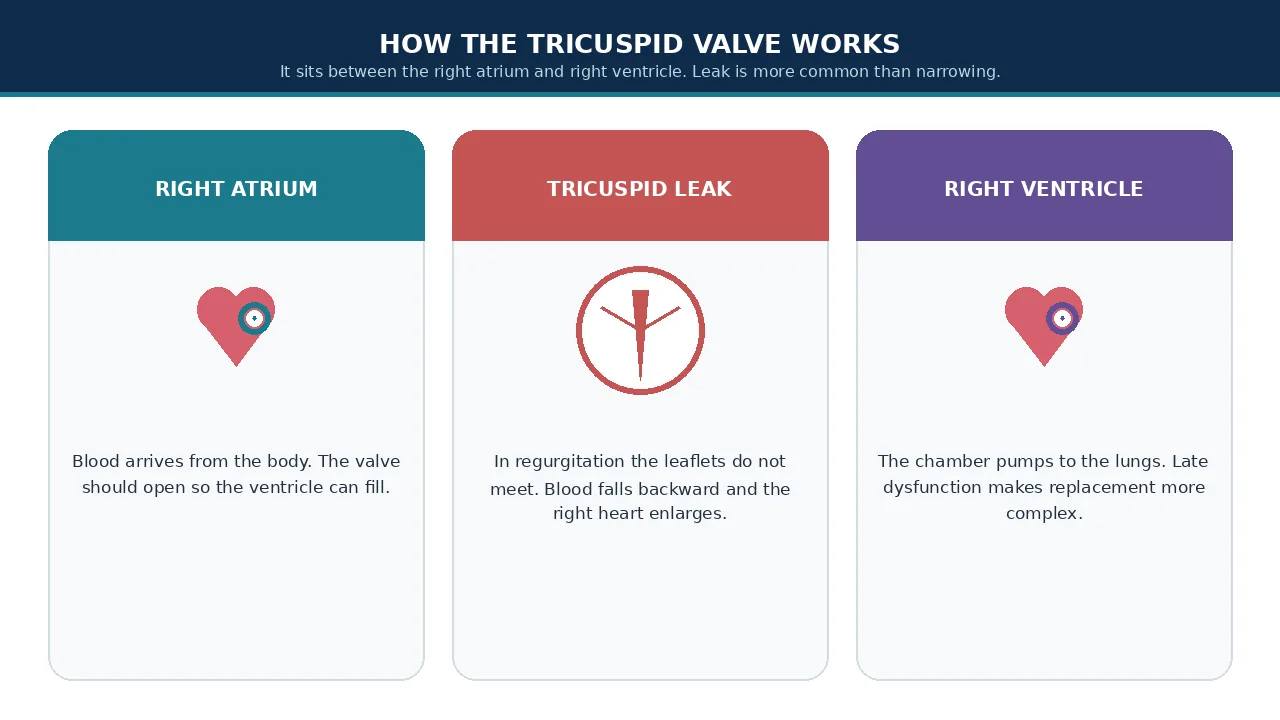
The tricuspid valve is one of the four valves of the heart. It is located between the right atrium and the right ventricle.
The valve normally opens when blood moves from the right atrium into the right ventricle. It closes when the right ventricle contracts, preventing blood from flowing backward into the right atrium.
When the valve becomes severely narrowed or fails to close properly, the heart may struggle to move blood efficiently through the pulmonary circulation.
The two major forms of tricuspid valve disease are:
- Tricuspid regurgitation (TR): the valve does not close properly and blood leaks backward.
- Tricuspid stenosis: the valve becomes narrowed and restricts forward blood flow.
Tricuspid regurgitation is much more commonly encountered than tricuspid stenosis.
What is tricuspid valve replacement surgery?
Tricuspid valve replacement surgery is an operation in which the diseased tricuspid valve is removed or excluded and replaced with a prosthetic valve.
The replacement valve can be:
- Mechanical
- Biological/tissue
The operation is generally performed under general anesthesia and, for conventional surgery, usually requires cardiopulmonary bypass.
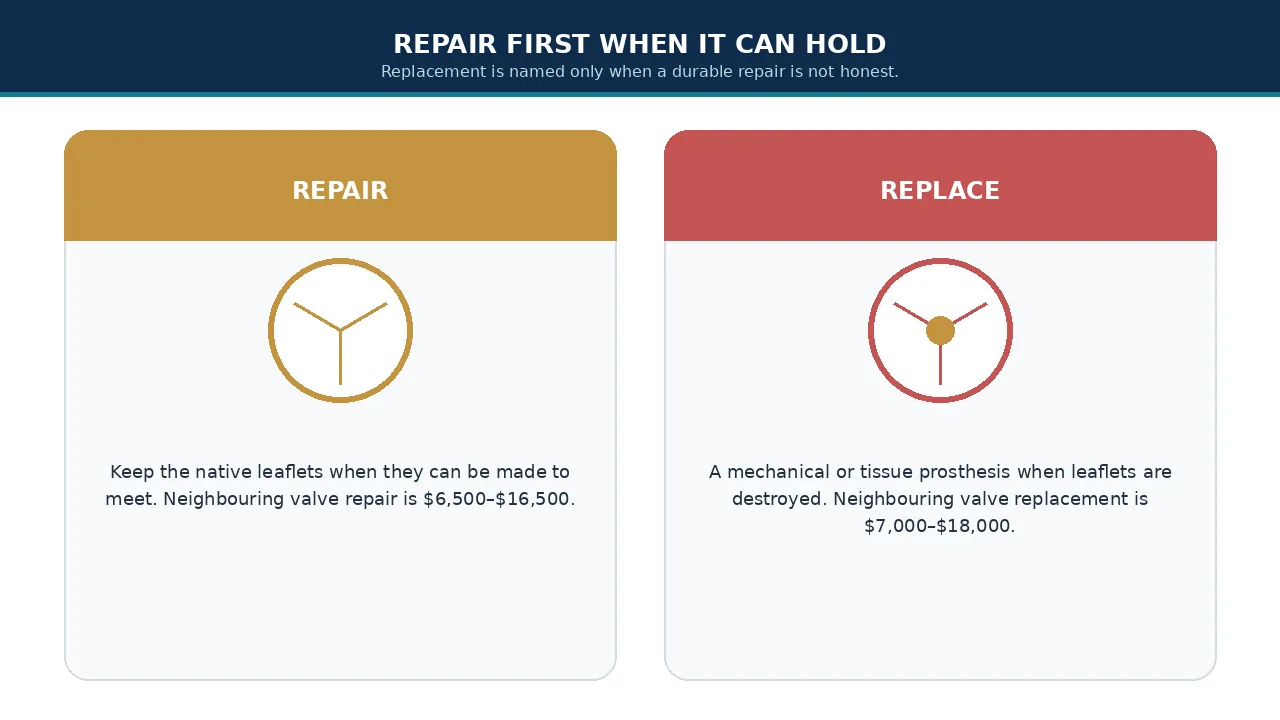
Replacement is not automatically the first choice for severe tricuspid valve disease. Whenever a durable repair is technically feasible, repair is commonly preferred because it preserves the patient's native valve and can avoid some of the long-term issues associated with prosthetic valves. Neighbouring heart valve repair is $6,500–$16,500. Neighbouring surgical heart valve replacement is $7,000–$18,000.
Ask whether repair or replacement is the honest product
When is tricuspid valve replacement needed?
The decision to replace the tricuspid valve is individualized.
Replacement may be considered when:
- The valve is severely damaged.
- Severe tricuspid regurgitation causes significant symptoms.
- Severe tricuspid stenosis produces clinically important obstruction.
- The valve cannot be repaired reliably.
- The valve has been extensively damaged by infective endocarditis.
- Congenital abnormalities make durable repair difficult.
- There is severe structural leaflet destruction.
- Previous valve surgery has failed.
- The patient requires another cardiac operation and significant tricuspid disease needs treatment.
- A prosthetic tricuspid valve has become dysfunctional and requires replacement.
Current guidelines emphasize intervention before advanced right-ventricular or end-organ dysfunction develops when appropriate, because late-stage disease can make treatment substantially more complex.
Tricuspid regurgitation and valve replacement
Tricuspid regurgitation is the most common reason patients develop significant tricuspid valve disease.
In TR, the valve does not close completely during right-ventricular contraction. Some blood therefore moves backward into the right atrium.
Over time, severe TR can contribute to:
- Right atrial enlargement
- Right ventricular enlargement
- Right-sided heart failure
- Fluid accumulation
- Leg swelling
- Abdominal swelling
- Liver congestion
- Reduced exercise tolerance
- Fatigue
- Breathlessness
- Irregular heart rhythms
TR is frequently secondary or functional, meaning the valve itself may initially be structurally normal but becomes incompetent because the right ventricle or tricuspid annulus enlarges.
Common associated conditions include pulmonary hypertension, left-sided valve disease, heart failure and atrial fibrillation.
Primary vs secondary tricuspid regurgitation
Understanding the cause of TR is important before deciding on replacement.
Primary tricuspid regurgitation. The valve itself is structurally abnormal. Potential causes include congenital abnormalities, Ebstein anomaly, infective endocarditis, rheumatic disease, carcinoid heart disease, trauma, degenerative valve disease, and pacemaker or device-related injury.
Secondary tricuspid regurgitation. The valve leaflets may be relatively normal, but changes in the heart cause them to separate and leak. Potential causes include right ventricular enlargement, pulmonary hypertension, left-sided heart disease, atrial fibrillation, right atrial enlargement and cardiomyopathy.
The distinction matters because treating the underlying cause and repairing the valve may be preferable to replacement in selected patients. Lead-related injury may sit on Pacemaker Implantation in India or ICD Device Implantation in India. Left-sided surgical valve lists sit on Heart Valve Replacement Surgery in India.
Tricuspid valve replacement vs tricuspid valve repair
One of the most important questions patients ask is: "Do I need replacement, or can my tricuspid valve be repaired?"
There is no universal answer.
| Feature | Tricuspid valve repair | Tricuspid valve replacement |
|---|---|---|
| Native valve preserved | Yes | No |
| Prosthetic valve required | Usually no | Yes |
| Preferred when durable result possible | Generally yes | When repair is unsuitable |
| Mechanical anticoagulation | Usually not required solely because of valve repair | Required for mechanical prosthesis |
| Long-term prosthetic-valve considerations | Fewer | Yes |
| Suitable for severely destroyed valve | Sometimes not | Often considered |
| Neighbouring GAF sheet | Heart valve repair $6,500–$16,500 | Heart valve replacement $7,000–$18,000 |
The 2025 ESC/EACTS guidance emphasizes early treatment of appropriate severe tricuspid disease and consideration of transcatheter therapies in selected patients at increased surgical risk. There is no live GAF tricuspid-repair-only treatment page.
Types of tricuspid valve replacement
Mechanical tricuspid valve
Mechanical valves are made from durable artificial materials.
Advantages
- Very durable
- Designed for long-term use
- Lower structural deterioration than tissue valves
Disadvantages
Patients with a mechanical valve generally require lifelong anticoagulation to reduce the risk of blood clot formation. This means regular monitoring and careful management of anticoagulant therapy. Mechanical valves may therefore be less attractive for some patients, particularly when long-term anticoagulation creates significant practical or medical concerns.
Biological or tissue tricuspid valve
Biological valves are generally manufactured using animal-derived tissue.
Potential advantages
- Usually do not require lifelong anticoagulation solely because the valve is tissue-based
- May be preferred in patients for whom long-term anticoagulation is undesirable
- Frequently considered in older patients
Potential disadvantages
- Tissue valves can deteriorate over time.
- Younger patients may experience structural valve deterioration sooner.
- Future reintervention may eventually be necessary.
The choice between mechanical and biological prostheses depends on age, bleeding and thromboembolic considerations, anticipated longevity, pregnancy considerations where relevant, ability to maintain anticoagulation, patient preference and valve-team assessment.
Ask which prosthesis the Heart Team is naming
Open tricuspid valve replacement surgery: how it is performed
Conventional tricuspid valve replacement generally follows several stages.
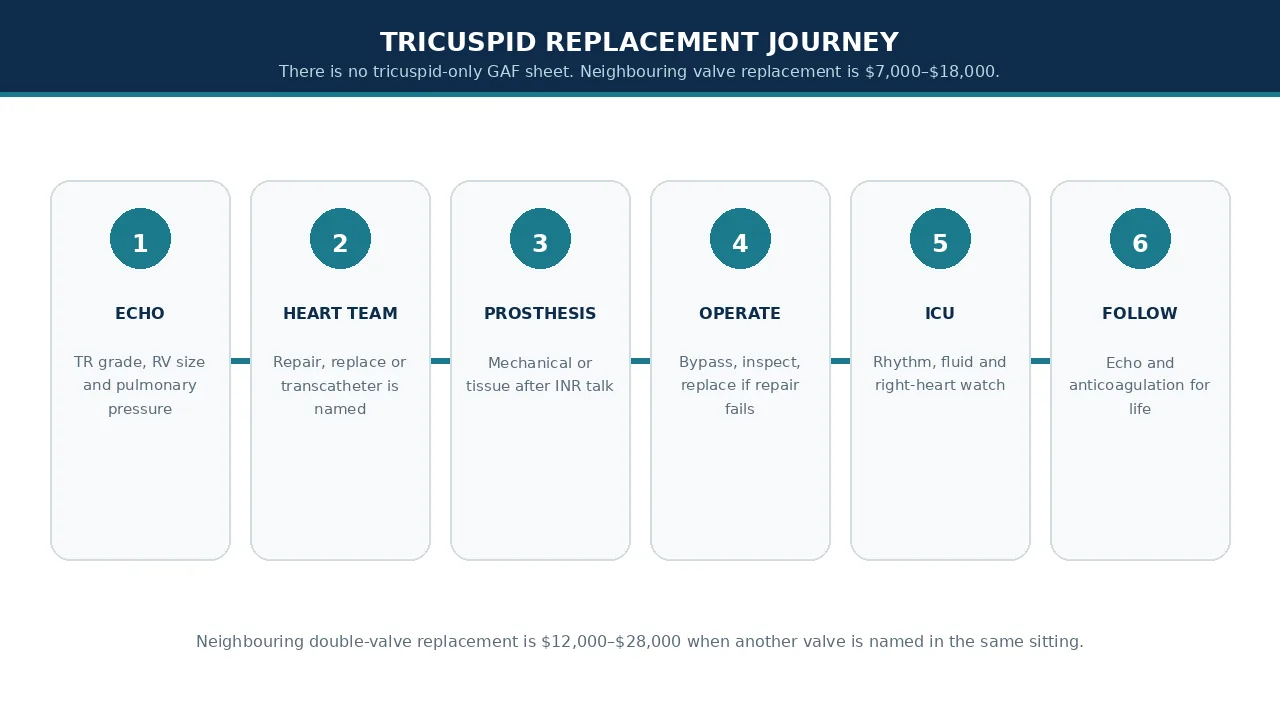
Step 1: Preoperative evaluation. The cardiac team reviews echocardiography, ECG, chest imaging where required, blood tests, kidney and liver function, cardiac catheterization when indicated, CT or MRI in selected cases, existing pacemaker or ICD leads, other valve disease, right-ventricular function and pulmonary artery pressure. Advanced imaging can be particularly important when considering complex valve intervention.
Step 2: General anesthesia. The patient is placed under general anesthesia.
Step 3: Surgical access. Traditional surgery commonly uses a median sternotomy, although selected centers and patients may be candidates for less invasive approaches.
Step 4: Cardiopulmonary bypass. A heart-lung machine temporarily takes over circulation and oxygenation while the surgeon operates on the heart.
Step 5: Assessment of the tricuspid valve. The surgeon examines the valve and determines whether repair remains possible. If the valve cannot be repaired adequately, replacement is performed.
Step 6: Removal of the diseased valve. The damaged valve tissue is carefully managed while protecting surrounding cardiac structures.
Step 7: Prosthetic valve implantation. The selected mechanical or biological valve is positioned in the tricuspid valve location and secured.
Step 8: Testing. The surgical team checks valve function and ensures that the prosthesis is functioning properly.
Step 9: Closure and ICU transfer. The patient is removed from cardiopulmonary bypass, the chest is closed and the patient is transferred to the cardiac ICU for monitoring.
Minimally invasive tricuspid valve surgery
Not every patient requires the same surgical access.
Selected cardiac centers may offer minimally invasive approaches depending on valve anatomy, previous surgeries, patient body habitus, associated heart procedures, surgeon experience, hospital infrastructure and overall surgical risk.
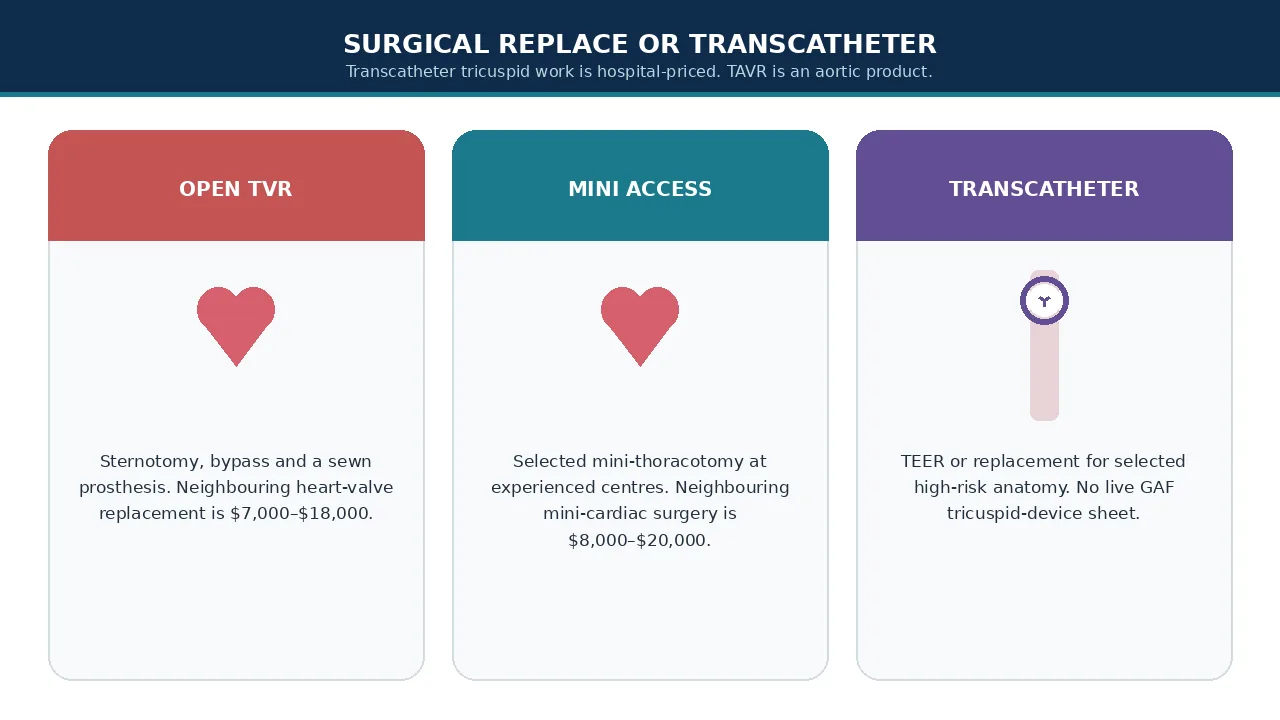
Minimally invasive surgery does not necessarily mean that every patient can avoid cardiopulmonary bypass. Neighbouring minimally invasive cardiac surgery is $8,000–$20,000 when a mini approach can honestly complete the valve work. Neighbouring robotic cardiac surgery is $10,000–$24,000 when a robotic platform is the named product. There is no live GAF minimally-invasive-tricuspid treatment page.
The most appropriate surgical approach should be determined after detailed evaluation rather than selected solely because an incision is smaller.
Transcatheter tricuspid valve replacement
Tricuspid valve treatment is evolving rapidly.
For patients who are at increased risk for conventional surgery, transcatheter approaches may provide an alternative in appropriately selected cases.
The 2025 ESC/EACTS guidelines state that in selected patients with isolated severe TR and increased surgical risk, tricuspid transcatheter edge-to-edge repair (TEER) or transcatheter replacement can be considered, provided there is no severe right-ventricular dysfunction or pre-capillary pulmonary hypertension.
Transcatheter treatment can be particularly relevant for patients who:
- Are elderly or frail
- Have undergone previous cardiac surgery
- Have multiple medical conditions
- Have high predicted surgical risk
- Have anatomy suitable for a transcatheter procedure
The exact technology available depends on the center, device approvals, anatomy and clinical indication. India has already reported use of transcatheter tricuspid valve implantation in complex high-risk patients.
There is no live GAF transcatheter-tricuspid sheet. Neighbouring TAVR/TAVI is $18,000–$42,000 and is an aortic product. A transcatheter tricuspid device is quoted after CT, echo and Heart Team review.
Ask whether transcatheter tricuspid work is even on the table
Who may be a candidate for transcatheter tricuspid treatment?
A patient may be evaluated for transcatheter treatment when TR is severe, symptoms are significant, conventional surgery carries substantial risk, anatomy is suitable, right-ventricular function remains appropriate, there is no contraindicating pulmonary vascular disease, and a Heart Team determines that the potential benefits justify intervention.
The assessment usually requires detailed echocardiography and sometimes cardiac CT.
Because transcatheter tricuspid interventions are a rapidly developing field, long-term durability data continue to evolve. The American Heart Association has highlighted the importance of individualized device selection and the still-developing evidence base for long-term outcomes.
Symptoms that may lead to tricuspid valve surgery
Severe tricuspid valve disease may produce symptoms gradually.
Common symptoms include:
- Swelling of the legs and ankles
- Abdominal swelling
- Shortness of breath
- Fatigue
- Reduced exercise tolerance
- Rapid heartbeat or palpitations
- Weakness
- Reduced appetite
- Abdominal discomfort
- Weight gain from fluid retention
Some patients have surprisingly few symptoms despite significant valve disease. That is why regular echocardiographic assessment can be important when significant TR has been identified.
New chest pain, sudden breathlessness or fainting is a local emergency department problem, not a WhatsApp message.
Causes of tricuspid valve disease
Tricuspid valve disease can result from several conditions.
Rheumatic heart disease. Rheumatic disease can affect the cardiac valves and, in some patients, contribute to tricuspid valve stenosis or regurgitation. There is no live GAF rheumatic-heart-disease treatment page.
Infective endocarditis. An infection of the valve can destroy or perforate valve tissue, potentially making repair impossible.
Congenital heart disease. Conditions such as Ebstein anomaly can significantly alter tricuspid valve structure and function. Neighbouring congenital heart surgery is $8,000–$28,000.
Pulmonary hypertension. High pressure in the pulmonary circulation can enlarge or alter the right ventricle and tricuspid annulus.
Left-sided valve disease. Mitral and aortic valve disease can indirectly contribute to right-sided pressure and volume overload. Surgical lists sit on Heart Valve Replacement Surgery in India. A catheter aortic valve sits on TAVR in India. A balloon that only widens the native aortic valve sits on Aortic Balloon Valvuloplasty in India.
Atrial fibrillation. Long-standing atrial fibrillation may cause right atrial and annular enlargement and contribute to functional TR.
Pacemaker or ICD leads. Cardiac device leads can occasionally interfere with tricuspid valve movement and contribute to regurgitation. Named device pages sit on Pacemaker Implantation in India and ICD Device Implantation in India.
Carcinoid heart disease. Carcinoid syndrome can cause characteristic right-sided valvular damage.
Diagnosis before tricuspid valve replacement
A thorough diagnostic evaluation is essential.
Echocardiography is central to evaluating valve structure, severity of regurgitation, valve gradients, right atrial size, right ventricular size, right ventricular function, pulmonary pressure estimates and other valve disease.
Transesophageal echocardiography can provide more detailed images and may be particularly important when planning surgery or transcatheter treatment.
Cardiac CT can be useful for procedural planning, especially for transcatheter interventions and assessment of venous anatomy.
Cardiac MRI may be useful when echocardiography does not adequately characterize right-ventricular function or the severity of regurgitation.
ECG can identify rhythm abnormalities and other electrical changes.
Cardiac catheterization may be recommended in selected patients to assess pressures and coronary anatomy. Neighbouring coronary angiography is $400–$1,200. If grafts are needed, that product sits on CABG Surgery in India.
Send echocardiography, ECG and previous notes
What does the Heart Team evaluate?
Before recommending replacement, specialists generally consider:
- Cause of tricuspid disease
- Severity of regurgitation or stenosis
- Symptoms
- Right-ventricular function
- Right-ventricular size
- Pulmonary pressures
- Liver and kidney function
- Other valve disease
- Coronary artery disease
- Previous heart surgery
- Pacemaker or ICD leads
- Age and frailty
- Surgical risk
- Valve anatomy
- Long-term treatment goals
The 2025 ESC/EACTS guidelines place particular emphasis on multidisciplinary Heart Teams and specialized valve centers for complex valvular disease.
Tricuspid valve replacement surgery cost in India
The cost of tricuspid valve replacement in India does not have one fixed price.
It depends on hospital, city, surgeon and cardiac team, mechanical versus tissue valve, ICU requirements, length of hospitalization, preoperative investigations, associated valve surgery, coronary bypass surgery if required, treatment of complications, previous cardiac surgery and the patient's overall medical condition.
There is no live GAF tricuspid-only sheet. Neighbouring heart valve replacement planning is $7,000–$18,000, typically 8–16 nights. Comparable US planning is $80,000–$220,000. Government reimbursement schedules and brochure rupee figures are not international self-pay quotations and are not used on this page.
Transcatheter tricuspid intervention is hospital-priced after device and imaging review. Neighbouring TAVR/TAVI at $18,000–$42,000 is not a tricuspid quote.
| Neighbouring GAF sheet | Planning range | Typical stay |
|---|---|---|
| Heart valve replacement | $7,000–$18,000 | 8–16 nights |
| Heart valve repair | $6,500–$16,500 | 7–14 nights |
| Mitral valve repair | $7,500–$18,000 | 7–14 nights |
| Aortic valve replacement | $7,000–$18,500 | 8–16 nights |
| Double valve replacement | $12,000–$28,000 | 10–18 nights |
| TAVR/TAVI | $18,000–$42,000 | 3–7 nights |
| Minimally invasive cardiac surgery | $8,000–$20,000 | 5–12 nights |
| CABG | $5,500–$14,000 | 7–14 nights |
| Congenital heart surgery | $8,000–$28,000 | 7–21 nights |
| Pacemaker implantation | $3,500–$9,000 | 1–3 nights |
| Cost component | May be included? |
|---|---|
| Cardiac surgeon | Yes |
| Anesthesia | Usually |
| Operating room | Usually |
| ICU | Usually |
| Hospital room | Usually |
| Prosthetic valve | Depends on package |
| Diagnostic tests | Depends on package |
| Medicines | Depends on package |
| Blood products | Depends on clinical need |
| Complication management | May be additional |
| Additional valve surgery | Additional |
| CABG | Additional |
| International patient services | May be additional |
| Transcatheter tricuspid device | Hospital-priced; no GAF sheet |
For international patients, GAF Healthcare should obtain an itemized hospital quotation rather than relying on an online average.
Request an itemised tricuspid estimate
Mechanical vs tissue valve: which one is better?
There is no single valve that is best for every patient. The decision is individualized.
Mechanical valve may be considered when long-term durability is a major consideration, the patient can safely maintain anticoagulation, and the clinical profile favors a mechanical prosthesis.
Tissue valve may be considered when avoiding lifelong anticoagulation is an important consideration, the patient's age and clinical profile make a biological prosthesis appropriate, and future valve degeneration and potential reintervention are acceptable considerations.
The decision should be made jointly by the patient and cardiac team after discussing age, bleeding risk, thromboembolic risk, anticoagulation requirements, pregnancy considerations where relevant, expected durability, future intervention options, lifestyle and ability to attend regular follow-up.
Risks and complications of tricuspid valve replacement
Tricuspid valve replacement is major heart surgery.
Potential complications include bleeding, infection, blood clots, stroke, abnormal heart rhythms, kidney injury, respiratory complications, right-heart failure, liver congestion, pacemaker requirement, prosthetic valve dysfunction, prosthetic valve thrombosis, valve infection, need for repeat intervention and death.
The individual risk can vary substantially. Patients with advanced right-ventricular dysfunction, pulmonary hypertension, liver or kidney dysfunction, previous cardiac operations or multiple valve problems may have a more complex risk profile.
This is one reason current guidelines emphasize timely evaluation rather than waiting until advanced organ dysfunction develops. Neighbouring pacemaker implantation is $3,500–$9,000 if conduction injury requires pacing.
Recovery after tricuspid valve replacement
Recovery occurs in stages.
First few days. Patients are usually monitored closely in a cardiac ICU before moving to a regular cardiac ward. Monitoring may include heart rhythm, blood pressure, oxygen levels, kidney function, fluid balance, valve function and surgical drains. Many patients remain hospitalized for approximately 4–7 days after isolated surgery; GAF neighbouring heart-valve replacement planning is typically 8–16 nights. Complex or combined cases can require longer stays.
First few weeks. Patients generally focus on gradually increasing walking, wound care, taking prescribed medication, maintaining a heart-healthy diet, avoiding heavy physical activity until cleared and attending follow-up appointments.
Longer-term recovery. Cardiac rehabilitation may be recommended. Recovery time depends on whether the patient underwent isolated tricuspid replacement, double or triple valve surgery, CABG plus valve surgery, redo cardiac surgery, minimally invasive surgery or transcatheter treatment.
There is no live GAF cardiac-rehabilitation treatment page. Rehab is usually quoted with the hospital stay or as a separate hospital service.
Life after tricuspid valve replacement
Most patients require long-term cardiac follow-up.
Follow-up may include clinical examination, ECG, echocardiography, medication review, anticoagulation monitoring when indicated, assessment of right-heart function and monitoring for prosthetic valve dysfunction.
Patients with prosthetic valves should understand the signs of potential complications and maintain regular communication with their cardiac team.
Anticoagulation after tricuspid valve replacement
Anticoagulation requirements depend heavily on the type of valve implanted and the patient's individual circumstances.
A patient with a mechanical valve generally requires long-term anticoagulant therapy.
A tissue valve does not necessarily require lifelong anticoagulation solely because it is a tissue prosthesis, although anticoagulation or antiplatelet treatment may be prescribed for other reasons.
Patients should never stop anticoagulant medication without medical advice.
Tricuspid valve replacement for infective endocarditis
Infective endocarditis can severely damage the tricuspid valve.
Some patients respond to antibiotic treatment without surgery.
Others may require surgery because of severe valve destruction, persistent infection, recurrent embolic complications, large infected vegetations, severe valve regurgitation or right-sided heart failure.
The choice between repair and replacement depends on the extent of infection and remaining valve tissue. Unexplained fever after a prosthetic valve belongs in a local emergency department, not in a WhatsApp thread.
Tricuspid valve replacement for Ebstein anomaly
Ebstein anomaly is a congenital abnormality involving the tricuspid valve.
Treatment can include tricuspid valve repair, cone reconstruction, valve replacement in selected cases and other congenital cardiac procedures.
For congenital disease, the surgical strategy is highly anatomy-dependent. Indian congenital heart disease guidance emphasizes repair where feasible, with replacement considered when adequate repair cannot be achieved. Neighbouring congenital heart surgery is $8,000–$28,000. There is no live GAF Ebstein-only treatment page.
Tricuspid valve replacement along with other valve surgery
Tricuspid disease frequently occurs alongside other valve disease.
A patient undergoing mitral valve surgery, aortic valve surgery, double valve surgery or other cardiac procedures may also require treatment of significant tricuspid disease.
Current guidelines support considering tricuspid intervention during left-sided valve surgery in appropriate patients, particularly when TR is severe or the tricuspid annulus is significantly dilated.
In many such cases, repair rather than replacement is preferred when a durable repair can be achieved. Neighbouring double valve replacement is $12,000–$28,000. Neighbouring CABG is $5,500–$14,000 when grafts are named in the same sitting. Combined lists sit on Heart Valve Replacement Surgery in India and CABG Surgery in India.
Tricuspid valve replacement in children
Tricuspid valve replacement in children requires additional considerations because the child continues to grow.
Potential issues include prosthesis size, growth, future valve interventions, anticoagulation, congenital anatomy and associated heart defects.
Children should ideally be evaluated at specialized congenital and pediatric cardiac centers. Neighbouring congenital heart surgery is $8,000–$28,000.
Tricuspid valve replacement in India for international patients
India is an important destination for patients seeking complex cardiac treatment.
For an international patient, the treatment journey usually involves:
- Medical record review. Send echocardiography, CT/MRI if available, ECG, previous surgical records, medication list, blood reports, discharge summaries and pacemaker or ICD details.
- Cardiologist/cardiac surgeon opinion. The hospital's Heart Team evaluates whether the patient needs medical management, valve repair, valve replacement, combined valve surgery or transcatheter treatment.
- Treatment plan. The hospital provides a proposed treatment pathway and estimated hospitalization.
- Cost estimate. An itemized quotation should ideally identify the procedure, prosthetic valve, ICU, room, professional charges, investigations, medicines and additional procedures.
- Medical visa and travel planning. International patients should travel only after receiving appropriate medical clearance and a treatment plan.
- Hospitalization. The patient undergoes the required investigations and procedure.
- Recovery and follow-up. The medical team determines when the patient is fit to return home.
WhatsApp coordination for planned travel is available at +91 90443 46292.
How to choose a hospital for tricuspid valve replacement in India
Rather than choosing a hospital simply because it appears in a "top hospitals" list, international patients should evaluate the specific cardiac program.
Cardiac surgery expertise. Ask how frequently the center performs complex valve surgery.
Heart Team. Look for coordination between a cardiologist, cardiac surgeon, cardiac anesthetist, cardiac imaging specialist, interventional cardiologist and critical-care team.
ICU infrastructure. Complex valve patients may require specialized postoperative cardiac ICU care.
Valve technology. Ask whether the center offers mechanical valves, tissue valves, minimally invasive surgery, transcatheter tricuspid interventions and valve-in-valve procedures where appropriate.
Management of complications. A high-volume cardiac center should have access to emergency surgery, a blood bank, cardiac ICU, electrophysiology, interventional cardiology, nephrology, pulmonary care and infectious disease support.
Start with live GAF cardiac surgery hospitals in the five catalog cities rather than a brochure that lists every Indian metro.
Questions to ask the cardiac surgeon
Before agreeing to surgery, patients can ask:
- Can my tricuspid valve be repaired instead of replaced?
- Why is replacement being recommended?
- What is causing my tricuspid valve disease?
- How severe is my tricuspid regurgitation or stenosis?
- How is my right ventricle functioning?
- Do I have pulmonary hypertension?
- Which prosthetic valve do you recommend and why?
- Mechanical or tissue valve?
- Will I need lifelong anticoagulation?
- What are the surgical risks in my individual case?
- Is minimally invasive surgery possible?
- Am I a candidate for transcatheter treatment?
- Do I need another valve operation at the same time?
- How long should I expect to remain in the hospital?
- How long should I stay in India after surgery?
- What follow-up will I need after returning home?
Send those answers with the echo
Why timing matters
Severe tricuspid valve disease should not necessarily be observed indefinitely.
The right ventricle can progressively enlarge and lose function, while chronic venous congestion can affect other organs.
The 2025 ESC/EACTS guidance recommends early surgical intervention in appropriate patients with isolated severe TR who have acceptable operative risk and no severe right-ventricular dysfunction. For patients at increased surgical risk, transcatheter options may be considered when anatomy and clinical circumstances are suitable.
This does not mean every patient with severe TR requires immediate surgery. The timing depends on the complete clinical picture.
Tricuspid valve replacement vs transcatheter replacement
| Factor | Surgical replacement | Transcatheter replacement |
|---|---|---|
| Access | Surgical | Catheter-based |
| General anesthesia | Usually | Depends on procedure |
| Open-heart surgery | Usually | No |
| Cardiopulmonary bypass | Usually | Generally no |
| Suitable for | Patients who can undergo surgery | Selected patients at increased surgical risk |
| Recovery | Longer | Usually shorter |
| Anatomy requirements | Surgical assessment | Detailed imaging is essential |
| Long-term evidence | Established surgical experience | Rapidly evolving |
| Availability | Widely established in cardiac surgery centers | More specialized |
| Neighbouring GAF sheet | Heart valve replacement $7,000–$18,000 | No live tricuspid-device sheet; TAVR $18,000–$42,000 is aortic |
The choice is not simply "old surgery versus new technology." It is a clinical decision based on anatomy, risk, expected benefit and available expertise. Current guidance increasingly incorporates transcatheter treatment into the management of selected severe TR patients.
Frequently asked questions
Is tricuspid valve replacement a major surgery? Yes. Conventional tricuspid valve replacement is major cardiac surgery and requires specialized cardiac surgical and intensive-care facilities.
Is tricuspid valve replacement better than repair? Not necessarily. When a durable repair is technically feasible, repair is generally preferred. Replacement is considered when adequate repair cannot be achieved or in selected clinical situations. Neighbouring heart valve repair is $6,500–$16,500.
How much does tricuspid valve replacement cost in India? There is no live GAF tricuspid-only sheet. Neighbouring heart valve replacement is $7,000–$18,000 (typically 8–16 nights). Neighbouring double-valve replacement is $12,000–$28,000. Transcatheter tricuspid work is hospital-priced. Neighbouring TAVR/TAVI is $18,000–$42,000 and is an aortic product.
How long is hospitalization after surgery? Many patients remain hospitalized for approximately 4–7 days after isolated surgery. GAF neighbouring heart-valve replacement planning is typically 8–16 nights. Combined or redo sittings can be longer.
Which is better: mechanical or tissue tricuspid valve? Neither is universally better. The choice depends on age, anticoagulation considerations, bleeding risk, durability expectations, future procedures and patient preference.
Can tricuspid valve replacement be done without open-heart surgery? Selected high-risk patients may be evaluated for transcatheter tricuspid replacement or repair. Suitability depends on anatomy and the availability of an appropriate device and experienced center. There is no live GAF transcatheter-tricuspid sheet.
Is tricuspid valve surgery dangerous? It can carry significant risk because it is major heart surgery, particularly when disease is advanced or accompanied by right-ventricular dysfunction, pulmonary hypertension, kidney/liver dysfunction or previous cardiac surgery. Individual risk should be calculated by the treating Heart Team.
Can a damaged tricuspid valve be repaired? Yes. Repair is often preferred when a durable repair is technically achievable.
What happens if severe tricuspid regurgitation is not treated? Progressive severe TR can contribute to right-heart failure, fluid retention, worsening exercise tolerance, organ congestion and other complications. The timing of intervention depends on symptoms, ventricular function, anatomy and overall risk.
How long does a tricuspid prosthetic valve last? Durability varies according to prosthesis type, patient characteristics and other factors. Mechanical valves are designed for long-term durability, while tissue valves can undergo structural deterioration over time.
Will I need blood thinners after tricuspid valve replacement? Patients with mechanical prosthetic valves generally require long-term anticoagulation. The medication plan after a tissue valve depends on the individual patient's circumstances.
Can international patients undergo tricuspid valve replacement in India? Yes. International patients can seek evaluation and treatment at Indian cardiac centers. Medical records should ideally be reviewed by the hospital before travel so that the appropriate specialist and investigations can be arranged.
Which city in India is best for tricuspid valve replacement? There is no single best city. Delhi NCR, Mumbai, Bengaluru, Chennai and Hyderabad are live GAF catalog cities.
When should I go to an emergency department? New chest pain, sudden breathlessness, fainting, uncontrolled bleeding or unexplained fever after a prosthetic valve belongs in a local emergency department, not in a WhatsApp message.
Is there a GAF tricuspid-repair or mitral-replacement treatment page? No. Tricuspid-repair-only, mitral-replacement-only, aortic-replacement-only and pulmonary-valve treatment pages are not live. Use this page, the heart-valve-replacement pillar and the named modality sheets.
Tricuspid valve replacement surgery in India: key takeaways
- Tricuspid valve replacement is used when the diseased valve cannot be repaired adequately or when replacement is otherwise clinically appropriate.
- Repair is generally preferred when a durable repair can be achieved.
- Severe tricuspid regurgitation is a common reason for intervention.
- Right-ventricular function is an important part of treatment planning.
- Mechanical and tissue prostheses have different advantages and long-term considerations.
- Conventional replacement is established cardiac surgery.
- Transcatheter tricuspid interventions are increasingly available for selected patients, particularly those at increased surgical risk.
- Advanced imaging is important when planning complex tricuspid interventions.
- Treatment should be determined by a multidisciplinary Heart Team.
- There is no live GAF tricuspid-only sheet. Neighbouring heart valve replacement is $7,000–$18,000.
- International patients should obtain an individualized, itemized hospital quotation before traveling to India.
Cost of tricuspid valve replacement in India: what patients should confirm
For medical-tourism patients, the most useful cost comparison is not simply the lowest advertised price.
Ask the hospital whether the quotation includes:
- Surgeon fees
- Anesthesia
- Prosthetic valve
- Operating room
- ICU
- Hospital room
- Diagnostic investigations
- Medicines
- Blood products
- Follow-up echocardiography
- Complication coverage
- Additional valve procedures
- Extended ICU stay
A low initial estimate can change substantially if the patient requires additional procedures or prolonged ICU care.
Medical tourism support for tricuspid valve treatment in India
International patients considering tricuspid valve treatment should ideally have their medical records reviewed before traveling.
A useful pre-arrival package includes recent echocardiography, a TEE report if available, CT/MRI reports, ECG, previous cardiac surgery records, current medication list, blood investigations, previous discharge summaries, details of pacemaker/ICD if present and previous valve replacement details if applicable.
The treating cardiac team can then determine whether the patient should be evaluated for medical treatment, valve repair, surgical valve replacement or transcatheter intervention. This approach avoids assuming that replacement is automatically required.
Ask GAF to name the tricuspid plan
Planned questions can also go to WhatsApp at +91 90443 46292. Emergency symptoms still belong in a local emergency department.
Related GAF Healthcare pages
- Heart Valve Replacement Surgery in India
- TAVR in India
- CABG Surgery in India
- Aortic Balloon Valvuloplasty in India
- Pacemaker Implantation in India
- ICD Device Implantation in India
- Coronary Angioplasty in India
- Heart valve replacement cost
- Cardiac surgeons in India
- Cardiac surgery hospitals in India
Mitral-valve-replacement, aortic-valve-replacement, minimally-invasive-heart-surgery, tricuspid-valve-repair, heart-surgery-in-india and city-valve-cost treatment pages are not live on this site. Use this page plus the named modality sheets.
Sources
- European Society of Cardiology (ESC) / EACTS — 2025 Guidelines for the Management of Valvular Heart Disease — current major guideline framework for tricuspid valve intervention, Heart Teams and valve centers.
- ESC/EACTS — 2025 Essential Messages on Valvular Heart Disease — specific recommendations covering severe tricuspid regurgitation, surgery and transcatheter treatment.
- American College of Cardiology — 2025 Expert Consensus Decision Pathway on Tricuspid Regurgitation — contemporary evaluation and management framework for TR.
- American Heart Association — The Tricuspid Valve: Review of Pathology, Imaging and Current Treatment Options — anatomy, imaging, medical treatment and emerging intervention strategies.
- American College of Cardiology — 2020 ACC/AHA Heart Valve Disease Guideline: Key Perspectives — established recommendations concerning severe TR and concomitant valve surgery.
- NCBI Bookshelf / StatPearls — Tricuspid Valve Repair — indications, surgical principles and tricuspid valve anatomy.
- GAF Healthcare heart valve replacement cost sheet — Heart Valve Replacement.
- GAF Healthcare heart valve repair cost sheet — Heart Valve Repair.
- GAF Healthcare TAVR/TAVI cost sheet — TAVR/TAVI.
- National Health Authority / Government of India — Health Benefit Package — government package information is not an international self-pay quotation.
Medical disclaimer
This page is intended for educational and medical-tourism information purposes. Tricuspid valve replacement is a major cardiac procedure, and the appropriate treatment depends on the individual patient's anatomy, symptoms, right-ventricular function, pulmonary pressures, associated heart disease and surgical risk. A qualified cardiologist and cardiac surgeon should make the final treatment recommendation after reviewing the patient's investigations.
Content freshness note: Treatment recommendations and transcatheter technologies are evolving rapidly. This article should be clinically reviewed and updated periodically, particularly when new valve devices, indications, guideline recommendations or Indian regulatory approvals change.
Treatment Process
- 1
Share echo
The patient provides echocardiography, ECG, CT if available and previous cardiac notes before anyone books travel.
- 2
Heart Team review
A cardiac surgeon and cardiologist review whether the case is repair, surgical replacement or transcatheter treatment.
- 3
Name the prosthesis
The team writes mechanical or tissue after anticoagulation, durability and future-procedure talk.
- 4
Itemized estimate
There is no live GAF tricuspid-only sheet. Neighbouring valve-replacement planning is $7,000–$18,000. Neighbouring double-valve work is $12,000–$28,000.
- 5
Travel to India
Stable planned cases travel after records review. New chest pain or sudden breathlessness is a local emergency.
- 6
Repeat essential tests
The receiving unit confirms echo, bloods, right-ventricular function and fitness after arrival.
- 7
Deliver the named valve
Surgical replacement, selected mini surgery or transcatheter treatment proceeds only after the product is named.
- 8
Cardiac ICU and ward
Rhythm, fluid balance, bleeding and INR or antiplatelet plans are watched before discharge.
- 9
Lifelong follow-up
The patient leaves with a valve card, medicine list, INR plan if mechanical and echo dates.