
Treatment Overview

Coronary artery bypass graft (CABG) surgery in India is a major cardiac operation used to improve blood flow to the heart when one or more coronary arteries are severely narrowed or blocked.
During CABG, a cardiac surgeon uses a healthy blood vessel from another part of the body to create a new route around a blocked coronary artery. This allows blood to reach the heart muscle more effectively. Depending on coronary anatomy, heart function, age, diabetes status, previous treatments and overall health, CABG may involve one, two, three, four or more bypass grafts.
India has established cardiac centres offering conventional on-pump CABG, off-pump coronary artery bypass (OPCAB), arterial grafting, minimally invasive approaches in selected patients, intensive cardiac care and structured cardiac rehabilitation.
A catheter that opens the artery from inside is a different product. Named PCI sits on Coronary Angioplasty in India. Diagnostic pictures sit on coronary angiography. A transcatheter aortic valve is a different product again. Named TAVR lists sit on TAVR in India. Combined valve work sits on heart valve replacement or aortic valve replacement. This page is the named first-time CABG product. Bentall lists sit on Bentall Procedure in India. Mitral replacement lists sit on Mitral Valve Replacement Surgery in India. Tricuspid repair lists sit on Tricuspid Valve Repair in India. Itemized bypass-cost lists sit on Heart Bypass Surgery Cost in India. LVAD lists sit on Left Ventricular Assist Device (LVAD) Procedure in India. VSD lists sit on Ventricular Septal Defect (VSD) Surgery in India. Aortic dissection lists sit on Aortic Dissection Repair Surgery in India. Heart valve replacement lists sit on Heart Valve Replacement Surgery in India. Tricuspid replacement lists sit on Tricuspid Valve Replacement Surgery in India.
GAF Healthcare planning for CABG is $5,500–$14,000 (typically 7–14 nights, then nearby recovery). US comparison is $70,000–$200,000. Neighbouring redo CABG is $8,500–$20,000 (typically 10–18 nights) when adhesions and conduit scarcity make a second bypass the honest product. Neighbouring minimally invasive cardiac surgery is $8,000–$20,000 (typically 5–12 nights) when a mini approach can actually complete the grafts. Neighbouring robotic cardiac surgery is $10,000–$24,000 (typically 5–12 nights) on a console the hospital already runs. Neighbouring coronary angioplasty and stenting is $3,200–$8,500 (typically 1–3 nights) when PCI rather than a graft is the product. Neighbouring coronary angiography is $400–$1,200 (typically day-care or overnight). Neighbouring heart valve replacement is $7,000–$18,000 (typically 8–16 nights) when a valve is replaced in the same pathway. Neighbouring aortic valve replacement is $7,000–$18,500 (typically 8–16 nights). These are planning ranges from partner hospital cost sheets, not hospital quotations. Emergency CABG, extra grafts, prolonged ICU, blood products, kidney support and combined valve-plus-bypass sittings are quoted after angiogram review.
International patients comparing cardiac surgeons commonly start with Delhi NCR, Mumbai, Bengaluru, Chennai and Hyderabad. Partner cardiac surgery hospitals in Delhi NCR, Mumbai and Bengaluru, and in Chennai and Hyderabad, are a typical first filter because CABG needs a cardiac ICU, blood bank and emergency backup. City cost sheets include Delhi NCR, Mumbai, Bengaluru, Chennai and Hyderabad. Kolkata, Pune, Ahmedabad, Chandigarh and Kochi may have cardiac theatres. They are not live GAF catalog cities on this site.
For international patients, the decision should not be based on price alone. The cardiac surgeon's experience, a multidisciplinary Heart Team, ICU facilities, emergency backup, infection-control systems, blood-bank support, rehabilitation and long-term follow-up are equally important.
Important: New or severe chest pain, sudden breathlessness, fainting, sudden weakness, difficulty speaking or pain spreading to the arm, jaw, back or neck belongs in a local emergency department first. WhatsApp at +91 90443 46292 is for planned coordination, not emergency care.
What is CABG surgery?
Coronary artery bypass grafting (CABG) is a surgical treatment for coronary artery disease (CAD).
The coronary arteries supply oxygen-rich blood to the heart muscle. When fatty deposits, cholesterol and other material build up inside these arteries, they can become narrowed or blocked. This can reduce blood flow to the heart and cause chest pain or breathlessness.
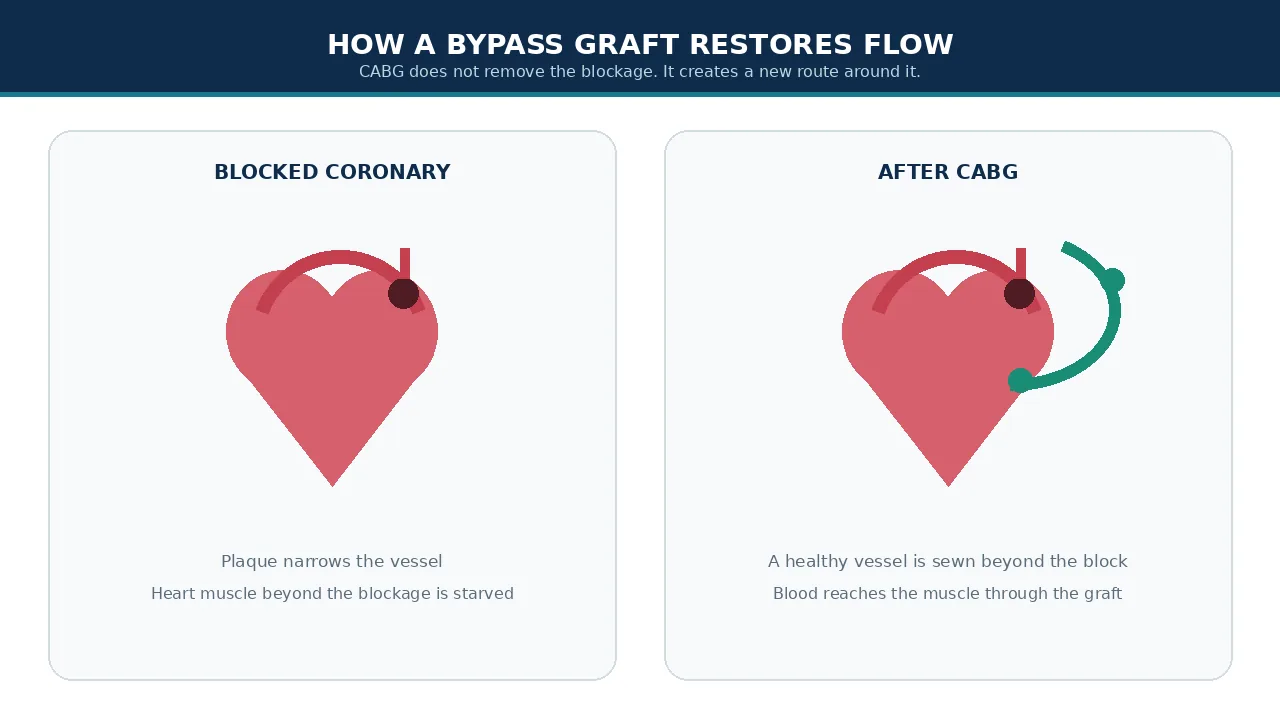
During CABG, the surgeon takes a healthy blood vessel and connects it so blood can travel around the blocked section of the coronary artery. The new route is called a bypass graft.
CABG therefore does not remove the blockage itself. It creates another pathway for blood to reach the heart muscle.
Why is CABG surgery needed?
CABG is generally considered when coronary artery disease is significant enough that restoring blood flow through surgery may provide important benefits.
The decision depends on much more than the percentage of blockage shown on an angiogram.
Doctors consider:
- Number of coronary arteries affected
- Location of the blockages
- Complexity of the coronary disease
- Left-main coronary artery involvement
- Heart pumping function
- Presence of diabetes
- Kidney function
- Previous angioplasty or stenting
- Previous bypass surgery
- Symptoms and their severity
- Overall surgical risk
- Age and general health
- Patient preferences
Current revascularization guidance emphasizes patient-centred decision-making and, when the optimal strategy is uncertain, discussion by a multidisciplinary Heart Team involving cardiology and cardiac surgery.
Ask whether a Heart Team names CABG or PCI
Who may be recommended for CABG?
CABG may be considered for patients with:
1. Multiple blocked coronary arteries. Patients with significant disease affecting several coronary arteries may be considered for surgical revascularization, particularly when the anatomy is complex.
2. Left-main coronary artery disease. The left main coronary artery supplies a substantial portion of the heart muscle. Significant left-main disease is an important situation in which revascularization decisions require careful evaluation. The 2021 ACC/AHA/SCAI guideline identifies surgical revascularization as an important treatment strategy for significant left-main disease, while PCI can be appropriate for selected patients depending on anatomical complexity.
3. Diabetes with multivessel coronary disease. Diabetes can affect coronary disease patterns and surgical risk. For some patients with diabetes and multivessel disease, CABG may be considered as part of the revascularization strategy.
4. Complex coronary anatomy. Some coronary blockages are technically difficult to treat with stents. CABG can provide another route when PCI is less suitable.
5. Previous angioplasty or stenting. If an artery becomes significantly narrowed again or previous PCI does not provide adequate revascularization, CABG may be considered.
6. Certain emergency situations. CABG may occasionally be required during an acute heart attack when PCI is not possible, unsuccessful or unsuitable. Emergency CABG carries different risks from planned surgery.
Named PCI remains on Coronary Angioplasty in India. Heart-attack symptoms still belong in a local emergency department, not on a treatment page.
CABG vs angioplasty and stenting
Patients frequently ask whether they should have bypass surgery or angioplasty.
PCI, commonly called angioplasty and stenting, uses a catheter to open a narrowed coronary artery, usually with balloon treatment and placement of a stent.
CABG creates a new route around the blockage using a graft.
There is no single answer for every patient. The choice depends on coronary anatomy, disease complexity, symptoms, heart function, medical conditions and surgical risk.
| Feature | CABG | Angioplasty / PCI |
|---|---|---|
| Approach | Surgical | Catheter-based |
| Anaesthesia | General anaesthesia | Usually local anaesthesia with sedation |
| Incisions | Usually a chest incision | Small catheter-access site |
| Hospital recovery | Longer. GAF CABG stay is typically 7–14 nights | Usually shorter. Neighbouring PCI is typically 1–3 nights |
| Common use | Complex or multivessel disease and selected high-risk anatomy | Suitable focal or less complex coronary disease |
| Grafts or stents | Uses blood-vessel grafts | Uses balloon and stent |
| Recovery | Several weeks | Often considerably quicker |
| Decision | Anatomy and patient factors | Anatomy and patient factors |
The table is a general explanation, not a treatment recommendation for an individual patient.
Send the angiogram before anyone names a graft
Types of CABG surgery
CABG can be performed using different surgical techniques.
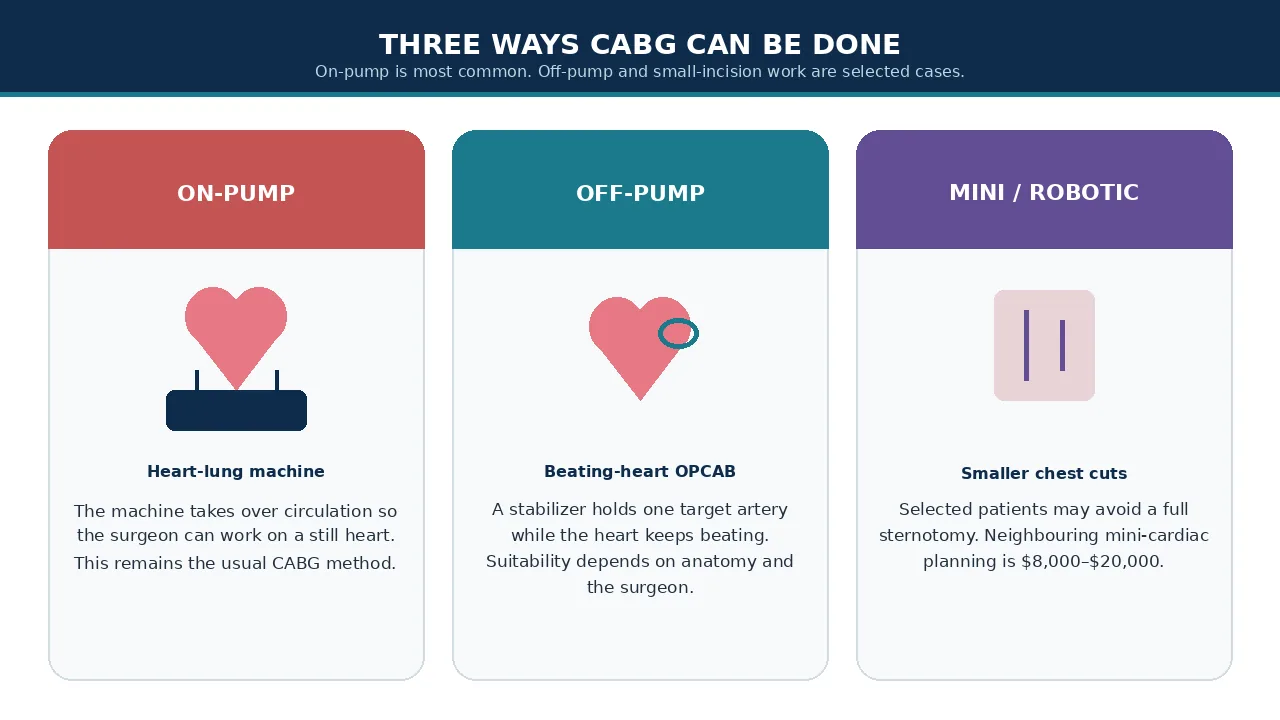
1. On-pump CABG. In conventional CABG, a heart-lung bypass machine temporarily takes over circulation and oxygenation while the surgeon operates on the heart. The heart may be temporarily stopped to provide a still surgical field. On-pump CABG remains the most common form of coronary bypass surgery.
2. Off-pump CABG. Off-pump coronary artery bypass (OPCAB) is performed while the heart continues beating. A stabilizing device helps the surgeon work on the targeted coronary artery. It may be appropriate for selected patients. The choice depends on coronary anatomy, surgeon expertise and the patient's overall condition.
3. Minimally invasive CABG. Selected patients may be candidates for smaller chest incisions. These techniques are not appropriate for everyone. Neighbouring minimally invasive cardiac surgery planning is $8,000–$20,000 when a mini approach can honestly complete the grafts.
4. Robotic or totally endoscopic CABG. Some specialised centres perform robotic or totally endoscopic coronary bypass. Neighbouring robotic cardiac surgery is $10,000–$24,000 on a console the hospital already runs weekly. These techniques are available only in selected centres and for appropriately selected patients.
What blood vessels are used for CABG?
The surgeon needs a healthy blood vessel to create the bypass.
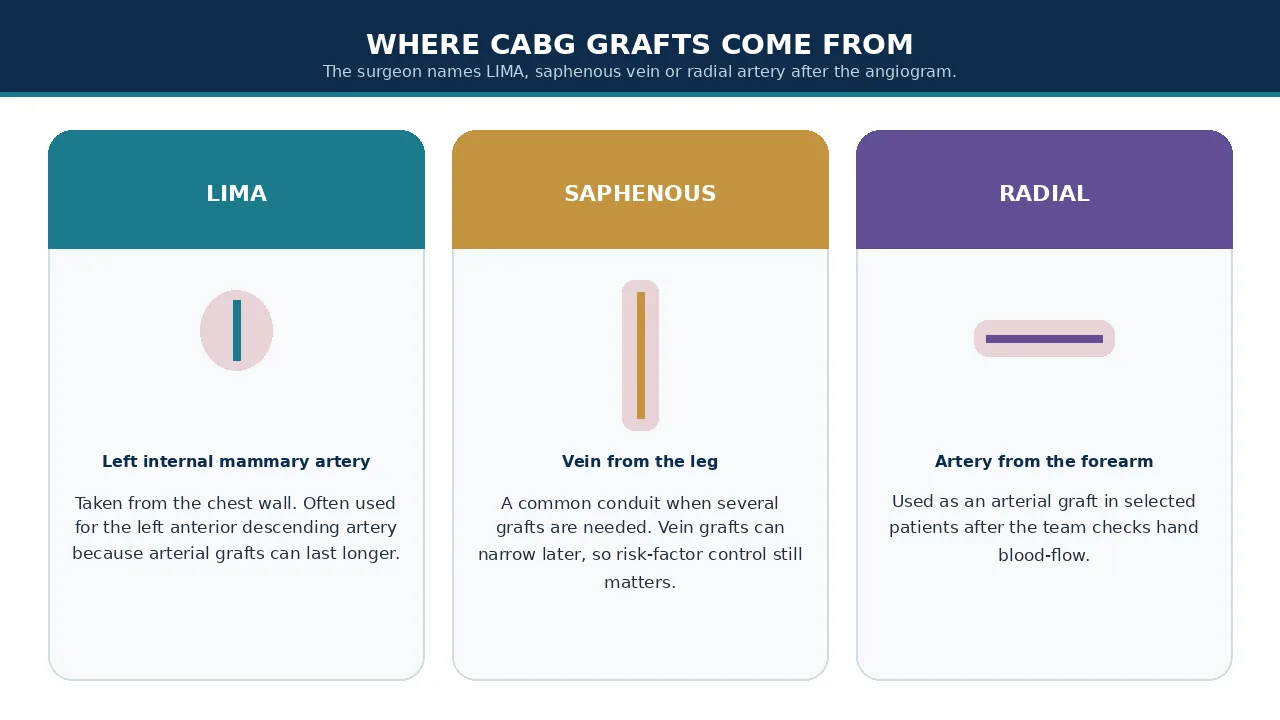
Internal mammary artery. The internal mammary artery, particularly the left internal mammary artery (LIMA), is commonly used for bypassing the left anterior descending coronary artery. Arterial grafts can provide excellent long-term durability in appropriate patients.
Saphenous vein. The saphenous vein is usually taken from the leg. It can be used to create one or more bypass grafts.
Radial artery. The radial artery from the forearm may also be used as an arterial graft in selected patients.
The surgeon chooses grafts according to coronary anatomy, patient factors and the planned bypass strategy.
Ask which conduits the surgeon is naming
What does double, triple or quadruple bypass mean?
The terms single bypass, double bypass, triple bypass and quadruple bypass refer to the number of bypass grafts created.
- Single bypass: 1 graft
- Double bypass: 2 grafts
- Triple bypass: 3 grafts
- Quadruple bypass: 4 grafts
The number of bypasses does not by itself determine how serious a person's condition is.
A patient requiring a single graft can have significant disease, while another patient may require several grafts because multiple coronary arteries need revascularization. Extra grafts can change operating time, ICU need and the hospital quotation. They do not automatically move the case onto the redo CABG sheet. Redo CABG is a second-time operation.
Tests before CABG surgery
Before recommending bypass surgery, the cardiac team needs to understand the patient's coronary anatomy and overall surgical risk.
Coronary angiography provides detailed information about the location and severity of coronary artery blockages. Neighbouring coronary angiography planning is $400–$1,200. Dedicated angiogram images, not only a written report, are particularly useful when planning revascularization.
Echocardiogram evaluates heart pumping function, chambers, valves, wall-motion abnormalities and other structural findings.
Electrocardiogram assesses the heart's electrical activity and may identify evidence of previous or ongoing cardiac injury.
Blood tests may evaluate haemoglobin, kidney function, liver function, blood sugar, electrolytes, blood group and infection markers where indicated.
Chest imaging such as a chest X-ray may be requested depending on the patient's condition.
Depending on age and medical history, doctors may also assess lung function, carotid arteries, peripheral vascular disease, diabetes control, kidney function, previous records and anticoagulation status.
The 2021 ACC/AHA/SCAI guideline specifically emphasizes structured preprocedural assessment and Heart Team decision-making when selecting revascularization strategies.
Send angiography, echo and ECG before travel
How is CABG surgery performed?
A typical CABG procedure follows several stages.
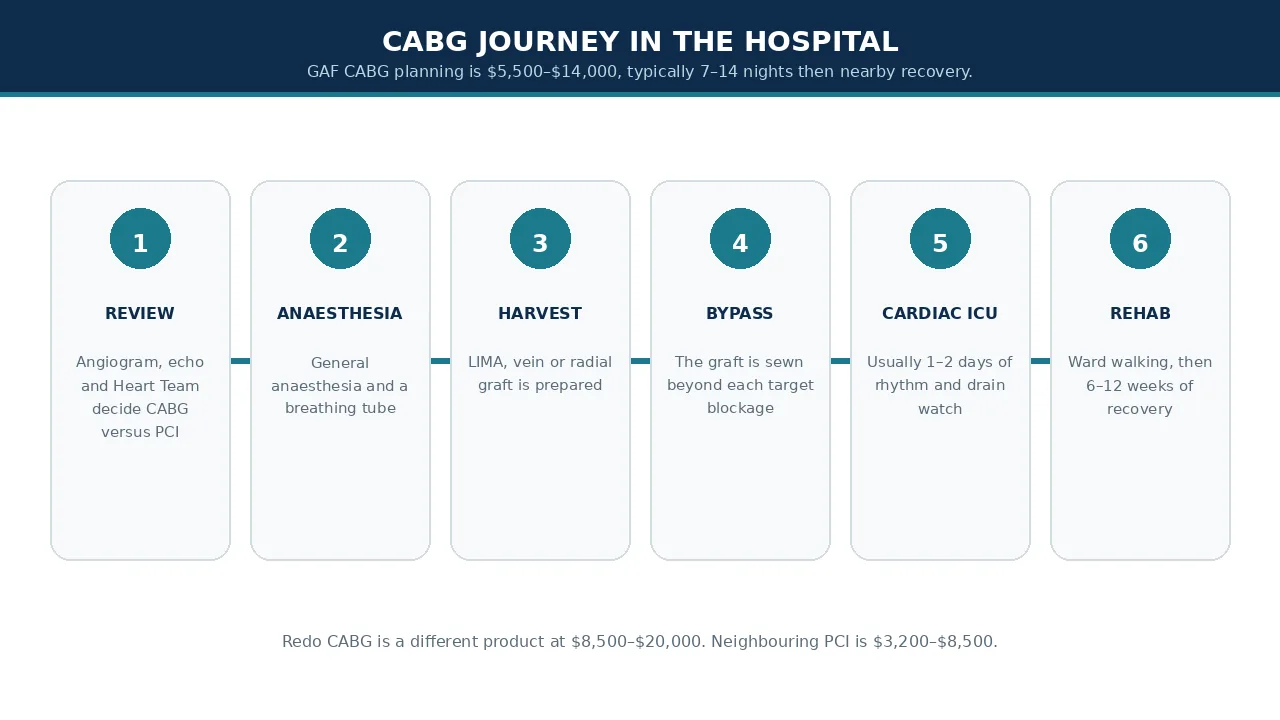
Step 1: General anaesthesia. The patient is placed under general anaesthesia. A breathing tube is inserted and connected to a ventilator.
Step 2: Surgical access. For conventional CABG, the surgeon usually makes an incision through the middle of the chest and opens the breastbone to reach the heart. Selected minimally invasive procedures use smaller incisions.
Step 3: Harvesting the graft. The surgeon obtains the required blood vessel from the chest, arm or leg.
Step 4: Heart-lung machine. For on-pump surgery, the patient is connected to a heart-lung machine. This machine maintains circulation and oxygenation during the operation.
Step 5: Creating the bypass. The surgeon attaches the graft beyond the blocked or severely narrowed segment of the coronary artery. This creates an alternative route for blood flow.
Step 6: Completing the operation. After the grafts are completed, the surgeon checks blood flow and closes the chest. In conventional surgery, the breastbone is secured using wires that generally remain in place.
How long does CABG surgery take?
CABG commonly takes approximately 3 to 6 hours, although the duration varies.
The operating time may depend on the number of grafts, complexity of coronary disease, previous heart surgery, surgical technique, other procedures performed at the same time and the patient's medical condition.
A straightforward planned CABG can therefore take considerably less time than a complex or emergency operation.
What happens immediately after CABG?
After surgery, the patient is usually transferred to a cardiac intensive care unit.
Initially, the patient may remain connected to a ventilator until sufficiently awake and able to breathe independently.
The medical team continuously monitors heart rhythm, blood pressure, oxygen levels, urine output, bleeding, kidney function and heart function.
Chest drainage tubes may remain temporarily to remove fluid from around the heart and lungs.
As recovery progresses, the patient is moved from intensive care to a cardiac ward.
Hospital stay after CABG
Many patients spend approximately 1–2 days in intensive care, followed by several days on a cardiac ward.
GAF CABG planning is typically 7–14 nights, then nearby recovery. A total stay of around one week is common for uncomplicated cases. Complicated cases can require a longer stay.
Patients may be discharged when heart rhythm is stable, breathing is satisfactory, pain is manageable, wounds are progressing normally, the patient can move safely, food and medicines can be tolerated, and no significant complication requires continued hospitalisation.
CABG surgery recovery in India
Recovery after bypass surgery happens gradually.
The first few weeks can involve fatigue, chest discomfort, reduced appetite, sleep disturbance, shoulder or back discomfort, reduced physical strength and emotional changes.
These symptoms generally improve as healing progresses.
Many patients return to many normal activities around 6 weeks, while complete recovery can take approximately 2–3 months or longer depending on the operation and individual health.
Mayo Clinic describes a typical recovery period of approximately 6–12 weeks, while emphasizing that recovery differs between individuals.
CABG recovery timeline
| Period | What may happen |
|---|---|
| Days 1–2 | ICU monitoring, breathing support initially if required, pain control and early mobilisation |
| Days 3–7 | Transfer to ward, walking, physiotherapy, medication adjustment and wound monitoring |
| Week 2 | Gradual increase in activity at home |
| Weeks 3–4 | Improving stamina; continued walking and rehabilitation |
| Around 6 weeks | Many patients can resume more normal daily activities if cleared by their doctor |
| 6–12 weeks | Continued recovery of strength and cardiovascular fitness |
| After 3 months | Many patients have returned substantially toward their usual routine, depending on health and occupation |
This is a general guide, not an individualized medical clearance.
Cardiac rehabilitation after CABG
Cardiac rehabilitation is an important part of recovery.
It typically combines supervised exercise, education, lifestyle modification, risk-factor management, nutrition guidance, medication adherence and emotional support.
The aim is not simply to recover from the operation. It is also to reduce the risk of future cardiovascular problems.
Current patient guidance recommends gradually increasing activity and following the cardiac team's rehabilitation plan. There is no live GAF cardiac-rehabilitation treatment page. Rehab is usually quoted with the hospital stay or as a separate hospital service.
Diet after CABG surgery
There is no diet that cures coronary artery disease.
Depending on the patient's medical condition, doctors and dietitians may recommend more vegetables, fruits, whole grains, legumes, nuts in appropriate portions, lean protein and fish where appropriate.
They may also recommend limiting saturated fats, trans fats, excess salt, highly processed foods, excess added sugar and excessively large portions.
Patients with diabetes, kidney disease or other conditions may require an individualized diet.
Medicines after CABG
CABG does not eliminate the need for long-term medical treatment.
Depending on the patient's condition, the cardiologist may prescribe antiplatelet medicines, statins or other lipid-lowering medicines, blood-pressure medicines, beta-blockers in selected patients, diabetes medicines and other cardiac medicines.
Patients should not stop aspirin, antiplatelet medicines, statins or other prescribed drugs without discussing the change with their treating doctor.
Long-term treatment remains important because CABG treats the consequences of coronary blockage but does not eliminate the underlying coronary artery disease.
Risks and complications of CABG surgery
CABG is major heart surgery and carries potential risks.
Possible complications include bleeding, wound infection, abnormal heart rhythm, heart attack, stroke, kidney injury, lung complications, prolonged ventilator support, blood clots, temporary memory or concentration problems, need for additional surgery or procedures and, rarely, death.
The risk is not the same for every patient. It can be influenced by age, diabetes, kidney disease, lung disease, smoking, frailty, heart function, extent of coronary disease, emergency versus planned surgery and previous cardiac surgery.
Emergency CABG generally carries different risk considerations from planned CABG.
Warning signs after CABG
Patients should seek urgent medical attention if they develop:
- New or severe chest pain
- Severe breathlessness
- Fainting
- Sudden weakness
- Difficulty speaking
- New confusion
- Significant wound bleeding
- Pus or increasing redness around the wound
- High fever
- Persistent or worsening palpitations
Sudden chest pain, particularly when associated with sweating, nausea, breathlessness or pain spreading to the arm, jaw, back or neck, can indicate an emergency and requires immediate medical evaluation in a local emergency department. A coordinator can also open WhatsApp after the patient is already in emergency care.
Request an itemised CABG estimate
CABG surgery cost in India
There is a live GAF CABG sheet. Planning is $5,500–$14,000, typically 7–14 nights, then nearby recovery. Comparable US planning is $70,000–$200,000.
This is an indicative planning range, not a guaranteed package price. First-time CABG pricing does not apply to redo CABG at $8,500–$20,000.
| Treatment component | GAF planning range | Typical stay |
|---|---|---|
| CABG | $5,500–$14,000 | 7–14 nights, then nearby recovery |
| Redo CABG | $8,500–$20,000 | 10–18 nights |
| Minimally invasive cardiac surgery | $8,000–$20,000 | 5–12 nights |
| Robotic cardiac surgery | $10,000–$24,000 | 5–12 nights |
| Coronary angioplasty and stenting | $3,200–$8,500 | 1–3 nights |
| Coronary angiography | $400–$1,200 | Day-care or overnight |
| Heart valve replacement | $7,000–$18,000 | 8–16 nights |
| Aortic valve replacement | $7,000–$18,500 | 8–16 nights |
Typical CABG cost components
| Cost component | May be included? |
|---|---|
| Cardiac surgeon fees | Usually in the hospital quotation |
| Cardiologist evaluation | Usually |
| Preoperative investigations | Depends on package |
| Operating-room charges | Usually |
| Anaesthesia | Usually |
| CABG procedure | Usually |
| ICU stay | Usually within the named night range |
| Ward or room | Usually |
| Medicines | Package-dependent |
| Blood products | Package-dependent |
| Consumables | Package-dependent |
| Complication management | May be additional |
| Extended ICU stay | May be additional |
| Cardiac rehabilitation | Often separate |
For international patients, a written estimate should separate hospital charges, surgeon fees, ICU nights, blood products, medicines and possible complication-related costs.
What can increase the cost of CABG?
The final cost can increase when a patient requires emergency surgery, multiple grafts, longer ICU stay, prolonged hospitalisation, blood products, treatment of infection, kidney support, ventilator support, additional cardiac procedures, treatment of other medical conditions, a higher room category or additional investigations.
This is why comparing only an advertised “CABG package price” can be misleading. A Heart Team quotation after angiography is the honest number.
CABG surgery in India for international patients
India is a major destination for patients seeking cardiac treatment because the country has established cardiac surgery programmes, specialist teams and hospitals offering advanced cardiac diagnostics and intensive care.
For an international patient, successful treatment involves more than the operation itself.
1. Medical record review. The cardiac team reviews coronary angiography, echocardiography, ECG, blood tests, previous cardiac procedures, the medication list and medical history.
2. Treatment opinion. The hospital or cardiac team determines whether CABG, PCI, medical therapy or another approach should be considered.
3. Cost estimate. The patient receives a treatment and hospitalisation estimate based on the available medical information.
4. Travel planning. International patients may need visa assistance, airport pickup, hospital admission coordination, accommodation, local transportation and interpreter support.
5. Hospital admission. The patient undergoes final assessment before surgery.
6. Surgery and ICU care. The patient receives CABG and postoperative cardiac intensive care.
7. Rehabilitation. Early walking and rehabilitation begin according to medical clearance.
8. Discharge and follow-up. The patient receives a discharge summary, medication plan, follow-up schedule, wound-care instructions, rehabilitation recommendations and emergency contact instructions.
For international patients, it is particularly important to confirm who will coordinate follow-up after returning home.
How to choose a hospital for CABG surgery in India
The cheapest hospital is not necessarily the right hospital for every CABG patient.
When comparing cardiac centres, consider a dedicated cardiothoracic team, a Heart Team that can coordinate cardiologists and cardiac surgeons, a dedicated cardiac ICU, 24/7 intensivist support, ventilator facilities, emergency intervention capability, blood-bank support, renal support, infection-control systems and cardiac rehabilitation.
International patients may also need assistance with medical visa documentation, airport transfer, accommodation, language support, billing, discharge documentation and follow-up coordination.
Start with live GAF cardiac surgery hospitals in the five catalog cities rather than a brochure that lists every Indian metro.
Questions to ask a CABG surgeon
Before choosing a cardiac surgeon, patients and families can ask:
- Why do you recommend CABG for me?
- How many coronary arteries are significantly diseased?
- Why is CABG being recommended instead of angioplasty?
- How many grafts are likely to be required?
- Which graft vessels are you planning to use?
- Will the surgery be on-pump or off-pump?
- Am I suitable for minimally invasive CABG?
- What are my individual surgical risks?
- How long should I expect to stay in ICU?
- How long will I likely remain in hospital?
- What complications should my family be prepared for?
- When can I travel home?
- What medicines will I need after surgery?
- When can I return to work?
- What follow-up will I need after returning home?
Send those answers with the angiogram
How to prepare for CABG surgery
If CABG is planned, the hospital may advise you to stop smoking, review all medicines, follow instructions about blood thinners, control blood sugar, control blood pressure, follow dietary instructions, complete requested investigations, inform the medical team about allergies and previous surgeries, and arrange family support after discharge.
Never stop blood-thinning medication on your own. Your cardiologist and surgeon will tell you exactly which medicines need to be continued, stopped or adjusted before surgery.
What to take to the hospital
International and domestic patients can prepare a folder containing:
- Passport or identification
- Previous medical reports
- Coronary angiography images and reports
- Echocardiogram
- ECG
- Blood reports
- Previous discharge summaries
- Medication list
- Allergy information
- Previous surgery records
- Insurance documents, if applicable
For international patients, keeping digital copies of all medical documents can be useful.
Can CABG be done without open-heart surgery?
Traditional CABG is generally performed through an incision in the chest and access through the breastbone.
Selected patients may be candidates for minimally invasive or robotic approaches. These techniques are not appropriate for every coronary anatomy. The surgeon must determine whether minimally invasive CABG can safely achieve the required revascularization.
Is CABG a permanent cure?
CABG is not a cure for coronary artery disease.
It creates new pathways for blood flow around existing blockages. The underlying process that caused coronary artery disease can continue.
This means patients still need cholesterol management, blood-pressure control, diabetes control, smoking cessation, regular physical activity, heart-healthy nutrition, prescribed medications and long-term cardiology follow-up.
Grafts can also develop narrowing over time, so long-term cardiovascular care remains important.
How long do CABG grafts last?
Graft durability varies.
Arterial grafts and vein grafts have different long-term behaviour. Graft longevity depends on the type of graft, patient age, diabetes, smoking, cholesterol control, blood pressure, medication adherence and progression of coronary disease.
A CABG operation should therefore be viewed as part of a long-term heart-health strategy, rather than a one-time procedure after which cardiac care can stop.
CABG surgery success rate
Patients often search for the CABG success rate in India.
It is important not to quote one universal percentage because surgical outcomes vary according to patient characteristics, disease severity, emergency versus elective surgery, hospital, surgeon and complications.
A healthier patient undergoing planned surgery may have a very different risk profile from a patient undergoing emergency CABG after a major heart attack.
Hospitals should therefore provide an individualized risk assessment rather than relying on a generic success rate. The Society of Thoracic Surgeons and other professional bodies use risk-adjusted outcomes to evaluate cardiac surgery performance.
CABG surgery for diabetic patients
Diabetes is common among patients with coronary artery disease.
Patients with diabetes may have more diffuse or multivessel coronary disease and can have additional considerations around wound healing, infection, blood-sugar management, kidney function and cardiovascular risk.
Diabetes does not automatically mean a patient cannot undergo CABG. The cardiac team considers diabetes alongside the coronary anatomy, heart function and overall surgical risk.
CABG surgery for elderly patients
Age alone does not determine whether CABG is appropriate.
Doctors also assess functional status, frailty, kidney function, lung function, brain and neurological health, other medical conditions, coronary anatomy, heart function and patient goals.
For older adults, individualized risk-benefit assessment is particularly important.
CABG surgery for patients with low heart function
Some patients requiring CABG have reduced left ventricular function.
The decision can be complex and depends on the severity of coronary disease, viable heart muscle, symptoms, overall health, surgical risk and the expected benefit of revascularization.
These patients should ideally be evaluated by a multidisciplinary cardiac team.
CABG after a heart attack
CABG can sometimes be performed urgently after a heart attack.
The timing depends on the patient's condition, coronary anatomy, previous interventions and whether PCI can adequately restore blood flow.
Emergency CABG is different from planned elective CABG and generally requires rapid assessment by cardiology, cardiac surgery and critical-care teams. Acute chest-pain care still starts in a local emergency department.
Can CABG and valve surgery be done together?
In selected patients, CABG can be performed during the same operation as another cardiac procedure, such as valve surgery.
Whether combined surgery is appropriate depends on the patient's anatomy, symptoms, surgical risk and the indication for each procedure.
A combined procedure may affect operation duration, ICU stay, recovery time, total treatment cost and surgical risk. Neighbouring heart valve replacement is $7,000–$18,000. Neighbouring aortic valve replacement is $7,000–$18,500. Combined sittings are quoted after imaging, not by adding brochure numbers.
Named TAVR remains on TAVR in India when a catheter valve rather than a surgical valve is the honest product. Neighbouring aortic balloon valvuloplasty is a temporary balloon, not a bypass.
Life after CABG
The goal after CABG is not simply to recover from surgery. It is to protect the heart over the long term.
Patients should work with their cardiologist on cholesterol control, blood-pressure management, diabetes management, physical activity, healthy body weight, smoking cessation, medication adherence and regular follow-up.
Cardiac rehabilitation can help patients safely rebuild fitness and develop sustainable heart-health habits.
Frequently asked questions about CABG surgery in India
Is CABG surgery safe?
CABG is a major operation and carries risks, but it is an established treatment for appropriate patients with significant coronary artery disease. Individual risk varies substantially based on age, heart function, coronary anatomy and other medical conditions.
How many days does a CABG patient stay in hospital?
GAF CABG planning is typically 7–14 nights, then nearby recovery. Many uncomplicated patients stay around one week, including time in intensive care and the cardiac ward.
How long does CABG surgery take?
CABG commonly takes approximately 3–6 hours, although complex cases may take longer.
How long does it take to recover from CABG?
Many patients require approximately 6–12 weeks for substantial recovery, while some take longer.
Is CABG better than angioplasty?
Neither procedure is universally better. The choice depends on coronary anatomy, disease complexity, heart function, medical conditions and individual circumstances. Named PCI sits on Coronary Angioplasty in India.
What is the cost of CABG in India?
GAF CABG planning is $5,500–$14,000. Neighbouring redo CABG is $8,500–$20,000. Actual cost depends on hospital, number of grafts, room category, technique, complications and length of stay.
Is CABG covered by insurance in India?
Many health-insurance policies cover medically necessary CABG, subject to the specific policy terms, waiting periods, exclusions, network-hospital rules and preauthorization requirements. GAF quotes are planning ranges, not insurance approvals.
Can international patients undergo CABG in India?
Yes. International patients can seek CABG in India, but they should have their angiography and medical records reviewed by the cardiac team before travel whenever possible.
Can I travel after CABG?
Travel timing should be decided by the treating cardiac team. Long-distance air travel soon after major cardiac surgery may require medical clearance.
Can I return to normal life after CABG?
Many patients return to normal or near-normal daily activities after recovery. Long-term heart-health management remains essential.
Can coronary arteries block again after CABG?
Yes. The underlying coronary artery disease can progress, and bypass grafts can also develop narrowing over time. Long-term medication, lifestyle changes and follow-up remain important.
Does CABG prevent another heart attack?
CABG can improve blood flow and may reduce cardiovascular risk in appropriately selected patients, but it does not guarantee that another heart attack cannot occur.
Is triple bypass more serious than single bypass?
The number of grafts reflects how many bypasses are required. It should not be used by itself to determine an individual's overall surgical risk.
What is the difference between CABG and open-heart surgery?
CABG is one type of open-heart surgery. The term “open-heart surgery” also includes procedures such as valve replacement and repair.
Can CABG be done without a heart-lung machine?
Yes. Off-pump CABG is performed without the heart-lung machine in selected patients.
What happens if a patient is not suitable for CABG?
Depending on the anatomy and clinical situation, treatment may involve PCI, medication or another revascularization strategy. A Heart Team may be involved when the optimal strategy is uncertain.
Pacing after cardiac surgery, when needed, sits on Pacemaker Implantation in India. A defibrillator is a different product on ICD Device Implantation in India. Coronary-artery-disease, heart-attack, cardiac-rehabilitation, angiography-treatment and city-CABG-cost pages are not live on this site. Use this pillar page plus the named modality sheets.
Why choose India for CABG surgery?
India has developed a large network of cardiac hospitals offering cardiologists, cardiothoracic surgeons, cardiac anaesthetists, cardiac intensivists, interventional cardiology, cardiac imaging, cardiac catheterization laboratories, cardiac ICUs, cardiac rehabilitation and multidisciplinary specialist support.
For international patients, India can also offer coordinated medical-travel services covering hospital appointments, travel assistance, accommodation and local logistics.
Patients should compare clinical capability, surgeon experience, ICU infrastructure, outcomes, emergency support and total treatment costs, rather than choosing a hospital solely on advertised price.
How GAF Healthcare can help with CABG treatment in India
GAF Healthcare can help international patients coordinate the medical-travel process for CABG treatment in India.
Support can include collection of medical records, coordination of a cardiac opinion, hospital and cardiac surgeon options, treatment-cost estimates, appointment scheduling, medical visa documentation support, airport and local transportation coordination, accommodation assistance, hospital admission coordination, interpretation support where required, discharge coordination and follow-up planning.
The final diagnosis, treatment recommendation, surgical technique and medical decision remain with the treating cardiac team.
A coordinator can also open WhatsApp.
Documents required for a CABG opinion
For an initial cardiac review, patients should ideally provide:
- Coronary angiography report
- Angiography CD/DVD or digital images
- Echocardiogram report
- ECG
- Recent blood investigations
- Previous discharge summaries
- Current medication list
- Diabetes and blood-pressure records, if available
- Previous angioplasty or stent details
- Relevant CT or other imaging reports
Providing complete angiography images is particularly useful because the cardiac team needs to understand the actual coronary anatomy before advising on revascularization.
Get a CABG treatment opinion in India
If you or a family member has been advised to undergo coronary artery bypass graft surgery, obtaining a detailed cardiac review before travelling can help clarify the treatment pathway.
Share available coronary angiography, echocardiogram, ECG, blood reports, medical history, current medicines and previous cardiac procedures.
The medical team can then assess the case and determine whether CABG, PCI, medical management or another approach should be considered.
High fever, new chest pain, sudden breathlessness, fainting or sudden confusion belongs in a local emergency department first. WhatsApp at +91 90443 46292 is for planned coordination, not emergency care.
Key takeaways
- CABG is a surgical treatment for significant coronary artery disease.
- It creates a new route for blood to reach the heart muscle around blocked or narrowed coronary arteries.
- CABG may be considered for selected patients with multivessel disease, left-main disease, complex coronary anatomy or certain situations where PCI is unsuitable.
- CABG can be performed using on-pump or off-pump techniques, with minimally invasive approaches available for selected patients.
- Surgery commonly takes around 3–6 hours.
- GAF CABG planning is $5,500–$14,000, typically 7–14 nights, then nearby recovery.
- Recovery commonly takes 6–12 weeks, although individual recovery differs.
- CABG does not cure the underlying coronary artery disease.
- Long-term medication, cardiac rehabilitation, healthy lifestyle and cardiology follow-up remain important.
- For international patients, hospital infrastructure, cardiac-team expertise and postoperative care should be considered alongside cost.
Top 10 sources
- American College of Cardiology / American Heart Association / SCAI — 2021 Guideline for Coronary Artery Revascularization. Comprehensive evidence-based guidance on CABG, PCI, Heart Team decision-making and revascularization.
- European Society of Cardiology — 2024 Guidelines for Chronic Coronary Syndromes. Current European guidance covering diagnosis, medical therapy and selection of revascularization strategies.
- Mayo Clinic — Coronary Artery Bypass Graft. Patient-focused information covering indications, types, procedure, risks, recovery and long-term care.
- NHS — Coronary Artery Bypass Graft. Patient information covering what CABG is, how it is performed, recovery and complications.
- NHS — Recovery After CABG. Practical information on hospital stay, activity, rehabilitation and recovery.
- NHS — Complications of CABG. Information on potential postoperative complications and warning signs.
- AIIMS New Delhi — Coronary Artery Bypass Surgery: A Guide to Patients. Indian patient-education resource covering CABG, preparation, surgery and postoperative care.
- Mayo Clinic — Coronary Artery Disease: Diagnosis and Treatment. Background on coronary artery disease, CABG, PCI and cardiac rehabilitation.
- Society of Thoracic Surgeons — risk-adjusted cardiac surgery outcomes. Why a generic success-rate percentage is not an individual prognosis.
- GAF Healthcare CABG cost sheet — CABG (Coronary Artery Bypass Grafting) and neighbouring redo, mini-cardiac, robotic and PCI sheets.
Medical disclaimer: This page is intended for education and international-treatment planning. CABG is major heart surgery, and treatment decisions — including whether CABG, PCI or medicines are appropriate — must be made by a specialist Heart Team after reviewing the individual patient's angiography, heart function, surgical risk and overall health.
Treatment Process
- 1
Share angiography
The patient provides coronary angiography images, echo, ECG, blood tests and previous cardiac procedure notes before anyone books travel.
- 2
Heart Team review
A cardiac surgeon and cardiologist review whether the case is CABG, PCI, medicines or a combined valve pathway.
- 3
Name the product
The team writes first-time CABG, redo CABG, mini-cardiac surgery or PCI as separate products.
- 4
Itemized estimate
GAF CABG planning is $5,500–$14,000. Neighbouring redo CABG is $8,500–$20,000. Neighbouring PCI is $3,200–$8,500.
- 5
Travel to India
Stable planned cases travel after records review. New chest pain or sudden breathlessness is a local emergency.
- 6
Repeat essential tests
The receiving unit confirms angiography, echo, bloods and fitness after arrival.
- 7
Deliver the named graft
On-pump, off-pump or selected mini CABG proceeds only after conduits and targets are named.
- 8
Cardiac ICU and ward
Rhythm, drains, walking and medicines are watched before discharge.
- 9
Rehab and follow-up
The patient leaves with a medication list, wound rules, rehab plan and remote-follow-up dates.