
Treatment Overview

Aortic dissection repair surgery in India is a complex, highly specialized treatment used to repair a tear in the wall of the aorta, the body's main artery. Depending on where the dissection begins and how far it extends, treatment may involve emergency open-heart surgery, aortic root or arch replacement, thoracic endovascular aortic repair (TEVAR), a hybrid procedure, or carefully supervised medical management.
Aortic dissection is a medical emergency. Stanford Type A aortic dissection generally requires immediate surgical evaluation and repair, while uncomplicated Type B dissection is often initially treated with intensive blood-pressure and heart-rate control. Complicated Type B disease may require endovascular or surgical intervention.
For international patients considering treatment in India, the country has major cardiac and aortic surgery centres capable of managing complex cases. However, because aortic dissection can deteriorate rapidly, international travel should only be considered after the treating medical team confirms that the patient is stable enough to travel.
A surgical aortic valve is a different product. Named lists sit on Heart Valve Replacement Surgery in India and TAVR in India. TAVR is a catheter valve, not TEVAR. Combined coronary grafts sit on CABG Surgery in India. A balloon that only widens the native aortic valve sits on Aortic Balloon Valvuloplasty in India. There is no live GAF TEVAR-only, aortic-root-only or aortic-aneurysm-repair treatment page. This page is the named aortic-dissection-repair product. Bentall lists sit on Bentall Procedure in India. LVAD lists sit on Left Ventricular Assist Device (LVAD) Procedure in India. VSD lists sit on Ventricular Septal Defect (VSD) Surgery in India.
There is no live GAF aortic-dissection-only cost sheet. Neighbouring aortic aneurysm surgery is $9,000–$22,000 (typically 8–16 nights). US comparison is $90,000–$260,000. Neighbouring aortic root replacement is $10,000–$24,000 (typically 10–18 nights) when Bentall, composite-graft or valve-sparing root work is the honest product. US comparison for root replacement is $90,000–$250,000. Named aortic valve replacement is $7,000–$18,500 (typically 8–16 nights) when SAVR is added. Neighbouring heart valve replacement is $7,000–$18,000 (typically 8–16 nights). Neighbouring TAVR/TAVI is $18,000–$42,000 and is an aortic-valve product, not a TEVAR quote. Neighbouring CABG is $5,500–$14,000 (typically 7–14 nights) when grafts are named. TEVAR stent-grafts, hybrid arch work and frozen elephant trunk have no live GAF sheet and are quoted after CTA. These are planning ranges from partner hospital cost sheets, not hospital quotations. Emergency Type A repair, prolonged ICU, blood products and malperfusion complications are quoted after imaging review.
International patients comparing cardiac surgeons commonly start with Delhi NCR, Mumbai, Bengaluru, Chennai and Hyderabad. Partner cardiac surgery hospitals in Delhi NCR, Mumbai and Bengaluru, and in Chennai and Hyderabad, are a typical first filter because aortic repair needs a cardiac ICU, CTA, perfusion and emergency backup. City cost sheets include Delhi NCR, Mumbai, Bengaluru, Chennai and Hyderabad. Kolkata, Pune, Ahmedabad, Chandigarh and Kochi may have aortic theatres. They are not live GAF catalog cities on this site.
Emergency warning: Sudden severe chest or upper-back pain, fainting, severe breathlessness, new neurological symptoms or sudden limb weakness can indicate aortic dissection. Seek a local emergency department immediately. WhatsApp at +91 90443 46292 is for planned second-opinion coordination after the patient is stable, not for an acute tear.
What is aortic dissection?
The aorta is the largest artery in the body. It begins at the heart and travels through the chest and abdomen before dividing into arteries that supply the rest of the body.
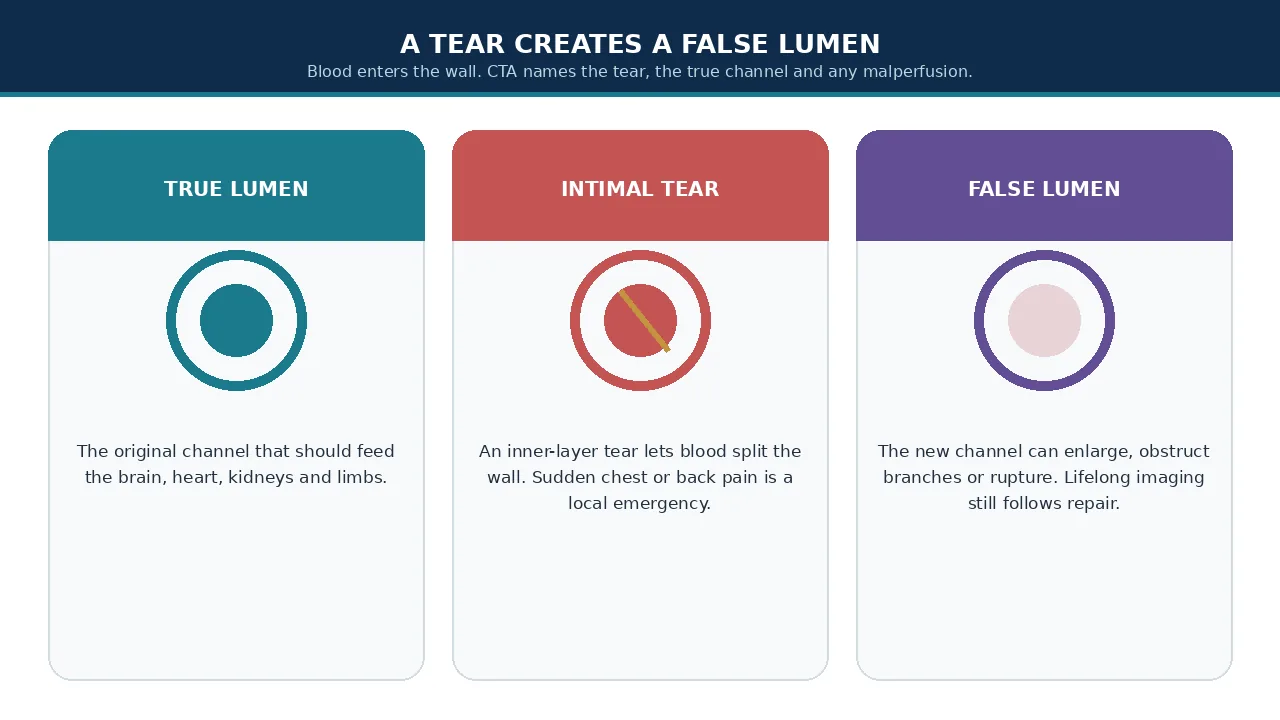
The wall of the aorta has several layers. In an aortic dissection, a tear develops in the inner layer, allowing blood to enter the wall and separate its layers. This creates a false lumen alongside the normal blood-flow channel, known as the true lumen.
The dissection can extend along the aorta and interfere with blood flow to the brain, heart, kidneys, intestines, spinal cord or limbs. In severe cases, the outer wall can rupture.
This is why early diagnosis and rapid treatment are critical.
What is aortic dissection repair surgery?
Aortic dissection repair is not one single operation.
The appropriate treatment depends on:
- Location of the initial tear
- Whether the ascending aorta is involved
- Extent of the dissection
- Aortic root involvement
- Aortic valve involvement
- Aortic arch involvement
- Coronary artery involvement
- Evidence of rupture
- Blood flow to the brain and other organs
- Kidney or intestinal ischemia
- Limb ischemia
- Patient's age and overall health
- Previous aortic surgery
- Anatomy suitable for endovascular treatment
The primary goals are to prevent rupture, restore blood flow, treat malperfusion, eliminate or exclude the main entry tear where appropriate, and stabilize the diseased aorta.
Ask the aortic team which product the CTA names
Types of aortic dissection
Stanford Type A aortic dissection
Stanford Type A involves the ascending aorta, regardless of whether the dissection extends farther down the aorta.
It is generally considered a surgical emergency because it can cause aortic rupture, cardiac tamponade, severe aortic regurgitation, heart failure, coronary artery obstruction, heart attack, stroke, kidney or intestinal ischemia and limb ischemia.
Current ACC/AHA guidance recommends emergency surgical evaluation and immediate intervention for acute Type A dissection.
Type A surgery may involve, depending on anatomy:
- Ascending aortic replacement
- Hemiarch replacement
- Total arch replacement
- Aortic root replacement
- Valve repair or replacement
- Valve-sparing root replacement in selected cases
- Coronary artery reimplantation or bypass when required
- Frozen elephant trunk or other extended techniques in selected extensive dissections
The operation is individualized according to the location of the tear and the structures involved. Neighbouring aortic root replacement is $10,000–$24,000 when the root is the honest product. Neighbouring aortic valve replacement is $7,000–$18,500 when SAVR is added. Neighbouring CABG is $5,500–$14,000 when grafts are named.
Stanford Type B aortic dissection
Type B dissection begins in the descending aorta beyond the ascending aorta.
Unlike acute Type A disease, not every Type B dissection requires immediate surgery.
Uncomplicated Type B. Initial treatment commonly focuses on intensive blood-pressure control, heart-rate control, pain management, close monitoring and serial imaging.
Complicated Type B. Intervention may be required when there is aortic rupture, organ malperfusion, limb ischemia, persistent or recurrent severe pain, progressive enlargement, extension of the dissection or other high-risk features.
When anatomy is suitable, TEVAR is often preferred for complicated Type B dissection. There is no live GAF TEVAR sheet. Neighbouring aortic aneurysm surgery is $9,000–$22,000 when open or hybrid descending work is named.
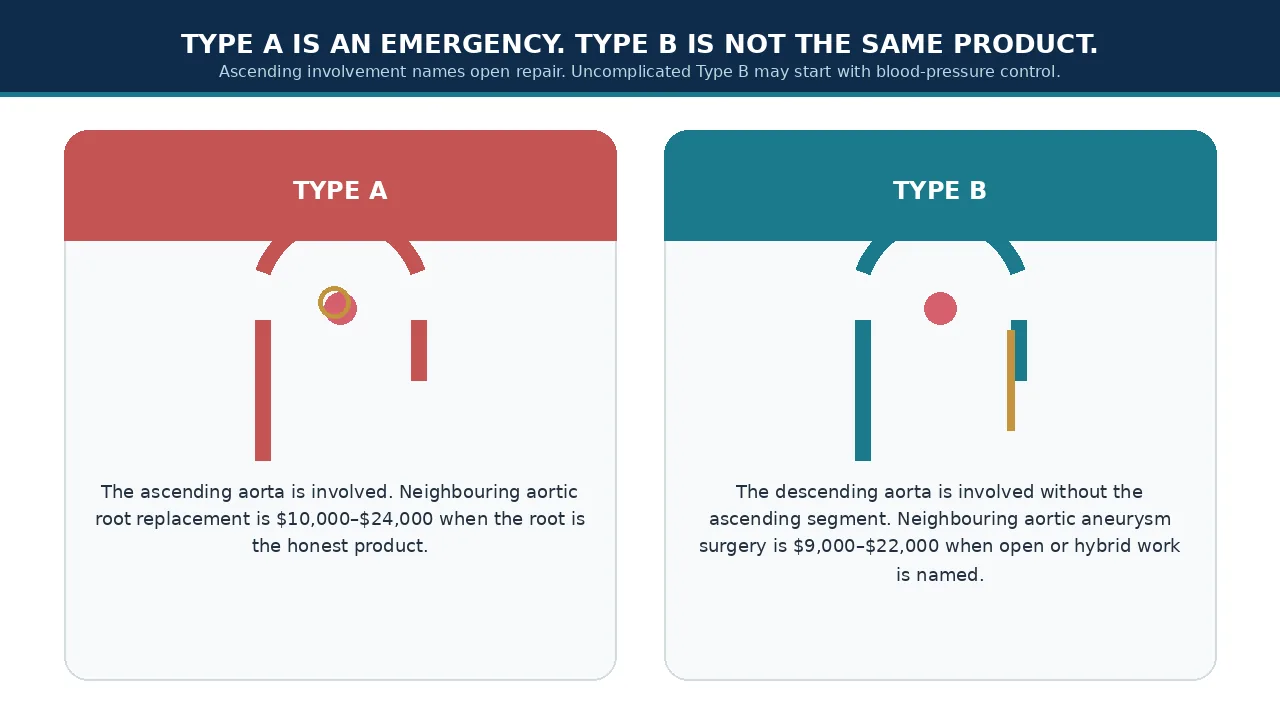
Type A vs Type B aortic dissection
| Feature | Type A | Type B |
|---|---|---|
| Main location | Ascending aorta involved | Descending aorta without ascending involvement |
| Typical urgency | Emergency | Depends on complications |
| Usual treatment | Open surgery | Medical management, TEVAR or surgery depending on anatomy |
| Major concerns | Rupture, tamponade, valve failure, coronary involvement, stroke | Rupture, malperfusion, aneurysmal enlargement |
| Open surgery | Frequently required | Reserved for selected cases |
| TEVAR | Selected complex cases | Important option for suitable complicated disease |
| Neighbouring GAF sheet | Aortic root replacement $10,000–$24,000 | Aortic aneurysm surgery $9,000–$22,000 |
The distinction is clinically important because the same treatment strategy should not be applied to every aortic dissection.
Symptoms of aortic dissection
Aortic dissection can resemble a heart attack or other emergency conditions.
Common symptoms include:
- Sudden severe chest pain
- Severe upper-back pain
- Pain that radiates toward the back, neck or abdomen
- Sudden abdominal pain
- Shortness of breath
- Fainting or loss of consciousness
- Weakness or paralysis
- Difficulty speaking
- Visual disturbances
- Leg pain
- Weak or absent pulses
- Different blood-pressure readings between limbs
The classic pain is often described as sudden and severe, but not every patient has textbook symptoms.
If someone develops sudden severe chest or back pain, especially with fainting, breathlessness or neurological symptoms, they should be taken to a local emergency department immediately. Do not wait for the pain to settle. Do not send a WhatsApp message first.
Causes and risk factors of aortic dissection
Aortic dissection often develops in an already weakened aortic wall.
High blood pressure. Long-standing uncontrolled hypertension places continuous mechanical stress on the aortic wall.
Aortic aneurysm. An enlarged aorta may have a weakened wall and can be more susceptible to dissection. Neighbouring aortic aneurysm surgery is $9,000–$22,000. There is no live GAF aortic-aneurysm-repair treatment page.
Bicuspid aortic valve. Some people born with a bicuspid aortic valve have associated aortic enlargement or aortopathy. Surgical lists sit on Heart Valve Replacement Surgery in India.
Marfan syndrome, Loeys-Dietz syndrome and vascular Ehlers-Danlos syndrome. Inherited connective-tissue disorders can weaken the aorta and increase the risk of aggressive aortic disease. There is no live GAF Marfan or connective-tissue treatment page.
Family history. A family history of aortic dissection or certain inherited aortic disorders may increase risk.
Smoking. Tobacco exposure contributes to vascular disease.
Trauma. Severe chest trauma can damage the aorta.
Previous cardiac or aortic surgery. Certain patients with previous aortic procedures require long-term surveillance for new aortic problems.
How is aortic dissection diagnosed?
Because the symptoms can resemble other emergencies, rapid imaging is essential when aortic dissection is suspected.
CT angiography (CTA) is commonly used because it can rapidly show the location of the intimal tear, true and false lumens, extent of dissection, aortic diameter, branch-vessel involvement, signs of rupture and organ malperfusion. CTA is particularly useful in emergency settings.
Transesophageal echocardiography (TEE) can provide detailed images of the heart, aortic root and thoracic aorta. It may be particularly useful when the patient is unstable or when immediate bedside assessment is necessary.
Magnetic resonance angiography can provide detailed vascular imaging without ionizing radiation, but it is generally less practical than CT for an unstable patient requiring immediate diagnosis.
Transthoracic echocardiography may identify aortic root abnormalities, aortic regurgitation, pericardial effusion and cardiac function. It does not replace appropriate cross-sectional imaging when dissection is suspected.
Blood tests can assess kidney function, hemoglobin, electrolytes, cardiac biomarkers, lactate and coagulation. Laboratory tests support the assessment but do not independently confirm or exclude aortic dissection.
Send CTA images, not only the written report
What happens before aortic dissection surgery?
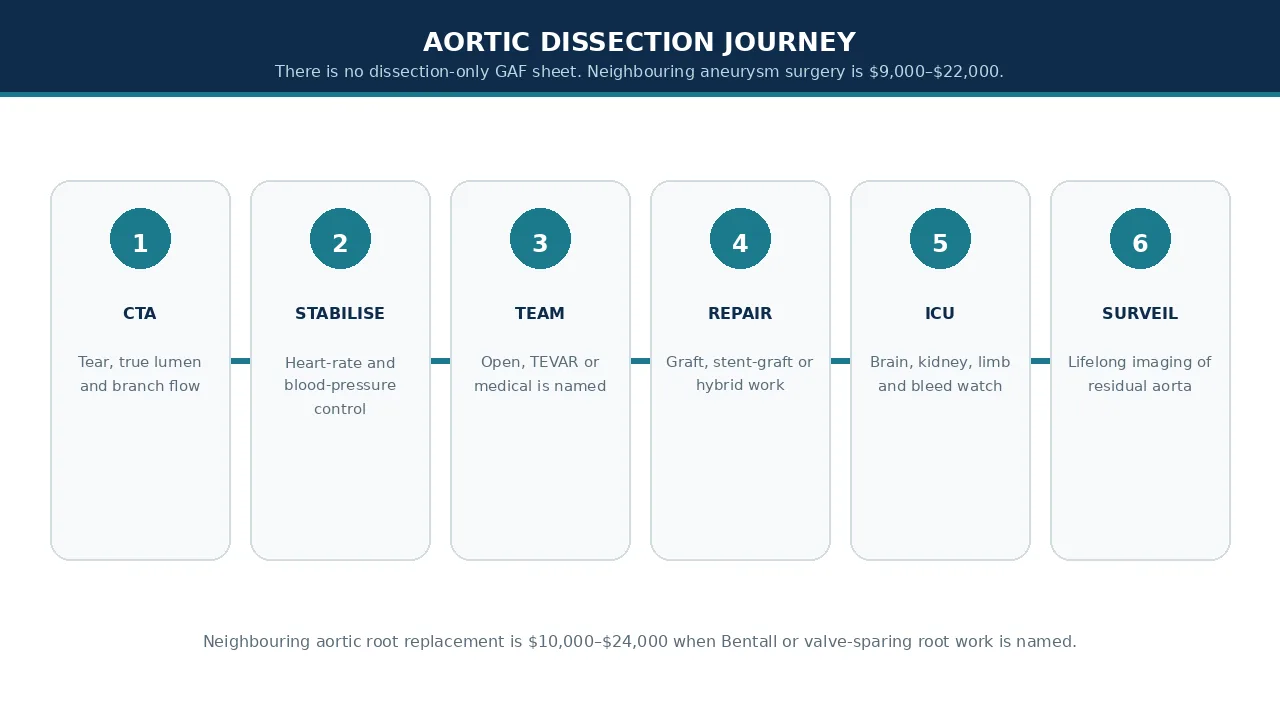
Aortic dissection management usually begins before the patient reaches the operating room.
The team may initiate continuous cardiac monitoring, arterial blood-pressure monitoring, intravenous access, pain control, heart-rate control, blood-pressure reduction, oxygen and respiratory support when necessary, blood and blood-product preparation, urgent CT/TEE imaging, and assessment of brain, kidney, bowel and limb perfusion.
The immediate objective is to reduce stress on the aortic wall while the definitive treatment is organized.
For acute aortic syndromes, guideline-based management emphasizes heart-rate and blood-pressure control together with pain management.
How is aortic dissection repair surgery performed?
The exact procedure varies considerably.
Step 1: General anesthesia. Open Type A repair is performed under general anesthesia. The patient is connected to advanced monitoring systems, and additional lines may be inserted for continuous blood-pressure and hemodynamic monitoring.
Step 2: Cardiopulmonary bypass. For many open Type A operations, a heart-lung machine temporarily takes over the circulation while the surgeon repairs the aorta.
Step 3: Establishing safe blood flow. The surgical team chooses an appropriate cannulation and perfusion strategy based on the patient's anatomy and the extent of the dissection. Axillary, femoral, direct aortic or other strategies may be considered.
Step 4: Opening and inspecting the aorta. The surgeon identifies the damaged segment, entry tear and extent of the dissection.
Step 5: Removing or excluding the diseased segment. The damaged portion of the aorta may be removed and replaced with a synthetic graft.
Step 6: Repairing the aortic root or valve. If the dissection involves the aortic root or valve, additional procedures may be required. These can include aortic valve resuspension, aortic valve replacement, aortic root replacement, valve-sparing aortic root replacement or a composite graft/Bentall procedure. The ACC/AHA guideline recommends valve resuspension when the valve leaflets themselves are not significantly damaged and recommends root replacement when there is extensive root destruction, a root aneurysm or certain genetic aortic disorders.
Step 7: Aortic arch repair. If the dissection involves the arch, the operation may require hemiarch replacement, total arch replacement, extended arch repair, hybrid procedures or frozen elephant trunk techniques in selected patients.
What is TEVAR for aortic dissection?
Thoracic Endovascular Aortic Repair (TEVAR) is a minimally invasive approach in which a stent-graft is delivered through an artery, commonly through the femoral artery in the groin.
The stent-graft is positioned inside the aorta to cover an appropriate entry tear and redirect blood flow through the true lumen.
TEVAR can be particularly important in appropriately selected patients with complicated Type B aortic dissection.
Potential advantages
- No large chest incision
- Usually less invasive than open thoracic surgery
- Potentially shorter recovery
- Useful in selected high-risk surgical patients
Important limitations
TEVAR is not suitable for every patient. Suitability depends on aortic anatomy, landing zones, location of the tear, branch-vessel anatomy, access vessels, extent of dissection, previous operations and presence of complications.
There is no live GAF TEVAR sheet. Neighbouring TAVR/TAVI is $18,000–$42,000 and is an aortic-valve product. A TEVAR stent-graft is quoted after CTA and access-vessel review.
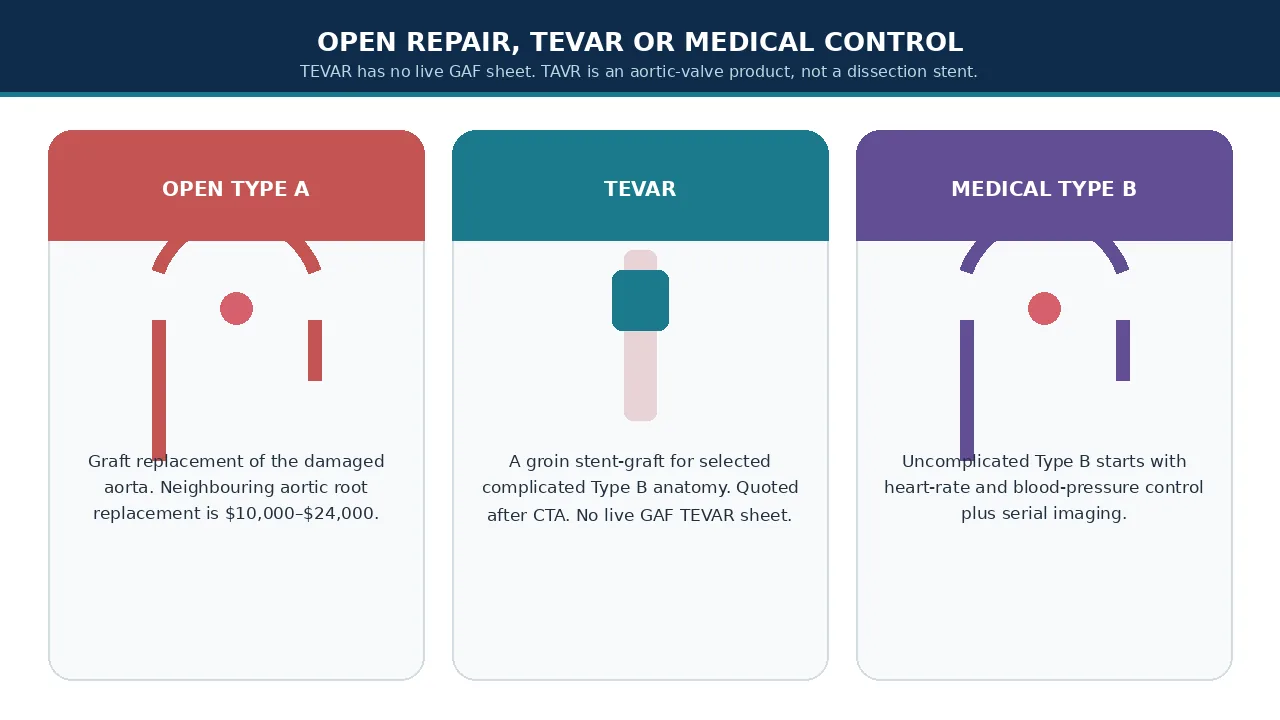
Ask whether TEVAR, open repair or medical control is the honest product
What is a hybrid aortic dissection repair?
Some complex cases require both open and endovascular techniques.
For example, an operation may first modify the aortic arch or its branch vessels, followed by placement of an endovascular stent-graft.
Hybrid approaches may be considered when the dissection extends across multiple sections of the thoracic aorta. Hybrid and frozen elephant trunk sittings have no live GAF sheet.
Aortic root replacement and Bentall procedure
When the aortic root is severely damaged and the aortic valve cannot be preserved, the surgeon may replace the aortic root and valve together using a composite graft. This is commonly referred to as the Bentall procedure.
It may be considered when Type A dissection involves significant aortic root destruction, aortic root aneurysm, severe valve involvement or certain inherited aortic conditions. The coronary arteries may need to be reimplanted into the graft.
Neighbouring aortic root replacement is $10,000–$24,000. There is no live GAF Bentall-only treatment page.
Valve-sparing aortic root replacement
In selected patients, the surgeon may preserve the patient's native aortic valve while replacing the diseased aortic root.
This approach may be considered when the native valve is suitable for preservation, the valve leaflets are structurally appropriate, the patient is sufficiently stable and the procedure is performed by an experienced aortic team. Not every patient is a candidate.
Frozen elephant trunk procedure
For extensive Type A dissections involving the arch and descending thoracic aorta, a frozen elephant trunk (FET) procedure may be considered.
It combines an open arch replacement with an integrated endovascular stent-graft component extending into the descending thoracic aorta. It is a complex procedure used selectively, rather than routinely for every aortic dissection. There is no live GAF FET sheet.
Aortic dissection surgery: how long does it take?
The duration varies substantially according to the operation.
A relatively straightforward repair may be shorter than a complex operation involving the aortic root, valve, coronary arteries, aortic arch, descending thoracic aorta, multiple branch vessels, malperfusion or previous grafts.
As a broad patient-planning estimate, complex open aortic surgery can take several hours, and some extensive procedures may last considerably longer.
Patients and families should ask the treating centre for an individualized estimate rather than relying on a fixed duration.
Recovery after aortic dissection surgery
Recovery depends heavily on whether the patient underwent emergency open surgery, TEVAR, hybrid treatment or medical management.
Intensive care unit. After open repair, patients commonly spend time in a cardiac or cardiothoracic ICU. The team monitors blood pressure, heart rhythm, breathing, kidney function, neurological status, bleeding, drain output, limb circulation, infection and heart function.
Hospital recovery. Once stable, the patient moves from intensive care to a regular ward. Recovery may include breathing exercises, physiotherapy, gradual walking, nutrition support, pain management, blood-pressure adjustment, wound care and medication planning. Neighbouring aortic aneurysm surgery planning is typically 8–16 nights. Neighbouring aortic root replacement planning is typically 10–18 nights. Emergency Type A stays can be longer.
At home. Fatigue can persist after major aortic surgery. Patients usually need a gradual return to normal activities and should follow the surgeon's restrictions concerning lifting, exercise and work.
Follow-up after aortic dissection repair
Repairing the immediate problem does not necessarily eliminate future aortic risk.
Residual dissected aorta may remain, particularly in patients whose dissection extends into the descending thoracic or abdominal aorta.
Long-term surveillance may include CT angiography, MRI/MRA, echocardiography, blood-pressure monitoring, medication review, assessment for aortic enlargement and evaluation for new symptoms.
Patients may require periodic imaging even when they feel completely well.
Risks and complications of aortic dissection surgery
Aortic dissection repair is major surgery, often performed in an emergency.
Potential complications include bleeding, infection, stroke, heart attack, kidney injury, respiratory complications, heart rhythm abnormalities, spinal cord ischemia, limb ischemia, bowel ischemia, aortic valve problems, need for blood transfusion, graft-related complications, residual dissection, reoperation and death.
The individual risk varies greatly according to the patient's condition and anatomy.
Emergency Type A dissection is particularly challenging because complications such as rupture, tamponade, coronary involvement, severe aortic regurgitation and malperfusion may already be present when the patient reaches the hospital.
Neighbouring pacemaker implantation is $3,500–$9,000 if conduction injury later requires pacing.
Aortic dissection surgery success rate
There is no single success rate that accurately applies to every aortic dissection operation.
Outcomes depend on Type A or Type B disease, emergency versus planned intervention, patient age, aortic anatomy, rupture, shock, stroke, kidney injury, coronary involvement, malperfusion, surgical complexity and experience of the treating centre.
Publishing a generic success rate on a treatment page can be misleading. The more useful question is: what is the expected outcome for this patient's specific type and extent of aortic dissection at the proposed centre?
High-volume, experienced aortic centres and multidisciplinary teams are specifically emphasized in contemporary guidelines.
Aortic dissection repair surgery cost in India
The cost of aortic dissection treatment in India varies widely because "aortic dissection repair" can mean very different procedures.
A straightforward repair and an emergency Type A dissection involving the root, valve and arch should not be treated as the same procedure for pricing purposes.
There is no live GAF aortic-dissection-only sheet. Brochure medical-tourism figures and government reimbursement schedules are not international self-pay quotations and are not used on this page.
| Neighbouring GAF sheet | Planning range | Typical stay |
|---|---|---|
| Aortic aneurysm surgery | $9,000–$22,000 | 8–16 nights |
| Aortic root replacement | $10,000–$24,000 | 10–18 nights |
| Aortic valve replacement | $7,000–$18,500 | 8–16 nights |
| Heart valve replacement | $7,000–$18,000 | 8–16 nights |
| TAVR/TAVI | $18,000–$42,000 | 3–7 nights |
| CABG | $5,500–$14,000 | 7–14 nights |
| Minimally invasive cardiac surgery | $8,000–$20,000 | 5–12 nights |
| TEVAR stent-graft | Hospital-priced; no GAF sheet | Quoted after CTA |
| Hybrid / frozen elephant trunk | Hospital-priced; no GAF sheet | Quoted after CTA |
| Treatment | Indicative cost consideration |
|---|---|
| Medical management of selected uncomplicated Type B dissection | Lower than major surgery, but ICU and imaging costs apply |
| Open aortic dissection repair | Highly variable depending on graft and surgical complexity |
| Aortic root replacement/Bentall | Neighbouring sheet $10,000–$24,000 |
| Aortic arch replacement | Higher because of complexity; no separate GAF sheet |
| TEVAR | Strongly affected by the stent-graft; no GAF sheet |
| Hybrid/frozen elephant trunk repair | Usually among the more complex approaches; no GAF sheet |
Aortic dissection should not be treated on the basis of a low-cost package alone. Graft/stent selection, ICU requirements, emergency readiness, surgeon expertise, blood products and management of complications can significantly change the final bill.
Ask the hospital to clarify whether the quotation includes cardiothoracic surgeon fees, anesthesia, operating-room charges, aortic graft, valve or composite graft, stent-graft if TEVAR is planned, ICU stay, room charges, medicines, blood and blood products, imaging, laboratory tests, physiotherapy and follow-up consultations.
Request an itemised aortic-repair estimate
Factors affecting aortic dissection surgery cost in India
The final price may depend on:
- Type of dissection. Type A emergency surgery generally requires a different level of operative support than uncomplicated Type B disease.
- Surgical technique. Open surgery, TEVAR and hybrid procedures have different resource requirements.
- Aortic root involvement. Root replacement and valve surgery increase complexity.
- Aortic arch involvement. Arch reconstruction may require specialized perfusion and cerebral-protection strategies.
- Graft or stent-graft. The implant itself can represent a significant component of the total cost.
- ICU duration. Emergency patients may require prolonged intensive care.
- Complications. Stroke, kidney failure, infection, bleeding or respiratory complications can extend hospitalization.
- Patient's medical condition. Diabetes, kidney disease, lung disease and other conditions may influence perioperative care.
- Hospital and city. Costs can differ between institutions. Live GAF catalog cities are Delhi NCR, Mumbai, Bengaluru, Chennai and Hyderabad.
How long do patients need to stay in India?
For international patients, the duration should not be planned using a standard tourism package.
After major Type A repair, the patient may require several days in ICU, additional inpatient recovery, repeat imaging, wound review, medication stabilization, physiotherapy and clearance for air travel.
Neighbouring aneurysm-surgery planning is typically 8–16 nights. Neighbouring root-replacement planning is typically 10–18 nights. Emergency aortic surgery can require substantially longer hospitalization when complications occur.
A treating surgeon should confirm when the patient is medically fit to travel.
Can international patients come to India for aortic dissection treatment?
Yes, Indian tertiary hospitals treat international patients with complex cardiovascular conditions.
However, acute aortic dissection is different from an elective procedure.
If the patient currently has an acute Type A dissection or another unstable aortic emergency, travelling internationally to seek a cheaper treatment package may be unsafe.
For a patient who has already undergone emergency repair and is seeking a second opinion, residual dissection assessment, elective staged repair, TEVAR, follow-up imaging, chronic Type B treatment or complex redo surgery, India may be considered after review by an appropriate aortic team.
Share records before anyone books travel
WhatsApp coordination for planned, stable cases is available at +91 90443 46292.
Documents international patients should send for a medical opinion
Before requesting an international second opinion, prepare:
- CT angiography images
- CTA report
- Echocardiography/TEE report
- ECG
- Discharge summary
- Operative notes, if surgery has already been performed
- Current medication list
- Kidney-function reports
- Blood-pressure history
- Relevant genetic/family history
- Previous cardiac or aortic surgery records
- Current symptoms
The actual CT images are often more useful than the written report alone, because the surgical team needs to understand the three-dimensional anatomy and extent of the dissection.
Choosing a hospital for aortic dissection surgery in India
Aortic dissection is not simply a procedure where patients should compare room prices or hospital size.
Does the hospital have an experienced aortic surgery team? Look for surgeons and teams experienced in acute Type A dissection, aortic root surgery, aortic arch surgery, TEVAR, hybrid procedures and complex redo aortic surgery.
Is 24/7 emergency cardiac surgery available? Acute Type A disease can require surgery immediately.
Is there a dedicated cardiac ICU? Complex aortic patients may require prolonged intensive monitoring.
Is advanced imaging available? The centre should have rapid access to CT angiography, echocardiography, TEE and interventional imaging.
Can the hospital manage complications? Neurology, neurosurgery, vascular surgery, interventional radiology, nephrology, gastrointestinal/critical-care support, a blood bank and advanced ICU services may be important in complicated cases.
Start with live GAF cardiac surgery hospitals in the five catalog cities rather than a brochure that lists every Indian metro.
Major Indian cities for aortic surgery
Patients commonly explore advanced cardiovascular centres in the live GAF catalog cities: Delhi NCR, Mumbai, Bengaluru, Chennai and Hyderabad.
Pune, Kochi and Ahmedabad may have aortic theatres. They are not live GAF catalog cities on this site.
The choice should be based on the patient's anatomy, urgency, surgeon expertise and availability of the required aortic procedure—not simply the city.
Aortic dissection treatment options: at a glance
| Treatment | Typical role |
|---|---|
| Intensive medical therapy | Initial management for many uncomplicated Type B dissections |
| Open ascending aortic repair | Main treatment for acute Type A dissection |
| Hemiarch replacement | Selected Type A dissections |
| Total arch replacement | Selected arch-involving disease |
| Aortic root replacement | Root destruction or significant root disease; neighbouring $10,000–$24,000 |
| Bentall procedure | Root + valve replacement when required; no live GAF Bentall page |
| Valve-sparing root replacement | Selected patients with suitable native valve |
| TEVAR | Particularly important for suitable complicated Type B dissections; no GAF sheet |
| Hybrid repair | Selected extensive arch/descending disease |
| Frozen elephant trunk | Selected extensive Type A/arch-descending dissections |
Current guidelines emphasize that treatment should be anatomy- and complication-specific, rather than applying one operation to every patient.
Life after aortic dissection repair
Surviving surgery is an important milestone, but follow-up remains part of treatment.
Blood-pressure control. Keeping blood pressure controlled reduces stress on the aorta. Medication may include beta-blockers or other antihypertensive drugs according to the treating physician.
Regular imaging. CT or MRI surveillance may be required to identify residual dissection, aortic enlargement, new aneurysmal changes, graft problems, new dissection or endoleak after TEVAR.
Physical activity. Patients should receive individualized advice regarding exercise. Heavy lifting and activities that cause sudden extreme blood-pressure increases may need to be avoided.
Smoking cessation. Stopping tobacco use is an important part of cardiovascular risk reduction.
Family screening. Some patients have inherited aortic disease. When an inherited disorder or familial aortic disease is suspected, doctors may recommend imaging or genetic assessment for first-degree relatives.
Frequently asked questions
Is aortic dissection surgery an emergency? Acute Type A aortic dissection is generally a surgical emergency. Immediate surgical evaluation is recommended because of the risks of rupture, tamponade, severe aortic regurgitation, coronary involvement and malperfusion.
Can aortic dissection heal without surgery? Some uncomplicated Type B dissections can initially be managed with intensive medical therapy and surveillance. Type A disease generally requires emergency surgical treatment.
Is aortic dissection the same as an aortic aneurysm? No. An aneurysm is an abnormal enlargement of the aorta. A dissection occurs when blood enters through a tear in the aortic wall and separates its layers. An aneurysm can, however, increase the risk of dissection.
Can Type B aortic dissection be treated without surgery? Yes. If Type B dissection is uncomplicated, medical therapy and close surveillance may be the initial approach. Complications or high-risk features can change the treatment plan.
Is TEVAR a major operation? TEVAR is less invasive than open thoracic surgery, but it remains a major vascular intervention and carries risks including stroke, spinal cord ischemia, vascular injury, endoleak and further aortic complications. There is no live GAF TEVAR sheet.
How long does aortic dissection surgery take? Complex open repair often takes several hours. Root, valve, arch and extensive descending-aorta involvement can substantially increase operative time.
How long is recovery? Recovery varies. Major open surgery may require several weeks of physical recovery and longer before returning to unrestricted activity. Neighbouring aneurysm-surgery planning is typically 8–16 nights.
Can aortic dissection happen again after surgery? Yes. Repairing one segment does not necessarily eliminate disease in the remaining aorta. Lifelong surveillance is therefore important.
Can patients live a normal life after aortic dissection repair? Many patients can return to active daily lives, but long-term follow-up, blood-pressure management, medication adherence and imaging surveillance remain important.
Does everyone need the same type of graft? No. Graft selection depends on the location and extent of the disease, root and valve involvement, arch anatomy and surgical strategy.
Is open surgery better than TEVAR? There is no universal answer. The appropriate treatment depends on the type of dissection, anatomy and complications. Open repair is central to acute Type A management, while TEVAR has an important role in appropriately selected Type B disease.
What happens if aortic dissection is left untreated? Untreated acute dissection can progress to rupture, tamponade, organ ischemia, stroke, heart attack, severe aortic regurgitation or death. The risk depends on the type and extent of disease.
How much does aortic dissection repair cost in India? There is no live GAF aortic-dissection-only sheet. Neighbouring aortic aneurysm surgery is $9,000–$22,000. Neighbouring aortic root replacement is $10,000–$24,000. TEVAR is hospital-priced.
Which city in India is best for aortic dissection surgery? There is no single best city. Delhi NCR, Mumbai, Bengaluru, Chennai and Hyderabad are live GAF catalog cities.
When should I go to an emergency department? Sudden severe chest or upper-back pain, fainting, severe breathlessness, new neurological symptoms or sudden limb weakness belongs in a local emergency department, not in a WhatsApp message.
Is TAVR the same as TEVAR? No. TAVR replaces an aortic valve through a catheter. TEVAR places a stent-graft in the thoracic aorta. Named TAVR lists sit on the TAVR page.
Questions to ask the aortic surgeon
Before proceeding, patients and families can ask:
- Is this Stanford Type A or Type B?
- Where is the primary entry tear?
- How far does the dissection extend?
- Is the aortic root involved?
- Is the aortic valve affected?
- Is the aortic arch involved?
- Are the coronary arteries affected?
- Is there evidence of organ malperfusion?
- Is open surgery or TEVAR recommended?
- Why is this particular technique being recommended?
- Will the valve need repair or replacement?
- Will the aortic root need replacement?
- Will the arch need replacement?
- What graft or stent-graft will be used?
- What are the major risks in this individual case?
- How long is ICU recovery expected to take?
- What follow-up scans will be required?
- How frequently will imaging be needed?
- When can the patient travel?
- What is the complete estimated cost?
Send those answers with the CTA
Why aortic dissection treatment requires a specialized team
Aortic dissection can affect multiple organ systems simultaneously.
A patient may need coordinated care from an aortic/cardiothoracic surgeon, vascular surgeon, interventional specialist, cardiac anesthesiologist, cardiologist, critical-care specialist, neurologist, nephrologist, radiologist, perfusionist and a specialized nursing team.
This is particularly important when the dissection causes malperfusion, meaning inadequate blood flow to organs or limbs.
Contemporary ACC/AHA guidance specifically highlights the role of multidisciplinary aortic teams and higher-volume centres with experienced practitioners and extensive management capabilities.
Aortic dissection repair surgery in India for international patients
India is an established destination for complex cardiac and cardiovascular care, including advanced aortic procedures.
For international patients, the process generally involves:
- Medical record review. Send CTA images, reports and clinical records for assessment.
- Aortic surgeon opinion. The specialist determines whether the case is emergency, urgent, elective, suitable for medical management, TEVAR, open surgery or staged/hybrid treatment.
- Hospital selection. The case should be matched with a centre capable of performing the required procedure.
- Treatment quotation. The hospital should provide an individualized estimate based on the proposed procedure.
- Treatment and ICU care. The patient undergoes the planned intervention with postoperative critical care.
- Follow-up. Imaging and medication plans should be established before the patient returns home.
Ask GAF to name the aortic plan
Planned questions can also go to WhatsApp at +91 90443 46292. Emergency symptoms still belong in a local emergency department.
Key takeaways
- Aortic dissection is a medical emergency.
- Acute Type A dissection generally requires immediate surgical evaluation and repair.
- Uncomplicated Type B dissection may initially be managed medically.
- Complicated Type B disease may require TEVAR or another intervention.
- Open Type A surgery may involve the ascending aorta, aortic root, valve and/or arch.
- The exact procedure must be determined from CT imaging and the patient's clinical condition.
- Aortic dissection surgery is complex and should ideally be managed by an experienced multidisciplinary aortic team.
- There is no live GAF aortic-dissection-only sheet. Neighbouring aortic aneurysm surgery is $9,000–$22,000. Neighbouring aortic root replacement is $10,000–$24,000.
- Long-term blood-pressure control and lifelong imaging surveillance are important after treatment.
- International patients should not travel for treatment during an unstable acute dissection unless the treating medical team specifically determines that transfer is safe.
Related GAF Healthcare pages
- Heart Valve Replacement Surgery in India
- TAVR in India
- CABG Surgery in India
- Aortic Balloon Valvuloplasty in India
- Tricuspid Valve Replacement Surgery in India
- Pacemaker Implantation in India
- Aortic aneurysm surgery cost
- Aortic root replacement cost
- Cardiac surgeons in India
- Cardiac surgery hospitals in India
Aortic-root-replacement, Bentall, TEVAR, aortic-aneurysm-repair, frozen-elephant-trunk and minimally-invasive-heart-surgery treatment pages are not live on this site. Use this page plus the named modality sheets.
Sources
- American College of Cardiology / American Heart Association — 2022 Guideline for the Diagnosis and Management of Aortic Disease.
- European Society of Cardiology — 2024 Guidelines for Peripheral Arterial and Aortic Diseases.
- Society of Thoracic Surgeons / American Association for Thoracic Surgery — Guidelines on Type B Aortic Dissection.
- Mayo Clinic — Aortic Dissection: Diagnosis & Treatment.
- Cleveland Clinic — Aortic Dissection: Symptoms & Treatment.
- NCBI Bookshelf / StatPearls — Aortic Dissection.
- GAF Healthcare aortic aneurysm surgery cost sheet — Aortic Aneurysm Surgery.
- GAF Healthcare aortic root replacement cost sheet — Aortic Root Replacement.
- Indian Association of Cardiovascular-Thoracic Surgeons / AIIMS — Overview of Acute Type A Aortic Dissection in India.
- National Health Authority / Government of India reimbursement schedules — government package information is not an international self-pay quotation.
Medical disclaimer
This page is intended for general educational and medical-tourism information. It does not replace an examination, CT angiography review or individualized advice from a qualified cardiothoracic, vascular or aortic specialist.
Aortic dissection can become life-threatening rapidly. Anyone with symptoms suggestive of acute aortic dissection should seek immediate emergency medical care in a local emergency department rather than waiting for an online consultation or arranging international travel.
Treatment Process
- 1
Share CTA
The patient provides CT angiography images, echo and previous aortic notes before anyone books travel.
- 2
Aortic team review
A cardiothoracic or aortic surgeon reviews whether the case is emergency Type A, medical Type B, TEVAR or hybrid work.
- 3
Name the product
The team writes open graft, TEVAR, root/Bentall or medical control after anatomy and malperfusion review.
- 4
Itemized estimate
There is no live GAF dissection-only sheet. Neighbouring aneurysm surgery is $9,000–$22,000. Neighbouring root replacement is $10,000–$24,000.
- 5
Travel only if stable
Acute chest or back pain is a local emergency. Stable second-opinion or staged cases travel after records review.
- 6
Repeat essential tests
The receiving unit confirms CTA, bloods, kidney function and fitness after arrival.
- 7
Deliver the named repair
Open repair, TEVAR or medical control proceeds only after the product is named.
- 8
Cardiac ICU and ward
Brain, kidney, limb perfusion, bleeding and blood pressure are watched before discharge.
- 9
Lifelong surveillance
The patient leaves with a blood-pressure plan, imaging dates and a written summary of residual aorta.