
Treatment Overview

The Bentall procedure in India is a complex open-heart surgery used to replace the diseased aortic root and aortic valve, usually together with the affected ascending aorta. During the operation, a composite graft containing an artificial heart valve and vascular graft is implanted, and the coronary arteries are reattached to the new graft.
The procedure is commonly considered when an aortic root aneurysm is associated with a diseased aortic valve, particularly when the valve cannot be reliably preserved. It may also be required in selected patients with aortic dissection, connective-tissue disorders, bicuspid aortic valve disease, or other conditions affecting the aortic root.
India has established cardiac surgery centres with multidisciplinary teams experienced in complex aortic procedures. For international patients, the choice of hospital should be based not only on the quoted price but also on the surgeon's experience with aortic root surgery, intensive-care facilities, availability of blood products, imaging, rehabilitation and long-term follow-up.
A surgical aortic valve without root replacement is a different product. Neighbouring aortic valve replacement is $7,000–$18,500. Broader surgical valve lists sit on Heart Valve Replacement Surgery in India. A catheter aortic valve is a different product again and sits on TAVR in India. TAVR is not TEVAR and is not a Bentall quote. Acute aortic tears sit on Aortic Dissection Repair Surgery in India. Combined coronary grafts sit on CABG Surgery in India. A balloon that only widens the native aortic valve sits on Aortic Balloon Valvuloplasty in India. There is no live GAF valve-sparing-root, David-procedure, TEVAR-only or aortic-replacement-only treatment page. This page is the named Bentall-procedure product.
There is no live GAF Bentall-only cost sheet. Neighbouring aortic root replacement is $10,000–$24,000 (typically 10–18 nights) when composite-graft Bentall work is the honest product. US comparison is $90,000–$250,000. Neighbouring aortic aneurysm surgery is $9,000–$22,000 (typically 8–16 nights). US comparison is $90,000–$260,000. Neighbouring aortic valve replacement is $7,000–$18,500 (typically 8–16 nights) when isolated SAVR is the product. Neighbouring heart valve replacement is $7,000–$18,000. Neighbouring TAVR/TAVI is $18,000–$42,000 and is an aortic-valve product, not a root-graft quote. Neighbouring CABG is $5,500–$14,000 when grafts are added. Neighbouring double valve replacement is $12,000–$28,000 when a second valve is replaced in the same sitting. Neighbouring minimally invasive cardiac surgery is $8,000–$20,000 and is not assumed for a standard Bentall. TEVAR stent-grafts, hybrid arch work, frozen elephant trunk and valve-sparing David or Yacoub operations have no live GAF sheet and are quoted after CTA. These are planning ranges from partner hospital cost sheets, not hospital quotations.
International patients comparing cardiac surgeons commonly start with Delhi NCR, Mumbai, Bengaluru, Chennai and Hyderabad. Partner cardiac surgery hospitals in Delhi NCR, Mumbai and Bengaluru, and in Chennai and Hyderabad, are a typical first filter because Bentall work needs a cardiac ICU, CTA, perfusion and emergency backup. City cost sheets include Delhi NCR, Mumbai, Bengaluru, Chennai and Hyderabad. Kolkata, Pune, Ahmedabad, Chandigarh and Kochi may have aortic theatres. They are not live GAF catalog cities on this site.
Emergency warning: Sudden severe chest or upper-back pain, fainting, severe breathlessness, new neurological symptoms or sudden limb weakness can indicate aortic dissection or rupture. Seek a local emergency department immediately. WhatsApp at +91 90443 46292 is for planned record review after the patient is stable, not for an acute tear.
What is the Bentall procedure?
The Bentall procedure, also called composite aortic root replacement, was developed by Hugh Bentall and Antony De Bono and introduced in 1968.
It is designed to treat disease involving the part of the aorta immediately above the heart — the aortic root — when the aortic valve also needs replacement.
The operation generally involves three major components:
- Replacement of the diseased aortic root
- Replacement of the aortic valve
- Reimplantation of the coronary arteries into the new graft
The ascending aorta may also be replaced when it is involved in the disease.
This makes Bentall surgery different from an isolated aortic valve replacement. In a conventional valve replacement, the surgeon replaces the valve but does not necessarily replace the aortic root. In Bentall surgery, the root and valve are replaced together. Neighbouring isolated aortic valve replacement is $7,000–$18,500. There is no live GAF aortic-replacement-only treatment page.
Understanding the aortic root
The aorta is the body's largest artery. It begins at the left ventricle of the heart and carries oxygen-rich blood throughout the body.
The first part of the aorta is called the aortic root.
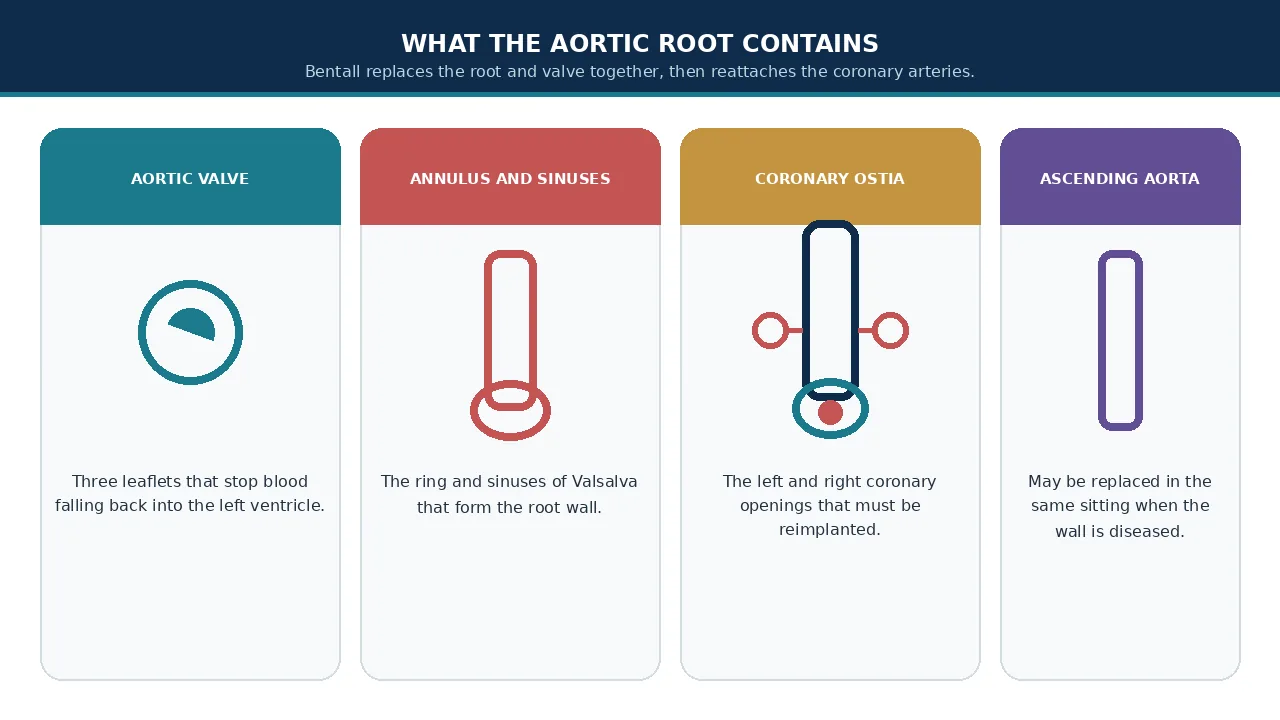
The aortic root contains:
- The aortic valve
- The aortic annulus
- The sinuses of Valsalva
- The openings of the coronary arteries
Because the coronary arteries originate from the aortic root, replacing this area is technically demanding. The surgeon must reconstruct the root and carefully reconnect the coronary arteries to the new graft.
This is one reason why Bentall surgery should generally be performed by an experienced cardiac or aortic surgery team, particularly when the operation is complex or being performed for dissection or rupture.
Why is Bentall surgery needed?
The most common reason for Bentall surgery is a disease process affecting both the aortic root and aortic valve.
Potential indications include:
1. Aortic root aneurysm
An aneurysm occurs when the wall of the aorta becomes abnormally enlarged or weakened.
As the aortic root enlarges, the risk of serious complications such as aortic dissection or rupture can increase.
The decision to operate is not based solely on one diameter measurement. Doctors consider:
- Maximum aortic diameter
- Rate of enlargement
- Aortic valve function
- Body size
- Age
- Family history
- Genetic aortic disease
- Bicuspid aortic valve
- Symptoms
- Other cardiovascular conditions
The 2022 ACC/AHA aortic disease guideline emphasizes individualized assessment and notes that surgery may be considered at lower diameters in selected patients at experienced centres. Neighbouring aortic aneurysm surgery is $9,000–$22,000 when aneurysm repair rather than a named Bentall conduit is the honest product. There is no live GAF aortic-aneurysm-repair treatment page.
2. Severe aortic regurgitation
Aortic regurgitation occurs when the aortic valve does not close properly and blood flows backward into the left ventricle.
When severe valve disease occurs together with significant aortic root enlargement, replacing both the valve and root may be appropriate.
3. Aortic dissection
An aortic dissection occurs when blood enters a tear in the inner layer of the aortic wall and separates the wall's layers.
When the ascending aorta or aortic root is involved, emergency surgery may be required.
Bentall surgery may form part of complex treatment when the aortic root and valve are significantly affected. Named dissection lists sit on Aortic Dissection Repair Surgery in India.
Emergency surgery for dissection or rupture generally carries greater risk than planned elective surgery. Acute chest or back pain belongs in a local emergency department, not in a travel booking.
4. Bicuspid aortic valve with aortic root disease
Some people are born with a bicuspid aortic valve, meaning the valve has two functional leaflets instead of the usual three.
Bicuspid valve disease can be associated with enlargement of the ascending aorta or aortic root.
The treatment depends on the valve's condition and the anatomy of the aorta. A Bentall procedure may be considered when both the valve and root require replacement.
5. Genetic aortic conditions
Aortic root aneurysms may occur in people with inherited disorders such as:
- Marfan syndrome
- Loeys-Dietz syndrome
- Certain forms of familial thoracic aortic disease
- Other connective-tissue disorders
Patients with inherited aortic disease may require surgery at smaller aortic diameters than patients with sporadic aneurysms.
6. Failed or unsuitable valve-sparing repair
A surgeon may initially evaluate whether the patient's native aortic valve can be preserved.
If the valve leaflets are significantly diseased, calcified, damaged or unlikely to provide durable function after repair, valve replacement may be more appropriate. There is no live GAF David-procedure or valve-sparing-root treatment page.
Ask whether Bentall or valve-sparing is the honest product
When is Bentall surgery recommended?
There is no single aortic diameter that applies to every patient.
For patients with sporadic aortic root or ascending aortic aneurysms, the 2022 ACC/AHA guideline identifies 5.5 cm as a traditional threshold in many patients, while surgery may be reasonable at 5.0 cm in selected patients when managed by an experienced multidisciplinary aortic team. Rapid enlargement can also influence the decision.
The 2024 European Society of Cardiology guidance similarly emphasizes assessment based on aneurysm size, location, growth and individual risk factors; it notes that aortic root replacement may be considered at more than 52 mm in selected low-risk patients at experienced centres.
Important: These numbers should not be used as a self-diagnosis or a personal surgical threshold. Genetic conditions, bicuspid aortic valve, family history, rapid growth, pregnancy considerations and other factors can change the recommended timing.
Bentall procedure vs valve-sparing aortic root replacement
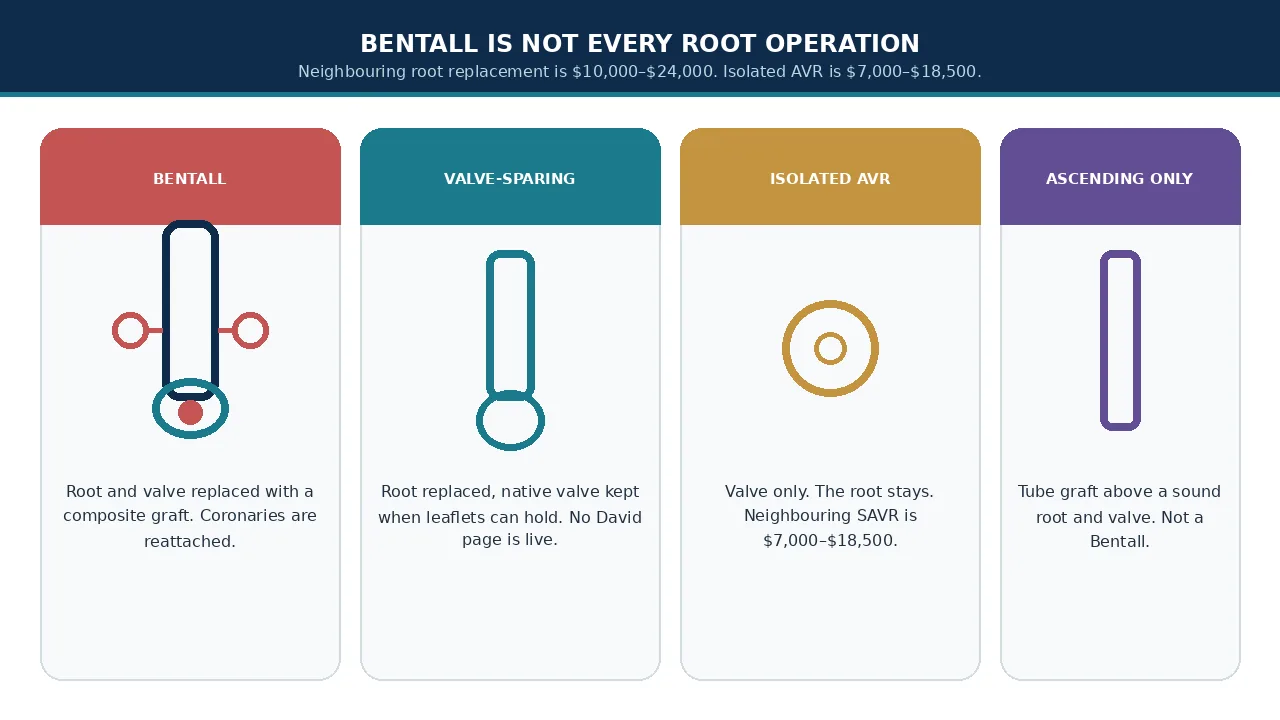
Not every patient with an aortic root aneurysm needs a Bentall procedure.
The two important surgical approaches are:
| Feature | Bentall Procedure | Valve-Sparing Root Replacement |
|---|---|---|
| Aortic root | Replaced | Replaced |
| Native aortic valve | Replaced | Preserved |
| Prosthetic valve | Yes | No |
| Mechanical anticoagulation | Required if mechanical valve is used | Usually not required solely because of the valve |
| Suitable for | Diseased or unsuitable native valve | Suitable, repairable native valve |
| Common techniques | Composite valve-graft | David or Yacoub-type procedures |
| Long-term consideration | Prosthetic valve surveillance | Native valve durability surveillance |
The ACC/AHA guideline considers valve-sparing root replacement reasonable when the native valve is suitable for repair and the operation is performed by experienced surgeons.
Comparative studies suggest that valve-sparing procedures can provide excellent long-term outcomes in appropriately selected patients, but they are technically demanding and require careful patient selection.
The decision should therefore be based on the patient's valve anatomy, age, associated disease, surgical expertise and expected durability — rather than simply choosing one procedure based on its name. There is no live GAF David-procedure treatment page. Neighbouring aortic root replacement is $10,000–$24,000 when either a Bentall conduit or a named valve-sparing root is the honest product after imaging.
Mechanical vs biological valve in Bentall surgery
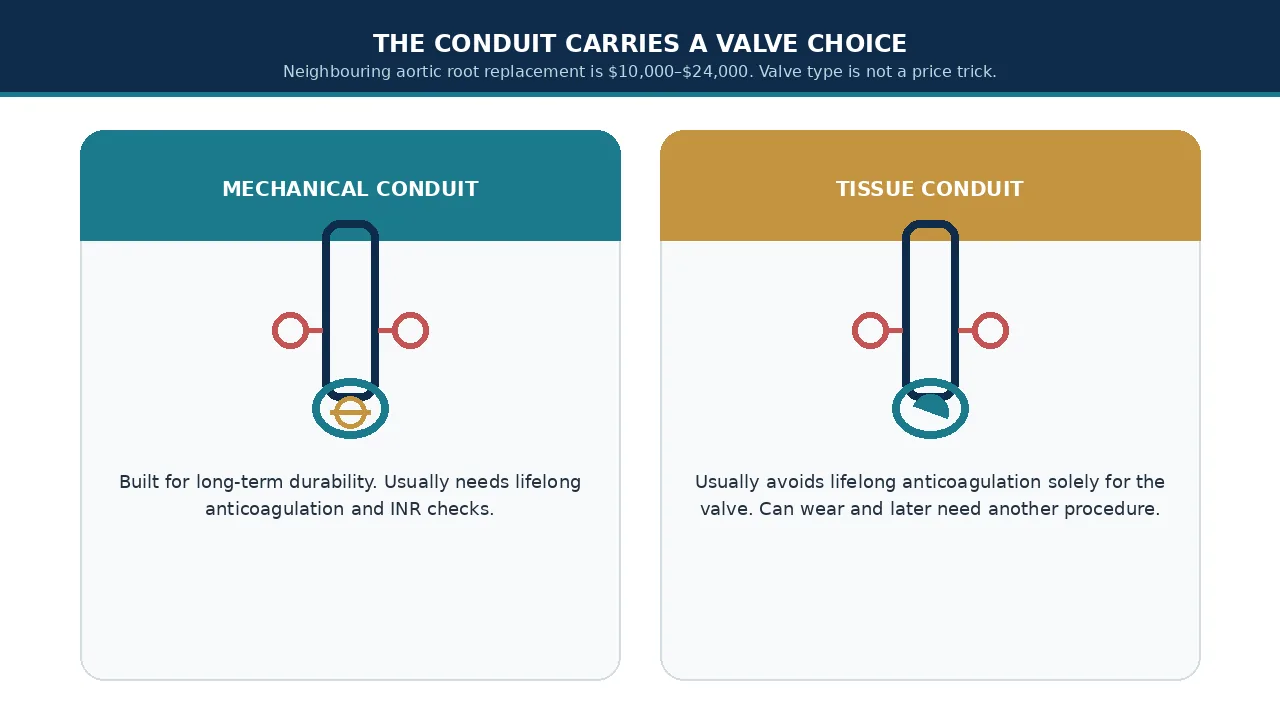
One of the important decisions during Bentall surgery is the type of prosthetic valve.
Mechanical valve
Mechanical valves are made from durable synthetic materials and are designed for long-term use.
Advantages
- Very durable
- Generally suitable for patients in whom long-term durability is a priority
- Lower likelihood of structural valve deterioration compared with tissue valves
Consideration
Patients with mechanical valves require lifelong anticoagulation to reduce the risk of blood clots.
That means regular monitoring and careful management of anticoagulant medication.
Biological or tissue valve
A bioprosthetic valve is made using biological tissue.
Potential advantages
- Usually does not require lifelong anticoagulation solely because of the prosthetic valve
- May be attractive for some older patients or people for whom long-term anticoagulation is undesirable
Consideration
Biological valves can deteriorate over time, and the risk of structural valve deterioration is influenced by factors including age.
The choice should be individualized after discussion with the cardiac surgeon and cardiologist.
Ask which prosthesis the conduit will carry
How is the Bentall procedure performed?
Although individual surgical techniques vary, the procedure generally follows these stages.
Step 1: General anaesthesia
The patient receives general anaesthesia and remains unconscious throughout the operation.
Step 2: Access to the heart
A median sternotomy is commonly performed to provide access to the heart and ascending aorta.
Step 3: Cardiopulmonary bypass
The patient is connected to a heart-lung bypass machine.
This machine temporarily performs the functions of the heart and lungs while the surgeon operates on the heart and aorta.
Step 4: Diseased aorta is exposed
The surgeon examines the ascending aorta and aortic root and determines the extent of disease.
Step 5: Aortic valve is removed
In a Bentall procedure, the diseased native aortic valve is removed.
Step 6: Diseased aortic root is removed
The aneurysmal or diseased section of the aortic root is removed while preserving the structures needed for reconstruction.
Step 7: Composite valve-graft is implanted
A new conduit containing:
- A prosthetic aortic valve, and
- A vascular graft
is sewn into position.
Step 8: Coronary arteries are reattached
The coronary arteries originate from the aortic root.
The surgeon creates coronary "buttons" and reimplants them into the new graft so blood can continue flowing normally into the coronary circulation.
This is a technically important part of the operation.
Step 9: Additional aortic repair if required
If the disease extends into the ascending aorta or arch, additional procedures may be performed during the same operation. Combined CABG is $5,500–$14,000 when grafts are named. There is no live GAF aortic-arch-replacement or frozen-elephant-trunk treatment page.
Step 10: Heart is restarted and bypass is discontinued
The surgical team gradually restores normal heart function and removes the patient from cardiopulmonary bypass.
Step 11: Chest closure
The sternum is closed and the surgical incision is closed.
How long does Bentall surgery take?
A Bentall procedure commonly takes several hours.
Cleveland Clinic reports that aortic root replacement with a Bentall procedure typically takes around four to five hours, although the actual duration varies depending on the patient's anatomy and whether additional procedures are required.
An emergency Bentall operation for dissection or rupture may be considerably more complex.
Tests before Bentall surgery
A comprehensive evaluation is essential before elective Bentall surgery.
Your medical team may request:
Echocardiography
An echocardiogram evaluates:
- Aortic valve function
- Aortic regurgitation
- Heart chamber size
- Heart pumping function
- Aortic root dimensions
A transesophageal echocardiogram may be required when detailed valve and aortic imaging is needed.
CT angiography
CT angiography provides detailed information about:
- Aortic root
- Ascending aorta
- Aortic arch
- Aortic dissection
- Aneurysm size
- Other vascular structures
MRI / MR angiography
MRI can be useful for detailed aortic assessment and long-term surveillance in selected patients.
Coronary evaluation
Depending on age and risk factors, coronary imaging may be required before major aortic surgery. Neighbouring coronary angiography is a diagnostic picture, not a Bentall quote.
Blood tests
Routine investigations may include:
- Complete blood count
- Kidney function
- Liver function
- Electrolytes
- Blood grouping and crossmatching
- Coagulation tests
Electrocardiogram
An ECG evaluates the heart's electrical activity and identifies rhythm abnormalities or evidence of previous cardiac disease.
The overall evaluation helps the team determine the extent of disease and the safest surgical strategy.
Bentall procedure in India: cost
The cost of a Bentall procedure in India varies substantially and should not be quoted as a single fixed price.
Aortic root surgery is a major cardiac operation involving a prosthetic valve, vascular graft, intensive-care management, anaesthesia, surgery, imaging, blood products and postoperative monitoring.
There is no live GAF Bentall-only sheet. Neighbouring aortic root replacement is $10,000–$24,000 (typically 10–18 nights). US comparison is $90,000–$250,000. Neighbouring aortic aneurysm surgery is $9,000–$22,000. Isolated aortic valve replacement is $7,000–$18,500 and is not a root-graft package. Published Indian rupee listings and medical-tourism dollar packages are not GAF quotations.
For an international patient, the final package can also include:
- Surgeon and surgical team fees
- Hospital charges
- ICU stay
- Prosthetic valve
- Aortic graft/conduit
- Anaesthesia
- Investigations
- Blood products
- Medicines
- Postoperative imaging
- Room category
- Complication management
- Additional cardiac procedures
- Accommodation outside the hospital
- Travel and visa expenses
Indicative cost factors in India
| Cost Factor | Effect on Final Cost |
|---|---|
| Mechanical vs tissue valve | Can significantly affect implant cost |
| Type of graft/conduit | Affects implant cost |
| Hospital | Different hospitals have different package structures |
| Surgeon/team | Specialist fees vary |
| ICU duration | Longer ICU stay increases cost |
| Emergency vs elective surgery | Emergency surgery can require substantially greater resources |
| Additional CABG | Adds surgical and hospital costs |
| Aortic arch surgery | Can substantially increase complexity |
| Kidney/lung/other complications | May extend hospitalization |
| Room category | Affects hospital charges |
| International patient services | May add coordination and support costs |
Important cost note
A very low quotation should not automatically be interpreted as a better financial option.
For Bentall surgery, patients should compare:
- Surgeon experience
- Number and type of aortic procedures performed
- ICU capabilities
- Availability of perfusion specialists
- Blood-bank support
- Emergency surgical backup
- Prosthesis brand and model
- What is included in the package
- Postoperative follow-up
Request an itemised root-replacement estimate
What is usually included in a Bentall surgery package in India?
Hospital packages differ, but a comprehensive quotation may include:
- Preoperative evaluation
- Cardiologist consultation
- Cardiac surgeon consultation
- Anaesthesia
- Operating-room charges
- Cardiopulmonary bypass
- Surgical procedure
- Prosthetic valve
- Vascular graft/conduit
- ICU care
- Ward stay
- Routine medicines
- Standard investigations
- Nursing care
Patients should ask for a written estimate before travelling to India.
For international patients, GAF Healthcare can coordinate medical records, hospital opinions, treatment estimates and travel-related logistics based on the patient's clinical requirements.
Before accepting a quotation, ask the hospital to specify whether the price includes the conduit, ICU days, room category, blood products, CTA, echocardiography, additional CABG or arch work, complication-related expenses and extra hospital days.
Recovery after Bentall procedure
Recovery from Bentall surgery takes time because it combines major aortic surgery with valve replacement.
ICU recovery
After surgery, patients usually spend time in the intensive-care unit.
During this period, the team monitors:
- Heart rhythm
- Blood pressure
- Oxygen levels
- Kidney function
- Bleeding
- Heart function
- Neurological status
The exact ICU stay depends on the patient's condition and whether complications occur. Neighbouring GAF root-replacement planning is typically 10–18 nights.
Hospital recovery
After ICU stabilization, the patient moves to a cardiac ward.
Physiotherapy generally begins early, including breathing exercises and gradual mobilization.
At home
Recovery continues after discharge.
Patients may experience:
- Fatigue
- Chest discomfort
- Reduced stamina
- Sleep disturbance
- Appetite changes
- Mood changes
- Temporary weakness
These symptoms can improve gradually.
Bentall procedure recovery timeline
Every patient recovers at a different rate, but a general pathway may look like this:
| Period | Typical Focus |
|---|---|
| First few days | ICU monitoring and stabilization |
| First 1–2 weeks | Hospital recovery and gradual mobilization |
| Weeks 2–4 | Increasing activity at home |
| Weeks 4–8 | Progressive improvement in stamina |
| Around 6–12 weeks | Many patients gradually return toward routine activities |
| Several months | Continued cardiovascular conditioning and follow-up |
These are general expectations rather than guaranteed timelines.
Recovery may take longer after emergency surgery, combined procedures, stroke, kidney problems, infection or other complications.
Life after Bentall surgery
Successful Bentall surgery does not mean that follow-up can stop.
Patients generally need lifelong cardiovascular surveillance.
Follow-up may include:
- Echocardiography
- CT or MRI of the remaining aorta when indicated
- Blood-pressure monitoring
- Valve assessment
- Anticoagulation monitoring when a mechanical valve is used
- Regular cardiology review
The remaining portions of the aorta may still require surveillance, particularly in people with genetic aortic conditions or extensive aortic disease.
The ACC/AHA guideline emphasizes appropriate imaging surveillance for patients with aortic disease before and after intervention.
Medicines after Bentall surgery
Medication depends on the patient's condition and prosthetic valve.
A patient may receive medicines such as:
- Anticoagulants
- Blood-pressure medicines
- Beta-blockers
- Pain medicines
- Other cardiovascular medicines
If a mechanical valve is used
Lifelong anticoagulation is generally required.
Patients must follow their anticoagulation plan carefully and undergo the recommended monitoring.
Never stop or change anticoagulant medication without medical advice.
Risks and complications of Bentall procedure
Bentall surgery is a major operation, and complications are possible even in experienced centres.
Potential complications include:
- Bleeding
- Need for re-exploration
- Infection
- Stroke
- Heart attack
- Abnormal heart rhythm
- Kidney injury or kidney failure
- Respiratory complications
- Blood clots
- Prosthetic valve dysfunction
- Graft infection
- Coronary artery complications
- Aortic complications
- Need for repeat surgery
- Death
The risk depends strongly on whether the operation is elective or emergency, the patient's age and health, the extent of aortic disease, previous cardiac surgery and the need for additional procedures.
Emergency Bentall surgery for acute dissection or rupture generally has a different risk profile from planned elective surgery.
Mayo Clinic and Cleveland Clinic list bleeding, stroke, infection, prosthetic-valve problems and the need for further aortic treatment among the risks of aortic-root surgery.
Bentall procedure success rate
It is better to avoid quoting a single universal “Bentall success rate” because outcomes vary significantly according to the patient's condition.
Elective surgery for a stable aortic root aneurysm generally has a different risk profile from emergency surgery for acute dissection or rupture.
Published studies demonstrate that modern Bentall surgery can provide durable long-term outcomes in appropriately selected patients. A systematic review involving 7,629 patients undergoing Bentall procedures with mechanical prostheses reported a pooled early mortality of 6%, while more recent high-volume series have reported substantially lower operative mortality in selected contemporary cohorts.
A 2026 study of 1,493 patients undergoing Bentall procedures between 1997 and 2023 also illustrates the importance of the underlying diagnosis: most patients underwent surgery for aneurysm, while smaller groups underwent surgery for dissection or endocarditis, with the latter groups having more preoperative complications.
For a patient, the most meaningful question is not “What is the success rate?” but “What is the expected risk for my specific operation?”
Factors that affect Bentall surgery outcomes
Important factors include:
Patient-related factors
- Age
- Kidney function
- Lung disease
- Diabetes
- Previous stroke
- Heart function
- Previous cardiac surgery
Disease-related factors
- Aortic aneurysm size
- Aortic dissection
- Rupture
- Aortic valve disease
- Infection
- Extent of aortic involvement
Procedure-related factors
- Elective vs emergency surgery
- Need for CABG
- Need for arch replacement
- Redo surgery
- Surgeon and centre experience
- Postoperative ICU management
High-volume, experienced multidisciplinary aortic teams are specifically emphasized in contemporary aortic guidelines because complex aortic surgery requires specialized expertise and resources.
Bentall procedure for Marfan syndrome
Marfan syndrome is a genetic connective-tissue disorder that can weaken the aortic wall.
Patients with Marfan syndrome may develop progressive enlargement of the aortic root.
Because the aortic wall is inherently vulnerable, surgical thresholds may be lower than for patients with ordinary degenerative aneurysms.
Whether a Bentall procedure or valve-sparing root replacement is appropriate depends particularly on the condition of the native aortic valve.
When the valve is suitable for preservation, a valve-sparing operation may be considered by an experienced aortic surgeon.
Bentall procedure for bicuspid aortic valve
A bicuspid aortic valve can be associated with:
- Aortic stenosis
- Aortic regurgitation
- Aortic root enlargement
- Ascending aortic aneurysm
The treatment depends on both the valve and the aorta.
If the native valve is severely diseased and the root requires replacement, Bentall surgery may be appropriate.
If the valve is suitable for preservation, another type of root operation may be considered. Isolated stenosis without root disease may sit on neighbouring aortic valve replacement or TAVR in India after Heart Team review.
Bentall procedure for aortic dissection
Aortic dissection involving the ascending aorta is a medical emergency.
Symptoms may include sudden severe chest or upper-back pain, fainting, shortness of breath or neurological symptoms.
When acute type A dissection affects the root and valve, a Bentall-type root replacement may be required.
Emergency aortic surgery is substantially different from elective Bentall surgery because the patient may arrive with:
- Shock
- Organ malperfusion
- Cardiac tamponade
- Aortic rupture
- Stroke
- Kidney dysfunction
The 2026 published cohort study of Bentall procedures found substantially greater preoperative complications among patients undergoing surgery for dissection and endocarditis compared with aneurysm patients.
Named dissection lists sit on Aortic Dissection Repair Surgery in India. There is no live GAF TEVAR-only treatment page.
Ask whether dissection needs emergency local care
Bentall procedure vs aortic valve replacement
These procedures are not interchangeable.
| Feature | Bentall Procedure | Aortic Valve Replacement |
|---|---|---|
| Aortic valve | Replaced | Replaced |
| Aortic root | Replaced | Usually not |
| Ascending aorta | May be replaced | Usually not |
| Coronary arteries | Reimplanted into graft | Usually not |
| Typical indication | Root + valve disease | Primarily valve disease |
| Complexity | Major complex aortic surgery | Depends on procedure and patient |
Neighbouring isolated SAVR is $7,000–$18,500. Neighbouring TAVR/TAVI is $18,000–$42,000. Neither is a Bentall conduit.
Bentall procedure vs ascending aorta replacement
An ascending aortic replacement may replace the enlarged ascending aorta while leaving the native aortic valve and root intact.
Bentall surgery is different because it replaces the aortic root and valve together and reconnects the coronary arteries.
The appropriate procedure depends on exactly where the aorta is diseased and whether the valve is functioning normally.
Can Bentall surgery be minimally invasive?
The traditional Bentall operation is an open-heart surgical procedure.
Because the operation involves reconstruction of the aortic root, replacement of the valve and reimplantation of the coronary arteries, it is considerably more complex than many minimally invasive cardiac procedures.
Specialized centres are investigating newer approaches for selected aortic conditions, but these should not be confused with standard Bentall surgery. Neighbouring minimally invasive cardiac surgery is $8,000–$20,000 and is not assumed for a named Bentall list.
Choosing a hospital for Bentall procedure in India
For a complex operation such as Bentall surgery, hospital selection should go beyond brand recognition.
Look for a centre with:
Experienced aortic/cardiac surgeons
Ask how frequently the surgeon performs:
- Bentall procedures
- Aortic root replacement
- Ascending aortic surgery
- Aortic dissection surgery
- Redo aortic surgery
Advanced cardiac ICU
A complex aortic operation requires high-quality postoperative intensive care.
Heart-lung bypass expertise
The operation requires experienced perfusion and operating-room teams.
Advanced imaging
The hospital should have access to:
- Echocardiography
- CT angiography
- MRI when required
- Intraoperative transesophageal echocardiography
Blood bank and emergency support
This is particularly important for complex and emergency aortic operations.
Multidisciplinary aortic care
Contemporary guidelines emphasize multidisciplinary teams and experienced centres for complex aortic disease.
Partner cardiac surgery hospitals in Delhi NCR, Mumbai, Bengaluru, Chennai and Hyderabad are the live GAF first filter.
Bentall procedure in major Indian cities
Bentall and complex aortic surgery are available at major cardiac centres. Live GAF catalog cities are Delhi NCR, Mumbai, Bengaluru, Chennai and Hyderabad.
City cost sheets include Delhi NCR, Mumbai, Bengaluru, Chennai and Hyderabad.
Pune, Kolkata, Ahmedabad and Kochi may have aortic theatres. They are not live GAF catalog cities on this site.
Patients should select the centre based on the complexity of their disease and the experience of the treating aortic team rather than choosing a city solely on price.
Why international patients consider India for Bentall surgery
Patients travelling to India for complex cardiac surgery commonly look for a combination of:
- Experienced cardiac surgeons
- Multispecialty hospitals
- Advanced cardiac ICUs
- Modern diagnostic facilities
- International-patient coordination
- English-speaking medical teams
- Treatment options across several major cities
- Competitive treatment costs compared with many international destinations
However, the suitability of India should be determined on the basis of the patient's clinical records and the specific hospital and surgeon available.
Documents to send before travelling to India
International patients should ideally provide:
- Recent echocardiogram
- CT angiography of the aorta
- MRI/MR angiography if available
- ECG
- Previous angiography reports
- Previous cardiac surgery records
- Blood-test reports
- Current medication list
- Previous discharge summaries
- Genetic testing reports, if relevant
- A brief medical history
Good-quality imaging is particularly valuable because the surgeon needs to understand the exact anatomy of the aortic root, ascending aorta and coronary arteries.
Send CTA, echo and genetic notes before travel
How GAF Healthcare can help international patients
For patients travelling to India for a Bentall procedure, medical-tourism coordination can include:
- Collection of medical records
- Review and organization of reports
- Sharing records with appropriate cardiac centres
- Obtaining specialist opinions
- Comparing treatment plans
- Requesting a hospital cost estimate
- Visa and travel coordination
- Airport assistance
- Hospital admission coordination
- Accommodation support
- Local transportation
- Post-treatment coordination
The medical decision remains with the treating cardiac team and the patient.
A coordinator can also open WhatsApp at +91 90443 46292 for planned records review.
Questions to ask the cardiac surgeon before Bentall surgery
Before deciding on surgery, patients should consider asking:
About the operation
- Why do I need a Bentall procedure?
- How large is my aortic root?
- Is my aneurysm growing rapidly?
- Is my aortic valve repairable?
- Could I have a valve-sparing root replacement?
- Will the ascending aorta also need replacement?
- Will I need arch surgery?
- Will I need CABG?
About the prosthetic valve
- Do you recommend a mechanical or tissue valve?
- Why is that valve appropriate for me?
- If mechanical, what anticoagulation will I need?
- How often will I need monitoring?
- What is the expected durability of the tissue valve if one is used?
About the surgeon and hospital
- How many Bentall procedures do you perform each year?
- How many complex aortic operations does your centre perform?
- What are your centre's outcomes for elective Bentall surgery?
- What are the common complications?
- How long is the expected ICU stay?
- What happens if complications occur?
About recovery
- How long should I remain in India?
- When can I fly home?
- When can I drive?
- When can I return to work?
- When can I exercise?
- What follow-up will I need after returning home?
Frequently asked questions about Bentall procedure in India
Is Bentall surgery a major operation?
Yes. Bentall surgery is a major open-heart operation involving replacement of the aortic root and aortic valve and reimplantation of the coronary arteries.
Is Bentall procedure safe?
Bentall surgery can provide durable treatment for appropriately selected patients, but it carries significant risks because it is complex cardiac surgery. Individual risk depends on the patient's health, anatomy, diagnosis and whether the operation is elective or emergency.
How much does a Bentall procedure cost in India?
There is no live GAF Bentall-only sheet. Neighbouring aortic root replacement is $10,000–$24,000, typically 10–18 nights. US comparison is $90,000–$250,000. Neighbouring aortic aneurysm surgery is $9,000–$22,000. Isolated SAVR is $7,000–$18,500.
How many hours does Bentall surgery take?
It commonly takes several hours. Cleveland Clinic reports approximately four to five hours for aortic root replacement with a Bentall procedure, although complex cases can take longer.
How long does it take to recover from Bentall surgery?
Many patients require several weeks to regain strength, with more complete recovery potentially taking several months. Emergency surgery and additional procedures can significantly extend recovery.
Will I need lifelong medicines after Bentall surgery?
If a mechanical valve is used, lifelong anticoagulation is generally required. Other medications depend on the patient's cardiovascular condition.
Is a mechanical or tissue valve better?
Neither is universally better. The choice depends on age, medical history, anticoagulation considerations, expected durability, pregnancy considerations where relevant, and patient preference.
Can Bentall surgery be avoided?
Sometimes. If the aortic root is not yet at the recommended intervention threshold and the patient is suitable for surveillance, regular imaging and medical management may be used.
If surgery is needed but the native aortic valve is healthy enough to preserve, a valve-sparing aortic root replacement may be considered. There is no live GAF David-procedure treatment page.
Is Bentall procedure permanent?
The vascular graft is designed for long-term use. However, patients still require lifelong monitoring because prosthetic valves can have complications and the remaining aorta can develop disease.
Can Bentall surgery be performed after aortic dissection?
Yes. A Bentall-type operation may be required in selected patients with acute type A aortic dissection involving the aortic root and valve. Emergency cases are substantially more complex than planned surgery. Named dissection lists sit on Aortic Dissection Repair Surgery in India.
Can Bentall surgery be performed in elderly patients?
Age alone does not determine eligibility. The surgical team considers overall health, kidney and lung function, frailty, heart function, anatomy and operative risk.
Can I travel internationally after Bentall surgery?
International travel should only occur after clearance from the treating cardiac team. Patients need adequate postoperative recovery, stable medications and an appropriate follow-up plan before flying.
Is TAVR the same as a Bentall procedure?
No. Neighbouring TAVR/TAVI is $18,000–$42,000 and is a catheter aortic-valve product. Bentall replaces the aortic root and valve with a surgical composite graft.
Is there a GAF David, TEVAR or isolated-AVR treatment page?
No. Valve-sparing-root, David-procedure, TEVAR-only and aortic-replacement-only treatment pages are not live. Use this page plus the named modality sheets.
When is Bentall surgery an emergency?
Sudden severe symptoms may indicate an acute aortic problem.
Seek emergency medical care in a local emergency department for symptoms such as:
- Sudden severe chest pain
- Sudden severe upper-back pain
- Fainting
- Severe shortness of breath
- New weakness or paralysis
- Difficulty speaking
- Sudden neurological symptoms
- Cold or painful limbs
An acute aortic dissection or rupture can be life-threatening and requires immediate specialist assessment. WhatsApp at +91 90443 46292 is not an emergency line.
Key takeaways
The Bentall procedure in India is a complex surgical treatment for disease involving the aortic root and aortic valve.
The operation generally replaces:
- The diseased aortic root
- The aortic valve
- Part or all of the affected ascending aorta when necessary
The coronary arteries are then reattached to the new graft.
The procedure may be recommended for selected patients with:
- Aortic root aneurysm
- Severe aortic regurgitation associated with root disease
- Bicuspid aortic valve with significant root disease
- Marfan or other inherited aortic disorders
- Aortic dissection
- Other complex aortic-root conditions
The decision about when to operate and which operation to perform should be individualized. In patients whose native aortic valve is suitable for preservation, a valve-sparing operation may be an alternative.
There is no live GAF Bentall-only sheet. Neighbouring aortic-root replacement planning is $10,000–$24,000.
For patients considering treatment in India, the most important factors are not simply cost or hospital reputation. The experience of the aortic surgery team, cardiac ICU, imaging facilities, emergency support, prosthesis selection and long-term follow-up all matter.
Share reports for a preliminary Bentall estimate
Related GAF Healthcare pages
- Aortic Dissection Repair Surgery in India
- Heart Valve Replacement Surgery in India
- Mitral Valve Replacement Surgery in India
- TAVR in India
- CABG Surgery in India
- Aortic Balloon Valvuloplasty in India
- Aortic root replacement cost
- Aortic aneurysm surgery cost
- Aortic valve replacement cost
- Cardiac surgeons in India
- Cardiac surgery hospitals in India
Valve-sparing-root, David-procedure, TEVAR-only and aortic-replacement-only treatment pages are not live on this site. Use this page plus the named modality sheets.
Top 10 sources
- American Heart Association / American College of Cardiology — 2022 Guideline for the Diagnosis and Management of Aortic Disease.
- European Society of Cardiology — 2024 Guidelines for Peripheral Arterial and Aortic Diseases.
- Cleveland Clinic — Aortic Root Replacement.
- Mayo Clinic — Aortic Root Surgery.
- GAF Healthcare aortic root replacement cost sheet — Aortic Root Replacement.
- GAF Healthcare aortic aneurysm surgery cost sheet — Aortic Aneurysm Surgery.
- GAF Healthcare aortic valve replacement cost sheet — Aortic Valve Replacement.
- PubMed — Bentall Procedure: A Systematic Review and Meta-Analysis.
- PubMed — Long-Term Survival and Operative Outcomes of the Bentall Procedure.
- PubMed — Bentall-De Bono vs Valve-Sparing Aortic Root Replacement.
Medical disclaimer
This article is intended for general educational purposes and should not replace consultation with a qualified cardiologist or cardiothoracic surgeon. Surgical indications, valve selection, operative risk, expected recovery and treatment costs vary from patient to patient. A cardiac surgeon should review the patient's imaging, medical history and overall health before recommending Bentall surgery.
Treatment costs are planning ranges from partner hospital cost sheets. New or sudden severe chest or upper-back pain, fainting, stroke signs or sudden limb weakness belongs in a local emergency department.
Treatment Process
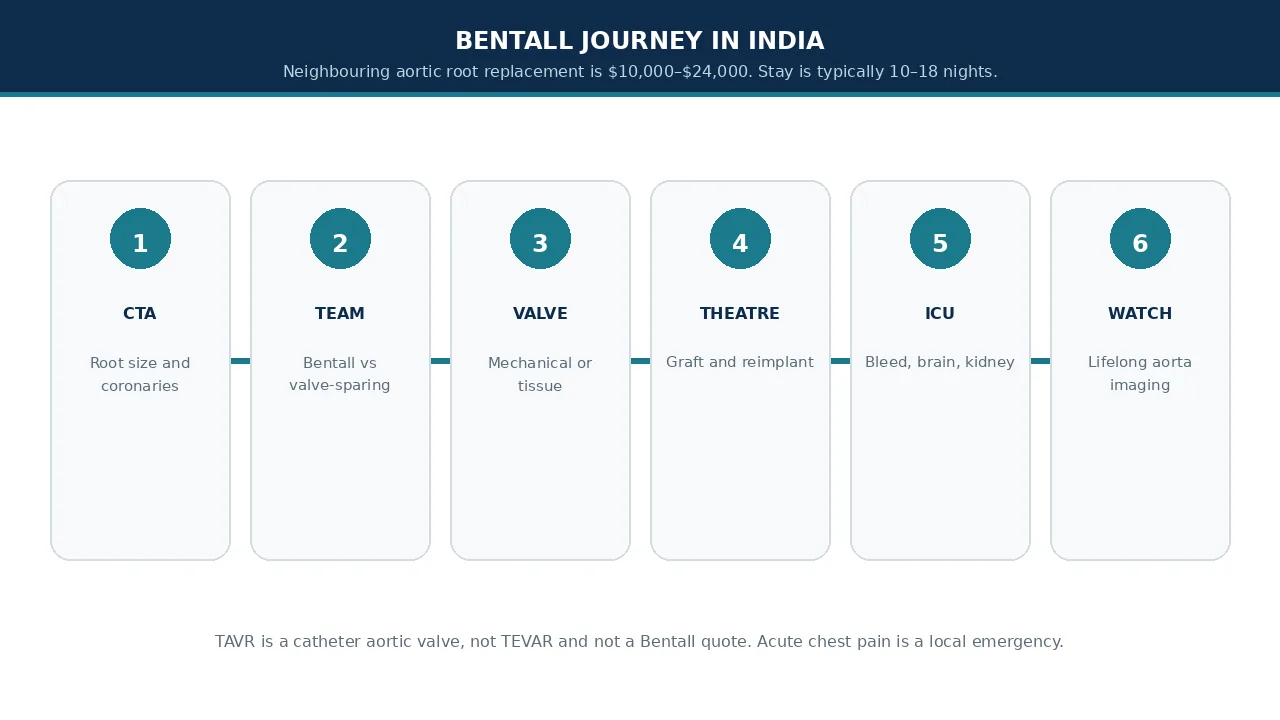
- 1
Share CTA
The patient provides CT angiography, echocardiography and previous aortic notes before anyone books travel.
- 2
Aortic team review
A cardiac or aortic surgeon reviews whether the case is Bentall, valve-sparing root replacement, isolated AVR or emergency dissection.
- 3
Name the conduit
The team writes composite valve-graft, valve-sparing root or a neighbouring isolated-valve product.
- 4
Itemized estimate
Neighbouring aortic root replacement planning is $10,000–$24,000. Neighbouring aneurysm surgery is $9,000–$22,000.
- 5
Travel only if stable
Stable planned root aneurysms travel after records review. Sudden chest or back pain is a local emergency.
- 6
Repeat essential tests
The receiving unit confirms CTA, echo, kidney function and fitness after arrival.
- 7
Implant the named graft
The diseased root and valve are replaced and the coronary arteries are reimplanted into the conduit.
- 8
Cardiac ICU and ward
Bleeding, brain, kidney, rhythm and blood pressure are watched before discharge.
- 9
Lifelong aorta follow-up
The patient leaves with valve type, anticoagulation if needed, blood-pressure targets and residual-aorta imaging dates.