
Treatment Overview
Aortic balloon valvuloplasty (BAV) in India is a minimally invasive catheter-based procedure used to temporarily improve blood flow through a severely narrowed aortic valve. An interventional cardiologist guides a balloon catheter to the aortic valve and inflates the balloon to widen the valve opening.
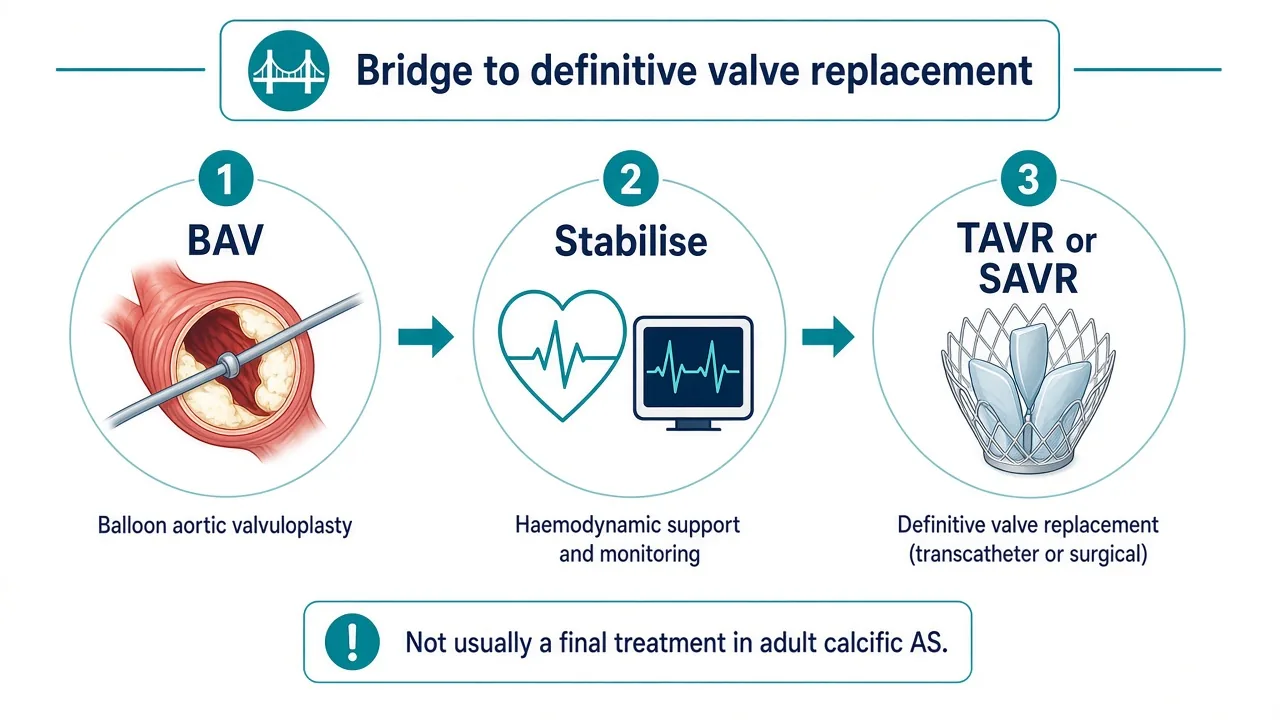
Today, balloon aortic valvuloplasty is used selectively. It is generally not a definitive replacement for aortic valve replacement in adults with severe calcific aortic stenosis because the valve can narrow again. Instead, BAV may be considered as a bridge to TAVR/TAVI or surgical aortic valve replacement (SAVR), as a bridge to decision-making in complex patients, or in selected patients who need urgent high-risk non-cardiac surgery.
A balloon that only widens the native aortic valve is a different product from a transcatheter replacement valve. Named TAVR lists sit on TAVR in India. Named surgical lists sit on aortic valve replacement. Neighbouring balloon mitral valvotomy is a mitral balloon procedure, not BAV. A coronary stent is a different product again. Named PCI sits on Coronary Angioplasty in India. This page is the named balloon aortic valvuloplasty product.
There is no separate GAF balloon aortic valvuloplasty cost sheet. BAV is quoted after Heart Team review of echo, anatomy and whether the procedure is a bridge to TAVR or surgery. Neighbouring TAVR/TAVI is $18,000–$42,000 (typically 3–7 nights). Neighbouring aortic valve replacement is $7,000–$18,500 (typically 8–16 nights). Neighbouring heart valve replacement is $7,000–$18,000 (typically 8–16 nights). Neighbouring balloon mitral valvotomy is $4,000–$10,000 (typically 2–5 nights) and must not be used as a BAV price. Neighbouring coronary angioplasty and stenting is $3,200–$8,500 (typically 1–3 nights) when coronary disease needs treatment in the same pathway. Neighbouring pacemaker implantation is $3,500–$9,000 (typically 1–3 nights) if conduction injury requires pacing. These are planning ranges from partner hospital cost sheets, not hospital quotations. Combined BAV-then-TAVR, paediatric BAV and emergency salvage cases are quoted after records review.
International patients comparing cardiologists commonly start with structural-heart lists in Delhi NCR, Mumbai, Bengaluru, Chennai and Hyderabad. Partner cardiac surgery hospitals in Delhi NCR, Mumbai and Bengaluru, and in Chennai and Hyderabad, are a typical first filter because BAV needs on-site TAVR and surgical backup. Neighbouring TAVR city cost sheets include Delhi NCR, Mumbai, Bengaluru, Chennai and Hyderabad. Kolkata, Pune, Ahmedabad, Chandigarh and Kochi may have catheter-valve services, but they are not live GAF catalog cities on this site.
Important: BAV is not automatically appropriate for every patient with aortic stenosis. A Heart Team must determine whether BAV, TAVR, SAVR or observation is the honest next step. New chest pain, fainting or severe breathlessness belongs in a local emergency department, not in a WhatsApp message.
Aortic Balloon Valvuloplasty in India at a Glance
| Factor | What patients should know |
|---|---|
| Procedure | Balloon dilation of the native aortic valve |
| Anaesthesia | Often local anaesthesia with sedation |
| GAF BAV sheet | None; quoted after Heart Team review |
| Neighbouring TAVR | $18,000–$42,000; typically 3–7 nights |
| Neighbouring SAVR | $7,000–$18,500; typically 8–16 nights |
| Main specialist | Interventional cardiologist / structural-heart team |
| Usual adult role | Bridge, not a new valve |
| Emergency | New chest pain, fainting or severe breathlessness belongs in a local emergency department |
What Is Aortic Balloon Valvuloplasty?
Aortic balloon valvuloplasty is a catheter-based procedure that attempts to enlarge the opening of a narrowed aortic valve.
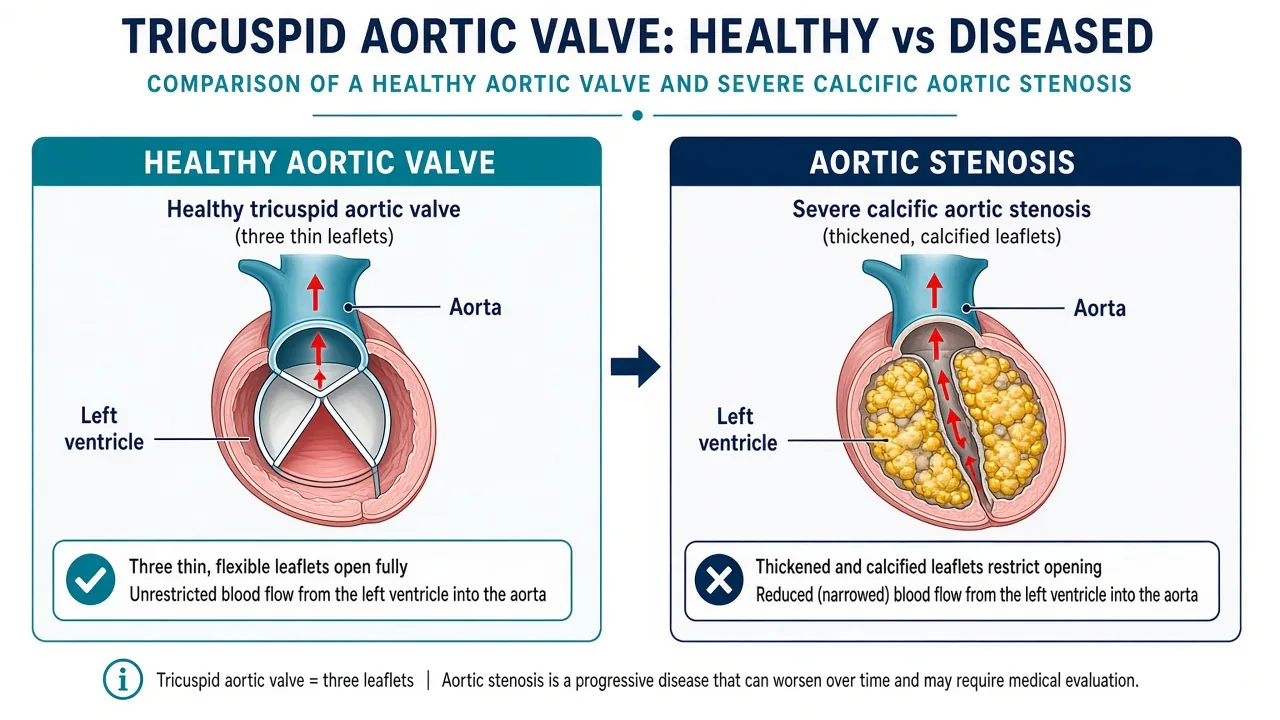
The aortic valve sits between the left ventricle and the aorta. It opens when the heart pumps blood out of the left ventricle and closes to prevent blood from flowing backward.
In aortic stenosis, the valve becomes narrowed and does not open normally. The heart must generate greater pressure to push blood through the restricted opening.
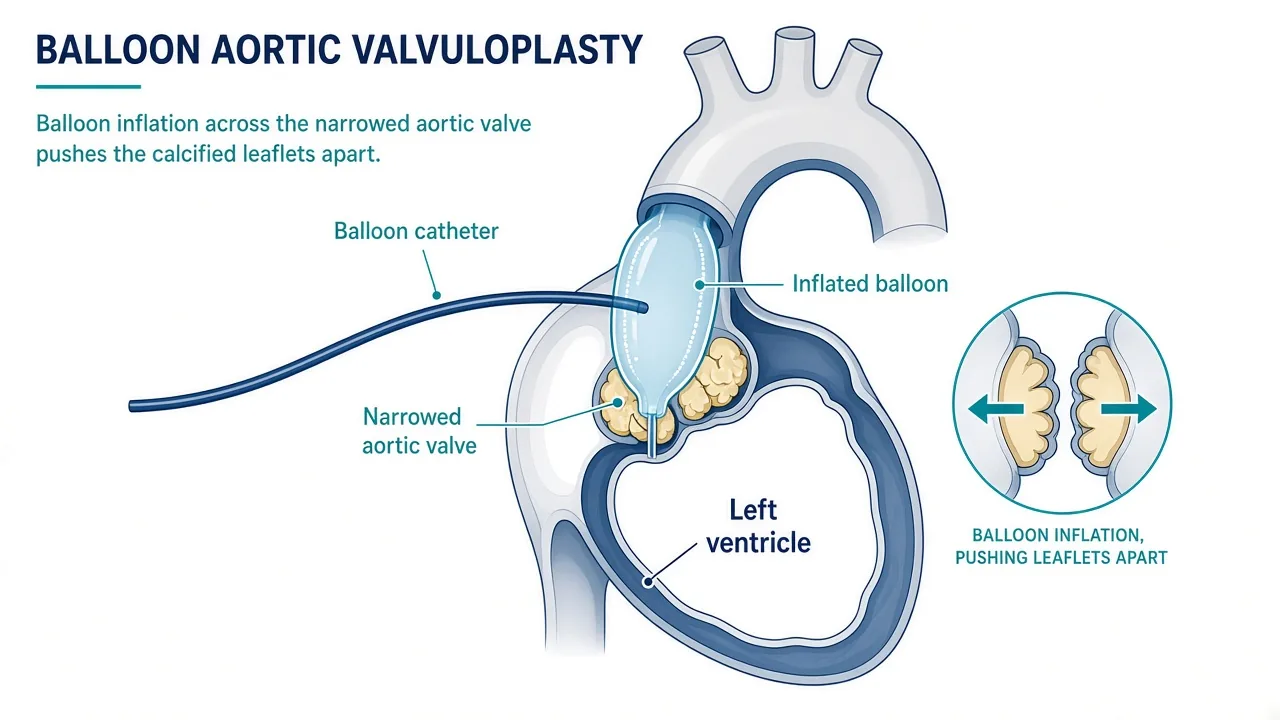
During BAV, a thin catheter carrying a deflated balloon is positioned across the narrowed valve. The balloon is then inflated for a short period. This can separate or fracture portions of the abnormal valve tissue and enlarge the effective valve opening.
The immediate result can be a reduction in the pressure gradient across the valve and improvement in blood flow. In adults with heavily calcified aortic stenosis, the improvement is often temporary.
Ask whether BAV is appropriate
Is Balloon Valvuloplasty the Same as TAVR?
No.
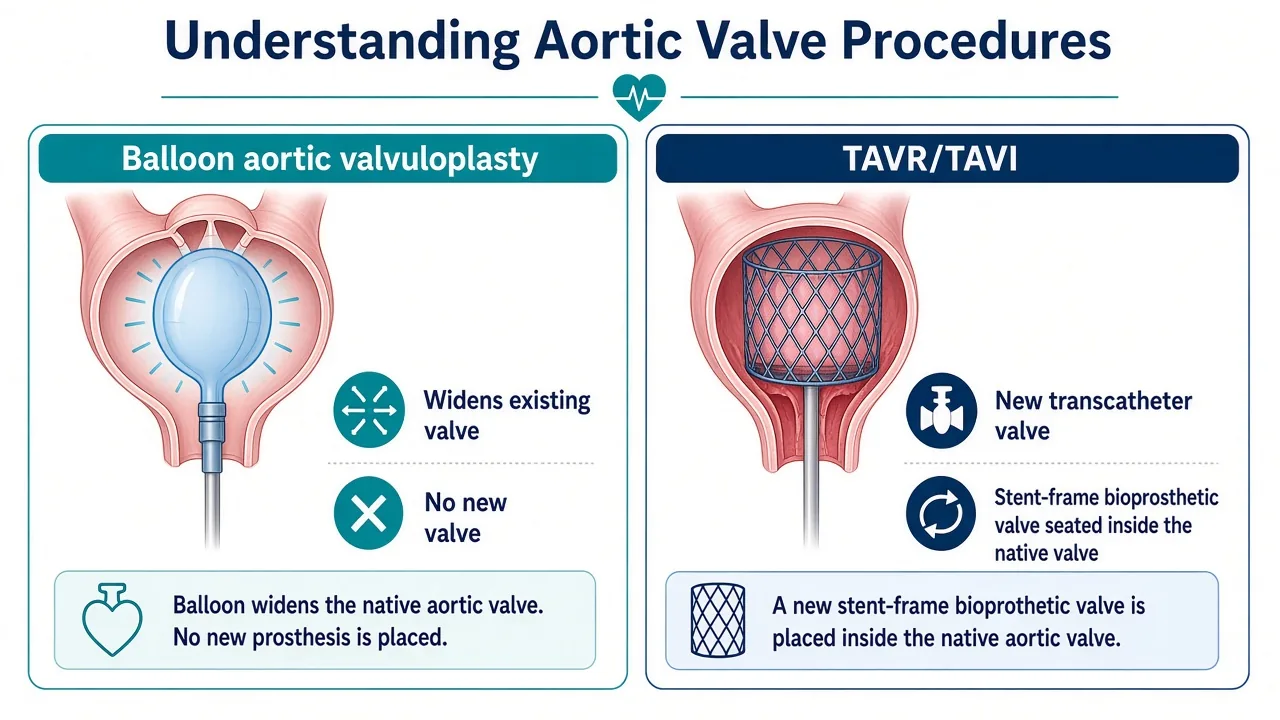
Balloon aortic valvuloplasty uses a balloon to widen the existing valve.
TAVR/TAVI places a new transcatheter heart valve inside the diseased native valve. Named lists sit on TAVR in India.
SAVR surgically removes or replaces the diseased valve with a prosthetic valve. Named lists sit on aortic valve replacement.
For many adults with symptomatic severe aortic stenosis, definitive valve replacement rather than balloon valvuloplasty is the principal treatment strategy. The choice between TAVR and SAVR depends on age, anatomy, procedural risk, life expectancy, comorbidities and the patient's overall goals.
Understanding Aortic Stenosis
Aortic stenosis can develop gradually. The valve leaflets may become thickened, fibrotic and eventually calcified. As the valve opening becomes smaller, the heart has to work harder to maintain adequate blood flow.
Common causes include age-related valve calcification, congenital bicuspid aortic valve, rheumatic valve disease and, less commonly, other structural abnormalities.
The underlying cause can influence treatment planning. In younger patients, congenital bicuspid valve disease may be particularly relevant. In regions where rheumatic heart disease remains prevalent, rheumatic valve disease can also contribute to aortic valve pathology.
Symptoms of Severe Aortic Stenosis
Some patients have aortic stenosis for years without obvious symptoms. Symptoms may become more noticeable as the obstruction becomes severe.
Common symptoms include breathlessness during exertion, chest discomfort, fatigue, reduced exercise tolerance, dizziness, fainting or near-fainting, palpitations, swelling of the legs, breathlessness when lying down and other heart-failure symptoms.
Not every patient experiences all of these symptoms.
A patient with known severe aortic stenosis who develops new breathlessness, chest pain, fainting or rapidly worsening symptoms should be evaluated in a local emergency department.
When Is Aortic Balloon Valvuloplasty Recommended?
The role of BAV has changed substantially since the expansion of TAVR. For an adult with severe calcific aortic stenosis, BAV is generally not the final treatment. Current guidelines describe a limited and selective role.
1. Bridge to TAVR/TAVI. A patient may be critically ill or haemodynamically unstable and not immediately suitable for definitive valve replacement. In selected circumstances, BAV can temporarily improve valve haemodynamics and provide time to stabilize the patient before TAVR. The ACC/AHA guideline states that percutaneous aortic balloon dilation may be considered as a bridge to SAVR or TAVI in critically ill patients with severe aortic stenosis.
2. Bridge to surgical aortic valve replacement. In selected high-risk patients, BAV may provide temporary haemodynamic improvement before surgical valve replacement.
3. Bridge to decision. Sometimes the team is uncertain whether symptoms are primarily caused by aortic stenosis or whether the patient can tolerate definitive intervention. A carefully selected BAV may show whether improving the obstruction produces meaningful clinical improvement.
4. Before urgent high-risk non-cardiac surgery. The 2025 ESC/EACTS guidelines note that TAVI or BAV may be considered before urgent high-risk non-cardiac surgery in selected patients with critical aortic stenosis, while highlighting the risk of acute aortic regurgitation after BAV.
5. Selected patients who cannot immediately undergo TAVR or SAVR. Some patients have severe comorbidities, active medical problems or logistical circumstances that make immediate definitive replacement difficult. In selected cases, BAV can provide temporary improvement while the underlying problem is addressed.
Share echo files for a Heart Team review
Who May Not Be a Suitable Candidate?
BAV is not automatically appropriate for every patient with aortic stenosis. The Heart Team may decide against the procedure when the patient is better suited to immediate TAVR, surgical valve replacement is more appropriate, the anatomy presents excessive procedural risk, significant aortic regurgitation is already present, the expected benefit is very limited, the risks outweigh the temporary benefit, or the overall clinical condition makes intervention inappropriate.
The decision should be individualized rather than based solely on echocardiogram numbers.
How Is Aortic Balloon Valvuloplasty Performed?
BAV is performed in a cardiac catheterization or structural-heart laboratory.
Step 1: Pre-procedure assessment. The team reviews symptoms, echocardiography, valve anatomy, left-ventricular function, kidney function, blood counts, blood-thinning medications, other heart disease, previous cardiac procedures and overall surgical and transcatheter risk. Additional imaging such as CT may be required when planning definitive valve treatment.
Step 2: Vascular access. The cardiologist introduces a catheter through an artery, commonly through the groin.
Step 3: Catheter navigation. The catheter is advanced toward the heart and across the aortic valve under imaging guidance.
Step 4: Balloon positioning. A balloon catheter is positioned across the narrowed aortic valve.
Step 5: Balloon inflation. The balloon is briefly inflated to widen the valve opening. The team may perform more than one inflation depending on anatomy and haemodynamic response.
Step 6: Haemodynamic assessment. The cardiologist assesses the pressure gradient across the valve and the patient's clinical response.
Step 7: Balloon removal. The balloon is deflated and removed.
Step 8: Final assessment. The team checks for improvement in valve obstruction, new aortic regurgitation, vascular complications, bleeding, heart-rhythm problems, blood-pressure changes and other procedural complications.
BAV can produce an immediate reduction in the transvalvular gradient, but the degree and duration of improvement vary.
Request a named-procedure cost estimate
What Tests Are Needed Before BAV?
Echocardiography is central to diagnosing and assessing aortic stenosis. It helps evaluate aortic valve opening, valve gradients, peak velocity, left-ventricular function, other valve abnormalities and pulmonary pressures.
ECG evaluates heart rhythm and electrical abnormalities.
Blood tests may include complete blood count, kidney function, electrolytes, blood glucose and coagulation testing when indicated.
CT imaging may be used when the team is evaluating anatomy for TAVR or other structural characteristics.
Coronary evaluation may be required, particularly when planning definitive valve intervention. Named PCI sits on Coronary Angioplasty in India.
Actual echo files are generally more useful than a written summary alone.
Aortic Balloon Valvuloplasty Cost in India
There is no separate GAF BAV sheet. A brochure BAV price is not a Heart Team plan. The quotation depends on the hospital, balloon and catheter, ICU need, investigations, medical complexity and whether TAVR, SAVR, PCI or pacing follows.
| Type / complexity | GAF planning | Typical stay |
|---|---|---|
| Balloon aortic valvuloplasty | Quoted after Heart Team review | Quoted after the case |
| TAVR/TAVI | $18,000–$42,000 | 3–7 nights |
| Aortic valve replacement | $7,000–$18,500 | 8–16 nights |
| Heart valve replacement | $7,000–$18,000 | 8–16 nights |
| Balloon mitral valvotomy | $4,000–$10,000 | 2–5 nights |
| Coronary angioplasty and stenting | $3,200–$8,500 | 1–3 nights |
| Pacemaker implantation | $3,500–$9,000 | 1–3 nights |
| Combined BAV-then-TAVR, paediatric BAV, emergency salvage | Quoted after case review | Depends on the case |
US comparison for neighbouring TAVR/TAVI is $50,000–$150,000. Neighbouring balloon mitral valvotomy is a different valve and must not be used to price BAV.
Cost can increase with ICU care, prolonged hospitalisation, additional imaging, treatment of complications, emergency intervention, more complex vascular access, additional cardiac procedures and subsequent TAVR or SAVR. Confirm whether a quotation includes the balloon and catheters, cath-lab charges, physician fees, sedation, stay, investigations, medicines and complication management.
City starting points for the neighbouring TAVR product:
Plan an international BAV stay
Aortic Balloon Valvuloplasty Cost vs TAVR in India
Do not compare BAV and TAVR simply on price. They serve different clinical purposes.
| Feature | Balloon aortic valvuloplasty | TAVR/TAVI |
|---|---|---|
| Purpose | Usually temporary valve opening | Definitive valve replacement |
| New valve implanted | No | Yes |
| Invasiveness | Catheter-based | Catheter-based |
| Long-term solution for adult calcific AS | Usually no | Often used as definitive treatment |
| Typical role | Bridge or selected temporary therapy | Definitive valve intervention |
| GAF planning | Quoted after review | $18,000–$42,000 |
| Patient selection | Highly selective | Established option for appropriate patients |
The 2025 ESC/EACTS guidelines emphasise Heart Team assessment when selecting between TAVI and SAVR. BAV has a much more limited role.
Risks and Complications of Aortic Balloon Valvuloplasty
Although BAV is minimally invasive, it is still a significant cardiac procedure.
Potential complications include bleeding, vascular complications (bleeding, blockage, dissection or other arterial injury), stroke, acute aortic regurgitation, arrhythmias, kidney injury, cardiac perforation or tamponade, heart attack and death.
A contemporary review of more than 14,000 patients reported a pooled stroke rate of approximately 1.27%, although individual risk varies. Severe acute aortic regurgitation is an important complication because it can cause sudden haemodynamic deterioration and may require emergency TAVR or surgery. A 2023 pooled review reported severe acute aortic regurgitation in approximately 1.31% of patients.
A pooled contemporary review reported approximately 1.94% intraprocedural mortality and 6.02% in-hospital mortality across heterogeneous published studies. These numbers should not be interpreted as an individual's expected risk because the included patients and clinical circumstances varied considerably.
Is Aortic Balloon Valvuloplasty a Permanent Treatment?
Usually, no. BAV can enlarge the valve opening and improve blood flow, but it does not implant a new valve.
In adults with heavily calcified aortic stenosis, restenosis can occur. Older ACC/AHA guidance notes that serious complications, restenosis and clinical deterioration commonly occur within months after BAV and that BAV should not be considered a substitute for aortic valve replacement in this setting.
A patient undergoing BAV should understand the planned next step: BAV → stabilization or temporary improvement → definitive treatment when appropriate. That definitive treatment may be TAVR/TAVI, SAVR or, in selected situations, continued medical or palliative management.
BAV as a Bridge to TAVR
One of the most important modern applications of BAV is as a bridge to TAVR. For example, a patient may have severe symptomatic aortic stenosis, acute heart failure, very poor haemodynamic tolerance, significant comorbidities and a need for stabilization before TAVR.
The Heart Team may consider BAV to temporarily improve forward blood flow. Once the patient stabilizes, the team can proceed with definitive valve replacement when appropriate. Contemporary reviews consistently describe this bridge strategy as one of the principal roles of BAV in the TAVR era.
BAV vs TAVR vs SAVR
| Question | BAV | TAVR/TAVI | SAVR |
|---|---|---|---|
| Opens native valve | Yes | Valve is replaced | Valve is replaced |
| New valve implanted | No | Yes | Yes |
| Catheter procedure | Yes | Yes | No |
| Open-heart surgery | No | No | Yes |
| Usually definitive for severe adult AS | No | Yes, when appropriate | Yes |
| Useful as a bridge | Yes | Usually definitive | Definitive |
| GAF planning | Quoted after review | $18,000–$42,000 | $7,000–$18,500 |
The choice should be made by a multidisciplinary Heart Team after considering anatomy, age, surgical risk, comorbidities, life expectancy and the patient's preferences.
Recovery After Aortic Balloon Valvuloplasty
Recovery is generally quicker than recovery from open-heart valve replacement, although the exact timeline depends heavily on the patient's medical condition.
Immediately after the procedure, the patient is monitored for blood pressure, heart rhythm, bleeding, vascular complications, chest discomfort, breathing difficulties, kidney function and neurological symptoms.
Hospital stay is quoted after case review. Neighbouring TAVR planning is typically 3–7 nights. Some hospital pages quote a short observation period after uncomplicated BAV. Critically ill patients, or those for whom BAV is part of a complex TAVR pathway, may require longer hospitalisation. International patients should not plan travel from the shortest published stay.
At home, patients are generally advised to keep the access site clean, follow medication instructions, avoid strenuous activity until cleared, attend scheduled follow-up, monitor for bleeding or swelling, and report chest pain, severe breathlessness, fainting or neurological symptoms immediately in a local emergency department.
Request a named-procedure hospital estimate
WhatsApp +91 90443 46292 for an itemised BAV estimate
How Long Does the Benefit of BAV Last?
The duration varies. BAV can provide meaningful short-term haemodynamic and symptomatic improvement, but the benefit may diminish as the valve becomes narrowed again.
Published reviews commonly describe improvement lasting roughly 6–12 months in many patients, although individual outcomes differ and some patients deteriorate sooner. This is why the procedure is often used as a bridge rather than a final treatment.
What Happens After BAV?
Depending on the patient's condition, the next step may be TAVR/TAVI, surgical aortic valve replacement, repeat echocardiography and clinical assessment, or medical or palliative management when definitive intervention is not appropriate.
Aortic Balloon Valvuloplasty for International Patients in India
For an international patient, the journey generally involves sharing medical records before travel, cardiologist review, echocardiography and imaging review, confirmation of the likely strategy, cost estimation, medical visa and travel coordination where applicable, hospital admission, BAV, post-procedure observation, follow-up planning and return-travel clearance when medically appropriate.
A particularly important point is to obtain clarity about whether BAV is intended as definitive treatment or as a bridge to TAVR or SAVR. If it is a bridge, the patient and family should understand the anticipated timeline and estimated cost of the next stage.
Stable planned cases travel after records review. New chest pain, fainting, severe breathlessness or collapse belongs in a local emergency department.
How to Choose a Hospital for Aortic Balloon Valvuloplasty in India
Look beyond the advertised procedure price. Confirm structural-heart expertise, Heart Team availability, TAVR capability if BAV is a bridge, cardiac surgery backup, ICU and emergency support, echocardiography and CT, and an estimate that separates procedure charges, devices, doctor fees, room, ICU, investigations, medicines and additional procedures.
Catalog hospitals currently affiliated with tagged TAVR lists, which are the relevant structural-heart filter for BAV, include Fortis Escorts Heart Institute and Artemis Hospital in Delhi NCR; KIMS Hospitals, Thane and Gleneagles Hospital in Mumbai; Gleneagles Hospitals in Bengaluru; MGM Healthcare and Gleneagles HealthCity in Chennai; and KIMS Hospitals and Yashoda Hospitals, Hi-Tech City in Hyderabad. A catalog tag is not a volume, outcome or ranking claim.
Named clinicians currently tagged to those TAVR lists include Dr. Ashok Seth and Dr. Amit Kumar Chaurasia in Delhi NCR; Dr. Milind Phadke and Dr. Dipak Patil in Mumbai; Dr. P R L N Prasad in Bengaluru; Dr. A B Gopalamurugan and Dr. Gobu P in Chennai; and Dr. Ajay J Swamy and Dr. V. Rajasekhar in Hyderabad.
Find a structural-heart specialist in India
WhatsApp +91 90443 46292 to match a BAV cardiologist
- Cardiac surgery hospitals in Delhi NCR
- Cardiac surgery hospitals in Mumbai
- Cardiac surgery hospitals in Bengaluru
- Cardiac surgery hospitals in Chennai
- Cardiac surgery hospitals in Hyderabad
Questions to Ask the Cardiologist Before BAV
Ask why BAV is being advised, whether it is intended as a temporary or definitive treatment, why BAV is being considered instead of immediate TAVR, whether SAVR could be more appropriate, the severity of aortic stenosis, what the echocardiogram shows, left-ventricular ejection fraction, individual procedural risks, expected duration of benefit, whether TAVR or surgery will be needed afterward, how soon definitive replacement could be performed, what happens if BAV does not improve symptoms, expected hospital stay, what is included in the estimate, and what follow-up is needed after returning home.
Advantages and Limitations
When appropriately selected, BAV can offer a minimally invasive approach, no open-heart surgery, rapid improvement in valve haemodynamics, stabilization of critically ill patients, a bridge to TAVR or SAVR, time to treat other medical problems, a temporary strategy before urgent non-cardiac surgery, and information for treatment decisions in complex cases.
The most important limitations are that it does not replace the valve, restenosis can occur, improvement may be temporary, severe aortic regurgitation can occur, stroke and vascular complications are possible, some patients still require TAVR or SAVR, and it is not appropriate for every patient with severe aortic stenosis.
Aortic Balloon Valvuloplasty in Children and Young Adults
BAV has a different role in congenital aortic stenosis. In selected children, adolescents and young adults with congenital aortic valve stenosis, balloon valvuloplasty may be an important treatment option. The anatomy and long-term management differ from those of an elderly patient with degenerative calcific aortic stenosis.
Adult sheets and neighbouring TAVR prices are not applied to children by default. The ACC/AHA guideline specifically recognizes a role for percutaneous balloon dilation in children, adolescents and young adults with aortic stenosis, while noting its very limited role in older adults as definitive therapy.
Frequently Asked Questions About Aortic Balloon Valvuloplasty in India
Is aortic balloon valvuloplasty a surgery?
No. BAV is a catheter-based procedure rather than open-heart surgery. A balloon catheter is introduced through a blood vessel and positioned across the aortic valve.
Is BAV the same as TAVR?
No. BAV temporarily enlarges the existing valve opening. TAVR implants a new transcatheter heart valve. Named TAVR lists sit on TAVR in India.
Is balloon valvuloplasty a permanent treatment?
Usually not for adults with calcific aortic stenosis. The valve can narrow again, so BAV is frequently used as a temporary bridge to definitive treatment.
How much does aortic balloon valvuloplasty cost in India?
There is no separate GAF BAV sheet. BAV is quoted after Heart Team review. Neighbouring TAVR/TAVI is $18,000–$42,000. Neighbouring surgical AVR is $7,000–$18,500. Neighbouring balloon mitral valvotomy is a different valve.
How long does the procedure take?
The procedure itself may take around an hour in some cases, but the actual duration varies according to anatomy, complexity and the treatment strategy.
How long does a patient stay in hospital?
Stay is quoted after case review. Neighbouring TAVR planning is typically 3–7 nights. Critically ill patients may require substantially longer monitoring.
Can BAV cure aortic stenosis?
BAV does not generally cure calcific aortic stenosis permanently. It can temporarily improve the valve opening.
Can BAV be repeated?
In selected patients, repeat BAV may be considered. Whether it is appropriate depends on the patient's condition, anatomy, prior response and definitive treatment options.
Is BAV safer than TAVR?
It is not appropriate to label one procedure universally safer. They have different purposes, patient-selection criteria and risks. BAV is less complex in some respects but still carries significant procedural risks.
What are the major risks of BAV?
Important complications include vascular injury, bleeding, stroke, acute aortic regurgitation, kidney injury, arrhythmia and, rarely, cardiac perforation or death.
Can BAV be used before non-cardiac surgery?
In carefully selected patients with critical or severe aortic stenosis who require urgent high-risk non-cardiac surgery, BAV may be considered as a temporary strategy. The 2025 ESC/EACTS guidelines specifically address this situation.
Will I need TAVR after BAV?
Possibly. Many adult patients undergoing BAV do so because they are being stabilized or assessed for definitive valve replacement. The need for TAVR or SAVR depends on anatomy, clinical condition and Heart Team assessment.
Can international patients undergo BAV in India?
Yes for stable planned cases. Echo files should generally be reviewed before travel so that the pathway and estimated costs can be discussed in advance. Acute deterioration should not wait for an international itinerary.
Key Takeaways
- Aortic balloon valvuloplasty is a catheter procedure used to widen a narrowed aortic valve.
- In adults with calcific aortic stenosis, the benefit is generally temporary. BAV is often a bridge to TAVR/TAVI or SAVR.
- There is no separate GAF BAV sheet. Neighbouring TAVR/TAVI is $18,000–$42,000 (typically 3–7 nights). Neighbouring surgical AVR is $7,000–$18,500.
- Neighbouring balloon mitral valvotomy is a different valve and must not be used as a BAV price.
- Acute aortic regurgitation, stroke, vascular complications, bleeding and kidney injury are among the potential complications.
- Patients should clarify whether BAV is intended as a bridge to a definitive valve procedure.
- Treatment decisions should be made by a multidisciplinary Heart Team.
- New chest pain, fainting or severe breathlessness belongs in a local emergency department.
Share echocardiography and a short clinical summary before making travel arrangements. A case-specific Heart Team opinion is more useful than a brochure BAV package.
Share imaging for a BAV review
Message a coordinator on WhatsApp
Request a cost review on WhatsApp
Top 10 Medical Sources
- 2025 ESC/EACTS Guidelines for the Management of Valvular Heart Disease — TAVI, SAVR and selected BAV before urgent non-cardiac surgery.
- 2020 ACC/AHA Guideline for the Management of Patients With Valvular Heart Disease — limited adult role for BAV as a bridge.
- Balloon Aortic Valvuloplasty in the Modern Era — outcomes, indications and technique.
- Percutaneous Balloon Aortic Valvuloplasty in the Era of TAVI — narrative review of bridge strategies.
- Contemporary Balloon Aortic Valvuloplasty — changing indications and refined technique.
- Balloon Aortic Valvuloplasty: Current Status and Future Prospects — role in the TAVR era.
- Morbidity and Mortality Associated With Balloon Aortic Valvuloplasty — national perspective on complications.
- Complications and Outcome of Balloon Aortic Valvuloplasty in High-Risk or Inoperable Patients — high-risk BAV outcomes.
- Cleveland Clinic — Valvuloplasty — procedure types and outlook.
- GAF Healthcare TAVR/TAVI — neighbouring partner USD planning range when BAV is a bridge to transcatheter replacement.
Last reviewed against the cited sources: October 2026.
Medical Disclaimer
This page is intended for general educational purposes and should not replace consultation with a qualified cardiologist or cardiac surgeon. Aortic stenosis varies significantly between patients. Whether balloon aortic valvuloplasty, TAVR/TAVI, surgical aortic valve replacement or another treatment is appropriate depends on individual clinical findings, imaging, anatomy, procedural risk, comorbidities and treatment goals.
Patients should obtain an individualized assessment from a qualified cardiac team before making treatment decisions.
If you develop new chest pain, fainting, severe breathlessness or collapse, seek urgent medical attention in a local emergency department.
Treatment Process
- 1
Share medical records
The patient provides echocardiography, ECG and a short description of breathlessness, chest pain, fainting or decompensated heart failure.
- 2
Heart Team review
A structural-heart team reviews whether the target is BAV as a bridge, immediate TAVR, surgical AVR or observation.
- 3
Confirm the next step
The team writes whether BAV is a bridge to TAVR, a bridge to SAVR, a bridge to decision or a selected urgent strategy.
- 4
Itemized estimate
BAV is quoted after review. Neighbouring TAVR and SAVR sheets are named separately rather than bundled into a brochure balloon price.
- 5
Travel to India
Stable planned cases travel after records review. New chest pain, fainting or severe breathlessness is a local emergency.
- 6
Balloon valvuloplasty
A balloon is positioned across the narrowed aortic valve and inflated under imaging in the cath lab.
- 7
Haemodynamic and access monitoring
The team watches the gradient, aortic regurgitation, groin, rhythm, stroke symptoms and kidney function after the procedure.
- 8
Plan definitive treatment
If BAV was a bridge, TAVR or SAVR timing, valve choice and fitness to proceed are confirmed before discharge when appropriate.
- 9
Return home
The patient leaves with a written summary covering what was done, warning signs and the next valve step.