
Treatment Overview
Coronary angioplasty in India, also called percutaneous coronary intervention (PCI), is a minimally invasive procedure used to reopen a narrowed or blocked coronary artery and restore blood flow to the heart. During the procedure, an interventional cardiologist guides a thin catheter through an artery, usually from the wrist or groin, to the blocked coronary artery. A small balloon is inflated to widen the narrowed area and, in most cases, a stent is placed to help keep the artery open.
Angioplasty is commonly used to treat significant coronary artery disease and can be performed electively for troublesome angina or urgently during a heart attack. The appropriate treatment depends on the location and severity of the blockage, the number of affected arteries, heart function, other medical conditions and the overall clinical situation.
Diagnostic pictures sit on coronary angiography. Named chronic total occlusion work sits on CTO angioplasty. Surgical bypass sits on CABG. This page is the named PCI and stenting product.
GAF Healthcare planning for coronary angioplasty and stenting is $3,200–$8,500 (typically 1–3 nights). US comparison is $25,000–$70,000. Named coronary angiography is $400–$1,200 (typically day-care or overnight). CTO angioplasty is $5,500–$14,000 (typically 1–4 nights). Neighbouring CABG is $5,500–$14,000 (typically 7–14 nights, then nearby recovery). These are planning ranges from partner hospital cost sheets, not hospital quotations. Extra stents, IVUS, OCT, FFR or iFR, rotablation, emergency primary PCI, cardiogenic shock and combined angiography-plus-PCI sittings are quoted after angiogram review.
International patients comparing cardiologists commonly start with Delhi NCR, Mumbai, Bengaluru, Chennai and Hyderabad. Partner cardiology hospitals in Delhi NCR, Mumbai and Bengaluru, and in Chennai and Hyderabad, are a typical first filter. City cost sheets include Delhi NCR, Mumbai, Bengaluru, Chennai and Hyderabad. Kolkata, Pune, Ahmedabad, Chandigarh and Kochi may have cath-lab services, but they are not live GAF catalog cities on this site.
India has developed extensive expertise in interventional cardiology, with major cardiac centres offering coronary angiography, angioplasty, complex PCI, intravascular imaging and other advanced coronary interventions.
Important: Chest pain, pressure or tightness accompanied by breathlessness, sweating, nausea, fainting or pain spreading to the arm, shoulder, jaw or back can indicate a heart attack. Go to a local emergency department. Do not delay emergency care to research treatment options, send a WhatsApp message or plan international travel. Acute coronary syndromes require prompt treatment.
Coronary Angioplasty in India at a Glance
| Factor | What patients should know |
|---|---|
| Procedure | PCI: balloon angioplasty, usually with a drug-eluting stent |
| Access | Wrist (radial) or groin (femoral) |
| Anaesthesia | Usually local anaesthesia, with sedation as required |
| GAF hospital stay | Typically 1–3 nights |
| Cost in India | GAF $3,200–$8,500; named sheets differ |
| Main specialist | Interventional cardiologist |
| Follow-up | Antiplatelet medicines, risk-factor control and cardiology review |
| Emergency | Chest pain with breathlessness, sweating or radiating pain belongs in a local emergency department |
What Is Coronary Angioplasty?
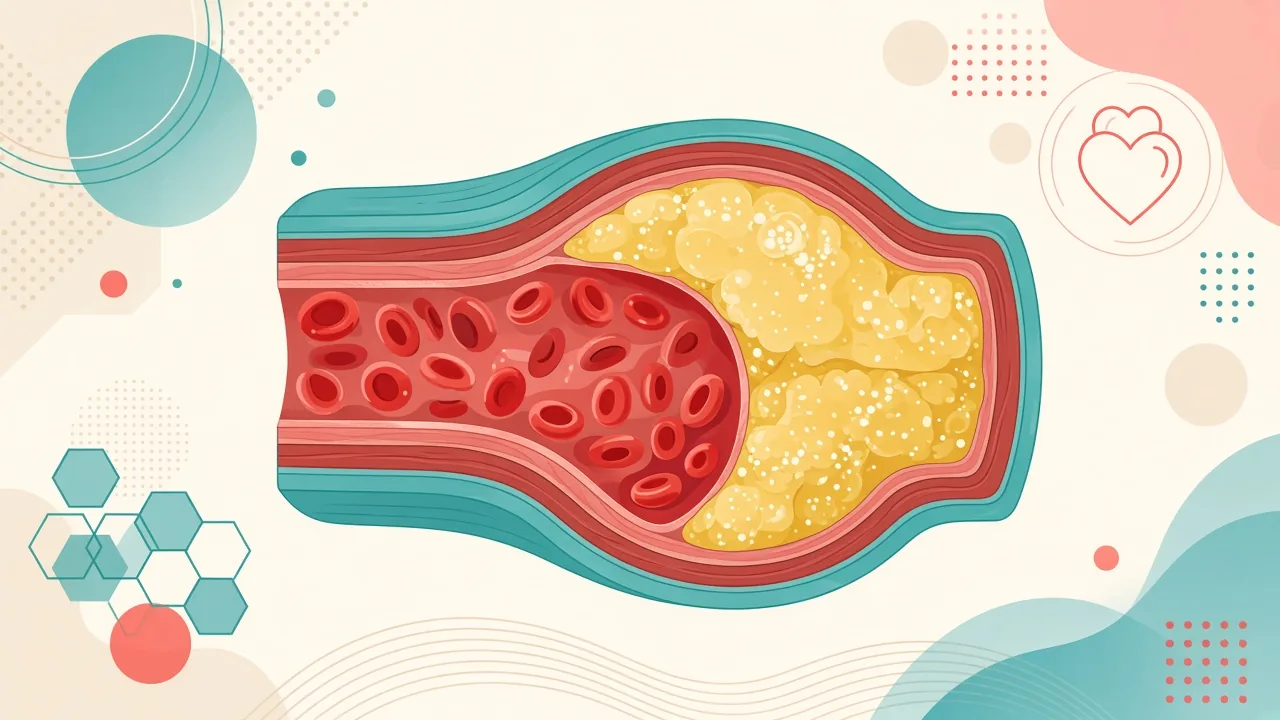
Coronary angioplasty treats a narrowed or blocked coronary artery. The coronary arteries supply oxygen-rich blood to the heart muscle. Atherosclerosis can cause plaques to build up inside these arteries. As a blockage becomes more significant, blood flow to the heart may become restricted, causing chest pain or shortness of breath.
During angioplasty, the cardiologist passes a catheter into the coronary artery and uses a balloon to widen the narrowed section. A stent may then be positioned inside the artery to provide structural support.
The procedure is also known as balloon angioplasty, PCI, PTCA, coronary stenting or a heart stent procedure.
Ask whether PCI or bypass is appropriate
Why Is Coronary Angioplasty Needed?
The main purpose is to improve blood flow through a coronary artery. PCI may be considered when coronary artery disease is causing significant symptoms or when urgent restoration of blood flow is necessary.
Heart attack. Emergency angioplasty may be required when a coronary artery becomes acutely blocked. The 2025 ACC/AHA guideline provides updated recommendations for acute coronary syndrome management, including PCI. That is a local emergency department pathway, not an international-travel plan.
Persistent or severe angina. Patients who continue to experience significant chest pain despite medical treatment may be evaluated for revascularization.
Significant coronary narrowing. An angiogram may reveal a narrowing that substantially restricts blood flow. The team may then consider PCI, medicines or CABG.
Unstable coronary disease. Some patients with unstable angina or non-ST-elevation myocardial infarction may require an invasive assessment and, when indicated, PCI.
Selected chronic coronary disease. PCI can be considered when symptoms, ischaemia, anatomy and response to medical therapy support revascularization.
The percentage of blockage alone does not determine whether a patient should have angioplasty. Cardiologists consider symptoms, anatomy, physiological significance, plaque characteristics, heart function and the overall clinical picture.
Who May Need Coronary Angioplasty?
There is no single blockage percentage that automatically means angioplasty is required.
Factors may include severity and location of the blockage, number of affected arteries, angina, evidence of ischaemia, angiography, FFR or iFR where appropriate, heart pumping function, previous heart attack, diabetes, kidney disease, previous PCI or CABG, overall surgical risk and anatomical complexity.
In some patients, medicines and lifestyle treatment may be sufficient. In others, PCI or CABG may be considered.
Coronary Angioplasty vs Coronary Angiography
Coronary angiography is primarily diagnostic. Contrast dye is injected into the coronary arteries while X-ray imaging identifies narrowing or blockage. GAF planning for coronary angiography is $400–$1,200.
Coronary angioplasty is treatment. A catheter, guidewire and balloon treat an obstructed artery, often followed by a stent.
In some cases, angiography and angioplasty happen in the same sitting if the anatomy and clinical circumstances make immediate treatment appropriate. Same-sitting PCI is quoted after the angiogram, not from the diagnostic sheet alone.
How Is Coronary Angioplasty Performed?
Step 1: Patient assessment. The team reviews symptoms, medical history, medications, allergies, kidney function and investigations. Blood tests, ECG, echocardiography and coronary imaging may be performed.
Step 2: Preparing the access site. The procedure is commonly performed through the radial artery in the wrist or the femoral artery in the groin. Radial access is increasingly preferred in appropriate patients, particularly in acute coronary syndrome, because it is associated with lower bleeding and vascular complication rates. The 2025 ACC/AHA ACS guideline emphasizes radial access for PCI in ACS patients.

Step 3: Inserting the catheter. After local anaesthesia, a small sheath is inserted and a thin catheter is guided toward the heart.
Step 4: Coronary angiography. Contrast dye and X-ray images identify the blockage.
Step 5: Passing the guidewire. A thin guidewire is advanced through the narrowed coronary artery.
Step 6: Balloon angioplasty. A balloon is positioned across the blockage and inflated briefly to widen the artery.
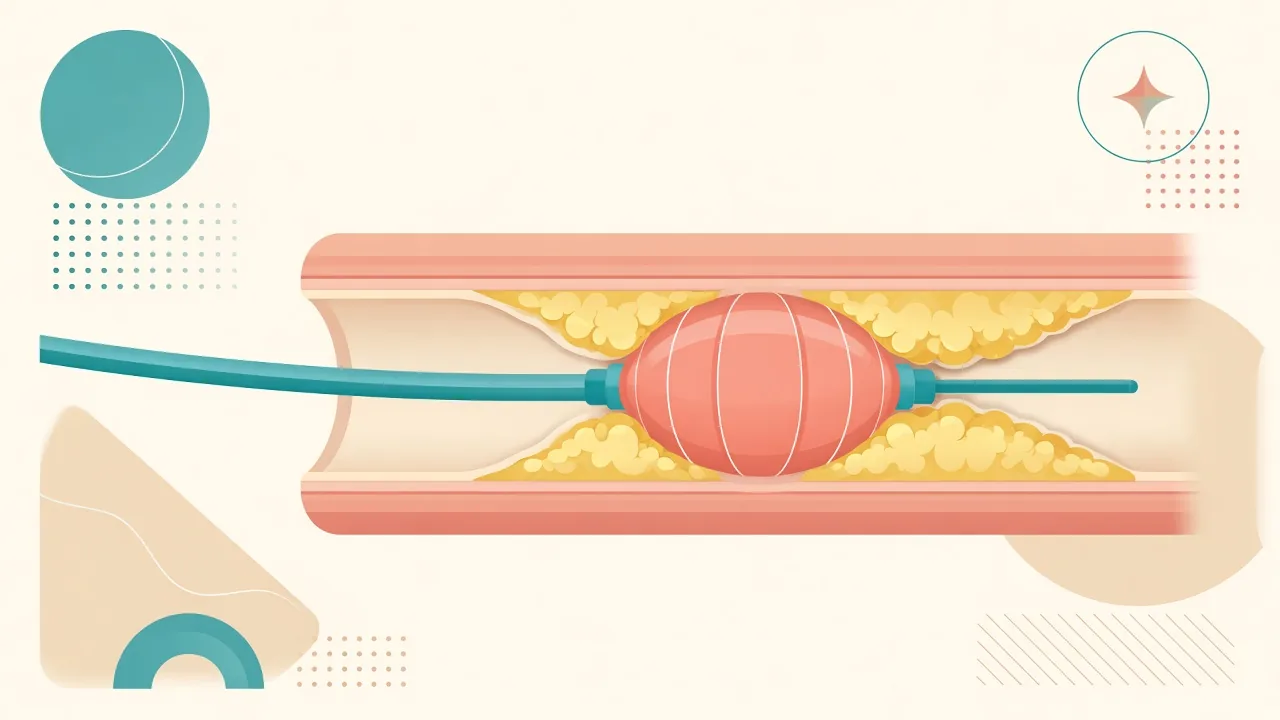
Step 7: Stent placement. In many PCI procedures a stent expands against the artery wall. Drug-eluting stents release medication designed to reduce tissue growth and re-narrowing.
Step 8: Final assessment. The cardiologist checks blood flow before removing the catheter. IVUS, OCT, FFR or iFR may be used in selected cases. The 2025 ACC/AHA acute coronary syndrome guideline gives intravascular imaging-guided PCI a Class 1 recommendation in relevant PCI settings. Those adjuncts are quoted after case review; there is no separate GAF IVUS or OCT cost sheet.
Request a named-procedure cost estimate
Types of Coronary Angioplasty
Balloon angioplasty widens the narrowed portion of the artery.
Drug-eluting stent PCI places a stent that releases medication locally to reduce restenosis.
Complex PCI may be required for heavily calcified lesions, chronic total occlusions, left main disease, bifurcation lesions, long or diffuse lesions, multiple blockages, restenosis or vein-graft disease. Named CTO angioplasty is $5,500–$14,000 (typically 1–4 nights) when that is the product. Rotablation and other lesion-modification techniques are quoted after records review.
What Is a Coronary Stent?
A coronary stent is a small mesh tube placed inside a coronary artery to help maintain its opening. Bare-metal stents and drug-eluting stents are the two broad historical categories. Modern PCI predominantly uses drug-eluting stents because they reduce restenosis compared with older bare-metal technology.
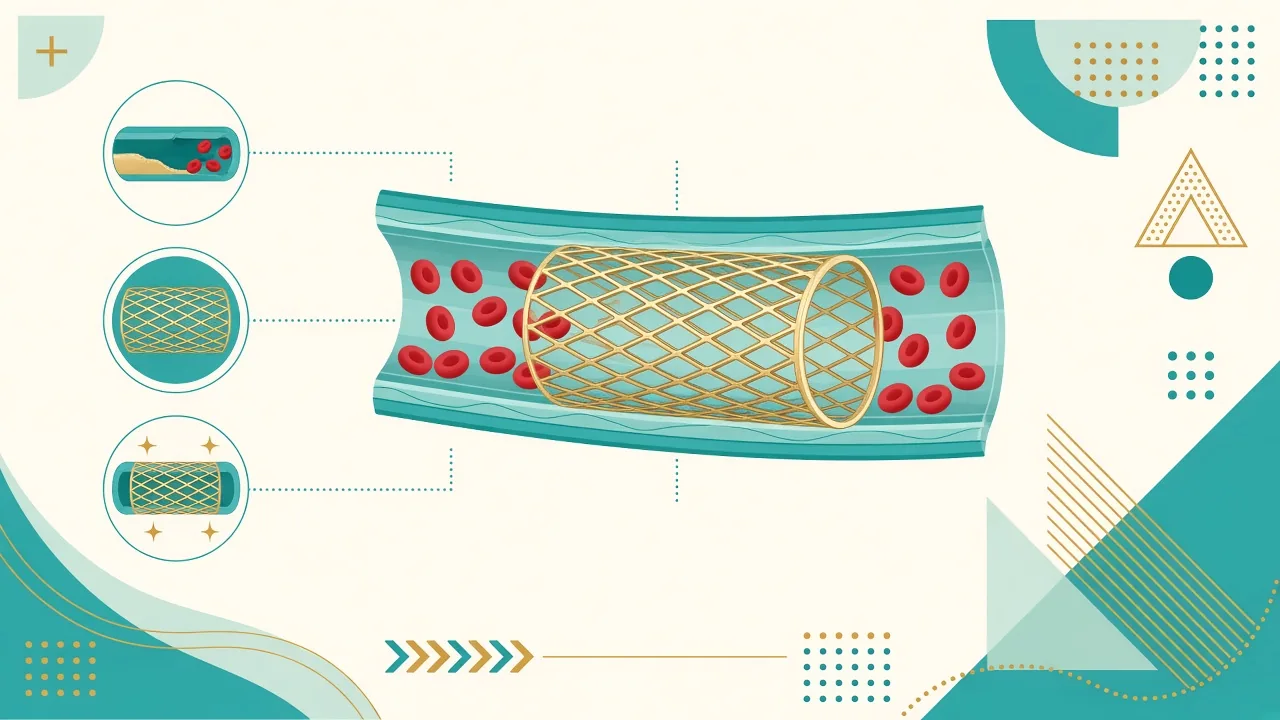
The stent is designed to remain permanently. It does not normally need to be removed. A stented artery can still develop restenosis or stent thrombosis. Antiplatelet medicines and risk-factor control remain essential.
Coronary Angioplasty Cost in India
There is no medically responsible single price because treatment may range from a planned single-vessel PCI to emergency primary PCI, extra stents or CABG.
| Type / complexity | GAF planning | Typical stay |
|---|---|---|
| Coronary angiography | $400–$1,200 | Day-care or overnight |
| Coronary angioplasty and stenting | $3,200–$8,500 | 1–3 nights |
| CTO angioplasty | $5,500–$14,000 | 1–4 nights |
| CABG | $5,500–$14,000 | 7–14 nights |
| Extra stents, IVUS, OCT, FFR, rotablation, emergency primary PCI, shock | Quoted after angiogram review | Depends on the case |
US comparison for coronary angioplasty and stenting is $25,000–$70,000.
Major cost drivers include number and type of stents, complexity, hospital and city, emergency versus planned procedure, ICU, IVUS/OCT or physiological assessment, atherectomy, length of stay and treatment of other conditions.
Coronary stents in India are subject to NPPA ceiling prices, which are revised periodically. The stent price is only one component of the bill. Catheter-lab charges, cardiologist fees, consumables, medicines, imaging, room charges and nursing are separate lines. Ask for an itemized estimate. Do not compare two quotations only by the headline package price.
City starting points:
- Delhi NCR coronary angioplasty cost
- Mumbai coronary angioplasty cost
- Bengaluru coronary angioplasty cost
- Chennai coronary angioplasty cost
- Hyderabad coronary angioplasty cost
Request a named-procedure hospital estimate
WhatsApp +91 90443 46292 for an itemised PCI estimate
Is Coronary Angioplasty Safe?
PCI is commonly performed and serious complications are uncommon overall. It is still an invasive cardiovascular procedure. Risk varies with age, overall health, kidney function, diabetes, disease severity, heart function, whether the procedure is planned or performed during a heart attack, anatomical complexity and number of vessels treated.
Possible complications include bleeding or bruising at the access site, access-artery damage, contrast reaction, kidney injury, coronary perforation, heart attack, stroke, stent thrombosis, restenosis, infection and, rarely, death. NHS guidance notes that serious complications are uncommon but can include major bleeding, heart attack and stroke. Mayo Clinic describes restenosis, stent clotting, bleeding, coronary artery damage and kidney injury.
Recovery After Coronary Angioplasty
GAF planning is typically 1–3 nights after coronary angioplasty and stenting. Some uncomplicated planned cases are discharged the same day in published hospital pathways. Emergency heart-attack cases may need several days and a substantially longer recovery.
The first 24 hours are used to watch chest pain, heart rhythm, blood pressure, access-site bleeding and other immediate complications. Mild soreness, bruising and tiredness are common in the first few days.
NHS guidance advises avoiding heavy lifting and strenuous activities for around a week or until the access wound has healed. Patients recovering from a heart attack require individualized rehabilitation.
Patients who receive a stent are commonly prescribed dual antiplatelet therapy. The 2025 ACC/AHA ACS guideline states that aspirin plus a P2Y12 inhibitor is the default strategy for at least 12 months in many ACS patients who are not at high bleeding risk. Never stop antiplatelet medication after stent placement without speaking to your cardiologist. Premature discontinuation can increase the risk of stent thrombosis and heart attack.
Angioplasty treats a blockage. It does not eliminate the underlying tendency to develop coronary artery disease. A stent is not a pacemaker. A stent is also not a transcatheter aortic valve. Named TAVR lists sit on TAVR in India. Named pacing lists sit on Pacemaker Implantation in India. Long-term care includes stopping tobacco, controlling blood pressure, diabetes and cholesterol, a heart-healthy diet, activity, medicines, follow-up and cardiac rehabilitation when recommended.
Plan an international angioplasty stay
Coronary Angioplasty vs Bypass Surgery
PCI opens the artery from inside. CABG creates a new route around blocked arteries and is major cardiac surgery with a longer recovery. GAF planning for CABG is $5,500–$14,000 (typically 7–14 nights).
There is no universal rule that angioplasty is better than bypass surgery or vice versa. For some patients PCI is appropriate. For others, especially extensive or complex multivessel disease and some patients with diabetes, CABG may be the more suitable revascularization strategy. The 2025 ACC/AHA ACS guideline emphasizes complete revascularization in appropriate ACS patients while recognizing that PCI versus surgery depends on coronary complexity.
Advanced Coronary Angioplasty in India
Major cardiac centres may offer IVUS, OCT, FFR, iFR, rotational atherectomy for selected calcified lesions, and specialized CTO techniques. These are not necessary for every patient. Their use depends on anatomy and the interventional cardiologist's assessment. Named CTO lists sit on CTO angioplasty.
Tests Before Coronary Angioplasty
Depending on the situation, investigations may include ECG, echocardiogram, blood tests, troponin, kidney function, glucose, lipids, chest imaging, coronary CT angiography in selected patients, diagnostic angiography, and FFR/iFR or intravascular imaging when indicated. Emergency cases may proceed directly to the catheterization laboratory.
For international patients, actual coronary angiogram images are generally more useful than a written report alone.
How Long Does Coronary Angioplasty Take?
A straightforward PCI may take approximately 30 minutes to 2 hours. Complex calcification, CTO, multiple lesions or multiple vessels can take considerably longer. Use duration as a general guide, not a guaranteed operating time.
Can a Blockage Return After Angioplasty?
Yes. Restenosis can occur. Risk depends on lesion characteristics, vessel size, diabetes, stent type, procedure complexity, medication adherence, smoking and other risk factors. Drug-eluting stents were developed to reduce restenosis compared with older bare-metal stents. Returning symptoms need prompt cardiology review.
Find an interventional cardiologist in India
WhatsApp +91 90443 46292 to match a PCI cardiologist
Why Consider India for Coronary Angioplasty?
Patients should evaluate the specific hospital and cardiac team, not India as a whole. A PCI centre should ideally have experienced interventional cardiologists, 24/7 emergency cardiac services, a dedicated cath lab, cardiac-surgery backup or a defined referral pathway, IVUS/OCT and physiological assessment when required, cardiac ICU, transparent itemized quotations and angiogram review before travel when clinically appropriate.
Catalog hospitals currently affiliated with tagged angioplasty lists include Artemis Hospital and Medanta in Delhi NCR; Gleneagles Hospital and Apollo Hospitals, Navi Mumbai in Mumbai; Apollo Hospitals on Bannerghatta Road in Bengaluru; MGM Healthcare and Gleneagles Health City in Chennai; and Apollo Hospital, Jubilee Hills and KIMS Hospitals in Hyderabad. A catalog tag is not a volume, outcome or ranking claim.
Named clinicians currently tagged to coronary angioplasty lists include Dr. (Col) Balbir Kalra and Dr. Abhinav Chhabra in Delhi NCR; Dr. Charan Lanjewar and Dr. Brajesh Kumar Kunwar in Mumbai; Dr. Abhijit Vilas Kulkarni and Dr. Girish B Navasundi in Bengaluru; Dr. A B Gopalamurugan and Dr. Gobu P in Chennai; and Dr. A. Sreenivas Kumar and Dr. Ajay J Swamy in Hyderabad.
- Cardiology hospitals in Delhi NCR
- Cardiology hospitals in Mumbai
- Cardiology hospitals in Bengaluru
- Cardiology hospitals in Chennai
- Cardiology hospitals in Hyderabad
What Medical Records Should International Patients Send?
Ideally provide a recent cardiology consultation, ECG, echocardiogram, angiography report and images/DICOM, blood tests, kidney function, medication list, previous PCI or CABG records, discharge summaries, allergy details and passport information where applicable.
Can a Patient Travel to India for Coronary Angioplasty?
Yes, for stable, planned cases after records review. Chest pain with breathlessness, sweating, nausea, fainting or radiating pain belongs in a local emergency department. Do not fly with an untreated acute coronary syndrome to obtain a cheaper stent.
GAF planning distinguishes hospital stay from total stay in India. Coronary angioplasty and stenting is typically 1–3 nights in hospital. Combined review, medicines and fitness to fly usually take longer. Keep the return flight flexible until the treating team confirms fitness for travel, especially after emergency PCI.
Request a coronary angioplasty treatment plan
Questions to Ask Your Cardiologist
Ask which artery is blocked, how severe the narrowing is, whether angioplasty is definitely required, whether medicines alone could be appropriate, whether CABG is another option, how many stents may be required, what type of stent is being considered, whether the procedure is straightforward or complex, whether IVUS, OCT, FFR or iFR will be used, what the major risks are in this specific case, how long hospital stay might be, which antiplatelet medicines will be needed and for how long, when work and exercise can resume, which symptoms require emergency care, and what the itemized estimate includes.
Warning Signs After Angioplasty
Go to a local emergency department for new or severe chest pain, severe shortness of breath, fainting, significant bleeding from the catheter site, increasing swelling at the access site, sudden weakness or neurological symptoms, a cold, pale or numb arm or leg, or fever with signs of infection. Severe chest pain that does not settle is an emergency, not a WhatsApp question.
Frequently Asked Questions About Coronary Angioplasty in India
Is coronary angioplasty the same as a heart stent?
Not exactly. Angioplasty opens a narrowed artery, usually with a balloon. A stent is a mesh tube placed to help keep it open. Most modern PCI procedures for significant lesions use a stent when clinically appropriate.
How much does coronary angioplasty cost in India?
GAF coronary angioplasty and stenting planning is $3,200–$8,500. Named angiography is $400–$1,200. CTO and CABG sheets differ. A written estimate after angiogram review is required.
Is angioplasty a major surgery?
No. PCI is a minimally invasive catheter-based procedure rather than open-heart surgery. It is still a serious cardiovascular intervention and should be performed in an appropriately equipped cardiac centre.
Can angioplasty be performed during a heart attack?
Yes. Emergency PCI is an important treatment for appropriate patients with acute myocardial infarction. Timing belongs in emergency care, not in delayed medical travel.
How many days do I need to stay in the hospital?
GAF planning is typically 1–3 nights. Some hospital pages quote same-day discharge after uncomplicated planned PCI. Heart-attack cases often need longer.
Can angioplasty be done without a stent?
In selected cases, balloon angioplasty or other strategies may be used without a permanent stent. The appropriate strategy depends on the lesion.
Is angioplasty better than bypass surgery?
There is no single answer. PCI and CABG are different revascularization strategies. Anatomy, complexity, diabetes, heart function and surgical risk decide.
Can a person live normally after angioplasty?
Many patients return to active daily lives after successful PCI when they follow medicines and risk-factor control. Angioplasty does not cure the underlying coronary disease.
Can international patients have coronary angioplasty in India?
Yes, subject to medical suitability. Angiogram images should generally be reviewed before travel for planned cases. Acute chest-pain syndromes should not wait for an international itinerary.
Key Takeaways
- Coronary angioplasty is also called PCI.
- A balloon widens the blockage and a stent is commonly placed when appropriate.
- GAF planning is $3,200–$8,500 (typically 1–3 nights). Named angiography, CTO and CABG sheets differ.
- Radial (wrist) access is increasingly preferred in appropriate PCI patients, particularly in ACS.
- Stent prices in India are subject to NPPA ceilings; the stent is only one line on the bill.
- Dual antiplatelet therapy after a stent must not be stopped without cardiology advice.
- Angioplasty treats a blockage but does not eliminate coronary artery disease.
- Chest pain with breathlessness, sweating or radiating pain belongs in a local emergency department.
Share angiogram images, ECG and echocardiography before making travel arrangements. A case-specific cardiology opinion is more useful than a brochure stent package.
Share imaging for an angioplasty review
Message a coordinator on WhatsApp
Request a cost review on WhatsApp
Top 10 Medical Sources
- ACC/AHA 2025 Guideline for Acute Coronary Syndromes — ACS, PCI, antiplatelet therapy, radial access and intravascular imaging.
- ACC/AHA/SCAI 2021 Guideline for Coronary Artery Revascularization — PCI versus CABG decision-making.
- NPPA, Government of India — coronary-stent ceiling-price notifications.
- WHO — Cardiovascular diseases — prevention and treatment context.
- WHO — Heart attack — acute coronary syndromes in global mortality.
- NHS — Coronary angioplasty and stent insertion — procedure, recovery and risks.
- Mayo Clinic — Coronary angioplasty and stents — indications, risks and recovery.
- GAF Healthcare coronary angioplasty and stenting — partner USD planning range for PCI.
- GAF Healthcare coronary angiography — neighbouring diagnostic sheet.
- GAF Healthcare CABG — neighbouring surgical revascularization sheet.
Last reviewed against the cited sources: September 2026.
Medical Disclaimer
This page is intended for general educational purposes and should not replace consultation with a qualified cardiologist. The decision to undergo coronary angioplasty, choose a stent, undergo CABG, continue medical therapy or pursue another treatment should be based on symptoms, investigations, coronary anatomy and overall health.
Treatment costs, hospital packages and recovery times are planning figures and can change. A hospital's written estimate and the treating cardiologist's assessment are authoritative for an individual patient.
If you develop chest pain, pressure or tightness with breathlessness, sweating, nausea, fainting or pain spreading to the arm, shoulder, jaw or back, seek urgent medical attention in a local emergency department.
Treatment Process
- 1
Share medical records
The patient provides ECG, echocardiogram, angiography report and images, kidney function and a short description of current symptoms.
- 2
Cardiology review
An interventional cardiologist reviews whether the target is planned PCI, emergency ACS care, CTO work or a CABG discussion.
- 3
Procedure selection
The team names angiography, single-vessel PCI, complex or CTO PCI, or CABG rather than a generic stent package.
- 4
Medical optimisation
Antiplatelet strategy, kidney function, diabetes control and access-site plan are addressed before a planned procedure.
- 5
Itemized estimate
The hospital quotes the named sheet plus stent count, ICU, imaging adjuncts and emergency risk, not a brochure overnight package.
- 6
Travel to India
Stable planned cases travel after records review. Chest pain with breathlessness or radiating pain is a local emergency, not a reason to delay care for international travel.
- 7
PCI
The blockage is treated through the named radial or femoral corridor, with a stent when clinically appropriate.
- 8
Access-site and rhythm monitoring
The team watches for bleeding, chest pain, rhythm changes and kidney function in the first day after the procedure.
- 9
Medicines and rehabilitation
Dual antiplatelet therapy, statins and cardiac rehabilitation are added according to the presentation.
- 10
Return home
The patient leaves with a written summary covering the named procedure, stent details, antiplatelet plan, warning signs and the follow-up schedule.