Treatment Overview

ASD closure surgery in India is a treatment used to close an atrial septal defect (ASD), a congenital opening in the wall separating the heart's two upper chambers. Depending on the type, size, location, surrounding tissue and effect on the heart and lungs, an ASD may be closed using a catheter-delivered closure device or through surgical repair.
Many small ASDs do not require immediate intervention and may narrow or close naturally, particularly during childhood. Larger or hemodynamically significant defects can cause excessive blood flow to the lungs and enlargement of the right side of the heart and may eventually contribute to arrhythmias, pulmonary hypertension or heart failure.
India has established pediatric and adult congenital-heart programs offering echocardiography, cardiac catheterization, device closure and open-heart congenital cardiac surgery. The appropriate treatment should be selected only after reviewing the patient's echocardiogram, clinical condition, pulmonary pressures, ASD anatomy and associated heart defects.
Ventricular holes sit on Ventricular Septal Defect (VSD) Surgery in India. A persistent duct sits on PDA Closure Surgery in India. TOF lists sit on TOF Repair Surgery in India. Aortic narrowing sits on Coarctation Repair Surgery in India. d-TGA anatomical repair sits on Arterial Switch Operation in India. Staged single-ventricle lists sit on Glenn Procedure Surgery in India and Fontan Procedure Surgery in India. Valve lists sit on Heart Valve Replacement Surgery in India. Pacing after heart block sits on Pacemaker Implantation in India. There is no live GAF AVSD-only, robotic-ASD-only or pediatric-cardiac-surgery-only treatment page. This page is the named ASD-closure product.
GAF Healthcare planning for ASD closure is $4,000–$9,500 (typically 5–10 nights; parent stay expected). US comparison is $30,000–$80,000. Neighbouring VSD closure is $4,500–$11,000. Neighbouring PDA closure is $3,500–$8,500. Neighbouring TOF repair is $6,500–$16,000. Neighbouring congenital heart surgery is $8,000–$28,000 (typically 7–21 nights; parent stay expected) when a broader congenital list is the honest product. US comparison for that broader sheet is $80,000–$250,000. Neighbouring heart valve replacement is $7,000–$18,000 (typically 8–16 nights) when a valve is named in the same sitting. Neighbouring pacemaker implantation is $3,500–$9,000 (typically 1–3 nights) if complete heart block requires pacing. Neighbouring minimally invasive cardiac surgery is $8,000–$20,000 when a mini approach can honestly complete isolated work. The closure device itself can be a major component of a device-closure bill and is quoted after echo and device selection. These are planning ranges from partner hospital cost sheets, not hospital quotations.
International patients comparing pediatric cardiac surgeons commonly start with Delhi NCR, Mumbai, Bengaluru, Chennai and Hyderabad. Partner pediatric cardiac surgery hospitals in Delhi NCR, Mumbai and Bengaluru, and in Chennai and Hyderabad, are a typical first filter because ASD closure needs a pediatric cardiac ICU, echo and emergency backup. City ASD sheets include Delhi NCR, Mumbai, Bengaluru, Chennai and Hyderabad. Broader congenital lists still sit with cardiac surgeons in Delhi NCR, Mumbai, Bengaluru, Chennai and Hyderabad, and with cardiac surgery hospitals in Delhi NCR, Mumbai and Bengaluru, Chennai and Hyderabad. Neighbouring congenital city sheets include Delhi NCR and Mumbai, plus Bengaluru, Chennai and Hyderabad. Kolkata, Pune, Ahmedabad, Chandigarh and Kochi may have congenital theatres. They are not live GAF catalog cities on this site.
Important: Severe breathing difficulty, bluish discoloration, poor feeding, extreme lethargy, fainting or a collapsing child belongs in a local emergency department first. WhatsApp at +91 90443 46292 is for planned record review, not an acute infant emergency.
What is an atrial septal defect?
An atrial septal defect, commonly called an ASD or hole in the heart, is an opening in the septum between the right and left atria.
Normally, the septum separates the two upper chambers. When an ASD is present, blood can pass between them. In many ASDs, oxygen-rich blood from the left atrium flows into the right atrium, creating a left-to-right shunt.
A small defect may have little effect. A larger defect can send an excessive amount of blood toward the lungs over many years. This can enlarge the right atrium and right ventricle and, in some patients, eventually contribute to pulmonary hypertension or abnormal heart rhythms.
The decision to close an ASD is therefore not based only on the diameter of the hole. Cardiologists consider the type of ASD, size, shunt, right-heart enlargement, pulmonary pressures, symptoms, anatomy and associated heart conditions.
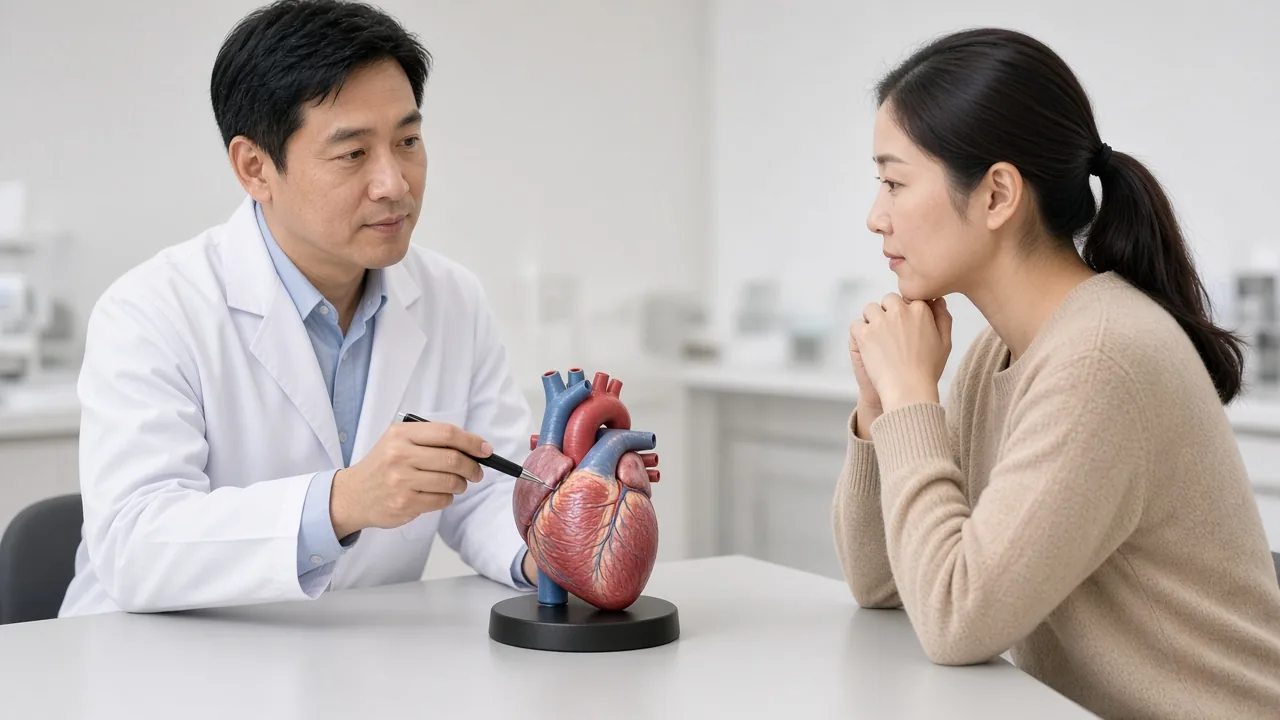
Types of ASD
There are several anatomical types of atrial septal defect.
1. Secundum ASD. This is the most common type and occurs in the central portion of the atrial septum. It is the type most commonly considered for transcatheter ASD device closure, provided the defect has suitable anatomy and adequate surrounding tissue for the device to anchor securely.
2. Primum ASD. A primum ASD occurs in the lower part of the atrial septum and is often associated with abnormalities of the atrioventricular valves. These defects generally require surgical repair rather than routine device closure. There is no live GAF AVSD-only treatment page.
3. Sinus venosus ASD. This defect is located near the entry of the superior or inferior vena cava into the atrium. It may be associated with abnormal pulmonary venous drainage. Surgical correction is generally required because treatment may involve both closure of the defect and correction of the associated venous abnormality.
4. Coronary sinus ASD. This is a less common defect involving the coronary sinus region. Because of its anatomy, surgical treatment may be required.

Ask which ASD type the echo is naming
When does an ASD need closure?
Not every ASD needs immediate closure.
A cardiologist may recommend observation when the defect is small, produces little or no significant shunting and does not cause enlargement or dysfunction of the right side of the heart.
Closure becomes more relevant when an ASD causes a significant left-to-right shunt, right atrial or right ventricular enlargement, symptoms or other clinically important consequences.
In adults, guidelines consider factors such as the magnitude of the shunt, right-heart enlargement, pulmonary artery pressure and pulmonary vascular resistance when determining whether closure is appropriate. Closure should generally be avoided in patients with advanced pulmonary vascular disease or a net right-to-left shunt because closing the communication can be harmful in that setting.
Common reasons a cardiologist may recommend closure include:
- Significant left-to-right shunting
- Enlargement of the right atrium or right ventricle
- Shortness of breath or reduced exercise tolerance
- Recurrent respiratory problems in some children
- Palpitations or atrial arrhythmias associated with the defect
- Evidence of excessive pulmonary blood flow
- Certain paradoxical embolic events
- Progressive effects on cardiac structure or function
- A large ASD unlikely to close spontaneously
The exact indication should be determined by a congenital-heart specialist rather than by the size of the ASD alone.
ASD closure: device closure vs surgery
There are two major approaches.
| Feature | Device closure | Surgical ASD closure |
|---|---|---|
| Access | Catheter, usually through a groin vein | Surgical access through the chest |
| Open-heart surgery | No | Usually yes |
| Most suitable for | Selected secundum ASDs | Primum, sinus venosus, coronary sinus and unsuitable secundum ASDs |
| Device implanted | Yes | Usually no |
| Incision | No chest incision | Chest incision, although minimally invasive approaches may be possible |
| Hospital recovery | Generally shorter | Generally longer |
| Recovery | Usually faster | Usually several weeks |
| Suitability | Depends heavily on anatomy | Can treat a broader range of ASD anatomy |
| Imaging guidance | Echocardiography + fluoroscopy | Intraoperative imaging |
| Main specialist | Interventional cardiologist | Congenital or pediatric cardiac surgeon |
| Neighbouring GAF sheet | ASD closure $4,000–$9,500 | ASD closure $4,000–$9,500 |
Transcatheter closure is a minimally invasive alternative to surgery for appropriately selected secundum ASDs. Surgical treatment remains important when anatomy is unsuitable for device placement or when the ASD is associated with other abnormalities requiring surgical correction.
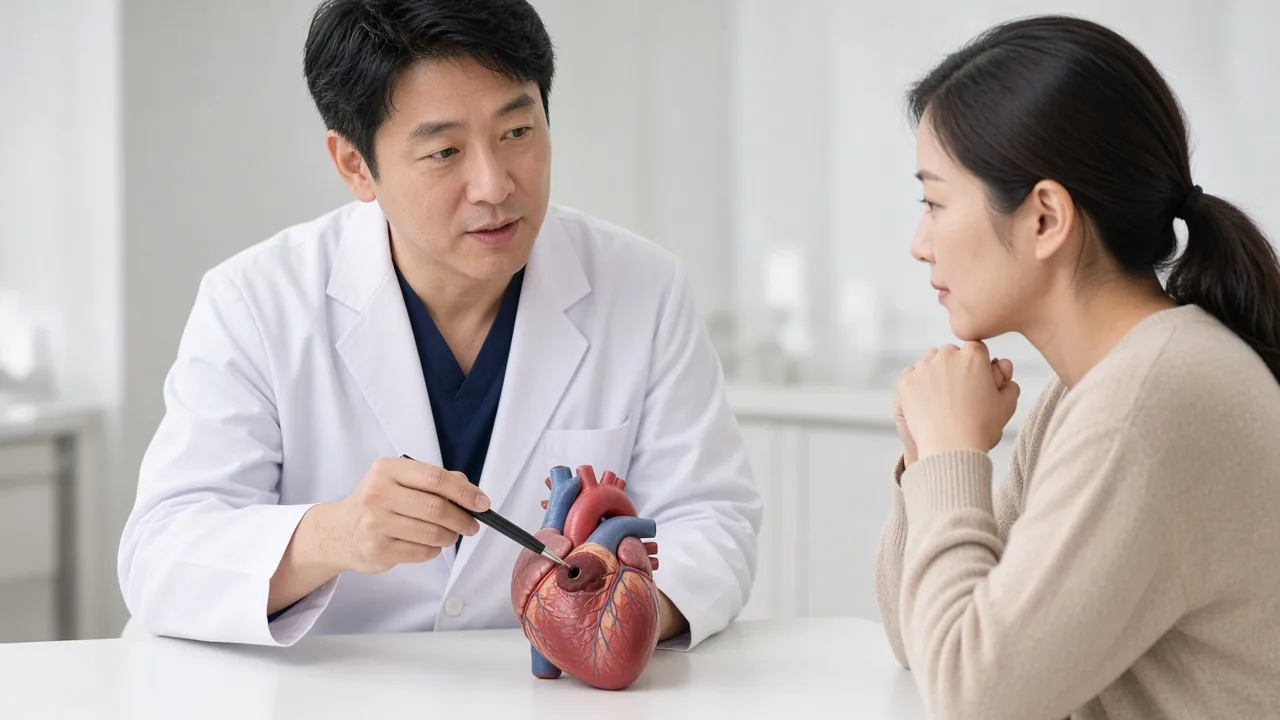
Ask whether a device or surgery is the honest product
ASD device closure in India
ASD device closure is a catheter-based procedure that closes a suitable ASD without opening the chest.
The cardiologist introduces a catheter through a vein, commonly in the groin, and advances it toward the heart. Imaging is used to position the closure device across the ASD.
Once the device is correctly positioned, it expands on both sides of the septum and seals the abnormal opening. Over time, heart tissue grows over the device.
The procedure requires careful assessment of the ASD's dimensions and the surrounding septal rims before a device is selected.
How ASD device closure is performed
Step 1: Pre-procedure evaluation. The patient undergoes cardiac imaging and clinical assessment. Depending on age and complexity, tests may include echocardiography, ECG, chest imaging when appropriate, blood tests, transesophageal echocardiography (TEE), cardiac CT or MRI in selected cases, and cardiac catheterization when pulmonary pressures or other hemodynamic information needs clarification. Echocardiography is particularly important for assessing the defect, shunt and surrounding structures.
Step 2: Anesthesia or sedation. The choice depends on the patient's age, anatomy, imaging requirements and institutional practice. Children may require general anesthesia, while selected adults may undergo the procedure with sedation.
Step 3: Venous access. A catheter is introduced through a vein, usually in the groin.
Step 4: Measuring the ASD. The cardiology team evaluates the size and morphology of the defect and determines whether enough tissue surrounds it to securely support a device.
Step 5: Device positioning. The selected closure device is advanced through the catheter and positioned across the ASD.
Step 6: Device deployment. The cardiologist checks the device's position and its relationship with nearby cardiac structures before releasing it.
Step 7: Confirmation of closure. Echocardiography and other procedural imaging are used to assess device position and residual blood flow.
Step 8: Catheter removal. The catheter is withdrawn and the access site is treated.
What is an ASD closure device?
An ASD closure device is a specialized implant designed to seal an abnormal opening between the atria.
Many devices have two discs connected by a central waist. The waist sits within the ASD while the discs rest on either side of the septum.
Common device systems vary according to the patient's anatomy, defect size and clinical requirements. Device selection should be individualized rather than based simply on brand or price. There is no live GAF device-brand sheet. A device list is quoted after echo and anatomy review.
Who is suitable for ASD device closure?
Device closure is primarily considered for secundum ASD when the anatomy is appropriate.
The cardiologist evaluates:
- ASD diameter
- Number of defects
- Location of the defect
- Septal rim adequacy
- Relationship to the aorta
- Relationship to the mitral and tricuspid valves
- Pulmonary veins
- Right-heart size
- Pulmonary artery pressure
- Pulmonary vascular resistance
- Associated congenital heart abnormalities
Transcatheter closure is not appropriate for every secundum ASD and is generally not the standard device approach for primum, sinus venosus or coronary sinus defects.
When is ASD surgery necessary?
Surgical ASD closure may be recommended when:
- The ASD is not suitable for device closure.
- The defect is a primum ASD.
- The defect is a sinus venosus ASD.
- The defect involves the coronary sinus.
- There is inadequate tissue around a secundum ASD for secure device placement.
- The ASD is very large or has complex anatomy.
- Another cardiac abnormality requires surgery at the same time.
- The anatomy makes catheter closure unsafe or technically unsuitable.
Open-heart surgery involves exposing the heart and closing the ASD either by direct suturing or with a patch, depending on the defect.
Open surgery is the established approach for primum, sinus venosus and coronary sinus ASDs, while some secundum ASDs may also require surgery when they are too large or otherwise unsuitable for catheter closure.
Surgical ASD closure procedure
A typical surgical repair involves several stages.
1. Anesthesia. The patient receives general anesthesia.
2. Surgical access. Traditional repair commonly uses a median sternotomy, although selected patients may be considered for minimally invasive approaches at specialized centers.
3. Cardiopulmonary bypass. The patient is connected to a heart-lung machine so that blood circulation and oxygenation can be maintained while the heart is repaired.
4. ASD exposure. The surgeon accesses the atrial septum and identifies the defect.
5. Closure. A small defect may sometimes be closed with sutures. A larger defect is generally closed using a patch, which can be made from suitable biological or synthetic material.
6. Testing and completion. The surgical team checks the repair and closes the surgical access.
7. Intensive care and recovery. The patient is monitored in a cardiac intensive care environment before moving to a regular ward when stable.
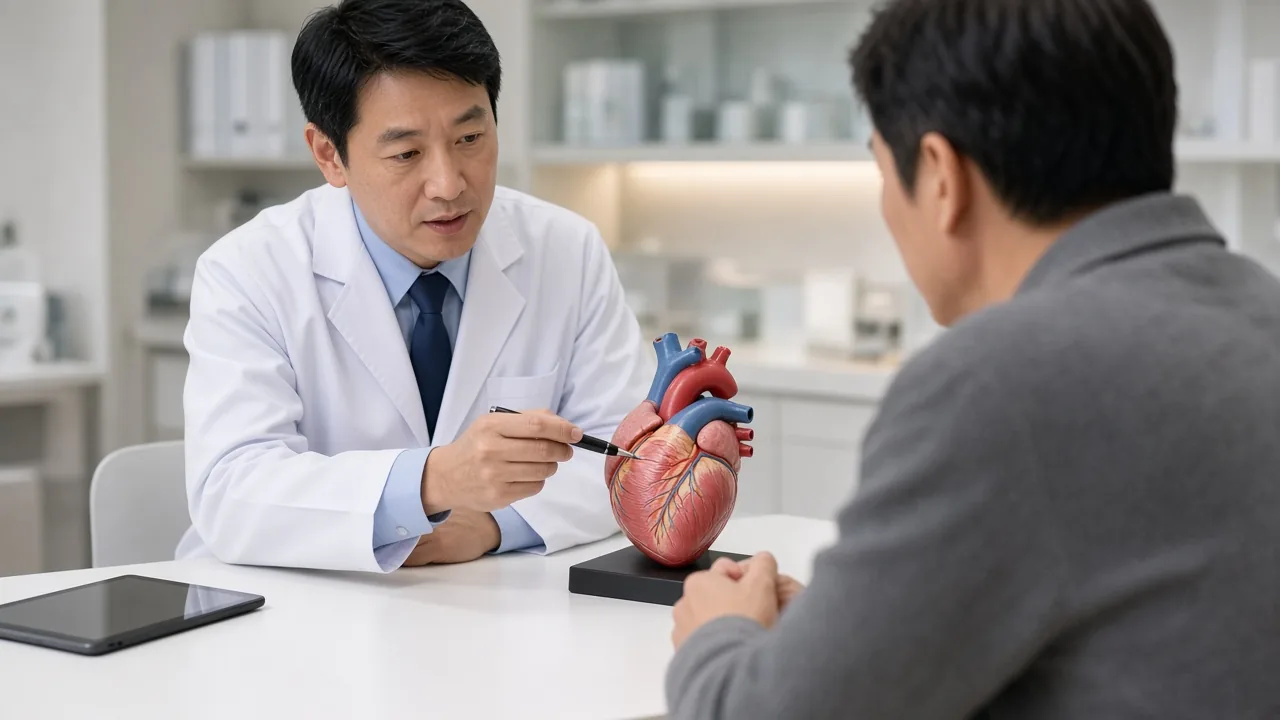
Minimally invasive and robotic ASD surgery in India
Selected cardiac centers in India offer minimally invasive approaches for certain ASD repairs.
Instead of a traditional full sternotomy, smaller incisions may be used. Robotic or endoscopic approaches may also be available for carefully selected patients.
These techniques are not suitable for every ASD. Patient anatomy, defect characteristics, associated heart conditions, surgeon expertise and hospital infrastructure all influence whether minimally invasive surgery is appropriate.
There is no live GAF robotic-ASD-only treatment page. Neighbouring minimally invasive cardiac surgery is $8,000–$20,000 when a mini approach can honestly complete isolated work.
ASD closure in children
ASD is frequently diagnosed during childhood, although some patients are diagnosed much later.
Many children with small ASDs have no symptoms. A larger defect may cause excessive pulmonary blood flow, poor weight gain in some cases, recurrent respiratory symptoms or enlargement of the right side of the heart.
The pediatric cardiologist may monitor a small defect to determine whether it closes or becomes smaller naturally.
For a significant defect, closure may be recommended to prevent long-term effects on the heart and pulmonary circulation.
Device closure in children. When anatomy is appropriate, a catheter-delivered device can avoid open-heart surgery. The decision depends on the child's age and weight, ASD size, ASD anatomy, septal rims, associated heart defects, pulmonary pressures, and center and operator experience.
Surgical closure in children. Children with defects unsuitable for device closure may undergo surgical repair. Pediatric cardiac centers in India routinely manage congenital heart defects, including ASD.
ASD closure in adults
An ASD can remain undiagnosed until adulthood.
Some adults are diagnosed after a murmur is detected, while others undergo evaluation for breathlessness, fatigue, palpitations, reduced exercise tolerance, an abnormal ECG, enlarged right-sided heart chambers, pulmonary hypertension, or stroke or embolic events in selected circumstances.
An adult with a significant ASD may benefit from closure when the anatomy and pulmonary circulation make closure appropriate.
However, late closure requires more careful assessment, particularly if there is pulmonary hypertension, longstanding right-heart enlargement or atrial arrhythmia.
AHA/ACC guidance specifically emphasizes hemodynamics when considering ASD closure in adults and advises against closure in certain patients with advanced pulmonary vascular disease or a net right-to-left shunt.
Tests before ASD closure
A comprehensive evaluation may include:
Echocardiogram. This is one of the most important tests. It helps determine ASD location, ASD size, direction of blood flow, right-heart size, valve function and pulmonary pressure estimates.
Transesophageal echocardiography. TEE provides detailed views of the atrial septum and can be particularly useful for planning device closure.
ECG. An ECG evaluates heart rhythm and electrical changes associated with the defect.
Cardiac CT or MRI. These tests may be useful when echocardiography does not provide sufficient anatomical information or when associated abnormalities need further assessment.
Cardiac catheterization. Catheterization may be required in selected patients, particularly when pulmonary pressures or pulmonary vascular resistance need accurate measurement.
Send echocardiography images, not only the written report
ASD closure cost in India
The cost of ASD closure in India varies because device closure and surgical repair are different procedures, even when both sit on the same GAF sheet.
GAF Healthcare planning for ASD closure is $4,000–$9,500, typically 5–10 nights, with parent stay expected. US comparison is $30,000–$80,000. Neighbouring congenital heart surgery planning is $8,000–$28,000, typically 7–21 nights. Comparable US planning for that broader sheet is $80,000–$250,000. Published Indian rupee listings are not GAF quotations.
| Neighbouring GAF sheet | Planning range | Typical stay |
|---|---|---|
| ASD closure | $4,000–$9,500 | 5–10 nights |
| VSD closure | $4,500–$11,000 | 6–12 nights |
| PDA closure | $3,500–$8,500 | 3–8 nights |
| TOF repair | $6,500–$16,000 | 8–16 nights |
| Congenital heart surgery | $8,000–$28,000 | 7–21 nights |
| Heart valve replacement | $7,000–$18,000 | 8–16 nights |
| Minimally invasive cardiac surgery | $8,000–$20,000 | 5–12 nights |
| Pacemaker implantation | $3,500–$9,000 | 1–3 nights |
| Closure device | Hospital-priced after echo | Quoted with the device |
A written package quotation should clearly state whether the ASD device, anesthesia, ICU, room, investigations, medicines and follow-up are included.
Request an itemised ASD estimate
Factors that affect ASD closure cost
| Cost factor | How it affects the bill |
|---|---|
| Device closure vs surgery | Major determinant |
| Closure device | Device cost can significantly affect total expense |
| ASD size and anatomy | Complex cases may require additional resources |
| Patient age | Pediatric cases may require specialized anesthesia and care |
| Hospital | Facilities and pricing vary |
| City | Live GAF catalog cities are Delhi NCR, Mumbai, Bengaluru, Chennai and Hyderabad |
| ICU requirement | Longer intensive care increases cost |
| Length of stay | More hospitalization increases cost |
| Associated heart defects | Additional procedures increase expenses |
| Investigations | Advanced imaging or catheterization may add cost |
| Complications | Can substantially increase the final bill |
Patients should request an itemized quotation that clearly states whether the ASD device, anesthesia, ICU, room, investigations, medicines and follow-up are included.
ASD closure cost for international patients
India is a major destination for patients seeking congenital cardiac treatment because several tertiary hospitals have dedicated pediatric cardiac surgery, interventional cardiology and congenital-heart programs.
For an international patient, the treatment estimate should ideally include specialist consultation, echocardiography, required blood tests, additional cardiac imaging, device or surgical procedure, hospitalization, ICU care where required, medicines during hospitalization, follow-up evaluation, and medical records and discharge documentation.
International patients should obtain a patient-specific medical opinion and written quotation before making travel arrangements.
Best cities in India for ASD treatment
ASD treatment is available in major Indian medical centers, particularly cities with established pediatric cardiac and congenital-heart programs.
Live GAF catalog cities are:
- Delhi NCR
- Mumbai
- Bengaluru
- Chennai
- Hyderabad
The choice of city should be based on the patient's specific ASD anatomy, age, procedure required and congenital cardiac expertise, rather than city name alone.
Kolkata, Pune, Ahmedabad, Chandigarh, Jaipur and Kochi may have congenital theatres. They are not live GAF catalog cities on this site.
How to choose an ASD hospital in India
For ASD treatment, patients should look beyond a hospital's general reputation.
Consider whether the center has:
- Pediatric and adult congenital-heart expertise. Children and adults can have very different clinical requirements.
- Interventional cardiology. The hospital should have experience with congenital cardiac catheterization and device closure.
- Pediatric cardiac surgery. A surgical backup is important when device closure is being considered, particularly in complex cases.
- Advanced imaging. Access to high-quality TEE, 3D echocardiography, CT or MRI can improve anatomical assessment.
- Cardiac intensive care. This is particularly important for children, complex defects and surgical patients.
- Multidisciplinary care. The ideal setup brings together a pediatric cardiologist or adult congenital cardiologist, interventional cardiologist, congenital cardiac surgeon, cardiac anesthesiologist, echocardiography specialist and cardiac ICU team.
Start with live GAF pediatric cardiac surgery hospitals in Delhi NCR, Mumbai, Bengaluru, Chennai and Hyderabad.
Risks and complications of ASD device closure
ASD device closure is generally performed with high procedural success in appropriately selected patients, but it is not risk-free.
Possible complications include:
- Arrhythmias
- Device embolization or migration
- Residual shunt
- Blood-vessel complications at the access site
- Thrombus formation
- Pericardial effusion
- Cardiac tamponade
- Rare erosion of cardiac structures
- Atrioventricular conduction problems
- Infection
- Allergic or medication-related reactions
The exact risk depends on patient anatomy, device type, operator experience and underlying health.
Risks of surgical ASD closure
Surgical repair is an established treatment but is more invasive than catheter-based closure.
Potential risks include:
- Bleeding
- Infection
- Arrhythmias
- Pericardial or pleural fluid
- Blood clots
- Lung complications
- Kidney complications
- Stroke
- Reoperation in rare circumstances
- Anesthesia-related complications
- Residual or recurrent shunting
- Risks related to cardiopulmonary bypass
The patient's age, other medical conditions, ASD anatomy and associated congenital abnormalities influence individual risk.
Recovery after ASD device closure
Recovery after device closure is generally faster than after open-heart surgery.
Many patients can begin walking relatively soon after the procedure, return home after a short period of observation, resume routine activities progressively, and return to school or work relatively quickly, according to their cardiologist's instructions.
Activity restrictions vary by age, procedure and individual recovery.
Follow-up echocardiography is important to confirm device position and assess residual shunting and heart function.
Antiplatelet medication may be prescribed for a period after device closure. The exact drug and duration should always follow the treating cardiologist's instructions.
Recovery after surgical ASD closure
Surgical recovery takes longer because the chest and heart have undergone an operation.
Patients may initially experience chest discomfort, fatigue, reduced appetite, temporary sleep disturbance and soreness around the incision.
The healthcare team gradually increases activity. Heavy lifting and strenuous activity may be restricted during the early healing period.
Children generally return to normal activities progressively under the guidance of their pediatric cardiologist and surgeon.
GAF ASD planning is typically 5–10 nights, with parent stay expected. Neighbouring congenital-heart planning is typically 7–21 nights.
Follow-up after ASD closure
ASD closure is not necessarily the end of cardiac care.
Follow-up can include clinical examination, ECG, echocardiography, rhythm monitoring when required, medication review, assessment of exercise capacity, monitoring for residual shunt and assessment of right-heart remodeling.
The follow-up schedule depends on the type of ASD, patient's age, method of closure and any remaining cardiac abnormalities.
Patients with a history of ASD should continue periodic cardiology follow-up because uncommon late problems can occur.
What happens if ASD is not closed?
A small ASD may remain harmless and require only observation.
A significant untreated ASD, however, can expose the heart and lungs to excessive blood flow for years.
Potential long-term complications can include:
- Enlargement of the right atrium and right ventricle
- Pulmonary hypertension
- Atrial arrhythmias
- Heart failure
- Reduced exercise capacity
- Paradoxical embolic events
- Advanced pulmonary vascular disease in severe longstanding cases
An unrepaired ASD can increase blood flow through the lungs and, over time, contribute to pulmonary vascular damage, pulmonary hypertension, abnormal heart rhythms and heart failure.
Can ASD close naturally?
Yes, some ASDs can become smaller or close spontaneously, particularly small defects detected during infancy or early childhood.
However, spontaneous closure depends on the type and size of the defect.
A large ASD should not be assumed to close naturally without appropriate cardiology follow-up.
There is currently no medication that directly closes an ASD. Medicines can manage associated symptoms or complications but do not physically close the defect.
Is ASD device closure better than open-heart surgery?
These procedures should not be viewed as universally interchangeable.
Device closure may be appropriate for a suitable secundum ASD and generally avoids a chest incision.
Surgery is necessary or preferable for defects that cannot safely accommodate a device or that require correction of associated cardiac abnormalities.
The correct question is not simply "device or surgery?" but: which method is safest and most appropriate for this patient's specific ASD anatomy and cardiac physiology?
A congenital-heart specialist should make that determination after imaging and hemodynamic assessment.
ASD closure and pregnancy
Women with an ASD or a history of ASD closure should discuss pregnancy with their cardiologist, particularly when the defect is large, unrepaired or associated with pulmonary hypertension or arrhythmias.
A repaired ASD with normal heart function is very different from an unrepaired ASD complicated by significant pulmonary vascular disease.
Pregnancy planning should therefore be individualized.
ASD closure and physical activity
Many patients can return to normal physical activity after successful ASD closure and appropriate recovery.
Children with successfully repaired ASD often do not require permanent activity restrictions.
Adults may also return to exercise once their cardiologist confirms appropriate recovery and there are no significant residual cardiac problems.
The timing should be individualized, particularly after surgery or when pulmonary hypertension or arrhythmias are present.
Questions to ask the ASD specialist in India
Before proceeding, international and domestic patients can ask:
- What type of ASD do I have?
- How large is the defect?
- Is the right side of my heart enlarged?
- Is my pulmonary pressure normal?
- Is device closure possible?
- Why do you recommend device closure or surgery?
- What device would be used?
- Is the procedure performed under general anesthesia or sedation?
- How long will hospitalization take?
- What are the major risks in my particular case?
- Will I need blood-thinning or antiplatelet medication?
- When can I return to school, work or exercise?
- What follow-up echocardiograms will I need?
- What happens if there is residual leakage?
- What is included in the treatment quotation?
- Does the quoted price include the closure device?
- Is ICU care included?
- What happens if additional treatment is required?
Send those answers with the echo
ASD closure for international patients coming to India
Patients traveling to India for ASD treatment should ideally send their medical records before travel.
Useful documents include echocardiogram reports, echo images or videos where available, ECG, CT/MRI reports, cardiac catheterization reports, previous surgical records, medication list, blood investigation reports, previous discharge summaries, and pediatric growth and medical history for children.
A remote review by the treating cardiac team can help determine whether the patient may be suitable for device closure or requires surgical assessment.
Once the patient arrives in India, the treating team may repeat investigations because the decision to proceed should be based on current clinical and anatomical findings.
- Send medical records. Echocardiogram, ECG, medical reports, previous surgery records, current medicines, blood tests and growth information.
- Receive medical opinion. The hospital's pediatric cardiologist or cardiac surgeon reviews the case.
- Obtain a treatment plan. Observation, device closure, open surgery or additional investigations.
- Receive cost estimate. An itemized quotation after the product is named.
- Arrange travel. Travel should be planned after the medical team confirms that the patient is clinically fit to travel.
- Preoperative assessment in India. Repeat investigations after arrival.
- Treatment. The procedure is performed after the final medical assessment.
- Recovery and follow-up. The patient remains under medical supervision until the treating team considers discharge appropriate.
Share records before anyone books travel
WhatsApp coordination for planned travel is available at +91 90443 46292.
How long should international patients stay in India?
The total stay depends on the procedure, age, recovery and medical condition.
A medical traveler should consider time for initial consultation, diagnostic testing, preoperative assessment, the procedure, ICU recovery when required, ward recovery, follow-up echocardiography and final clearance for travel.
GAF ASD planning is typically 5–10 nights, with parent stay expected. Neighbouring congenital-heart planning is typically 7–21 nights. Families should avoid booking a return flight immediately after the expected discharge date.
The treating surgeon or interventional cardiologist should provide travel advice before the patient leaves India.
Why patients choose India for ASD treatment
India has developed substantial expertise in pediatric cardiac surgery, interventional cardiology and congenital-heart care.
Large tertiary centers provide access to pediatric cardiologists, adult congenital-heart specialists, interventional cardiologists, congenital cardiac surgeons, advanced echocardiography, cardiac catheterization laboratories, pediatric cardiac ICUs and minimally invasive cardiac surgery in selected centers.
For an international patient, the most important factor remains matching the patient's ASD anatomy and clinical needs with the appropriate cardiac team and facility.
Frequently asked questions
Is ASD closure surgery open-heart surgery? Not always. A suitable secundum ASD can often be closed through a catheter using a closure device, without opening the chest. Other ASD types and anatomically unsuitable defects may require surgery.
What is the cost of ASD closure in India? GAF Healthcare planning for ASD closure is $4,000–$9,500, typically 5–10 nights, with parent stay expected. US comparison is $30,000–$80,000. Neighbouring congenital heart surgery is $8,000–$28,000 (typically 7–21 nights). Device selection can change the final bill.
Is ASD device closure painful? The catheter is usually introduced through a vein in the groin, so there is no chest incision. Sedation or anesthesia is used to maintain comfort. Some soreness at the access site may occur afterward.
How long does ASD device closure take? The duration varies according to anatomy, imaging requirements and procedural complexity. The treating center should provide the expected procedure and hospital timeline after reviewing the patient's investigations.
How long does a child stay in hospital after ASD device closure? The stay is usually much shorter than after open-heart surgery, although the exact duration depends on the child's age, procedure and recovery. GAF ASD planning is typically 5–10 nights, with parent stay expected.
Can a large ASD be closed with a device? Some large secundum ASDs can be closed using a device, but size alone does not determine suitability. The surrounding rims, location and relationship with nearby structures are critical.
Can primum ASD be closed with a device? Primum ASD generally requires surgical repair because of its location and frequent association with atrioventricular valve abnormalities.
Can sinus venosus ASD be closed without surgery? Traditional management is surgical because sinus venosus ASD can be associated with abnormal pulmonary venous drainage. Selected specialized transcatheter approaches exist for particular anatomies, but suitability requires assessment by an experienced congenital-heart team.
Is ASD closure safe? Both catheter and surgical closure are established treatments. However, every cardiac procedure has risks. Individual risk depends on anatomy, age, pulmonary pressures, associated abnormalities and overall health.
Will my child need medicines after ASD closure? Some children may receive antiplatelet or other medication for a limited period after device closure. The treating cardiologist determines the medication and duration.
Can ASD come back after closure? A successfully repaired ASD generally remains closed. After device or surgical closure, follow-up is still important to detect residual shunting or other cardiac issues.
Can adults undergo ASD closure? Yes. Adults with a significant ASD can undergo closure when the clinical and hemodynamic assessment indicates that closure is appropriate. Adult patients require particular attention to pulmonary vascular disease and cardiac rhythm.
Can ASD cause pulmonary hypertension? Yes. A significant longstanding ASD can expose the pulmonary circulation to excessive blood flow and may contribute to pulmonary hypertension. Advanced pulmonary vascular disease can change whether closure is appropriate.
Can ASD cause heart failure? A significant untreated ASD can contribute to right-heart volume overload and, in some patients, eventually heart failure.
Is there medicine to close an ASD? No. Medicines may treat symptoms or associated complications, but they do not close the anatomical hole.
Which city in India is best for ASD closure? There is no single best city. Delhi NCR, Mumbai, Bengaluru, Chennai and Hyderabad are live GAF catalog cities.
When should I go to an emergency department? Severe breathing difficulty, bluish discoloration, poor feeding, extreme lethargy, fainting or collapse belongs in a local emergency department, not in a WhatsApp message.
Is there a GAF AVSD or pediatric-cardiac-surgery-only treatment page? No. AVSD-only, robotic-ASD-only and pediatric-cardiac-surgery-only treatment pages are not live. VSD, PDA, TOF, Glenn, Fontan, arterial-switch and coarctation lists sit on those treatment pages.
Key takeaway
ASD closure in India is an established treatment for patients whose atrial septal defect is clinically significant and suitable for intervention.
The treatment may involve transcatheter device closure or surgical repair. Device closure is particularly important for appropriately selected secundum ASDs, while surgery remains essential for many anatomically complex defects and ASDs associated with other cardiac abnormalities.
The most important step is a detailed evaluation by a pediatric cardiologist, adult congenital cardiologist, interventional cardiologist or congenital cardiac surgeon, depending on the patient's age and condition.
A patient's ASD should not be treated solely on the basis of its size. Defect type, anatomy, shunt magnitude, right-heart changes and pulmonary vascular status all matter.
GAF Healthcare planning for ASD closure is $4,000–$9,500. Neighbouring congenital heart surgery is $8,000–$28,000.
Medical tourism support for ASD treatment in India
For international patients considering ASD treatment in India, GAF Healthcare can assist with non-clinical coordination: identifying appropriate hospitals, collecting records, obtaining preliminary opinions, requesting treatment estimates, and coordinating travel after the team confirms fitness.
The final diagnosis and treatment decision should always be made by the treating cardiology and cardiac surgery team after reviewing the patient's clinical condition and investigations.
Planned questions can also go to WhatsApp at +91 90443 46292. Emergency symptoms still belong in a local emergency department.
Related GAF Healthcare pages
- Ventricular Septal Defect (VSD) Surgery in India
- PDA Closure Surgery in India
- TOF Repair Surgery in India
- Glenn Procedure Surgery in India
- Fontan Procedure Surgery in India
- Arterial Switch Operation in India
- Coarctation Repair Surgery in India
- Heart Valve Replacement Surgery in India
- Pacemaker Implantation in India
- ASD closure cost
- Congenital heart surgery cost
- Pediatric cardiac surgeons in India
- Pediatric cardiac surgery hospitals in India
- Cardiac surgeons in India
- Cardiac surgery hospitals in India
AVSD-only, robotic-ASD-only and pediatric-cardiac-surgery-only treatment pages are not live on this site. Use this page plus the named ASD-closure sheet.
Sources
- Centers for Disease Control and Prevention (CDC) — Atrial Septal Defect.
- American Heart Association (AHA) — Atrial Septal Defect.
- AHA/ACC Guideline for the Management of Adults With Congenital Heart Disease.
- Mayo Clinic — ASD diagnosis and treatment, including catheter and surgical repair.
- NCBI Bookshelf / StatPearls — Catheter management of atrial septal defect.
- NCBI Bookshelf / StatPearls — Atrial septal defect: treatment and management.
- GAF Healthcare ASD closure cost sheet — ASD Closure (Atrial Septal Defect).
- American Heart Association — Surgery for Congenital Heart Disease.
- European Society of Cardiology — Adult congenital-heart management.
- GAF Healthcare neighbouring VSD, PDA and congenital-heart-surgery sheets.
Medical disclaimer
This article is intended for educational and medical-tourism information purposes only. It does not replace consultation with a qualified pediatric cardiologist, congenital cardiologist or cardiac surgeon.
ASD treatment is highly individualized. The need for closure, the choice between device and surgery, expected risks and cost can only be determined after evaluating the patient's medical history, echocardiogram, cardiac anatomy, pulmonary pressure and overall health.
If a child or adult has severe breathing difficulty, bluish discoloration, poor feeding, extreme lethargy, fainting or other signs of acute illness, urgent assessment in a local emergency department is required.
Treatment Process
- 1
Share echo
The family provides echocardiography images, ECG and growth notes before anyone books travel.
- 2
Congenital team review
A pediatric cardiologist and congenital surgeon review whether the case is observation, device closure or surgical repair.
- 3
Name the product
The team writes watch, device or surgical patch after type, rims and pulmonary pressure review.
- 4
Itemized estimate
GAF ASD planning is $4,000–$9,500. Neighbouring congenital heart surgery is $8,000–$28,000. Device work is hospital-priced.
- 5
Travel if fit
Stable planned cases travel after records review. Severe breathing difficulty or poor feeding is a local emergency.
- 6
Repeat essential tests
The receiving unit confirms echo, bloods, weight and fitness after arrival.
- 7
Deliver the named closure
Device closure or surgical repair proceeds only after the product is named.
- 8
Cardiac ICU and ward
Rhythm, feeding, oxygen and residual shunt are watched before discharge.
- 9
Congenital follow-up
The family leaves with echo dates, activity advice and who will follow residual anatomy after returning home.