
Treatment Overview

The Fontan procedure in India is a complex open-heart surgery performed for selected children with single-ventricle congenital heart disease. It is usually the final stage of a planned series of surgeries that changes the way blood flows through the heart and lungs.
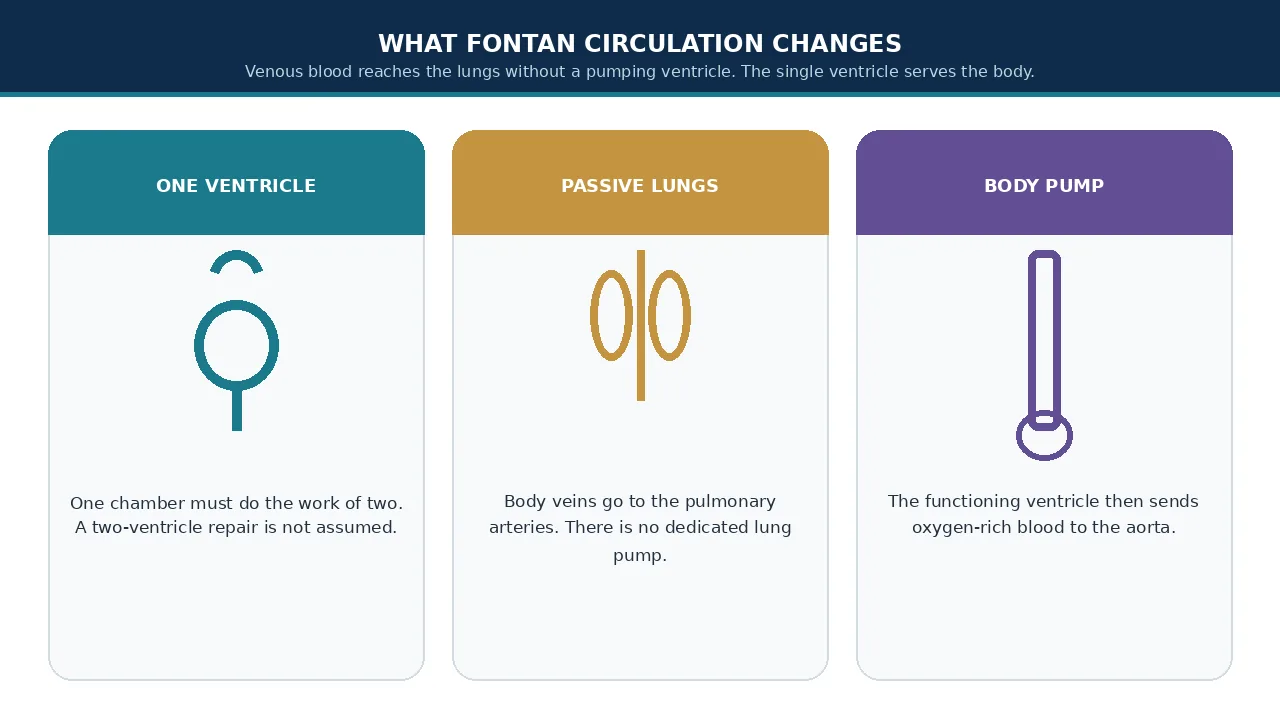
Unlike conventional heart surgery, the Fontan procedure does not create two normally functioning ventricles. Instead, it establishes a circulation in which blood returning from the body flows directly to the pulmonary arteries, while the single functioning ventricle pumps oxygen-rich blood to the body.
Fontan surgery may be considered for children with conditions such as tricuspid atresia, hypoplastic left heart syndrome (HLHS), double-inlet left ventricle, pulmonary atresia with an intact ventricular septum, unbalanced atrioventricular septal defect, and other forms of functionally single-ventricle heart disease.
India has established pediatric cardiac surgery programs capable of managing complex congenital heart disease, including staged single-ventricle palliation. The decision to proceed with Fontan completion, however, depends on the child's anatomy, ventricular function, pulmonary arteries, pulmonary vascular resistance, heart rhythm, oxygen saturation, and overall clinical condition.
Associated ventricular holes sit on Ventricular Septal Defect (VSD) Surgery in India. A persistent duct sits on PDA Closure Surgery in India. d-TGA anatomical repair sits on Arterial Switch Operation in India. Aortic narrowing sits on Coarctation Repair Surgery in India. Broader surgical valve lists sit on Heart Valve Replacement Surgery in India. There is no live GAF Norwood, HLHS-only, heart-transplant or pediatric-cardiac-surgery-only treatment page. This page is the named Fontan-procedure product. ASD lists sit on ASD Closure Surgery in India. TOF lists sit on TOF Repair Surgery in India.
GAF Healthcare planning for Fontan procedure is $9,000–$22,000 (typically 10–18 nights; parent stay expected). US comparison is $70,000–$180,000. Neighbouring Glenn procedure is $8,000–$18,000 (typically 8–16 nights) when the second stage is the honest product. Neighbouring Norwood procedure is $18,000–$40,000 (typically 3–8 weeks in a paediatric cardiac ICU) when first-stage HLHS palliation is named. Neighbouring arterial switch is $12,000–$26,000. Neighbouring congenital heart surgery is $8,000–$28,000. Neighbouring VSD closure is $4,500–$11,000. Neighbouring PDA closure is $3,500–$8,500. Neighbouring pediatric heart transplantation is $50,000–$120,000 when Fontan failure later names listing. These are planning ranges from partner hospital cost sheets, not hospital quotations.
International patients comparing pediatric cardiac surgeons commonly start with Delhi NCR, Mumbai, Bengaluru, Chennai and Hyderabad. Partner pediatric cardiac surgery hospitals in Delhi NCR, Mumbai and Bengaluru, and in Chennai and Hyderabad, are a typical first filter because Fontan completion needs a pediatric cardiac ICU, catheterization and lifelong congenital follow-up. City cost sheets include Delhi NCR, Mumbai, Bengaluru, Chennai and Hyderabad. Kolkata, Pune, Ahmedabad, Chandigarh and Kochi may have congenital theatres. They are not live GAF catalog cities on this site.
Important: A collapsing, grey or severely breathless child with single-ventricle physiology belongs in a local emergency department first. WhatsApp at +91 90443 46292 is for planned record review after the child is stable, not for Fontan failure in the night.
What is the Fontan procedure?
The Fontan procedure is a palliative operation for functionally single-ventricle congenital heart disease.
In a normal heart, the right ventricle pumps oxygen-poor blood to the lungs and the left ventricle pumps oxygen-rich blood to the rest of the body. Some congenital heart defects are too complex to achieve this type of two-ventricle circulation safely.
In these children, surgeons may use a staged approach to separate the pulmonary and systemic circulations as much as the anatomy allows.
The Fontan operation is generally the final stage of this pathway.
During Fontan completion, blood returning from the upper and lower parts of the body is directed toward the pulmonary arteries. The blood then travels through the lungs before returning to the heart, where the functioning ventricle pumps oxygenated blood to the body.
The pulmonary circulation in a Fontan patient is therefore largely passive rather than driven by a dedicated subpulmonary ventricle.
This produces a very different cardiovascular physiology from a normal circulation.
Why is Fontan surgery needed?
Some babies are born with heart defects in which one ventricle is too small, absent, or unsuitable for supporting a normal two-ventricle circulation.
Examples include:
- Tricuspid atresia
- Hypoplastic left heart syndrome
- Double-inlet left ventricle
- Pulmonary atresia with intact ventricular septum
- Unbalanced atrioventricular septal defect
- Mitral atresia
- Certain forms of double-outlet right ventricle
- Complex heterotaxy-associated heart defects
- Other anatomies resulting in functionally single-ventricle physiology
The exact surgical pathway depends on the individual anatomy.
Not every child with a congenital heart defect requires Fontan surgery. Some children may be candidates for biventricular repair, while others require staged single-ventricle palliation.
This distinction is extremely important.
A pediatric cardiology and congenital cardiac surgery team generally evaluates the anatomy and physiology before deciding which pathway is appropriate.
There is no live GAF HLHS-only treatment page. Neighbouring Norwood and Glenn sheets exist when those stages are named.
Ask whether Fontan completion is the honest product
Fontan procedure: how does it work?
The basic objective of Fontan surgery is to establish a total cavopulmonary connection.
The major veins returning blood from the body carry oxygen-poor blood toward the pulmonary arteries.
After Fontan completion, systemic venous blood is directed into the pulmonary circulation without being pumped by a separate right or left ventricle.
The functioning ventricle then receives oxygen-rich blood from the lungs and pumps it to the systemic circulation.
Simplified blood-flow pathway
Body → systemic veins → Fontan pathway → pulmonary arteries → lungs → heart → functioning ventricle → aorta → body
This arrangement allows the single functioning ventricle to focus primarily on pumping blood to the body.
However, it also creates a circulation with chronically elevated systemic venous pressure and relatively limited cardiac output compared with a normal two-ventricle circulation.
This is why Fontan patients require long-term monitoring even when the operation itself has been successful.
Fontan surgery is usually the final stage of a three-stage pathway
Fontan completion is generally not the first operation.
Children with single-ventricle physiology commonly undergo staged palliation.
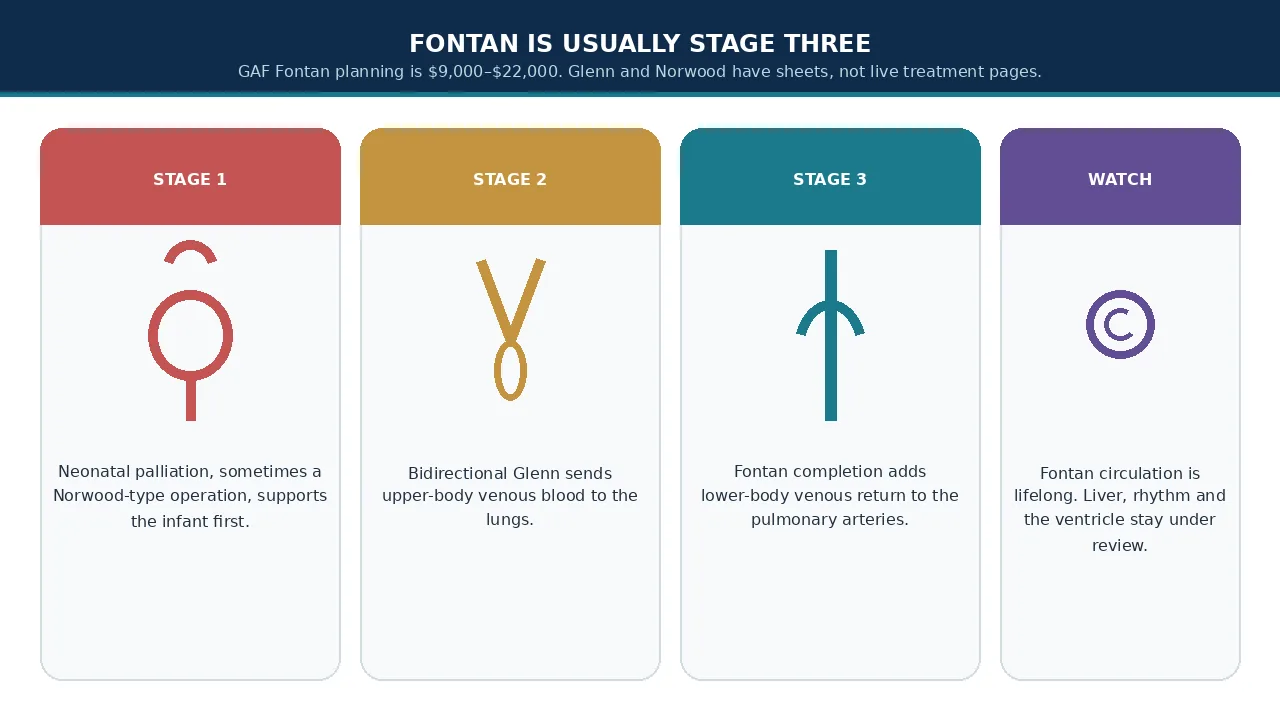
Stage 1: Initial neonatal palliation
The first operation is performed during the newborn period in many patients.
The exact procedure depends on the congenital defect.
For example, a child with hypoplastic left heart syndrome may undergo a Norwood-type operation, while another anatomy may require a different procedure or a catheter-based intervention.
The purpose is to establish a circulation that can support the infant until the next stage.
Neighbouring Norwood procedure is $18,000–$40,000 when that first-stage sheet is the honest product. There is no live GAF Norwood treatment page.
A critically ill newborn belongs in a local emergency department, not on an international flight arranged around a later Fontan package.
Stage 2: Bidirectional Glenn or hemi-Fontan
The second stage is commonly performed several months after the first stage.
A bidirectional Glenn procedure connects the superior vena cava to the pulmonary arteries.
This allows blood returning from the upper part of the body to flow directly to the lungs.
The Glenn procedure reduces the workload on the single ventricle and prepares the child for Fontan completion.
The precise timing depends on the child's anatomy, oxygen saturation, ventricular function, pulmonary arteries and clinical condition.
Neighbouring Glenn procedure is $8,000–$18,000. Glenn lists sit on Glenn Procedure Surgery in India.
Stage 3: Fontan completion
Fontan completion is the final planned stage of single-ventricle palliation.
At this stage, venous blood from the lower part of the body is also directed into the pulmonary arteries.
The resulting circulation is called Fontan circulation.
Different surgical configurations may be used, including:
- Lateral tunnel Fontan
- Extracardiac conduit Fontan
- Variations adapted to individual anatomy
- Fenestrated Fontan in selected patients
The choice depends on the child's anatomy, previous operations, surgeon preference and institutional experience.
Ask about Glenn versus Fontan stage
Who is a candidate for Fontan surgery?
Fontan surgery is considered only after careful assessment.
A child may be considered for Fontan completion when the circulation is judged capable of functioning with the physiological demands of Fontan circulation.
Important factors include:
1. Ventricular function
The single ventricle needs to have adequate systolic and diastolic function.
Significant ventricular dysfunction may increase the risks associated with Fontan completion.
2. Pulmonary arteries
The pulmonary arteries need to be adequately developed and unobstructed enough to receive systemic venous blood.
3. Pulmonary vascular resistance
Low pulmonary vascular resistance is important because blood must travel through the lungs without the assistance of a subpulmonary pumping chamber.
4. Heart rhythm
Significant arrhythmias may complicate Fontan physiology. Neighbouring pacemaker implantation is a different product if later pacing is named.
5. Atrioventricular valve function
Significant atrioventricular valve regurgitation may need to be addressed before or during Fontan completion. Neighbouring heart valve replacement is a different product.
6. Pulmonary venous and arterial anatomy
The cardiac team evaluates the pulmonary circulation carefully before proceeding.
7. Overall clinical condition
Nutrition, growth, oxygen saturation, liver function, kidney function and other medical factors may influence surgical planning.
Tests before Fontan surgery
A comprehensive preoperative assessment is essential.
The exact investigations vary between patients, but may include:
Echocardiography
An echocardiogram evaluates:
- Ventricular function
- Valve function
- Residual defects
- Blood flow
- Pulmonary arteries
- Previous surgical connections
Cardiac catheterization
Cardiac catheterization can provide detailed information about:
- Pulmonary artery pressures
- Pulmonary vascular resistance
- Ventricular pressures
- Oxygen saturations
- Fontan pathway anatomy
- Collateral vessels
CT or cardiac MRI
Advanced imaging may be used when more detailed anatomical information is required.
It can help evaluate:
- Pulmonary arteries
- Systemic veins
- Pulmonary veins
- Ventricular anatomy
- Aortic anatomy
- Surgical pathways
- Collateral vessels
Electrocardiogram
An ECG assesses heart rhythm and electrical activity.
Chest imaging
Chest X-ray or other imaging may be used to evaluate the lungs and heart.
Blood tests
Blood investigations may assess:
- Hemoglobin
- Kidney function
- Liver function
- Electrolytes
- Coagulation
- Nutritional status
The team may also evaluate previous medical records, operative reports and catheterization results.
Types of Fontan procedure
Extracardiac conduit Fontan
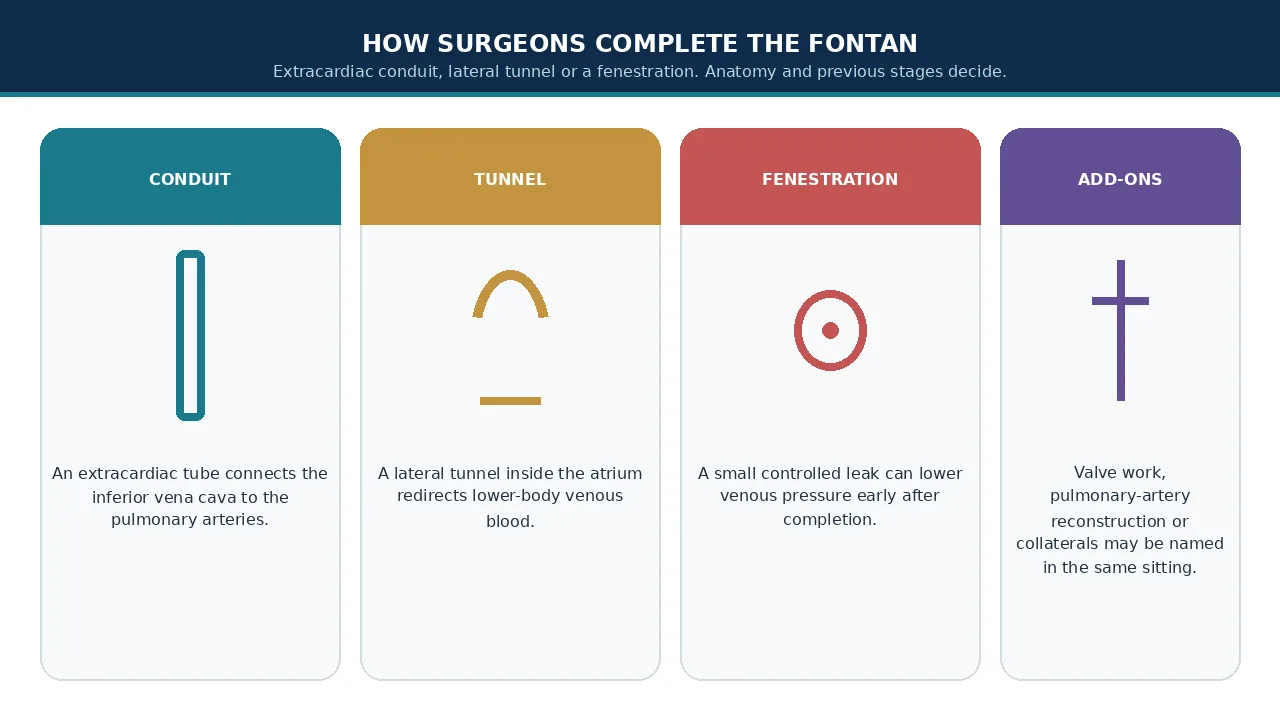
An extracardiac conduit is placed outside the heart to connect the inferior vena cava to the pulmonary arteries.
This technique is widely used because the pathway can be created without extensive intracardiac reconstruction.
The exact approach varies according to anatomy.
Lateral tunnel Fontan
A lateral tunnel is created within the atrium to direct systemic venous blood toward the pulmonary arteries.
This technique is another established form of Fontan completion.
Fenestrated Fontan
In selected cases, surgeons may create a small communication, known as a fenestration, between the Fontan pathway and the atrium.
The purpose is to provide a controlled pathway that can reduce venous pressure during the early postoperative period.
A fenestration can also result in some degree of oxygen desaturation because a small amount of blood may bypass the lungs.
Whether fenestration is appropriate is decided on an individual basis.
What happens during Fontan surgery?
The precise operation varies according to the child's anatomy and previous surgeries.
In a typical surgical pathway, the child receives general anesthesia and is connected to the appropriate cardiopulmonary support system during the operation.
The surgeon establishes a pathway that directs systemic venous blood toward the pulmonary arteries.
Any associated defects that need correction may be addressed during the same operation.
The surgical team may also manage:
- Pulmonary artery reconstruction
- Atrioventricular valve problems
- Residual obstructions
- Collateral vessels
- Fenestration
- Other anatomy identified during preoperative planning
The operation is performed by a specialized congenital or pediatric cardiac surgery team.
Fontan completion is generally major open-heart surgery, although the exact support and reconstruction vary with previous stages.
Fontan surgery in India
India has a growing network of pediatric cardiology and congenital cardiac surgery programs that manage complex congenital heart disease.
Families seeking Fontan surgery in India should look beyond the name of a hospital and assess the complete congenital heart program.
Fontan patients require much more than an operation.
Ideally, the center should have access to:
- Pediatric cardiology
- Congenital cardiac surgery
- Pediatric cardiac anesthesia
- Pediatric cardiac intensive care
- Interventional cardiology
- Advanced cardiac imaging
- Cardiac catheterization
- Electrophysiology
- Pediatric hepatology when required
- Pulmonary and respiratory support
- Nutrition and rehabilitation
- Long-term congenital heart follow-up
For international patients, coordination between the referring cardiologist and the Indian congenital heart team is particularly important.
Previous echocardiograms, catheterization reports, CT/MRI images, operative notes, discharge summaries and medication lists should ideally be shared before travel.
Fontan procedure cost in India
The cost of Fontan surgery in India cannot be accurately represented by a single fixed price because these are highly individualized congenital heart operations.
GAF Healthcare planning for Fontan procedure is $9,000–$22,000 (typically 10–18 nights; parent stay expected). US comparison is $70,000–$180,000. Neighbouring Glenn is $8,000–$18,000. Neighbouring Norwood is $18,000–$40,000. Published Indian rupee listings are not GAF quotations.
Indicative planning table
| Treatment pathway | Indicative GAF planning |
|---|---|
| Fontan completion | $9,000–$22,000; typically 10–18 nights |
| Neighbouring Glenn | $8,000–$18,000 when the second stage is named |
| Neighbouring Norwood | $18,000–$40,000 when first-stage HLHS palliation is named |
| Neighbouring congenital heart surgery | $8,000–$28,000 when a broader congenital list is named |
| Neighbouring pediatric heart transplant | $50,000–$120,000 if Fontan failure later names listing |
| Prolonged ICU or pleural drains | May cost more because of extra nights |
| International patient package | Written after echo, cath and operative-note review |
These are planning figures, not quotations.
The final hospital bill may depend on:
- Hospital and city
- Pediatric cardiac surgeon
- Complexity of the congenital heart defect
- Type of Fontan procedure
- Previous surgeries
- Need for pulmonary artery reconstruction
- Valve repair
- Fenestration
- Cardiac catheterization
- ICU duration
- Ventilator support
- Medicines
- Blood products
- Management of postoperative complications
- Additional investigations
- Length of hospital stay
For this reason, an individualized quotation should be obtained after the pediatric cardiac team reviews the patient's medical records and investigations.
Request an itemised Fontan estimate
What a Fontan surgery quotation may include
Depending on the hospital, the package may include some or all of:
- Surgeon and surgical team charges
- Operating room charges
- Anesthesia
- Intensive care
- Hospital room
- Routine investigations
- Medical supplies
- Medicines during hospitalization
- Nursing
- Follow-up evaluation
Families should ask the hospital or medical facilitator for a written estimate that clearly separates included and excluded costs.
For international patients, it is also useful to budget separately for accommodation, local transportation, flights, visa expenses, caregiver costs and possible additional hospitalization.
Fontan surgery recovery
Recovery after Fontan surgery varies significantly.
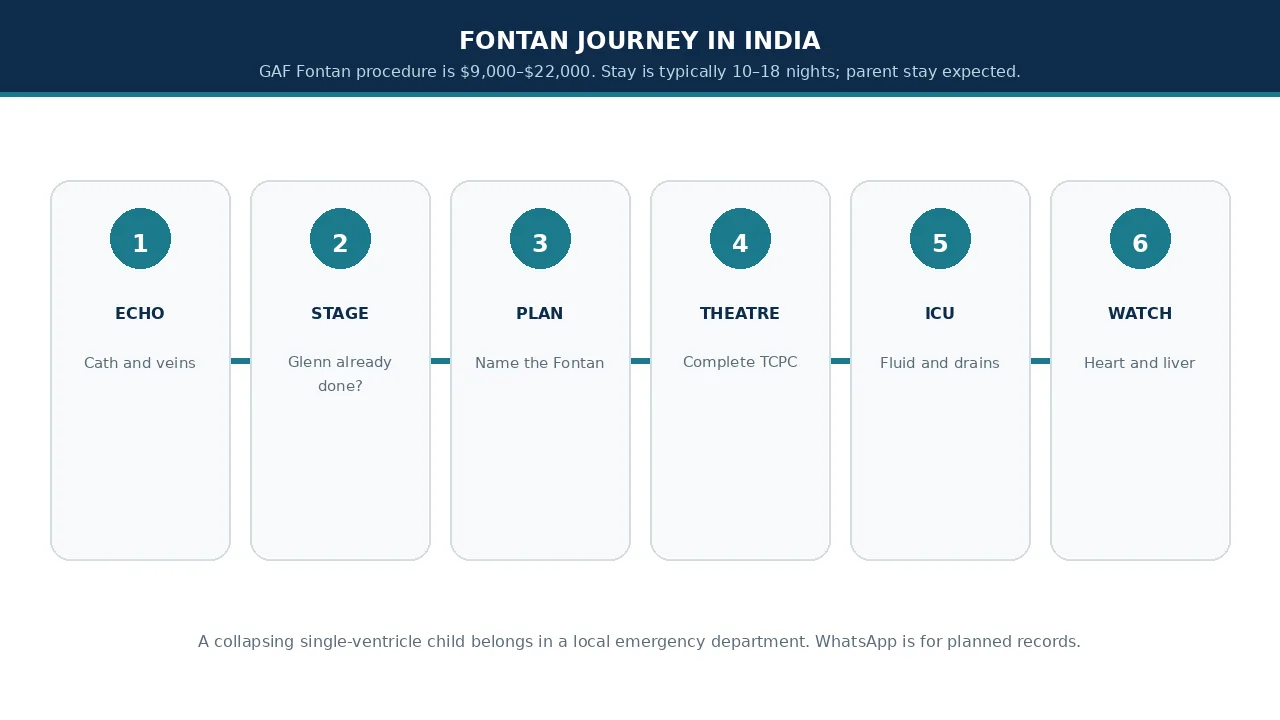
The child is generally monitored in a pediatric cardiac intensive care unit immediately after surgery.
The medical team monitors:
- Oxygen saturation
- Blood pressure
- Heart rhythm
- Central venous pressure
- Fluid balance
- Kidney function
- Ventilator requirements
- Chest drainage
- Cardiac output
- Signs of infection
Some children recover relatively smoothly, while others may require prolonged intensive care.
Chest tubes may remain in place until drainage decreases sufficiently.
Fluid management is particularly important because Fontan circulation depends on favorable pressure relationships between the systemic veins and pulmonary circulation.
The child's medication plan may include diuretics, antithrombotic treatment or other medicines depending on the clinical situation.
GAF planning is typically 10–18 nights, with parent stay expected. Prolonged drains or low-output states can stay longer.
How long does it take to recover after Fontan surgery?
There is no single recovery timeline for every child.
Recovery depends on:
- Age
- Underlying congenital heart defect
- Previous operations
- Ventricular function
- Pulmonary pressures
- Surgical complexity
- Postoperative fluid drainage
- Heart rhythm
- Lung function
- Presence of complications
Children usually require close follow-up after discharge.
Parents should not judge recovery solely by the number of days spent in hospital. The more important goal is establishing a stable Fontan circulation and ensuring adequate nutrition, oxygenation, activity and organ function.
Possible risks and complications of Fontan surgery
Fontan surgery is a major cardiac procedure.
Although surgical and intensive-care techniques have improved substantially, complications can occur.
Potential early complications include:
- Low cardiac output
- Abnormal heart rhythm
- Bleeding
- Infection
- Pleural effusion
- Chylothorax
- Fluid retention
- Respiratory problems
- Thrombus formation
- Arrhythmias
- Prolonged ventilation
- Kidney dysfunction
- Need for catheter-based intervention
- Need for additional surgery
Some complications may develop months or years after Fontan completion.
This is why Fontan surgery should be understood as the beginning of a lifelong management pathway, rather than the end of treatment.
Long-term complications of Fontan circulation
Fontan circulation places unusual demands on the cardiovascular system and other organs.
Long-term problems can involve several systems.
Ventricular dysfunction
The single ventricle may gradually develop systolic or diastolic dysfunction.
Regular cardiac assessment helps detect deterioration early.
Arrhythmias
Atrial and other rhythm disturbances can occur in patients with Fontan circulation.
Some patients may require medication, electrophysiology procedures or device therapy.
Thromboembolism
The altered circulation can increase the risk of blood clot formation in some patients.
Antithrombotic treatment is individualized by the treating team.
Protein-losing enteropathy
Protein-losing enteropathy, or PLE, is an important potential complication.
It occurs when proteins are lost through the gastrointestinal tract and can lead to edema, low serum protein levels and nutritional problems.
Plastic bronchitis
Plastic bronchitis is an uncommon but potentially serious complication in which abnormal casts form within the airways.
Specialist assessment is required when respiratory symptoms suggest this condition.
Liver disease
Long-term elevation of venous pressure can affect the liver.
This may lead to Fontan-associated liver disease (FALD), including congestion and progressive fibrosis.
Modern Fontan care therefore includes attention to liver health as well as the heart.
Reduced exercise capacity
Many people with Fontan circulation have reduced exercise capacity compared with individuals with normal cardiac anatomy.
Exercise recommendations should be individualized rather than assuming that all physical activity is unsafe.
Fontan failure
Fontan failure describes deterioration of the Fontan circulation.
It may involve:
- Ventricular dysfunction
- High venous pressures
- Persistent fluid retention
- Arrhythmias
- Protein-losing enteropathy
- Plastic bronchitis
- Liver disease
- Reduced exercise capacity
- Progressive decline in overall cardiovascular function
In severe cases, advanced heart-failure therapies or transplantation may need to be considered. Neighbouring pediatric heart transplantation is $50,000–$120,000. There is no live GAF heart-transplant treatment page.
Fontan-associated liver disease
One of the most important aspects of long-term Fontan care is liver surveillance.
The Fontan circulation creates chronically elevated systemic venous pressure, which can affect the liver over time.
Patients may develop:
- Hepatic congestion
- Liver fibrosis
- Abnormal liver tests
- Portal hypertension
- Development of liver nodules
- Other manifestations of chronic liver disease
Importantly, liver problems may develop even when the patient feels well.
Long-term follow-up can therefore include liver blood tests and imaging, with specialist hepatology assessment when appropriate.
Life after Fontan surgery
Many children with Fontan circulation grow into adolescence and adulthood.
The objective of modern care is not simply survival after surgery but supporting:
- Growth
- Development
- Education
- Physical activity
- Emotional well-being
- Social participation
- Cardiac health
- Liver health
- Kidney health
- Healthy transition into adult congenital heart care
The American Heart Association emphasizes structured surveillance for people living with Fontan circulation because complications can affect multiple organ systems.
Follow-up after Fontan surgery
Fontan follow-up should be lifelong.
Depending on age and clinical condition, surveillance may include:
- Pediatric or adult congenital cardiology visits
- Echocardiography
- ECG
- Holter monitoring
- Exercise testing
- Cardiac MRI or CT when required
- Blood tests
- Liver assessment
- Kidney assessment
- Oxygen saturation monitoring
- Assessment for arrhythmias
- Assessment for thrombosis
- Nutritional evaluation
The 2025 AHA/ACC/HRS/ISACHD/SCAI adult congenital heart disease guideline also emphasizes specialized congenital heart care for people with complex congenital heart disease.
Ask about lifelong Fontan and liver follow-up
Can a child with Fontan circulation live a normal life?
The answer varies from patient to patient.
Modern Fontan care has enabled many patients to survive into adulthood and participate in education, work, family life and physical activity.
However, Fontan circulation is not physiologically normal.
Patients may have limitations in exercise capacity and remain at risk of cardiac and non-cardiac complications.
The best long-term approach is regular specialist follow-up, early recognition of symptoms and appropriate management of emerging problems.
Exercise after Fontan surgery
Physical activity is important for overall health, but the type and intensity of exercise should be individualized.
The child's cardiologist may consider:
- Oxygen saturation
- Ventricular function
- Heart rhythm
- Exercise tolerance
- Fontan pressures
- Previous complications
- Current medications
Parents should not automatically restrict all physical activity simply because their child has undergone Fontan surgery.
At the same time, strenuous activity should not be started without appropriate medical advice.
Nutrition and growth after Fontan surgery
Nutrition is particularly important in children with complex congenital heart disease.
Some children may have experienced:
- Poor weight gain
- Increased metabolic requirements
- Feeding difficulties
- Fluid restrictions
- Protein loss
- Reduced appetite
A pediatric cardiology team may work with a dietitian to support appropriate calorie and protein intake.
Good nutrition can contribute to recovery, growth and overall functional status.
When should parents contact the doctor?
After Fontan surgery, parents should seek medical advice promptly if the child develops symptoms such as:
- Increasing breathlessness
- Blue or grey discoloration
- Persistent fever
- Swelling
- Rapid weight gain from fluid retention
- Reduced urine output
- Persistent vomiting or diarrhea
- Significant abdominal swelling
- New palpitations
- Fainting
- Unusual tiredness
- Reduced exercise tolerance
- Persistent cough
- Unexpected drop in oxygen saturation
Those warning signs belong in a local emergency department. The exact emergency instructions should come from the child's treating cardiac team.
Fontan procedure for international patients coming to India
India is a potential treatment destination for families seeking specialized congenital cardiac care.
International patients should ideally complete a remote medical evaluation before travelling.
A medical review can help the cardiac team understand:
- The exact congenital diagnosis
- Previous surgeries
- Current oxygen saturation
- Ventricular function
- Pulmonary artery anatomy
- Current medications
- Previous complications
- Recent catheterization findings
- Whether Fontan completion is being considered
- Whether additional procedures may be necessary
Documents to send before travelling
Families should consider providing:
- Latest echocardiography report
- Previous echocardiograms if available
- Cardiac catheterization report
- CT or MRI reports and images
- Previous operative notes
- Discharge summaries
- Current medication list
- Recent blood-test results
- Oxygen saturation records
- Growth and weight information
If possible, original imaging files should be provided rather than only written reports.
Send echo, cath and operative notes before travel
How to choose a hospital for Fontan surgery in India
Fontan surgery should be performed in a center with appropriate experience in complex congenital and pediatric cardiac surgery.
When comparing hospitals, families can ask:
Pediatric cardiac expertise
Does the hospital have a dedicated pediatric congenital cardiac surgery program?
Single-ventricle experience
Does the team routinely manage staged single-ventricle palliation?
Cardiac ICU
Is there a dedicated pediatric cardiac intensive care unit?
Interventional cardiology
Can catheter-based procedures be performed if needed?
Imaging
Does the center have advanced echocardiography, CT, MRI and cardiac catheterization facilities?
Postoperative management
Does the team have experience managing Fontan-specific complications?
Long-term follow-up
Can the hospital provide lifelong congenital heart follow-up or coordinate it with the patient's local cardiologist?
International patient support
For overseas families, does the hospital provide assistance with medical coordination, appointments, accommodation guidance and documentation?
A coordinator can also open WhatsApp at +91 90443 46292 for planned records review.
Questions to ask the Fontan surgeon
Before surgery, parents should have a detailed discussion with the congenital cardiac team.
Useful questions include:
- What is my child's exact heart defect?
- Why is a Fontan procedure being recommended?
- Is biventricular repair possible?
- Has the child completed the Glenn or equivalent second-stage procedure?
- Is ventricular function adequate for Fontan completion?
- What are the pulmonary artery pressures?
- Is pulmonary vascular resistance acceptable?
- Does the child need additional procedures?
- Will a fenestration be created?
- What are the major risks in this particular case?
- How long might ICU care be required?
- What complications are you watching for after surgery?
- What medications will be needed after discharge?
- What follow-up tests will be required?
- How will the child's liver be monitored?
- What physical activities will be allowed?
- What symptoms should prompt an emergency visit?
- What will long-term Fontan follow-up look like?
- What is included in the hospital estimate?
- What costs may arise outside the initial estimate?
These questions can help families understand the individual treatment plan rather than relying only on general information about Fontan surgery.
Fontan procedure vs Glenn procedure
The Glenn and Fontan procedures are related but they are not the same operation.
| Feature | Glenn procedure | Fontan procedure |
|---|---|---|
| Stage | Usually second-stage palliation | Usually final stage of staged palliation |
| Main connection | Superior vena cava to pulmonary arteries | Systemic venous return directed to pulmonary arteries |
| Venous blood redirected | Mainly upper-body venous return | Upper and lower systemic venous return |
| Purpose | Reduce workload on the single ventricle and prepare for Fontan | Complete the total cavopulmonary circulation |
| Typical timing | Earlier childhood | Later than Glenn, individualized |
| Long-term status | Intermediate stage | Fontan circulation |
| Live GAF product | Glenn Procedure Surgery in India plus the Glenn sheet | This treatment page plus the Fontan sheet |
For families considering treatment in India, it is useful to understand that Glenn surgery and Fontan completion are stages of the same broader single-ventricle treatment pathway, but their objectives and anatomy are different.
Fontan procedure vs biventricular repair
A biventricular repair attempts to establish a circulation using two functioning ventricles.
A Fontan pathway is used when a safe two-ventricle circulation cannot be achieved or is not considered appropriate for the particular anatomy.
The choice is highly individual.
It may depend on:
- Size of the ventricles
- Valve anatomy
- Ventricular balance
- Great arteries
- Pulmonary arteries
- Coronary anatomy
- Previous surgeries
- Associated congenital abnormalities
Families should ask the congenital cardiac team whether a biventricular strategy, single-ventricle palliation or another approach is appropriate before proceeding.
Neighbouring arterial switch is a two-ventricle anatomical repair for d-TGA, not a Fontan product.
Frequently asked questions about Fontan surgery in India
Is Fontan surgery a cure?
No. Fontan surgery is a palliative procedure that establishes a different circulation for patients with functionally single-ventricle congenital heart disease.
At what age is Fontan surgery performed?
There is no universal age. Fontan completion is commonly performed during early childhood, but timing depends on the child's anatomy, previous surgeries, physiology and clinical condition.
Does every child with a single ventricle need Fontan surgery?
Not necessarily. Treatment decisions depend on the exact congenital heart defect and whether a two-ventricle repair or another strategy is possible.
Is Fontan surgery open-heart surgery?
Fontan completion is generally performed as major cardiac surgery, although the specific surgical technique varies according to anatomy and the patient's previous operations.
Is Fontan surgery risky?
Yes. It is complex congenital heart surgery, and complications can occur both around the operation and later in life. Individual risk depends on anatomy, ventricular function, pulmonary pressures, previous operations and overall health.
How long does Fontan surgery take?
The duration varies according to the anatomy and additional procedures required. The surgical team can provide a patient-specific estimate.
How long does a child stay in the hospital?
Hospital stay varies widely. GAF planning is typically 10–18 nights. ICU and hospital recovery depend on the child's condition and whether postoperative complications occur.
Can Fontan patients live into adulthood?
Yes. Improvements in congenital heart surgery and medical care have enabled many patients with Fontan circulation to survive into adulthood. However, lifelong specialist surveillance remains necessary.
Can Fontan patients exercise?
Many can participate in physical activity, but the type and intensity should be individualized according to cardiac function, rhythm, oxygen saturation and exercise capacity.
Can Fontan circulation fail?
Yes. Fontan failure can involve cardiovascular dysfunction, arrhythmias, high venous pressure, fluid retention, protein-losing enteropathy, plastic bronchitis, liver disease and other complications.
Does Fontan surgery affect the liver?
It can. The Fontan circulation is associated with chronic venous pressure elevation, which can cause Fontan-associated liver disease over time.
Does Fontan surgery require lifelong medication?
Some patients require long-term medicines, including antithrombotic or heart-failure medications, while others may not require the same treatment. Medication is individualized.
How much does Fontan surgery cost in India?
GAF Healthcare planning for Fontan procedure is $9,000–$22,000, typically 10–18 nights, with parent stay expected. US comparison is $70,000–$180,000. A personalized hospital quotation is required for an accurate figure.
Can international patients get Fontan surgery in India?
Selected international patients can seek evaluation at specialized Indian pediatric congenital heart centers. The patient's records and imaging should ideally be reviewed before travel.
When should I go to an emergency department?
Increasing breathlessness, grey or blue skin, fainting, rapid swelling or collapse belongs in a local emergency department, not in a WhatsApp message.
Fontan procedure surgery in India: key takeaway
The Fontan procedure is a major milestone in the treatment of children with complex single-ventricle congenital heart disease.
It is designed to create a circulation in which systemic venous blood reaches the lungs without being pumped by a separate subpulmonary ventricle.
The procedure can significantly improve circulation and oxygenation in appropriately selected patients, but it does not create a normal two-ventricle heart.
Fontan circulation requires lifelong care.
GAF Healthcare planning for the named Fontan-procedure sheet is $9,000–$22,000.
For families considering Fontan surgery in India, the most important step is a detailed evaluation by an experienced pediatric cardiology and congenital cardiac surgery team. The decision should be based on the child's individual anatomy, previous surgeries, ventricular function, pulmonary circulation and overall health rather than on age or a generic treatment pathway.
For international patients, obtaining a specialist review before travelling can help determine whether Fontan completion is appropriate, what investigations are required and what additional procedures may be needed.
Share reports for a preliminary Fontan estimate
Related GAF Healthcare pages
- Arterial Switch Operation in India
- PDA Closure Surgery in India
- Ventricular Septal Defect (VSD) Surgery in India
- Coarctation Repair Surgery in India
- Heart Valve Replacement Surgery in India
- Fontan procedure cost
- Glenn procedure cost
- Norwood procedure cost
- Pediatric cardiac surgeons in India
- Pediatric cardiac surgery hospitals in India
Norwood, HLHS-only and heart-transplant treatment pages are not live on this site. Use this page plus the named modality sheets.
Top 10 sources
- American Heart Association — Evaluation and Management of the Child and Adult With Fontan Circulation.
- American Heart Association — Top Things to Know: Fontan Circulation.
- 2025 AHA/ACC Guideline for Adults With Congenital Heart Disease.
- Rao PS — Single Ventricle comprehensive review.
- Single Ventricle Fontan: The Basics for General Cardiologists.
- Where are we after 50 years of the Fontan operation? — Indian Journal of Thoracic and Cardiovascular Surgery.
- What have we learnt 50 years after the first Fontan procedure?
- GAF Healthcare Fontan procedure cost sheet — Fontan Procedure.
- GAF Healthcare Glenn procedure cost sheet — Glenn Procedure.
- GAF Healthcare Norwood and pediatric transplant sheets — Norwood Procedure and Pediatric Heart Transplantation.
Medical disclaimer
This page is intended for general medical education and healthcare-planning purposes. It does not diagnose single-ventricle disease or replace an examination by a qualified pediatric cardiologist or congenital cardiac surgeon.
The decision to complete Fontan, to fenestrate, or to stay on a Glenn circulation must be made individually after echocardiography, catheterization and clinical review.
Treatment costs are planning ranges from partner hospital cost sheets. A collapsing, grey or severely breathless child belongs in a local emergency department.
Treatment Process
- 1
Share records
The family provides echocardiography, catheterization and previous operative notes before anyone books travel.
- 2
Congenital team review
A pediatric cardiologist and congenital surgeon review whether Fontan, further Glenn observation or local emergency care is honest.
- 3
Name the product
The team writes extracardiac, lateral-tunnel or fenestrated Fontan only after anatomy and pulmonary-resistance review.
- 4
Itemized estimate
GAF Fontan planning is $9,000–$22,000. Neighbouring Glenn is $8,000–$18,000 when that stage is named.
- 5
Travel only if stable
Stable planned cases travel after records review. A collapsing single-ventricle child belongs in a local emergency department.
- 6
Repeat essential tests
The receiving unit confirms echo, cath findings, saturations and fitness after arrival.
- 7
Complete the named Fontan
Open-heart total cavopulmonary connection proceeds only after the product is named.
- 8
Pediatric cardiac ICU
Drains, fluid balance, saturation and rhythm are watched before discharge.
- 9
Lifelong follow-up
The family leaves with a heart-and-liver imaging plan and who will follow Fontan circulation after returning home.