Treatment Overview

TOF repair surgery in India is a specialized congenital heart surgery performed to correct Tetralogy of Fallot (TOF), a heart defect present from birth. The operation generally involves closing the ventricular septal defect (VSD) and relieving the obstruction that restricts blood flow from the right ventricle to the lungs.
TOF is one of the most common cyanotic congenital heart defects. Modern pediatric cardiac surgery can repair the condition in infancy or childhood, while older children and adults who were not treated earlier may also undergo corrective surgery after detailed evaluation.
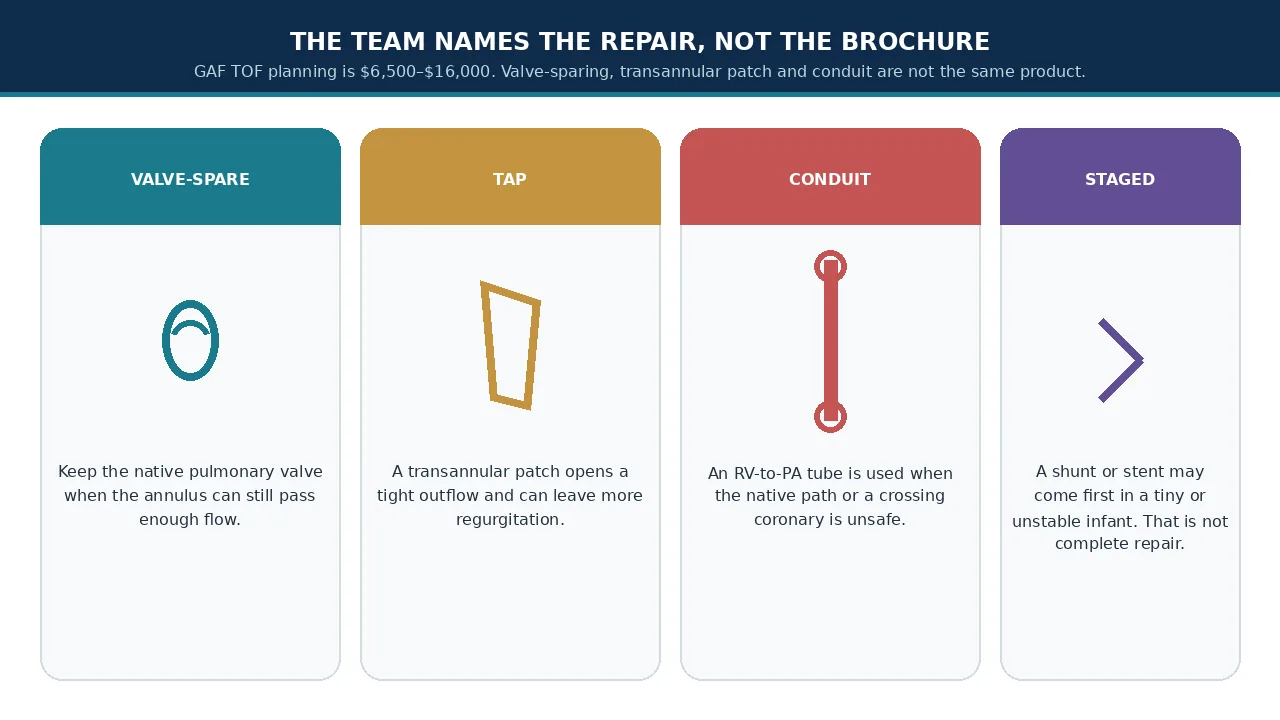
The exact surgical approach is not the same for every child. Depending on the anatomy, the surgeon may preserve the pulmonary valve, enlarge the right ventricular outflow tract with a transannular patch, use a conduit between the right ventricle and pulmonary artery, or choose a staged approach before complete repair.
For families considering TOF surgery in India, the most important factors are not simply the hospital location or quoted price. The child's cardiac anatomy, pulmonary arteries, coronary artery pattern, oxygen level, age, weight, previous procedures, associated abnormalities, and the experience of the pediatric congenital-heart team all influence treatment planning.
Associated ventricular holes sit on Ventricular Septal Defect (VSD) Surgery in India. A persistent duct sits on PDA Closure Surgery in India. Aortic narrowing sits on Coarctation Repair Surgery in India. d-TGA anatomical repair sits on Arterial Switch Operation in India. Staged single-ventricle lists sit on Glenn Procedure Surgery in India and Fontan Procedure Surgery in India. Later pulmonary-valve work sits on Heart Valve Replacement Surgery in India. Pacing after heart block sits on Pacemaker Implantation in India. There is no live GAF BT-shunt-only, pulmonary-valve-replacement-only or pediatric-cardiac-surgery-only treatment page. This page is the named TOF-repair product. ASD lists sit on ASD Closure Surgery in India.
GAF Healthcare planning for TOF repair is $6,500–$16,000 (typically 8–16 nights; parent stay expected). US comparison is $50,000–$140,000. Neighbouring VSD closure is $4,500–$11,000 when an isolated ventricular hole is the honest product. Neighbouring PDA closure is $3,500–$8,500. Neighbouring ASD closure is $4,000–$9,500. Neighbouring coarctation repair is $6,000–$15,000. Neighbouring Glenn procedure is $8,000–$18,000. Neighbouring arterial switch is $12,000–$26,000. Neighbouring congenital heart surgery is $8,000–$28,000 when a broader congenital list is named. These are planning ranges from partner hospital cost sheets, not hospital quotations.
International patients comparing pediatric cardiac surgeons commonly start with Delhi NCR, Mumbai, Bengaluru, Chennai and Hyderabad. Partner pediatric cardiac surgery hospitals in Delhi NCR, Mumbai and Bengaluru, and in Chennai and Hyderabad, are a typical first filter because TOF repair needs a pediatric cardiac ICU, perfusion and lifelong congenital follow-up. City cost sheets include Delhi NCR, Mumbai, Bengaluru, Chennai and Hyderabad. Kolkata, Pune, Ahmedabad, Chandigarh and Kochi may have congenital theatres. They are not live GAF catalog cities on this site.
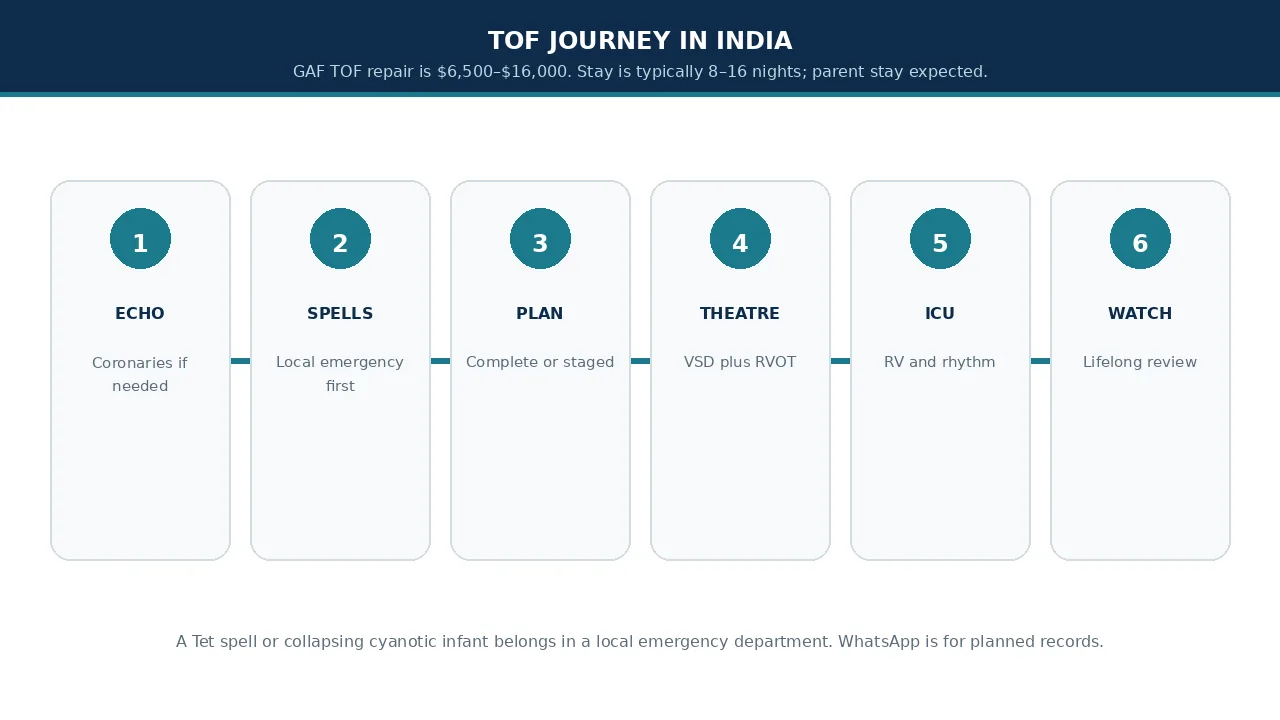
Important: A hypercyanotic Tet spell, or a collapsing, grey or severely blue infant, belongs in a local emergency department first. WhatsApp at +91 90443 46292 is for planned record review after the child is stable, not for a spell in the night.
What is Tetralogy of Fallot?
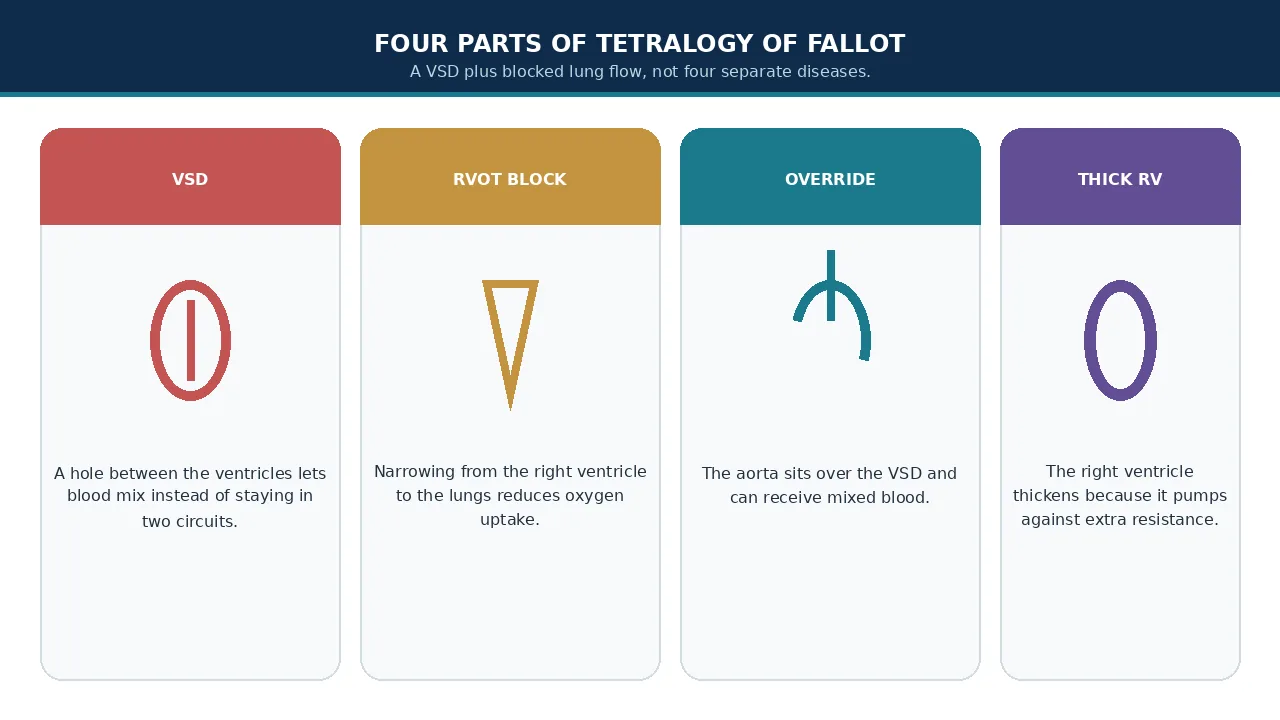
Tetralogy of Fallot, commonly abbreviated as TOF, is a congenital heart defect in which four related abnormalities affect the structure and function of the heart.
The four classic features are:
- Ventricular septal defect (VSD) – a hole between the two lower chambers of the heart.
- Pulmonary stenosis or right ventricular outflow obstruction – narrowing that restricts blood leaving the right ventricle and traveling toward the lungs.
- Overriding aorta – the aorta is positioned over the ventricular septal defect and may receive blood from both ventricles.
- Right ventricular hypertrophy – the muscular wall of the right ventricle becomes thickened because it has to pump against increased resistance.
The degree of obstruction varies from child to child. This is one reason why two children diagnosed with TOF may have very different symptoms and require different surgical strategies.
In more severe cases, reduced blood flow to the lungs can cause significant cyanosis, particularly during episodes sometimes called hypercyanotic or Tet spells.
How does TOF affect the heart?
In a healthy heart, oxygen-poor blood travels to the right side of the heart and then to the lungs. The blood picks up oxygen in the lungs before returning to the left side of the heart and being pumped throughout the body.
In TOF, obstruction between the right ventricle and pulmonary arteries can reduce pulmonary blood flow.
The VSD also allows blood to pass between the ventricles. Depending on the severity of the obstruction and other anatomical factors, some oxygen-poor blood can bypass the lungs and enter the systemic circulation.
This can reduce the oxygen saturation in the blood.
The result may be:
- Bluish discoloration of the lips or skin
- Rapid breathing
- Difficulty feeding
- Poor weight gain
- Fatigue
- Breathlessness
- Irritability
- Cyanotic spells
- Fainting in severe cases
- Reduced exercise tolerance in older children
Some children have relatively mild cyanosis, while others can become critically ill during infancy.
A Tet spell is a local emergency. Do not wait for an international coordinator to reply.
Why is TOF repair surgery needed?
TOF is an anatomical heart defect, so medicines alone generally cannot correct the underlying structural abnormalities.
Medication may sometimes be used to stabilize a baby or reduce symptoms while surgery is being planned. In selected critically cyanotic infants, a temporary procedure may also be performed to increase pulmonary blood flow.
The definitive objective of surgery is to:
- Close the VSD
- Relieve obstruction in the right ventricular outflow tract
- Improve blood flow from the right ventricle to the lungs
- Improve oxygenation
- Reduce the workload on the right ventricle
- Preserve pulmonary valve function whenever anatomically feasible
- Establish a stable circulation for long-term growth and development
The operation is therefore more than simply closing a hole. The surgeon must reconstruct the pathway from the right ventricle to the pulmonary arteries while considering the pulmonary valve, pulmonary arteries, coronary arteries and surrounding structures.
Isolated VSD lists sit on Ventricular Septal Defect (VSD) Surgery in India. This page is the named TOF-repair product.
Ask whether complete repair is the honest product
Who needs TOF repair surgery?
Most children diagnosed with TOF eventually require surgical intervention.
The exact timing depends on the severity of cyanosis, right ventricular outflow obstruction, pulmonary artery anatomy, weight, associated cardiac defects, genetic conditions and the overall clinical condition of the child.
The Indian consensus statement on congenital heart disease recommends complete repair in stable patients with minimal cyanosis generally around 6–12 months, while symptomatic younger infants with significant cyanosis or recurrent spells may require earlier intervention or palliation depending on anatomy and institutional expertise.
Children diagnosed later should generally be evaluated for repair rather than assuming that they have missed the treatment window.
Adults with previously unrepaired TOF may also undergo corrective surgery after comprehensive assessment.
When is TOF repair done?
There is no single age that is appropriate for every child.
Complete repair during infancy
Many children undergo complete repair during the first year of life.
The exact timing is individualized based on:
- Oxygen saturation
- Frequency and severity of cyanotic spells
- Pulmonary artery size
- Degree of RVOT obstruction
- Pulmonary valve anatomy
- Weight
- Prematurity
- Associated cardiac defects
- Genetic or syndromic conditions
- Previous interventions
Earlier surgery
Earlier intervention may be considered when a baby has significant cyanosis, recurrent hypercyanotic spells, severe RVOT obstruction or other high-risk features.
Staged treatment
Some very small, unstable or anatomically complex babies may first receive a palliative procedure that increases pulmonary blood flow.
Complete repair is then performed later when the child is in a better condition or the pulmonary arteries have developed sufficiently.
There is no live GAF BT-shunt-only treatment page. A shunt or duct stent is named only after the congenital team reviews the infant, not from a package title.
TOF repair surgery: complete repair vs staged repair
There are two broad treatment pathways.
1. Complete TOF repair
During complete repair, the surgeon addresses the major anatomical problems during one operation.
The repair generally includes:
- Closure of the VSD
- Relief of RVOT obstruction
- Reconstruction of the pulmonary outflow pathway
- Management of the pulmonary valve
- Enlargement of the pulmonary arteries or RVOT when required
The exact technique depends on the individual anatomy.
2. Staged or palliative treatment
Some babies are not ideal candidates for immediate complete repair.
A temporary procedure may be used to increase blood flow to the lungs.
Depending on anatomy and the treating center, options can include:
- Systemic-to-pulmonary artery shunt
- Ductus arteriosus stenting
- Right ventricular outflow tract intervention
- Pulmonary valve balloon valvuloplasty in selected cases
A staged approach does not mean the TOF has been permanently repaired. It is usually part of a planned pathway toward definitive repair.
Neighbouring PDA closure is a different product if a duct is closed rather than used as a temporary source of pulmonary blood flow.
How is TOF repair surgery performed?
Complete TOF repair is usually performed under general anesthesia.
The child is connected to a cardiopulmonary bypass machine, which temporarily takes over the work of the heart and lungs during the operation.
The surgical steps vary, but a typical repair may involve the following.
Step 1: Access to the heart
The surgeon generally reaches the heart through a median sternotomy.
Step 2: Cardiopulmonary bypass
Blood circulation is supported by the heart-lung machine while the heart is temporarily stopped or otherwise managed to permit intracardiac repair.
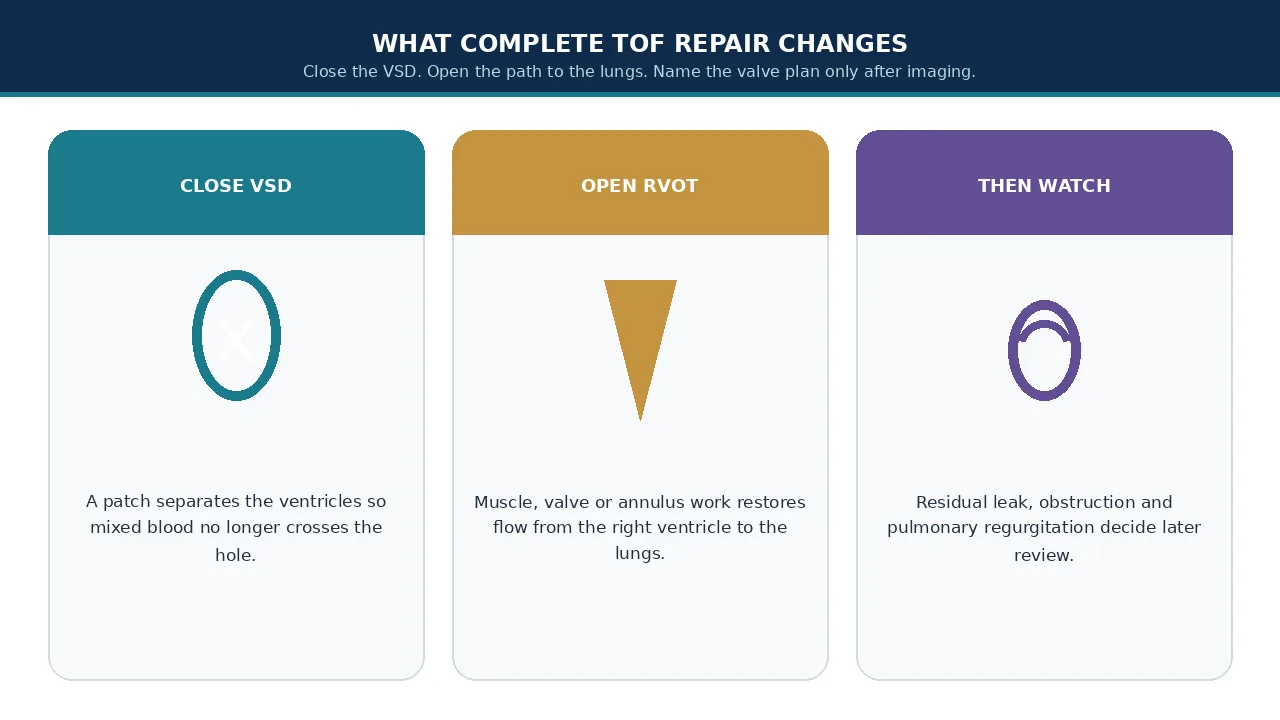
Step 3: Closure of the VSD
The VSD is closed with a surgical patch.
This separates the ventricles and helps prevent abnormal mixing of blood.
Step 4: Relief of RVOT obstruction
The surgeon removes or divides obstructive muscle and enlarges the pathway from the right ventricle toward the pulmonary arteries as necessary.
Step 5: Pulmonary valve management
Whenever possible, the surgeon may attempt a pulmonary-valve-sparing repair.
However, valve preservation is not always possible.
If the pulmonary annulus is too small or obstruction cannot be adequately relieved without enlarging the outflow tract, a transannular patch may be required.
Step 6: Conduit placement when required
In selected anatomies, a conduit may be placed between the right ventricle and pulmonary artery.
This approach can be particularly relevant when the native pathway is unsuitable or certain coronary artery patterns make conventional RVOT enlargement unsafe.
Step 7: Testing the repair
The surgical team evaluates the reconstructed circulation before completing the operation.
Postoperative echocardiography is used to assess:
- Residual VSD
- RVOT obstruction
- Pulmonary valve function
- Right ventricular function
- Pulmonary artery flow
- Other residual abnormalities
Ask about valve-sparing versus transannular patch
What is a valve-sparing TOF repair?
A valve-sparing repair attempts to preserve the patient's native pulmonary valve and avoid unnecessarily enlarging the pulmonary annulus.
Preserving pulmonary valve function can be beneficial because significant pulmonary regurgitation after TOF repair can place additional volume load on the right ventricle.
However, valve preservation is not appropriate for every patient.
The surgeon has to balance two objectives:
Adequately relieve obstruction while preserving as much useful pulmonary valve function as the anatomy allows.
A technically impressive attempt to preserve a valve is not useful if significant residual obstruction remains.
The surgical plan therefore needs to be individualized.
What is a transannular patch repair?
A transannular patch (TAP) is used when the pulmonary valve annulus or RVOT is too narrow to provide adequate blood flow after repair.
The patch enlarges the RVOT and may extend across the pulmonary valve annulus.
This can effectively relieve obstruction, but it may result in significant pulmonary regurgitation because the native pulmonary valve may no longer provide normal closure.
This is one reason why long-term follow-up is essential after TOF repair.
Modern surgical planning often aims to preserve pulmonary valve function when safely possible, but the child's immediate anatomy and ability to establish adequate forward blood flow remain critical.
What is an RV-to-PA conduit?
A right-ventricle-to-pulmonary-artery conduit is a tube that creates a pathway between the right ventricle and pulmonary artery.
A conduit may be considered in selected anatomical situations.
It can be particularly useful when:
- The pulmonary valve or annulus is unsuitable
- The native RVOT is severely abnormal
- A coronary artery crosses the anticipated surgical RVOT
- The pulmonary arteries require a different reconstruction strategy
- The child has a complex TOF variant
Conduits do not necessarily last for the patient's entire lifetime.
As the child grows or the conduit deteriorates, additional catheter-based or surgical intervention may eventually be required.
Preoperative evaluation before TOF surgery
Before surgery, the pediatric cardiology and cardiac surgery teams need a detailed anatomical map of the heart.
Common investigations include:
Echocardiography
Echocardiography is one of the most important tests.
It can assess:
- VSD
- RVOT obstruction
- Pulmonary valve
- Pulmonary arteries
- Right ventricular size and function
- Aortic position
- Associated defects
ECG
An electrocardiogram provides information about cardiac rhythm and electrical conduction.
Chest X-ray
A chest X-ray may help evaluate the heart and lungs.
Pulse oximetry
Oxygen saturation helps determine the degree of cyanosis.
CT angiography or cardiac catheterization
These may be required in selected children, particularly when pulmonary artery anatomy, collateral vessels or coronary anatomy needs further clarification.
Blood tests
Routine preoperative blood investigations are usually performed to assess the child's general condition and readiness for surgery.
Genetic evaluation
Some children with TOF have associated genetic or chromosomal abnormalities.
The treating team may recommend genetic evaluation when the clinical picture suggests it.
Why coronary artery anatomy matters in TOF surgery
Coronary anatomy is particularly important because an anomalous coronary artery may cross the intended route of RVOT reconstruction.
If the surgeon were to enlarge the RVOT without recognizing such anatomy, the coronary artery could potentially be injured.
For this reason, the preoperative imaging strategy must identify important coronary variations whenever clinically indicated.
When an important coronary artery crosses the RVOT, the surgeon may choose a different repair strategy, including a conduit or another reconstruction technique.
TOF repair surgery cost in India
The cost of TOF repair surgery in India varies considerably.
There is no single price that applies to every child.
GAF Healthcare planning for TOF repair is $6,500–$16,000 (typically 8–16 nights; parent stay expected). US comparison is $50,000–$140,000. Headline medical-tourism prices that omit ICU nights, conduit work or associated reconstruction should not be compared with a GAF partner sheet.
Published Indian rupee listings are not GAF quotations.
For international patients, the total financial requirement can also include travel, accommodation, investigations, interpreter or coordination services, additional ICU days and treatment of complications.
Indicative TOF surgery cost in India
| Cost component | Indicative information |
|---|---|
| TOF repair in India | $6,500–$16,000 GAF Healthcare planning range |
| Hospital stay | Typically 8–16 nights; parent stay expected |
| ICU care | Usually required after major pediatric cardiac surgery |
| Preoperative investigations | May be included or billed separately |
| Cardiac catheterization or CT | May be additional if required |
| Transannular patch or conduit | May substantially increase the estimate |
| Neighbouring VSD | $4,500–$11,000 when an isolated hole is named |
| Neighbouring congenital list | $8,000–$28,000 when a broader product is honest |
| Medicines | Depends on the child's postoperative plan |
| Accommodation | Usually separate for international families |
| Flights and visa | Usually separate |
| US comparison | $50,000–$140,000 |
Why TOF surgery cost varies
The final price can depend on:
- Hospital
- City
- Pediatric cardiac surgeon
- ICU requirements
- Child's age and weight
- Complexity of TOF
- Pulmonary artery anatomy
- Need for a conduit
- Need for a transannular patch
- Previous shunt or cardiac procedure
- Associated cardiac abnormalities
- Length of ICU stay
- Length of hospital stay
- Blood products
- Postoperative complications
- Additional diagnostic procedures
A low quoted surgical price should not be interpreted as evidence of equivalent care, and a higher price does not automatically mean a better outcome. Families should compare the complete treatment plan, congenital-heart expertise, ICU capability, inclusions and follow-up arrangements.
What is included in a TOF surgery package?
A hospital package may include some or all of:
- Pediatric cardiology consultation
- Preoperative investigations
- Surgeon fees
- Anesthesia
- Operating room charges
- Cardiopulmonary bypass
- ICU stay for a specified period
- Ward accommodation
- Routine postoperative investigations
- Standard medicines during hospitalization
- Discharge planning
However, package inclusions differ between hospitals.
Before international travel, families should obtain a written estimate that clearly identifies what is included and what may be charged separately.
TOF surgery in India for international patients
India is a major destination for patients seeking specialized cardiac treatment.
For a child traveling from another country, medical planning should begin before the family boards a flight.
A typical pathway may involve:
1. Medical record review
The family shares:
- Echocardiography reports
- CT/MRI reports where available
- Oxygen saturation records
- Previous operation reports
- Medication list
- Blood investigations
- Growth information
- Previous discharge summaries
2. Pediatric cardiology review
The Indian cardiac team reviews the available records and determines whether additional investigations are necessary.
3. Treatment plan
The family receives a preliminary treatment plan and estimated hospital costs.
4. Travel planning
Travel should be coordinated only after the treating team confirms that the child's condition is sufficiently stable for travel.
5. Hospital admission
The child undergoes the required preoperative assessment after arrival.
6. Surgery and ICU care
Complete repair or the appropriate staged intervention is performed.
7. Discharge
The family receives medication instructions, warning signs and follow-up recommendations.
8. Follow-up after returning home
The treating Indian team should provide a clear postoperative summary for the child's local cardiologist.
A coordinator can also open WhatsApp at +91 90443 46292 for planned records review.
Send records before booking travel
How long does TOF surgery take?
The duration of TOF repair varies.
A straightforward repair may take several hours, while complex anatomy, previous procedures, abnormal coronary anatomy, pulmonary artery reconstruction or conduit placement can make the operation longer.
Families should therefore avoid selecting a hospital based on an advertised standard surgery time.
The more meaningful question is whether the center can provide:
- Experienced pediatric cardiac surgeons
- Pediatric cardiac anesthesia
- Pediatric cardiac ICU
- Advanced imaging
- Perfusion support
- Interventional cardiology
- Electrophysiology when required
- Emergency surgical backup
- Long-term congenital-heart follow-up
Adult CABG theatres are not a substitute for a named pediatric TOF list.
Recovery after TOF repair surgery
Recovery occurs in stages.
Pediatric cardiac ICU
After surgery, the child is usually transferred to a pediatric cardiac ICU.
The team monitors:
- Heart rate
- Blood pressure
- Oxygen saturation
- Breathing
- Urine output
- Heart rhythm
- Chest drainage
- Heart function
- Electrolytes
- Signs of infection
Some children require mechanical ventilation for a period after surgery.
The duration depends on the child's condition and complexity of the operation.
Hospital ward
Once stable, the child is moved from the ICU to a regular pediatric cardiac ward.
The focus shifts toward:
- Feeding
- Mobilization
- Pain control
- Wound care
- Medication adjustment
- Stable oxygenation
- Normal heart rhythm
- Parent education
Ask about hospital stay after TOF
How long does a child stay in hospital after TOF surgery?
A straightforward postoperative course may require approximately 5–10 days, although this is not a fixed rule.
GAF Healthcare currently uses 8–16 nights as an international-family planning range for the overall hospital stay, with parent stay expected.
Some children are discharged sooner.
Others require considerably longer hospitalization because of:
- Low cardiac output
- Respiratory problems
- Arrhythmias
- Infection
- Feeding difficulties
- Residual cardiac lesions
- Fluid accumulation
- Kidney dysfunction
- Prolonged ventilation
- Complex anatomy
International families should therefore plan accommodation and travel flexibility rather than booking a fixed return date immediately after surgery.
Recovery at home
Once discharged, most children gradually return to their normal activities.
Parents may be advised to:
- Give medicines exactly as prescribed
- Keep the surgical wound clean
- Monitor temperature
- Watch for breathing difficulties
- Observe feeding and appetite
- Monitor activity levels
- Attend scheduled cardiology visits
- Follow activity restrictions
- Return to hospital if warning signs develop
The exact restrictions depend on the child's age, surgery and postoperative findings.
When can a child return to school?
There is no universal timetable.
Children recovering normally may return to school after their surgeon confirms adequate recovery.
The timeline may depend on:
- Age
- Type of repair
- Wound healing
- Energy level
- Heart function
- Residual defects
- Physical activity requirements at school
Children should not be rushed back into competitive sports simply because the surgical wound looks healed.
The cardiologist should determine when higher-intensity physical activity is appropriate.
Risks and complications of TOF repair surgery
TOF repair has become substantially safer with advances in pediatric cardiac surgery, anesthesia, ICU care and imaging.
However, it remains major heart surgery.
Possible complications include:
- Bleeding
- Infection
- Abnormal heart rhythms
- Temporary or persistent ventricular dysfunction
- Residual VSD
- Residual RVOT obstruction
- Pulmonary regurgitation
- Pulmonary stenosis
- Fluid around the heart or lungs
- Respiratory complications
- Kidney problems
- Neurological complications
- Prolonged ICU stay
- Need for reoperation
- Need for catheter-based intervention
- Rarely, death
The individual risk cannot be accurately determined from the diagnosis alone.
A very small newborn with severe cyanosis and complex coronary or pulmonary artery anatomy does not have the same risk profile as an otherwise stable older child with relatively simple TOF anatomy.
Neighbouring pacemaker implantation is a different product if later pacing is named.
What happens if there is a residual VSD?
After surgery, echocardiography is used to check whether the VSD has been completely closed.
A very small residual leak may sometimes be monitored.
A larger or hemodynamically significant residual defect may require further treatment.
The decision depends on the size and location of the residual defect and its effect on the heart and lungs.
Long-term problems after TOF repair
Successful TOF surgery does not mean that cardiac follow-up can stop.
Children and adults with repaired TOF require lifelong surveillance.
Potential late problems include:
Pulmonary regurgitation
The pulmonary valve may allow blood to leak backward into the right ventricle.
Significant pulmonary regurgitation can eventually enlarge or weaken the right ventricle.
RVOT obstruction
Narrowing can remain or develop again in the RVOT or pulmonary arteries.
Right ventricular enlargement
The right ventricle may become enlarged because of pulmonary regurgitation or other hemodynamic abnormalities.
Arrhythmias
Electrical rhythm problems can occur after TOF repair.
Some patients may require specialized rhythm evaluation.
Pulmonary artery problems
The pulmonary arteries may remain small or develop areas of narrowing.
Aortic root enlargement
Some repaired TOF patients require surveillance of the aorta as part of long-term congenital-heart care.
Does TOF repair last for life?
The initial repair can provide long-term correction, but lifelong follow-up is still required.
Some patients eventually need:
- Pulmonary valve replacement
- RVOT intervention
- Pulmonary artery intervention
- Catheter-based procedures
- Repeat surgery
- Arrhythmia treatment
The need for additional treatment depends on the original anatomy, surgical technique and how the heart changes over time.
Long-term studies demonstrate that many patients live for decades after TOF repair, but reinterventions remain an important part of the long-term clinical pathway.
Pulmonary valve replacement after TOF repair
One of the major long-term issues following TOF repair is pulmonary valve dysfunction.
If severe pulmonary regurgitation or pulmonary stenosis develops and begins affecting the right ventricle or symptoms, the cardiology team may consider pulmonary valve replacement.
Depending on the patient's anatomy, age and previous surgery, treatment may be:
- Surgical pulmonary valve replacement
- Transcatheter pulmonary valve replacement
- Other catheter-based intervention
Not every patient requires pulmonary valve replacement.
The decision is based on symptoms, imaging, exercise capacity, right ventricular size and function, valve severity and other clinical factors.
There is no live GAF pulmonary-valve-replacement-only treatment page. Broader surgical valve lists sit on Heart Valve Replacement Surgery in India.
TOF repair success rate
Families understandably ask about the success rate of TOF surgery.
There is no single percentage that accurately represents every TOF patient.
Published studies show that modern TOF repair can achieve high survival, particularly in experienced congenital-heart programs. A large systematic review covering more than 21,000 patients reported low early mortality across contemporary cohorts, while long-term studies demonstrate substantial survival decades after repair.
However, published outcomes cannot be directly applied to an individual child.
Risk can vary with:
- Age at surgery
- Weight
- Prematurity
- Degree of cyanosis
- Pulmonary artery anatomy
- Pulmonary valve anatomy
- Coronary artery anatomy
- Genetic conditions
- Previous palliation
- Associated heart defects
- Surgical era
- Center experience
Therefore, instead of asking only what the success rate is, families should ask the treating team what the expected risk is for this child's specific anatomy, and what the likely short- and long-term outcomes are.
TOF repair outcomes in India
Indian centers have extensive experience with congenital heart surgery, including TOF repair.
Published Indian data demonstrate that TOF surgery is performed across pediatric cardiac centers, including centers treating infants and complex congenital heart disease.
At the same time, outcomes reported across Indian studies vary significantly because patients, anatomy, age, disease severity and hospital resources differ.
A recent systematic review of congenital heart surgery studies from India found substantial variation between studies and highlighted the importance of patient selection, case complexity and center-level factors.
For an international family, this reinforces an important point:
Do not judge a TOF program only by a national average or a single published percentage. Evaluate the specific congenital-heart center and the child's individual anatomy.
How to choose a hospital for TOF surgery in India
For TOF repair, the relevant expertise is pediatric and congenital cardiac surgery, not simply general cardiac surgery.
When comparing hospitals, families should look at:
Pediatric cardiac surgery team
Ask about the surgeon's experience with congenital heart repair in infants and children.
Pediatric cardiac ICU
A dedicated pediatric cardiac ICU is important for postoperative management.
Pediatric cardiac anesthesia
Children with congenital heart disease require specialized anesthetic management.
Pediatric cardiology
The surgical team should work closely with pediatric cardiologists.
Interventional cardiology
Catheter-based procedures may be required before or after surgery.
Advanced imaging
The center should have access to detailed echocardiography and other imaging when required.
Electrophysiology
Long-term TOF patients may develop rhythm abnormalities requiring specialist management.
Long-term follow-up
Ask how the hospital manages children after discharge and into adolescence and adulthood.
TOF repair surgery: questions to ask the surgeon
Before making a decision, parents can ask:
- What type of TOF does my child have?
- How severe is the RVOT obstruction?
- How large are the pulmonary arteries?
- Is the pulmonary valve suitable for preservation?
- Is there an anomalous coronary artery?
- Will my child need a transannular patch?
- Is an RV-to-PA conduit likely to be required?
- Does my child need complete repair now?
- Would staged palliation be safer or more appropriate?
- What are the major risks in this specific case?
- How long is the expected ICU stay?
- What is the expected hospital stay?
- What complications should we watch for?
- Will my child need lifelong cardiac follow-up?
- What future procedures could become necessary?
- What is included in the quoted treatment cost?
- What costs are excluded?
- How will follow-up be managed after we return home?
TOF repair surgery in India: step-by-step patient journey
Step 1: Send medical records
Share the child's echocardiography, CT/MRI, discharge summaries, oxygen saturation and previous procedure records.
Step 2: Specialist review
A pediatric cardiologist reviews the available information.
Step 3: Surgical opinion
The congenital cardiac surgeon evaluates the anatomy and determines the likely surgical strategy.
Step 4: Cost estimate
The hospital or medical-care coordinator provides an indicative treatment estimate.
Step 5: Travel clearance
International patients should confirm with the treating medical team that the child is medically fit for travel.
Step 6: Arrival in India
The child undergoes any additional investigations required by the treating hospital.
Step 7: Surgery
The appropriate TOF repair is performed.
Step 8: Pediatric cardiac ICU
The child is monitored closely after surgery.
Step 9: Ward recovery
Once stable, the child moves to the pediatric cardiac ward.
Step 10: Discharge
The family receives medicines, wound-care instructions, follow-up plans and warning signs.
Step 11: Follow-up
Long-term congenital-heart follow-up continues after returning home.
What should international patients bring to India?
Families should carry copies of:
- Previous echocardiograms
- CT or MRI scans
- Cardiac catheterization reports
- ECG reports
- Previous operation notes
- Discharge summaries
- Medication list
- Blood test results
- Vaccination information
- Genetic test reports, if available
- Pediatric growth records
- Oxygen saturation records
Digital copies should also be stored securely so they can be accessed if the original documents are misplaced.
How parents can prepare a child for TOF surgery
The preparation depends heavily on the child's age.
For an infant, parents mainly need to follow the medical team's feeding, medication and admission instructions.
For an older child, parents can explain that:
- Doctors will help the heart work better.
- The child will sleep during the operation.
- There may be tubes and monitors after surgery.
- The child may spend time in a special ICU.
- The chest may feel sore afterward.
- Parents will be nearby whenever hospital rules allow.
Simple, age-appropriate explanations can reduce fear.
Warning signs after TOF surgery
Parents should contact the medical team urgently if the child develops:
- Increasing breathlessness
- Bluish discoloration
- Fainting
- Severe weakness
- Persistent fever
- Rapid or irregular heartbeat
- Poor feeding
- Repeated vomiting
- Increasing swelling
- Reduced urine output
- Significant wound redness or discharge
- Sudden deterioration
Emergency symptoms belong in a local emergency department, not in a WhatsApp message.
Can children with repaired TOF live a normal life?
Many children with repaired TOF grow up, attend school, participate in everyday activities and reach adulthood.
However, repaired does not mean no longer needs medical care.
Some patients require continued monitoring for:
- Pulmonary valve function
- Right ventricular function
- Heart rhythm
- Exercise capacity
- Pulmonary arteries
- Aortic dimensions
- Residual or recurrent obstruction
The goal of long-term care is to identify these changes early and intervene when necessary.
TOF repair and exercise
Exercise recommendations should be individualized.
Some children with a good postoperative result may participate in many normal physical activities.
Others may require restrictions depending on:
- Pulmonary regurgitation
- RV dilation
- RV function
- Arrhythmias
- Residual obstruction
- Exercise-test results
- Other associated abnormalities
Parents should not impose permanent activity restrictions without discussing them with the child's congenital-heart specialist.
TOF surgery in India vs treatment abroad
Families sometimes compare India with other international destinations.
A meaningful comparison should include more than the surgery price.
Consider:
| Factor | Questions to compare |
|---|---|
| Surgeon | How much pediatric congenital-heart experience does the team have? |
| ICU | Is a dedicated pediatric cardiac ICU available? |
| Surgery | What repair strategy is proposed? |
| Imaging | Can complex coronary and pulmonary anatomy be evaluated? |
| Cost | What is included and excluded? |
| Hospital stay | What happens if recovery takes longer? |
| Complications | How are additional costs handled? |
| Follow-up | Who manages the child after returning home? |
| Travel | Is the child stable enough for international travel? |
| Communication | Is there reliable communication with the family and local doctors? |
US cash comparison for a named TOF list is $50,000–$140,000. That figure is a planning comparison, not a promise that every child in India will stay at the lower bound of $6,500–$16,000.
TOF repair: frequently asked questions
Is TOF curable?
TOF can be surgically repaired, correcting the major anatomical abnormalities. However, repaired TOF is a lifelong congenital-heart condition requiring periodic follow-up.
Is TOF surgery risky?
TOF repair is major heart surgery and carries risks. The risk differs substantially between patients and depends on anatomy, age, weight, previous procedures and associated conditions.
What age is best for TOF surgery?
There is no single best age for every child. Stable patients are commonly repaired during infancy, while symptomatic or severely cyanotic babies may require earlier intervention.
Is TOF surgery open-heart surgery?
Complete TOF repair generally involves open-heart surgery with cardiopulmonary bypass.
How many days does a child stay in hospital after TOF surgery?
An uncomplicated recovery may take approximately 5–10 days, but complex cases can require a longer stay. GAF overall hospital planning is typically 8–16 nights.
How much does TOF surgery cost in India?
GAF Healthcare planning for TOF repair is $6,500–$16,000, typically 8–16 nights, with parent stay expected. US comparison is $50,000–$140,000. Families should obtain an individualized quotation after the hospital reviews the child's records.
Can adults undergo TOF repair?
Yes. Adults with unrepaired TOF can be evaluated for surgical correction. The evaluation is more complex because long-standing cyanosis and secondary changes may have developed.
Does every TOF patient need a transannular patch?
No. Some patients can undergo valve-sparing or annulus-sparing repair. The decision depends on the pulmonary annulus, RVOT anatomy and the surgeon's assessment.
Does every child need a pulmonary valve replacement later?
No. Some do and some do not. The decision depends on pulmonary valve function, right ventricular size and function, symptoms, arrhythmias and other findings.
Can TOF be repaired in a newborn?
Selected newborns can undergo early complete repair, while others may first undergo palliation. The decision depends on anatomy, clinical stability and institutional expertise.
What happens if a child has a Tet spell?
A hypercyanotic spell can be a medical emergency. The child belongs in a local emergency department immediately.
Can TOF surgery be done after one year of age?
Yes. Children diagnosed later can still be evaluated for repair. The surgical plan depends on their current anatomy and clinical condition.
How long does TOF repair surgery take?
The operation commonly takes several hours, but duration varies according to the complexity of the repair.
Will my child need lifelong medication?
Not every patient requires lifelong medication. Medicines after surgery depend on the child's specific repair, rhythm, ventricular function and other findings.
Can children with repaired TOF play sports?
Many can participate in physical activity, but the level of activity should be individualized according to postoperative cardiac assessment.
Can TOF surgery be repeated?
Yes. Some patients require later surgical or catheter-based interventions, particularly involving the pulmonary valve, RVOT or pulmonary arteries.
Is there a GAF ASD-closure or BT-shunt treatment page?
No. BT-shunt-only and pulmonary-valve-replacement-only treatment pages are not live. ASD lists sit on the ASD closure surgery page. Neighbouring sheets exist. VSD, PDA, Glenn, Fontan, arterial-switch and coarctation lists sit on those treatment pages.
When should I go to an emergency department?
A Tet spell, increasing breathlessness, grey or blue skin, fainting, poor feeding or collapse belongs in a local emergency department, not in a WhatsApp message.
TOF repair surgery in India: key takeaways
- Tetralogy of Fallot is a congenital heart defect that generally requires surgical treatment.
- Complete repair usually closes the VSD and relieves obstruction between the right ventricle and lungs.
- Surgery may be performed during infancy, but timing is individualized.
- Some critically ill or very small babies may require staged palliation before complete repair.
- Pulmonary-valve preservation is considered when the anatomy permits adequate relief of obstruction.
- A transannular patch or RV-to-PA conduit may be necessary in selected patients.
- GAF Healthcare planning for the named TOF-repair sheet is $6,500–$16,000.
- Published cost figures should be treated as planning estimates rather than guaranteed package prices.
- Modern TOF repair has produced strong long-term survival in many contemporary cohorts.
- Some patients require later catheter-based or surgical intervention.
- Lifelong congenital-heart follow-up remains important after repair.
- For international patients, medical clearance before travel and continuity of follow-up after returning home are essential.
For families considering TOF repair surgery in India, the most important step is a detailed evaluation by an experienced pediatric cardiology and congenital cardiac surgery team. The decision should be based on the child's individual anatomy, pulmonary arteries, coronary pattern and overall health rather than on age or a generic treatment pathway.
Share reports for a preliminary TOF estimate
Related GAF Healthcare pages
- Ventricular Septal Defect (VSD) Surgery in India
- PDA Closure Surgery in India
- Glenn Procedure Surgery in India
- Fontan Procedure Surgery in India
- Arterial Switch Operation in India
- Coarctation Repair Surgery in India
- Heart Valve Replacement Surgery in India
- TOF repair cost
- VSD closure cost
- Pediatric cardiac surgeons in India
- Pediatric cardiac surgery hospitals in India
BT-shunt-only, pulmonary-valve-replacement-only and pediatric-cardiac-surgery-only treatment pages are not live on this site. Use this page plus the named modality sheets.
Top 10 sources
- Indian consensus statement on congenital heart disease — timing of complete TOF repair and selected palliation.
- American Heart Association — Tetralogy of Fallot. Lifelong care after repair, residual lesions and later pulmonary-valve decisions.
- Centers for Disease Control and Prevention — Tetralogy of Fallot. Patient-oriented anatomy and why surgery is usually required.
- NCBI/StatPearls — Tetralogy of Fallot. Anatomy, cyanotic spells, evaluation and surgical strategies.
- Systematic review of contemporary TOF repair outcomes. Early mortality and long-term survival vary by anatomy and era.
- Indian Journal of Thoracic and Cardiovascular Surgery — congenital heart surgery series. Center-level variation in Indian TOF programmes.
- GAF Healthcare TOF repair cost sheet — TOF Repair (Tetralogy of Fallot).
- GAF Healthcare VSD closure cost sheet — VSD Closure (Ventricular Septal Defect).
- GAF Healthcare congenital heart surgery sheet — Congenital Heart Surgery.
- GAF Healthcare Glenn and Fontan sheets — neighbouring staged-circulation products when those anatomies are named.
Medical disclaimer
This page is intended for general medical education and healthcare-planning purposes. It does not diagnose tetralogy of Fallot or replace an examination by a qualified pediatric cardiologist or congenital cardiac surgeon.
The decision to perform complete repair, a transannular patch, a conduit or staged palliation should be made by a qualified congenital-heart team after reviewing the child's medical history, imaging and hemodynamic information.
Cost figures are indicative planning ranges from partner hospital cost sheets and are not hospital quotations. A Tet spell or collapsing, grey or severely blue child belongs in a local emergency department.
Treatment Process
- 1
Share records
The family provides echocardiography, saturations and previous operative notes before anyone books travel.
- 2
Congenital team review
A pediatric cardiologist and congenital surgeon review whether complete repair, palliation or local emergency care is honest.
- 3
Name the product
The team writes valve-sparing, transannular-patch or conduit repair only after pulmonary-valve and coronary review.
- 4
Itemized estimate
GAF TOF planning is $6,500–$16,000. Neighbouring VSD is $4,500–$11,000 when an isolated hole is named.
- 5
Travel only if stable
Stable planned cases travel after records review. A Tet spell belongs in a local emergency department.
- 6
Repeat essential tests
The receiving unit confirms echo, saturations, coronaries if needed and fitness after arrival.
- 7
Complete the named TOF repair
Open-heart VSD closure and RVOT relief proceed only after the product is named.
- 8
Pediatric cardiac ICU
Right-ventricular function, rhythm, oxygenation and drains are watched before discharge.
- 9
Lifelong follow-up
The family leaves with a pulmonary-valve and rhythm plan and who will follow the child after returning home.