
Treatment Overview

Tricuspid valve repair in India is a heart-valve procedure used to treat a diseased or leaking tricuspid valve while preserving the patient's own valve whenever technically possible. It is most commonly performed for significant tricuspid regurgitation (TR), in which blood leaks backward from the right ventricle into the right atrium.
Depending on the cause, severity of valve leakage, right ventricular function, symptoms, overall health and valve anatomy, treatment may involve surgical repair, minimally invasive repair or, in selected high-risk patients, a transcatheter procedure such as tricuspid transcatheter edge-to-edge repair (T-TEER).
India has established cardiac surgery and structural-heart programs capable of evaluating complex valve disease. The appropriate treatment, however, should be selected by a multidisciplinary heart team after detailed imaging and assessment rather than by cost or procedure name alone.
Replacement of a valve that cannot be reconstructed sits on Tricuspid Valve Replacement Surgery in India. Broader surgical valve lists sit on Heart Valve Replacement Surgery in India. A catheter aortic valve is a different product and sits on TAVR in India. Combined coronary grafts sit on CABG Surgery in India. Device-lead injury may sit on Pacemaker Implantation in India or ICD Device Implantation in India. There is no live GAF T-TEER-only, mitral-repair-only or transcatheter-tricuspid-replacement treatment page. This page is the named tricuspid-repair product. Mitral replacement lists sit on Mitral Valve Replacement Surgery in India.
There is no live GAF tricuspid-repair-only cost sheet. Neighbouring heart valve repair is $6,500–$16,500 (typically 7–14 nights) when a durable tricuspid repair is the honest product. US comparison is $75,000–$200,000. Neighbouring mitral valve repair is $7,500–$18,000 (typically 7–14 nights) when left-sided repair is also named. Neighbouring heart valve replacement is $7,000–$18,000 (typically 8–16 nights) when replacement rather than repair is the honest product. Neighbouring double valve replacement is $12,000–$28,000 (typically 10–18 nights). Neighbouring minimally invasive cardiac surgery is $8,000–$20,000 (typically 5–12 nights) when a mini approach can honestly complete the valve work. Neighbouring robotic cardiac surgery is $10,000–$24,000 (typically 5–12 nights). Neighbouring CABG is $5,500–$14,000 when grafts are added. Neighbouring congenital heart surgery is $8,000–$28,000 when Ebstein or other congenital work is the honest product. Neighbouring pacemaker implantation is $3,500–$9,000 if a lead must be managed or conduction injury requires pacing. Neighbouring TAVR/TAVI is $18,000–$42,000 and is an aortic product, not a tricuspid quote. Transcatheter tricuspid repair has no live GAF sheet and is quoted after Heart Team imaging. These are planning ranges from partner hospital cost sheets, not hospital quotations.
International patients comparing cardiac surgeons commonly start with Delhi NCR, Mumbai, Bengaluru, Chennai and Hyderabad. Partner cardiac surgery hospitals in Delhi NCR, Mumbai and Bengaluru, and in Chennai and Hyderabad, are a typical first filter because tricuspid repair needs a cardiac ICU, multimodality imaging and emergency backup. City cost sheets include Delhi NCR, Mumbai, Bengaluru, Chennai and Hyderabad. Kolkata, Pune, Ahmedabad, Chandigarh and Kochi may have valve theatres. They are not live GAF catalog cities on this site.
Important: New or severe chest pain, sudden breathlessness, fainting, sudden swelling, uncontrolled bleeding or unexplained persistent fever after tricuspid repair belongs in a local emergency department first. WhatsApp at +91 90443 46292 is for planned record review, not an emergency line.
What is tricuspid valve repair?
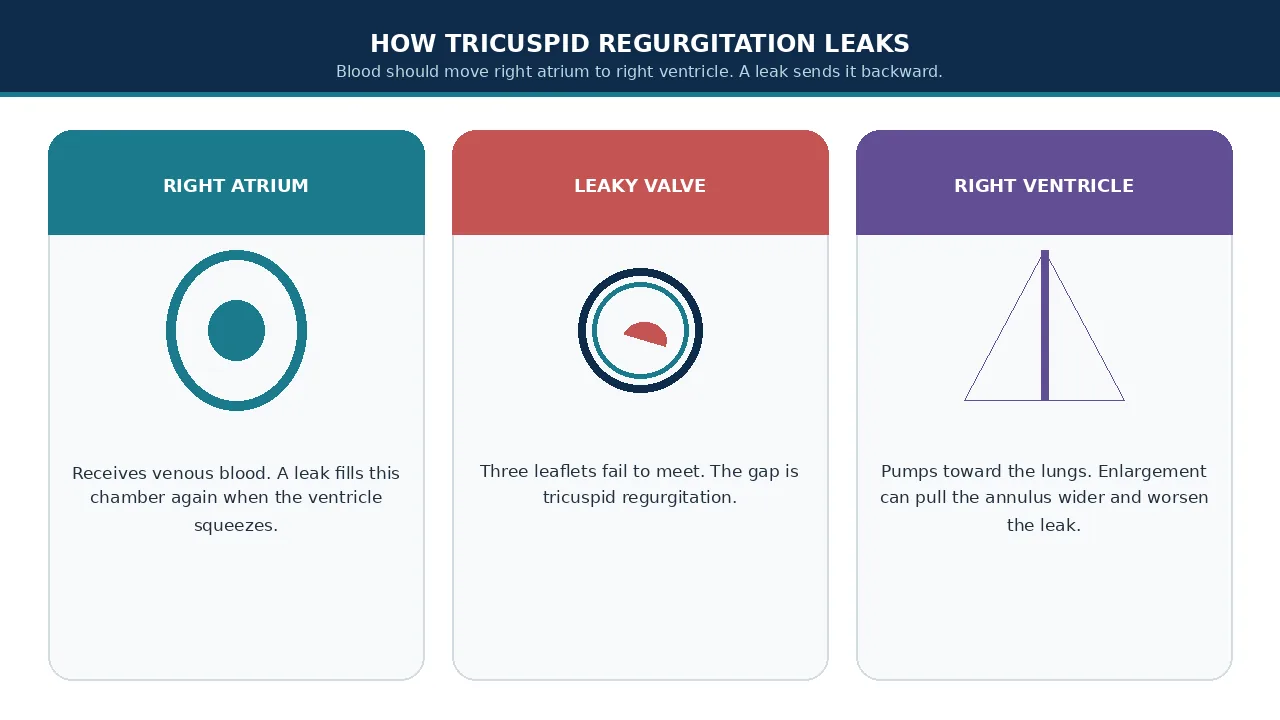
The tricuspid valve is one of the four valves of the heart. It lies between the right atrium and right ventricle and normally allows blood to move from the right atrium into the right ventricle while preventing backward flow when the ventricle contracts.
When the valve does not close properly, blood flows backward. This condition is called tricuspid regurgitation.
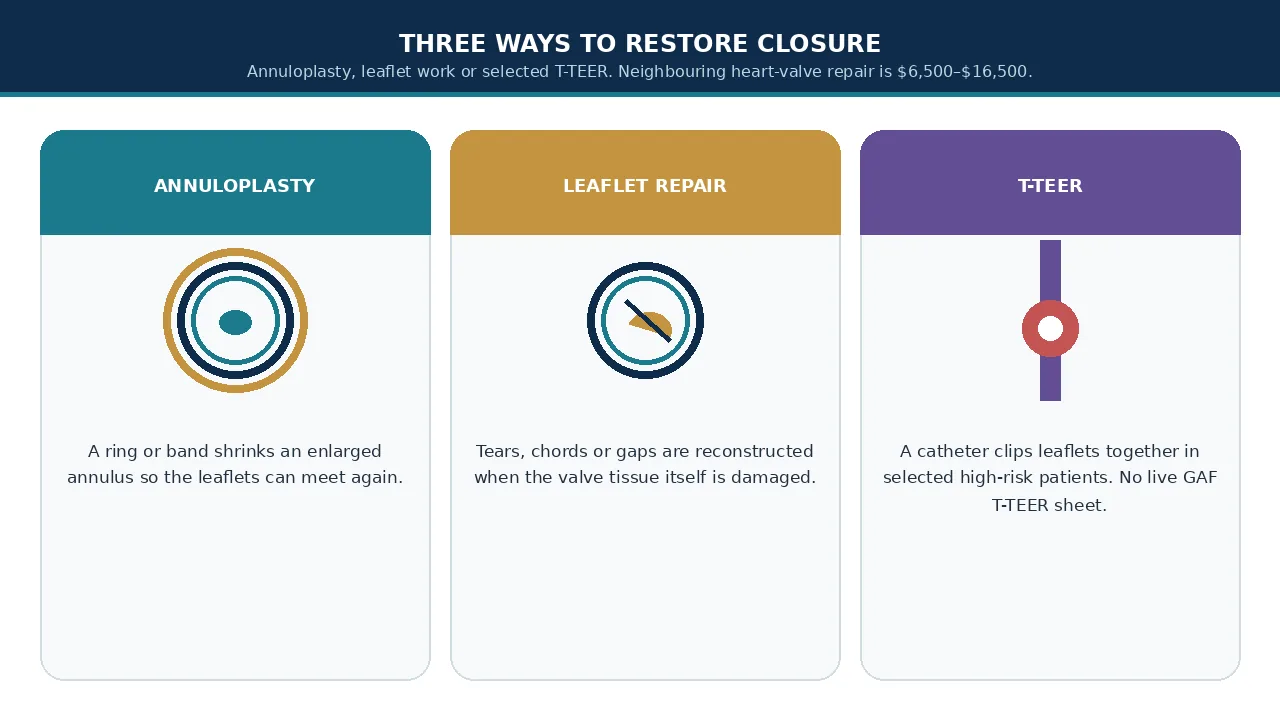
Tricuspid valve repair aims to restore proper valve closure while retaining the patient's own valve. Depending on the anatomy, the surgeon may reshape the valve leaflets, repair supporting structures or reduce and stabilize an enlarged valve ring using an annuloplasty technique.
Current European guidance specifically states that repair is preferred over replacement when technically feasible, particularly in patients with suitable anatomy.
Understanding the tricuspid valve
The tricuspid valve has three main leaflets:
- Anterior leaflet
- Posterior leaflet
- Septal leaflet
These leaflets are supported by chordae tendineae and papillary muscles. The valve is surrounded by a fibrous structure called the tricuspid annulus.
The valve works together with the right atrium and right ventricle to maintain one-way blood flow toward the lungs.
When the valve becomes severely leaky, blood moves backward during right-ventricular contraction. Over time, this can enlarge the right atrium and right ventricle and cause congestion in the veins returning blood to the heart.
The American Heart Association notes that symptoms may include fatigue, weakness, swelling of the legs or feet, abdominal swelling and other signs of right-sided congestion.
What is tricuspid regurgitation?
Tricuspid regurgitation is leakage through the tricuspid valve.
During a normal heartbeat, the tricuspid valve closes when the right ventricle contracts. In tricuspid regurgitation, the valve does not close completely and some blood moves backward into the right atrium.
The severity can range from mild to severe.
Mild tricuspid regurgitation is common and may not require an intervention. Significant or severe TR requires closer assessment, particularly when it is associated with symptoms, right-ventricular enlargement or declining right-ventricular function.
The 2025 ESC/EACTS guidelines emphasize that severe TR is associated with an increased risk of heart failure and death and that patients are often referred for treatment later than ideal.
What causes tricuspid regurgitation?
Tricuspid regurgitation can be broadly divided into primary and secondary TR.
Primary tricuspid regurgitation
In primary TR, there is a structural problem involving the valve itself.
Possible causes include:
- Infective endocarditis
- Rheumatic heart disease
- Congenital abnormalities
- Ebstein anomaly
- Myxomatous valve disease
- Trauma
- Radiation-related valve damage
- Carcinoid syndrome
- Iatrogenic injury following certain cardiac procedures
The 2025 ESC/EACTS guidelines report that only a minority of significant TR cases are due to primary structural abnormalities of the valve. Neighbouring congenital heart surgery is $8,000–$28,000 when Ebstein or other congenital work is the honest product.
Secondary tricuspid regurgitation
Secondary, or functional, TR occurs when the valve leaflets themselves may be relatively normal but cannot close properly because the surrounding heart structures have changed.
Common mechanisms include:
- Right-ventricular enlargement
- Right-ventricular dysfunction
- Right-atrial enlargement
- Tricuspid annular dilatation
- Pulmonary hypertension
- Left-sided heart-valve disease
- Heart failure
- Atrial fibrillation
The 2025 ESC/EACTS guidelines describe atrial and ventricular phenotypes of secondary TR, with atrial TR commonly associated with atrial fibrillation and right-atrial/annular enlargement, and ventricular TR associated with ventricular or left-sided cardiac disease.
Ask whether TR is primary, secondary or lead-related
Tricuspid regurgitation and pacemaker leads
A pacemaker or other cardiac implantable electronic device can sometimes contribute to tricuspid regurgitation.
A lead may interfere with leaflet movement or become involved with the valve apparatus.
This is important because the treatment strategy can differ when a pacemaker or defibrillator lead is involved.
The heart team may need to determine whether the lead is actually causing the regurgitation or is simply present in a patient who has TR for another reason.
In selected patients, lead repositioning or extraction may be considered, although this has its own risks and is not appropriate for everyone. Neighbouring pacemaker implantation is $3,500–$9,000. Neighbouring ICD implantation is $8,000–$18,000. Device lists sit on Pacemaker Implantation in India and ICD Device Implantation in India.
Symptoms of tricuspid regurgitation
Early or mild tricuspid regurgitation may produce no noticeable symptoms.
As the disease progresses, patients may develop symptoms related to right-sided heart failure and venous congestion.
Common symptoms include:
- Breathlessness, particularly with activity
- Fatigue
- Reduced exercise tolerance
- Swelling of the ankles and legs
- Abdominal swelling
- Feeling of abdominal fullness
- Weight gain from fluid retention
- Reduced appetite
- Weakness
- Palpitations
- Prominent neck veins
- Reduced urine output in advanced congestion
The American Heart Association identifies fatigue, weakness, peripheral swelling and abdominal or liver congestion among possible manifestations of TR.
Symptoms can vary considerably between patients.
A person with severe TR does not necessarily have severe symptoms at the beginning. This is one reason regular clinical and echocardiographic follow-up is important.
When is tricuspid valve repair recommended?
Not everyone with tricuspid regurgitation requires valve repair.
Treatment depends on:
- Severity of TR
- Symptoms
- Cause of TR
- Right-ventricular size
- Right-ventricular function
- Pulmonary pressures
- Left-sided valve disease
- Previous cardiac surgery
- Pacemaker or defibrillator leads
- Age and general health
- Surgical risk
- Valve anatomy
For severe primary TR, the 2025 ESC/EACTS guidelines recommend surgery in appropriate symptomatic patients who are operable. Intervention may also be considered in selected asymptomatic patients when there is evidence of right-ventricular dilatation or deterioration in right-ventricular function.
For secondary TR, the decision is more complex because treating the underlying cardiac condition is often an important part of management.
Tricuspid valve repair during other heart surgery
Tricuspid repair is frequently considered when a patient is already undergoing surgery for another valve problem.
For example, a patient undergoing mitral valve surgery may also have significant tricuspid regurgitation. Neighbouring mitral valve repair is $7,500–$18,000 when left-sided repair is also named. Neighbouring heart valve replacement is $7,000–$18,000 when a left-sided prosthesis is the honest product.
The 2025 ESC/EACTS guidelines recommend treatment of severe tricuspid regurgitation during indicated left-sided valve surgery because significant TR is unlikely to reliably disappear after the left-sided problem alone is corrected, while a later reoperation can carry substantial risk.
In selected patients with moderate TR or mild TR accompanied by significant annular dilatation, concomitant repair may also be considered.
The decision must balance the potential benefit of preventing progression against operative risks, including the possibility of requiring a pacemaker after surgery.
Ask whether another valve will be named in the same sitting
How is tricuspid valve disease diagnosed?
A detailed assessment is essential before deciding between repair, replacement, medical therapy or a transcatheter intervention.
1. Echocardiography
Echocardiography is the central imaging test.
A transthoracic echocardiogram can assess:
- Tricuspid regurgitation
- Valve anatomy
- Right-atrial size
- Right-ventricular size
- Right-ventricular function
- Pulmonary pressures
- Other valve abnormalities
- Blood-flow patterns
2. Transesophageal echocardiography
A transesophageal echocardiogram may provide more detailed images of the valve.
It can be particularly useful when planning a surgical or transcatheter intervention.
3. Cardiac CT
Cardiac CT may be used for detailed anatomical assessment and is particularly relevant when planning certain transcatheter procedures.
4. Cardiac MRI
Cardiac MRI can provide additional information about:
- Right-ventricular volumes
- Right-ventricular function
- Blood-flow abnormalities
- Structural cardiac disease
The AHA's scientific statement emphasizes that multiple imaging modalities may be needed because tricuspid anatomy and disease mechanisms can vary substantially from one patient to another.
5. Electrocardiogram
An ECG may help identify:
- Atrial fibrillation
- Other arrhythmias
- Heart rhythm abnormalities
- Evidence of associated cardiac disease
6. Blood tests
Blood tests may evaluate:
- Kidney function
- Liver function
- Hemoglobin
- Electrolytes
- Infection markers when relevant
- Other factors affecting operative risk
What happens during tricuspid valve repair?
The exact procedure depends on the patient's anatomy and the chosen technique.
For conventional surgical repair, the patient receives general anesthesia and is connected to a heart-lung bypass machine.
The surgeon then accesses the tricuspid valve and identifies the mechanism responsible for the leak.
The repair is tailored to the anatomy.
Possible techniques include:
- Annuloplasty
- Leaflet repair
- Leaflet reshaping
- Closure of leaflet defects
- Reconnection of damaged valve tissue
- Chordal repair or replacement
- Other reconstructive techniques
The goal is to restore adequate leaflet coaptation so that the valve closes effectively.
Mayo Clinic and Cleveland Clinic both describe annuloplasty, leaflet repair and reconstruction of supporting structures among approaches used during tricuspid valve repair.
What is tricuspid annuloplasty?
Tricuspid annuloplasty is one of the most commonly used surgical repair techniques.
In TR, the annulus may become enlarged. When this happens, the valve leaflets can be pulled apart and may no longer meet properly.
During annuloplasty, the surgeon reduces and stabilizes the annulus, often using a prosthetic ring or band.
The purpose is to improve leaflet coaptation and reduce regurgitation.
Current European guidance favors ring annuloplasty when repair is technically feasible.
Minimally invasive tricuspid valve repair
Selected patients may be candidates for minimally invasive surgery.
Instead of a traditional full sternotomy, the surgical team may use smaller incisions and specialized instruments.
Potential advantages can include:
- Smaller incisions
- Less disruption of the chest
- Potentially shorter hospital recovery
- Earlier mobility
However, minimally invasive surgery is not appropriate for every patient.
The decision depends on valve anatomy, previous surgery, other procedures being performed, surgeon expertise and the patient's overall condition. Neighbouring minimally invasive cardiac surgery is $8,000–$20,000. Neighbouring robotic cardiac surgery is $10,000–$24,000. There is no live GAF minimally-invasive-heart-surgery treatment page.
Transcatheter tricuspid valve repair
The treatment of tricuspid disease has expanded beyond conventional surgery.
For selected patients, a catheter-based procedure may be considered.
One important technique is transcatheter edge-to-edge repair (T-TEER).
Instead of opening the chest, a catheter is generally introduced through a blood vessel and guided to the tricuspid valve. A device approximates portions of the valve leaflets to reduce backward leakage.
This approach may be particularly relevant for patients considered high risk for conventional surgery.
The 2025 ESC/EACTS guidelines state that transcatheter treatment should be considered in selected high-risk patients with symptomatic severe TR despite optimal medical therapy, provided there is not severe right-ventricular dysfunction or pre-capillary pulmonary hypertension. Treatment should be performed at an experienced heart-valve center.
There is no live GAF T-TEER treatment page or T-TEER cost sheet. Neighbouring TAVR/TAVI is $18,000–$42,000 and is an aortic-valve product, not a tricuspid clip quote.
Ask whether imaging names surgical repair or T-TEER
What does research show about transcatheter tricuspid repair?
The evidence base for transcatheter tricuspid interventions has expanded rapidly.
In the TRILUMINATE Pivotal randomized trial, patients with symptomatic severe TR treated with transcatheter edge-to-edge repair experienced greater improvement in quality of life than those receiving medical therapy alone. The procedure also substantially reduced the degree of TR, although the trial did not show a significant reduction in death or heart-failure hospitalization at the reported follow-up.
This distinction is important.
A reduction in valve leakage and improvement in symptoms or quality of life does not automatically mean that every patient will have a longer survival or fewer hospitalizations.
Patient selection remains critical.
Surgical repair vs transcatheter repair
| Feature | Surgical tricuspid repair | Transcatheter repair |
|---|---|---|
| Access | Surgical access to the heart | Catheter-based access |
| Heart-lung bypass | Usually required for conventional surgery | Usually not required for T-TEER |
| Valve anatomy | Can address complex structural abnormalities | Requires suitable anatomy |
| Typical role | Operable patients requiring definitive surgical repair | Selected high-risk patients |
| Incision | Sternotomy or minimally invasive access | Small vascular access |
| Recovery | Generally longer | Usually shorter |
| Suitability | Depends on surgical risk and anatomy | Depends strongly on anatomy and procedural risk |
| Long-term evidence | Longer surgical experience | Evidence base is rapidly developing |
| GAF planning | Neighbouring heart-valve repair $6,500–$16,500 | No live GAF T-TEER sheet |
There is no universally superior procedure for every patient.
The choice should be made by a valve team after reviewing imaging, symptoms, right-ventricular function, surgical risk and the underlying mechanism of TR.
Tricuspid valve repair vs replacement
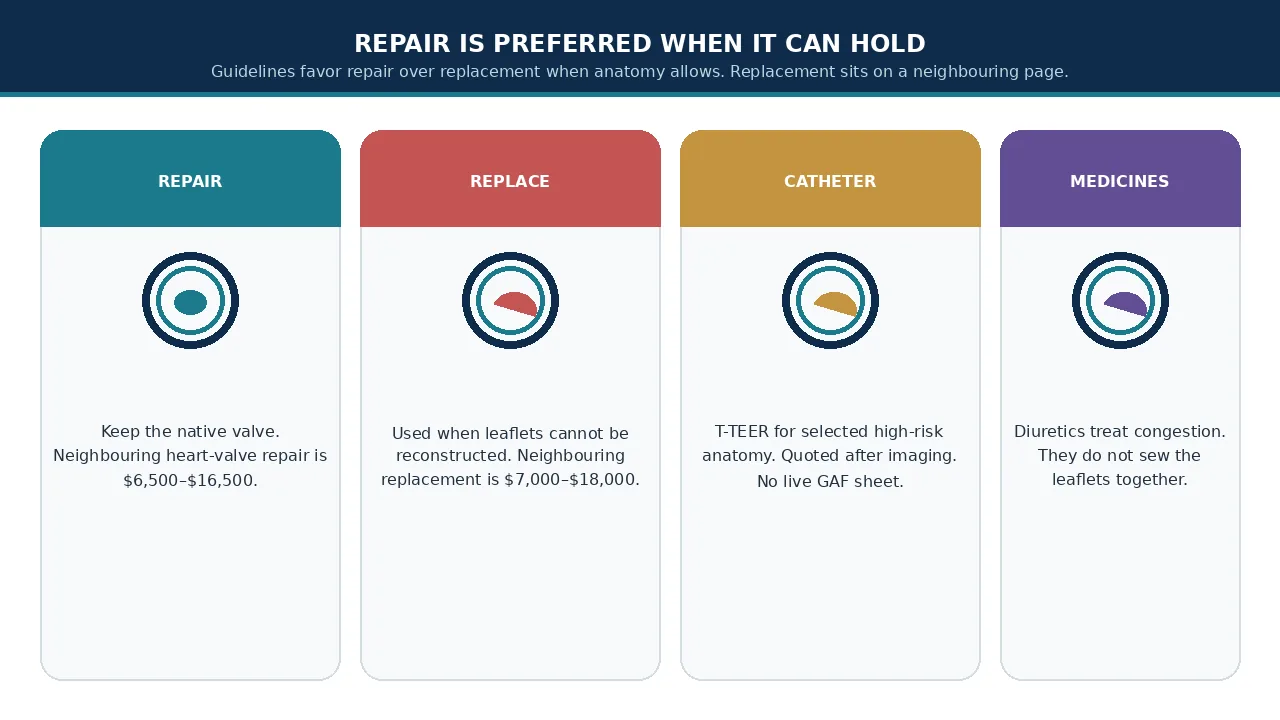
When the valve can be reconstructed effectively, repair is generally preferred over replacement.
Advantages of repair may include:
- Preservation of the patient's native valve
- Avoidance of a prosthetic valve
- Preservation of native valve structures
- Potentially less prosthesis-related management
- Avoidance of some long-term prosthetic-valve issues
However, repair is not always possible.
Severe leaflet damage, advanced tethering, extensive structural disease or other anatomical factors may make replacement more appropriate.
The 2025 ESC/EACTS guidelines state that repair using an annuloplasty ring is preferred over replacement whenever technically feasible, although replacement may be necessary in advanced disease.
Replacement lists sit on Tricuspid Valve Replacement Surgery in India. Neighbouring heart valve replacement is $7,000–$18,000.
Why timing matters in tricuspid valve disease
One of the most important considerations is not waiting until irreversible right-heart or organ damage has developed.
Severe TR can cause chronic venous congestion.
Over time, this may affect:
- Right-ventricular function
- Liver function
- Kidney function
- Exercise capacity
- Nutritional status
- Overall functional status
The 2025 ESC/EACTS guidelines highlight the problem of late referral and note that outcomes can be better when appropriate patients are assessed before advanced right-heart and organ dysfunction develops.
That does not mean every patient with TR should undergo early surgery.
It means the decision should be made before the disease progresses to a stage where intervention becomes substantially more difficult or risky.
How to prepare for tricuspid valve repair in India
Before traveling to India or scheduling surgery, international patients should ideally provide:
- Recent echocardiogram
- Transesophageal echocardiogram, if available
- Cardiac CT or MRI, if already performed
- ECG
- Previous cardiac catheterization reports
- Previous surgery reports
- Pacemaker or ICD details, if applicable
- Current medication list
- Blood-test reports
- Previous hospital discharge summaries
- Relevant specialist opinions
Digital copies can usually be reviewed by the cardiac team before the patient travels.
This can help determine whether the patient needs:
- Medical treatment first
- Surgical repair
- Valve replacement
- Concomitant valve surgery
- A transcatheter intervention
- Additional diagnostic testing
Send echo, CT and medication lists before travel
What happens before surgery?
The hospital's cardiac team usually performs a comprehensive assessment.
This may include:
Medical history
Doctors review:
- Symptoms
- Previous heart surgery
- Heart failure
- Atrial fibrillation
- Pulmonary hypertension
- Kidney disease
- Liver disease
- Diabetes
- Previous infections
- Pacemaker or ICD history
Cardiac imaging
The team assesses:
- Severity of TR
- Leaflet morphology
- Annular size
- Right-ventricular function
- Right-atrial size
- Pulmonary pressures
- Other valve disease
Surgical-risk assessment
Risk assessment may include age, comorbidities, previous procedures, kidney and liver function, ventricular function and overall clinical status.
The Society of Thoracic Surgeons now provides contemporary risk models specifically for isolated tricuspid valve surgery based on its Adult Cardiac Surgery Database.
Hospital stay after tricuspid valve repair
The length of hospitalization varies.
After conventional surgical repair, patients generally spend time in:
- Operating room
- Cardiac intensive care unit
- Step-down or cardiac ward
- Hospital recovery
- Discharge and rehabilitation
During recovery, the medical team monitors:
- Heart rhythm
- Blood pressure
- Oxygen levels
- Kidney function
- Fluid balance
- Surgical wounds
- Heart function
- Possible infection
- Bleeding
Mayo Clinic notes that patients commonly remain hospitalized for several days after tricuspid valve surgery, with the exact duration depending on the procedure, health status and complications. GAF neighbouring heart valve repair planning is typically 7–14 nights.
Recovery after tricuspid valve repair
Recovery is different for every patient.
Factors affecting recovery include:
- Type of procedure
- Whether surgery was isolated or combined with another operation
- Age
- Pre-existing heart failure
- Right-ventricular function
- Kidney and liver function
- Surgical complications
- General physical condition
Open-heart surgery generally requires a longer recovery period than a catheter-based intervention.
Patients are gradually encouraged to walk and increase physical activity under medical guidance.
Cardiac rehabilitation may be recommended. There is no live GAF cardiac-rehabilitation treatment page.
Life after tricuspid valve repair
Successful repair can reduce tricuspid regurgitation and may improve symptoms and functional capacity.
However, repair does not mean that follow-up is no longer necessary.
Patients generally require periodic cardiac evaluation and echocardiography.
A heart-healthy lifestyle remains important:
- Do not smoke
- Maintain a healthy weight
- Follow the prescribed medication plan
- Control blood pressure
- Control diabetes when present
- Follow medical advice regarding exercise
- Attend scheduled cardiac follow-ups
- Seek medical attention for new or worsening symptoms
Risks of tricuspid valve repair
Tricuspid valve repair is a major cardiac procedure when performed surgically and carries potential risks.
Possible complications include:
- Bleeding
- Infection
- Blood clots
- Stroke
- Abnormal heart rhythm
- Need for a pacemaker
- Kidney injury
- Respiratory complications
- Residual tricuspid regurgitation
- Recurrent regurgitation
- Right-heart failure
- Need for additional intervention
- Death
The actual risk varies significantly from one patient to another.
It depends on the patient's age, health, severity of disease, right-ventricular function, pulmonary pressures, previous surgery and the complexity of the procedure.
Mayo Clinic specifically lists bleeding, blood clots, recurrent or failed repair, arrhythmias, infection, stroke and death among potential risks of tricuspid valve surgery.
What are the success rates of tricuspid valve repair?
It is better to avoid quoting a single "success rate" for tricuspid valve repair because outcomes vary considerably according to the patient's disease and the definition of success.
For example, a repair can be technically successful but still leave some residual TR.
Outcomes depend on:
- Primary vs secondary TR
- Severity of disease
- Valve anatomy
- Right-ventricular function
- Pulmonary hypertension
- Presence of other valve disease
- Surgical timing
- Previous heart surgery
- Center and surgeon experience
Contemporary STS data involving 13,587 isolated tricuspid valve surgery patients treated between 2017 and 2023 were used to develop modern risk models. The STS reported a predicted operative mortality of approximately 5.5% for isolated repair in that dataset, illustrating why individual risk assessment is more meaningful than using a generic internet "success rate."
These figures are not a prediction for an individual patient and should not be applied directly to a particular case.
Tricuspid valve repair cost in India
The cost of tricuspid valve repair in India varies substantially.
There is no live GAF tricuspid-repair-only sheet. Neighbouring heart valve repair is $6,500–$16,500 (typically 7–14 nights). US comparison is $75,000–$200,000.
Major factors include:
- Type of repair
- Open vs minimally invasive approach
- Transcatheter vs surgical treatment
- Surgeon and cardiac team
- Hospital
- ICU duration
- Room category
- Diagnostic tests
- Anesthesia
- Medicines
- Blood products
- Length of hospitalization
- Prosthetic ring or other surgical materials
- Whether another valve is repaired simultaneously
- Complications
- Rehabilitation
External medical-travel databases sometimes publish other headline figures. Those numbers are not a GAF Healthcare quotation and should not be used in place of the live neighbouring sheets.
What should an Indian hospital quote include?
For an international patient, ask for an itemized quotation covering:
- Cardiologist consultation
- Cardiac surgeon consultation
- Echocardiography
- Pre-operative investigations
- Surgeon fees
- Anesthesia
- Operation-theatre charges
- Valve repair material or ring
- ICU charges
- Room charges
- Medicines
- Consumables
- Blood products, if required
- Follow-up consultation
- Additional charges if complications occur
A written, itemized estimate is much more useful than comparing hospitals using a headline price alone.
Request an itemised tricuspid-repair estimate
Factors that can increase the cost
The final treatment cost can be higher when a patient requires:
- Combined valve surgery
- Coronary artery bypass surgery
- Valve replacement instead of repair
- Repeat cardiac surgery
- Prolonged ICU care
- Mechanical ventilation
- Additional cardiac imaging
- Treatment for kidney or liver dysfunction
- Management of infection
- Blood transfusion
- Treatment of complications
This is especially important for international patients because a medical package should ideally distinguish planned treatment costs from contingency costs. Neighbouring CABG is $5,500–$14,000 when grafts are added.
Why do international patients consider India for tricuspid valve treatment?
Patients traveling internationally for cardiac treatment generally look at more than the advertised surgical price.
Important considerations include:
Multidisciplinary cardiac care
Complex tricuspid disease may require input from:
- Cardiologists
- Cardiac surgeons
- Interventional cardiologists
- Cardiac anesthesiologists
- Imaging specialists
- Heart-failure specialists
- Intensive-care specialists
Advanced cardiac imaging
Complex tricuspid disease often requires detailed imaging to understand valve anatomy and right-heart function. The AHA specifically emphasizes the role of multimodality imaging in planning treatment.
Valve-team decision making
The appropriate intervention should be selected by a team familiar with surgical and transcatheter options.
International-patient coordination
International patients may also require help with:
- Medical-record review
- Hospital appointment scheduling
- Visa documentation
- Airport transfers
- Accommodation
- Interpreter services
- Treatment estimates
- Hospital coordination
- Follow-up planning
How to choose a hospital for tricuspid valve repair in India
For a complex valve procedure, patients should look beyond general hospital rankings.
Ask the hospital:
- How many tricuspid valve repairs does the cardiac team perform?
- Does the hospital have a dedicated valve or structural-heart team?
- Can the hospital perform both surgical and transcatheter evaluation?
- How is right-ventricular function assessed?
- Can the hospital manage complex pulmonary hypertension and heart failure?
- What is the surgeon's experience with repair rather than replacement?
- What happens if repair is not technically possible?
- Is a minimally invasive approach available when appropriate?
- What is included in the treatment estimate?
- What follow-up is provided after discharge?
For high-risk or complex patients, access to a full cardiac team can be particularly important.
What makes a patient suitable for tricuspid valve repair?
Suitability depends on several factors.
A patient may be considered for repair when:
- TR is significant
- Symptoms are present
- The right ventricle is affected
- The valve anatomy is repairable
- Surgical risk is acceptable
- The expected benefit outweighs procedural risk
For selected high-risk patients, transcatheter treatment may be considered instead of conventional surgery.
The 2025 ESC/EACTS guidance specifically emphasizes anatomical assessment, including jet location, coaptation gap, leaflet tethering and possible pacemaker-lead interference when evaluating patients for transcatheter treatment.
Can severe tricuspid regurgitation be treated without surgery?
Sometimes.
Medical treatment can help control symptoms, particularly fluid retention.
Diuretics may reduce congestion, while treatment of the underlying heart or lung condition may also be important.
However, medicines generally do not physically repair a severely damaged tricuspid valve.
Selected patients may be considered for catheter-based treatment.
The 2025 ESC/EACTS guidelines have strengthened the role of transcatheter treatment for appropriately selected high-risk patients with symptomatic severe TR despite optimal medical treatment.
Can tricuspid valve repair be done without open-heart surgery?
Yes, in selected patients.
There are catheter-based and minimally invasive approaches.
However, not every patient is anatomically suitable.
A transcatheter procedure may depend on:
- Leaflet anatomy
- Location of the regurgitant jet
- Coaptation gap
- Leaflet tethering
- Right-ventricular function
- Pulmonary pressures
- Pacemaker lead position
- Previous valve procedures
The decision requires detailed imaging and specialist assessment.
Tricuspid valve repair in India for international patients
International patients can begin the evaluation process remotely in many cases.
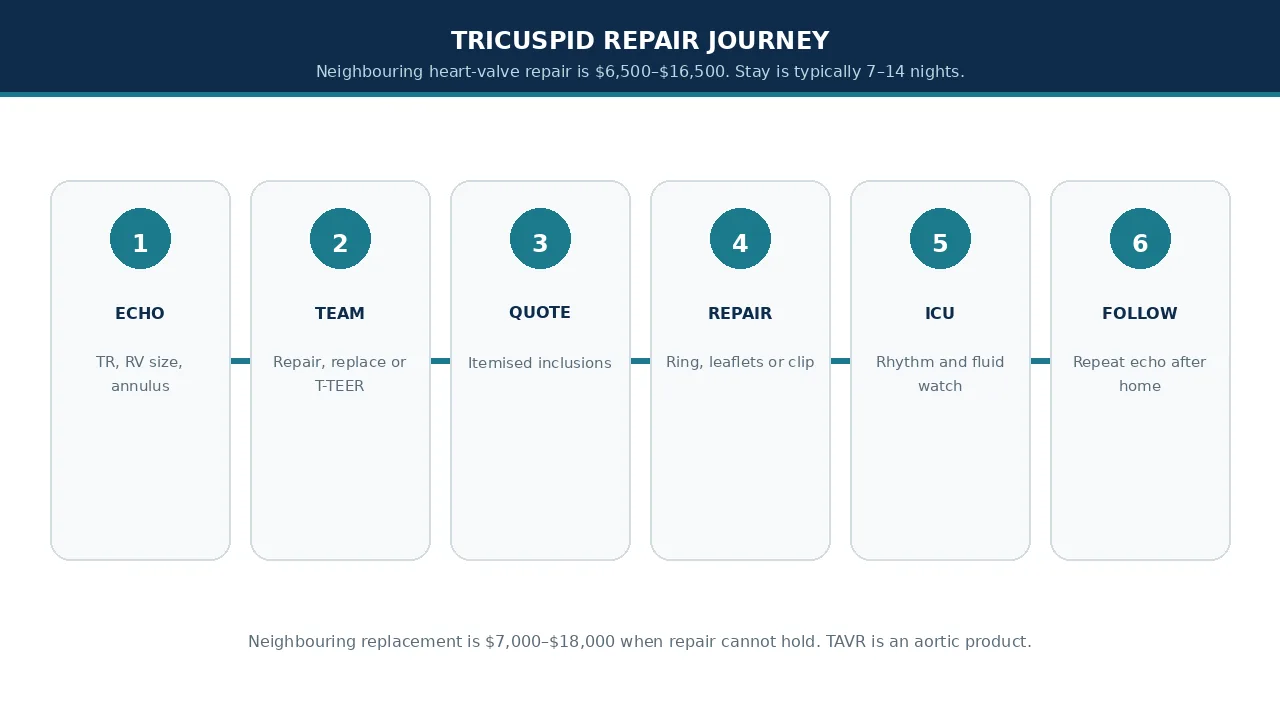
A practical pathway is:
Step 1: Send medical records
Share echocardiography, cardiac imaging, ECGs, previous reports and medication details.
Step 2: Medical review
The cardiac team reviews the records and determines whether additional investigations are required.
Step 3: Treatment recommendation
The team may recommend:
- Medical management
- Surgical repair
- Valve replacement
- Transcatheter repair
- Additional testing
- A combined procedure
Step 4: Cost estimate
The hospital provides an estimated treatment cost based on the proposed treatment plan.
Step 5: Travel planning
After medical acceptance, the international patient can coordinate:
- Visa
- Flights
- Accommodation
- Airport transfer
- Hospital admission
Step 6: Final assessment in India
The patient undergoes the required examinations after arrival.
The final treatment decision may change if new imaging or clinical findings alter the assessment.
Step 7: Treatment and recovery
The patient undergoes the planned procedure and remains under cardiac monitoring.
Step 8: Discharge and follow-up
The patient receives medications, wound-care instructions, activity guidance and follow-up recommendations.
Send records before anyone books flights
Questions to ask a tricuspid valve surgeon
Before choosing treatment, patients should consider asking:
- What is causing my tricuspid regurgitation?
- How severe is my TR?
- Is my right ventricle enlarged?
- Is my right-ventricular function reduced?
- Can my valve be repaired?
- Why do you recommend repair rather than replacement?
- Is minimally invasive surgery appropriate?
- Am I a candidate for transcatheter repair?
- Do I need treatment for another valve at the same time?
- What are my individual surgical risks?
- How experienced is the center with tricuspid repair?
- What happens if the valve cannot be repaired?
- How long should I expect to stay in hospital?
- What will recovery look like?
- What follow-up will I need after returning home?
A coordinator can also open WhatsApp at +91 90443 46292 for planned records review.
Frequently asked questions about tricuspid valve repair in India
Is tricuspid valve repair a major surgery?
Conventional surgical tricuspid repair is a major cardiac operation. It generally involves general anesthesia and, in conventional open-heart surgery, cardiopulmonary bypass.
However, selected patients may undergo minimally invasive or catheter-based treatment.
Is tricuspid valve repair better than replacement?
When technically feasible, repair is generally preferred because it preserves the patient's own valve. Replacement becomes necessary when the valve cannot be reliably repaired.
How long does tricuspid valve repair take?
The duration varies according to the repair technique and whether other cardiac procedures are performed at the same time.
A combined valve operation may take substantially longer than an isolated repair.
How many days do I need to stay in India?
The required stay depends on the complexity of the procedure, recovery and follow-up requirements.
International patients should allow additional time beyond the expected hospital stay for post-operative review and clearance to travel. GAF neighbouring heart-valve repair planning is typically 7–14 nights.
How long is hospital stay after tricuspid valve repair?
After conventional surgery, hospitalization commonly lasts several days, although the exact duration varies with recovery and complications.
Can tricuspid regurgitation come back after repair?
Yes.
Recurrent or residual TR can occur after repair. The likelihood depends on the original disease mechanism, valve anatomy, right-heart remodeling and the repair performed.
Regular follow-up is therefore important.
Can tricuspid valve disease cause heart failure?
Severe TR can contribute to right-sided heart failure and systemic venous congestion.
Can tricuspid regurgitation be treated with medicines?
Medicines can help manage fluid retention and treat associated heart conditions, but they do not physically reconstruct a severely damaged valve.
Is transcatheter tricuspid repair available in India?
Catheter-based tricuspid interventions are an evolving area of structural-heart treatment. Availability depends on the hospital, device, regulatory status, patient anatomy and clinical indication.
Patients should confirm the specific technology and indication with the treating heart center. There is no live GAF T-TEER treatment page.
What tests are needed before tricuspid valve repair?
Most patients require detailed echocardiography. Depending on the case, doctors may also request transesophageal echocardiography, cardiac CT, cardiac MRI, ECG, blood tests and other cardiac investigations.
What is the difference between tricuspid stenosis and tricuspid regurgitation?
Tricuspid regurgitation means the valve leaks backward.
Tricuspid stenosis means the valve is narrowed and restricts forward blood flow.
The treatment approach differs between the two conditions.
Can tricuspid valve repair be combined with mitral valve surgery?
Yes. In appropriate patients, tricuspid repair may be performed during surgery for left-sided valve disease. Current guidelines specifically address concomitant tricuspid intervention in patients undergoing left-sided valve surgery.
What happens if the tricuspid valve cannot be repaired?
If reliable repair is not possible, the cardiac surgeon may recommend valve replacement. That pathway sits on Tricuspid Valve Replacement Surgery in India.
The choice between repair and replacement depends on valve anatomy, disease severity, patient risk and the expected durability of the repair.
Key takeaways
- Tricuspid valve repair is designed to restore valve function while preserving the patient's native tricuspid valve.
- The most common condition requiring repair is significant tricuspid regurgitation.
- TR can be primary, caused by structural valve disease, or secondary, caused by changes in the heart surrounding the valve.
- Echocardiography is central to diagnosis and treatment planning.
- Right-ventricular size and function are particularly important when deciding treatment.
- When technically feasible, contemporary guidelines generally favor repair over replacement.
- Some patients can undergo minimally invasive or transcatheter tricuspid repair rather than conventional open surgery.
- The 2025 ESC/EACTS guidelines support transcatheter treatment for selected high-risk patients with symptomatic severe TR despite optimal medical therapy, when appropriate anatomical and clinical criteria are met.
- Treatment should ideally be planned before severe right-ventricular or end-organ dysfunction develops.
- There is no live GAF tricuspid-repair-only sheet. Neighbouring heart-valve repair planning is $6,500–$16,500.
- International patients should obtain a detailed medical review and itemized quotation before traveling.
- The most important decision is not simply where treatment costs less, but whether the treating center has the appropriate valve expertise, imaging, surgical capability and structural-heart support for the individual case.
Get a personalised tricuspid-repair opinion in India
A cardiac team needs to review echocardiography, right-ventricular function, pulmonary pressures and associated valve disease before naming repair, replacement, T-TEER or medicines.
Share reports for a preliminary tricuspid-repair estimate
Related GAF Healthcare pages
- Tricuspid Valve Replacement Surgery in India
- Heart Valve Replacement Surgery in India
- CABG Surgery in India
- Heart Bypass Surgery Cost in India
- TAVR in India
- Pacemaker Implantation in India
- ICD Device Implantation in India
- Heart valve repair cost
- Heart valve replacement cost
- Mitral valve repair cost
- Cardiac surgeons in India
- Cardiac surgery hospitals in India
T-TEER-only, mitral-repair-only, transcatheter-tricuspid-replacement and cardiac-rehabilitation treatment pages are not live on this site. Use this page plus the named modality sheets.
Top 10 sources
- European Society of Cardiology / European Association for Cardio-Thoracic Surgery — 2025 Guidelines for the Management of Valvular Heart Disease.
- American Heart Association — The Tricuspid Valve: A Review of Pathology, Imaging and Current Treatment Options, Scientific Statement, 2024.
- American Heart Association — Tricuspid Valve Regurgitation.
- Mayo Clinic — Tricuspid Valve Repair and Tricuspid Valve Replacement.
- Mayo Clinic — Tricuspid Valve Regurgitation: Diagnosis and Treatment.
- Cleveland Clinic — Tricuspid Valve Repair and Replacement.
- Society of Thoracic Surgeons — Isolated Tricuspid Valve Surgery Risk Calculator and contemporary surgical outcomes data.
- New England Journal of Medicine — TRILUMINATE Pivotal Trial: Transcatheter Repair for Patients with Tricuspid Regurgitation.
- GAF Healthcare heart valve repair cost sheet — Heart Valve Repair.
- GAF Healthcare heart valve replacement cost sheet — Heart Valve Replacement.
Medical disclaimer
This page is intended for general educational purposes and should not replace advice from a qualified cardiologist or cardiac surgeon.
Tricuspid valve disease varies considerably between patients. The decision to undergo valve repair, replacement, transcatheter treatment or medical management should be based on individual symptoms, imaging findings, right-ventricular function, associated diseases, procedural risk and evaluation by an appropriate heart team.
Treatment availability, costs and outcomes can change over time. Patients should obtain a current treatment plan and itemized quotation directly from the treating hospital before making travel or treatment arrangements. New chest pain, sudden breathlessness, fainting or sudden swelling belongs in a local emergency department.
Treatment Process
- 1
Share echo
The patient provides echocardiography, CT or MRI if available, ECG, blood tests and device details before anyone books travel.
- 2
Heart Team review
A valve team reviews whether the case is repair, replacement, T-TEER, medicines or a combined left-sided sitting.
- 3
Name the product
The team writes isolated repair, concomitant mitral work, replacement or catheter repair as separate products.
- 4
Itemized estimate
Neighbouring heart-valve repair planning is $6,500–$16,500. Neighbouring replacement is $7,000–$18,000.
- 5
Travel if fit
Stable planned cases travel after records review. New chest pain or sudden breathlessness is a local emergency.
- 6
Repeat essential tests
The receiving unit confirms echo, right-ventricular function and fitness after arrival.
- 7
Deliver the named repair
Annuloplasty, leaflet work or selected T-TEER proceeds only after anatomy is named.
- 8
Cardiac ICU and ward
Rhythm, fluid balance, residual TR and wounds are watched before discharge.
- 9
Echo follow-up
The patient leaves with medicines, activity rules and a plan for repeat echocardiography after returning home.