
Choosing a cardiologist is an important decision, especially when you or someone in your family has been diagnosed with a heart condition. You may be worried about the diagnosis, uncertain about the available treatments, or trying to understand whether a recommended procedure is necessary.
Finding a suitable specialist involves more than looking at online ratings or choosing a doctor with the longest experience. You need to consider the doctor's qualifications, expertise in your particular condition, hospital facilities, communication and approach to treatment.
India has a large network of hospitals and heart specialists offering consultations, diagnostic services, medical management and advanced cardiac procedures. The right doctor for one patient may not be the right choice for another.
A patient with high blood pressure may need a cardiologist experienced in preventive and clinical cardiology. Someone with a complex heart rhythm disorder may need an electrophysiologist, while a patient with a blocked coronary artery may require assessment by an interventional cardiologist.
This guide explains how to choose a cardiologist in India, which qualifications and credentials to verify, how to compare hospitals, what questions to ask during a consultation and what international patients should consider before travelling for cardiac treatment.
Important: If you or someone else has new or severe chest pain, severe breathlessness, fainting with concerning symptoms, or other signs of a possible heart attack or stroke, seek emergency medical care immediately. Call your local emergency service. Do not delay emergency care to compare doctors online.
Cardiologists in India and cardiac surgeons in India are directories, not a ranking. This site does not rank doctors. City cardiology lists include Delhi NCR, Mumbai, Chennai, Bengaluru, and Hyderabad. Hospital lists: cardiology and cardiac surgery. How the clinical and interventional roles differ is in interventional cardiologist vs clinical cardiologist. How to judge a campus is in how to choose a hospital for heart treatment in India.

1. What Type of Cardiologist You Need
Cardiology is a broad specialty. Cardiologists diagnose and manage different cardiovascular conditions, and some develop additional expertise in particular diseases, investigations or procedures.
Before comparing individual doctors, identify which type of specialist may fit your condition. The American Heart Association page on finding a healthcare professional is a general patient guide to that kind of choice.
Clinical or General Cardiologist
A clinical cardiologist evaluates, diagnoses and manages many common heart conditions. These may include hypertension, coronary artery disease, heart failure, certain rhythm disorders and problems involving the heart valves.
Clinical cardiologists may recommend medication, lifestyle changes, investigations and follow-up. They can also refer patients to interventional cardiologists, cardiac surgeons or other specialists when necessary.
A clinical cardiologist may be an appropriate starting point when you need a comprehensive cardiac assessment or ongoing management of a known heart condition.
Interventional Cardiologist
An interventional cardiologist specialises in catheter-based procedures used to diagnose or treat certain cardiovascular conditions.
These procedures may include coronary angiography, coronary angioplasty and stent placement. Depending on additional training and practice, some interventional cardiologists also perform structural heart procedures.
If a doctor has recommended angioplasty or another catheter-based intervention, ask about the specialist's experience with your specific condition and the hospital's facilities. The practical checklist is in how to choose an angioplasty specialist in India. Valve-team questions are in how to choose a TAVR/TAVI specialist in India.

Electrophysiologist
An electrophysiologist focuses on the electrical activity of the heart and disorders of heart rhythm, known as arrhythmias.
Depending on the diagnosis and their training, an electrophysiologist may evaluate patients for procedures such as catheter ablation or the implantation and management of certain cardiac rhythm devices.
Patients with recurrent palpitations, documented arrhythmias or complex rhythm disorders may require assessment by a specialist with this expertise. How to think about atrial fibrillation care is in best cardiologists for atrial fibrillation in India.
Heart Failure and Preventive Cardiology
Heart failure specialists focus on patients whose hearts cannot pump blood effectively enough to meet the body's needs. Their work may involve medication, monitoring, investigation of the underlying cause, coordination of multidisciplinary care and assessment for advanced therapies in selected patients.
Preventive cardiology focuses on reducing the risk of developing cardiovascular disease or preventing further complications in people who already have it. This may involve high cholesterol, high blood pressure, diabetes-related cardiovascular risk, smoking, obesity and other contributing factors.
Paediatric Cardiologist
A paediatric cardiologist specialises in heart conditions affecting babies, children and adolescents. These may include congenital heart defects, childhood rhythm disorders and other cardiovascular problems that arise during childhood.
Children who need heart surgery may also require evaluation by a paediatric cardiac surgeon. A paediatric cardiologist and a cardiac surgeon have different roles, and they may work together. Adult procedure ranges later in this article do not apply to a child's operation. Ask the paediatric team for its own written estimate.
Cardiologist and Cardiac Surgeon
A cardiologist diagnoses and manages heart disease and may perform certain catheter-based procedures, depending on their subspecialty.
A cardiac surgeon performs operations on the heart and related structures, such as coronary artery bypass grafting or certain valve operations. Surgeon profiles are in the cardiac surgery directory. The surgery page is CABG surgery in India.
Some conditions can be treated medically, through a catheter-based intervention, or through surgery. The appropriate approach depends on the diagnosis, disease severity, anatomy, overall health and clinical assessment.
If you have been advised to undergo heart surgery, ask whether your case has been reviewed by the relevant cardiac team and whether alternative treatment approaches are appropriate. Read angioplasty vs bypass surgery in India.
2. Qualifications and Registration
A doctor's qualifications are an essential starting point. A list of degrees alone does not describe clinical expertise.
Basic Medical Qualifications
For a doctor practising modern medicine in India, review their medical degree, recognized postgraduate qualifications and relevant specialty training.
Cardiology training pathways may involve postgraduate medical training followed by recognized super-specialty qualifications or other applicable accredited training pathways.
The qualifications listed on a profile should reflect the doctor's documented credentials. If you are uncertain about a qualification or its relevance, ask the hospital or the doctor's office for clarification.
Professional Registration
The National Medical Commission's National Medical Register is an official resource for information on registered medical practitioners in India. The Commission’s site is nmc.org.in.
Registration information and public records may not always be complete or immediately updated. If a record is unavailable, contact the relevant medical council or institution for clarification.
Training That Matches the Case
Additional qualifications can be useful, and they should be read in context.
Consider whether the doctor's training is relevant to your condition, whether their current clinical work matches the expertise you need and whether they practise in a hospital equipped to manage your case.
A patient considering a complex rhythm procedure should look for relevant electrophysiology expertise. Years of general cardiology practice, on their own, do not establish that expertise.
Current Hospital Affiliation
Doctors may change hospitals, departments, consulting schedules or professional roles.
Confirm that the doctor currently practises at the hospital listed on their profile and that the hospital can arrange the consultation or procedure you require.
This matters if you are travelling from another city or country and have planned accommodation or flights around the consultation.
3. Experience That Matches the Condition
Years of experience can be useful. The type of experience matters as much.
A cardiologist who regularly manages a particular condition may be more relevant than a doctor whose practice focuses on a different area of cardiology.
Experience With Your Diagnosis
If you have coronary artery disease, ask about the doctor's experience in evaluating coronary disease and determining when medication, angioplasty or surgery may be appropriate.
If you have a heart rhythm disorder, ask whether the doctor regularly manages your specific type of arrhythmia or whether referral to an electrophysiologist would be appropriate.
For complex valve disease, heart failure or congenital heart conditions, look for relevant specialist expertise and access to a suitable multidisciplinary team.
What Procedure Counts Mean
You may see doctors or hospitals advertise the number of procedures they have performed. Such numbers can provide context when they are documented and clearly defined. They do not independently establish quality.
If procedural experience is important to your decision, ask whether the information is verifiable and whether it relates to the specific procedure you need.
A larger number does not, by itself, establish a better outcome for an individual patient.
Outcomes in Context
When appropriate, ask how the doctor and hospital evaluate outcomes, complications and follow-up after the relevant treatment.
Meaningful comparisons require consistent definitions and attention to patient risk, disease severity and procedure complexity. Outcomes from one type of patient may not apply to another.
Be cautious about claims of guaranteed success, zero risk or universally superior results.
4. Hospital Facilities
A cardiologist's expertise is one part of the treatment decision. The hospital needs facilities appropriate for the investigation or treatment being considered.
A routine consultation and medication review may be managed in an outpatient setting. Complex interventions or unstable cardiac conditions may require advanced hospital services. A well-known hospital name does not establish that every doctor or programme suits every patient. Compare the facilities, team, treatment plan, costs and follow-up for your case.
Cardiac Diagnostic Facilities
Depending on your condition, useful services may include electrocardiography, echocardiography, exercise or other stress testing, Holter or other ambulatory rhythm monitoring, CT coronary angiography and other cardiac imaging where indicated, cardiac MRI where indicated, and cardiac catheterisation when required.
Your cardiologist should explain which investigations are appropriate and how the results will influence your care. This site does not publish a single price for an ECG, an echocardiogram, a Holter monitor or a stress test. Ask the hospital how each test is billed.
Interventional Cardiology, Surgery and Emergency Support
For angioplasty or another catheter-based procedure, confirm an equipped catheterisation laboratory and a team trained for the planned treatment. Ask about monitoring, complications and urgent cardiac care.
If surgery may be required, check for the relevant cardiac surgical team, operating facilities, intensive care and postoperative monitoring. Anaesthesia, imaging, blood-bank services and rehabilitation may also matter.
For an acute emergency, the priority is immediate medical assessment and access to emergency cardiac care.
5. Tests and Treatments a Cardiologist May Recommend
A consultation is meant to clarify your condition and the next steps. It does not mean that every patient needs an invasive procedure.
Diagnostic Tests
An ECG records the electrical activity of the heart. An echocardiogram uses ultrasound to assess heart structure and function. Ambulatory monitors can record heart rhythm over longer periods.
Other tests may be appropriate when the doctor needs more information about coronary arteries, heart muscle, valves or blood flow.
Ask what each test is intended to establish, whether preparation is necessary and how the results will influence treatment. What to gather is in what to bring to a cardiologist appointment.
Medication and Lifestyle Management
Many cardiovascular conditions can be managed, at least initially, with medication, lifestyle changes and regular monitoring.
Depending on the diagnosis, treatment may involve medicines for blood pressure, cholesterol, heart rhythm, heart failure or prevention of blood clots.
Do not stop or change prescribed heart medication without consulting your treating clinician, especially medication prescribed after a heart attack, stent placement or another major cardiac event.
Angioplasty and Stenting
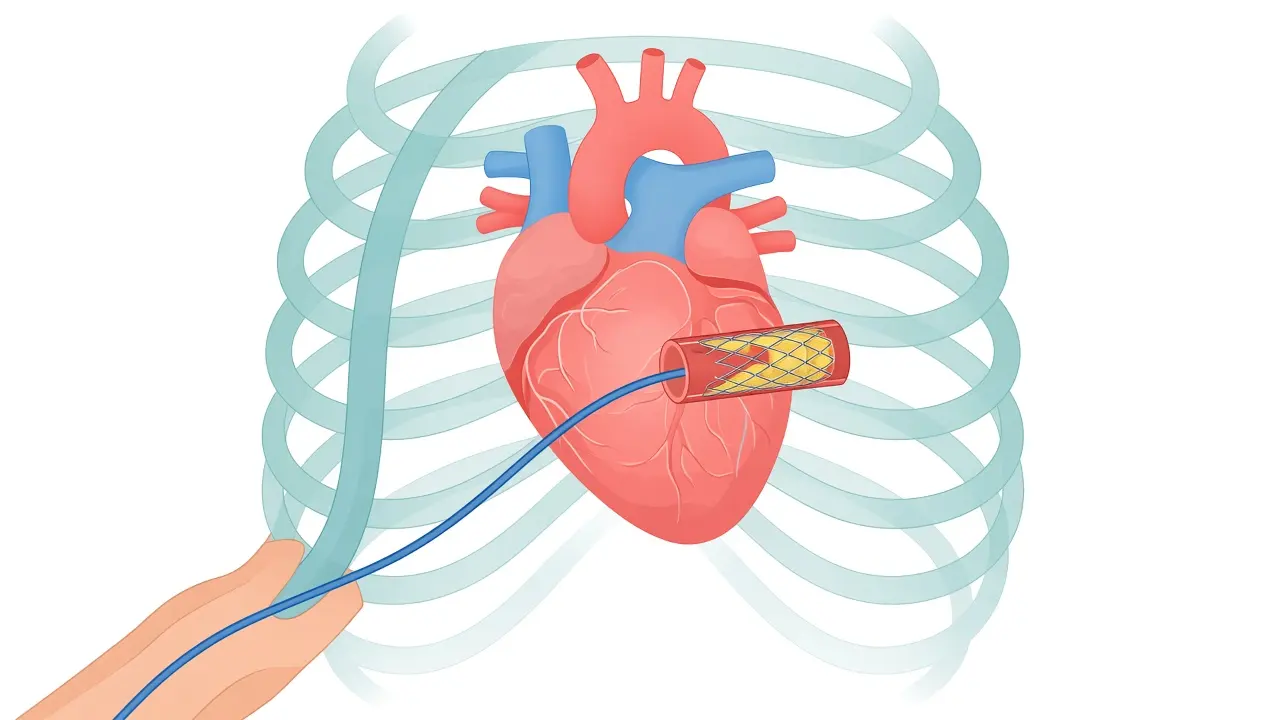
Angioplasty is a catheter-based procedure used to open a narrowed or blocked artery in selected patients. A stent may be placed to help keep the artery open. The procedure page is coronary angioplasty in India.
The decision depends on the clinical situation, coronary anatomy, symptoms and other relevant factors. Angioplasty is not the correct treatment for every patient with coronary artery disease.
Ask your cardiologist to explain the expected benefits, risks, alternatives and what may happen if the procedure is delayed.
Pacemakers and Other Cardiac Devices
Pacemakers and other implanted cardiac devices may be recommended for selected rhythm disorders or other conditions.
The type of device, expected benefits and follow-up requirements depend on the diagnosis. Implantation and long-term management should be planned by an appropriately qualified team. The cost guide is pacemaker cost in India.

Heart Valve Procedures and Cardiac Surgery
Some valve conditions can be monitored or managed with medication. Others may require a catheter-based intervention or surgery. The valve pages are heart valve replacement cost in India and TAVR in India.
Coronary artery disease may sometimes require bypass surgery rather than angioplasty. When several options are available, ask how the team reached its recommendation and whether a multidisciplinary review would be useful. A broader question list is in questions to ask before heart surgery.
6. Communication During the Consultation
A cardiologist should be able to explain complex medical information in language you can understand.
Cardiovascular treatment can involve long-term medication, monitoring, lifestyle changes and decisions about procedures that carry meaningful risks and benefits. The American Heart Association note on preparing for medical visits describes that preparation in general terms.
During the consultation, notice whether the doctor listens to your symptoms and concerns, reviews your history and existing reports, explains the diagnosis and the areas of uncertainty, discusses reasonable alternatives, explains benefits and risks, answers questions, and provides a clear follow-up plan.
You need a doctor who treats your concerns respectfully and explains the medical reasoning. If you do not understand an explanation, ask for it in simpler terms. Consider bringing a family member if that would help you remember the plan.
7. How to Compare Cardiologists
Use this framework when you are looking at more than one specialist. It is a discussion list, not a scoring system. For a routine follow-up, communication and continuity may matter most. For a complex procedure, relevant expertise and hospital capabilities may carry more weight.
| Factor | What to check | Questions to ask |
|---|---|---|
| Qualifications | Recognized degrees and registration | Are the qualifications relevant to my condition? |
| Specialisation | Clinical, interventional, electrophysiology or other expertise | Does the doctor regularly manage cases like mine? |
| Relevant experience | Experience with the condition or procedure | Can the doctor explain their approach to my case? |
| Hospital facilities | Diagnostic, interventional, surgical and critical-care support | Does the hospital have the services I may need? |
| Communication | Clear explanations and shared decisions | Do I understand the diagnosis and treatment plan? |
| Treatment options | Medical management, interventions and surgery where relevant | Have appropriate alternatives been discussed? |
| Cost transparency | Consultation, investigations, procedures and follow-up | What is included in the estimate? |
| Continuity of care | Monitoring, follow-up and access to records | Who will manage my care after treatment? |
A short list of verified facts and unanswered questions is often more useful than a complicated score.
8. How to Find a Cardiologist Online
Online directories can help you identify specialists across cities and hospitals. Treat the listing as a starting point for research. It is not a substitute for clinical assessment, and it is not a ranking.
Start With the Medical Need
Write down your diagnosis, the reason for the referral and any procedure that has been recommended.
If you do not know which type of cardiologist you need, begin with a qualified clinician who can review your records and advise whether a subspecialist referral is appropriate.
Search by the Expertise the Case Needs
Someone with a complex rhythm disorder may look for electrophysiology expertise. Someone advised to undergo angioplasty may look for an interventional cardiologist. A broad label such as heart specialist is a weak match when the case needs a narrower skill.
Profiles, Affiliations and the Appointment
Review qualifications, designations, stated areas of expertise and current hospital affiliations. If information is missing or inconsistent, ask for clarification before you arrange travel.
Confirm consultation availability, which records to send and whether an initial remote consultation is possible. A directory listing cannot determine which treatment is appropriate.
GAF Healthcare helps patients explore doctors and hospitals in India. Start with cardiologists in India, then review profiles that match your diagnosis and the type of specialist you need. Final treatment decisions belong with the qualified medical team after an appropriate evaluation. You can message the desk on WhatsApp at +91 90443 46292.
9. Published Planning Ranges Are Not a Quotation
Cardiologist consultation costs vary across India. This site does not publish a single fee for a cardiologist consultation. The final amount depends on the consultation format, the doctor's role, the hospital or clinic, the city, the complexity of the case and whether investigations are added. How published outpatient examples are handled is in cardiologist consultation fees in India.
A first consultation that reviews a complex file may be billed differently from a routine follow-up. Online appointments may use a different fee from an in-person visit. ECG, echocardiography, blood tests, rhythm monitoring and imaging may be charged separately. Confirm the current consultation fee, and which tests are included, with the hospital.
This site does not publish a single price for coronary angiography, angioplasty, a pacemaker, bypass surgery, catheter ablation or a valve procedure. The figures below are an indicative planning range, not a quotation. Ask the treating hospital for a written, itemised estimate. A lower consultation fee does not establish that the whole episode will cost less.
Coronary angiography is listed at US$400–US$1,200, stay Day-care or overnight.
Coronary angioplasty and stenting is listed at US$3,200–US$8,500, stay 1–3 nights typical. Read angioplasty cost in India.
Pacemaker implantation is listed at US$3,500–US$9,000, stay 1–3 nights.
Atrial fibrillation ablation is listed at US$6,500–US$16,000, stay 1–3 nights. That stay window matches the pacemaker listing. The procedures are different. Read cardiac ablation cost in India.
CABG (coronary artery bypass grafting) is listed at US$5,500–US$14,000, stay 7–14 nights, then nearby recovery. Read bypass surgery cost in India.
Heart valve replacement is listed at US$7,000–US$18,000, stay 8–16 nights. TAVR/TAVI is listed at US$18,000–US$42,000, stay 3–7 nights typical.
A United States comparison band is US$5,000–US$15,000 for angiography, US$25,000–US$70,000 for angioplasty, US$20,000–US$50,000 for a pacemaker, US$40,000–US$90,000 for atrial fibrillation ablation, US$70,000–US$200,000 for CABG, US$80,000–US$220,000 for heart valve replacement, and US$50,000–US$150,000 for TAVR. Each of those figures is not an India price.
The NPPA sets ceiling prices for scheduled coronary stents. In the Department of Pharmaceuticals statement dated 17 March 2026, the ceiling was ₹10,692.69 for a bare-metal stent and ₹38,933.14 for a drug-eluting stent, plus applicable GST. They are the stent, not the angioplasty. Check the 17 March 2026 statement before you rely on the figures.
If a procedure is being considered, ask the estimate to name hospital charges, professional fees, room category, devices or implants, medication, intensive care if required, and follow-up. Ask which items may change the total.
10. When a Second Opinion Helps
A second opinion can be useful when you are uncertain about a diagnosis, have been advised to undergo a major procedure, or want to understand whether reasonable alternatives exist. The steps are in second opinion from a cardiologist in India. The American Heart Association page on a second medical opinion describes the same idea for patients.
Consider another opinion when you do not understand why a procedure has been recommended, you want the benefits and risks of different options explained, the diagnosis is complex or uncertain, you want another specialist to review imaging, your concerns have not been addressed, or you want the recovery, costs or long-term implications clarified.
Collect consultation notes, test reports, imaging files and the medication list. Write down the diagnosis you have been given, the treatment proposed and the questions you want answered. If the recommendations differ, ask both clinicians to clarify the reasoning.
Do not delay urgent treatment to complete an online search. If the condition is time-sensitive, ask the treating team how quickly another opinion can be obtained safely.
11. Planning a Visit From Another Country
Patients travelling to India for consultations, investigations and cardiac treatment have extra practical work: records, travel, language, estimates and follow-up after they go home.
The choice of cardiologist should still rest on clinical suitability.
Records, the Estimate and the Stay
Where possible, arrange an initial review before you book international travel. Send the diagnosis, current symptoms, previous procedures, medication, major medical conditions, and relevant ECGs, echocardiograms, angiography images, CT or MRI studies, blood tests and discharge summaries.
Ask which file formats the hospital needs. The doctor may request more tests or an in-person examination before a final recommendation. A remote review can identify next steps. It may not confirm that a procedure is necessary.
Ask for a written estimate based on the information available, and use the planning ranges in section 9 only as context. Clarify whether it includes consultation, investigations, the proposed procedure, hospital stay, medication, intensive care if required and follow-up. A preliminary estimate is not the final bill.
The length of stay depends on the diagnosis, the treatment, recovery and fitness to travel. The angioplasty planning window on this site is 1–3 nights typical. That is not a discharge date. Ask the treating team how long you may need to remain near the hospital. Book a return journey after that team has given an individual plan.
Follow-Up and Children
Before you leave, obtain a discharge summary, an updated medication list, procedure details if a procedure was done, copies of relevant reports and follow-up instructions. Confirm who will manage care at home and how the doctors can share records.
If you are travelling with a child, the team needs experience appropriate to the patient's age. Adult planning ranges in this article are for the adult procedures named above.
GAF Healthcare can help international patients navigate doctor and hospital information and coordinate enquiries where those services are available. Medical decisions remain with the treating clinicians. Start with cardiologists in India.
12. Red Flags When Comparing Cardiologists
Be cautious when a profile lists degrees the doctor or institution cannot confirm, registration details cannot be clarified through official channels, a procedure is described as risk-free or certain to succeed, you are pressed into an expensive booking without a clinical explanation, alternatives are not discussed, the hospital will not say what an estimate includes, or marketing uses labels such as number one or best in India without transparent criteria, or there is no plan for medication, monitoring and worsening symptoms.
Commercial pressure is different from a genuine emergency that needs immediate care. One incomplete website profile does not establish that a doctor is unqualified. Ask for clarification and verify important details. The National Medical Register is one place to start.
13. Questions for the First Consultation
Preparing questions can make the visit more useful. You do not need to ask every question in one appointment. Start with the issues that decide the next step. The American Heart Association page on talking with your healthcare professional is a general prompt list.
Questions About the Diagnosis
- What is my current diagnosis?
- How certain is the diagnosis, and what remains unclear?
- Which findings in my reports are most important?
- Do I need additional tests? What will they help establish?
- How urgent is treatment in my situation?
Questions About Treatment
- What treatment options are appropriate for me?
- What are the expected benefits and risks of each option?
- Can my condition be managed with medication and monitoring, or is a procedure being considered?
- Why do you recommend this particular treatment?
- What could happen if I delay the proposed treatment?
- Would a second opinion or multidisciplinary review be useful?
Questions About the Hospital and Recovery
- Where will the procedure be performed, if one is needed?
- What hospital facilities or specialist teams might my case require?
- What is the expected recovery process?
- How long might I need to stay in hospital?
- Which symptoms should prompt urgent medical attention?
- What follow-up appointments or tests will I need?
Questions About Costs
- What is the consultation fee?
- Are tests included or charged separately?
- If a procedure is recommended, can I receive an itemised estimate?
- Which costs could change during treatment?
- What follow-up expenses should I plan for?
14. Documents to Bring
Organised records help the cardiologist understand your history and can reduce repeated tests.
Bring previous consultation notes and discharge summaries, ECG reports and tracings, echocardiogram reports and images, coronary angiography reports and original images if performed, CT, MRI or other cardiac imaging, recent blood tests including cholesterol, glucose and kidney function, a list of current medicines, doses and known allergies, details of previous heart procedures or implanted devices, other medical conditions and family history, and a short timeline of symptoms.
Bring original imaging files when possible. Ask the clinic which formats it accepts. Do not stop medication to prepare for the appointment unless your treating clinician specifically instructs you to do so.
15. After You Choose a Cardiologist
Selecting a specialist starts the care. It does not finish it.
Ask for a clear explanation of the working diagnosis and what each recommended treatment is intended to achieve. If you are prescribed medication, confirm the dose, timing, possible side effects and what to do if you miss a dose.
Keep copies of consultation notes, investigation reports, prescriptions and discharge summaries. They help another doctor if you move, travel or need another opinion.
Attend the follow-up that was recommended. Ask which changes should prompt an earlier review.
Seek emergency medical care for new or severe chest pressure or pain, severe breathlessness, fainting with concerning symptoms, or signs suggestive of a heart attack or stroke. Do not use an online directory for a possible cardiac emergency.
16. Frequently Asked Questions About Choosing a Cardiologist in India
These answers are general education. They are not a personal treatment plan.
1. How do I choose the best cardiologist in India?
Start by identifying the type of cardiologist appropriate for your condition. Verify qualifications and registration, assess relevant clinical experience, review hospital facilities and arrange a consultation. Communication, treatment options and follow-up should also influence the decision. This site does not rank doctors. There is no single cardiologist who is best for every patient.
2. What qualifications should a cardiologist in India have?
Check the doctor's recognized medical qualifications, relevant postgraduate or super-specialty training and professional registration. The qualifications needed for a particular role depend on the doctor's scope of practice and the treatment being considered. Verify credentials through official or institutional sources when possible, including the National Medical Register.
3. What is the difference between a cardiologist and an interventional cardiologist?
A cardiologist diagnoses and manages cardiovascular conditions. An interventional cardiologist has additional expertise in catheter-based procedures, such as coronary angioplasty and stenting, and may perform other interventions depending on their training. The appropriate specialist depends on your diagnosis and treatment needs. The longer comparison is in the interventional and clinical cardiologist guide linked in this article.
4. Should I choose a cardiologist based on years of experience?
Years of experience can provide useful context, and they should not be the only deciding factor. Relevant experience with your particular condition, appropriate training, hospital capabilities and communication are also important. Ask about experience that relates to your diagnosis or proposed procedure.
5. Is a large hospital always the right setting?
A large hospital may provide advanced diagnostic services, specialist teams and critical care, which can matter for complex cases. The appropriate setting depends on your medical needs. Compare the facilities required for your condition rather than relying on hospital size or brand name alone.
6. How much does a cardiologist consultation cost in India?
This site does not publish a single fee for a cardiologist consultation. Fees vary by doctor, hospital, city, appointment type and case complexity. Additional tests may be charged separately, and this site does not publish a single price for an ECG, echocardiogram, Holter monitor or stress test. Contact the hospital for its current fee and request an itemised estimate if investigations or treatment are being considered.
7. Can I consult a cardiologist in India online?
Some hospitals and doctors offer remote consultations, including for international patients. Availability depends on the doctor and the case. An online consultation can help review records and discuss next steps. It may not replace physical examination, urgent assessment or investigations that require an in-person visit.
8. Can I get a second opinion before heart surgery or angioplasty?
Yes. A second opinion may help you understand the diagnosis, the reason for the proposed procedure, potential risks and reasonable alternatives. Share your reports and imaging with the second specialist. If treatment is urgent, ask the treating team whether another opinion can be obtained safely without delaying necessary care.
9. What should I bring to my first cardiologist appointment?
Bring previous consultation notes, relevant test reports and imaging, medication details, information about allergies, and a brief history of your symptoms. If you have undergone a previous procedure, bring the procedure report and discharge summary. Ask the clinic in advance if it needs any specific documents.
10. How do I find a cardiologist for angioplasty in India?
Look for an interventional cardiologist with relevant expertise in coronary artery disease and angioplasty. Verify current hospital affiliation and the availability of catheterisation and emergency support. The doctor should first assess whether angioplasty is appropriate. The angioplasty specialist guide linked in this article sets out the questions to ask.
11. How do I find a cardiologist for a heart rhythm disorder?
An electrophysiologist may be appropriate for certain complex rhythm disorders. The correct referral depends on the type of arrhythmia, previous test results and treatment history. A cardiologist can help determine whether specialist electrophysiology assessment is needed. Atrial fibrillation is discussed in the specialist guide linked earlier in this article.
12. Can international patients travel to India for cardiac treatment?
International patients may seek consultations, investigations and cardiac treatment in India. Before travelling, share available medical records, request a preliminary assessment and clarify costs, hospital arrangements and the expected length of stay. The final treatment plan and fitness to travel must be assessed by the treating medical team.
13. How can I compare two cardiologists fairly?
Compare verified qualifications, relevant expertise, hospital facilities, proposed treatment options, communication, costs and follow-up arrangements. Consider an independent opinion if the treatment decision is complex. Online ratings alone cannot establish which doctor is most suitable for your case.
14. Should I choose a cardiologist recommended by family or friends?
A personal recommendation can be a useful starting point, particularly if the person has experience with a similar condition. You should still verify the doctor's qualifications, relevant expertise and current hospital affiliation. The most suitable specialist depends on your own diagnosis and needs.
15. When should I seek urgent cardiac care instead of booking an appointment?
Seek emergency care for symptoms that may indicate a heart attack or another serious cardiovascular emergency, including severe or new chest pain, severe breathlessness or fainting with concerning symptoms. Call your local emergency service rather than waiting for a routine appointment.
16. What does this site list if a procedure is being planned?
This site does not publish a single price for those procedures. Coronary angiography is listed at an indicative planning range of US$400–US$1,200, stay Day-care or overnight. Coronary angioplasty and stenting is listed at US$3,200–US$8,500, stay 1–3 nights typical. A pacemaker is listed at US$3,500–US$9,000, stay 1–3 nights. CABG is listed at US$5,500–US$14,000, stay 7–14 nights, then nearby recovery. Those ranges are not a quotation. Ask the treating hospital for a written estimate.
17. Are the United States comparison figures an India price?
A United States comparison band is US$25,000–US$70,000 for angioplasty and US$70,000–US$200,000 for CABG. Each of those figures is not an India price. Use them only beside the India planning ranges, and ask the hospital for an estimate based on your own records.
Conclusion: Match the Doctor to the Decision
Choosing a cardiologist in India should follow your diagnosis, the specialist's relevant expertise, the hospital's capabilities and your ability to understand the proposed plan.
Verify qualifications, ask direct questions, understand the available options and seek another opinion when the situation allows. For international patients, records, estimates, travel and follow-up should support the clinical decision.
If you are beginning a search, start with cardiologists in India. Review the available profiles and discuss suitable options with a qualified medical professional. This site does not rank doctors and does not publish a single fee for a cardiologist consultation.
Medical disclaimer: This article is for general educational purposes and does not replace an individual medical consultation, diagnosis or treatment recommendation. No named clinician has signed it. A qualified healthcare professional should assess your symptoms, medical history and investigation results before making clinical decisions. For possible cardiac emergencies, seek immediate emergency medical care.
Sources
National Medical Commission — National Medical Register. nmr.nmc.org.in.
National Medical Commission — official website. nmc.org.in.
American Heart Association — finding the right healthcare professional. Finding the right doctor.
American Heart Association — medical appointments. Working with your healthcare professional.
American Heart Association — preparing for medical visits. Preparing for medical visits.
American Heart Association — getting a second medical opinion. Second medical opinion.
American Heart Association — talking to your healthcare professional. Heart-to-heart.
NHS — health information and services. nhs.uk.
MedlinePlus, U.S. National Library of Medicine. medlineplus.gov.
World Health Organization — cardiovascular diseases. WHO topic page.
Department of Pharmaceuticals — stent ceiling statement, 17 March 2026. PIB release.
No named clinician has signed this article. Confirm that source links remain active, and check clinical statements against current professional guidance, before treating the page as clinical instruction.