
Cardiac ablation is a procedure used to treat certain abnormal heart rhythms, also called arrhythmias. During catheter ablation, a specialist guides thin tubes called catheters through blood vessels to the heart and targets small areas of tissue responsible for abnormal electrical signals.
The cardiac ablation cost in India depends on the type of arrhythmia, the ablation technique, the complexity of the procedure, the hospital, the specialist team and the patient's medical condition.
A straightforward ablation for some forms of supraventricular tachycardia (SVT) may involve a different treatment pathway from a complex atrial fibrillation (AFib) ablation or an ablation for ventricular tachycardia.
The cost may also vary according to whether an electrophysiology (EP) study is performed, which mapping technology is used, whether the patient needs general anaesthesia or sedation, and how long hospital monitoring is required.
There is no single price that applies to every cardiac ablation procedure in India. Patients should obtain a written quotation that identifies the exact procedure, the investigations required, the hospital stay, medicines, follow-up and any exclusions.
This guide explains the major types of cardiac ablation, the conditions they may treat, how the procedure works, what affects the total bill and what patients travelling to India should plan for.
1. What Is Cardiac Ablation?
Cardiac ablation is a treatment that targets small areas of heart tissue involved in creating or maintaining an abnormal electrical rhythm.
The heart has an electrical conduction system that coordinates its contractions. If abnormal electrical pathways or areas of tissue disrupt this system, the heart may beat too quickly or irregularly.
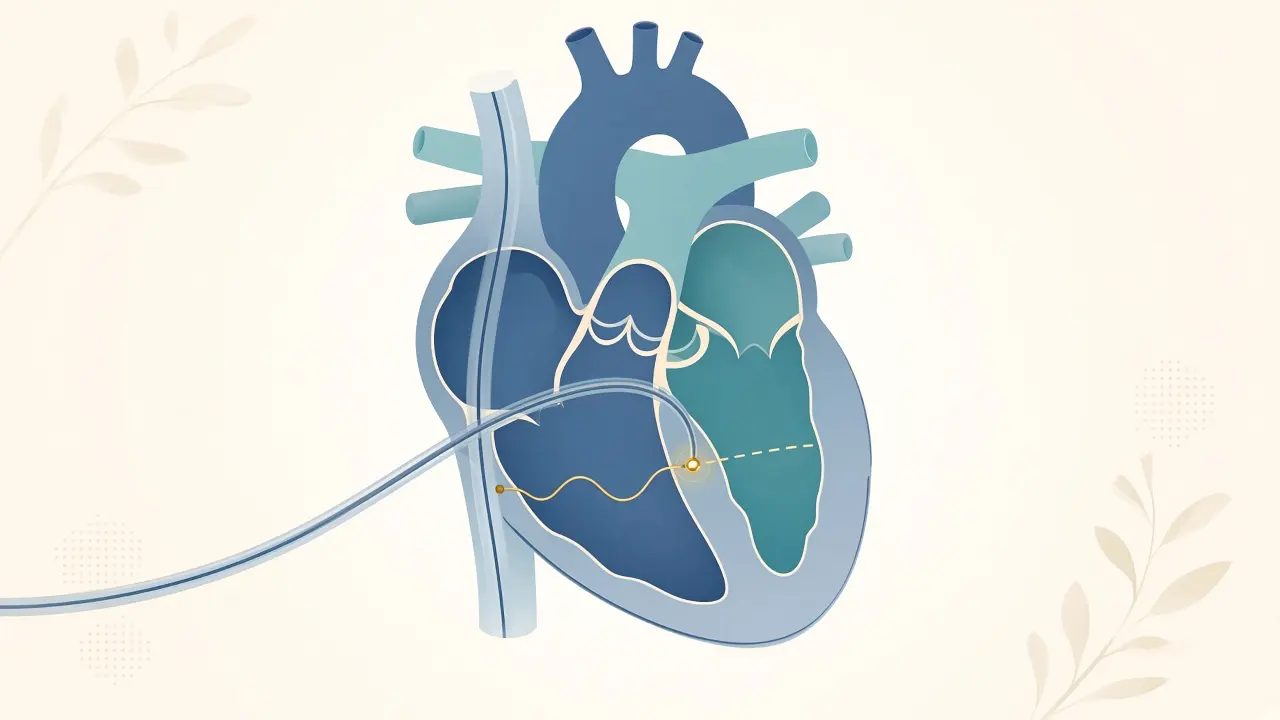
During catheter ablation, the specialist guides catheters through a blood vessel to the heart. The team identifies the source or pathway responsible for the rhythm problem and applies a form of energy to create a small, controlled area of tissue change. This can interrupt the abnormal electrical signals.
Catheter ablation does not usually require open-heart surgery. It is performed in a specialised electrophysiology laboratory or cardiac procedure room. The American Heart Association explains the approach in its overview of ablation for arrhythmias.
Why is cardiac ablation performed?
A cardiologist may recommend ablation when:
- An abnormal heart rhythm causes significant symptoms.
- Medication does not adequately control the rhythm.
- Medication causes unacceptable side effects.
- The rhythm is suitable for ablation and the expected benefits justify the risks.
- The patient's condition may benefit from an early procedural approach.
For some rhythm disorders, ablation may be offered as an initial treatment option. For others, medication or monitoring may be appropriate. The recommendation depends on the diagnosis, symptom burden, heart structure, other medical conditions and patient preferences.
Does cardiac ablation cure an arrhythmia?
Ablation can eliminate or substantially reduce certain abnormal rhythms, but success varies by condition and patient. Some patients may need medication after the procedure. Others may experience a recurrence and require another ablation or a different treatment.
For atrial fibrillation, the goal may be to reduce episodes, symptoms and the burden of the rhythm disorder rather than guarantee that it will never return.
2. Which Heart Rhythm Problems Can Be Treated With Ablation?
The type of arrhythmia is one of the most important factors determining the procedure and its cost. A current hospital listing for atrial fibrillation ablation in India is not the same request as an ablation for SVT or ventricular tachycardia.
Supraventricular tachycardia (SVT)
SVT is a group of rhythm disorders that cause an unusually fast heartbeat originating above the ventricles. Some forms are caused by abnormal electrical pathways or circuits. Catheter ablation may be an effective treatment for selected patients and can sometimes eliminate the pathway responsible for the rhythm. The procedure may be less complex than certain forms of atrial fibrillation or ventricular tachycardia ablation, but complexity varies.
Atrial flutter
Atrial flutter is an abnormal rhythm involving rapid electrical activity in the atria, the upper chambers of the heart. Catheter ablation may be recommended for selected patients. The exact procedure depends on the type of flutter and the patient's medical history.
Atrial fibrillation (AFib)
Atrial fibrillation is an irregular rhythm involving the atria. It can cause palpitations, fatigue, breathlessness or reduced exercise tolerance, although some patients have few symptoms.
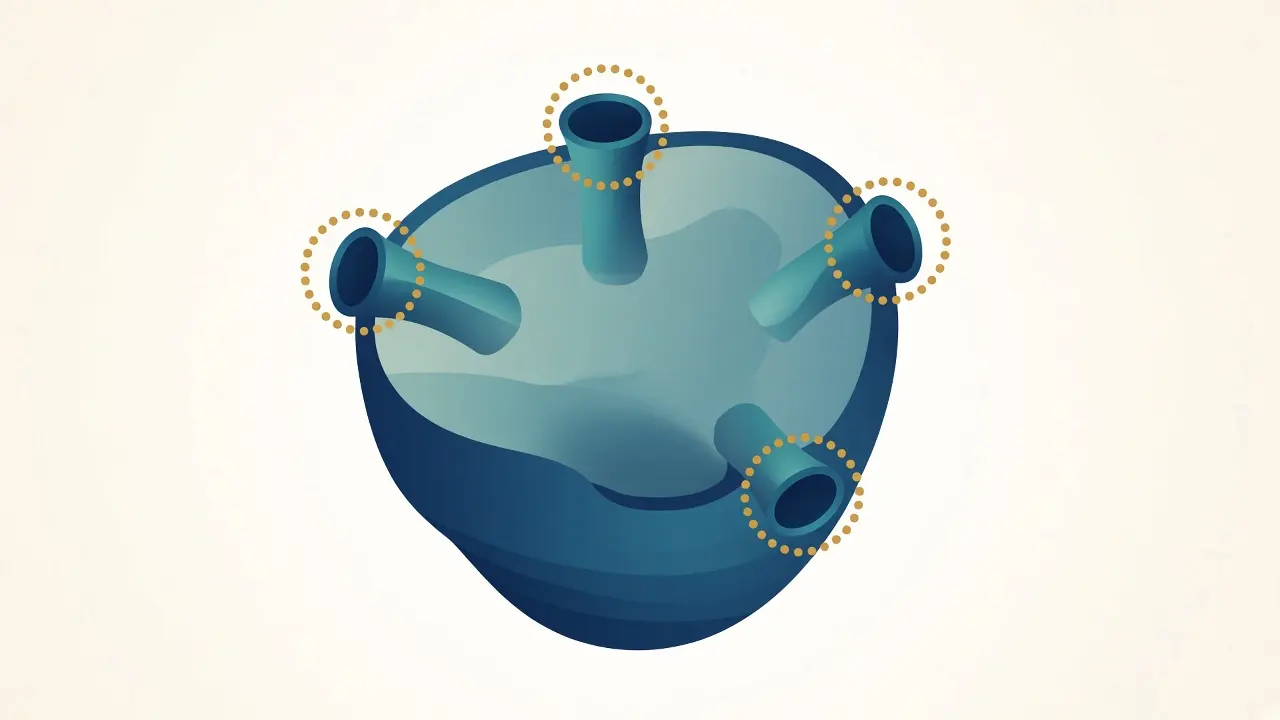
AFib ablation often involves pulmonary vein isolation, a procedure that targets electrical triggers commonly associated with the pulmonary veins. The procedure may require advanced mapping, specialised catheters and additional monitoring. Its cost can differ from ablation for simpler rhythm disorders.
Ablation does not automatically remove the need for blood-thinning medication. Stroke prevention decisions must be based on the patient's individual risk and clinical guidance.
Ventricular tachycardia (VT)
Ventricular tachycardia is a fast rhythm arising from the lower chambers of the heart. Some forms can be life-threatening. Ablation may be used in selected patients, often with careful consideration of underlying heart disease, previous procedures and the risk of dangerous rhythm events.
VT ablation can be more complex than some other ablation procedures and may require specialised mapping, advanced support and a longer hospital stay. Patients with ventricular arrhythmias may also need medication, an implantable cardioverter-defibrillator (ICD) or other treatment. An ICD implantation is a separate decision and is not included in an ablation quotation unless the hospital says so in writing.
Other arrhythmias
Ablation may also be considered for selected conditions involving accessory pathways, including Wolff-Parkinson-White syndrome, and other specific electrical disorders. The specialist should explain the exact diagnosis and why ablation is being considered.
3. Types of Cardiac Ablation: Radiofrequency, Cryoablation and Pulsed-Field Ablation
The energy source and equipment used can affect the procedure and the quotation. Radiofrequency ablation is one listed pathway; cryoablation and pulsed-field ablation depend on what the hospital actually has available for that rhythm.
Radiofrequency ablation
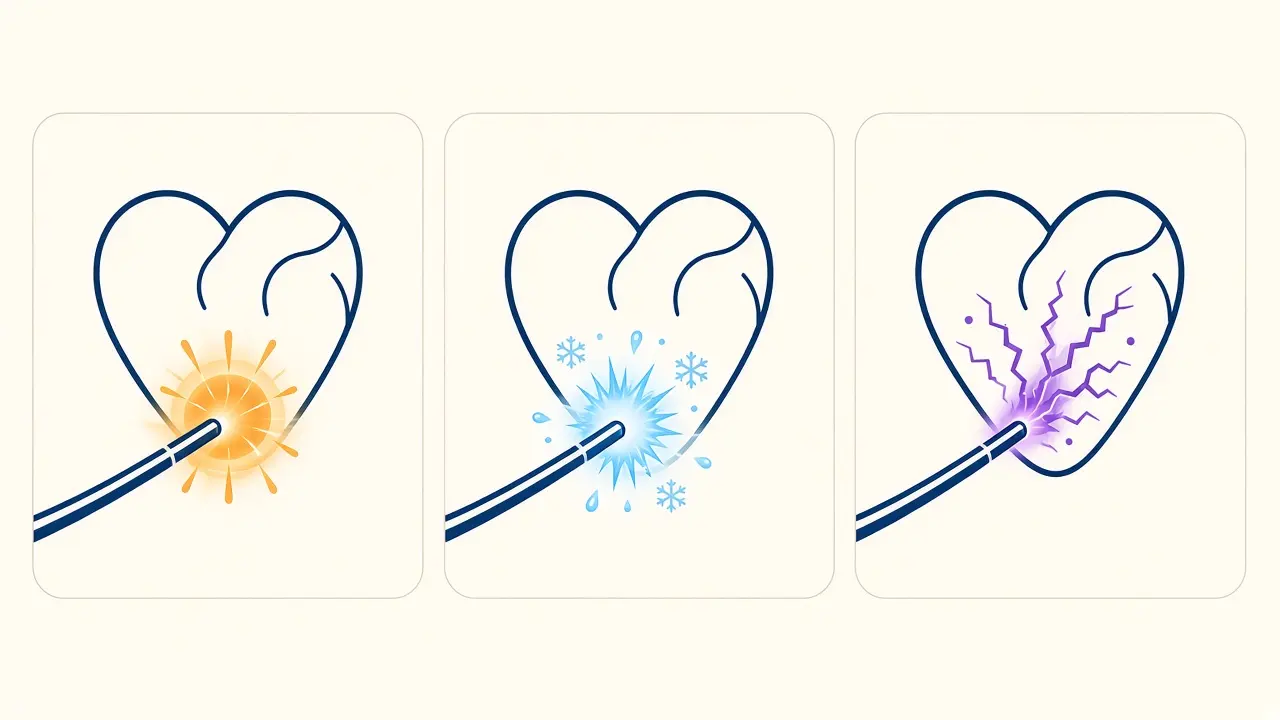
Radiofrequency ablation uses controlled heat to create small areas of tissue change that interrupt abnormal electrical signals. It is used for several types of arrhythmia. The catheter, mapping requirements and procedure duration depend on the rhythm being treated.
Cryoablation
Cryoablation uses extreme cold to affect targeted tissue. It may be used for selected arrhythmias, including certain approaches to atrial fibrillation ablation. The suitability of cryoablation depends on the rhythm disorder, anatomy, equipment and specialist assessment.
Pulsed-field ablation (PFA)
Pulsed-field ablation uses short electrical pulses to affect targeted tissue through a process called electroporation. It is a newer ablation approach used in selected settings, particularly for atrial fibrillation. Availability, clinical indications, device systems and cost can vary between hospitals. PFA should not be assumed to be suitable for every arrhythmia or every patient.
Comparison of ablation techniques
| Technique | How it works | Cost considerations |
|---|---|---|
| Radiofrequency ablation | Uses controlled heat to create targeted tissue changes | Depends on catheters, mapping, procedure complexity and hospital package |
| Cryoablation | Uses extreme cold to treat selected tissue | Depends on the cryoablation system, disposable equipment and procedure |
| Pulsed-field ablation | Uses short electrical pulses to affect targeted tissue | Depends on device availability, specialised equipment and clinical requirements |
There is no universally best technique for every patient. The appropriate choice depends on the arrhythmia, anatomy, available technology and the specialist's assessment.
4. What Is an Electrophysiology Study, and Is It Included in the Cost?
An electrophysiology study, often called an EP study, examines the heart's electrical activity using specialised catheters. The specialist places catheters inside the heart to record electrical signals and may use controlled stimulation to identify the mechanism of an arrhythmia. An EP study may be performed before or as part of an ablation procedure. The American Heart Association describes electrophysiology studies separately from the ablation itself.
Why might an EP study be needed?
It can help the team:
- Identify the electrical pathway or circuit responsible for an arrhythmia.
- Confirm the mechanism of a rhythm disorder.
- Guide treatment decisions.
- Map the area targeted during ablation.
- Assess whether a particular procedure is appropriate.
Is the EP study charged separately?
Hospital billing policies vary. Some quotations combine the EP study and ablation, while others list them separately. Before accepting an estimate, ask whether the price includes the diagnostic EP study, catheters used for mapping and recording, three-dimensional mapping if required, ablation catheters and equipment, anaesthesia or sedation, post-procedure monitoring, and any additional procedure if the rhythm mechanism differs from what was expected.
5. What Determines Cardiac Ablation Cost in India?
The heart ablation cost in India and the catheter ablation cost in India depend on several clinical and operational factors. None of these factors has one public tariff that fits every hospital.
1. Type of arrhythmia
An ablation for SVT may require a different procedure from AFib or VT ablation. The rhythm disorder affects the mapping process, catheters, duration and monitoring requirements. An SVT ablation cost in India should not be read across as an atrial fibrillation ablation cost in India or an AFib ablation cost.
2. Complexity of the procedure
Some arrhythmias are caused by a clearly defined electrical pathway. Others involve more complex areas of the heart and may require detailed mapping.
3. Mapping technology
Three-dimensional electroanatomical mapping may be used in selected procedures. Ask whether it is planned and whether the associated charges are included.
4. Catheters and disposable equipment
Different procedures may require different catheter types and numbers. Some specialised devices or consumables may be charged separately.
5. Energy source
Radiofrequency, cryoablation and pulsed-field systems have different equipment requirements. A radiofrequency ablation heart cost, a cryoablation heart procedure and a pulsed field ablation cost are not interchangeable line items. The choice depends on clinical suitability and availability.
6. Hospital and room category
Room category, ICU access and hospital billing policies can affect the final amount. Comparing hospitals in India for cardiology is a starting point for facilities, not a price list.
7. Anaesthesia or sedation
The type of anaesthesia or sedation depends on the procedure, patient and hospital protocol. Confirm whether these charges are included.
8. Hospital stay
Some patients can leave on the same day or after an overnight stay. Others need longer monitoring because of the procedure or underlying condition.
9. Existing heart disease
Heart failure, coronary artery disease, kidney disease and other conditions may require additional assessment, treatment or monitoring.
10. Additional procedures
A patient may need another intervention, a pacemaker implantation or an ICD depending on the rhythm disorder and clinical findings. These are separate treatment decisions and should not be assumed to be included in an ablation package.
11. Follow-up and medicines
Some estimates include the first review, while others cover only the procedure and hospital stay. Ask whether follow-up ECGs, rhythm monitoring and consultations are included.
6. What Is Included in a Cardiac Ablation Package?
A package may cover some or all of the procedure-related expenses. Its exact scope must be confirmed in writing.
Potential inclusions
Depending on the hospital, the quotation may include:
- Electrophysiologist fees.
- EP laboratory or procedure-room charges.
- Diagnostic EP study.
- Ablation procedure.
- Catheters and selected consumables.
- Anaesthesia or sedation.
- A defined period of hospital monitoring.
- Routine investigations within specified limits.
- Medicines within specified limits.
- Standard discharge planning.
Possible exclusions
Additional charges may apply for advanced mapping systems or specialised catheters, extra investigations, additional procedures, a prolonged hospital stay or ICU care, medicines or consumables beyond package limits, treatment of complications, a repeat ablation, outpatient follow-up after the included period, and accommodation and travel for international patients.
Questions to ask the billing team
- Which arrhythmia and ablation technique does the quotation cover?
- Is the EP study included?
- Is three-dimensional mapping required, and is it included?
- Are the ablation catheters and disposable equipment included?
- Are anaesthesia and specialist fees included?
- How many hospital days are covered?
- Are medicines and investigations subject to limits?
- What happens if the procedure takes longer than expected?
- Is follow-up included?
- How are complications or a repeat procedure billed?
7. How Is Cardiac Ablation Performed?
The exact steps depend on the arrhythmia and technique, but catheter ablation generally follows a similar pathway.
Before the procedure
The team reviews symptoms, previous ECGs, rhythm-monitoring results, medicines and other medical conditions. Investigations may include an ECG, echocardiogram, blood tests, ambulatory rhythm monitoring and other tests based on the clinical plan.
The patient receives instructions about eating, drinking and medication. Some medicines may need adjustment, but patients should not stop anticoagulants or other prescribed medication unless their treating team directs them to do so.
During the procedure
The procedure is generally performed in an electrophysiology laboratory. The patient may receive sedation or anaesthesia, depending on the procedure and clinical circumstances. The specialist inserts catheters through a blood vessel, often in the groin, and guides them to the heart. Electrical signals are recorded to identify the source or pathway responsible for the arrhythmia. The team then applies the selected energy source to the target tissue and checks whether the intended rhythm has been treated.
How long does cardiac ablation take?
The duration varies considerably. Some procedures are relatively short, while complex ablation — particularly for certain forms of AFib or VT — may take several hours. The American Heart Association notes that catheter ablation can take four hours or longer in some cases. Ask the hospital for an estimate based on the planned procedure rather than relying on a general time range.
Is open-heart surgery required?
Most catheter ablations are performed through blood vessels and do not require open-heart surgery. Bypass surgery and valve surgery are different operations. If the question is coronary disease rather than a rhythm disorder, see CABG surgery in India and heart bypass surgery cost in India. Valve disease is covered separately in heart valve replacement in India.
Some rhythm disorders may be treated with a surgical or hybrid approach in selected circumstances. The specialist should explain which approach is being proposed and why.
8. Risks and Possible Complications of Cardiac Ablation
Cardiac ablation is an established treatment, but it is an invasive procedure and carries risks. Potential complications may include:
- Bleeding or bruising at the catheter entry site.
- Infection.
- Damage to a blood vessel.
- Blood clots or stroke.
- Injury to heart tissue or a heart valve.
- Fluid around the heart.
- A new or worsened rhythm disturbance.
- A slow heart rate that may require a pacemaker.
- Other complications specific to the arrhythmia or ablation technique.
Some risks are uncommon, but their likelihood depends on the patient's health and the procedure performed. Certain AFib ablation techniques carry specific risks involving the pulmonary veins, nearby nerves or the oesophagus. The treating team should explain which risks are relevant to the planned approach.
Ask your specialist what the most important risks are in your case, how that centre monitors during and after the procedure, what happens if ablation does not control the rhythm, and whether another ablation or a device could be needed. Do not compare complication rates between hospitals unless the figures are clearly defined, current and relevant to the same procedure and patient group.
9. Recovery After Cardiac Ablation
Cardiac ablation recovery time depends on the rhythm being treated, the procedure and the patient's overall condition. Some patients return to routine activities within a few days. Others require longer recovery or closer follow-up.

Immediately after ablation
The patient is monitored in a recovery area. The team checks heart rhythm, blood pressure and the catheter entry site. Patients may need to lie flat for a period after the procedure to reduce bleeding risk. The timing depends on the access site and hospital protocol.
First few days
Some soreness, bruising or swelling at the catheter entry site may occur. Follow instructions about keeping the site clean and dry, bathing, physical activity and medication. Arrange transport home if the hospital advises against driving.
First week
Patients may be asked to avoid heavy lifting and strenuous exercise while the entry site heals. Ask the treating team when driving, working, flying and returning to exercise are appropriate.
Early rhythm changes after AFib ablation
Some patients experience irregular rhythms during the weeks following AFib ablation. An early episode does not necessarily mean the procedure has failed, but new or concerning symptoms should be reported. Do not stop anticoagulants or rhythm-control medication just because the procedure has been completed. The treating clinician should determine how long medication remains necessary.
Warning signs after ablation
Seek emergency medical care for severe or persistent chest pain, sudden or severe breathlessness, fainting or collapse, stroke symptoms such as facial drooping, arm weakness or difficulty speaking, or heavy bleeding that does not stop with the instructed pressure. Contact the treating team promptly for fever, worsening redness or swelling at the entry site, new palpitations, increasing pain or other symptoms listed in the discharge instructions.
10. AFib Ablation: Cost, Benefits and Long-Term Considerations
Atrial fibrillation ablation is one of the more widely discussed forms of cardiac ablation because AFib can affect quality of life and may be associated with stroke and other complications. The purpose of ablation is to reduce or prevent AFib episodes and improve symptoms in appropriately selected patients. The Mayo Clinic describes atrial fibrillation ablation and the American Heart Association describes nonsurgical procedures for atrial fibrillation.
Who may be considered for AFib ablation?
A specialist may consider ablation when symptoms remain troublesome, antiarrhythmic medicines are ineffective or poorly tolerated, the patient prefers a procedural rhythm-control option after discussing the alternatives, or clinical circumstances support ablation as an appropriate treatment. Ablation can also be considered earlier in the treatment pathway for selected patients. The decision depends on the diagnosis, heart structure, symptoms, risks and preferences.
What affects AFib ablation cost?
The quotation may depend on the ablation technique and device system, the need for advanced mapping, catheters and other disposable equipment, anaesthesia or sedation, hospital stay and monitoring, the patient's anatomy and clinical complexity, and whether the procedure is a first ablation or a repeat procedure. Ask whether the quoted amount includes the full planned AFib procedure rather than a generic EP study or a simpler arrhythmia ablation. Use the AFib ablation listing to request that specific procedure, then confirm the written inclusions.
Will AFib disappear permanently after ablation?
Not necessarily. AFib can return after ablation, and some patients need repeat treatment or medication. The result depends on the type and duration of AFib, other medical conditions, heart structure and other factors.
Will I still need blood thinners?
Possibly. Stroke prevention after AFib ablation is based on the patient's individual stroke risk and clinical guidance, not simply on whether the procedure appears successful. Do not stop anticoagulation without the treating clinician's advice.
11. SVT Ablation: What Patients Should Know
Supraventricular tachycardia includes several rhythm disorders that can cause episodes of a rapid heartbeat. Some forms are caused by an abnormal electrical circuit or pathway that can be targeted during ablation.
How is SVT ablation different from AFib ablation?
The electrical mechanism and treatment target are often different. Some SVT procedures involve a clearly defined pathway or circuit, while AFib ablation commonly targets electrical triggers associated with the pulmonary veins. The procedural complexity, equipment and follow-up requirements may therefore differ, and so can the bill.
What should be confirmed in the quotation?
Ask whether the estimate includes the EP study, mapping, ablation, catheters, hospital stay and first follow-up. The hospital should identify the suspected rhythm disorder and explain whether the final treatment plan may change after the EP study.
12. Ventricular Tachycardia Ablation: Why It May Be More Complex
Ventricular tachycardia arises from the lower chambers of the heart. Some forms are associated with previous heart attacks, scarring or structural heart disease. VT ablation may require detailed mapping and careful management of the patient's underlying condition.
Some patients also need an ICD or medication to reduce the risk of dangerous rhythm events. Ablation does not automatically replace an ICD when an ICD is clinically indicated. Read the device pathway separately from the ablation pathway: ICD implantation cost factors and, where a pacing system is the question, pacemaker implantation.
What affects the cost of VT ablation?
Potential factors include the location and complexity of the abnormal rhythm, the underlying heart disease, advanced mapping requirements, the need for additional circulatory or anaesthesia support, hospital and ICU monitoring, other procedures or device treatment, and the patient's recovery and follow-up needs. Patients should request a case-specific estimate and a clear explanation of the proposed treatment strategy.
13. Cardiac Ablation vs Medication: Which Is Better?
Neither option is universally better. The right approach depends on the arrhythmia, symptoms, expected benefits, risks and the patient's preferences.
| Consideration | Medication | Catheter ablation |
|---|---|---|
| Main approach | Uses medicines to control the rhythm or symptoms | Targets tissue responsible for selected abnormal electrical signals |
| Treatment duration | May be short term or long term | Usually a planned procedure, with follow-up and possible additional treatment |
| Possible disadvantages | Side effects, interactions or incomplete rhythm control | Invasive procedure with procedural risks |
| Follow-up | Medication review and rhythm monitoring | Rhythm monitoring and medication review as needed; a device is a separate decision |
| Suitability | Depends on the arrhythmia and the patient's condition | Depends on the arrhythmia, anatomy, clinical risks and expected benefit |
Some patients use both medication and ablation. Others may need a different treatment, such as cardioversion, a pacemaker or an ICD. Do not stop or change medication without discussing it with the treating clinician.
14. How to Choose a Heart Rhythm Specialist in India
A cardiac electrophysiologist is a cardiologist with specialised expertise in heart rhythm disorders and their diagnosis and treatment. A general listing of cardiologists in India is a directory, not a ranking and not a statement that every listed doctor performs every ablation.
Verify qualifications and registration
Check the clinician's medical qualifications, registration and relevant procedural experience. India's National Medical Commission provides a National Medical Register.
Ask about experience with the exact arrhythmia
Experience with SVT ablation does not necessarily mean the same level of experience with complex AFib or VT ablation. Ask who will perform the procedure and who will manage follow-up.
Understand the proposed technique
The specialist should explain why radiofrequency, cryoablation, pulsed-field ablation or another approach is being considered.
Check hospital facilities
Ask about the electrophysiology laboratory, mapping systems, emergency support, anaesthesia arrangements and post-procedure monitoring.
Confirm follow-up access
Ask who will review symptoms, medication and rhythm-monitoring results after discharge. If you live abroad, confirm how follow-up can be arranged after returning home.
Request an itemised quotation
The estimate should identify the procedure, equipment, hospital stay, tests, medicines, follow-up and potential exclusions.
City directories are a way to start a conversation with a hospital, not a quality score. Cardiologists listed for Delhi NCR, Mumbai, Bengaluru, Chennai and Hyderabad still need to be matched to the rhythm being treated.
15. Cardiac Ablation in India for International Patients
Patients travelling to India for arrhythmia treatment in India may need to coordinate medical records, appointments, accommodation, a caregiver and follow-up alongside the procedure. GAF Healthcare can help with hospital communication, appointment coordination, medical records and practical travel planning. Message the coordination desk on WhatsApp at +91 90443 46292. Clinical decisions and fitness-to-travel assessments stay with the treating clinicians.
Before travelling
Share available medical records with the treating hospital. These may include ECGs and rhythm-monitoring reports, echocardiography results, previous EP study or ablation reports, the medication list and allergies, discharge summaries, details of previous cardiac procedures, and information about other medical conditions.
Ask the hospital whether a remote consultation is possible and whether further investigations are likely to be needed. Do not book travel solely on the basis of an online price estimate. The treating team should assess the proposed treatment and advise whether travel is appropriate.
During the hospital stay
Before discharge, confirm the final diagnosis and procedure performed, the medicines to continue or change, wound-care instructions, activity restrictions, warning signs requiring urgent care, the date of the next appointment, and the contact pathway for symptoms or complications. Obtain copies of the procedure report, discharge summary, ECGs and relevant test results.
When can international patients fly home?
There is no universal waiting period after cardiac ablation. The appropriate timing depends on the procedure, the patient's condition, recovery, symptoms and any complications. The treating clinician should advise when travel may be appropriate. Patients should leave flexibility for additional monitoring or treatment if required.
Planning follow-up in the home country
Ask for a written follow-up plan that can be shared with a cardiologist or electrophysiologist at home. The plan should include the diagnosis, procedure details, current medicines, recommended monitoring, follow-up dates and warning signs.
16. Questions to Ask Before Cardiac Ablation
Use this checklist during your consultation.
About the diagnosis
- What exact arrhythmia do I have?
- What tests confirm the diagnosis?
- Why is ablation being recommended?
- Are medication or other treatment options appropriate?
- What are the risks of delaying treatment?
About the procedure
- Which ablation technique is proposed?
- Is an EP study required?
- Will three-dimensional mapping be used?
- What are the most important risks in my case?
- How long is the procedure expected to take?
- Could I need another procedure?
About the cost
- Does the quotation include the EP study?
- Are mapping and catheters included?
- Are anaesthesia, medicines and hospital stay included?
- Is follow-up included?
- What happens if the procedure changes or takes longer?
- How are complications or repeat procedures billed?
About recovery
- How long might I stay in hospital?
- Which medicines should I continue?
- When can I drive, exercise and travel?
- What symptoms require urgent care?
- When will my rhythm be reassessed?
For international patients
- Can my records be reviewed before travel?
- Which tests should I bring or complete in advance?
- How long should I plan to remain in India?
- When might I be medically fit to fly?
- Can my home-country doctor receive the procedure report and follow-up plan?
17. Frequently Asked Questions About Cardiac Ablation Cost in India
How much does cardiac ablation cost in India?
The cost depends on the arrhythmia, procedure, equipment, hospital and patient's clinical needs. An SVT ablation may have different requirements from AFib or VT ablation. Request a current, itemised quotation for the exact procedure rather than relying on one general price. This guide does not publish a national rate, because a single range would not describe those different procedures.
Is cardiac ablation a major surgery?
Most catheter ablations are performed through blood vessels and do not require open-heart surgery. They are still invasive procedures and carry risks. The complexity depends on the arrhythmia and the treatment approach. Bypass and valve operations are different treatments and are planned on their own indications.
How long does cardiac ablation take?
The duration varies. Some procedures are relatively short, while complex AFib or VT ablation can take several hours. The American Heart Association notes that some catheter ablations take four hours or longer. Ask the treating team for a procedure-specific estimate.
How many days does a patient stay in hospital after ablation?
Some patients can go home the same day or after an overnight stay. Others need longer observation based on the procedure and clinical condition. The hospital should say how many days the quotation covers and what a longer stay would change on the bill.
Is AFib ablation more expensive than SVT ablation?
It may be, because AFib ablation can require different catheters, mapping, equipment and monitoring. The final amount still depends on the hospital and the patient's case, so the two quotations have to be read side by side rather than assumed from the diagnosis names alone.
Can cardiac ablation permanently cure an arrhythmia?
Ablation can eliminate or reduce certain arrhythmias, but recurrence is possible. Some patients require repeat ablation or continued medication. For atrial fibrillation, the aim is often fewer episodes and fewer symptoms, not a promise that the rhythm will never return.
Will I need medication after ablation?
Possibly. Medication requirements depend on the arrhythmia, the procedure and the patient's underlying conditions. Do not stop antiarrhythmic medicines or anticoagulants unless the treating clinician advises you to. Stopping a blood thinner because the procedure is finished can be unsafe.
Is cardiac ablation safe?
Ablation is an established treatment, but it carries risks such as bleeding, infection, blood vessel injury and, in some cases, more serious complications including stroke, fluid around the heart, or a slow rhythm that needs a pacemaker. The risks depend on the procedure and the patient's health. Discuss the benefits and risks with the treating specialist. This page does not quote a complication percentage, because a borrowed rate from another centre or another rhythm would be misleading.
Can I travel by air after cardiac ablation?
Some patients can travel after recovery, but timing depends on the procedure and clinical assessment. There is no universal number of days. Ask the treating team before booking or taking a flight, and keep spare days in the itinerary in case monitoring needs to continue.
Can I exercise after cardiac ablation?
Activity should resume according to the discharge instructions. Patients are often advised to avoid heavy lifting and strenuous exercise for a short period while the catheter entry site heals. The exact restriction depends on the procedure and recovery.
Does AFib ablation mean I can stop blood thinners?
Not automatically. Anticoagulation decisions depend on stroke risk and clinical guidance, not simply on whether the ablation appears successful. Never stop anticoagulants without the prescribing clinician's advice, including during the weeks when the rhythm may still be unsettled.
How can GAF Healthcare help international patients?
GAF Healthcare can help coordinate hospital communication, specialist appointments, medical records, quotations and practical travel arrangements on WhatsApp at +91 90443 46292. Diagnosis, treatment recommendations, choice of technique and medical fitness assessments remain the responsibility of qualified healthcare professionals. A coordination message is not a quotation and not a decision to travel.
What is the difference between an electrophysiology study and cardiac ablation?
An electrophysiology study records and stimulates the heart's electrical system so the team can see how the rhythm starts. Ablation is the treatment step that applies energy to selected tissue. Hospitals sometimes do both in one sitting and sometimes bill them apart. The quotation should say which of the two it covers, including the catheters used for recording and the catheters used for ablation.
Is pulsed-field ablation suitable for every arrhythmia?
No. Pulsed-field ablation is a newer approach used in selected settings, particularly for some atrial fibrillation procedures. Whether a hospital offers it, and whether it fits a particular rhythm and anatomy, has to be decided by the electrophysiologist. It should not be requested as a default upgrade, and a quotation that only says "ablation" does not mean pulsed-field equipment is included.
What medical records should I send before requesting a quotation?
Send ECGs, any Holter or other rhythm-monitoring reports, echocardiography, previous EP study or ablation reports, a current medicine list including anticoagulants, allergies, and discharge summaries from earlier heart procedures. Say which rhythm has been diagnosed and whether the question is a first ablation or a repeat. Without those records, a hospital can only describe its usual package, not the procedure your case is likely to need.
Can cardiac ablation be repeated if the rhythm returns?
Yes, a repeat ablation is sometimes recommended if the rhythm returns and the specialist judges that another procedure is appropriate. A repeat procedure can need different mapping and may be billed separately from the first package. Recurrence is not proof that the first procedure was done incorrectly; some rhythms, especially atrial fibrillation, can return despite a carefully performed ablation.
How is atrial flutter ablation different from AFib ablation?
Atrial flutter and atrial fibrillation are both atrial rhythms, but the electrical circuit and the tissue the team treats are often different. Flutter ablation is planned around the flutter circuit identified in that patient. AFib ablation more often involves pulmonary vein isolation and can need a different catheter set. Ask the hospital to name the rhythm on the quotation so a flutter pathway is not priced, or planned, as if it were an AFib pathway.
Conclusion: Compare the Exact Procedure, Not Just the Price
Cardiac ablation can help treat selected abnormal heart rhythms, but the procedure and cost vary according to the arrhythmia being treated. An ablation for SVT is not the same as a complex AFib or VT procedure. The mapping system, catheters, energy source, hospital stay and follow-up requirements can all influence the final bill.
Before proceeding, confirm the diagnosis, understand why ablation is recommended, compare the proposed treatment with appropriate alternatives and obtain a written estimate with clear inclusions and exclusions. For international patients, planning should also include medical record review before travel, a realistic recovery period and a reliable follow-up pathway after returning home.
These are live GAF Healthcare pages that match this subject. Each one is a directory or a different procedure, not a substitute for the quotation:
- [Cardiologists in India](/doctors/India/Cardiology)
- [Atrial fibrillation ablation](/costs/India/Cardiology/Atrial-Fibrillation-Ablation)
- [Radiofrequency ablation](/costs/India/Cardiology/Radiofrequency-Ablation)
- [Pacemaker implantation](/costs/India/Cardiology/Pacemaker-Implantation)
- [ICD implantation](/costs/India/Cardiology/ICD-Implantation-Implantable-Cardioverter-Defibrillator)
- [Hospitals for cardiology in India](/hospitals/India/Cardiology)
- [CABG surgery in India](/treatments/cabg-surgery-in-india), for coronary bypass rather than ablation
- [Heart valve replacement in India](/treatments/heart-valve-replacement-in-india), for valve disease rather than a rhythm procedure
Sources
The clinical descriptions above follow public patient information from these organisations. They are not a treatment protocol for an individual.
- American Heart Association — [Ablation for arrhythmias](https://www.heart.org/en/health-topics/arrhythmia/prevention--treatment-of-arrhythmia/ablation-for-arrhythmias)
- American Heart Association — [Nonsurgical procedures for atrial fibrillation](https://www.heart.org/en/health-topics/atrial-fibrillation/treatment-and-prevention-of-atrial-fibrillation/nonsurgical-procedures-for-afib)
- American Heart Association — [Electrophysiology studies](https://www.heart.org/en/health-topics/arrhythmia/symptoms-diagnosis--monitoring-of-arrhythmia/electrophysiology-studies)
- American Heart Association — [What is an arrhythmia?](https://professional.heart.org/-/media/files/health-topics/answers-by-heart/what-is-arrhythmia.pdf)
- Mayo Clinic — [Cardiac ablation](https://www.mayoclinic.org/tests-procedures/cardiac-ablation/about/pac-20384993)
- Mayo Clinic — [Atrial fibrillation ablation](https://www.mayoclinic.org/tests-procedures/atrial-fibrillation-ablation/about/pac-20384969)
- NHS — [Catheter ablation](https://www.nhs.uk/conditions/catheter-ablation/)
- European Society of Cardiology — [Clinical practice guidelines](https://www.escardio.org/Guidelines)
- National Medical Commission — [National Medical Register](https://nmr.nmc.org.in/)
This article is for general educational purposes only and does not replace consultation with a qualified cardiologist or cardiac electrophysiologist. It has not been signed off by a named reviewer. The suitability, risks, technique and cost of cardiac ablation depend on individual clinical assessment. Hospital prices and package inclusions can change. Confirm all clinical and financial details directly with the treating hospital.