
Treatment Overview
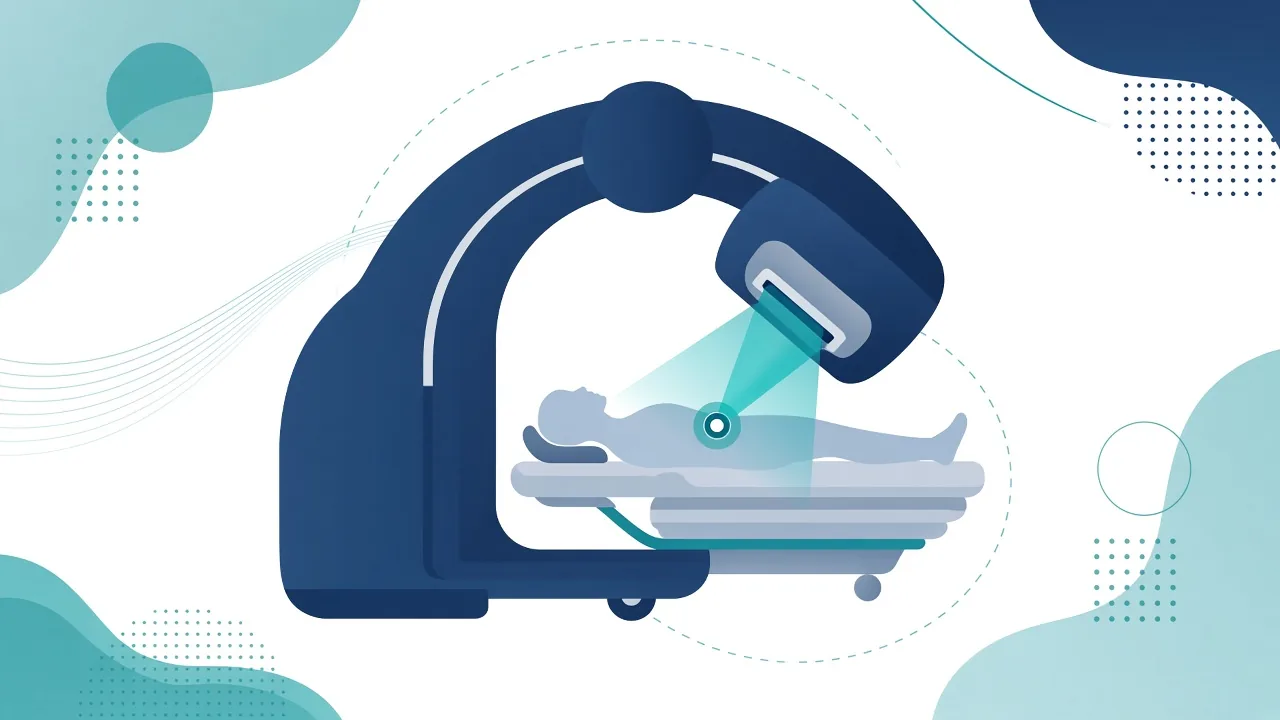
External beam radiotherapy (EBRT) in India is a local cancer treatment in which high-energy radiation is generated outside the body, usually by a medical linear accelerator, and directed at a planned target. Depending on the cancer, stage, location and intent, EBRT may be used to control a tumour, reduce recurrence risk after surgery, shrink disease before another treatment, or relieve symptoms from advanced cancer.
Modern Indian centres can deliver 3D-CRT, IMRT, IGRT, VMAT, stereotactic courses and, at selected campuses, proton therapy. The honest technique is the one that can deliver the prescribed dose to the target while protecting nearby organs — not the newest or most expensive machine name.
This page is the named EBRT product. It is not brachytherapy, IORT or total-body irradiation. There is no live GAF VMAT, SBRT or proton-only treatment page. Named IGRT lists sit on IGRT in India. Named IMRT lists sit on IMRT in India. Those techniques sit on neighbouring cost sheets until named separately. Cancer-specific pathways sit on Breast Cancer Treatment in India, Prostate Cancer Treatment in India, Cervical Cancer Treatment in India, Colon Cancer Treatment in India, Lymphoma Treatment in India and Brain Tumor Surgery in India. Prostate and breast radiation detail also sit on Radiation Therapy for Prostate Cancer and Radiation Therapy for Breast Cancer. Those sheets must not be used as an EBRT quotation for a different cancer.
GAF Healthcare planning for EBRT is $1,000–$6,000+ (typically 15–35 sessions over 4–7 weeks). US comparison is $12,000–$25,000. Neighbouring 3D-CRT is $700–$2,500+. Neighbouring IMRT is $6,500–$14,500. Neighbouring IGRT is $7,200–$16,000. Neighbouring SBRT is $8,000–$17,500 (typically 1–5 sessions). Neighbouring SRS is $8,500–$18,000. Neighbouring proton beam therapy is $28,000–$55,000. Neighbouring brachytherapy is $5,500–$13,000. These are planning ranges from partner hospital cost sheets, not hospital quotations.
International patients comparing EBRT radiation oncologists commonly start with Delhi NCR, Mumbai, Bengaluru, Chennai and Hyderabad. Partner radiation oncology hospitals in Delhi NCR, Mumbai and Bengaluru, and in Chennai and Hyderabad, are a typical first filter because this work needs named planning, physics QA and image guidance. City sheets include Delhi NCR, Mumbai, Bengaluru, Chennai and Hyderabad. Pune, Kolkata, Ahmedabad and Jaipur may have linacs. They are not live GAF catalog cities on this site.
Medical note: A linac in the building is not the same as a named EBRT list. Previous radiation dose, target motion and nearby organs decide the product. Inability to swallow fluids, chest pain, severe shortness of breath, uncontrolled bleeding, high fever or fainting belongs in a local emergency department first. WhatsApp at +91 90443 46292 is for planned record review, not an acute radiation-toxicity emergency.
Share pathology, imaging and any previous radiation plan for an EBRT review
What Is External Beam Radiotherapy?
EBRT is radiation treatment in which a machine outside the body produces and directs high-energy radiation toward a planned area.
Unlike brachytherapy, the source is not placed inside or next to the tumour. The beam damages DNA in cancer cells. Cells that cannot repair that damage stop dividing or die. Healthy cells in the field can also be affected, which is why planning shapes dose around the target and limits nearby organs.
EBRT is a local treatment. Radiation prescribed for a chest target is directed to that planned volume, not the whole body.
Message GAF Healthcare on WhatsApp
How Does EBRT Work?
- Diagnosis and staging. Pathology, CT, MRI, PET-CT, blood tests, previous surgery, systemic therapy and any previous radiation are reviewed.
- Radiation oncology consultation. A radiation oncologist decides whether radiation belongs on the plan and what intent it has: primary treatment, after surgery, before surgery, with chemotherapy, for selected metastases, or for symptom relief.
- Simulation and planning. The target, organs at risk, dose, fractions and image-guidance needs are written down.
- Delivery. Daily or hypofractionated sessions follow that named plan.
The decision depends on cancer type, stage, location, intent and the relationship of the target to nearby organs.
When Is EBRT Used?
Curative. Selected cancers of the prostate, breast, head and neck, cervix, lung, brain, oesophagus, rectum, anal canal, skin and certain lymphomas, alone or with surgery or systemic therapy.
Adjuvant. After surgery, to treat microscopic disease in the surgical bed or regional nodes when radiation is indicated. Breast conservation followed by radiation is a common example. Named breast lists sit on Breast Cancer Treatment in India.
Neoadjuvant. Before surgery in selected cancers, sometimes with chemotherapy. Locally advanced rectal cancer is one setting. Named colorectal lists sit on Colon Cancer Treatment in India.
Concurrent chemoradiation. Radiation and chemotherapy in the same period for selected head and neck, cervical, rectal, anal, lung or oesophageal cancers. Named cervical lists sit on Cervical Cancer Treatment in India.
Palliative. Shorter courses for bone pain, bleeding, obstruction, selected nerve symptoms or breathlessness caused by a tumour.
Do not judge quality by session count. A five-session SBRT list and a six-week conventional list are different products.
Request a records review before anyone books travel
Which Cancers Can Be Treated With EBRT?
Whether EBRT is honest depends on the diagnosis, not a machine brochure.
- Breast. Breast, chest wall and/or nodes after surgery in selected patients. Partial-breast external-beam lists exist for some patients. See Radiation Therapy for Breast Cancer.
- Prostate. Definitive treatment for selected localized or locally advanced disease, sometimes with hormone therapy. Hypofractionation can reduce visit count when appropriate. See Radiation Therapy for Prostate Cancer and Brachytherapy for Prostate Cancer.
- Lung. Conventional EBRT or SBRT for selected small, localized tumours.
- Head and neck. Primary and nodal volumes, often with systemic therapy.
- Cervix. External beam combined with brachytherapy and chemotherapy for appropriate patients.
- Brain. After surgery, instead of surgery in selected cases, or for residual or recurrent disease. Named surgical lists sit on Brain Tumor Surgery in India.
- Rectum and anal canal. Selected locally advanced rectal cancers; chemoradiation for many anal cancers.
- Oesophagus. With chemotherapy before surgery or as definitive treatment in selected patients.
- Lymphoma. Selected localized volumes. Named lists sit on Lymphoma Treatment in India.
- Bone metastases. Pain relief and local control at selected symptomatic sites.
There is no live GAF lung-cancer, head-and-neck-cancer or rectal-cancer-only treatment page. Those diagnoses stay on this EBRT product and the neighbouring cost sheets until named separately.
Types of External Beam Radiotherapy
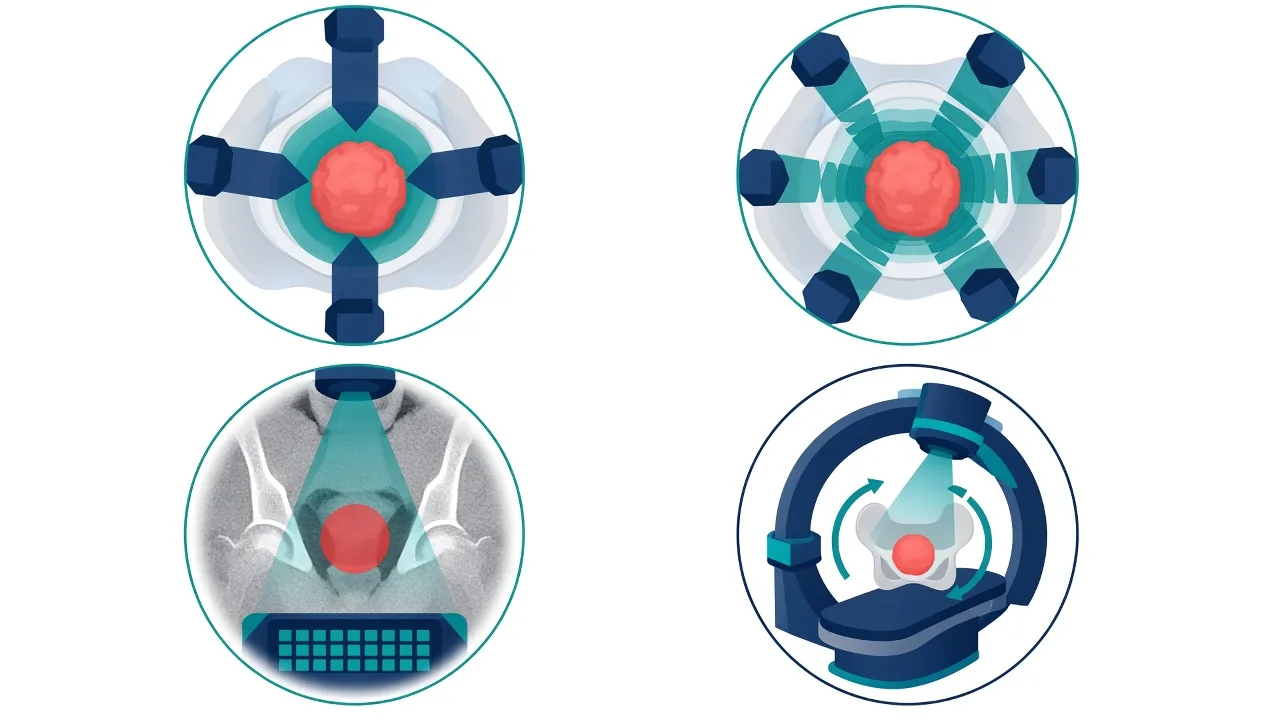
3D-CRT uses CT-based three-dimensional planning and shaped beams. It remains appropriate when the target can be treated without more complex modulation.
IMRT varies intensity across beam segments so dose can wrap complex targets and spare nearby organs such as spinal cord, salivary glands, bowel, bladder or rectum. It is still delivered on a linac.
IGRT uses imaging immediately before or during treatment to confirm position. It matters when the target moves — lung, liver, pancreas, prostate — or when millimetre-level setup is required.
VMAT is an intensity-modulated arc: the gantry rotates while intensity and other parameters change. It can be efficient. It is not automatically better because the word “arc” appears. There is no live GAF VMAT treatment page.
SBRT delivers a high dose to selected extra-cranial tumours in a few sessions. It needs strict immobilization and image guidance.
SRS / SRT focuses dose on selected brain or CNS lesions in one or a few sessions. Despite the word “radiosurgery,” there is usually no incision.
Proton therapy uses a Bragg peak that can fall off sharply after a defined depth. It is not automatically superior. Availability and cost are higher. The NCI notes that comparative evidence is still developing for several uses.
The radiation oncologist names the technique after the plan, not after a brochure.
Ask whether 3D-CRT, IMRT, IGRT, SBRT or proton therapy is the named product
EBRT vs Brachytherapy
| Feature | External beam radiotherapy | Brachytherapy |
|---|---|---|
| Source | Outside the body | Inside or next to the tumour |
| Equipment | Linear accelerator or other external system | Applicator, catheter or source system |
| Coverage | Can include tumour and regional volumes | Highly localized |
| Anaesthesia | Usually not needed | May be required |
| Combined use | Yes | Yes |
For cervical cancer, external beam and brachytherapy are often complementary, not competing products. Prostate brachytherapy detail sits on the named blog, not this sheet.
Treatment Process
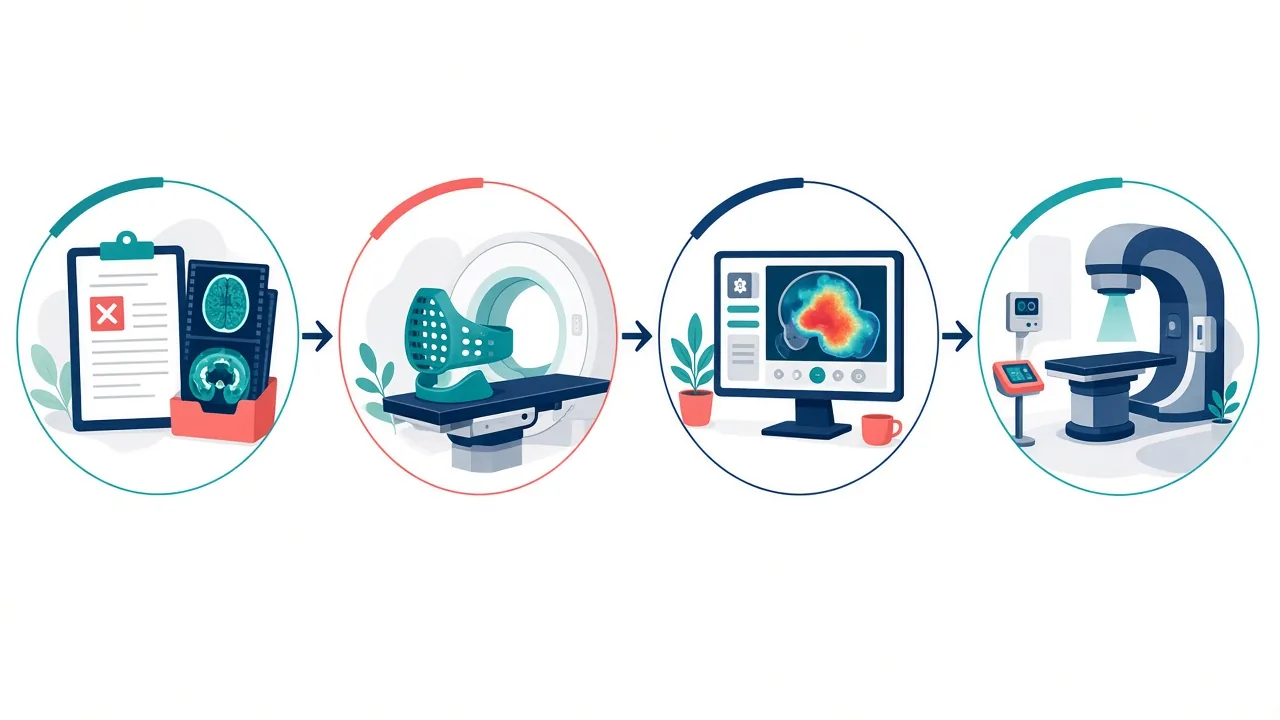
- Consultation. Intent, risks, alternatives, expected fractions and whether chemotherapy runs alongside radiation.
- CT simulation. Positioning that will be repeated each day. MRI or PET may be fused when it changes the target.
- Immobilization. Masks, moulds, vacuum bags or other supports so setup can be reproduced.
- Planning. Target volumes, dose, fractions, beam arrangement, organ constraints and image-guidance rules.
- Physics QA. Plan and machine checks before the first beam. AERB regulates Indian radiotherapy facilities, equipment, shielding and qualified staff.
- First treatment. Positioning, verification, then beam delivery. The gantry may rotate. It does not normally touch the patient.
- On-treatment reviews. Conventional lists are often Monday to Friday. Hypofractionated or stereotactic lists are shorter.
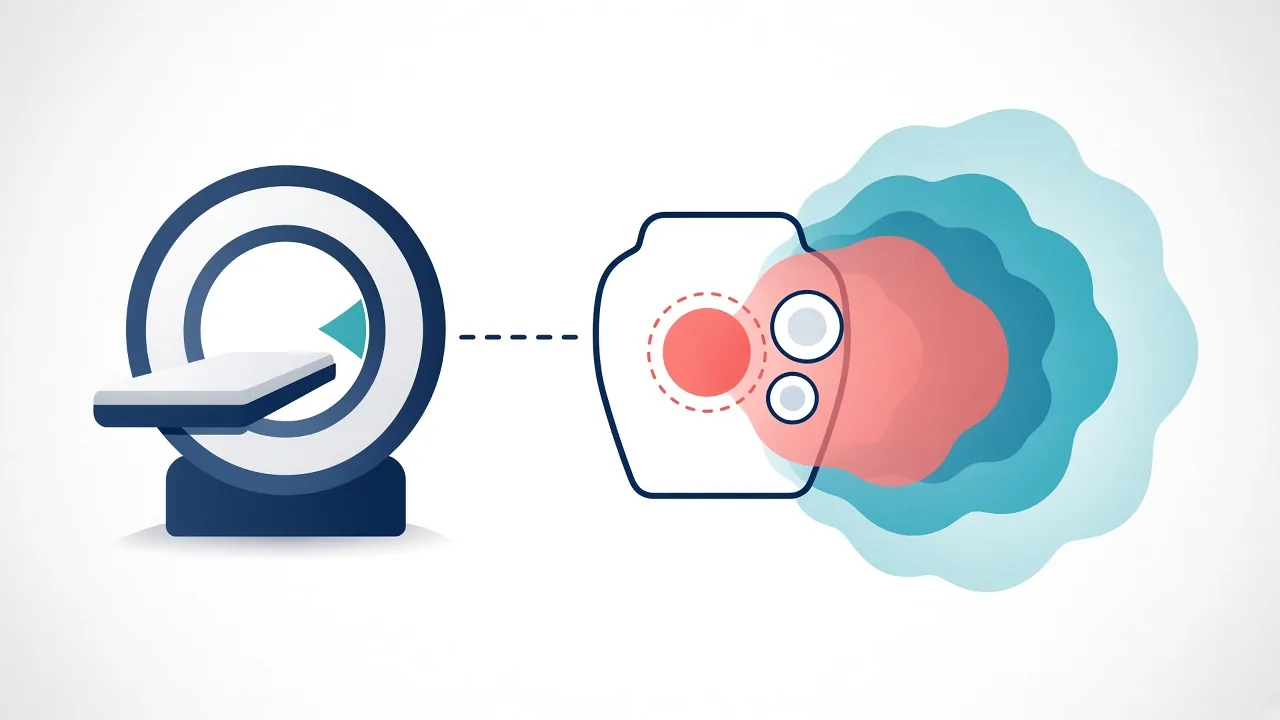
The radiation delivery itself may last only minutes. Positioning and image guidance take longer. The therapist leaves the room during beam-on but watches continuously.
How Many Sessions?
There is no universal number. Session count depends on cancer type, stage, size, location, intent, previous surgery or radiation, concurrent chemotherapy, technique and anatomy.
A conventional course may last several weeks. Selected hypofractionated or stereotactic lists finish in far fewer visits. GAF EBRT planning is typically 15–35 sessions over 4–7 weeks. That is a planning frame, not a prescription.
Is EBRT Painful or Radioactive?
Beam-on is generally not painful. You do not feel the X-rays. Side effects can still appear during the course: fatigue, skin change, nausea, diarrhoea, swallowing difficulty, mouth soreness, urinary or bowel change, or hair loss in the treated field.
External beam radiation does not leave a radioactive source in the body. After the machine is off, the patient does not emit therapeutic radiation. That is different from some internal treatments.
Share previous radiation records and current medicines
Side Effects
Effects follow the tissues in or near the field.
General. Fatigue often builds through the course. Skin may become red, dry, darker or irritated. Hair loss is usually limited to the treated area.
Head and neck. Dry mouth, thick saliva, sore throat, mouth sores, swallowing difficulty, taste change and dental problems, depending on dose to salivary glands and oral cavity.
Chest. Swallowing difficulty, cough, skin irritation, fatigue and, in some patients, shortness of breath.
Abdomen. Nausea, vomiting, diarrhoea, abdominal discomfort and fatigue.
Pelvis. Diarrhoea, urinary frequency or irritation, bowel change and, in some patients, sexual effects. Late effects can appear months or years later.
Modern planning reduces unnecessary dose. It cannot remove every risk.
Inability to swallow fluids, chest pain, severe shortness of breath, uncontrolled bleeding, high fever, sudden confusion or fainting belongs in a local emergency department.
EBRT Cost in India
GAF Healthcare planning is $1,000–$6,000+, typically 15–35 sessions over 4–7 weeks. US comparison is $12,000–$25,000. This is a preliminary planning range, not a fixed quotation. It depends on cancer, stage, technique, fractions, planning complexity, imaging, hospital and whether IMRT, IGRT, SBRT or proton therapy is named instead.
A quotation should state whether consultation, CT simulation, planning, physics QA, delivery, image guidance, medicines and on-treatment reviews are inside the package. Concurrent chemotherapy, extra imaging, hotel, flights, visa and home follow-up are usually separate.
City name is a weaker driver than the named technique and fraction count. Delhi NCR, Mumbai, Bengaluru, Chennai and Hyderabad are the live GAF catalog cities. Published Indian rupee listings vary widely by source and are not used as GAF quotations on this page.
Request an itemized EBRT estimate after records review
International Patient Pathway
Before travel, share biopsy and immunohistochemistry, CT/MRI/PET reports and images, operation notes, chemotherapy records, any previous radiation plan and dose, current medicines and blood tests. Previous radiation is especially important. A new plan must account for prior dose.
A useful planning framework is 4–7 weeks on an outpatient linac list for conventional EBRT, plus extra days for simulation and review. Stereotactic lists are shorter. Concurrent chemoradiation can lengthen the stay. Do not book a return flight from an average session count.
- Send records.
- A radiation oncologist reviews whether EBRT is the named product and which technique belongs.
- Expected fractions, image guidance and organ constraints are written down.
- An itemized estimate is issued. GAF EBRT planning is $1,000–$6,000+.
- Stable planned cases travel after that review. Acute bleeding, airway compromise or high fever is a local emergency.
- Simulation and essential tests are repeated after arrival.
- The named course is delivered.
- The patient leaves with a side-effect plan, follow-up imaging timing and who will manage them at home.
GAF Healthcare can coordinate records, hospital sharing, appointments, visa documentation, airport transfer, accommodation near the bunker, interpreter support and follow-up messages. The treating radiation oncologist remains responsible for prescription and medical care.
Share records for a case-specific EBRT plan
Work, Diet and Questions to Ask
Some patients continue work during a localized course. Others cannot, especially with concurrent chemotherapy or significant fatigue. International patients should allow more days than the minimum fraction count.
There is no single radiotherapy diet. Head-and-neck lists may need softer, higher-calorie food. Abdominal or pelvic lists may need adjustments if diarrhoea appears. Do not start extreme diets or unproven supplements without the oncology team.
Ask:
- What is the goal — control, recurrence reduction or symptom relief?
- Why this technique rather than 3D-CRT, IMRT, IGRT, SBRT or protons?
- Which volume will be treated, and how many fractions?
- Will chemotherapy run at the same time?
- What early and late effects are most likely?
- How will image guidance and immobilization be used?
- What is included in the written estimate?
- Who manages side effects after I return home?
Radiation and surgery are not always alternatives. They can be sequential or combined. Radiation is local; chemotherapy is systemic. Proton therapy is still external beam, not automatically better.
The useful question is not “which machine is most advanced?” It is “which named plan can treat this cancer while meeting dose constraints for nearby organs?”
Frequently Asked Questions
Is external beam radiotherapy available in India? Yes. Techniques vary by hospital and may include 3D-CRT, IMRT, IGRT, VMAT and stereotactic lists. Proton therapy is available at selected centres.
How much does EBRT cost in India? GAF Healthcare planning is $1,000–$6,000+, typically 15–35 sessions over 4–7 weeks. US comparison is $12,000–$25,000. Named IMRT, IGRT, SBRT or proton lists use different sheets.
How many sessions will I need? There is no universal number. Selected stereotactic or palliative lists may be one or a few sessions. Conventional lists may last several weeks.
Is radiation therapy painful? Beam-on is generally painless. Side effects can develop during or after treatment depending on the area treated.
Do I need to stay in hospital? Most EBRT is outpatient. Admission may be needed for other medical reasons.
Does radiation make me radioactive? No. External beam radiation does not leave radioactive material inside the body.
Is IMRT better than 3D-CRT? Neither is universally better. IMRT can shape dose more tightly when sensitive organs sit next to the target. The named plan decides.
Is proton therapy better than conventional radiation? Not necessarily. Protons can spare selected normal tissues. Whether that changes outcome depends on the cancer and the evidence.
Can external radiation be combined with chemotherapy? Yes. Chemoradiation is used for several cancers. Timing depends on the protocol.
Can external radiation be used after surgery? Yes, when the expected benefit justifies adjuvant treatment.
Can external radiation cure cancer? For some cancers and stages it is part of curative treatment. In others it reduces recurrence risk or controls symptoms.
Is EBRT available in Delhi NCR, Mumbai, Bengaluru, Chennai and Hyderabad? Yes. Those five cities are the live GAF catalog cities.
When should I go to an emergency department? Inability to swallow fluids, chest pain, severe shortness of breath, uncontrolled bleeding, high fever or fainting belongs in a local emergency department.
Which city in India is right? There is no single preferred city. Delhi NCR, Mumbai, Bengaluru, Chennai and Hyderabad are live GAF catalog cities.
Key Takeaways
- EBRT is local radiation from a machine outside the body. It does not make the patient radioactive.
- 3D-CRT, IMRT, IGRT, VMAT, SBRT and protons are techniques, not automatic upgrades.
- Most courses are outpatient. Session count follows the cancer and intent, not a brochure.
- Side effects follow the treated area and dose.
- GAF planning in India is $1,000–$6,000+, typically 15–35 sessions over 4–7 weeks.
- A linac in the building is not a substitute for a named EBRT list.
Why Choose GAF Healthcare for External Beam Radiotherapy in India?
GAF Healthcare coordinates record review, a named radiation list, an itemized estimate, accommodation planning near the bunker and follow-up messages. The first step is to establish whether EBRT is honest for this cancer, or whether brachytherapy, SBRT, protons, surgery or no India list should be named instead.
Share pathology, imaging and any previous radiation plan for a case-specific assessment.
Share records for a case-specific EBRT assessment
Planned questions can also go to WhatsApp at +91 90443 46292. Emergency symptoms still belong in a local emergency department.
Medical Disclaimer
This page provides general educational information about external beam radiotherapy in India. It does not diagnose cancer or determine whether radiation is appropriate for an individual patient.
Treatment decisions should be made with a qualified radiation oncologist after reviewing pathology, imaging, previous dose and overall health.
Published treatment costs are indicative and can change between hospitals, cities, techniques and individual cases. A hospital's written quotation should be obtained before treatment or travel arrangements are finalized.
Treatment Process
- 1
Share records
The patient provides pathology, imaging and any previous radiation plan before anyone books travel.
- 2
Radiation oncology review
A radiation oncologist reviews whether EBRT, brachytherapy, SBRT, protons or no India list is the honest product.
- 3
Name the technique
The team writes 3D-CRT, IMRT, IGRT, SBRT or protons only after the target and organs at risk are reviewed.
- 4
Itemized estimate
GAF EBRT planning is $1,000–$6,000+. Neighbouring IMRT is $6,500–$14,500 when intensity modulation is the named product.
- 5
Travel if fit
Stable planned cases travel after records review. Airway compromise, uncontrolled bleeding or high fever is a local emergency.
- 6
CT simulation
Positioning, immobilization and planning scans are repeated after arrival.
- 7
Deliver the named course
Daily or hypofractionated fractions proceed only after the list is named.
- 8
On-treatment care
Skin, swallowing, bowel and bladder effects are watched during the course.
- 9
Follow-up plan
The patient leaves with a side-effect plan, imaging timing and who will follow them after returning home.