
Treatment Overview
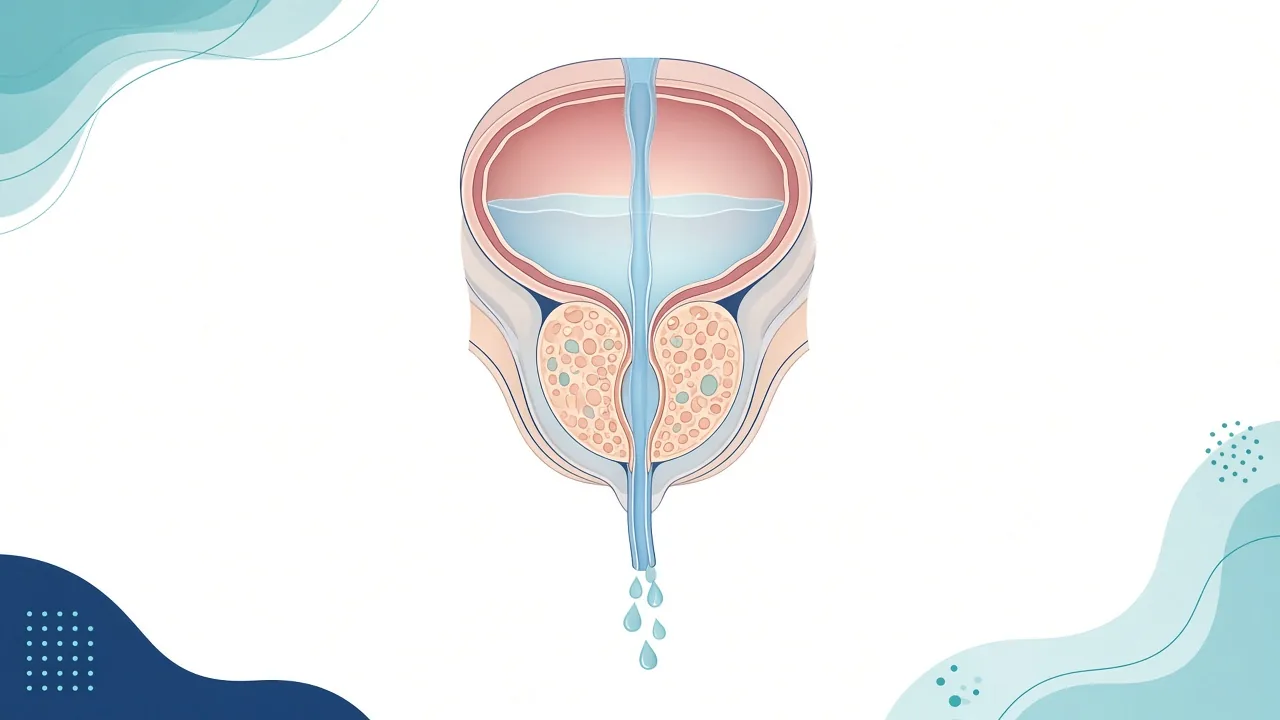
TURP (transurethral resection of the prostate) in India is a well-established operation for urinary obstruction caused by benign prostatic hyperplasia (BPH). A urologist passes a resectoscope through the urethra and removes the inner prostate tissue that is blocking urine. There is no external abdominal or pelvic incision.
For men with a weak stream, hesitancy, nocturia, incomplete emptying, recurrent infections or retention, TURP can improve flow and quality of life when medicines are no longer enough. The prostate sits below the bladder and surrounds part of the urethra. As it enlarges it compresses that channel. TURP opens the channel by resecting chips of obstructing tissue. It does not remove the entire prostate.
This page is the named TURP product. It is not prostate cancer surgery. Cancer lists sit on Prostate Cancer Treatment in India and Radical Prostatectomy in India. Neighbouring enucleation lists sit on HoLEP Surgery in India. Neighbouring vaporization lists sit on GreenLight Laser Surgery in India. There is no live GAF Aquablation, UroLift or BPH-only treatment page. Those neighbouring sheets must not be used as a TURP quotation.
GAF Healthcare planning for TURP is $2,500–$6,200 (typically 2–4 nights). US comparison is $12,000–$25,000. Neighbouring HoLEP is $3,800–$8,500 (typically 2–4 nights). Neighbouring GreenLight laser surgery is $3,200–$7,800 (typically 1–3 nights). Neighbouring radical prostatectomy is $7,000–$18,000 when the product is cancer, not BPH. These are planning ranges from partner hospital cost sheets, not hospital quotations.
International patients comparing TURP surgeons commonly start with Delhi NCR, Mumbai, Bengaluru, Chennai and Hyderabad. Partner urology hospitals in Delhi NCR, Mumbai and Bengaluru, and in Chennai and Hyderabad, are a typical first filter because this work needs a named resection list, bipolar or monopolar energy and pathology. City sheets include Delhi NCR, Mumbai, Bengaluru, Chennai and Hyderabad. Pune, Kolkata, Ahmedabad and Jaipur may have resectoscope theatres. They are not live GAF catalog cities on this site.
Medical note: A resectoscope in the building is not the same as a named TURP list. Volume, residual, bladder function, bleeding risk and the surgeon's resection experience decide the product. Heavy bleeding, large clots, inability to pass urine, fever with shaking chills, chest pain or fainting belongs in a local emergency department first. WhatsApp at +91 90443 46292 is for planned record review, not an acute retention or bleed emergency.
Share prostate volume, residual and uroflow for a TURP review
What Is TURP Surgery?
Transurethral resection of the prostate is an endoscopic operation used primarily to treat urinary obstruction from an enlarged prostate.
The prostate sits below the bladder and surrounds part of the urethra. As it enlarges, it can compress the urethra and make it harder for urine to pass.
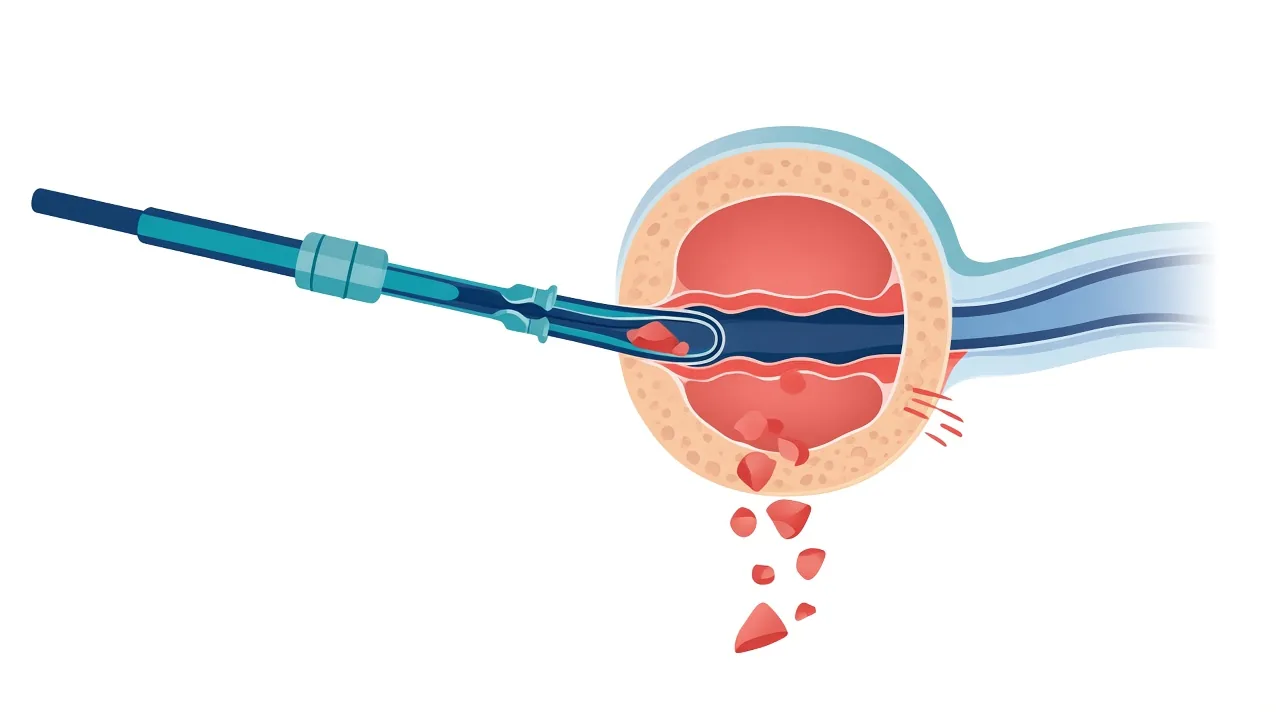
During TURP, the surgeon introduces a thin resectoscope through the urethra. Small portions of obstructing prostate tissue are resected as chips to create a wider passage. Because the surgeon reaches the prostate through the natural urinary passage, there is no external incision. MedlinePlus describes the same route.
TURP removes the obstructing portion of the prostate rather than the entire gland. That is the important distinction from radical prostatectomy.
Message GAF Healthcare on WhatsApp
Why Is TURP Surgery Done?
The most common reason is BPH that is causing significant lower urinary tract symptoms or complications.
BPH is not prostate cancer. It is a non-cancerous enlargement that becomes more common with age.
Symptoms can include a weak stream, difficulty starting, interrupted flow, straining, frequency, urgency, nocturia, incomplete emptying, dribbling, retention and recurrent urinary infections.
When obstruction becomes severe, BPH can contribute to recurrent infections, bladder stones, retention or damage to the upper urinary tract.
When Is TURP Recommended?
TURP is generally considered when symptoms are significant, when BPH has caused complications, or when medicines have not provided enough relief. The decision is individualized rather than based on prostate size alone.
A urologist may consider surgery when:
- Medicines are no longer enough. Many men start with tablets. If symptoms stay troublesome, surgery may be discussed.
- Urinary retention develops. Acute or recurrent inability to empty the bladder may need a more definitive channel.
- Recurrent infections occur. Incomplete emptying can feed repeated urinary tract infections.
- Bladder stones develop. Long-standing obstruction raises that risk.
- There is significant bleeding from the prostate. Haematuria tied to BPH can be an indication.
- Kidney or upper-tract complications appear. Prolonged obstruction can affect kidney function.
- Symptoms substantially affect life. Sleep, travel, work and daily activities can justify a surgical conversation even without a major complication.
Request a records review before anyone books travel
Who May Be a Candidate?
A patient may be considered when BPH is causing bothersome symptoms, medication has not helped enough, obstruction is significant, retention has occurred, recurrent infections or bladder stones are tied to obstruction, or the urologist judges TURP appropriate after evaluation.
The final decision depends on more than symptoms. Prostate anatomy, prostate volume, bladder function, flow, overall health and previous treatments all influence whether TURP, HoLEP, GreenLight or no endoscopic list is named.
Tests Before TURP Surgery
Work-up commonly includes:
- Symptom history, nocturia, previous retention, previous prostate treatment and the blood-thinner list
- Physical examination, including a digital rectal examination when clinically appropriate
- Urine testing for infection
- Blood tests for general health, kidney function and anaesthesia fitness
- PSA when age, examination and cancer-evaluation needs justify it
- Ultrasound for prostate size, bladder condition and residual urine
- Uroflowmetry
- Post-void residual measurement
The exact evaluation is individualized rather than identical for every patient.
TURP Surgery Procedure: Step by Step
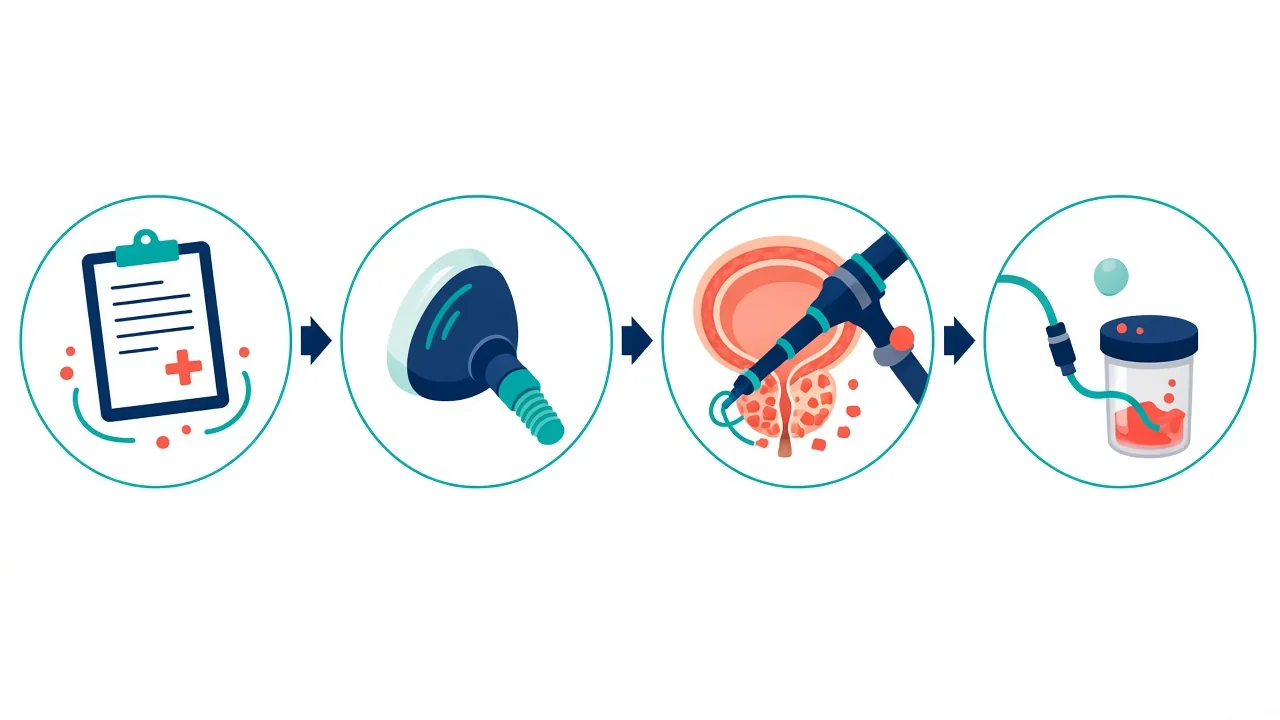
- Anaesthesia. Spinal or general, named by the anaesthesia team.
- Positioning. The patient is positioned for urethral access.
- Resectoscope. The instrument enters through the urethra. No skin incision.
- Visualization. The surgeon maps the obstructing tissue.
- Resection. A cutting loop removes chips of inner prostate tissue to open the channel.
- Haemostasis. Energy controls bleeding. Modern bipolar TURP reduces the irrigation-fluid risk associated with older monopolar lists.
- Catheter. A urinary catheter usually stays while swelling settles. Many sources describe 24–48 hours; the exact duration varies.
- Monitoring. Urine output, colour, clots, vital signs and the ability to void after catheter removal are watched.
Operating time is often 60–90 minutes and rises with gland size, associated bladder work and anatomy. Some sources describe about one to two hours. A website promising a fixed short time for every prostate is not an honest quotation.
Is TURP Surgery Painful?
The operation itself is performed under anaesthesia, so the patient should not feel the resection.
After surgery some men notice burning, urgency, frequency, mild pelvic discomfort and blood in the urine. Those symptoms usually ease as the channel heals.
Pain or urinary discomfort that becomes severe, or is joined by fever, inability to pass urine or significant bleeding, belongs in a local emergency department.
Ask whether TURP, HoLEP or GreenLight is the named product
TURP vs HoLEP vs GreenLight
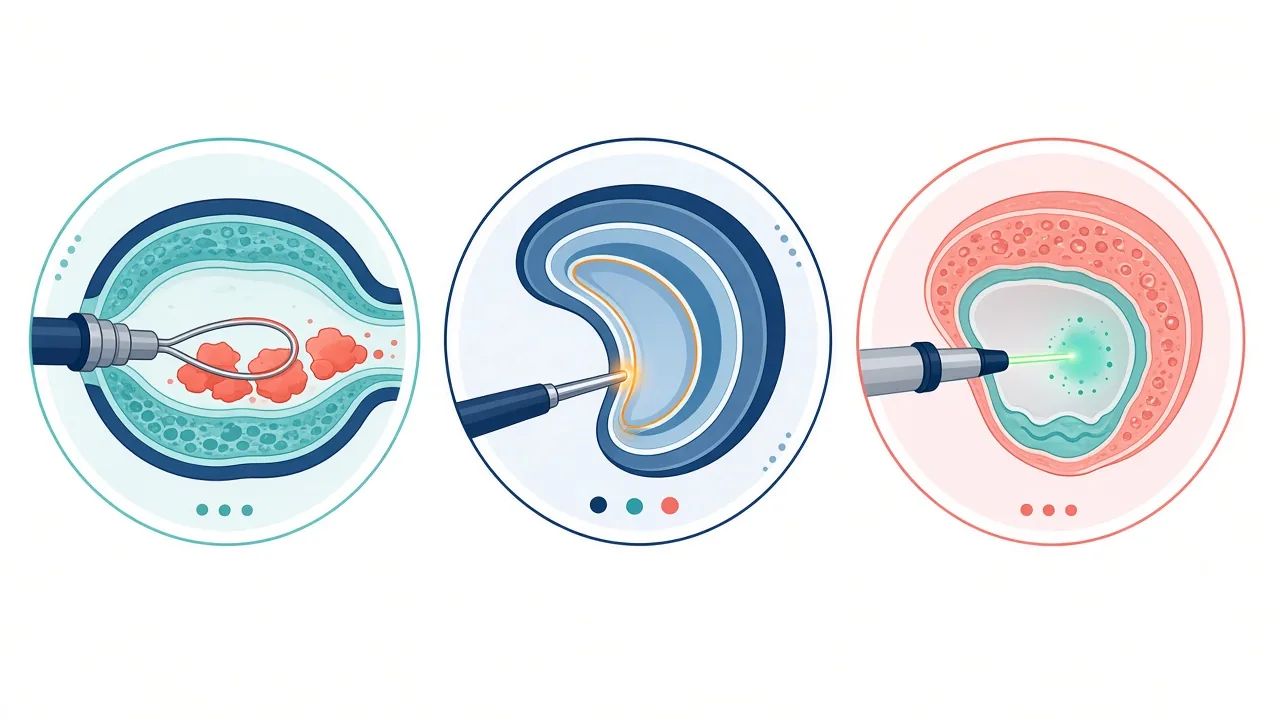
| Feature | TURP | HoLEP | GreenLight / PVP |
|---|---|---|---|
| Approach | Through the urethra | Through the urethra | Through the urethra |
| External incision | No | No | No |
| Energy | Electrosurgical resection | Holmium laser enucleation | Laser vaporization |
| Tissue removal | Resected in chips | Enucleated and morcellated | Vaporized |
| Tissue for pathology | Yes | Yes | Usually limited |
| Prostate-size use | Depends on anatomy and surgeon | Broad size range when experience matches | Depends on anatomy |
| Hospital stay | Usually short | Usually short | Usually short |
The choice should be based on prostate anatomy, surgeon experience, available technology and patient priorities. HoLEP is not automatically better than TURP for every patient. GreenLight is not automatically better because the word “laser” appears.
Named enucleation lists sit on HoLEP Surgery in India. Named vaporization lists sit on GreenLight Laser Surgery in India. Do not use those sheets as a TURP quotation.
TURP vs Medication
Medication is often used first. Tablets can relax the outlet or reduce prostate growth depending on the drug. Surgery becomes relevant when symptoms stay troublesome, medicines do not help enough, side effects are unacceptable, retention occurs, or BPH causes recurrent infections, stones or other complications. NIDDK notes the same sequence.
TURP vs Radical Prostatectomy
These products should not be confused.
TURP usually treats urinary obstruction from BPH. It removes obstructing inner tissue.
Radical prostatectomy treats selected localized prostate cancer. It removes the prostate gland. That list sits on Radical Prostatectomy in India. The wider cancer pathway sits on Prostate Cancer Treatment in India.
TURP is not a substitute for radical prostatectomy when cancer-directed surgery is required.
Recovery
Recovery happens gradually. A catheter generally drains the bladder at first. Blood-tinged urine is expected early. After the catheter comes out, urgency, frequency or burning can persist while the tract heals.
Day 0–1. Monitoring, catheter drainage and urine assessment.
Day 1–2. The catheter may come out if urine looks satisfactory and the patient can void. Some men need it longer.
First week. Burning, frequency or mild blood in urine may continue.
Weeks 2–4. Light daily activity often resumes. Flow usually continues to improve.
Weeks 4–6. Many activity restrictions are lifted only after the treating urologist clears them. Heavy lifting, strenuous exercise and sexual activity commonly wait several weeks.
This is a general guide, not a personalized timetable. GAF planning for stay is 2–4 nights. Desk work may resume in one to two weeks if uncomplicated. Physically demanding work usually waits longer. Follow the treating surgeon, not a tourism timetable.
If the patient cannot urinate adequately after catheter removal, the catheter may need to be reinserted temporarily.
Some blood in the urine is common. Contact the medical team, and use a local emergency department if bleeding becomes heavy, large clots appear, flow is blocked, urine becomes more bloody rather than clearer, fever or chills occur, or the patient suddenly cannot urinate. NHS guidance gives the same warning signs.
Fever with shaking chills, heavy bleeding or large clots, inability to pass urine, chest pain, shortness of breath or fainting belongs in a local emergency department. Mayo Clinic lists the same red flags.
Share volume, residual and blood-thinner details
Expected Results
The primary objective is to improve urine flow and reduce obstruction symptoms. Many patients notice better flow, easier starting, less residual, less frequency, less nocturia, less urgency and better quality of life.
Mayo Clinic notes that TURP often relieves symptoms and that the effect can last for many years, although some patients eventually need another procedure.
Outcome depends on the degree of obstruction, prostate anatomy, bladder function, how long symptoms have been present, other urinary conditions and overall health. A long-obstructed bladder does not always recover perfect storage function even after the channel is opened.
Risks and Complications
TURP is established, but every operation has risks.
- Bleeding. Pink urine is common. Significant bleeding that needs extra treatment or transfusion is less common.
- Urinary tract infection. More likely when a catheter is required.
- Temporary difficulty voiding. Some men cannot pass urine immediately after catheter removal.
- Urinary incontinence. Temporary leakage can occur. Persistent incontinence is less common.
- Retrograde ejaculation. Semen may travel back into the bladder. Orgasm can still occur. Fertility can be affected.
- Erectile dysfunction. Possible, and considered less common than retrograde ejaculation. This is not the same product as penile implantation.
- Urethral stricture or bladder-neck narrowing. Scar tissue can later narrow the channel.
- Need for repeat treatment. Symptoms or obstruction can return.
- TUR syndrome. Older monopolar lists carried a risk from absorption of irrigation fluid and low sodium. Modern bipolar TURP reduces that particular mechanism.
Message GAF Healthcare on WhatsApp
TURP and Sexual Function
TURP does not remove the entire prostate. Retrograde ejaculation is still a common long-term effect. The man can experience orgasm, but visible ejaculate may be reduced or absent.
Men who are planning future fertility should discuss this before choosing TURP. Desire and erection are different problems from ejaculation. Existing erectile dysfunction has its own causes and is not treated by TURP.
TURP Surgery Cost in India
GAF Healthcare planning is $2,500–$6,200, typically 2–4 nights. US comparison is $12,000–$25,000. This is a preliminary planning range, not a fixed quotation. It depends on hospital, surgeon, prostate size, bipolar or monopolar energy, anaesthesia, room category, stay, tests, pathology and whether HoLEP or GreenLight is named instead.
A quotation should state whether the urologist fee, anaesthesia, theatre, consumables, room, medicines, catheter, pathology and follow-up are inside the package. Complication management, extra nights, ICU, blood products, hotel, flights, visa and home follow-up are usually separate.
City name is a weaker driver than gland volume and the named resection list. Delhi NCR, Mumbai, Bengaluru, Chennai and Hyderabad are the live GAF catalog cities. Published Indian rupee listings vary widely by source and are not used as GAF quotations on this page.
Request an itemized TURP estimate after volume review
International Patient Pathway
Before travel, share prostate ultrasound or MRI with volume, PSA, urine and kidney tests, uroflow, residual, cystoscopy notes, the full medication list including blood-thinners, and any previous prostate procedure or biopsy. A urologist then decides whether TURP, HoLEP, GreenLight or no endoscopic list is honest.
A useful planning framework is 2–4 nights in hospital and a longer total India stay for catheter removal and travel clearance. The treating surgeon should confirm fitness to fly. Do not book a return flight from an average number, and do not plan an immediate long-haul flight without that clearance.
- Send records.
- A urologist reviews whether TURP is the named product.
- The energy platform, expected catheter plan and pathology plan are written down.
- An itemized estimate is issued. GAF planning is $2,500–$6,200.
- Stable planned cases travel after that review. Acute retention with pain, fever or heavy bleeding is a local emergency.
- Essential tests are repeated after arrival.
- The named resection is delivered.
- The patient leaves with catheter instructions, pathology timing and who will follow them at home.
GAF Healthcare can coordinate records collection, hospital sharing, appointments, visa documentation, airport transfer, accommodation, interpreter support and follow-up messages. The treating urologist remains responsible for diagnosis, procedure selection and medical care.
Share records for a case-specific TURP plan
Diet, Exercise, Work and Sex After TURP
Follow the surgeon's written instructions.
In general, recovery advice may include adequate fluids unless restricted, fibre to avoid constipation and straining, prescribed medicines exactly as written, fewer bladder irritants if they worsen symptoms, and no restart of blood-thinners without medical advice. Mayo Clinic recommends hydration, constipation prevention and avoidance of strenuous activity during healing.
Walking is usually encouraged. Heavy lifting, intense exercise, cycling and perineal pressure commonly wait until the surgeon clears them. NHS guidance often cites about six weeks for heavy lifting or intense exercise.
Desk work may resume relatively early if recovery is uncomplicated. Physically demanding work usually waits longer. Sexual activity is generally postponed during early healing. Many patient-information sources advise about 4–6 weeks; confirm with the treating surgeon. Retrograde ejaculation can still occur after that clearance.
Questions to Ask Before Surgery
- Why do I need TURP, and is my prostate definitely causing these symptoms?
- What is my prostate volume and residual?
- Have medicines been adequately tried?
- Would HoLEP or GreenLight be more appropriate?
- Which TURP technique do you recommend, bipolar or otherwise?
- Will the removed tissue go to pathology?
- How long will the catheter stay, and how long should I remain in India?
- How do you manage retrograde ejaculation and possible erectile change?
- When can I work, exercise, fly and resume sexual activity?
- What symptoms should send me to an emergency department?
Frequently Asked Questions
Is TURP surgery safe? TURP is a well-established urological procedure. Every operation has risks, including bleeding, infection, temporary urinary problems and sexual side effects. Individual risk depends on health, prostate characteristics and surgical factors.
Is TURP surgery painful? The procedure itself is performed under anaesthesia. Burning, urgency and discomfort can occur during recovery.
How long does TURP surgery take? Commonly around 60–90 minutes. Complex cases can take longer.
How many days do I need to stay in hospital? GAF planning is typically 2–4 nights. Local sources often describe a shorter stay. Duration depends on bleeding, catheter needs and other health conditions.
How long does the catheter stay in? Often around 24–48 hours, but the actual duration depends on urine appearance, swelling and the ability to void after removal.
Can TURP cure an enlarged prostate? TURP removes the obstructing portion and can provide long-lasting relief. It does not remove the entire prostate, and BPH can later need further treatment.
Does TURP remove the whole prostate? No. It removes the portion obstructing the urinary channel.
Does TURP cause erectile dysfunction? It can occur, but it is not the most commonly discussed sexual consequence. Retrograde ejaculation is discussed more often.
Can I have children after TURP? Retrograde ejaculation can make natural conception more difficult. Men who want future children should discuss fertility before treatment.
Is TURP better than HoLEP? Neither is universally better. Prostate size, anatomy, bleeding risk, surgeon expertise and available technology decide the named product.
Is TURP better than GreenLight laser surgery? They use different technologies. The honest choice depends on the prostate and the clinical circumstances.
Can TURP treat prostate cancer? No. TURP relieves urinary obstruction. It is not equivalent to definitive prostate-cancer surgery.
Can a large prostate be treated with TURP? Sometimes. Suitability versus HoLEP or another technique depends on volume, anatomy, surgeon expertise and patient factors.
How soon will I notice improvement? Flow can improve once obstruction is relieved. Burning, frequency and urgency may persist temporarily. Full symptom improvement can take time.
Is blood in urine normal after TURP? Some blood is common. Heavy bleeding, large clots, worsening colour or blocked flow needs medical assessment, and urgent cases belong in a local emergency department.
How much does TURP cost in India? GAF Healthcare planning is $2,500–$6,200, typically 2–4 nights. US comparison is $12,000–$25,000.
Is TURP available in Delhi NCR, Mumbai, Bengaluru, Chennai and Hyderabad? Yes. Those five cities are the live GAF catalog cities. The appropriate hospital depends on the named resection list, surgeon experience, technology and the written package.
Can international patients get TURP in India? Yes, after medical evaluation, documentation and an appropriate travel plan.
When should I go to an emergency department? Inability to pass urine, heavy bleeding or large clots, fever with shaking chills, chest pain, shortness of breath or fainting belongs in a local emergency department.
Which city in India is right? There is no single preferred city. Delhi NCR, Mumbai, Bengaluru, Chennai and Hyderabad are live GAF catalog cities.
Key Takeaways
- TURP resects obstructing inner prostate tissue through the urethra. There is no external incision. It is not cancer surgery.
- It is useful when BPH symptoms are severe, medicines have failed, or complications such as retention, infection or stones have developed.
- Recovery is measured in weeks. Retrograde ejaculation is the main long-term sexual consideration.
- GAF planning in India is $2,500–$6,200, typically 2–4 nights.
- A resectoscope in the building is not a substitute for a named TURP list.
Why Choose GAF Healthcare for TURP Surgery in India?
GAF Healthcare coordinates record review, a named resection list, an itemized estimate, admission support and follow-up planning. The first step is to establish whether TURP is honest for this prostate, or whether HoLEP, GreenLight or no endoscopic list should be named instead.
Share prostate volume, residual, uroflow, PSA and the medication list for a case-specific assessment.
Share records for a case-specific TURP assessment
Planned questions can also go to WhatsApp at +91 90443 46292. Emergency symptoms still belong in a local emergency department.
Medical Disclaimer
This page provides general educational information about TURP surgery in India. It does not diagnose BPH or determine whether resection is appropriate for an individual patient.
Treatment decisions should be made with a qualified urologist after reviewing symptoms, prostate volume, residual, medicines and overall health.
Published treatment costs are indicative and can change between hospitals, cities, energy platforms and individual cases. A hospital's written quotation should be obtained before treatment or travel arrangements are finalized.
Treatment Process
- 1
Share records
The patient provides ultrasound volume, residual, uroflow, PSA and the blood-thinner list before anyone books travel.
- 2
Urology review
A urologist reviews whether TURP, HoLEP, GreenLight or no endoscopic list is the honest product.
- 3
Name the product
The team writes TURP only after volume, residual and energy platform are reviewed.
- 4
Itemized estimate
GAF TURP planning is $2,500–$6,200. Neighbouring HoLEP is $3,800–$8,500 when enucleation is the named product.
- 5
Travel if fit
Stable planned cases travel after records review. Acute retention with pain, fever or heavy bleeding is a local emergency.
- 6
Repeat essential tests
The receiving unit confirms labs, urine and fitness after arrival.
- 7
Deliver the named resection
Transurethral resection proceeds only after the list is named.
- 8
Catheter care
Urine colour, output and the ability to void are watched before discharge.
- 9
Pathology and follow-up
The patient leaves with specimen timing, catheter instructions and who will follow flow after returning home.