
Treatment Overview
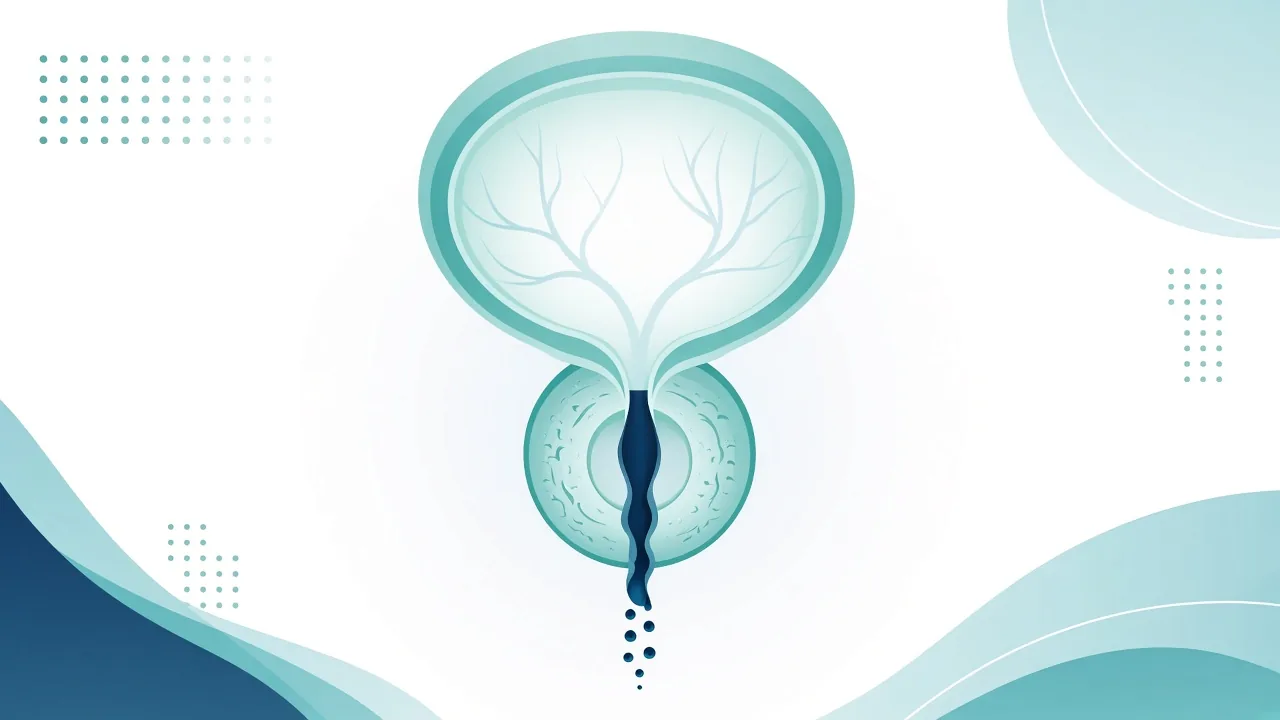
HoLEP (holmium laser enucleation of the prostate) in India is a minimally invasive laser operation for urinary obstruction caused by benign prostatic hyperplasia (BPH). A urologist uses a holmium laser to separate the enlarged inner adenoma from the prostate capsule, then a morcellator breaks that tissue into pieces and removes it through the urethra.
Unlike vaporization, HoLEP removes a substantial volume of obstructing tissue and sends it for pathology. The American Urological Association describes HoLEP as a prostate-size-independent surgical option for LUTS/BPH. It can be used for small, medium or very large glands when the anatomy and the surgeon's enucleation experience make that honest.
This page is the named HoLEP product. It is not prostate cancer surgery and it does not remove the entire prostate. Cancer lists sit on Prostate Cancer Treatment in India and Radical Prostatectomy in India. Neighbouring vaporization lists sit on GreenLight Laser Surgery in India. There is no live GAF Aquablation, UroLift or BPH-only treatment page. Named TURP lists sit on TURP Surgery in India. Those neighbouring sheets must not be used as a HoLEP quotation.
GAF Healthcare planning for HoLEP is $3,800–$8,500 (typically 2–4 nights). US comparison is $16,000–$32,000. Neighbouring GreenLight laser surgery is $3,200–$7,800 (typically 1–3 nights). Neighbouring TURP is $2,500–$6,200 (typically 2–4 nights). Neighbouring radical prostatectomy is $7,000–$18,000 when the product is cancer, not BPH. These are planning ranges from partner hospital cost sheets, not hospital quotations.
International patients comparing HoLEP surgeons commonly start with Delhi NCR, Mumbai, Bengaluru, Chennai and Hyderabad. Partner urology hospitals in Delhi NCR, Mumbai and Bengaluru, and in Chennai and Hyderabad, are a typical first filter because this work needs a named enucleation list, a morcellator and pathology. City sheets include Delhi NCR, Mumbai, Bengaluru, Chennai and Hyderabad. Pune, Kolkata, Ahmedabad and Jaipur may have holmium theatres. They are not live GAF catalog cities on this site.
Medical note: A holmium machine in the building is not the same as a named HoLEP list. Volume, residual, bladder function and the surgeon's enucleation experience decide the product. Heavy bleeding, large clots, inability to pass urine, fever with shaking chills, chest pain or fainting belongs in a local emergency department first. WhatsApp at +91 90443 46292 is for planned record review, not an acute retention or bleed emergency.
Share prostate volume, residual and uroflow for a HoLEP review
What Is HoLEP Surgery?
HoLEP stands for holmium laser enucleation of the prostate.
The prostate surrounds the urethra just below the bladder. As it enlarges it can squeeze the channel and cause a weak stream, hesitancy, frequency, urgency, nocturia, incomplete emptying, retention, infections or bladder stones.
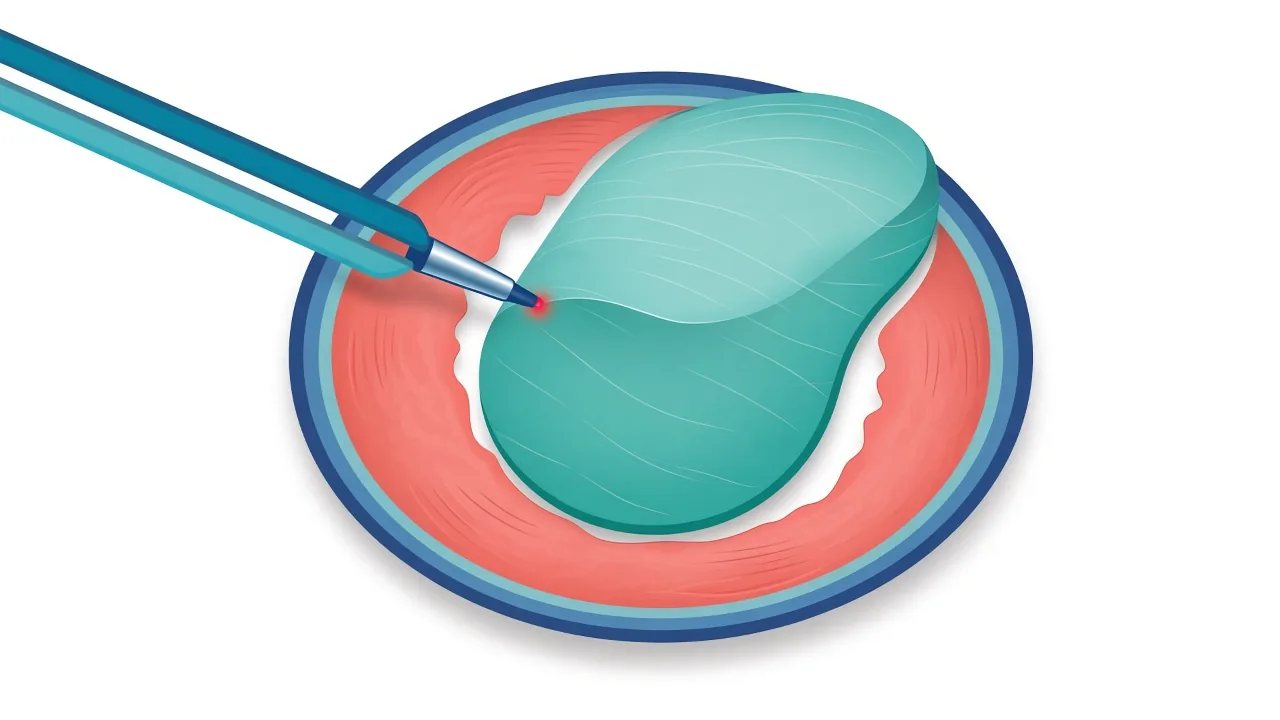
HoLEP is performed through the urethra. A thin endoscope enters the urinary passage. The holmium laser separates the enlarged adenoma from the surgical capsule. That tissue is pushed into the bladder.
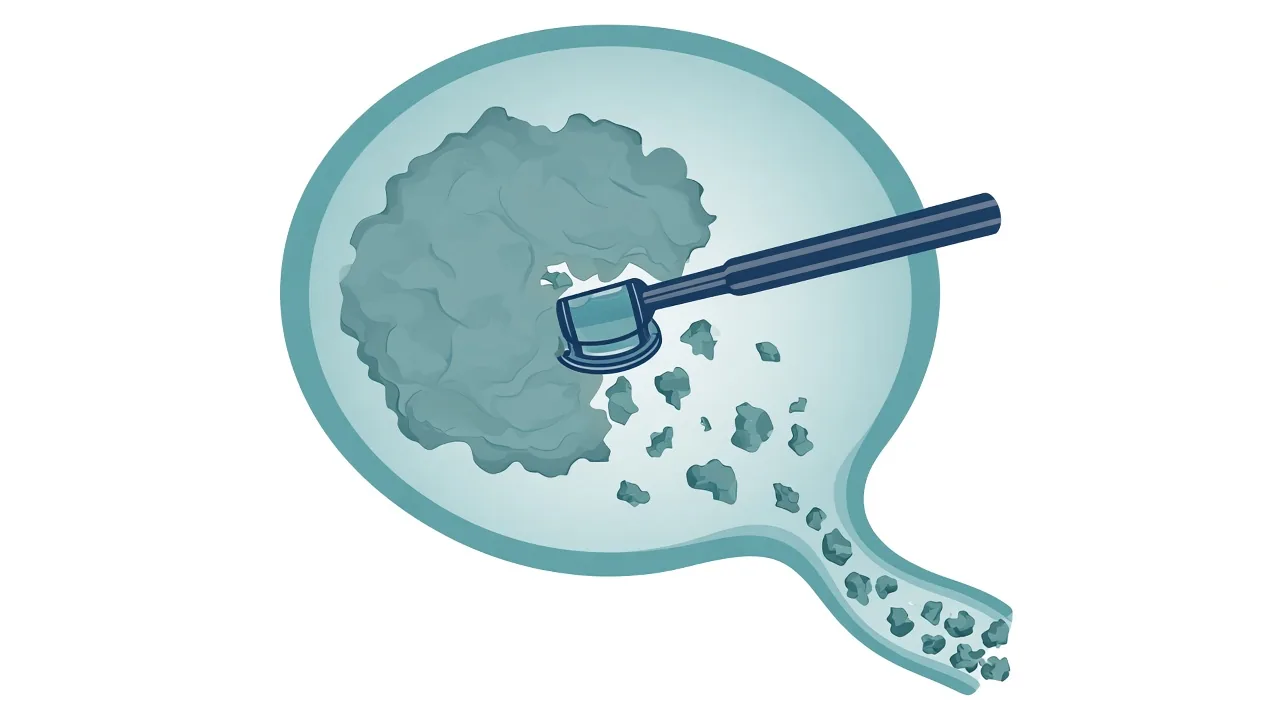
A morcellator then breaks the tissue into pieces and removes it through the instrument. The specimen can go to histopathology. Johns Hopkins describes the same sequence: separate the inner tissue from the outer layer, then morcellate and remove it.
Message GAF Healthcare on WhatsApp
Why Is HoLEP Performed?
HoLEP relieves obstruction from BPH. Typical symptoms include difficulty starting, a weak or intermittent stream, straining, incomplete emptying, frequency, urgency, nocturia, dribbling, retention, recurrent infections, bladder stones, haematuria tied to BPH, or deteriorating bladder or kidney function from obstruction.
Not every man with BPH needs surgery. Medicines and lifestyle measures come first when they still work. Surgery becomes relevant when symptoms stay troublesome, complications appear, or testing shows significant obstruction.
Who May Be a Candidate?
A urologist may consider HoLEP when medicines have failed, obstruction is significant, retention or infection keeps returning, bladder stones have formed, residual urine is high, the gland is substantially enlarged, other BPH treatments have failed, or a procedure that can remove a large volume of adenoma is the honest tool.
AUA guidance treats HoLEP as size-independent. Suitability is still individual: bladder function, previous procedures, bleeding risk and the surgeon's enucleation volume matter.
Request a records review before anyone books travel
HoLEP for a Very Large Prostate
One of the strongest uses of HoLEP is a substantially enlarged gland. TURP has historically been used for smaller or moderate glands. HoLEP's anatomical enucleation can remove large volumes of adenoma. Randomized work has compared HoLEP with open prostatectomy in prostates larger than 100 grams and found durable urinary improvement without an abdominal incision.
A holmium brochure is not enough. Anatomy, bladder function, surgeon experience and the morcellator list decide whether HoLEP, GreenLight, TURP or open simple prostatectomy is named.
HoLEP vs TURP vs GreenLight
| Feature | HoLEP | TURP |
|---|---|---|
| Technology | Holmium laser enucleation | Electrosurgical resection |
| Access | Through the urethra | Through the urethra |
| External incision | No | No |
| Tissue removal | Anatomical enucleation | Shaving chips |
| Large prostate | Suitable when experience matches | May be less suitable as size rises |
| Tissue for pathology | Yes | Yes |
| Retrograde ejaculation | Common | Common |
Randomized trials have found HoLEP urinary outcomes comparable with TURP, with durable flow and symptom scores. Long-term follow-up has shown sustained results. Named TURP lists sit on TURP Surgery in India.
GreenLight PVP vaporizes tissue. HoLEP enucleates and morcellates it. That distinction matters when a large volume of adenoma must come out. Named vaporization lists sit on GreenLight Laser Surgery in India. Do not choose a list because the word “laser” is in the name.
Very large glands have also been treated with open or robotic simple prostatectomy. Those operations use abdominal access. HoLEP stays endoscopic. Outcomes still depend on the surgeon's learning curve.
Ask whether HoLEP, GreenLight or TURP is the named product
How Is HoLEP Performed?
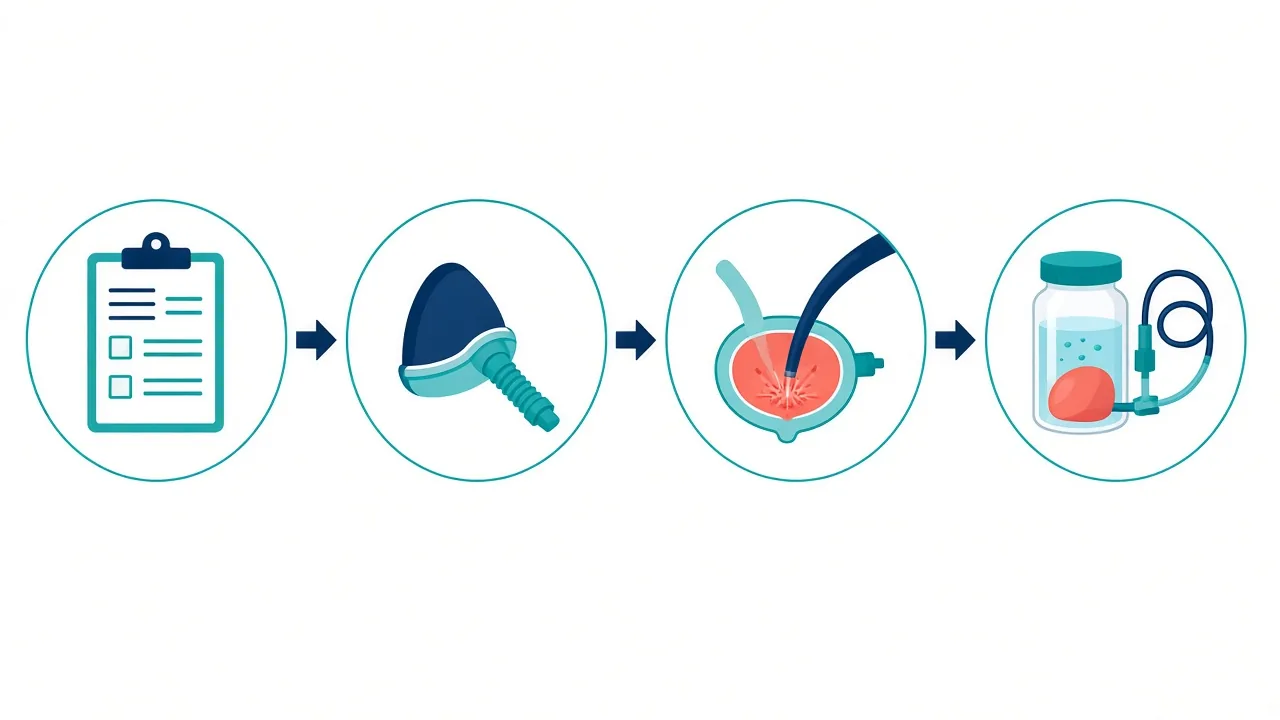
- Anaesthesia. Usually general or spinal.
- Endoscope. The instrument enters through the urethra. No skin incision.
- Landmarks. The adenoma and capsule are mapped.
- Laser enucleation. The holmium laser separates obstructing tissue from the capsule.
- Bladder. The freed adenoma is pushed into the bladder.
- Morcellation. Tissue is fragmented and removed.
- Haemostasis. The laser controls bleeding on the capsule surface.
- Pathology. The specimen can be examined.
- Catheter. A temporary catheter drains urine while the channel heals.
Operating time is often 1–2.5 hours and rises with gland size, previous surgery and morcellation time. A website promising a fixed short time for every prostate is not an honest quotation. Surgeon experience with this specific technique matters more than a holmium sticker on the theatre door.
Tests and Preparation
Work-up commonly includes symptom history and IPSS, urine testing, blood counts and kidney function, PSA when age and risk justify it, ultrasound for volume and residual, uroflowmetry, and cystoscopy when the story is unclear. Johns Hopkins lists the same core tests, with extras by case.
Do not stop anticoagulants or antiplatelet drugs on your own. The AUA recognizes HoLEP among laser procedures that can be considered in selected men at higher bleeding risk. That is not permission to continue or stop a blood thinner without a written plan.
Share volume, residual and blood-thinner details
Recovery
Recovery is progressive. Burning, frequency, urgency, pink urine, temporary leakage, bladder spasms and an unpredictable stream are common in the first days and weeks even after the obstruction is gone. Johns Hopkins notes irritation and some bleeding during healing.
First few days. The catheter comes out when emptying looks safe. Urine may stay pink.
First 1–2 weeks. Frequency and burning ease. Some men leak temporarily.
Around 2–4 weeks. Flow and obstructive symptoms often look clearer.
Around 4–8 weeks and beyond. Control and irritation continue to improve, especially after longstanding obstruction.
GAF planning for stay is 2–4 nights. Desk work may resume in one to two weeks if uncomplicated. Heavy lifting and strenuous activity usually wait at least two weeks, longer for physical jobs. Follow the treating surgeon, not a tourism timetable.
Fever with shaking chills, heavy bleeding or large clots, inability to pass urine, chest pain, shortness of breath or fainting belongs in a local emergency department. Cleveland Clinic gives the same warning signs.
Message GAF Healthcare on WhatsApp
Continence, Ejaculation and Erectile Function
Temporary leakage can occur after a large enucleation while the sphincter adjusts. Cough, standing or urgency leaks often improve. Pelvic-floor work may be advised. Persistent incontinence should be reviewed, not assumed.
Retrograde ejaculation is common. Semen may travel back into the bladder so visible ejaculate is reduced or absent. Desire and erection are different problems. Men who want biological children should discuss fertility before HoLEP. This is not a fertility treatment and is not the same product as penile implantation.
HoLEP is not designed to treat erectile dysfunction. Existing ED has its own causes.
Pathology, Cancer and Recurrence
Because tissue is removed, incidental prostate cancer can be found. Cleveland Clinic notes that HoLEP does not block later cancer treatment when that is indicated. HoLEP itself is not cancer treatment and does not remove the entire gland. The outer capsule stays. Radical prostatectomy is a different product.
Symptoms can still return from bladder dysfunction, stricture, bladder-neck contracture, residual tissue or another urinary condition. Long-term series have shown durable IPSS, flow and residual improvements with low reoperation for recurrent adenoma. No procedure guarantees that BPH symptoms never return.
HoLEP Surgery Cost in India
GAF Healthcare planning is $3,800–$8,500, typically 2–4 nights. US comparison is $16,000–$32,000. This is a preliminary planning range, not a fixed quotation. It depends on hospital, surgeon, prostate size, laser fibre, morcellator, anaesthesia, room category, stay, tests, pathology and whether another BPH procedure is named instead.
A quotation should state whether the urologist fee, anaesthesia, laser fibre, morcellator, room, medicines, catheter, pathology and follow-up are inside the package. Complication management and extra nights are usually separate.
City name is a weaker driver than gland volume and the named enucleation list. Delhi NCR, Mumbai, Bengaluru, Chennai and Hyderabad are the live GAF catalog cities.
Request an itemized HoLEP estimate after volume review
International Patient Pathway
Before travel, share prostate ultrasound or MRI with volume, PSA, urine and kidney tests, uroflow, residual, cystoscopy notes, the full medication list including blood-thinners, and any previous prostate procedure or biopsy. A urologist then decides whether HoLEP, GreenLight, TURP or no endoscopic list is honest.
A useful planning framework is 2–4 nights in hospital and a longer total India stay for catheter removal and travel clearance. The treating surgeon should confirm fitness to fly. Do not book a return flight from an average number.
- Send records.
- A urologist reviews whether HoLEP is the named product.
- The platform, morcellator and expected catheter plan are written down.
- An itemized estimate is issued. GAF planning is $3,800–$8,500.
- Stable planned cases travel after that review. Acute retention with pain, fever or heavy bleeding is a local emergency.
- Essential tests are repeated after arrival.
- The named enucleation is delivered.
- The patient leaves with catheter instructions, pathology timing and who will follow them at home.
Share records for a case-specific HoLEP plan
Questions to Ask Before Surgery
- How frequently do you perform HoLEP, including large glands?
- What is my prostate volume and residual?
- Would GreenLight or TURP be more appropriate?
- What is the plan for blood-thinners?
- Will all tissue go to pathology?
- How long will the catheter stay, and how long should I remain in India?
- How do you manage temporary leakage and retrograde ejaculation?
- What is included if extra nights or a stricture later appear?
Frequently Asked Questions
Is HoLEP better than TURP? Both are established BPH operations. HoLEP enucleates anatomically and can cover a broader size range. The honest choice depends on anatomy, bladder function and the surgeon's enucleation experience.
Is HoLEP suitable for a very large prostate? Yes. Size alone does not exclude HoLEP when experience matches the gland.
Does HoLEP remove the whole prostate? No. It removes the inner adenoma. The outer capsule stays. That is different from radical prostatectomy.
Does HoLEP cause retrograde ejaculation? Yes. It is a common side effect.
Can prostate cancer be found after HoLEP? Yes. Removed tissue can show incidental cancer. HoLEP is still not cancer treatment.
Can patients taking blood thinners undergo HoLEP? Selected men may. Never stop a blood thinner without medical instructions.
How much does HoLEP surgery cost in India? GAF Healthcare planning is $3,800–$8,500, typically 2–4 nights. US comparison is $16,000–$32,000.
How long should an international patient stay? There is no universal number. Stay depends on catheter removal, bleeding, voiding and the surgeon's travel clearance.
When should I go to an emergency department? Inability to pass urine, heavy bleeding or large clots, fever with shaking chills, chest pain, shortness of breath or fainting belongs in a local emergency department.
Which city in India is right? There is no single preferred city. Delhi NCR, Mumbai, Bengaluru, Chennai and Hyderabad are live GAF catalog cities.
Key Takeaways
- HoLEP enucleates the obstructing adenoma through the urethra and sends tissue for pathology. It is not cancer surgery.
- AUA treats it as size-independent. Very large glands are a core use when the surgeon's volume matches.
- Retrograde ejaculation is common. Temporary leakage can occur and usually improves.
- GAF planning in India is $3,800–$8,500, typically 2–4 nights.
- A holmium machine is not a substitute for a named HoLEP list.
Why Choose GAF Healthcare for HoLEP Surgery in India?
GAF Healthcare coordinates record review, a named enucleation list, an itemized estimate, admission support and follow-up planning. The first step is to establish whether HoLEP is honest for this prostate, or whether GreenLight, TURP or no endoscopic list should be named instead.
Share prostate volume, residual, uroflow, PSA and the medication list for a case-specific assessment.
Share records for a case-specific HoLEP assessment
Planned questions can also go to WhatsApp at +91 90443 46292. Emergency symptoms still belong in a local emergency department.
Medical Disclaimer
This page provides general educational information about HoLEP surgery in India. It does not diagnose BPH or determine whether enucleation is appropriate for an individual patient.
Treatment decisions should be made with a qualified urologist after reviewing symptoms, prostate volume, residual, medicines and overall health.
Published treatment costs are indicative and can change between hospitals, cities, laser platforms and individual cases. A hospital's written quotation should be obtained before treatment or travel arrangements are finalized.
Treatment Process
- 1
Share records
The patient provides ultrasound volume, residual, uroflow, PSA and the blood-thinner list before anyone books travel.
- 2
Urology review
A urologist reviews whether HoLEP, GreenLight, TURP or no endoscopic list is the honest product.
- 3
Name the product
The team writes HoLEP only after volume, capsule anatomy and morcellator availability are reviewed.
- 4
Itemized estimate
GAF HoLEP planning is $3,800–$8,500. Neighbouring GreenLight is $3,200–$7,800 when vaporization is the named product.
- 5
Travel if fit
Stable planned cases travel after records review. Acute retention with pain, fever or heavy bleeding is a local emergency.
- 6
Repeat essential tests
The receiving unit confirms labs, urine and fitness after arrival.
- 7
Deliver the named enucleation
Holmium enucleation and morcellation proceed only after the list is named.
- 8
Catheter care
Urine colour, output and the ability to void are watched before discharge.
- 9
Pathology and follow-up
The patient leaves with specimen timing, catheter instructions and who will follow flow after returning home.