
When cancer spreads to the lining of the abdominal cavity, doctors need to understand not only whether the disease is present but also how extensively it has spread.
A patient may have a few small tumour deposits in one part of the abdomen, while another may have disease distributed across several abdominal and pelvic regions. These situations can require very different treatment approaches.
This is where the Peritoneal Cancer Index (PCI) becomes important.
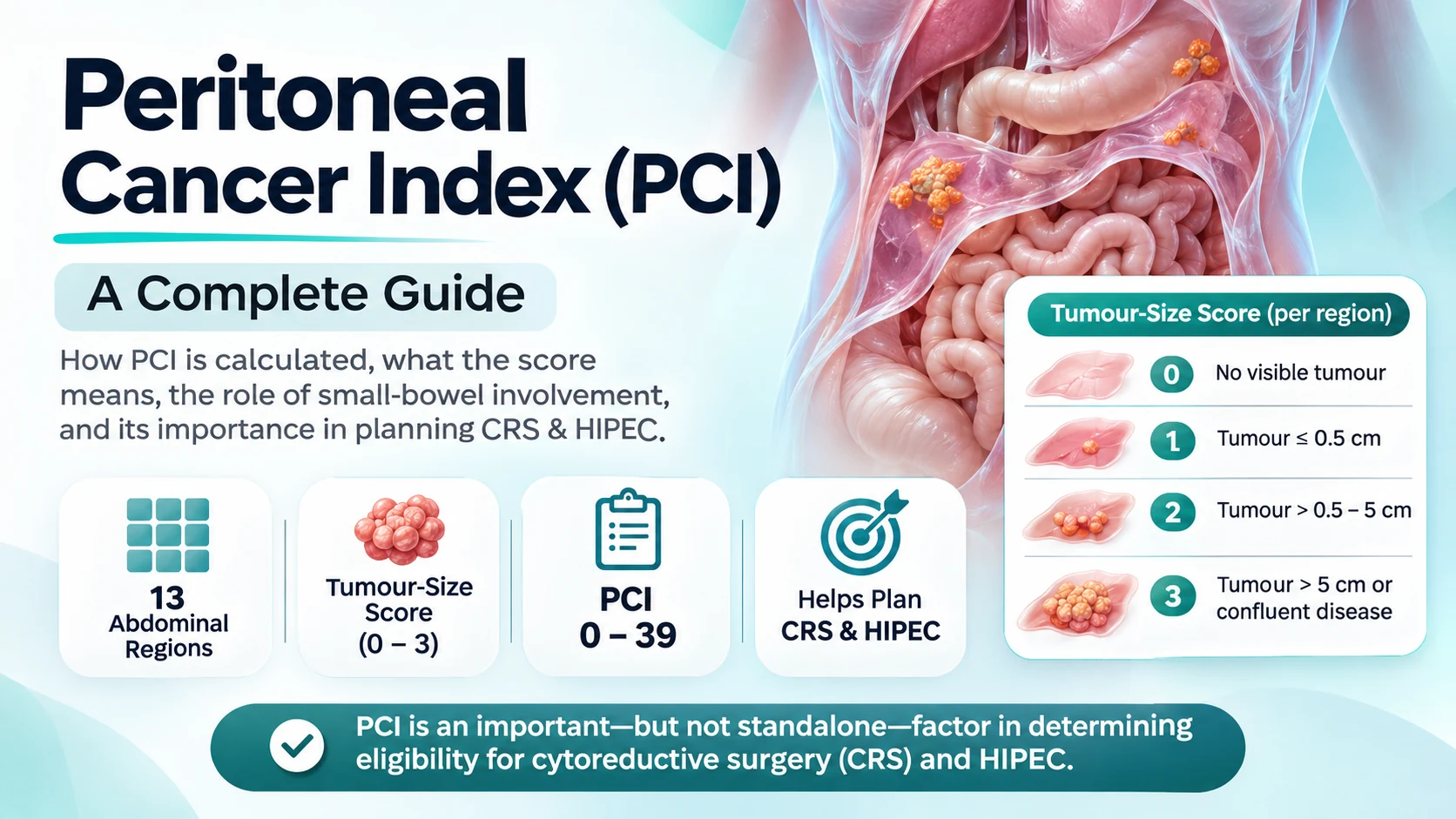
PCI is a scoring system used by surgical oncologists to estimate the extent of peritoneal disease. It divides the abdominal cavity into 13 regions and assigns a score to each region according to the size of the largest tumour deposit identified there.
The scores are added together to produce a total ranging from 0 to 39.
The PCI score helps doctors assess the disease burden, plan surgery and consider whether complete cytoreduction may be achievable. It can also contribute to discussions about whether a patient should be evaluated for CRS-HIPEC.
However, one important point needs to be understood: PCI alone does not determine whether a patient is eligible for HIPEC or surgery.
The original cancer type, tumour biology, location of deposits, small-bowel involvement, previous treatment and the patient's general health all influence the decision.
For patients seeking specialist treatment in India, PCI assessment is an important part of the evaluation of selected peritoneal surface malignancies. Indian expert consensus also recommends recording both the total PCI and the individual scores for all 13 regions in patients with colorectal peritoneal metastases.
This guide explains the scoring system, how doctors calculate it, how to interpret the result and what international patients should understand before travelling to India for treatment.
1. What Is the Peritoneal Cancer Index?
The Peritoneal Cancer Index is a standardised system used to measure the extent of cancer spread across the peritoneal surfaces.
It was developed to provide surgeons with a consistent way to describe the distribution and size of tumour deposits inside the abdominal cavity.
The system is commonly used when evaluating patients with peritoneal metastases arising from cancers such as:
- Colorectal cancer
- Ovarian cancer
- Appendix cancer
- Pseudomyxoma peritonei
- Gastric cancer
- Primary peritoneal malignancies
- Other selected abdominal and pelvic cancers
PCI is particularly relevant when a specialist team is considering cytoreductive surgery, with or without HIPEC.
Why is PCI important?
It helps doctors understand:
- How widely cancer has spread inside the abdomen
- Which abdominal regions are involved
- The approximate size of tumour deposits
- Whether complete removal of visible disease may be possible
- Which areas may require extensive surgery
- Whether disease distribution makes surgery difficult
- How to communicate the extent of disease consistently
A higher PCI generally indicates a greater burden of peritoneal disease. However, two patients with the same total score may have very different surgical prospects because the location of their tumour deposits can be different.
2. How Is the Abdomen Divided Into 13 Regions?
The PCI system divides the abdominal cavity into 13 regions.
Nine regions cover the main abdominal and pelvic areas. Four additional regions describe the upper and lower portions of the small bowel.
Each region is assessed separately.
The 13 PCI regions
| Region | Anatomical area |
|---|---|
| 0 | Central abdomen |
| 1 | Right upper abdomen |
| 2 | Epigastrium (upper central abdomen) |
| 3 | Left upper abdomen |
| 4 | Left flank |
| 5 | Left lower abdomen |
| 6 | Pelvis |
| 7 | Right lower abdomen |
| 8 | Right flank |
| 9 | Upper jejunum |
| 10 | Lower jejunum |
| 11 | Upper ileum |
| 12 | Lower ileum |
The first nine regions describe the main abdominal and pelvic areas.
The remaining four focus on the small intestine, which is especially important when assessing the feasibility of major peritoneal surgery.
Why are the small-bowel regions assessed separately?
The small bowel plays a major role in digestion and nutrient absorption.
If cancer deposits extensively involve the small bowel or its supporting mesentery, removing all visible disease may require sacrificing too much healthy intestine.
This can make complete cytoreduction unsafe or impractical.
Therefore, the distribution of disease in regions 9–12 can be particularly important when a surgeon evaluates a patient for CRS-HIPEC.
3. How Is the PCI Score Calculated?
Each of the 13 regions receives a lesion-size score from 0 to 3.
The score is based on the size of the largest tumour deposit in that particular region.
The four lesion-size categories are:
| Lesion-size score | Finding |
|---|---|
| LS-0 | No visible tumour deposit |
| LS-1 | Tumour deposit up to 0.5 cm |
| LS-2 | Tumour deposit greater than 0.5 cm and up to 5 cm |
| LS-3 | Tumour deposit greater than 5 cm or confluent disease |
The regional scores are then added together.
PCI = Sum of lesion-size scores across all 13 regions.
The lowest possible score is 0 and the highest possible score is 39.
Example: How a PCI score of 12 is calculated
Consider a hypothetical patient with the following findings:
| Region | Lesion-size score |
|---|---|
| Central abdomen | 2 |
| Right upper abdomen | 1 |
| Epigastrium | 2 |
| Left upper abdomen | 1 |
| Left flank | 0 |
| Left lower abdomen | 1 |
| Pelvis | 2 |
| Right lower abdomen | 1 |
| Right flank | 0 |
| Upper jejunum | 1 |
| Lower jejunum | 0 |
| Upper ileum | 1 |
| Lower ileum | 0 |
| Total PCI | 12 |
The total score is:
[ 2+1+2+1+0+1+2+1+0+1+0+1+0=12 ]
<badge color="info">Illustrative example</badge>
A PCI of 12 indicates the sum of the regional lesion-size scores. It does not, by itself, establish whether surgery or HIPEC is appropriate.
The surgeon must also assess where the deposits are located, whether complete cytoreduction is feasible and whether the patient can safely undergo the procedure.
4. What Does a PCI Score of 0 to 39 Mean?
The PCI score provides a numerical description of the extent of peritoneal disease.
A score closer to zero generally indicates less visible disease, while a higher score indicates a greater tumour burden.
However, PCI should not be treated as a universal staging system or a fixed predictor of treatment outcome.
Understanding the broad score ranges
| PCI score | General interpretation |
|---|---|
| 0 | No visible peritoneal tumour deposits identified |
| 1–10 | Lower numerical disease burden |
| 11–20 | Intermediate numerical disease burden |
| 21–30 | Higher numerical disease burden |
| 31–39 | Extensive numerical disease burden |
These are descriptive ranges for understanding the score. They are not universal surgical eligibility categories.
A patient with a relatively low PCI may still be unsuitable for surgery if deposits involve critical structures. Conversely, selected patients with a higher score may still be evaluated for surgery depending on the cancer type, tumour biology and distribution of disease.
Does a low PCI always mean surgery is possible?
No.
A low score can be encouraging because it may indicate a lower burden of visible disease. But the location of the deposits is equally important.
For example, a small deposit in a technically difficult area may affect surgical planning more than several deposits in areas that can be removed safely.
Does a high PCI mean surgery is impossible?
Not necessarily.
A high score can make complete cytoreduction more difficult and may reduce the likelihood of achieving the intended surgical result.
However, there is no single PCI cut-off that applies to every cancer type.
The treating team must consider the pathology, anatomical distribution, treatment response and patient fitness.
5. How Does PCI Help Determine Eligibility for CRS-HIPEC?
CRS-HIPEC is a combined treatment approach involving cytoreductive surgery and heated intraperitoneal chemotherapy.
The two components have different purposes:
- Cytoreductive surgery (CRS): Removes visible tumour deposits from the peritoneal surfaces.
- HIPEC: Circulates heated chemotherapy inside the abdominal cavity, usually after cytoreductive surgery, to target microscopic residual cancer cells.
The surgical objective is generally to achieve complete or near-complete removal of visible disease where appropriate.
PCI helps surgeons estimate how extensive that operation may need to be.
How specialists use PCI
1. Estimating disease burden
The score gives the team a structured description of how extensively cancer involves the abdomen.
2. Assessing surgical feasibility
The surgeon evaluates whether the tumour deposits can be removed safely and whether complete cytoreduction appears achievable.
3. Identifying technically difficult areas
Disease involving the small bowel, mesentery or other critical structures can affect the feasibility of surgery.
4. Planning the operation
The regional scores help surgeons understand which areas may require peritonectomy or removal of involved tissues.
5. Discussing treatment options
The PCI score contributes to the decision about surgery, systemic treatment, HIPEC or other approaches.
6. Documenting disease extent
Recording the total score and regional scores allows the team to compare findings over time and communicate the disease distribution more precisely.
The PCI is therefore an important planning tool, not a standalone decision rule.
6. Why Is Small-Bowel Involvement So Important?
Small-bowel involvement is one of the most important anatomical considerations during the assessment of peritoneal metastases.
The small intestine is responsible for absorbing nutrients and supporting normal digestion.
When cancer deposits involve extensive portions of the small bowel or its mesentery, removing all visible disease may require removing a substantial length of intestine.
This can create serious problems.
Possible consequences of extensive small-bowel removal
- Reduced nutrient absorption
- Chronic diarrhoea
- Nutritional deficiencies
- Weight loss
- Dependence on specialised nutritional support
- Short bowel syndrome in severe cases
- Reduced quality of life
For this reason, surgeons carefully assess the small-bowel regions rather than relying only on the total PCI.
Can a patient with small-bowel involvement undergo CRS-HIPEC?
It depends on the extent and distribution of involvement.
Limited deposits may sometimes be removable. Extensive disease affecting multiple small-bowel segments or the mesentery may make complete cytoreduction unsafe.
A specialist surgeon must evaluate the actual imaging and, where appropriate, direct laparoscopic or operative findings.
7. Is PCI Calculated From a CT Scan or During Surgery?
PCI can be estimated before surgery using imaging, but the most complete assessment may require direct inspection of the abdominal cavity.
There are three commonly discussed approaches.
A. Radiological PCI
Radiological PCI is estimated from imaging studies such as:
- Contrast-enhanced CT
- MRI
- Selected PET-CT examinations
A radiologist and surgical oncologist review the scans to identify tumour deposits and estimate their distribution across the 13 regions.
This helps with initial treatment planning.
However, imaging can miss small deposits, especially in areas that are difficult to assess.
A radiological PCI is therefore an estimate rather than a guarantee of the final operative score.
B. Laparoscopic PCI assessment
In selected patients, diagnostic laparoscopy may be performed to inspect the abdominal cavity.
The surgeon uses a camera and instruments inserted through small incisions.
This may help assess:
- Distribution of tumour deposits
- Small-bowel involvement
- Disease in areas that are difficult to evaluate on imaging
- Whether major surgery may be feasible
Laparoscopy is not appropriate or necessary for every patient. The decision depends on the clinical situation and the treating team's assessment.
C. Intraoperative PCI
During an open operation, the surgeon can systematically examine the abdominal and pelvic regions and record the lesion-size scores.
This provides a direct assessment of the disease encountered during surgery.
In some cases, the operative findings may differ from the preoperative imaging estimate.
Why can the imaging score and surgical score differ?
Imaging may not detect every small tumour deposit. Some deposits may be hidden by bowel loops, difficult anatomical positions or adjacent structures.
In addition, the disease may change between the scan and the operation.
For this reason, patients should understand that the final surgical findings may affect the treatment plan.
8. What Is the Difference Between PCI and the Completeness of Cytoreduction Score?
PCI and the Completeness of Cytoreduction score measure different things.
They should not be confused.
PCI measures the extent of visible peritoneal disease before or during the assessment of surgery.
The Completeness of Cytoreduction score describes how much visible tumour remains after cytoreductive surgery.
The completeness-of-cytoreduction system commonly uses these categories:
| Score | General meaning |
|---|---|
| CC-0 | No visible residual tumour |
| CC-1 | Residual tumour nodules up to 2.5 mm |
| CC-2 | Residual nodules greater than 2.5 mm and up to 2.5 cm |
| CC-3 | Residual nodules greater than 2.5 cm or confluent residual disease |
The exact reporting conventions may vary by protocol and clinical context.
Why is the CC score important?
The objective of cytoreductive surgery is to remove as much visible disease as safely possible.
The completeness of cytoreduction is an important factor in assessing the likely benefit of surgery.
A patient may have a particular PCI score before surgery, but the operation's outcome is described separately using the completeness-of-cytoreduction assessment.
In simple terms:
- PCI: How much visible disease is present?
- CC score: How much visible disease remains after surgery?
Both provide important information, but neither should be interpreted without the original cancer type and clinical context.
9. Does the Ideal PCI Score Differ Between Cancer Types?
Yes. The relevance of a particular PCI score depends on the original cancer and its biological behaviour.
A single numerical threshold should not be applied to every peritoneal malignancy.
Colorectal cancer
In colorectal cancer with peritoneal metastases, PCI is an important part of patient selection.
Doctors consider:
- Total PCI
- Distribution of deposits
- Small-bowel involvement
- Whether complete cytoreduction appears achievable
- Tumour biology and molecular findings
- Presence of disease outside the peritoneum
- Patient fitness
The 2024 INDEPSO-ISPSM Indian consensus specifically recommends recording both the total PCI and the score for each of the 13 regions.
It also recommends considering the PCI cut-off alongside disease distribution, tumour histology and the presence of synchronous liver metastases.
Importantly, the consensus was selective about HIPEC outside clinical trials and did not recommend treating it as a routine addition for every patient.
Ovarian cancer
Ovarian cancer often involves multiple peritoneal surfaces.
PCI may help describe the extent of disease and assist surgical planning. However, ovarian cancer treatment decisions also depend on the stage, response to chemotherapy, the likelihood of complete cytoreduction and the patient's overall condition.
The role of HIPEC is specific to selected clinical settings and should be discussed with a gynaecologic oncology and medical oncology team.
Appendix cancer and pseudomyxoma peritonei
Appendiceal tumours, particularly those associated with pseudomyxoma peritonei, may involve extensive areas of the abdominal cavity.
Some patients with higher PCI scores may still be evaluated for CRS-HIPEC, depending on tumour grade, distribution, small-bowel involvement and the feasibility of complete cytoreduction.
This is one reason why a single universal PCI cut-off is inappropriate.
Gastric cancer
Gastric cancer with peritoneal metastases requires careful assessment.
The amount of disease, response to systemic treatment, tumour biology and presence of disease elsewhere are important.
A high PCI may make complete cytoreduction difficult, but the decision must be made in the context of the individual case and current evidence.
10. What PCI Score Is Required for HIPEC?
There is no single PCI score that makes every patient eligible for HIPEC.
This is one of the most frequently misunderstood aspects of peritoneal cancer treatment.
Different cancer types have different evidence bases, treatment protocols and selection criteria.
Some clinical publications describe commonly used PCI thresholds for particular cancers. These should not be interpreted as universal rules.
For example, the 2024 Indian INDEPSO-ISPSM consensus on colorectal peritoneal metastases recommended that the PCI threshold and disease distribution should both be considered when selecting patients for cytoreductive surgery.
The same consensus recommended HIPEC outside clinical trials only in a more selective group of colorectal patients, including those with a PCI of 11–15 under the consensus recommendation.
That recommendation is specific to the colorectal cancer context. It should not be applied automatically to ovarian, appendiceal, gastric or other peritoneal malignancies.
A PCI score is one part of a much broader clinical decision.
Patients should ask the treating team to explain why the proposed treatment is appropriate for their particular cancer type.
11. Can a Patient With PCI 20 or Higher Undergo Surgery?
Possibly, but the decision requires careful specialist evaluation.
A PCI of 20 or higher indicates a substantial numerical burden of peritoneal disease. It may make complete cytoreduction more difficult, depending on the tumour type and the anatomical distribution.
However, the score alone does not establish whether surgery is impossible.
The surgeon will assess:
- Whether the disease is concentrated in removable areas
- Whether the small bowel is extensively involved
- Whether critical structures are affected
- Whether complete cytoreduction is realistic
- Whether the tumour is responding to systemic treatment
- Whether the patient can tolerate major surgery
A higher PCI may lead the team to recommend systemic treatment, further assessment or a different treatment objective.
It should not be interpreted as an automatic reason to undergo or avoid surgery.
12. What Happens If the PCI Is Too High for Complete Cytoreduction?
If the disease distribution makes complete cytoreduction unlikely, the team may recommend an alternative approach.
Possible options include:
Systemic chemotherapy
Chemotherapy may help control cancer growth and symptoms. In selected patients, it may reduce tumour burden and allow reassessment.
Targeted therapy
Targeted medicines may be considered when the cancer has relevant molecular characteristics.
Immunotherapy
Some patients may be eligible for immunotherapy depending on the original cancer and biomarker results.
Clinical trials
Selected patients may be considered for clinical trials investigating new treatments for peritoneal disease.
Supportive and palliative care
When major surgery is not appropriate, supportive care can help manage pain, ascites, digestive symptoms and nutritional problems.
A high PCI does not mean that the patient has no treatment options. It means that the treatment objective and approach need to be carefully reconsidered.
13. How Is PCI Used to Plan Treatment in India?
India has specialist surgical oncology teams involved in the evaluation of selected peritoneal surface malignancies.
The INDEPSO-ISPSM consensus is particularly relevant to the Indian context because it addresses the management of colorectal peritoneal metastases and includes recommendations on PCI recording, surgical selection, systemic treatment and HIPEC.
For international patients considering treatment in India, PCI is often part of the specialist assessment.
What happens during an initial PCI assessment?
1. Review of existing scans
The team reviews CT, MRI or PET-CT images to estimate disease distribution.
2. Review of pathology
The original biopsy and histopathology reports are examined to confirm the cancer type.
3. Specialist consultation
A surgical oncologist experienced in peritoneal malignancies assesses whether further evaluation is required.
4. Regional disease assessment
The specialist considers the involvement of all 13 PCI regions, paying particular attention to the small bowel and other critical structures.
5. Additional investigation
The team may recommend updated imaging, pathology review or diagnostic laparoscopy.
6. Treatment recommendation
The specialist explains whether surgery, systemic treatment, further evaluation or supportive care is appropriate.
What should patients understand about PCI estimates?
A PCI estimated from a scan may differ from the score recorded during surgery.
A preliminary opinion should therefore be understood as an assessment based on the information available at that time.
The final decision may change after further investigations or direct examination.
14. What Is the Cost of PCI Assessment in India?
PCI is a scoring system, not a separate treatment or operation. Its assessment is usually incorporated into the wider diagnostic and surgical evaluation.
There is no single fixed price for PCI assessment.
The cost depends on which investigations are already available and what additional tests are required.
Factors that may affect the cost
- Specialist surgical oncology consultation
- Review of previous CT, MRI or PET-CT images
- New imaging investigations
- Pathology review
- Immunohistochemistry or molecular testing
- Diagnostic laparoscopy, if recommended
- Hospital admission, if required
- Additional preoperative tests
Patients should request a written estimate for the complete assessment rather than assuming that one PCI-related fee covers every investigation.
If surgery is subsequently recommended, the hospital should provide a separate treatment estimate that explains the proposed procedure and expected admission.
15. What Medical Reports Are Needed for a PCI Assessment in India?
International patients can often begin the assessment process by sharing their existing medical records before travelling.
This may help the specialist team determine whether the available information is sufficient for an initial opinion.
Useful documents include:
- Recent contrast-enhanced CT scan reports
- Original CT images in DICOM format
- MRI or PET-CT reports, if performed
- Biopsy report
- Histopathology report
- Immunohistochemistry results
- Molecular testing results, if available
- Previous operation notes
- Chemotherapy details and dates
- Recent blood test reports
- Discharge summaries
- Current medication list
Why are the original scan images important?
A written radiology report is useful, but it may not describe every detail needed for surgical planning.
The treating surgeon may want to review the actual images to understand:
- The distribution of tumour deposits
- Whether small-bowel regions appear involved
- Whether the omentum or other structures are affected
- Whether disease outside the peritoneum is visible
- Whether additional imaging is required
Patients should therefore try to obtain the original scan files rather than sharing only photographs of the report.
16. Questions to Ask Your Surgeon About PCI and HIPEC Eligibility
A PCI score can be difficult for patients to interpret without clinical context.
During a consultation, consider asking:
- What is my estimated PCI score?
- Is this score based on CT, MRI, laparoscopy or direct surgical assessment?
- Which of the 13 regions are involved?
- Are the small bowel or its mesentery affected?
- Is the disease limited to the peritoneum?
- Is complete cytoreduction likely to be achievable?
- Does my primary cancer type influence the PCI threshold?
- Is the proposed treatment CRS alone or CRS-HIPEC?
- What evidence supports adding HIPEC in my particular situation?
- Would systemic chemotherapy be recommended before surgery?
- Is another scan or diagnostic laparoscopy required?
- What are the main surgical risks?
- What is the expected hospital and ICU stay?
- What is the treatment objective?
- What follow-up will be needed after treatment?
The surgeon should explain the score in relation to the patient's actual disease distribution rather than relying only on the total number.
17. How GAF Healthcare Can Help International Patients Seeking PCI Assessment in India
Patients from Tanzania, Kenya, Ethiopia, Uganda, Zambia, Iraq and other countries may consider India for specialist evaluation of peritoneal malignancies.
For patients being assessed for CRS-HIPEC, obtaining an opinion before travelling is particularly useful because the proposed treatment may involve major surgery and prolonged recovery.
GAF Healthcare helps international patients coordinate non-clinical aspects of medical treatment in India.
Depending on the patient's requirements, support may include:
- Collection and organisation of medical records
- Coordination of specialist surgical oncology consultations
- Sharing reports with hospitals for an initial review
- Requesting hospital opinions and individual treatment estimates
- Appointment coordination
- Assistance with medical visa documentation
- Airport transfers and accommodation coordination
- Interpreter arrangements where required
- Support with hospital admission coordination
- Assistance with follow-up communication
Clinical assessment, PCI interpretation, surgical eligibility and treatment decisions remain the responsibility of the treating medical team.
Patients should receive a clear specialist opinion before making travel or financial commitments.
18. Frequently Asked Questions About the Peritoneal Cancer Index
1. What is the Peritoneal Cancer Index?
The Peritoneal Cancer Index, or PCI, is a scoring system used to measure the extent of tumour deposits inside the abdominal cavity. It divides the abdomen into 13 regions and assigns each a lesion-size score from 0 to 3.
2. What is the maximum PCI score?
The maximum PCI score is 39. This occurs when all 13 regions receive the highest lesion-size score of 3.
3. What is the minimum PCI score?
The minimum score is 0, which means no visible peritoneal tumour deposits were identified in the assessed regions.
4. How many regions are included in PCI?
PCI includes 13 regions: nine abdominal and pelvic regions and four regions describing different sections of the small bowel.
5. How is the PCI score calculated?
The largest tumour deposit in each region is assigned a score from 0 to 3. All 13 regional scores are added together to calculate the total PCI.
6. What does PCI score 1 mean?
A PCI of 1 indicates a very low numerical burden of visible peritoneal disease. It does not automatically establish whether surgery is appropriate because the location of the deposit and the primary cancer also matter.
7. What does PCI score 10 mean?
A PCI of 10 represents the sum of the regional lesion-size scores. It generally indicates a lower numerical disease burden than a score of 20 or 30, but it cannot independently determine surgical eligibility.
8. What does PCI score 15 mean?
A PCI of 15 indicates a moderate numerical burden of peritoneal disease. Its implications depend on the original cancer, tumour distribution and the possibility of complete cytoreduction.
9. What does PCI score 20 mean?
A PCI of 20 indicates a substantial burden of peritoneal disease. It may make complete cytoreduction more difficult, but it is not a universal cut-off that automatically rules surgery in or out.
10. Does a high PCI score mean HIPEC is impossible?
No. A high PCI may make surgery more challenging, but the decision depends on tumour type, disease distribution, small-bowel involvement and the patient's fitness. There is no single threshold for all cancers.
11. What PCI score is required for HIPEC?
There is no universal PCI score for HIPEC eligibility. Criteria differ by primary cancer and clinical evidence. The treating specialist must assess the complete clinical picture.
12. Can a patient with PCI 25 undergo CRS-HIPEC?
Some patients may be assessed, but a PCI of 25 indicates extensive disease and may make complete cytoreduction difficult. The location of deposits and primary cancer type are important. A specialist opinion is essential.
13. Is PCI calculated from a CT scan?
A radiological PCI can be estimated using CT or MRI. However, imaging may miss small deposits, so the final assessment may differ from the score estimated before surgery.
14. Is PCI calculated during surgery?
Yes. Surgeons can assess the abdominal cavity directly during laparoscopy or open surgery and record the regional lesion-size scores. This may provide a more complete assessment of visible disease.
15. What is the difference between radiological PCI and surgical PCI?
Radiological PCI is estimated from imaging studies. Surgical PCI is assessed through direct examination of the abdominal cavity. The two scores may differ because imaging does not always reveal every small tumour deposit.
16. Why is small-bowel involvement important in PCI?
Extensive disease involving the small bowel or its mesentery may prevent complete removal of visible tumour without sacrificing too much healthy intestine. This can make major surgery unsafe or impractical.
17. What is the difference between PCI and CC score?
PCI measures the extent of visible peritoneal disease before or during surgery. The completeness-of-cytoreduction score describes how much visible tumour remains after surgery.
18. Does PCI determine survival?
PCI is associated with disease burden and can contribute to prognostic assessment. However, survival also depends on the original cancer, tumour biology, completeness of surgery, treatment response and other patient factors. PCI alone cannot predict an individual's survival.
19. Does the PCI threshold differ for ovarian and colorectal cancer?
Yes. Treatment selection and the role of surgery or HIPEC differ across cancer types. A PCI threshold used in one cancer should not automatically be applied to another.
20. Can chemotherapy reduce the PCI score?
In some patients, systemic chemotherapy can reduce visible tumour burden. The PCI may then be reassessed using updated imaging or surgical evaluation. A change in PCI does not by itself establish surgical eligibility.
21. Is PCI used for pseudomyxoma peritonei?
Yes. PCI is used to describe the extent and distribution of disease in pseudomyxoma peritonei and can contribute to planning cytoreductive surgery and HIPEC.
22. Is PCI assessment available in India?
Specialist oncology teams in India assess peritoneal disease and use PCI as part of surgical evaluation where appropriate. Patients should verify the experience of the treating team and the diagnostic resources available.
23. How much does PCI assessment cost in India?
There is no single fixed cost. Expenses depend on the specialist consultation, imaging review, additional scans, pathology tests and whether diagnostic laparoscopy is recommended.
24. Can I share my scans with an Indian hospital before travelling?
Yes. Patients can often arrange an initial review by sharing their scan images, pathology reports, previous treatment details and relevant medical records. The hospital will advise whether further investigations or an in-person examination are necessary.
25. Can PCI change after chemotherapy?
Yes. If treatment changes the visible tumour burden, a new imaging-based or operative assessment may produce a different PCI. The method and timing of reassessment should be determined by the treating team.
26. Is a low PCI score enough to guarantee complete cytoreduction?
No. A low score may be favourable, but tumour location, small-bowel involvement, critical structures, tumour biology and surgical feasibility remain important.
19. Key Takeaways
- The Peritoneal Cancer Index measures the extent of visible tumour deposits across 13 abdominal and pelvic regions.
- Each region receives a lesion-size score from 0 to 3.
- The total PCI ranges from 0 to 39.
- A higher score generally indicates a greater burden of peritoneal disease.
- PCI helps specialists plan cytoreductive surgery and assess whether complete removal of visible disease may be possible.
- Small-bowel and mesenteric involvement can be particularly important.
- Radiological PCI is an estimate; direct surgical assessment may provide additional information.
- PCI and the completeness-of-cytoreduction score measure different things.
- There is no universal PCI cut-off for HIPEC across all cancer types.
- Patients considering treatment in India should obtain an experienced specialist assessment and understand how their PCI score relates to their actual disease distribution.
20. Medical Sources and Further Reading
The following clinical publications and scientific references informed this article.
1. INDEPSO-ISPSM Consensus on Peritoneal Malignancies: Management of Colorectal Peritoneal Metastases (2024)
Indian expert consensus addressing the management of colorectal peritoneal metastases. It recommends recording the total PCI and the score for each of the 13 regions and considering both PCI and disease distribution when selecting patients for surgery.
https://pubmed.ncbi.nlm.nih.gov/39637347/
2. Peritoneal Surface Malignancies – StatPearls, National Center for Biotechnology Information
Clinical reference explaining the PCI system, its 13 regions, lesion-size scoring and role in assessing peritoneal surface malignancies.
https://www.ncbi.nlm.nih.gov/books/NBK541114/
3. Selection Factors for Treatment and Stratification of Rare Abdominal or Pelvic Tumours With Peritoneal Metastases (2023)
Scientific review discussing PCI, disease distribution, completeness of cytoreduction and patient selection for treatment.
https://pmc.ncbi.nlm.nih.gov/articles/PMC10284755/
4. Diagnosis and Treatment of Peritoneal Carcinomatosis: A Comprehensive Overview
Review covering diagnosis, imaging, PCI scoring and treatment planning for peritoneal carcinomatosis.
https://pmc.ncbi.nlm.nih.gov/articles/PMC9995246/
5. American Radium Society Appropriate Use Criteria for the Management of Peritoneal Carcinomatosis From Different Tumour Origins
Multidisciplinary guidance discussing treatment selection according to tumour origin, patient fitness, PCI and the feasibility of complete cytoreduction.
https://doi.org/10.1002/cam4.71043
21. Related Articles on GAF Healthcare
Explore these related guides for a broader understanding of peritoneal malignancies and treatment options:
- HIPEC Surgery in India: Procedure, Eligibility, Cost and Recovery — link to the flagship HIPEC treatment page.
- What Is HIPEC Surgery? A Complete Guide to Hyperthermic Intraperitoneal Chemotherapy.
- Peritoneal Carcinomatosis: Causes, Symptoms, Diagnosis and Treatment Options.
- Peritoneal Metastases: Can Cancer Spread Inside the Abdominal Cavity Be Treated?
- HIPEC Surgery for Ovarian Cancer.
- HIPEC Surgery for Colon Cancer.
- HIPEC for Stomach Cancer.
- Pseudomyxoma Peritonei: Symptoms, Diagnosis and Treatment.
- CRS-HIPEC vs Surgery Alone: Understanding the Treatment Approach.
- HIPEC Surgery Risks and Complications.
Add the final published URLs to these related articles once those pages are live.
22. Need Help Exploring Peritoneal Cancer Treatment in India?
A PCI score can provide valuable information about the extent of peritoneal disease, but it should never be interpreted in isolation.
The original cancer type, tumour location, small-bowel involvement, previous treatment and the patient's overall health all matter when deciding whether surgery or HIPEC may be appropriate.
GAF Healthcare helps international patients coordinate specialist medical opinions and treatment arrangements in India.
Patients and families can share their medical reports and imaging for assistance in arranging specialist consultations and obtaining individual hospital opinions.
Contact GAF Healthcare to discuss a specialist medical opinion in India.
Medical disclaimer: This article is intended for educational purposes only. It does not replace an individual consultation with a qualified surgical oncologist or medical oncologist. PCI interpretation, surgical eligibility, treatment recommendations and prognosis must be assessed by the treating medical team.