
What Is Stomach Cancer with Peritoneal Spread? Stomach cancer (gastric cancer) is one of the most common and aggressive malignancies worldwide. When it spreads beyond the stomach wall to the thin membrane lining the abdominal cavity — the peritoneum — the condition is called peritoneal metastases or peritoneal carcinomatosis. This form of spread is particularly challenging because:
- The peritoneum has poor blood supply, making systemic chemotherapy less effective at reaching tumour deposits
- Symptoms such as abdominal bloating, ascites (fluid build-up), and pain can appear late
- Prognosis with systemic chemotherapy alone is generally limited However, for carefully selected patients, a combination of cytoreductive surgery (CRS) and heated intraperitoneal chemotherapy (HIPEC) can offer meaningful disease control and, in some cases, prolonged survival.
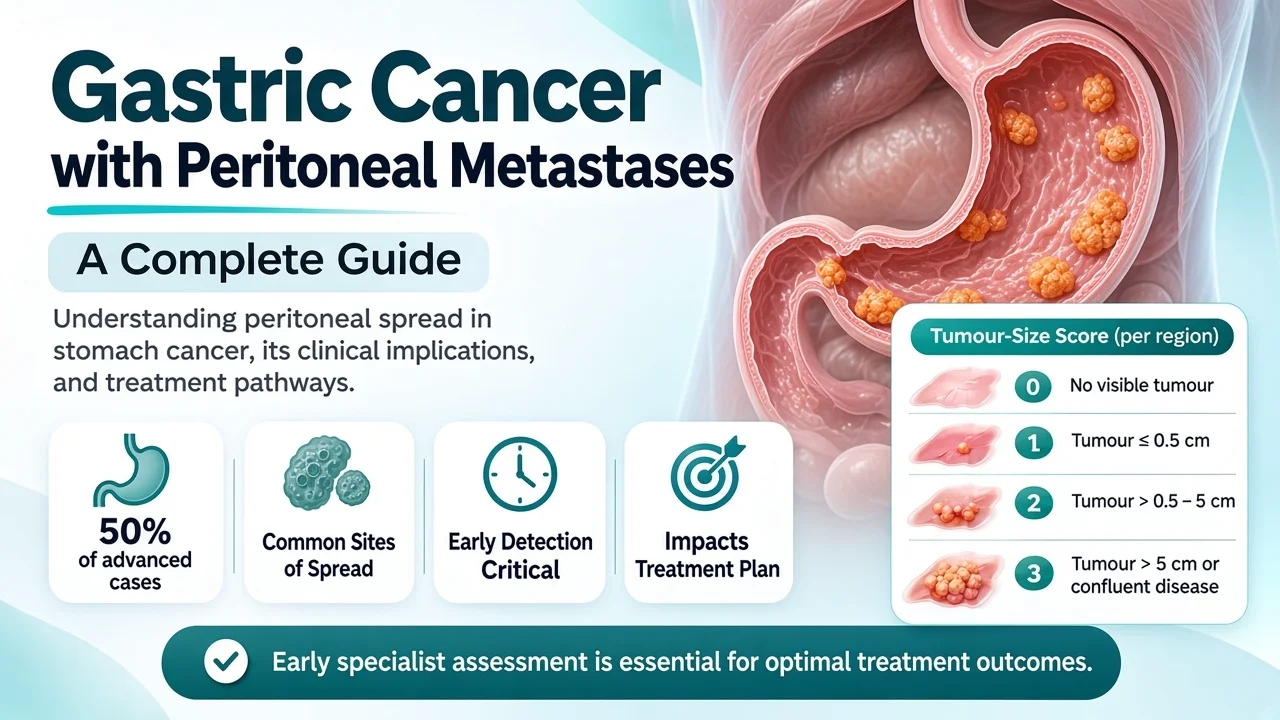 ## Understanding the PCI Score in Gastric Cancer The Peritoneal Cancer Index (PCI) is the standard tool for measuring disease burden before CRS-HIPEC. It divides the abdomen into 13 regions and scores visible tumour deposits from 0 to 3 in each. Total scores range from 0 to 39. In gastric cancer, lower PCI scores (typically below 12 to 14) are associated with:
- Higher likelihood of achieving complete cytoreduction (CC-0 or CC-1)
- Better outcomes after CRS-HIPEC
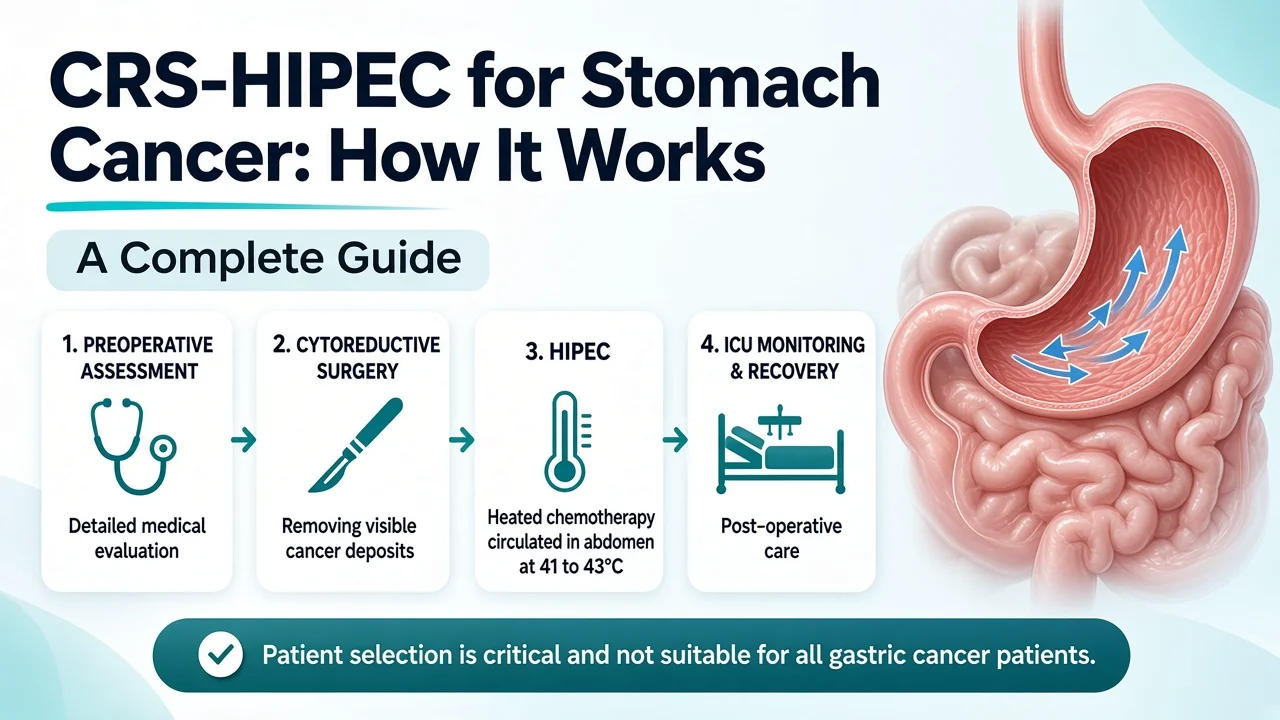
- Lower surgical risk and shorter recovery Patients with high PCI scores — especially those with diffuse small bowel involvement — are generally not candidates for surgery, as complete removal of all visible disease becomes impossible. > ## What Is CRS-HIPEC and How Does It Work for Stomach Cancer? CRS-HIPEC is a two-part surgical procedure performed in a single operating session: ### Step 1: Cytoreductive Surgery (CRS) The surgeon removes all visible peritoneal tumour deposits. This may include:
- Removing portions of the peritoneal lining (peritonectomy)
- Removing affected organs such as parts of the colon, small intestine, or omentum
- Resecting the original gastric tumour if still present The goal is to achieve complete cytoreduction — meaning no visible tumour remains (CC-0) or only microscopic residual disease (CC-1). Surgery is extensive and may last 6 to 12 hours or longer. ### Step 2: HIPEC (Heated Intraperitoneal Chemotherapy) Immediately after surgery, the abdomen is filled with a chemotherapy solution heated to 41 to 43 degrees Celsius. This heated solution is circulated throughout the abdominal cavity for 60 to 90 minutes. Chemotherapy agents commonly used in gastric cancer HIPEC include:
- Oxaliplatin (most widely used in gastric HIPEC protocols)
- Mitomycin C (sometimes used in combination)
- Cisplatin with Taxol (in some centres) Heating the chemotherapy enhances penetration into tissues and increases the killing effect on cancer cells while limiting systemic exposure.
 > ## Who Is Eligible for HIPEC in Stomach Cancer? Patient selection is the most critical factor in outcomes. The ideal candidate for CRS-HIPEC in gastric cancer typically has: Favourable factors:
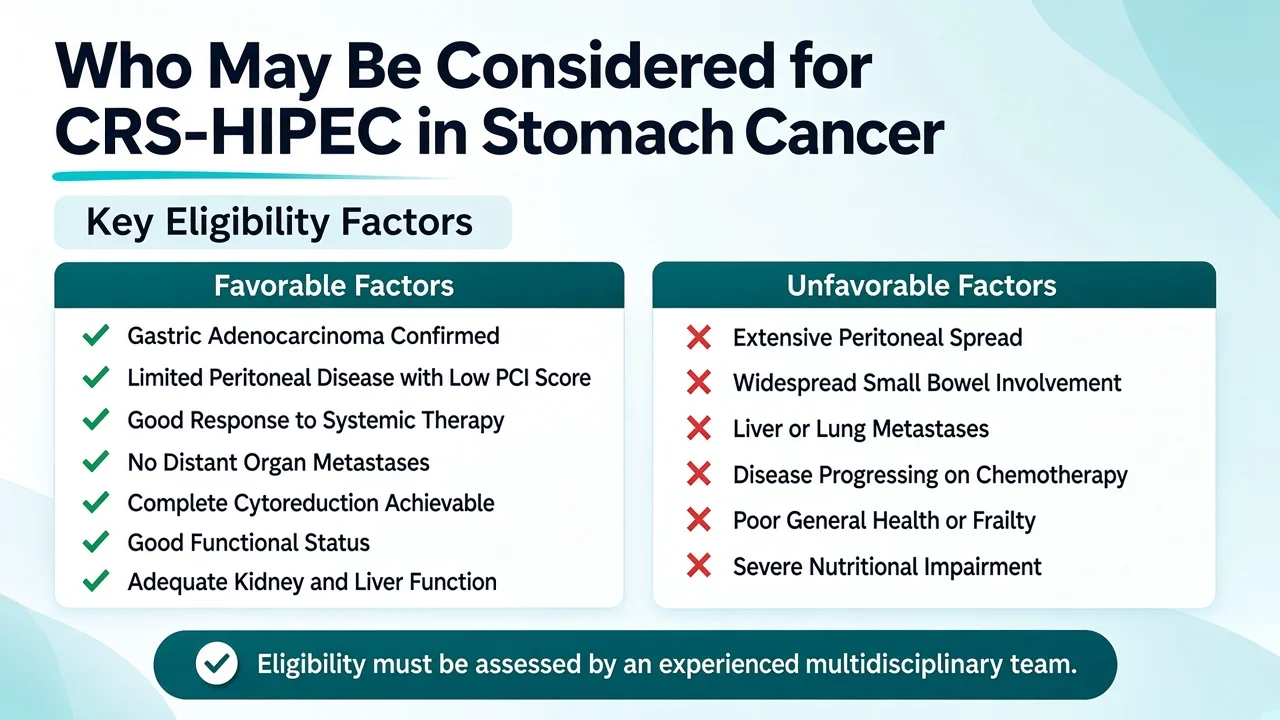
- Confirmed gastric adenocarcinoma (the most common gastric cancer type)
- Limited peritoneal disease (PCI score below 12 to 14 as a general guide)
- No distant metastases to the liver, lungs, or other organs
- Possibility of complete cytoreduction assessed by imaging and laparoscopy
- Good response to neoadjuvant (pre-operative) systemic chemotherapy
- Adequate kidney and liver function (necessary for safe intraperitoneal chemotherapy)
- Reasonable functional status and nutritional reserve Unfavourable factors that may exclude a patient:
- Extensive peritoneal spread (high PCI)
- Disease progression despite chemotherapy
- Widespread small bowel involvement (makes complete resection impossible without compromising nutrition)
- Liver or lung metastases
- Poor performance status or severe nutritional impairment
- Significant co-morbidities affecting surgical safety Eligibility is not determined by PCI alone — a full multidisciplinary assessment including repeat imaging, staging laparoscopy, and nutritional evaluation is required.
 > ## The Role of Neoadjuvant Chemotherapy Before HIPEC Most patients being considered for CRS-HIPEC in gastric cancer will first receive systemic chemotherapy (neoadjuvant or conversion chemotherapy) before surgery. This serves several purposes: 1. Reduces tumour burden — may downstage peritoneal disease to a range where surgery becomes feasible
- Tests tumour biology — patients whose disease progresses despite chemotherapy are unlikely to benefit from surgery
- Treats systemic micrometastases — addresses disease that may not be visible on imaging
- Selects the most appropriate candidates — only those showing stable or responding disease are taken for surgery Standard regimens include FLOT (fluorouracil, leucovorin, oxaliplatin, docetaxel), FOLFOX, or XELOX, often with or without a targeted agent such as trastuzumab (for HER2-positive tumours) or ramucirumab. ## What Are the Expected Outcomes? Outcomes vary considerably depending on:
- Disease burden at surgery (PCI score and completeness of cytoreduction)
- Tumour biology (HER2 status, Lauren classification, microsatellite instability)
- Response to prior chemotherapy
- Volume and experience of the surgical centre
- Patient age, nutritional status, and fitness Published data for selected patients who achieve complete cytoreduction suggests:
- Median survival of 15 to 30+ months in favourable subgroups (compared to 6 to 12 months with chemotherapy alone historically)
- Longer progression-free periods in patients with low PCI who achieve CC-0 resection
- Meaningful quality of life after recovery, particularly resolution of ascites > ## Risks and Recovery After CRS-HIPEC CRS-HIPEC for gastric cancer is a major operation. Patients should be counselled about: Common complications:
- Prolonged hospital stay (10 to 21 days typically)
- ICU monitoring for 1 to 3 days post-operatively
- Fatigue and nutritional challenges during recovery
- Wound healing issues and infection risk
- Anastomotic leaks if bowel was reconnected Serious but less common:
- Renal impairment from chemotherapy or fluid shifts
- Blood clots (deep vein thrombosis or pulmonary embolism)
- Bleeding requiring reoperation
- Multi-organ dysfunction in frail patients Mortality risk at high-volume, experienced centres is typically below 3 to 5%. Recovery takes 2 to 3 months before most patients feel able to return to light activities. ## How Is GAF Healthcare Helping Patients? GAF Healthcare works as a facilitating team to help patients with gastric cancer who are exploring CRS-HIPEC: - Medical record review — we review pathology, imaging, chemotherapy history, and staging before advising on suitability
- Second opinion coordination — we connect patients with experienced peritoneal oncology teams across India
- Hospital empanelment — we work with high-volume oncology centres where CRS-HIPEC is performed regularly
- Cost and logistics support — we provide transparent estimates and assist with accommodation, travel, and insurance documentation
- Language and communication support — for international patients, we provide translation and liaison services > ## Costing: What Does CRS-HIPEC Cost in India? The cost of CRS-HIPEC for stomach cancer at leading private oncology centres in India typically ranges from: Component Approximate Cost (INR) --- --- Pre-operative staging laparoscopy ₹40,000 – ₹80,000 CRS-HIPEC procedure (surgeon, OT, HIPEC equipment) ₹4,00,000 – ₹8,00,000 Hospital stay (10–14 days, ICU + ward) ₹2,00,000 – ₹5,00,000 Chemotherapy agents (oxaliplatin/mitomycin) ₹30,000 – ₹1,20,000 Pathology, radiology, lab tests ₹50,000 – ₹1,00,000 Estimated total (all-inclusive) ₹7,00,000 – ₹15,00,000 Costs vary between hospitals and cities, and depend on the complexity of the procedure. International patients should also factor in accommodation, travel, and visa costs. GAF Healthcare provides itemised estimates from multiple empanelled hospitals upon request. ## Frequently Asked Questions ### Is HIPEC effective for stomach cancer? HIPEC combined with cytoreductive surgery can be effective for carefully selected patients with gastric cancer peritoneal metastases. The best outcomes are seen in patients with limited disease burden (low PCI), good response to prior chemotherapy, and the ability to achieve complete cytoreduction. It is not a suitable treatment for all patients, and the decision requires a thorough multidisciplinary assessment. ### What is the survival rate after HIPEC for gastric cancer? Survival varies considerably based on disease burden, completeness of surgery, and tumour biology. Published series show median overall survival of 15 to 30 months in selected patients who achieve complete cytoreduction, compared to 6 to 12 months with systemic chemotherapy alone in historical cohorts. Some patients with favourable tumour biology and low disease burden have survived beyond 5 years. ### How is HIPEC different from regular chemotherapy for stomach cancer? Standard (systemic) chemotherapy is delivered through the bloodstream and reaches the peritoneum poorly due to limited blood supply. HIPEC delivers chemotherapy directly into the abdominal cavity at a high concentration and elevated temperature immediately after surgery. This maximises local drug exposure while limiting systemic side effects. ### What is the PCI score and how does it affect HIPEC eligibility? The Peritoneal Cancer Index (PCI) is a scoring system from 0 to 39 that measures the amount of visible peritoneal disease across 13 abdominal regions. Lower PCI scores (generally below 12 to 14 for gastric cancer) are associated with the ability to achieve complete cytoreduction and better outcomes. Patients with high PCI scores are generally not suitable for CRS-HIPEC. ### Can HIPEC cure stomach cancer? For the majority of patients, CRS-HIPEC is not a curative treatment but a form of disease control that can extend survival and improve quality of life (particularly by resolving ascites and abdominal symptoms). A minority of patients with very limited, favourable disease may achieve long-term disease-free survival. ### How long does HIPEC surgery take for stomach cancer? The combined CRS-HIPEC procedure typically takes 6 to 12 hours or longer, depending on the extent of peritoneal spread and whether additional organ resections are required. The HIPEC perfusion itself takes 60 to 90 minutes within that time. ### What chemotherapy is used in HIPEC for gastric cancer? The most commonly used agents in HIPEC for gastric cancer are oxaliplatin (usually at 360–460 mg/m² heated to 43°C), mitomycin C, and sometimes cisplatin with or without paclitaxel. The choice of agent and dose depends on the institution's protocol, prior chemotherapy exposure, and kidney function. ### Is HIPEC available in India for stomach cancer? Yes. CRS-HIPEC for gastric peritoneal metastases is performed at several major oncology centres in India, including in Mumbai, Delhi, Chennai, Hyderabad, and Bengaluru. GAF Healthcare can help identify appropriate centres and coordinate referrals based on the patient's clinical profile and location. ### How do I know if I am a candidate for HIPEC in stomach cancer? You should be evaluated by an experienced peritoneal oncology team. The assessment typically includes a review of all imaging (CT, PET-CT), pathology reports, chemotherapy history, and sometimes a staging laparoscopy. GAF Healthcare can arrange for a preliminary review of your records and connect you with appropriate specialists. ### What is the recovery time after CRS-HIPEC for stomach cancer? Hospital stay is typically 10 to 21 days. Full recovery takes 2 to 3 months. The first few weeks require close attention to nutrition, wound care, and gradual return of bowel function. ### Is HIPEC suitable for all types of stomach cancer? CRS-HIPEC is primarily used for gastric adenocarcinoma (the most common type). It is generally not used for other rare gastric tumours such as gastric lymphoma, GIST, or carcinoid tumours, which have their own treatment protocols. ### What happens if chemotherapy has stopped working for my stomach cancer? If your cancer is progressing on first or second-line systemic chemotherapy, the possibility of CRS-HIPEC is usually reduced significantly. However, the decision depends on the specific clinical situation. It is worth getting a specialist opinion even in this situation. ### Can HIPEC be repeated if stomach cancer comes back? A repeat CRS-HIPEC procedure for gastric cancer is possible in a small number of carefully selected patients who relapse after an initial complete response with a long disease-free interval. It is significantly more complex than the first procedure and carries higher risk. ### What is the difference between HIPEC and PIPAC for gastric cancer? PIPAC (Pressurised IntraPeritoneal Aerosol Chemotherapy) is a newer, less invasive approach that delivers aerosolised chemotherapy laparoscopically, repeated every 4 to 6 weeks. Unlike HIPEC, PIPAC does not involve a large open surgery or cytoreduction. It is used in patients who are not candidates for CRS-HIPEC due to high disease burden. ### How does nutrition affect eligibility for HIPEC in stomach cancer? Nutritional status is a critical factor. Patients with significant weight loss, low albumin, or malnutrition are at higher risk of complications after major surgery. Many centres require a minimum period of nutritional optimisation before proceeding with CRS-HIPEC.