
1. What Is HIPEC Surgery?
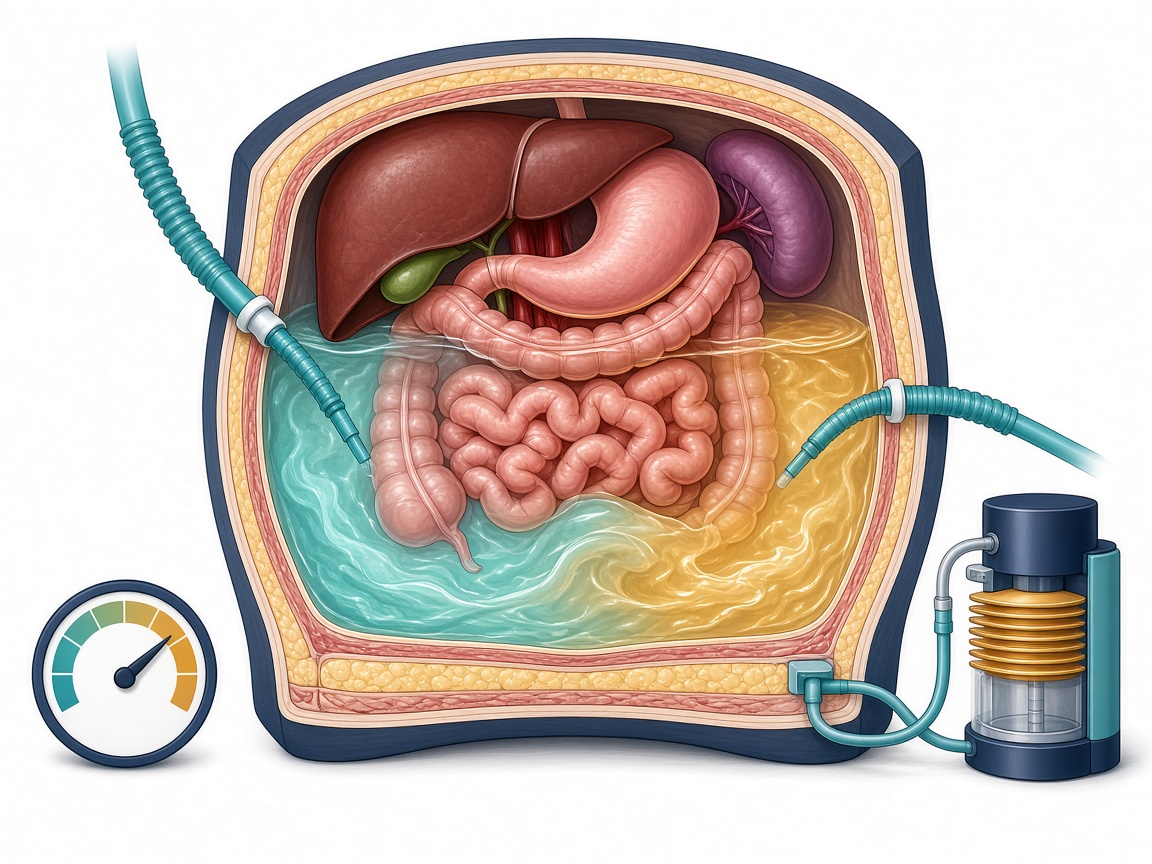
HIPEC surgery is an advanced cancer treatment in which heated chemotherapy is circulated directly inside the abdominal cavity to target microscopic cancer cells that may remain after visible tumours have been surgically removed.
HIPEC stands for Hyperthermic Intraperitoneal Chemotherapy. It is performed alongside a major operation called cytoreductive surgery (CRS), which removes visible cancer deposits from the abdominal cavity. The treatment is primarily used for selected cancers affecting the peritoneum — the thin membrane lining the abdominal cavity.
Unlike conventional chemotherapy, which travels through the bloodstream, HIPEC delivers chemotherapy directly into the abdominal cavity. The solution is heated to approximately 41–43 °C and circulated for a prescribed period after the surgeon has removed visible cancer deposits.
2. What Does HIPEC Stand For?
HIPEC is the abbreviation for Hyperthermic Intraperitoneal Chemotherapy. Each word describes an important part of the treatment: Hyperthermic means heated to a controlled temperature; Intraperitoneal means administered inside the abdominal cavity; Chemotherapy refers to medicines used to destroy or control cancer cells.
3. Understanding the Peritoneum
The peritoneum is a thin membrane lining the abdominal cavity and covering many organs within it. When cancer cells detach from a primary tumour and attach to these surfaces, the condition is known as peritoneal metastasis or peritoneal carcinomatosis.
Which Cancers Can Spread to the Peritoneum?
- Ovarian cancer
- Colorectal cancer
- Gastric or stomach cancer
- Appendiceal cancer
- Certain pancreatic cancers
- Primary peritoneal cancer
- Peritoneal mesothelioma (originates in the peritoneal lining)
4. How Does HIPEC Surgery Work?
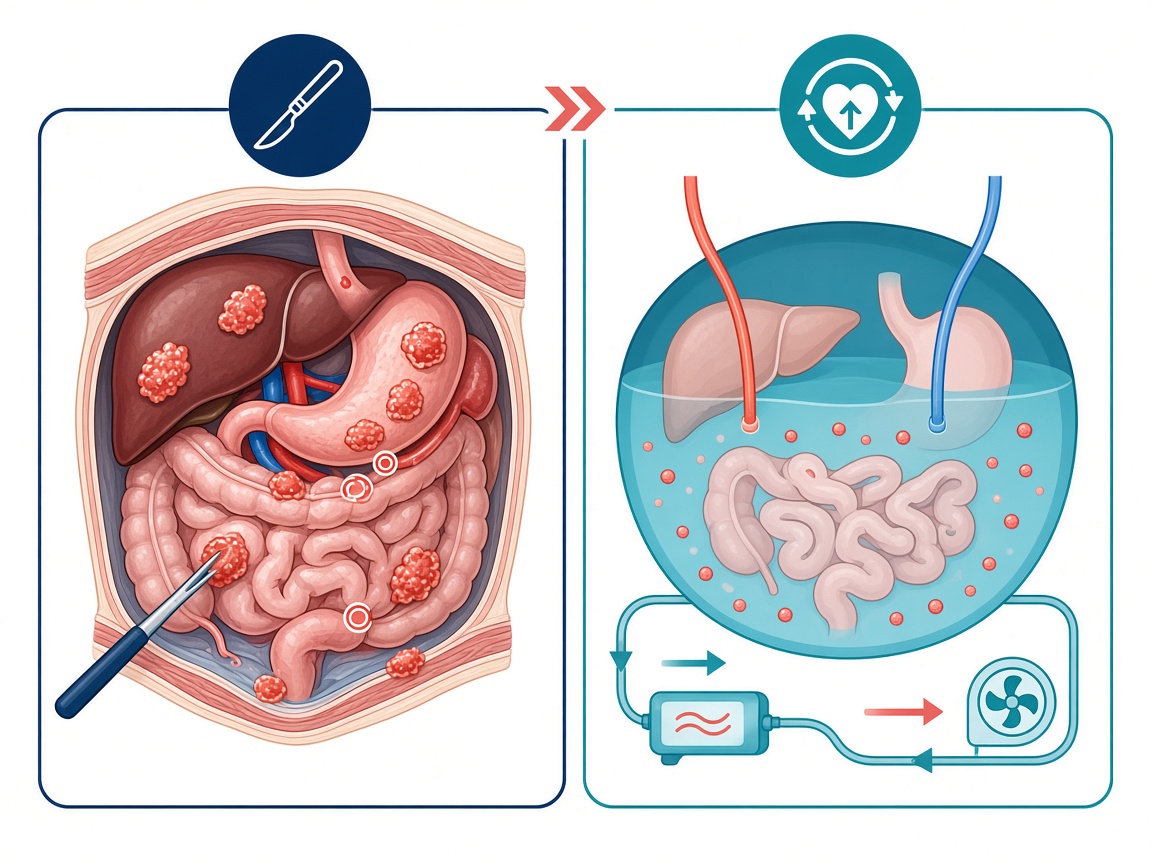
Stage 1: Cytoreductive Surgery (CRS)
The surgeon removes visible cancer deposits from the abdominal cavity, which may include affected sections of the peritoneum, omentum, bowel or other organs. The goal is complete macroscopic cytoreduction — no visible tumour remaining.
Stage 2: Hyperthermic Intraperitoneal Chemotherapy (HIPEC)
Once CRS is completed, heated chemotherapy is circulated throughout the abdominal cavity using a specialised perfusion machine. The solution is heated to approximately 41–43 °C and circulated for 30–120 minutes, then drained before the surgical team completes the operation.
5. Why Is Chemotherapy Heated During HIPEC?
Laboratory and clinical research suggests that heat can increase the activity of certain chemotherapy agents against cancer cells. Direct delivery into the abdominal cavity allows the treatment solution to contact peritoneal surfaces where microscopic cancer cells may remain after tumour removal. The specialised equipment controls temperature, circulation and exposure duration throughout the procedure.
Important: Heating chemotherapy does not guarantee destruction of all cancer cells or that it is automatically more effective than conventional chemotherapy. Its clinical value must be evaluated separately for each cancer type and patient.
6. Which Cancers Can Be Treated With HIPEC?
Pseudomyxoma Peritonei
CRS-HIPEC is an established specialist treatment approach for patients with resectable pseudomyxoma peritonei. International consensus recommendations support combining cytoreductive surgery with HIPEC in appropriately selected patients.
Ovarian Cancer
Selected patients with stage III ovarian cancer who have received neoadjuvant chemotherapy and are undergoing interval cytoreductive surgery may be considered for HIPEC. The OVHIPEC-1 clinical trial demonstrated improved survival outcomes in its selected patient population.
Colorectal Cancer
Selected patients with isolated colorectal peritoneal metastases may be considered for cytoreductive surgery. However, the ASCO guideline recommends against adding oxaliplatin-based HIPEC to CRS for colorectal peritoneal metastases. Indian specialists should also consider INDEPSO–ISPSM consensus recommendations.
Gastric Cancer, Peritoneal Mesothelioma and Appendiceal Cancer
CRS-HIPEC may be considered in highly selected patients with limited gastric peritoneal disease, carefully selected patients with diffuse malignant peritoneal mesothelioma, and certain appendiceal malignancies depending on histological type. Treatment planning is particularly important as different tumour types behave very differently.
7. Who Is Eligible for HIPEC Surgery?
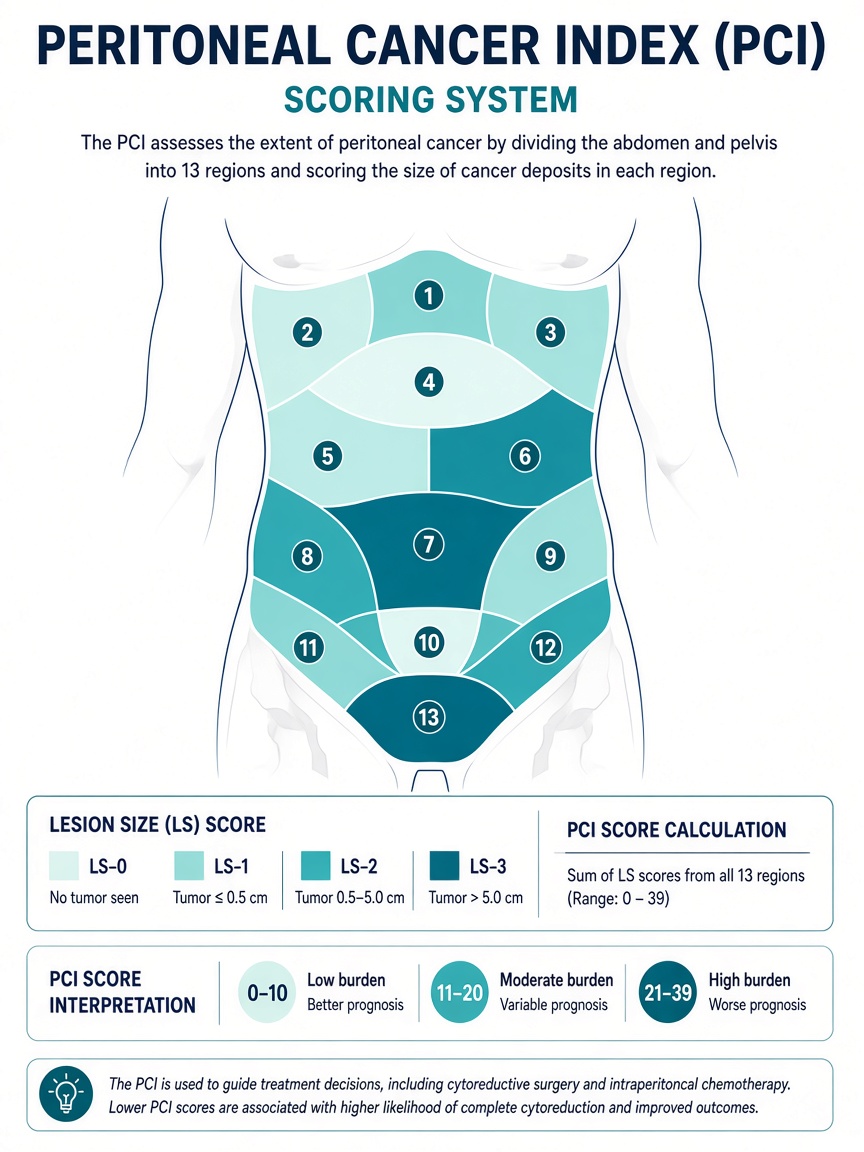
HIPEC is a major operation. Patient selection is one of the most important aspects of treatment. The specialist team generally considers the cancer type and histopathology, the distribution of tumour deposits, the Peritoneal Cancer Index (PCI), the possibility of complete tumour removal, general health and organ function, and previous cancer treatment history.
Who May Not Be Suitable?
- Cancer extensively spread outside the abdominal cavity
- Complete cytoreduction unlikely to be achievable
- Extensive small bowel or mesenteric involvement
- Severe uncontrolled medical conditions
- Disease progressing rapidly despite systemic treatment
- Risks of surgery outweigh the expected benefits
8. What Is the Peritoneal Cancer Index (PCI)?
The PCI is a scoring system used to assess the extent of cancer within the abdominal cavity. The abdomen is divided into 13 regions, each assigned a lesion-size score. The combined score ranges from 0 to 39. A higher PCI generally indicates a greater tumour burden, though there is no universal threshold for every cancer type.
9. The HIPEC Procedure Step by Step
- **General anaesthesia** — Vital signs, breathing, circulation and urine output monitored continuously.
- **Abdominal examination** — Surgeon examines the cavity, assesses PCI and determines whether complete cytoreduction is feasible.
- **Cytoreductive surgery** — Visible tumour deposits removed. May include peritonectomy, omentectomy, bowel resection and removal of affected organs.
- **HIPEC tube placement** — Specialised inflow/outflow tubes positioned inside the abdominal cavity with temperature monitoring.
- **Heated chemotherapy circulation** — Chemotherapy heated to 41–43 °C and circulated for 30–120 minutes using a specialised perfusion machine.
- **Drainage and closure** — Chemotherapy drained; surgical team completes remaining steps and closes the abdomen.
- **ICU monitoring** — Patient transferred to intensive care for close observation of kidney function, blood counts and fluid balance.
10. HIPEC vs Conventional Chemotherapy
Although both treatments use anticancer medicines, their delivery methods and treatment objectives differ. Conventional chemotherapy is usually given intravenously to treat cancer throughout the body. HIPEC delivers heated chemotherapy directly into the abdominal cavity during surgery to target microscopic disease on abdominal surfaces. Some patients may require both. The appropriate approach depends on cancer type and clinical evidence.
11. HIPEC vs PIPAC
PIPAC (Pressurised Intraperitoneal Aerosol Chemotherapy) delivers chemotherapy as a pressurised aerosol via laparoscopy and does not itself remove visible tumours through cytoreductive surgery. HIPEC delivers heated liquid chemotherapy into the abdominal cavity during CRS. They have different clinical applications and should not be considered interchangeable.
12. Chemotherapy Drugs Used in HIPEC
The chemotherapy drug used during HIPEC depends on the cancer type, treatment protocol and patient-specific considerations. Common agents include Mitomycin C (selected appendiceal and colorectal protocols), Cisplatin (selected ovarian protocols), Oxaliplatin (certain colorectal protocols — ASCO recommends against in colorectal CRS setting), and Doxorubicin (selected specialised protocols). These drugs are not interchangeable; selection depends on tumour type, evidence, kidney function and institutional protocol.
13. What Does Clinical Research Say About HIPEC?
Pseudomyxoma Peritonei
CRS-HIPEC is an established specialist treatment supported by international consensus recommendations for resectable pseudomyxoma peritonei.
Ovarian Cancer — OVHIPEC-1 Trial
The OVHIPEC-1 randomised clinical trial demonstrated improved recurrence-free and overall survival in selected stage III ovarian cancer patients undergoing interval cytoreductive surgery after neoadjuvant chemotherapy. These findings apply to the selected trial population and should not be generalised to all ovarian cancer patients.
Colorectal Cancer — PRODIGE 7 Trial
The PRODIGE 7 trial did not demonstrate an overall survival benefit from adding oxaliplatin-based HIPEC to CRS for colorectal peritoneal metastases. The ASCO guideline consequently recommends against adding oxaliplatin-based HIPEC to CRS in this setting. The guideline supports consideration of complete CRS combined with systemic chemotherapy in carefully selected patients.
14. Recovery After HIPEC Surgery
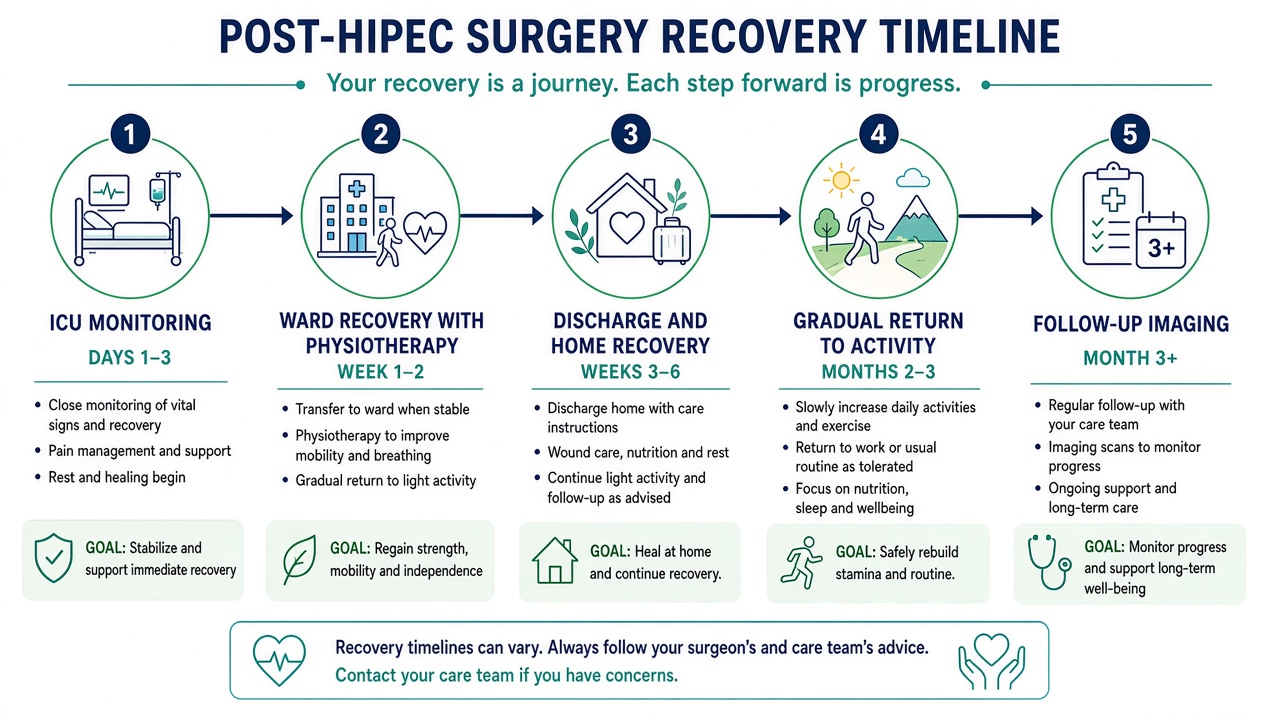
Recovery after CRS-HIPEC is generally longer than routine abdominal surgery. Patients may require several weeks of hospital-based care followed by a gradual recovery period at home.
- **Days 1–3:** Intensive monitoring of blood pressure, kidney function, urine output, blood counts and drain output.
- **Week 1:** Gradual mobilisation, breathing exercises and nutritional rehabilitation. Oral intake introduced depending on bowel recovery.
- **Week 2+:** Patients begin tolerating more food and increasing physical activity. Discharge depends on bowel function and recovery.
- **Weeks 4–8:** Strenuous activities restricted. Follow-up imaging and blood investigations continue.
- **Months 2–6:** Complete recovery may take several months. Nutritional support and additional systemic cancer treatment may be required.
15. Cost of HIPEC Surgery in India
The cost of HIPEC surgery in India varies according to the cancer type, extent of disease, complexity of cytoreductive surgery, chemotherapy protocol and postoperative requirements. There is no single fixed price applicable to every patient.
Major cost components include: specialist consultation, diagnostic investigations (CT, MRI, PET-CT, laboratory testing), cytoreductive surgery (surgeon, theatre and materials), HIPEC treatment (perfusion equipment, chemotherapy and consumables), anaesthesia, ICU admission, hospitalisation, medicines and any additional procedures required.
16. How Can International Patients Access HIPEC Treatment in India?
- **Submit medical records** — histopathology, CT/MRI, previous surgery and chemotherapy history, discharge summaries.
- **Obtain a specialist opinion** — records reviewed; further imaging or pathology review may be requested.
- **Understand treatment options** — CRS-HIPEC, systemic chemotherapy or another approach recommended based on evidence.
- **Obtain a treatment estimate** — itemised quote based on proposed treatment and expected hospital stay.
- **Medical visa and travel** — finalise travel only after the treating team confirms medical fitness.
- **Hospital admission** — clinical reassessment and preoperative investigations on arrival.
- **Recovery and return travel** — the treating surgeon provides written fitness-to-travel advice before discharge.
17. How GAF Healthcare Assists Patients Seeking HIPEC Treatment
GAF Healthcare facilitates international patients seeking specialised cancer treatment in India. Our priority is to help patients access an appropriate specialist opinion rather than encouraging surgery without proper medical assessment. Patients may be advised to undergo systemic chemotherapy, another surgical approach or supportive treatment instead of HIPEC.
- Medical report collection and organisation
- Specialist surgical oncology consultation coordination
- Hospital treatment opinion assistance
- Treatment estimate coordination
- Hospital appointment scheduling
- Medical visa documentation support
- Airport transfers and accommodation
- Interpreter assistance where required
- Hospital admission coordination
- Post-treatment follow-up arrangements
Patients from Tanzania, Kenya, Ethiopia, Uganda, Zambia, Nigeria, Iraq and other countries can approach GAF Healthcare for assistance coordinating their medical evaluation and treatment journey in India.
18. Frequently Asked Questions About HIPEC Surgery
What is HIPEC surgery in simple words?
HIPEC surgery is a specialised cancer treatment in which heated chemotherapy is circulated inside the abdominal cavity after surgeons remove visible cancer deposits. It is used for selected cancers affecting the peritoneum.
What does HIPEC stand for?
HIPEC stands for Hyperthermic Intraperitoneal Chemotherapy. Hyperthermic means heated, intraperitoneal means inside the abdominal cavity, and chemotherapy refers to medicines used to destroy or control cancer cells.
Is HIPEC surgery a major operation?
Yes. CRS-HIPEC is a major operation that may involve removal of the peritoneum, tumour deposits and affected portions of abdominal organs. Patients require general anaesthesia, postoperative monitoring and an extended recovery period.
Why is chemotherapy heated during HIPEC?
Heat may enhance the activity of certain chemotherapy drugs. Delivering the solution directly into the abdominal cavity allows it to contact peritoneal surfaces where microscopic cancer cells may remain after tumour removal.
Which cancers are treated with HIPEC?
HIPEC may be considered for selected patients with pseudomyxoma peritonei, peritoneal mesothelioma, ovarian cancer, colorectal peritoneal metastases, gastric peritoneal metastases and certain appendiceal malignancies. Evidence differs between these conditions.
Can HIPEC cure cancer?
In selected patients with certain peritoneal malignancies, complete cytoreductive surgery combined with HIPEC may offer long-term remission or potentially curative treatment. Cancer recurrence remains possible even after complete surgery.
What is the difference between CRS and HIPEC?
CRS removes visible cancer deposits through surgery. HIPEC circulates heated chemotherapy inside the abdomen after tumour removal to target microscopic residual disease. The two are commonly combined for selected peritoneal malignancies.
What is the difference between HIPEC and PIPAC?
HIPEC delivers heated liquid chemotherapy into the abdominal cavity during cytoreductive surgery. PIPAC delivers pressurised aerosolised chemotherapy through laparoscopy and does not itself remove visible tumours. They have different indications and cannot be substituted for each other.
What is the Peritoneal Cancer Index (PCI)?
PCI measures the distribution and extent of tumour deposits across 13 abdominal regions. The score ranges from 0 to 39 and helps surgeons assess disease burden and surgical feasibility.
What chemotherapy drugs are used in HIPEC?
Common agents include mitomycin C, cisplatin, oxaliplatin and doxorubicin. Drug selection depends on the primary cancer, available evidence, kidney function and the treating centre's protocol.
How long does HIPEC surgery take?
The operation may take approximately 6–12 hours or longer. Duration depends on tumour distribution, organs requiring removal, reconstruction needed and the chemotherapy protocol.
Is HIPEC suitable for stage 4 cancer?
Some patients with stage IV cancer may be considered if the disease is predominantly confined to the peritoneum and complete cytoreduction is achievable. Widespread distant metastases may make surgery unsuitable. Eligibility depends on individual clinical assessment.
What are the risks of HIPEC surgery?
Potential risks include infection, bleeding, bowel leakage, intestinal obstruction, kidney injury, blood clots, respiratory complications, electrolyte disturbances and chemotherapy-related toxicity.
How long does recovery after HIPEC take?
Initial hospital recovery commonly lasts one to three weeks. Complete recovery may take several months. Duration depends on surgical complexity, bowel recovery, complications and general health.
Is HIPEC surgery available in India?
Yes. Specialist surgical oncology teams in India are involved in CRS-HIPEC and peritoneal surface malignancy management. Patients should verify the specific hospital and surgeon have experience with their cancer type.
How much does HIPEC surgery cost in India?
The cost depends on cancer type, extent of surgery, chemotherapy drugs, ICU requirements and hospitalisation. There is no single fixed price. Share medical records and imaging to obtain an individualised estimate from the treating hospital.
Can international patients travel to India for HIPEC treatment?
Yes. International patients can seek specialist evaluation in India by sharing medical records for preliminary assessment before travel. The treating team determines suitability and when the patient is fit to travel home.
Does every patient with peritoneal cancer need HIPEC?
No. Some patients may benefit from systemic chemotherapy, surgery without HIPEC, targeted therapy, immunotherapy or supportive care. HIPEC is reserved for carefully selected patients based on cancer type and treatment suitability.
Scientific References
- Multi-Society Clinical Practice Guideline on CRS-HIPEC (2024). pmc.ncbi.nlm.nih.gov/articles/PMC11826033/
- ASCO Guideline: Treatment of Metastatic Colorectal Cancer. pmc.ncbi.nlm.nih.gov/articles/PMC10506310/
- INDEPSO–ISPSM Indian Consensus on Enhanced Recovery After CRS With or Without HIPEC (2025). pmc.ncbi.nlm.nih.gov/articles/PMC11732209/
- INDEPSO–ISPSM Consensus on Colorectal Peritoneal Metastases. pubmed.ncbi.nlm.nih.gov/39637347/
- OVHIPEC-1 Clinical Trial: Long-Term Survival Outcomes. pubmed.ncbi.nlm.nih.gov/37708912/
Medical Disclaimer: This article is intended for educational and informational purposes only. It does not replace consultation with a qualified oncologist or surgical oncologist. CRS-HIPEC is a complex procedure with significant risks. Treatment suitability, expected outcomes and alternative treatment options must be assessed individually by an experienced multidisciplinary medical team.