
Patent ductus arteriosus, usually called PDA, is a blood vessel that normally helps circulation before birth and is expected to close after delivery. PDA closure in babies means closing that vessel when a pediatric cardiologist finds that it is causing a significant extra flow of blood toward the lungs.
A small PDA may cause no symptoms and may close on its own. A larger PDA can make breathing, feeding and weight gain harder. The right next step is not the same for a premature infant in a neonatal unit and a well older baby with a persistent duct.
Important: Severe breathing difficulty, gasping, blue or grey lips or tongue, collapse, unresponsiveness or sudden deterioration needs emergency care now. Do not wait for a planned cardiology visit or for travel arrangements.
The named procedure page is PDA closure surgery in India. The wider congenital programme sits on Pediatric Heart Surgery in India. Nearby defects are explained on ASD closure, VSD surgery and TOF repair.
Planning figures live on the pediatric cardiac surgery cost directory and the PDA closure cost row. Families comparing pediatric cardiac surgeons can start with Delhi NCR, Mumbai, Bengaluru, Chennai and Hyderabad. Hospital lists use the same cities: India, Delhi NCR, Mumbai, Bengaluru, Chennai and Hyderabad.
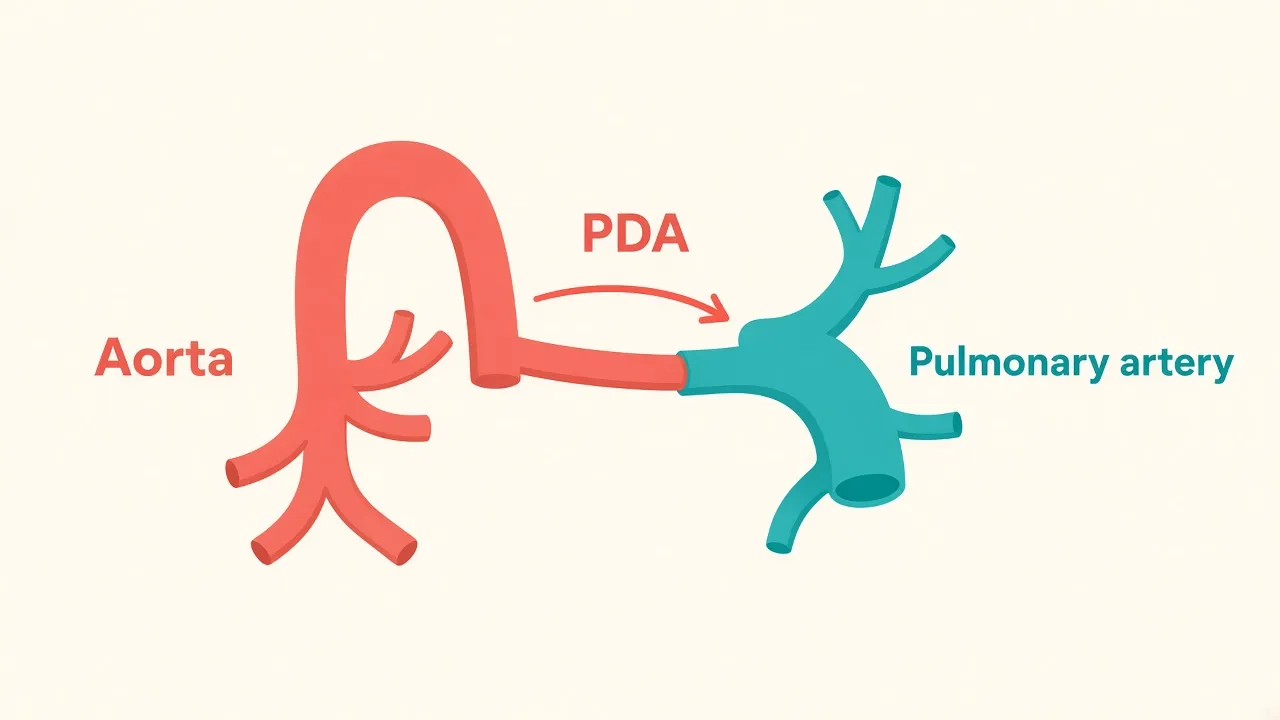
1. What Is Patent Ductus Arteriosus (PDA)?
Patent ductus arteriosus, commonly called PDA, is a congenital heart condition in which a blood vessel that normally helps circulation before birth remains open after birth.
The ductus arteriosus connects two major blood vessels: the aorta, which carries blood from the heart to the body, and the pulmonary artery, which carries blood towards the lungs.
Before birth, the baby's lungs are not yet responsible for oxygen exchange. The placenta supplies oxygen, and the ductus arteriosus allows much of the blood to bypass the lungs. After delivery, the lungs begin working. The ductus usually constricts and closes as part of the normal transition to life outside the womb. When it remains open, it is called a patent ductus arteriosus.
Why can an open ductus cause a problem?
After birth, pressure in the aorta is normally higher than pressure in the pulmonary artery. Blood can then flow from the aorta back into the pulmonary artery through the PDA. That may send extra blood towards the lungs. If the PDA is large enough, the additional flow can increase the workload on the heart and lungs.
The effect depends on the PDA's size, the baby's age, the surrounding heart anatomy and the pressure in the lung blood vessels. A small PDA may cause little or no measurable strain. A larger PDA may affect breathing, feeding, growth and heart function.
Is PDA the same as a hole in the heart?
No. A PDA is an open connection between two major blood vessels. An atrial septal defect (ASD) is an opening between the upper chambers of the heart, while a ventricular septal defect (VSD) is an opening between the lower chambers. All three can affect blood flow, but their anatomy, treatment options and follow-up differ.
2. Why Does PDA Occur in Babies?
The ductus arteriosus is a normal part of fetal circulation. PDA occurs when this vessel does not close as expected after birth. In many babies, the exact reason is not known.
Premature birth
PDA is more common in babies born prematurely. The mechanisms responsible for closure may not be fully mature, so the ductus is more likely to remain open. Premature infants may also have other conditions that affect breathing, feeding and circulation. The team has to look at the whole baby, not the duct alone.
Low birth weight
PDA is also more common in very low birth weight infants. These babies may need specialist neonatal care and a careful weighing of the benefits and risks of treatment.
Other associated conditions
Some babies with PDA have other congenital heart abnormalities. In those cases the effect of the PDA, and the best treatment, may be different. The cardiologist assesses the entire heart before recommending a plan. Tetralogy of Fallot repair and other named operations are separate decisions from closing an isolated duct.
Did the parents cause PDA?
Usually there is no identifiable action by a parent that caused the ductus to remain open. Parents should not blame themselves for the diagnosis. If the baby has additional congenital conditions or a relevant family history, the medical team can explain whether further assessment is appropriate.
3. What Are the Symptoms of PDA in Babies?
Symptoms depend on the size of the PDA and how much extra blood flows towards the lungs. A small PDA may cause no noticeable symptoms. It may be found when a doctor hears a heart murmur during a routine examination.
A larger or clinically significant PDA may cause:
- Fast or laboured breathing.
- Difficulty feeding or tiring during feeds.
- Sweating during feeding.
- Poor weight gain.
- Unusual fatigue or reduced energy.
- Frequent respiratory difficulties in some babies.
- Signs of heart strain in more severe cases.
These symptoms are not specific to PDA. Lung infections, feeding difficulties and other heart conditions can look similar.

Rapid breathing
A baby may breathe faster than expected or appear to work harder to breathe, especially during feeding. Persistent rapid breathing should be assessed by a clinician. Severe breathing difficulty, gasping or marked chest retractions needs emergency care.
Feeding difficulties
Some babies with a significant PDA tire quickly during feeds. They may take frequent breaks, feed for unusually long periods or struggle to take enough milk. If feeding difficulty continues alongside rapid breathing or poor growth, arrange a prompt assessment.
Poor weight gain
A baby may gain weight more slowly because feeding takes too much effort or the body uses extra energy. Poor weight gain has many causes. A pediatrician should look at growth measurements, feeding, hydration and possible underlying conditions together.
Sweating during feeding
Repeated sweating during feeds can occur when the heart and lungs are under extra strain. Sweating alone does not establish a diagnosis. If it occurs with breathlessness, fatigue, poor feeding or slow weight gain, discuss it with the baby's doctor.
Heart murmur
A clinician may hear an unusual sound through a stethoscope. A murmur can lead to further tests, but its presence does not by itself decide whether the PDA needs treatment. Echocardiography establishes the diagnosis and its significance.
4. When Is PDA an Emergency?
Not every PDA is an emergency. Some babies, particularly premature infants or babies with other heart conditions, can become seriously unwell.
Seek emergency medical care if the baby has:
- Severe breathing difficulty or gasping.
- Blue or grey lips or tongue.
- Collapse or unresponsiveness.
- Sudden marked weakness or deterioration.
- Severe difficulty feeding accompanied by breathing problems or reduced responsiveness.
Do not wait for a scheduled cardiology appointment if these symptoms occur. If a baby with a known PDA develops persistent rapid breathing, worsening feeding, unusual sleepiness or reduced urine output, contact the treating team promptly. Worsening symptoms may need immediate assessment.
5. How Is PDA Diagnosed?
Diagnosis starts with a clinical assessment and is usually confirmed by echocardiography. The aim is to see whether the ductus remains open, how much blood is passing through it, and whether it is affecting the heart or lungs.
Clinical examination
The clinician checks breathing, colour, pulses, growth and general condition. A heart murmur may be heard. Its presence and intensity do not fully decide how significant the PDA is.
Echocardiography
An echocardiogram uses ultrasound to image the heart and major blood vessels. It is the main test for PDA. It helps the cardiologist evaluate:
- The size and shape of the ductus.
- The direction and pattern of blood flow.
- The effect on the left side of the heart.
- Signs of increased blood flow towards the lungs.
- Estimated pressures and other relevant heart findings.
- Other structural heart defects.
The echocardiogram is particularly important when choosing between observation, medication, catheter closure and surgery. If you are gathering records for a review, the second-opinion guide for congenital heart surgery lists which echo files and reports to send.
Pulse oximetry, ECG and chest X-ray
Pulse oximetry estimates oxygen saturation. A normal reading does not rule out PDA. An ECG records the heart's electrical activity. A chest X-ray may show heart size and the lungs. These tests can help in selected cases. They do not replace echocardiography.
Additional investigations
Some babies need further imaging depending on anatomy, age and medical condition. Not every baby needs every test. The cardiologist chooses investigations according to the question that has to be answered before treatment.
6. Does Every Baby With PDA Need Treatment?
No. The decision depends on the PDA's size, its effect on circulation, the baby's symptoms, age and overall health.
When observation may be appropriate
A small PDA may cause no symptoms and may have little effect on the heart and lungs. In selected cases the cardiologist may recommend observation and follow-up rather than immediate closure. That lets the team see whether the duct closes naturally or remains clinically insignificant. Observation is not the same as ignoring the finding. Parents should know when the next review is due and which symptoms should prompt an earlier visit.
When treatment may be recommended
Treatment may be considered when the PDA causes significant extra blood flow towards the lungs, enlargement of the heart, symptoms, or other clinically important effects. Age and prematurity change the decision. A PDA that is significant in a premature infant may need a different approach from a persistent PDA in a healthy older child.
Why the decision is different for premature babies
Premature babies often have more complex medical needs. A PDA may sit alongside respiratory distress, lung disease or other complications of prematurity. The neonatal team weighs the echocardiogram and the possible benefits and harms of treatment. Closing the ductus is not automatically beneficial in every premature infant. Ask the team to explain why treatment is recommended, or why observation is preferred for now.
7. PDA Treatment Options: Observation, Medication, Catheter Closure and Surgery
There are several ways to manage PDA. The best option depends on the baby's condition and the anatomy of the ductus. Patent ductus arteriosus surgery in India covers both device closure and surgical ligation when a procedure is actually indicated.
Option 1: Observation and monitoring
For selected babies with a small or clinically insignificant PDA, the team may recommend regular monitoring. Follow-up may include examinations and repeat echocardiography. The schedule depends on the baby's condition.
Option 2: Medication for selected premature infants
In some premature babies with a clinically significant PDA, medicines such as ibuprofen or indomethacin may help the ductus close. These medicines affect prostaglandin pathways that help keep the ductus open before birth. Medication is not suitable for every baby. The neonatal team must consider kidney function, bleeding risk, intestinal problems and other contraindications.
Some babies do not respond to medication, and some should not receive it. Parents must never give ibuprofen, indomethacin or other medicines to close a PDA at home. These treatments require specialist prescribing and monitoring. Medication is generally less effective for a persistent PDA in full-term infants and older children than in selected premature infants.
Option 3: Catheter-based PDA closure
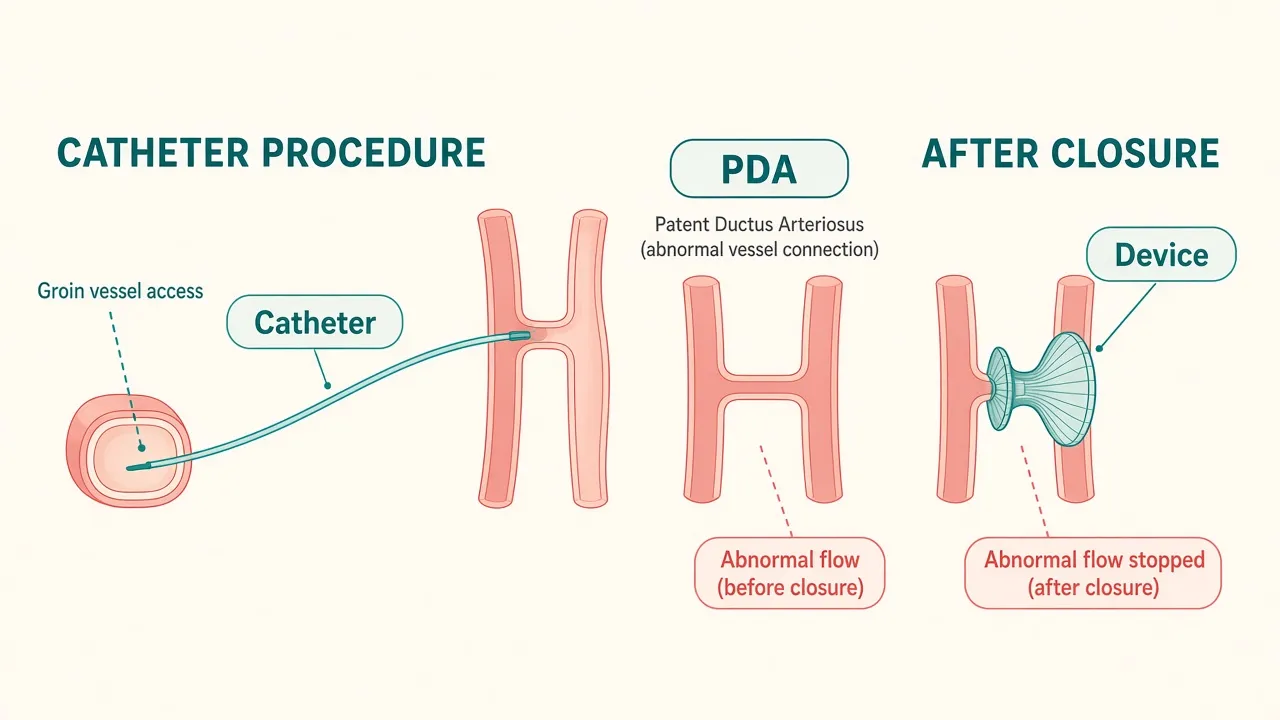
Catheter closure is a minimally invasive procedure used for many suitable PDAs. A thin tube is introduced through a blood vessel and guided to the ductus. A small closure device or coil is positioned to block the abnormal flow. This avoids a conventional open-chest operation and is commonly used in suitable children. Selected small premature infants may also be candidates at specialist centres.
Not every PDA can be closed this way. Suitability depends on the baby's size, the anatomy of the ductus, associated conditions, and the devices and expertise available.
Option 4: Surgical PDA closure
Surgery may be recommended when catheter closure is unsuitable, unsuccessful, or not the preferred approach. The surgeon reaches the ductus through an appropriate incision and closes it, usually by ligation or division. Surgery may be considered in selected premature infants or in children whose ductal anatomy cannot be treated appropriately with a catheter. The surgeon should explain why surgery is recommended and how it compares with the other suitable options.
8. What Is PDA Device Closure?
PDA device closure is a catheter-based procedure that closes the persistent connection between the aorta and the pulmonary artery. It is commonly used when the ductal anatomy and the child's size suit the available device.
How is the procedure performed?
- **Pre-procedure assessment.** The team reviews the echocardiogram, the baby's condition and the anatomy of the ductus. Extra tests may be required.
- **Anaesthesia and monitoring.** The baby receives appropriate anaesthesia or sedation and is monitored throughout. The exact approach depends on age, size and clinical needs.
- **Catheter access.** A small access site is made in a blood vessel, often in the groin. A catheter is guided towards the ductus using imaging.
- **Device placement.** A closure device is delivered through the catheter and positioned across the PDA. The team checks placement and the surrounding structures.
- **Assessment of the result.** Imaging checks device position and blood flow, including any residual flow.
- **Recovery and monitoring.** The child is watched for bleeding at the access site, circulation problems, rhythm changes and other complications.
Is PDA device closure a major operation?
It is less invasive than conventional open-chest surgery, but it is still a medical procedure with potential risks. The child may need anaesthesia, imaging, specialised equipment and hospital observation. Some children go home relatively quickly. Others need longer monitoring.
Can the device move or fail?
Device-related complications are uncommon but possible. They may include device movement, residual blood flow, obstruction of a nearby vessel, or other problems. The team checks position and the result during and after the procedure. Follow-up confirms that the ductus has been adequately closed.
9. What Happens During PDA Surgery?
Surgical PDA closure is an established treatment when a catheter approach is unsuitable or not appropriate for the child. The precise operation depends on anatomy and condition.
Before surgery
The team reviews the diagnosis, the medical history and the relevant investigations. Parents should receive an explanation of the planned operation, the expected benefits and the main risks. Questions to ask before heart surgery is a useful checklist for that conversation.
During surgery
The surgeon reaches the ductus through an appropriate incision and closes it, commonly with a clip, ligature or division of the vessel. This differs from open-heart surgery used for many complex congenital defects. PDA surgery does not necessarily require opening the heart itself or using cardiopulmonary bypass.
After surgery
The baby is monitored for breathing, circulation, pain and other signs of recovery. Premature infants may already be in intensive neonatal care, and the postoperative plan depends on their overall condition. Ask whether the baby will remain in the neonatal ICU, what monitoring is planned, and how the team will assess the result. Broader recovery expectations are outlined in heart surgery recovery in India.
10. PDA Treatment in Premature Babies: What Parents Should Know
PDA in premature infants needs particular care. These babies may have immature lungs, fragile blood vessels and other medical challenges. An open ductus does not automatically mean a procedure is needed.
Why might the PDA matter more in a premature baby?
A significant PDA may increase blood flow to the lungs and affect circulation to other organs. In some babies this contributes to breathing difficulty, feeding intolerance or other complications. Those problems can also result from prematurity itself. The team has to evaluate the whole picture.
Will medication always close a PDA in a premature baby?
No. Some babies respond to medication and others do not. The choice of medicine, and whether treatment is appropriate, depends on the infant's condition and on contraindications. The team may recommend observation, medication, catheter closure or surgery based on the balance of benefits and risks.
Can a very small premature baby undergo catheter closure?
Selected very small premature infants may undergo catheter-based closure at specialist centres with the right expertise and equipment. This is a highly specialised decision. Size, vascular access, ductal anatomy, respiratory status and overall condition all matter. Ask about the team's experience with that specific procedure and how the baby's other medical needs will be managed.
11. PDA Closure Cost in India
GAF Healthcare does not publish a single fee for PDA closure. The PDA closure planning band on the pediatric cardiac directory is US$3,500–US$8,500, with an expected stay of 3–8 nights; parent stay expected. The US comparison band on the same row is US$20,000–US$60,000.
These figures are planning ranges for families comparing care, not a quotation and not a package price. A premature infant who needs neonatal intensive care, a device that differs from the usual implant, or treatment of another heart defect can fall outside the band. The treating hospital should issue a written, case-specific estimate after reviewing the echocardiogram.
Neighbouring congenital procedures on the same directory use different bands, because they are different operations:
| Procedure | India planning band | Expected stay | US comparison band |
|---|---|---|---|
| PDA closure | US$3,500–US$8,500 | 3–8 nights; parent stay expected | US$20,000–US$60,000 |
| ASD closure | US$4,000–US$9,500 | 5–10 nights; parent stay expected | US$30,000–US$80,000 |
| VSD closure | US$4,500–US$11,000 | 6–12 nights; parent stay expected | US$35,000–US$90,000 |
| TOF repair | US$6,500–US$16,000 | 8–16 nights; parent stay expected | US$50,000–US$140,000 |
City planning pages for congenital heart surgery, which is the broader category rather than a PDA-only tariff, include India, Delhi NCR and Mumbai. Use them for context. Confirm the PDA estimate with the hospital that will treat the baby.
What determines the cost?
- The baby's age, weight and overall medical condition.
- Whether the baby is premature or full term.
- Whether the plan is observation, medication, catheter closure or surgery.
- The device, coil or other equipment required.
- Specialist consultation, echocardiography and other tests.
- Anaesthesia and procedure or operating-theatre charges.
- Neonatal or pediatric intensive care and the length of stay.
- Medicines, and any further procedure if a complication occurs.
What costs should families ask about?
| Cost component | Question to ask |
|---|---|
| Specialist assessment | Are consultations and echocardiography included? |
| Pre-procedure tests | Are ECG, imaging and laboratory tests included? |
| Catheter procedure | Are the cath lab, cardiologist, anaesthesia and procedure charges included? |
| Closure device | Is the device included, and can its cost vary? |
| Surgical treatment | Are surgeon fees, theatre charges and surgical supplies included? |
| Intensive care | How many days are estimated, and what is charged if care is extended? |
| Hospital stay | Which room or neonatal care category is included? |
| Medicines | Are medicines and supplies inside the estimate? |
| Additional treatment | How are complications or further procedures billed? |
| Follow-up | Are repeat echocardiograms and postoperative visits included? |
Is catheter closure cheaper than PDA surgery?
Not always. Catheter closure may avoid some costs of surgery and a longer stay, but the device and the catheter laboratory can be significant expenses. Surgical cost depends on the operation, anaesthesia, hospital facilities and postoperative care. Compare written estimates for options that are actually suitable for the child. A catheter package and a surgical package are not interchangeable when one approach does not fit the anatomy.
International families can share the echocardiography report and ask for a written estimate that states the recommended procedure, the expected admission, inclusions, exclusions and possible extra charges. The pediatric cardiac surgery cost directory is the planning reference. It is not a substitute for the hospital quotation.
12. What Are the Risks of PDA Closure?
PDA closure is an established treatment, and outcomes are generally very good for appropriately selected patients. Every intervention still carries risk. The risks vary with age, weight, anatomy, clinical condition and the method used.
Potential risks of catheter closure
- Bleeding or injury at the access site.
- Blood vessel injury.
- Device movement or displacement.
- Residual flow through the PDA.
- Obstruction of a nearby vessel.
- Heart rhythm disturbances.
- Rare serious complications that need further treatment.
Potential risks of surgery
- Bleeding.
- Infection.
- Injury to nearby structures.
- Complications related to anaesthesia.
- Breathing or circulation problems.
- Residual PDA or the need for further treatment.
The risks can be different in a premature infant who is already medically fragile compared with an otherwise healthy older child. Ask which risks matter most for your baby, how the team will watch for them, and what treatment would be available if a complication occurs.
13. Recovery After PDA Closure
Recovery depends on the treatment and on the baby's condition before the procedure. Straightforward catheter closure may mean a relatively short recovery. A premature infant, or a baby who needs surgery, may need more monitoring.
Recovery after catheter closure
The team watches circulation, heart rhythm, bleeding at the access site and other complications. Parents receive instructions about the access site, activity, medicines and follow-up. Discharge timing depends on the child's condition and the hospital protocol.
Recovery after surgery
Recovery depends on the baby's condition and the operation. Some babies need intensive monitoring, particularly if they were premature or had breathing difficulty before treatment. The team watches pain, breathing, feeding and wound healing. Follow the discharge instructions, and ask when routine handling, bathing and activity can resume.
When should parents seek help after discharge?
Contact the treating team promptly for fever, worsening feeding, unusual sleepiness, wound redness or discharge, or new breathing concerns. Seek emergency care for severe breathing difficulty, blue or grey lips or tongue, collapse, unresponsiveness or sudden deterioration.
14. Follow-Up After PDA Closure
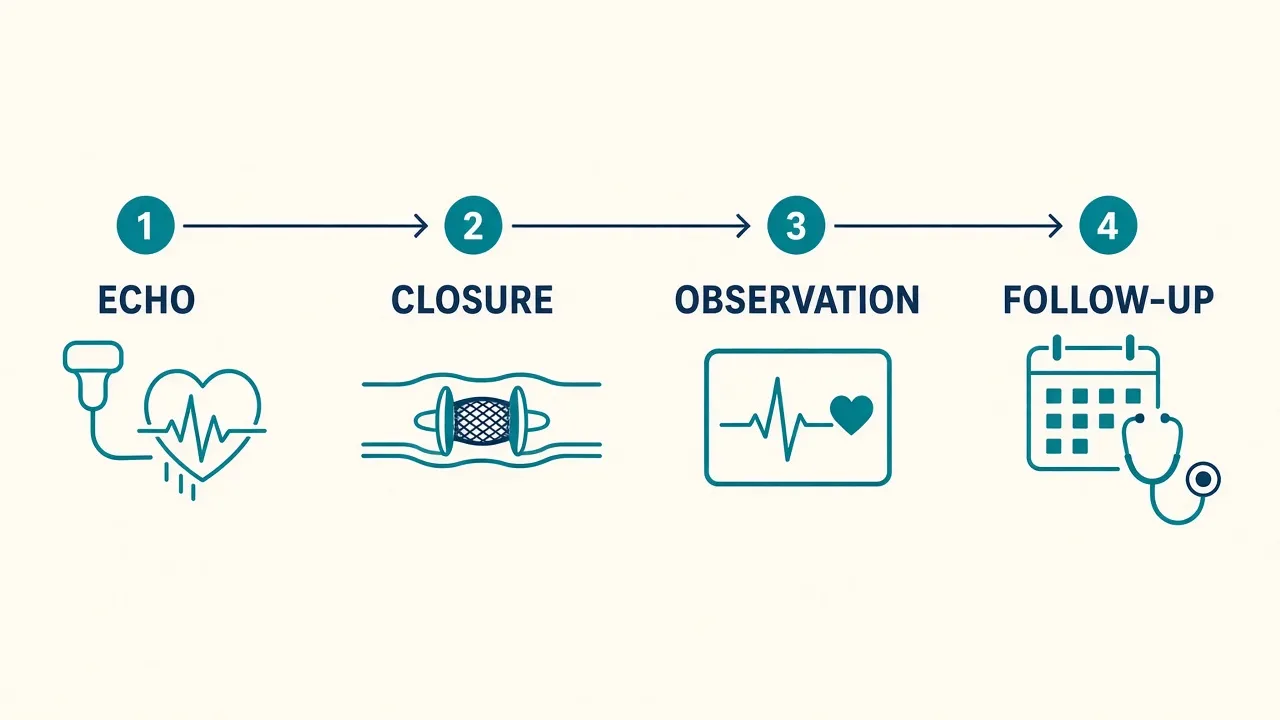
Follow-up confirms that the ductus has been closed adequately and that the heart is functioning as expected. The schedule depends on the procedure, the child's age and whether any other heart conditions are present.
What may happen at follow-up?
- A check of breathing, feeding and growth.
- Heart rate and clinical examination.
- A look at the wound or catheter access site.
- Echocardiography, including residual flow through the ductus.
- Device position, when a closure device was used.
- Review of any other congenital heart abnormalities.
Not every child needs the same number of visits. The cardiologist provides an individual plan.
Will my child need heart care for life?
Many children with an isolated PDA that has been successfully closed have an excellent long-term outlook and may need only limited follow-up, depending on the cardiologist's advice. Children with other congenital heart conditions, residual abnormalities or complications may need ongoing care. Keep the procedure report and follow-up records even if the child appears completely well.
Does my child need antibiotics before dental treatment?
Routine preventive antibiotics are not required for every child after PDA closure. They may be recommended in specific circumstances, such as certain residual defects or during a limited period after some procedures, according to current guidance. Ask the cardiologist, and make sure the dentist knows about the heart condition and the procedure.
15. PDA Closure in India for International Patients
For families travelling to India, the first step is to establish the diagnosis, clinical stability and treatment needs. Not every PDA requires immediate closure, and not every baby is fit to travel. The treating clinicians should say whether a planned consultation is appropriate or whether the baby needs urgent local treatment.
- **Gather medical records.** Share the echocardiography report and images, discharge summaries, the medication list, growth information and relevant tests. For premature infants, include neonatal records and information about breathing support.
- **Obtain a specialist review.** The pediatric cardiologist should explain whether observation, medication, catheter closure or surgery is being considered. A records review can help, but the plan may change after examination or further imaging.
- **Request a written cost estimate.** Ask for the proposed procedure, the expected admission, intensive care needs, and what is included. Clarify extra costs if the baby needs more monitoring than expected.
- **Confirm travel suitability.** Do not arrange travel until the treating team has advised whether the baby is fit to travel. Premature infants and babies with significant breathing or circulation problems may need urgent local treatment first.
- **Plan follow-up.** Before returning home, obtain the procedure report, discharge summary, medication instructions and follow-up plan. Ask how the hospital can coordinate with the local pediatrician or cardiologist.
GAF Healthcare coordinates consultations, record sharing, treatment estimates and relevant travel logistics for international families. The treating hospital is responsible for diagnosis, treatment recommendations and confirming whether travel is medically appropriate. Emergency care should never be delayed in order to arrange international travel.
16. Frequently Asked Questions About PDA Closure in Babies
What does PDA mean in a baby?
PDA stands for patent ductus arteriosus. A normal fetal blood vessel connecting the aorta and the pulmonary artery has remained open after birth. Before birth that vessel lets blood bypass the lungs. After birth it usually closes as the circulation changes.
Does every baby with PDA need closure?
No. Some small PDAs have little or no effect on circulation and may close naturally. Others need treatment because they send significant extra blood toward the lungs or affect the heart. The echocardiogram and the clinical assessment decide, not the name of the diagnosis alone.
Can PDA close on its own?
Yes. Some PDAs close naturally, particularly during infancy. The likelihood depends on prematurity, age and the characteristics of the ductus. A cardiologist can say whether observation is appropriate and when the next echocardiogram should be done.
Can medicine close PDA in a baby?
Medicines such as ibuprofen or indomethacin may help close a clinically significant PDA in selected premature infants. They are not suitable for every baby, and they are generally less effective for a persistent PDA in full-term infants and older children. They must be used only under specialist supervision. Parents must not give these medicines at home to try to close a PDA.
Is PDA closure an open-heart operation?
Catheter-based PDA closure does not require a conventional open-chest operation. Surgical closure is used in selected cases, but it does not necessarily involve opening the heart itself or using a heart-lung machine. The surgeon should explain which approach applies to your baby.
Is PDA device closure safe?
PDA device closure is an established treatment for appropriately selected patients. It still carries risks, including bleeding, device movement, residual flow or obstruction of nearby structures. The treating team should explain the risks that apply to this baby, not only a general complication list.
At what age can PDA be closed?
There is no single age for every baby. Timing depends on how significant the PDA is, the child's condition, prematurity, anatomy and the risks of waiting. Some babies need earlier treatment. Selected small PDAs can be monitored.
How much does PDA closure cost in India?
The GAF Healthcare planning band for PDA closure is US$3,500–US$8,500, with an expected stay of 3–8 nights; parent stay expected. The US comparison band on the same directory row is US$20,000–US$60,000. The actual cost depends on the method, the device, the hospital, the baby's age and condition, and intensive care. Request a written estimate from the treating hospital rather than a universal price.
Is catheter closure better than PDA surgery?
Neither option is best for every child. Catheter closure is commonly used when the ductus and the child's size are suitable. Surgery may be preferred when catheter closure is unsuitable or when the clinical situation needs a different approach. The comparison should be between options the cardiologist considers appropriate.
How long does a baby stay in the hospital after PDA closure?
The directory planning stay for PDA closure is 3–8 nights; parent stay expected. Some children need only a short period of observation after a straightforward catheter closure. Premature infants, or children with other medical problems, may need longer care. The discharge decision belongs to the treating team.
Can PDA affect a baby's growth?
A significant PDA can contribute to feeding difficulty and poor weight gain. Slow growth has many other causes. The pediatrician should assess feeding, growth measurements and the heart findings together rather than attributing every slow gain to the duct.
Can a premature baby undergo PDA closure?
Selected premature babies may receive medication, catheter-based closure or surgery, depending on the circumstances. The decision needs specialist assessment because prematurity and other medical conditions change the risks and benefits. An open ductus in a premature baby is not an automatic indication for a procedure.
Will my child need another procedure after PDA closure?
Most appropriately treated children do well, and further intervention is uncommon. Residual flow, device problems or other complications occasionally need additional treatment. Follow-up echocardiography is how the team looks for those problems.
Can a child live a normal life after PDA closure?
Many children with an isolated PDA that has been successfully closed have an excellent long-term outlook. Activity and follow-up depend on whether other heart conditions or residual abnormalities are present. Keep the procedure report for future clinicians.
Should a baby with PDA travel to India for treatment?
Travel suitability depends on the baby's condition and how urgent treatment is. A stable baby may be able to attend a planned specialist consultation. An unstable baby needs prompt local care. The treating team must advise whether travel is safe. Do not delay emergency care in order to travel.
Is PDA the same as ASD or VSD?
No. PDA is an open connection between the aorta and the pulmonary artery. An ASD is an opening between the upper heart chambers, and a VSD is an opening between the lower chambers. The tests overlap, but the treatment options and the planning cost bands differ.
Does a PDA cause blue lips?
An isolated PDA does not typically cause blue lips in the usual pattern of left-to-right blood flow. Blue or grey lips or tongue can indicate low oxygen or another serious problem and need urgent assessment, particularly if the baby has breathing difficulty or is unresponsive.
Does a baby need long-term follow-up after PDA closure?
The follow-up schedule depends on the result of closure and on any associated conditions. Some children need limited follow-up. Others need ongoing cardiac care because of residual problems or other heart defects. Follow the cardiologist's plan, and bring the discharge summary to local visits.
17. Conclusion: The Right PDA Treatment Depends on Your Baby
Patent ductus arteriosus is a common congenital heart condition, particularly among premature babies. The presence of a PDA does not automatically mean the baby needs an immediate procedure.
Some PDAs can be monitored. Selected premature infants may benefit from medication. Many suitable children can undergo catheter-based closure. Surgery remains important when catheter treatment is unsuitable or another approach is clinically preferred.
The decision should rest on age, prematurity, symptoms, echocardiogram findings, overall health, and the risks of treatment compared with observation. For families considering treatment in India, a specialist review and a written cost estimate clarify the approach. Do not delay urgent care, and do not arrange travel without clinical guidance.
GAF Healthcare can help international families coordinate specialist consultations and explore treatment arrangements in India, subject to clinical review and hospital availability. Diagnosis, treatment recommendations and decisions about travel suitability must come from the treating medical team.
Sources used for this guide
- [American Heart Association — Patent Ductus Arteriosus (PDA)](https://www.heart.org/en/health-topics/congenital-heart-defects/about-congenital-heart-defects/patent-ductus-arteriosus-pda)
- [Merck Manual Professional — Patent Ductus Arteriosus](https://www.merckmanuals.com/professional/pediatrics/congenital-cardiovascular-anomalies/patent-ductus-arteriosus-pda)
- [CDC — About Congenital Heart Defects](https://www.cdc.gov/heart-defects/about/index.html)
- [NHLBI — Congenital Heart Defects](https://www.nhlbi.nih.gov/health/congenital-heart-defects)
- [American Heart Association — Cardiac catheterization for heart defects](https://www.heart.org/en/health-topics/congenital-heart-defects/care-and-treatment-for-congenital-heart-defects/cardiac-catheterizations-for-heart-defects)