
Breast cancer can sometimes return after treatment, even when the original tumour was successfully removed. Recurrence may occur in the same breast, nearby lymph nodes or distant organs such as the bones, liver, lungs and brain. This guide explains warning signs, risk factors, diagnostic tests, treatment options and care for recurrent breast cancer in India.
Related reading: recurrence treatment in India, follow-up tests, metastatic / Stage 4 disease, surgery, chemotherapy, hormone therapy, HER2-positive care, cost and breast cancer treatment in India.

What Is Breast Cancer Recurrence?
Breast cancer recurrence means that cancer returns after a patient has completed treatment for an earlier breast cancer. Treatment may have included surgery, chemotherapy, radiation therapy, hormone therapy or targeted therapy. Even after these treatments, a small number of cancer cells may sometimes remain undetected. If those cells survive and begin growing again, the cancer can return.
- In the same breast where the original cancer developed.
- In the chest wall or around the surgical scar.
- In nearby lymph nodes.
- In distant organs such as the bones, liver, lungs or brain.
A recurrence does not necessarily mean that the original treatment failed or that the patient did something wrong. Some local and regional recurrences can still be treated with curative intent. Distant recurrence is generally managed as Stage 4 / metastatic breast cancer.
Can Breast Cancer Come Back After Treatment?
Yes. The possibility of recurrence depends on the original stage, tumour size and grade, lymph-node involvement, hormone receptor and HER2 status, surgical margins, response to treatment and whether recommended therapy was completed.
Some cancers have a higher risk of returning in the first few years. Certain hormone receptor-positive cancers can recur many years later — which is why follow-up remains important after active treatment ends.
What Are the Three Types of Breast Cancer Recurrence?

| Type of recurrence | Where cancer returns | Examples |
|---|---|---|
| Local recurrence | Same breast or chest wall | New tumour in the treated breast or near a mastectomy scar |
| Regional recurrence | Nearby lymph nodes | Underarm, collarbone or nearby neck-region nodes |
| Distant recurrence | Organs away from breast and regional nodes | Bones, liver, lungs or brain |
A local recurrence may sometimes be treated with surgery and radiation. Regional recurrence often needs a combination of systemic treatment, surgery and radiation. Distant recurrence is generally treated with medicines that act throughout the body.
Local Breast Cancer Recurrence
Local recurrence means cancer returns in the same breast or in the chest wall and surrounding area where the original tumour was treated. It can occur after either breast-conserving surgery or mastectomy — see lumpectomy vs mastectomy and surgery in India.
Local recurrence after lumpectomy
If cancer returns in the same breast, doctors may recommend a new biopsy, imaging to determine extent, mastectomy in many cases, repeat breast-conserving surgery only in carefully selected patients, radiation when appropriate and safe, and hormone therapy, chemotherapy or targeted therapy depending on biology. Prior radiation strongly influences what can be repeated safely.
Local recurrence after mastectomy
Cancer can return in the mastectomy scar, skin over the chest, tissue beneath the skin, chest wall or around a reconstructed breast. Treatment may include surgical removal, radiation if appropriate and systemic therapy. Doctors also investigate whether disease is limited to the chest wall or has spread elsewhere.
Regional Breast Cancer Recurrence
Regional recurrence occurs when breast cancer returns in lymph nodes near the original site — commonly axillary (underarm), supra- or infraclavicular (around the collarbone) or internal mammary nodes near the breastbone.
- A new lump in the armpit.
- Swelling near the collarbone or lower neck.
- Persistent discomfort around the shoulder or arm.
- Arm swelling (also consider lymphoedema).
Not every enlarged lymph node is cancer. Treatment may combine systemic therapy, surgical removal of affected nodes when feasible, radiation and subtype-directed medicines. Repeating radiation to a previously treated area requires careful specialist assessment. See also radiation therapy in India.
Distant Breast Cancer Recurrence
Distant recurrence means breast cancer returns in organs away from the breast and regional lymph nodes. It is also called metastatic breast cancer or Stage 4 disease. When breast cancer spreads to another organ, it remains breast cancer — for example, breast cancer in the liver is metastatic breast cancer, not primary liver cancer.
| Site of recurrence | Possible symptoms |
|---|---|
| Bones | Persistent bone pain, back pain, fractures or difficulty walking |
| Liver | Abdominal discomfort, nausea, loss of appetite, jaundice or abdominal swelling |
| Lungs | Persistent cough, breathlessness, chest discomfort |
| Brain | Headache, seizures, weakness, balance problems or confusion |
| Distant lymph nodes | New lumps or swelling (for example in the neck) |
When is distant recurrence an emergency?
- New severe back pain with leg weakness or numbness.
- Loss of bladder or bowel control.
- A new seizure, sudden confusion or weakness.
- Severe or sudden breathlessness or severe chest pain.
- Sudden inability to walk or bear weight.
These symptoms may indicate spinal cord compression, brain involvement, fracture or a blood clot — seek immediate care rather than waiting for a routine oncology appointment. Full Stage 4 pathway: metastatic breast cancer.
Can Breast Cancer Return After 5 or 10 Years?
Yes. Timing depends partly on subtype:
- Hormone receptor-positive — prolonged risk; dormant cells may activate years later; multi-year hormone therapy is often used to reduce risk.
- HER2-positive — can recur, but HER2-targeted treatment has substantially improved outcomes.
- Triple-negative — often higher risk in earlier years after diagnosis; see TNBC treatment in India.
- Inflammatory breast cancer — aggressive biology needing specialised care and close follow-up; see IBC guide.
Risk Factors for Breast Cancer Recurrence
- More advanced stage or larger tumour at initial diagnosis.
- Lymph-node involvement at diagnosis.
- High tumour grade.
- Positive surgical margins.
- Aggressive biology (including some TNBC and inflammatory cases).
- Incomplete or interrupted recommended treatment.
- Excess body weight and inactivity — associated with outcomes in some studies, but lifestyle alone cannot guarantee prevention.
Patients should not blame themselves for recurrence. Side effects, other medical conditions, finances and access to care all influence treatment completion.
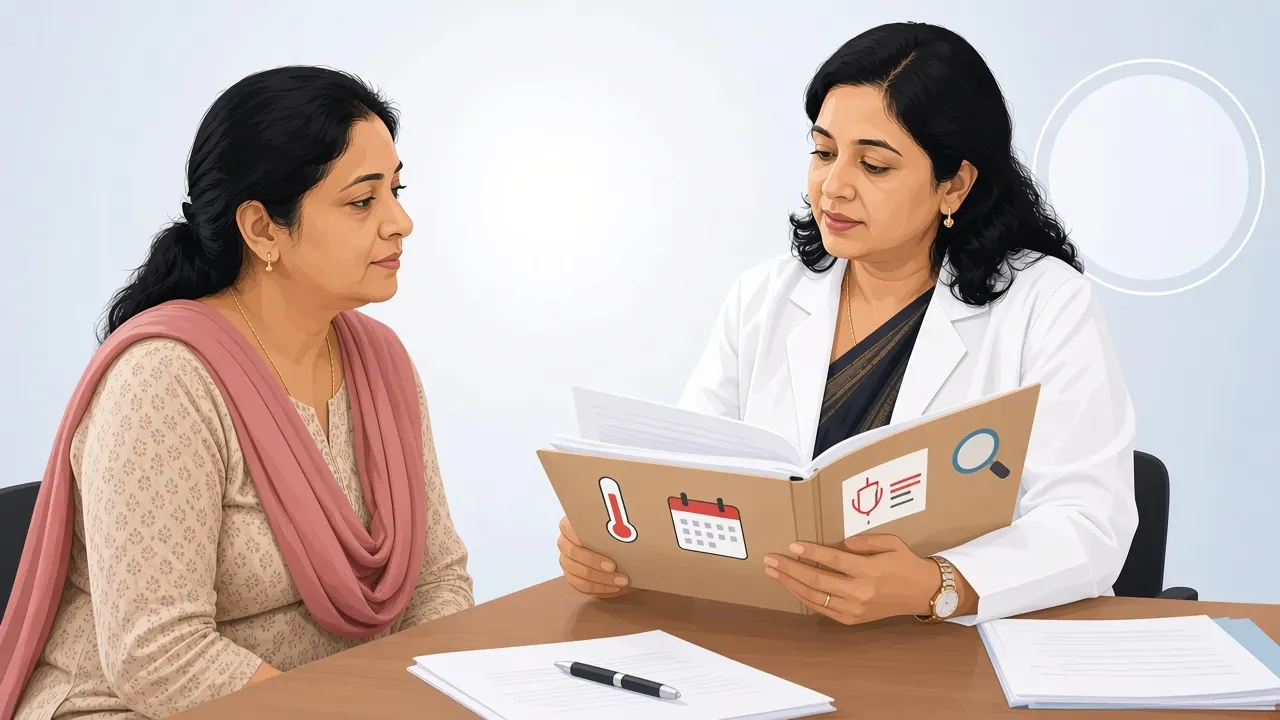
Early Warning Signs of Breast Cancer Recurrence
Changes in the breast
- New lump in the treated breast.
- Thickening or hardening.
- Change in size or shape.
- Skin dimpling, redness or swelling.
- Nipple inversion or unusual discharge.
- Persistent localised pain.
Changes around a mastectomy scar
- New lump near the scar.
- Thickening beneath the skin.
- Persistent rash or unusual skin change.
- Nodule near a reconstructed breast.
- New swelling or redness around the surgical area.
Armpit, neck and general symptoms
- New armpit or collarbone swelling.
- Unexplained arm swelling.
- Unexplained weight loss or persistent fatigue.
- Ongoing bone pain, cough or breathlessness.
- New neurological symptoms.
These symptoms are not specific to recurrence — many have other causes. Persistent or unusual changes should still be discussed. Related: symptoms overview and screening vs diagnostic care.
How Is Breast Cancer Recurrence Diagnosed?
When recurrence is suspected, doctors need to know whether the finding is cancer, where it is and how extensive it is, and whether the biological profile has changed. Pathway overview: diagnosis and ER/PR/HER2 testing.
- **Clinical examination** — treated breast or chest wall, scar or reconstruction, armpits, collarbone and neck.
- **Mammography and ultrasound** — for remaining breast tissue, scar-region lumps or enlarged nodes.
- **Breast MRI** — when mammography/ultrasound are inconclusive or extent assessment is needed.
- **Biopsy** — often essential to confirm recurrence and distinguish scar, infection or a new unrelated tumour.
- **Repeat ER, PR and HER2 testing** — receptor status can change at recurrence; treatment may follow updated findings.
- **Staging imaging** — selected CT, PET-CT, bone scan or MRI based on symptoms (not every test for every patient).
- **Blood tests** — blood counts, liver/kidney function, calcium; tumour markers are not used alone to confirm recurrence.
- Molecular testing — BRCA, PIK3CA, ESR1, PD-L1 or other assays when they may open treatment options; see precision oncology planning.
| Investigation | Purpose |
|---|---|
| CT chest/abdomen/pelvis | Checks for possible spread to organs and lymph nodes |
| PET-CT | May help assess disease distribution in selected cases |
| Bone scan | Evaluates possible bone involvement |
| MRI of the brain | Used when brain metastases are suspected |
| MRI of the spine | Evaluates suspected spinal involvement |
| Abdominal ultrasound | Examines the liver and other abdominal structures |
Understanding reports: pathology report explained.
How Is Recurrent Breast Cancer Treated?

There is no single treatment for every recurrence. Doctors consider previous surgery and radiation, prior chemotherapy and targeted medicines, current receptor status, disease-free interval, general health and whether disease is limited or widespread. Companion guide: recurrence treatment in India.
Treatment of local recurrence
Surgery is often central — mastectomy is frequently recommended after prior lumpectomy for invasive local recurrence; selected patients may discuss another breast-conserving operation. After mastectomy, surgeons may remove the recurrent tumour and surrounding tissue when feasible. Radiation may follow surgery or be used when surgery is not appropriate, if safe after prior exposure. Systemic therapy (hormone therapy, chemotherapy, HER2-targeted or other targeted therapy, immunotherapy in eligible settings) may still be needed even when disease appears local.
Treatment of regional recurrence
Plans may include biopsy confirmation, imaging to exclude distant spread, systemic therapy before surgery in selected cases, lymph-node surgery when feasible, radiation where appropriate and further systemic treatment based on updated markers. Lymphoedema risk must be considered.
Treatment of distant recurrence
Managed as metastatic disease. Options may include hormone therapy, CDK4/6 inhibitors, HER2-directed medicines, chemotherapy, immunotherapy, PARP inhibitors for selected BRCA mutations, antibody-drug conjugates, radiation for painful or threatening sites and supportive/palliative care. See Stage 4 guide.
Does Recurrent Breast Cancer Need Chemotherapy?
Not always. Chemotherapy may be recommended for triple-negative disease, aggressive or rapidly progressing recurrence, inadequate endocrine control, progression after prior endocrine therapy, distant disease needing a rapid systemic response, or when tumour characteristics suggest meaningful benefit. Some hormone receptor-positive patients receive endocrine therapy with targeted medicines instead.
Can Hormone Therapy Be Used Again After Recurrence?
Sometimes — when the recurrent tumour remains hormone receptor-positive. Choice depends on prior tamoxifen, aromatase inhibitors or fulvestrant, whether recurrence occurred during or after endocrine therapy, disease-free interval and molecular changes. See hormone therapy and side effects. Do not stop prescribed endocrine therapy without oncologist advice.
Can HER2-Positive Breast Cancer Recur?
Yes. Depending on prior exposure and current disease, oncologists may consider trastuzumab, pertuzumab, trastuzumab deruxtecan, trastuzumab emtansine, tucatinib-based combinations or other HER2-directed options. Sequencing depends on previous medicines, response, side effects and brain involvement. Detail: HER2-positive treatment in India.
Opposite Breast Cancer vs Recurrence
A new tumour in the opposite breast is not automatically a recurrence of the original cancer. Doctors distinguish a new primary, metastatic involvement or (less commonly) related disease involving the opposite breast. Biopsy and imaging establish the diagnosis — a new primary is treated according to its own stage and biology.
| Feature | Breast cancer recurrence | Second primary breast cancer |
|---|---|---|
| Meaning | Original cancer has returned | A separate, new breast cancer has developed |
| Location | Same breast, nearby nodes or distant organs | Often the opposite breast or another breast location |
| Tumour biology | May resemble or differ from the original cancer | Has its own biological characteristics |
| Treatment | Based on recurrence location, prior treatment and current markers | Based on the new cancer's stage and biology |
Prognosis for Recurrent Breast Cancer
Outlook depends mainly on whether recurrence is local, regional or distant; whether it can be completely removed; number and location of metastatic sites; ER/PR/HER2 status; grade; prior treatment response; general health; and available medicines.
- **Local** — some isolated local recurrences can be treated with curative intent.
- **Regional** — selected isolated regional recurrences may also receive intensive multimodality treatment with curative intent after distant disease is excluded.
- **Distant** — generally not considered curable with standard treatment, but modern systemic therapies can control disease for extended periods in some patients.
There is no single survival figure that accurately predicts an individual patient's course after recurrence.
Can Breast Cancer Recurrence Be Prevented?
There is no guaranteed prevention. Practical steps include completing recommended treatment (discuss side effects before stopping), attending follow-up, maintaining a healthy lifestyle, avoiding unproven "cures" and following a surveillance plan tailored to surgery and remaining breast tissue — not automatic annual PET-CT for every asymptomatic survivor.
Emotional Challenges After Recurrence
Hearing that breast cancer has returned can bring fear, anger, sadness, sleep disturbance, financial worry and uncertainty. Psychological counselling, support groups, family involvement and palliative care introduced alongside active treatment can help manage symptoms and distress — palliative care does not mean treatment has stopped.
Treatment of Recurrent Breast Cancer in India
For recurrent disease, the priority is a team that can review the original diagnosis, assess current disease and plan treatment from the latest pathology and imaging.
- **Review of original records** — biopsy, surgical pathology, ER/PR/HER2, imaging, operation notes, chemo/radiation summaries and prior targeted or hormone therapy.
- **Updated diagnosis and biomarkers** — new biopsy and receptor/molecular testing when indicated.
- **Multidisciplinary planning** — medical, surgical and radiation oncology with radiology, pathology, reconstructive surgery and palliative care as needed.
- **Access to modalities** — surgery, chemotherapy, hormone therapy, HER2-targeted medicines, immunotherapy, radiation and supportive care when indicated.
Specialists: medical oncology, surgical oncology, radiation oncology, Delhi NCR, Mumbai. International pathway: international patients. Younger patients: breast cancer in young women.
How Much Does Recurrent Breast Cancer Treatment Cost in India?
There is no single cost. Expense depends on where cancer has returned, prior treatment and which options remain suitable. Imaging, biopsy and medicine charges vary by centre — GAF does not invent fixed biopsy or scan package prices. Related named pathway planning ranges:
| Named pathway | GAF planning range in India | Recurrence relevance |
|---|---|---|
| Lumpectomy | $3,000–$7,500 | Selected repeat breast-conserving pathways when clinically appropriate |
| Mastectomy | $4,500–$10,000 | Common surgical option for invasive local recurrence after prior lumpectomy |
| Chemotherapy | $1,500–$8,000+ | When systemic cytotoxic therapy is indicated for recurrence biology or extent |
| Hormone therapy | $1,000–$4,500 | Hormone receptor-positive recurrence; medicine choice depends on prior endocrine exposure |
| EBRT | $1,000–$6,000+ | Selected local/regional control or palliative radiation — prior radiation must be reviewed |
| Precision oncology | $2,000–$7,000 | Selected genetic / molecular testing pathways when they change treatment options |
GAF figures are partner planning ranges for named treatment pathways — not biopsy, mammography or PET-CT package prices. Request an itemised estimate after updated pathology and imaging.
Broader context: breast cancer treatment cost in India. Request an itemised estimate after updated diagnosis rather than relying on a general advertised price.
Travelling to India for Recurrent Breast Cancer Treatment
Patients from Tanzania, Kenya, Uganda, Ethiopia, Zambia, Cameroon, Iraq, Oman, Saudi Arabia and other countries should organise records before travel:
- Original biopsy and surgical pathology reports.
- ER, PR and HER2 reports (and HER2 FISH/ISH if available).
- Previous and current imaging reports plus digital files.
- Chemotherapy, radiation, hormone and targeted therapy summaries.
- Operation records, recent blood tests, genetic/molecular results and current medicine list.
If possible, carry pathology slides or tissue blocks. Ask: Is this definite recurrence? Local, regional or distant? Has receptor status changed? Is surgery possible? What systemic therapy is recommended? What are benefits, side effects, duration, estimated cost and home follow-up?
How GAF Healthcare Can Help
GAF Healthcare assists international patients exploring treatment in India — connecting with oncology specialists, organising records for review, coordinating consultations and second opinions, explaining proposed investigations and supporting hospital and travel logistics. The treating oncologist remains responsible for diagnosis and medical recommendations. Do not delay urgent local care while arranging travel.
Frequently Asked Questions About Breast Cancer Recurrence
Can breast cancer return after successful treatment?
Yes. Breast cancer can return even after surgery, chemotherapy, radiation or hormone therapy. Some cancer cells may remain undetected and become active later.
How many years after treatment can breast cancer recur?
Recurrence may happen within months or years after treatment. Some hormone receptor-positive breast cancers can recur more than ten years later.
What is the most common site of breast cancer recurrence?
It depends on the cancer subtype and original stage. Local recurrence may occur in the treated breast or chest wall, while distant recurrence commonly affects the bones, liver, lungs or brain.
Can breast cancer recur after mastectomy?
Yes. Mastectomy removes most breast tissue but does not eliminate every possible breast cancer cell. Recurrence can develop in the skin, chest wall or surrounding tissues.
Can breast cancer recur after lumpectomy?
Yes. Cancer can return in the same breast after breast-conserving surgery. Appropriate radiation and systemic treatment reduce recurrence risk but cannot eliminate it completely.
Does recurrence always mean Stage 4 breast cancer?
No. Local and regional recurrence are not automatically Stage 4. Stage 4 disease means cancer has spread to distant organs or sites.
Can breast cancer return in the opposite breast?
A tumour in the opposite breast may be a new primary breast cancer rather than a recurrence. Biopsy and clinical assessment help distinguish between the two.
Does recurrent breast cancer always require chemotherapy?
No. Treatment depends on the current tumour biology and location. Some patients may be treated with surgery, radiation, hormone therapy or targeted medicines without chemotherapy.
Can hormone receptor status change when breast cancer returns?
Yes. ER, PR and HER2 status can differ between the original tumour and a recurrent tumour. When feasible, a new biopsy and repeat biomarker testing can help guide treatment.
Can local breast cancer recurrence be cured?
Some patients with isolated local recurrence can receive treatment with curative intent. The possibility depends on the extent of recurrence, previous treatment and tumour characteristics.
Is distant breast cancer recurrence curable?
Distant recurrence is generally not considered curable with standard treatment. However, systemic therapies can control the disease for extended periods in some patients.
Should patients undergo PET-CT every year after breast cancer treatment?
Not routinely. For patients without symptoms or concerning findings, routine PET-CT or extensive imaging solely to search for recurrence is generally not recommended. Imaging should be guided by clinical findings and the treating team.
Can lifestyle changes prevent breast cancer recurrence?
A healthy lifestyle may support general health and may be associated with better outcomes, but it cannot guarantee prevention. Patients should follow their prescribed treatment and avoid unproven cancer cures.
Is recurrent breast cancer treatment available in India?
Yes. Oncology centres in India provide different treatment approaches, including surgery, chemotherapy, hormone therapy, targeted therapy and radiation. The appropriate option depends on the diagnosis and the availability of the required treatment.
When should a breast cancer survivor contact the doctor?
Contact the treating team if you notice a new lump, persistent breast or chest-wall changes, enlarged lymph nodes, unexplained weight loss, persistent bone pain, ongoing cough or new neurological symptoms. Emergency symptoms such as seizures, sudden weakness or severe breathlessness require immediate assessment.
Final Thoughts
Breast cancer recurrence can be distressing, but it does not mean that treatment options have run out. The first step is to identify where cancer has returned and confirm the diagnosis with biopsy, updated ER/PR/HER2 testing and appropriate imaging.
Local and regional recurrences may sometimes be treated with surgery, radiation and systemic medicines aiming for long-term control or cure. Distant recurrence is generally treated as metastatic breast cancer according to tumour biology and the patient's health.
Do not ignore persistent new symptoms, do not assume every new lump is cancer, and do not delay assessment because of fear. Early evaluation helps patients and doctors make informed decisions.
Medical Sources and References
Medical disclaimer: This article is intended for general education and does not replace consultation with a qualified medical professional. A patient's diagnosis, recurrence risk and treatment plan must be determined by the treating oncology team after reviewing clinical history, pathology, imaging and relevant biomarker tests.