
Breast cancer cannot always be prevented, but understanding risk factors and adopting healthy habits may help reduce the chances of developing the disease. Regular breast awareness, appropriate screening and early medical assessment matter too. This guide covers risk factors, lifestyle changes, genetic testing, screening and prevention strategies relevant to women in India. Related care: screening in India, symptoms, treatment in India and cost.
Can Breast Cancer Be Prevented?
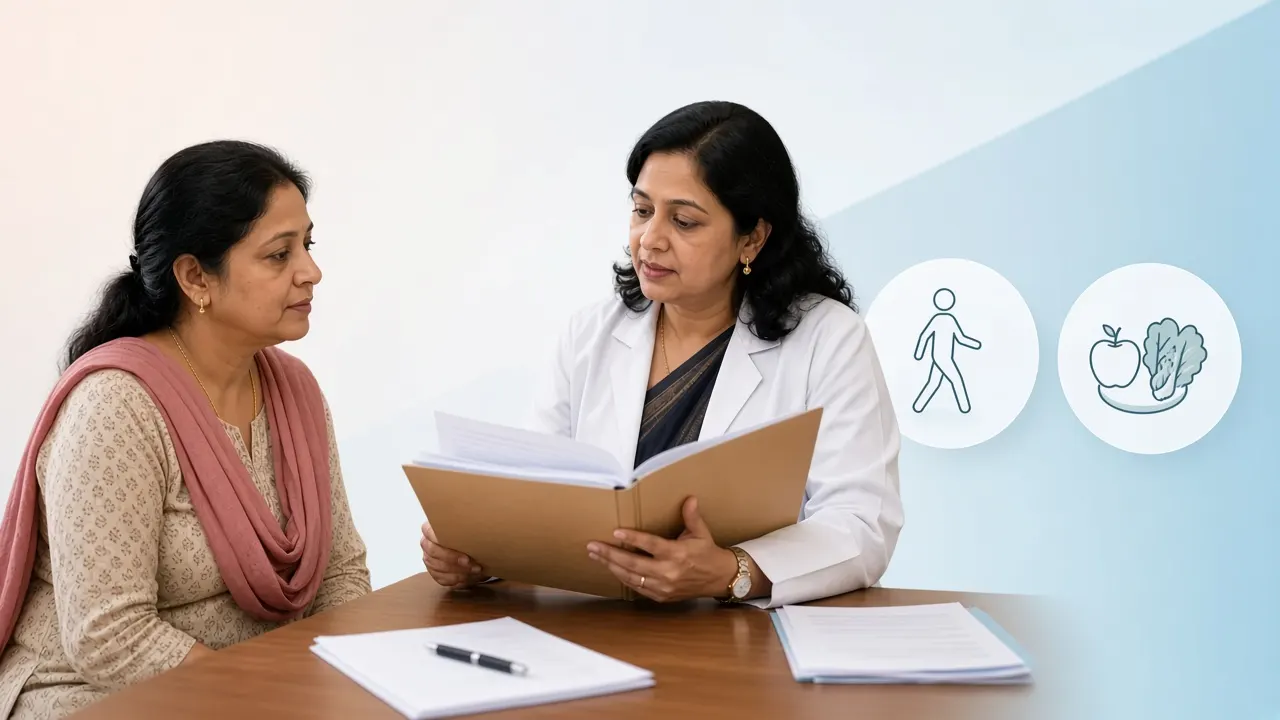
Breast cancer cannot always be prevented. Lifestyle changes and selected medical interventions may reduce risk. Some factors — age, inherited gene changes and family history — cannot be changed. Others, including alcohol, physical inactivity and excess body weight after menopause, may be influenced through choices.
- **Prevention** — steps that may reduce the chance of developing breast cancer.
- **Early detection** — identifying breast cancer earlier, before it has spread or caused serious symptoms.
Even women who follow a healthy lifestyle can develop breast cancer. Many diagnosed women have no known family history. The goal is informed decisions — not blame.
What Is Breast Cancer?
Breast cancer develops when abnormal cells in breast tissue grow and divide uncontrollably. It most often begins in the milk ducts or lobules. Some cancers remain localised for a time; others invade surrounding tissue and may spread to lymph nodes or distant organs.
- Invasive ductal and invasive lobular carcinoma.
- DCIS; LCIS (generally a risk marker rather than invasive cancer).
- Hormone receptor-positive, HER2-positive and triple-negative disease.
- Inflammatory breast cancer.
Type matters because risk assessment, screening and treatment decisions can differ. See stages and diagnosis.
What Are the Risk Factors for Breast Cancer?
A risk factor increases likelihood of disease. Having one or more factors does not mean cancer will develop — and women without obvious factors can still be diagnosed. Risks fall into factors that cannot be changed and factors that may be modified.
Risk factors that cannot be changed
- **Age** — risk generally rises with age; younger women can still develop breast cancer.
- **Family history** — mother, sister, daughter or a pattern of young-onset, bilateral, ovarian, pancreatic or related cancers.
- **Inherited gene changes** — BRCA1, BRCA2, PALB2, CHEK2, ATM, TP53, PTEN, CDH1 and others.
- **Personal history** of breast cancer or certain high-risk benign findings (ADH, ALH, LCIS).
- **Dense breast tissue** — raises risk slightly and can make mammography harder to interpret.
- **Prior chest radiation** at a young age (for example after Hodgkin lymphoma treatment).
- **Reproductive/menstrual history** — early menstruation, late menopause, later first full-term pregnancy or never carrying a pregnancy to term (statistical associations only).
Most women with breast cancer do not have a known family history. Absence of family history does not eliminate risk. More on young women.
Risk factors that may be modified
- **Alcohol** — risk rises with increasing intake; reducing or avoiding alcohol is practical.
- **Excess body weight after menopause** — fat tissue can produce oestrogen after menopause.
- **Physical inactivity** — regular activity is associated with lower risk.
- **Combined menopausal hormone therapy** (oestrogen + progestogen) — risk rises with longer use; discuss benefits and risks with a doctor.
- **Tobacco** — avoid smoking for overall cancer and cardiovascular health.
- **Breastfeeding** when possible — modest protective association; never a reason for blame.
Which Lifestyle Changes May Help Reduce Risk?

| Lifestyle measure | Potential benefit |
|---|---|
| Maintain a healthy body weight | May reduce postmenopausal breast cancer risk |
| Exercise regularly | Associated with lower breast cancer risk |
| Avoid or reduce alcohol | Reduces an established risk factor |
| Eat a balanced diet | Supports weight management and general health |
| Avoid smoking | Reduces several cancer and cardiovascular risks |
| Breastfeed when possible | Associated with a modest reduction in risk |
| Discuss hormone therapy carefully | Helps avoid unnecessary or unsuitable hormone exposure |
Maintain a healthy weight and exercise
Gradual, realistic weight management and regular activity support long-term health. WHO guidance for adults typically includes 150–300 minutes of moderate aerobic activity weekly (or equivalent vigorous activity) plus muscle-strengthening. Brisk walking, cycling, swimming, dancing, strength work and yoga can all count. If inactive, a 20–30 minute walk on most days is a reasonable start.
Limit alcohol and follow a balanced diet
Alcohol is an established risk factor. No single food prevents breast cancer, but a balanced pattern supports weight and general health — vegetables, fruits, whole grains, lentils, beans, nuts, seeds, fish or other protein, dairy or alternatives, and moderate cooking oils.
A balanced Indian diet is suitable:
| Meal | Practical options |
|---|---|
| Breakfast | Vegetable poha, oats, idli or eggs with whole-grain toast |
| Lunch | Dal, vegetables, roti and curd |
| Evening snack | Fruit, roasted chana or a small portion of nuts |
| Dinner | Vegetable khichdi, grilled fish, paneer or beans with vegetables |
There is no need for expensive “cancer-prevention” superfoods. Antioxidant supplements and detox drinks have not been proven to prevent breast cancer. Sugar does not directly cause breast cancer, but excess sugary drinks can drive weight gain. Normal dietary soy foods are generally considered safe for most people; concentrated isoflavone supplements need medical advice.
Does Prevention Require Genetic Testing?
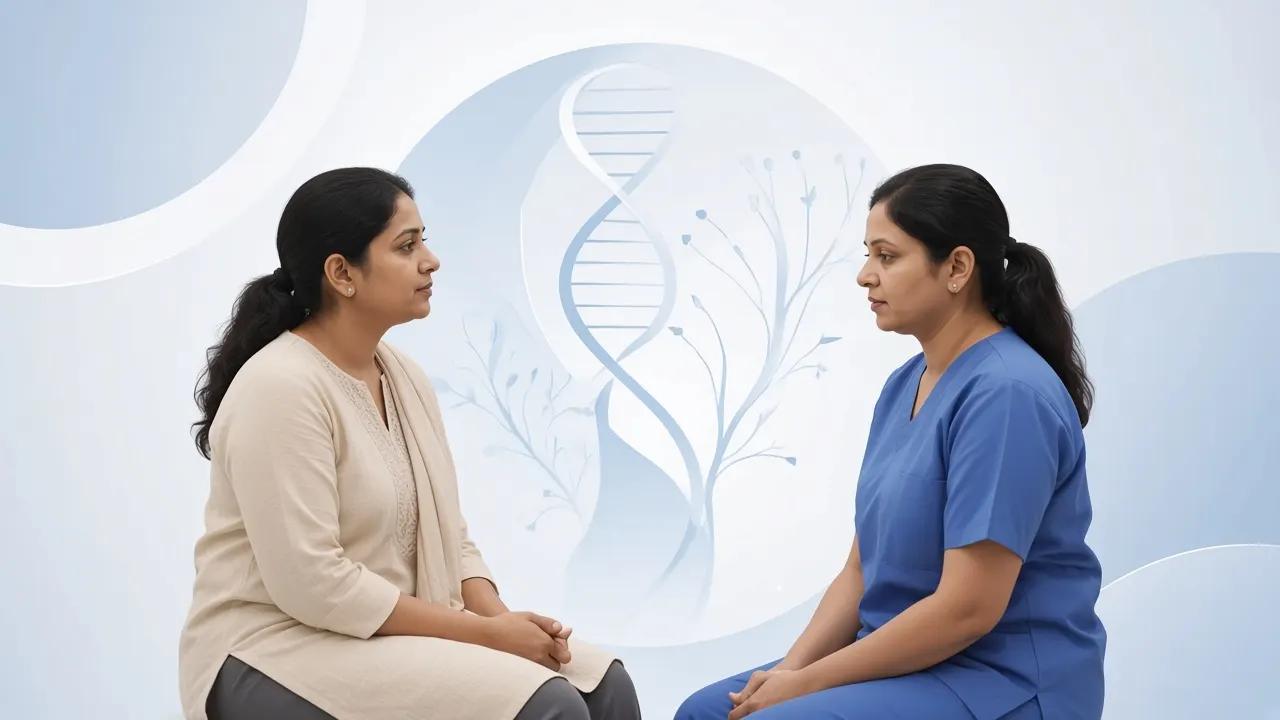
Genetic testing is not necessary for every woman. Counselling may be appropriate with young-onset breast cancer, multiple close relatives with breast cancer, ovarian cancer in the family, male breast cancer, bilateral disease, breast and ovarian cancer in one person, a known BRCA pathogenic variant in the family, or certain pancreatic/prostate patterns.
BRCA1 and BRCA2 testing
BRCA1 and BRCA2 help repair DNA. Harmful inherited changes can substantially raise breast and ovarian cancer risk. Testing usually uses blood or saliva. Results may show a pathogenic/likely pathogenic variant, a variant of uncertain significance (VUS — not automatically a reason for preventive surgery), or no clinically significant variant.
If a test is positive
Cancer is not inevitable. Options may include intensified surveillance (mammography and often annual MRI), risk-reducing medication, risk-reducing surgery in selected cases, ovarian risk management and family counselling. Decisions need specialist guidance. Related: precision oncology planning and diagnosis / biomarker testing.
Can Medicines or Surgery Reduce Risk in High-Risk Women?
Selected high-risk women may discuss chemoprevention (risk-reducing medication) such as tamoxifen, raloxifene or, in some postmenopausal settings, aromatase inhibitors. These can reduce hormone receptor-positive breast cancer risk but have side effects (for example hot flushes, clot risk, bone effects) and are not for everyone.
Risk-reducing mastectomy can substantially lower breast cancer risk in women with very high inherited risk; it is not for the general population and cannot eliminate risk completely. Some BRCA-related patients may also discuss risk-reducing removal of ovaries and fallopian tubes — primarily for ovarian risk, with possible breast-risk effects depending on age. See surgery in India.
Important: Do not start preventive medicines or pursue surgery from worry alone. A specialist should weigh expected benefit against risks.
What Is Breast Cancer Screening?
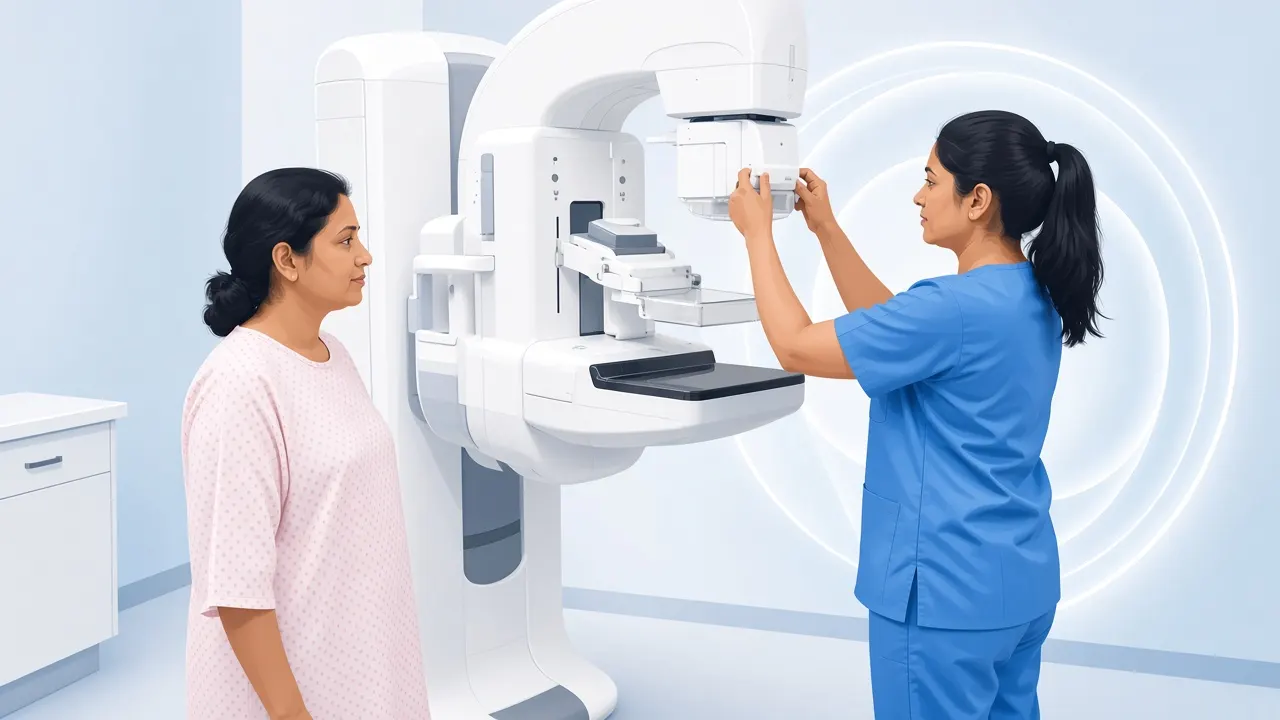
Screening tests women without symptoms to find possible cancer earlier. Diagnostic testing investigates a lump, discharge, skin change or other concern. Mammography is the main population screening imaging method; ultrasound and MRI help in selected situations. Full detail: breast cancer screening in India.
Screening methods at a glance
- **Mammography / tomosynthesis** — low-dose X-rays; can show masses, microcalcifications and distortion.
- **Ultrasound** — useful for lumps, younger symptomatic women, dense tissue as a supplement, biopsy guidance — not a universal mammography substitute.
- **Breast MRI** — mainly for significantly increased inherited or calculated lifetime risk.
- **Clinical breast examination** — used in India’s public programmes; does not replace imaging when imaging is indicated.
At What Age Should Women Start Screening in India?
There is no single schedule for every woman. Public-health programmes, specialist imaging guidance and high-risk pathways differ.
| Group | General approach |
|---|---|
| Women below 30 at average risk | Routine mammography screening generally not recommended; investigate symptoms when present |
| Women aged 30–39 | Risk assessment and clinical evaluation; imaging depends on symptoms and risk |
| Women aged 40 and above | Discuss mammography-based screening according to individual risk and applicable guidance |
| Women with strong family history or inherited risk | Specialist assessment; screening may begin earlier and include MRI |
| Women with previous breast cancer | Follow a separate surveillance plan rather than an average-risk screening schedule |
India’s population-based framework has used clinical breast examination for eligible women (commonly ages 30–65 in programme settings). The Breast Imaging Society, India supports considering annual mammography-based opportunistic screening from age 40, with intervals and stopping age individualised. High-risk women may need earlier start and MRI. Details and BI-RADS next steps: screening guide.
Early Detection: Warning Signs and Breast Awareness
Know what is normal for your breasts and seek care for persistent or unusual changes:
- A new lump in the breast or armpit.
- Change in breast size or shape; skin dimpling or puckering.
- New nipple inversion; blood-stained nipple discharge.
- Persistent redness, thickening, rash or unexplained swelling.
Breast cancer can be painless. Formal monthly self-examination has not been shown to reduce deaths as a stand-alone method — breast awareness and prompt evaluation matter more. If you find a lump: see a qualified clinician, share history and prior imaging, complete recommended ultrasound/mammography, and have a biopsy when tissue confirmation is needed. Do not delay because the lump is painless or you are young. More: symptoms.
Early detection can make treatment more effective. Screening only helps when abnormal results lead to timely diagnosis and treatment access.
Common Myths About Breast Cancer Prevention
- **Only women above 50** — younger women can develop breast cancer.
- **No family history means safe** — most diagnoses occur without known family history.
- **Cancer always causes pain** — many early cancers are painless.
- **Diet guarantees protection** — healthy eating helps but cannot guarantee prevention.
- **Self-exam prevents cancer** — awareness helps detection; it does not prevent cancer.
- **Mammography prevents cancer** — it detects possible cancer; it does not stop cancer forming.
- **Only BRCA carriers get breast cancer** — most cancers are not caused by inherited BRCA mutations.
- **Every lump is cancer / every hormone causes cancer / detox drinks prevent cancer** — false; assess lumps medically; hormone risk is individualised; no detox product is proven prevention.
Breast Cancer Prevention and Screening in India
- Ask about clinical breast examination at primary healthcare / Ayushman Arogya Mandir pathways where available.
- Seek mammography or specialist imaging at an equipped centre when age, risk or symptoms indicate.
- Consider genetic counselling for strong family histories.
- Complete follow-up after abnormal findings — diagnostic imaging, biopsy, pathology and specialist review.
International patients from East Africa, the Middle East and elsewhere may travel for specialist risk assessment, genetic interpretation, second opinions or complex diagnostics — but routine screening does not always require overseas travel. Carry prior imaging and family history. See international patients. Specialists: medical oncology, surgical oncology, radiation oncology, Delhi NCR, Mumbai.
Related Care Pathways and Planning Ranges
Prevention itself is not a priced “package.” If high-risk assessment, diagnosis or treatment follows, GAF partner planning ranges for named pathways (not invented screening package prices) include:
| Named pathway | GAF planning range in India | How it relates to prevention / early care |
|---|---|---|
| Precision oncology | $2,000–$7,000 | Selected genetic / tumour testing pathways after high-risk assessment or diagnosis |
| Lumpectomy | $3,000–$7,500 | Breast-conserving surgery when early operable disease is confirmed |
| Mastectomy | $4,500–$10,000 | Selected surgical pathways after confirmed cancer (or risk-reducing surgery when indicated) |
| Chemotherapy | $1,500–$8,000+ | Only when systemic therapy is indicated after diagnosis |
GAF figures are partner planning ranges for named treatment pathways — not mammography or “prevention package” prices. Ask centres for written estimates for imaging, genetic counselling or risk-reducing care.
Broader context: breast cancer treatment cost in India. GAF can help request case-specific consultation and imaging estimates.
How GAF Healthcare Can Help
GAF Healthcare assists international patients coordinating breast specialist consultations, imaging, record review and genetic counselling pathways in India. Screening eligibility, genetic testing and preventive treatment decisions remain with treating clinicians.
Frequently Asked Questions
Can breast cancer be completely prevented?
No. There is no guaranteed way to prevent breast cancer. Healthy lifestyle choices, appropriate risk assessment and selected medical interventions can reduce risk for some women.
What is the biggest risk factor for breast cancer?
Increasing age is one of the most important risk factors, apart from female biological sex. Inherited genetic changes and family history can also substantially increase risk.
Can exercise reduce breast cancer risk?
Regular physical activity is associated with a lower risk of breast cancer. It also supports weight management, cardiovascular health and general well-being.
Does breastfeeding reduce breast cancer risk?
Yes. Breastfeeding is associated with a modest reduction in breast cancer risk. However, it does not guarantee prevention.
Does alcohol increase breast cancer risk?
Yes. Alcohol consumption is associated with increased breast cancer risk, and the risk generally rises with greater consumption.
Does obesity increase breast cancer risk?
Excess body weight, particularly after menopause, is associated with an increased risk of breast cancer.
Can a woman with no family history develop breast cancer?
Yes. Most women diagnosed with breast cancer do not have a known family history.
At what age should women in India start breast cancer screening?
India has public-health clinical breast examination programmes for eligible women, while specialist breast-imaging guidance supports mammography-based screening from age 40 for women who choose opportunistic screening. The appropriate approach depends on individual risk and local guidance. See our screening guide.
Is mammography necessary every year?
Not necessarily for everyone. The interval depends on age, risk profile, previous findings and the guideline being followed. Agree on a schedule with your healthcare professional.
Is ultrasound enough to screen for breast cancer?
Ultrasound is useful for evaluating lumps and selected breast conditions, but it is not a universal replacement for mammography-based screening.
Who should undergo BRCA genetic testing?
Testing may be appropriate for women with certain personal or family cancer histories, including young-onset breast cancer, multiple affected relatives or a known inherited mutation in the family. Genetic counselling helps determine eligibility.
Can BRCA-positive women prevent breast cancer?
A positive result does not mean cancer is inevitable. Enhanced screening, risk-reducing medicines and preventive surgery may be discussed depending on the gene, age and individual circumstances.
Are preventive medicines available for breast cancer?
Yes. Medicines such as tamoxifen, raloxifene and certain aromatase inhibitors may reduce the risk of hormone receptor-positive breast cancer in selected high-risk women. They have potential side effects and require specialist assessment.
Does sugar cause breast cancer?
There is no evidence that eating sugar directly causes breast cancer. Excessive high-calorie food consumption may contribute to weight gain, which can influence risk after menopause.
Can men develop breast cancer?
Yes. Breast cancer in men is uncommon, but it can occur. Men with a breast lump, nipple discharge or other suspicious changes should seek medical assessment.
Can a normal mammogram guarantee that I do not have breast cancer?
No. Mammography can miss some cancers. A new or persistent lump or other suspicious symptom requires medical evaluation even after a normal mammogram.
Should women perform monthly breast self-examination?
Women should be familiar with their normal breast appearance and feel. Formal monthly self-examination is not a substitute for evidence-based screening and has not been shown to reduce breast cancer deaths.
What is the best way to reduce breast cancer risk?
There is no single best measure. Maintaining a healthy weight, staying physically active, avoiding alcohol, understanding family history and following an appropriate screening plan are practical steps.
Final Thoughts
Breast cancer prevention begins with understanding risk, not fear. Combine healthy habits with appropriate risk assessment, breast awareness and timely screening. Do not ignore a new breast lump, nipple change or unexplained skin abnormality — prompt assessment can make a significant difference. Continue with screening in India, follow-up after treatment and treatment options as needed.
Medical Sources and References
Medical disclaimer: This article is for general educational purposes and does not replace individual medical advice. Screening schedules, genetic testing and preventive medicines should follow personal risk, medical history and current clinical guidance. A new breast lump or suspicious change requires diagnostic assessment, not only a routine screening appointment.