
HER2-positive breast cancer is breast cancer in which the tumour shows overexpression of the HER2 protein or amplification of the HER2 gene. This guide supports the Breast Cancer Treatment in India pathway, the ER, PR and HER2 explainer, the diagnosis guide and the cost guide.

What Is HER2-Positive Breast Cancer?
HER2 stands for human epidermal growth factor receptor 2. HER2 is a protein involved in cell growth and signalling.
When a breast cancer has abnormally high HER2 activity, it can influence how the cancer behaves and can also create an opportunity for HER2-targeted treatment. This is why HER2 testing has become an important part of breast cancer diagnosis and treatment planning.
Multidisciplinary teams in Delhi NCR, Mumbai, Bengaluru, Chennai and Hyderabad use HER2 results together with stage and ER/PR status to plan treatment.
What Does HER2 Positive Mean?
A pathology report may contain a HER2 result based on different tests. The most common initial test is immunohistochemistry (IHC).
Results may be reported as HER2 0, HER2 1+, HER2 2+ or HER2 3+.
A result of 3+ on IHC is generally considered HER2-positive. A result of 2+ is usually considered equivocal and may require additional testing, commonly using in situ hybridization (ISH) to determine whether the HER2 gene is amplified.
The exact interpretation should come from the pathology team and treating oncologist. See how ER, PR and HER2 are tested and how diagnosis is built.
Why Is HER2 Testing Important?
HER2 status can change the treatment strategy significantly. A patient with HER2-positive disease may be considered for HER2-targeted treatment. A patient whose cancer is HER2-negative would generally not receive the same HER2-targeted regimen.
Therefore, a breast cancer diagnosis should not be based only on the tumour's location or stage. Doctors also consider its biological characteristics.
Important breast cancer markers include estrogen receptor (ER), progesterone receptor (PR) and HER2. These results help create an individualized treatment plan.
Can HER2-Positive Breast Cancer Also Be Hormone Receptor-Positive?
Yes. HER2 status and hormone receptor status are separate characteristics.
A breast cancer can be HER2-positive and ER-positive, HER2-positive and PR-positive, HER2-positive and ER/PR-positive, or HER2-positive and hormone receptor-negative.
This distinction matters because a patient with both HER2-positive and hormone receptor-positive disease may have a treatment plan involving both HER2-targeted therapy and endocrine therapy.
How Is HER2-Positive Breast Cancer Treated?

There is no single treatment plan for every HER2-positive breast cancer patient. Treatment depends on cancer stage, tumour size, lymph-node involvement, ER/PR status, HER2 status, whether the cancer is early-stage or metastatic, previous treatment, overall health and response to treatment.
Treatment may involve surgery, chemotherapy, HER2-targeted therapy, radiation therapy, hormone therapy and other systemic treatments in selected situations.
Treatment of Early-Stage HER2-Positive Breast Cancer
For early-stage HER2-positive breast cancer, treatment often involves a combination of local and systemic therapy. Depending on the case, treatment may begin with systemic therapy before surgery. This is called neoadjuvant therapy. See treatment by stage.
A simplified pathway could look like: Diagnosis → HER2 testing → Neoadjuvant treatment → Surgery → Additional treatment → Radiation/endocrine treatment where indicated.
However, the sequence is not identical for every patient. The treatment team determines the order based on tumour characteristics and the patient's clinical circumstances.
Why Is Treatment Sometimes Given Before Surgery?
For some HER2-positive breast cancers, doctors may recommend treatment before surgery. It can treat microscopic disease throughout the body early, reduce the size of the breast tumour, treat involved lymph nodes, provide information about how the cancer responds to treatment, and help guide treatment after surgery.
The pathology obtained during surgery can also provide information about whether residual cancer remains after preoperative treatment.
HER2-Targeted Therapy
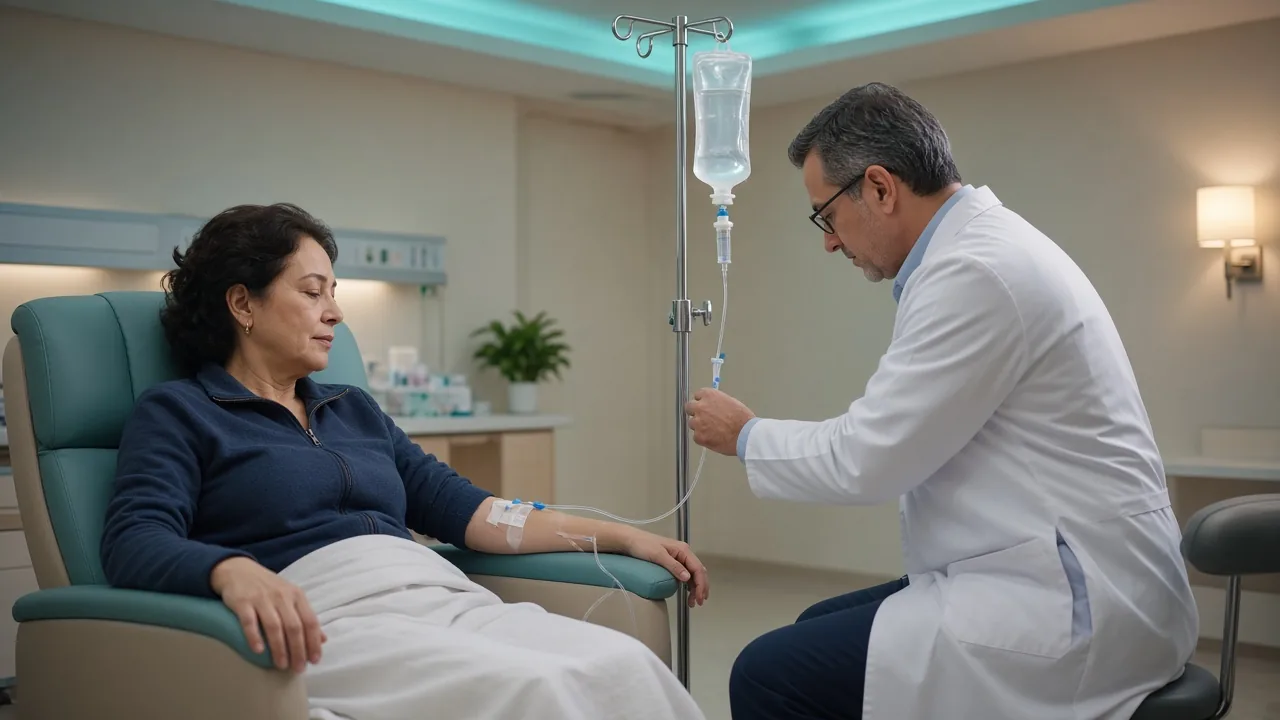
HER2-targeted therapy is designed to interfere specifically with HER2-driven cancer biology. This differs from conventional chemotherapy.
Targeted medicines may be used before surgery, after surgery, for recurrent disease or for metastatic disease. The exact medicine and duration depend on the clinical setting.
Trastuzumab
Trastuzumab is one of the most established HER2-targeted medicines. It binds to the HER2 protein and interferes with HER2-related signalling. It may be used as part of treatment for HER2-positive breast cancer in different clinical settings.
Treatment may be administered intravenously or through another formulation depending on the available treatment and clinical situation.
Pertuzumab
Pertuzumab is another HER2-targeted medicine. In selected patients, it may be combined with trastuzumab and chemotherapy. This combination can be used in particular treatment settings, including some patients with higher-risk early-stage disease or advanced disease.
Other HER2-Targeted Treatments
HER2-directed treatment has expanded beyond trastuzumab and pertuzumab. Depending on the clinical situation, other HER2-directed medicines may include trastuzumab emtansine (T-DM1), trastuzumab deruxtecan (T-DXd) and other HER2-directed agents.
These medicines are not interchangeable. Their use depends on stage, previous treatment, response to treatment, residual disease after preoperative treatment, metastatic disease, availability and clinical indication.
What Is the Role of Chemotherapy?
Chemotherapy remains an important part of treatment for many HER2-positive breast cancers. However, HER2-targeted therapy and chemotherapy are different treatments.
Chemotherapy acts through mechanisms that damage rapidly dividing cancer cells. HER2-targeted medicines specifically interfere with HER2-driven signalling. They are often used together in appropriate treatment settings.
Does Every HER2-Positive Patient Need Chemotherapy?
Not necessarily. Treatment depends on the patient's individual cancer characteristics.
Factors that influence the decision may include tumour size, lymph-node status, stage, patient age and general health, hormone receptor status, risk of recurrence, treatment setting and other pathological findings.
Some small, early-stage HER2-positive cancers may be treated with less intensive regimens than larger or node-positive cancers. The appropriate treatment should be determined by the treating oncology team.
HER2-Positive Breast Cancer Surgery
Surgery remains an important component of treatment for many patients with localized HER2-positive breast cancer. Depending on the tumour and patient factors, surgery may include breast-conserving surgery, mastectomy, sentinel lymph node biopsy and axillary lymph node surgery when indicated.
Can HER2-Positive Patients Have Lumpectomy?
Yes. HER2-positive status by itself does not automatically mean that a patient needs a mastectomy. Some patients can undergo breast-conserving surgery when the tumour and breast anatomy are suitable.
The overall treatment usually also includes appropriate systemic therapy and, after breast-conserving surgery, radiation therapy in most cases.
Can HER2-Positive Patients Have Mastectomy?
Yes. Mastectomy may be considered when the tumour is large relative to breast size, there are multiple areas of cancer, breast conservation is not appropriate, there are other clinical or genetic considerations, or the patient chooses mastectomy after discussing the options.
If reconstruction is desired, it may be performed immediately or later depending on the treatment plan. Explore Breast Reconstruction in India and reconstruction doctors.
What Is the Role of Radiation Therapy?
Radiation therapy may be recommended depending on the type of surgery and cancer characteristics. For patients undergoing breast-conserving surgery, radiation therapy is generally an important part of breast-conserving treatment.
After mastectomy, radiation may be recommended for selected patients based on tumour size, lymph-node involvement, other pathological findings and risk of recurrence. HER2-positive status alone does not determine whether radiation is required.
HER2-Positive Breast Cancer and Hormone Therapy
Some HER2-positive cancers are also hormone receptor-positive. If the cancer is ER-positive and/or PR-positive, endocrine therapy may be included in treatment.
This means a patient could potentially receive chemotherapy + HER2-targeted therapy + surgery + radiation + hormone therapy. But not every patient requires every treatment. Treatment should be individualized according to tumour biology and stage.
Treatment of HER2-Positive Metastatic Breast Cancer
Metastatic HER2-positive breast cancer is treated differently from localized disease. When breast cancer has spread to distant organs, systemic treatment becomes central to management.
Treatment may involve HER2-targeted medicines, chemotherapy, endocrine therapy for hormone receptor-positive disease, or other systemic therapies depending on previous treatment and the characteristics of the cancer. Treatment may change over time if the disease progresses or stops responding to a particular regimen.
What Happens If HER2-Positive Cancer Remains After Preoperative Treatment?
For some patients who receive treatment before surgery, pathology after surgery may show whether residual invasive cancer remains. This information can influence postoperative treatment.
For example, patients with residual HER2-positive disease after appropriate preoperative treatment may be considered for a different HER2-directed postoperative treatment rather than simply continuing the original regimen.
HER2-Positive Breast Cancer: Common Treatment Pathways
There is no universal pathway, but some examples include:
- Early-stage disease: Diagnosis → HER2 testing → systemic therapy → surgery → additional systemic therapy ± radiation
- HER2-positive and hormone receptor-positive: Diagnosis → HER2-directed treatment ± chemotherapy → surgery → radiation where indicated → endocrine therapy
- Metastatic disease: Diagnosis of metastatic HER2-positive disease → systemic HER2-directed treatment → monitoring → subsequent therapy if disease progresses
These are simplified examples rather than treatment prescriptions.
How Is HER2-Positive Breast Cancer Monitored During Treatment?

Monitoring depends on the treatment regimen. Doctors may assess physical examination, blood tests, imaging, tumour response, treatment-related side effects and heart function when required by the HER2-directed medicine.
What Are the Side Effects of HER2-Targeted Therapy?
Side effects depend on the specific medicine and combination being used. Possible side effects may include fatigue, diarrhea, nausea, infusion-related reactions, reduced blood counts when combined with chemotherapy, and changes in heart function with some HER2-targeted medicines.
Not every patient experiences these effects. The combination of chemotherapy and HER2-targeted therapy can also make it difficult to determine which medicine is responsible for a particular symptom. Patients should report new or persistent symptoms to their oncology team.
Heart Monitoring During HER2-Targeted Treatment
Some HER2-targeted treatments can affect heart function. For this reason, doctors may assess cardiac function before and during treatment. Testing may include an echocardiogram or another appropriate cardiac assessment.
The exact monitoring schedule depends on the medicine being used, previous cardiac history, other risk factors, treatment duration and clinical findings. Patients should tell their oncologist about any history of heart disease or relevant cardiac treatment before starting therapy.
How Long Does HER2-Targeted Treatment Continue?
The duration varies according to the clinical setting. For many patients with early-stage HER2-positive breast cancer, HER2-directed treatment may continue for an extended period after surgery.
For metastatic disease, treatment may continue as long as it is controlling the cancer and side effects remain manageable, with changes made when clinically necessary. The exact duration should be determined by the treating oncologist.
HER2-Positive Breast Cancer Treatment Cost in India
The cost of treating HER2-positive breast cancer can vary significantly. Unlike a single surgical procedure, HER2-positive treatment may involve several months of systemic treatment and multiple components. See the breast cancer treatment cost guide and Targeted Therapy Cost in India.
The total cost may include diagnostic tests, pathology and HER2 testing, imaging, surgery, chemotherapy, HER2-targeted medicines, radiation therapy, hospitalization or day-care treatment, blood tests, cardiac monitoring, supportive medicines and follow-up consultations.
The targeted medicines used can have a significant effect on the overall treatment cost. For this reason, it is not appropriate to provide one universal price for "HER2-positive breast cancer treatment." A patient-specific treatment plan and quotation are more useful.
What Determines the Cost of HER2-Targeted Treatment?
| Factor | Why it changes the cost |
|---|---|
| Medicine used | Different HER2-targeted medicines have different costs |
| Treatment duration | A longer course involves more doses |
| Combination therapy | HER2-targeted treatment may be combined with chemotherapy or other medicines |
| Route of administration | Some treatments require infusion facilities and monitoring |
| Hospital and day-care charges | Administration and monitoring add to the total |
| Additional investigations | Blood tests, imaging and cardiac monitoring may be required |
| Disease stage | Early-stage and metastatic pathways can differ substantially |
Why International Patients Should Get a Case-Specific Quote
For international patients, a general online price can be misleading because the treatment plan may change after pathology and imaging are reviewed. See the international-patient guide.
Before travelling to India, patients should ideally provide the biopsy report, histopathology, ER/PR results, HER2 report, imaging reports, previous treatment records, chemotherapy details, previous HER2-targeted treatment and current medicines.
HER2-Positive Breast Cancer Treatment for International Patients in India
International patients may require coordination between several specialties. Depending on the case, the treatment team can include a breast surgical oncologist, medical oncologist, radiation oncologist, radiologist, pathologist, reconstructive surgeon and a cardiologist when clinically required.
Before travelling, patients should ask whether their pathology can be reviewed remotely. This can help clarify whether additional testing is required, whether surgery is likely, whether systemic treatment should begin first, the expected treatment sequence, the approximate duration of stay, and whether a second opinion is recommended.
Questions to Ask Your Oncologist
- What is my HER2 test result?
- Was my HER2 result confirmed by the appropriate testing method?
- Is my cancer also ER- or PR-positive?
- What is the stage of my cancer?
- Do I need treatment before surgery?
- Which HER2-targeted medicine is being recommended?
- Will I need chemotherapy?
- Will I need radiation therapy?
- Will I need hormone therapy?
- How long will HER2-targeted treatment continue?
- Will my heart function need monitoring?
- What side effects should I watch for?
- What will determine whether the treatment is working?
- What are the expected costs of the complete treatment plan?
- Should I obtain a second opinion?
Frequently Asked Questions
Is HER2-positive breast cancer curable?
The outlook depends on the stage and other characteristics of the cancer. Many patients with early-stage HER2-positive breast cancer receive treatment with curative intent. Metastatic HER2-positive breast cancer is managed differently and generally requires ongoing systemic treatment.
Is HER2-positive breast cancer aggressive?
HER2-positive breast cancer has distinct biological characteristics and can behave differently from HER2-negative disease. Importantly, effective HER2-targeted treatments have significantly changed how HER2-positive breast cancer is managed.
What is the main treatment for HER2-positive breast cancer?
There is no single treatment. Depending on the situation, treatment may include surgery, chemotherapy, HER2-targeted therapy, radiation therapy and hormone therapy.
Does HER2-positive always mean chemotherapy is required?
No. The need for chemotherapy depends on tumour size, stage, lymph-node involvement, patient factors and the overall treatment plan.
Can HER2-positive breast cancer be hormone receptor-positive?
Yes. A tumour can be both HER2-positive and ER/PR-positive.
Can HER2-positive breast cancer be treated without surgery?
Some patients with advanced or metastatic disease may not undergo breast surgery because systemic treatment is the primary approach. For localized disease, surgery is often an important component when medically appropriate.
What is trastuzumab?
Trastuzumab is a HER2-targeted medicine used to treat HER2-positive breast cancer in appropriate clinical settings.
What is pertuzumab?
Pertuzumab is another HER2-targeted medicine that may be combined with trastuzumab and chemotherapy in selected patients.
Does HER2-targeted treatment have side effects?
Yes. Side effects vary by medicine and combination. They can include fatigue, gastrointestinal symptoms, infusion reactions and, with some medicines, effects on heart function.
How is HER2 status determined?
HER2 is commonly assessed using immunohistochemistry. Equivocal results may require additional testing such as in situ hybridization.
How much does HER2-positive breast cancer treatment cost in India?
There is no fixed price. The cost depends on the stage, medicines, targeted therapy, chemotherapy, surgery, radiation, monitoring and treatment duration.
Can international patients receive HER2-targeted treatment in India?
Yes. International patients can seek evaluation and treatment in India. Their pathology and previous treatment records should ideally be reviewed before travel.
HER2-Positive Breast Cancer in India: Key Takeaways
HER2-positive breast cancer is defined by specific biological characteristics identified through tumour testing. Treatment may involve HER2-targeted therapy, chemotherapy, surgery, radiation therapy, hormone therapy when the cancer is hormone receptor-positive, and other systemic treatments in selected situations.
The treatment plan depends on stage, HER2 status, ER/PR status, tumour characteristics, previous treatment and overall health. For international patients, obtaining a pathology review and treatment plan before travelling can help clarify the expected treatment sequence and potential costs.
GAF Healthcare Resources
- Breast Cancer Treatment in India
- ER, PR and HER2 results
- Breast Cancer Diagnosis
- Breast Cancer Treatment by Stage
- Breast Cancer Stages 0–4
- Breast Cancer Treatment Cost in India
- Treatment for international patients
- HER2-Targeted Therapy Doctors in India
- Targeted Therapy Cost in India
- Chemotherapy Doctors in India
- Chemotherapy Cost in India
- Hormone Therapy Doctors in India
- Hormone Therapy Cost in India
- Mastectomy Doctors in India
- Breast Reconstruction Doctors in India