Treatment Overview

Fanconi anemia (FA) is a rare inherited bone marrow failure disorder caused by abnormalities in the DNA-repair pathway. It can lead to progressive low blood counts, congenital abnormalities, myelodysplastic syndrome (MDS), acute myeloid leukemia (AML), and an increased risk of several solid cancers. Because Fanconi anemia affects multiple organ systems and patients can be unusually sensitive to chemotherapy and radiation, treatment requires a highly specialised, multidisciplinary approach.
India has paediatric haematology, bone marrow transplantation, genetic medicine and oncology programmes capable of managing complex inherited marrow-failure disorders. Published Indian transplant experience shows that hematopoietic stem cell transplantation (HSCT) for Fanconi anemia can be performed in Indian centres, although outcomes depend heavily on disease status, age, donor, infections, transfusion history and transplant protocol.
There is no single GAF Fanconi-anemia cost sheet. Androgens, G-CSF, DEB/MMC testing and transfusion cycles are hospital-priced products, not a nationwide package. Neighbouring allogeneic stem cell transplant planning is $30,000–$80,000, typically 6–10 weeks nearby. Neighbouring pediatric bone marrow transplantation is $28,000–$75,000, typically 6–12 weeks with a parent nearby. Neighbouring matched sibling donor transplant is $28,000–$70,000. Neighbouring haploidentical stem cell transplant is $35,000–$85,000. Neighbouring matched unrelated donor transplant is $40,000–$95,000. Neighbouring hematopoietic stem cell transplantation is $24,000–$70,000. The neighbouring bone marrow transplantation umbrella is $25,000–$70,000 and is not a substitute allogeneic quote when the graft type has already been named. Neighbouring bone marrow biopsy is $300–$900. Neighbouring precision oncology is $2,000–$7,000 when a named genetic panel plus clinic visit is the product. Comparable US allogeneic planning is $200,000–$420,000. Comparable US paediatric BMT planning is $180,000–$420,000. These are planning ranges from partner hospital cost sheets, not hospital quotations.
Autologous transplant uses the patient's own cells and is not the typical Fanconi product, because those cells carry the same DNA-repair defect. Autologous lists sit on Autologous Bone Marrow Transplant in India.
International patients comparing haematologists commonly start with city lists in Delhi NCR, Mumbai, Bengaluru, Chennai and Hyderabad. When a graft is already on the table, allogeneic lists include Delhi NCR allogeneic stem cell transplant. Bone-marrow-transplantation lists sit in Delhi NCR, Mumbai, Bengaluru, Chennai and Hyderabad. Paediatric lists include Delhi NCR paediatric haematology and Chennai paediatric haematology. Partner haematology hospitals are listed in the same five cities. City cost sheets include Delhi NCR allogeneic stem cell transplant and Mumbai bone marrow transplantation. Kolkata, Vellore, Pune, Ahmedabad and Chandigarh may appear in published institutional facts. They are not live GAF catalogue cities.
What is Fanconi anemia?
Fanconi anemia is an inherited disorder affecting the body's ability to repair certain types of DNA damage. It belongs to a group of disorders known as inherited bone marrow failure syndromes (IBMFS). Several genes participate in the Fanconi anemia DNA-repair pathway, and pathogenic variants in these genes can produce the FA phenotype.
The disease is best known for progressive bone marrow failure. As the marrow becomes less capable of producing blood cells, a patient may develop anaemia, thrombocytopenia and neutropenia. Fanconi anemia is more than a blood disorder. Some patients also have short stature, abnormal skin pigmentation, thumb or forearm abnormalities, kidney or urinary-tract abnormalities, genital abnormalities, eye or hearing problems, endocrine disorders, congenital heart abnormalities, developmental or learning difficulties, and an increased risk of MDS, AML and certain solid tumours.
Not every patient has all of these features. Some individuals are diagnosed only after unexplained bone marrow failure or cancer at a young age.
What causes Fanconi anemia?
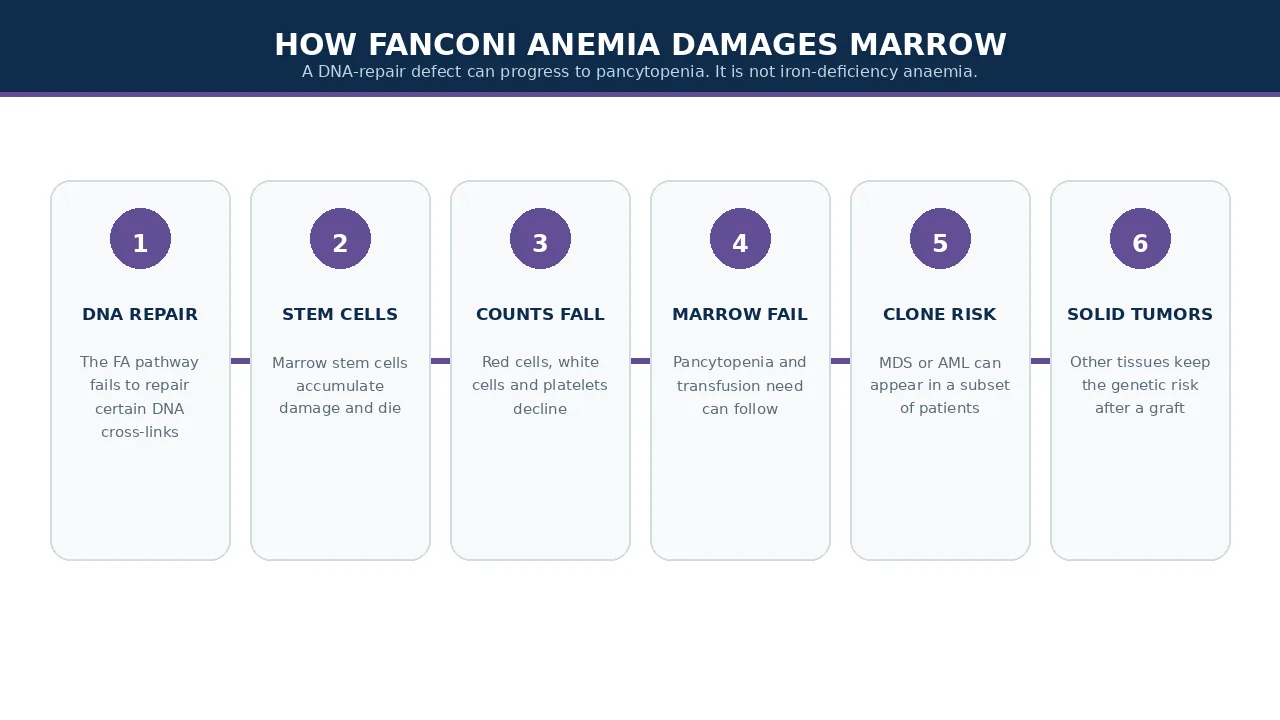
Fanconi anemia occurs because of inherited changes in genes involved in DNA repair. The FA pathway helps cells repair DNA interstrand cross-links and other forms of DNA damage. When this pathway does not work properly, cells can accumulate DNA damage and become vulnerable to cell death or abnormal genetic changes.
The hematopoietic stem cells in the bone marrow are particularly affected. Over time this can result in a DNA-repair defect, marrow stem-cell damage, declining blood-cell production, pancytopenia and marrow failure. The same genomic instability also contributes to the increased risk of MDS, leukemia and certain solid tumours.
Aplastic-anemia lists sit on Aplastic Anemia Treatment in India. Aplastic anemia describes marrow failure; Fanconi anemia is a specific inherited cause. Leukemia lists sit on Leukemia Treatment in India. MDS and AML treatment pages are not live on this site.
Ask whether current counts need an FA work-up
Symptoms and when to suspect FA
Haematologic symptoms can include fatigue, weakness, pale skin, breathlessness, frequent infections, fever, easy bruising, nosebleeds, gum bleeding and prolonged bleeding from minor injuries. Physical features can include short stature, abnormal pigmentation, café-au-lait-type skin changes, thumb or radial-ray abnormalities, skeletal abnormalities, microcephaly, kidney or genital abnormalities and eye abnormalities. The absence of obvious physical abnormalities does not rule out Fanconi anemia.
Doctors may consider Fanconi anemia when a child or young adult has unexplained aplastic anemia, pancytopenia, thrombocytopenia, neutropenia, macrocytosis, MDS, AML, congenital limb abnormalities, short stature, abnormal pigmentation, multiple congenital abnormalities, early-onset solid cancer or severe unusual toxicity after chemotherapy. A negative family history does not exclude Fanconi anemia.
Diagnosis
Correct diagnosis is extremely important because conventional treatment for acquired aplastic anemia, leukemia and other conditions may not be appropriate for a patient with an undiagnosed inherited DNA-repair disorder.
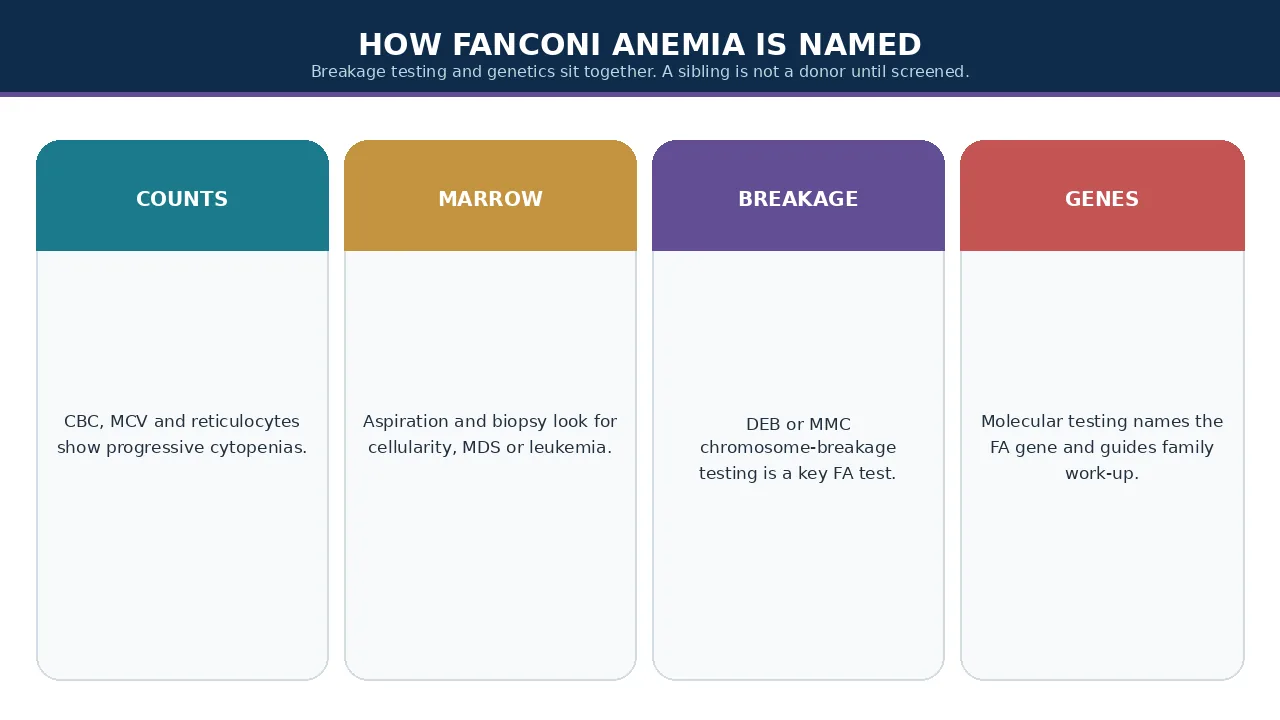
Complete blood count. Haemoglobin, white-cell count, absolute neutrophil count, platelet count, mean corpuscular volume and reticulocyte count. Progressive cytopenias can suggest bone marrow failure.
Bone marrow examination. Aspiration and biopsy assess cellularity, dysplasia, abnormal clones, MDS, leukemia and other causes of marrow failure. Neighbouring bone marrow biopsy planning is $300–$900.
Chromosome-breakage testing. Patient lymphocytes are exposed to DNA cross-linking agents such as diepoxybutane (DEB) or mitomycin C (MMC). Cells from individuals with Fanconi anemia demonstrate increased chromosome breakage and characteristic radial formations. This test is particularly important because Fanconi anemia can resemble other causes of aplastic anemia. There is no live GAF DEB or MMC sheet.
Genetic testing. Molecular testing can identify pathogenic variants in genes associated with Fanconi anemia, confirm the diagnosis, name the molecular subtype, guide family testing, support genetic counselling and identify certain genotype-specific cancer risks. Neighbouring precision oncology is $2,000–$7,000 only when a named panel plus clinic visit is the product. A genetic-testing treatment page is not live on this site.
Testing family members. Once Fanconi anemia has been diagnosed, appropriate testing of siblings and other at-risk relatives is important, especially when a sibling may potentially serve as a stem-cell donor. A potential donor should not simply be selected because they are a sibling. The donor must be evaluated for Fanconi anemia or carrier status according to the transplant team's protocol.
A negative or inconclusive blood breakage test does not always completely exclude Fanconi anemia, particularly when hematopoietic mosaicism is suspected. Specialist evaluation may lead to testing of another cell type, such as skin fibroblasts, along with molecular testing.
Send CBC, marrow, DEB/MMC and genetic reports
Treatment options
Treatment is individualised. There is no single protocol for every patient because the disease can range from relatively stable cytopenias to severe marrow failure, MDS or leukemia.
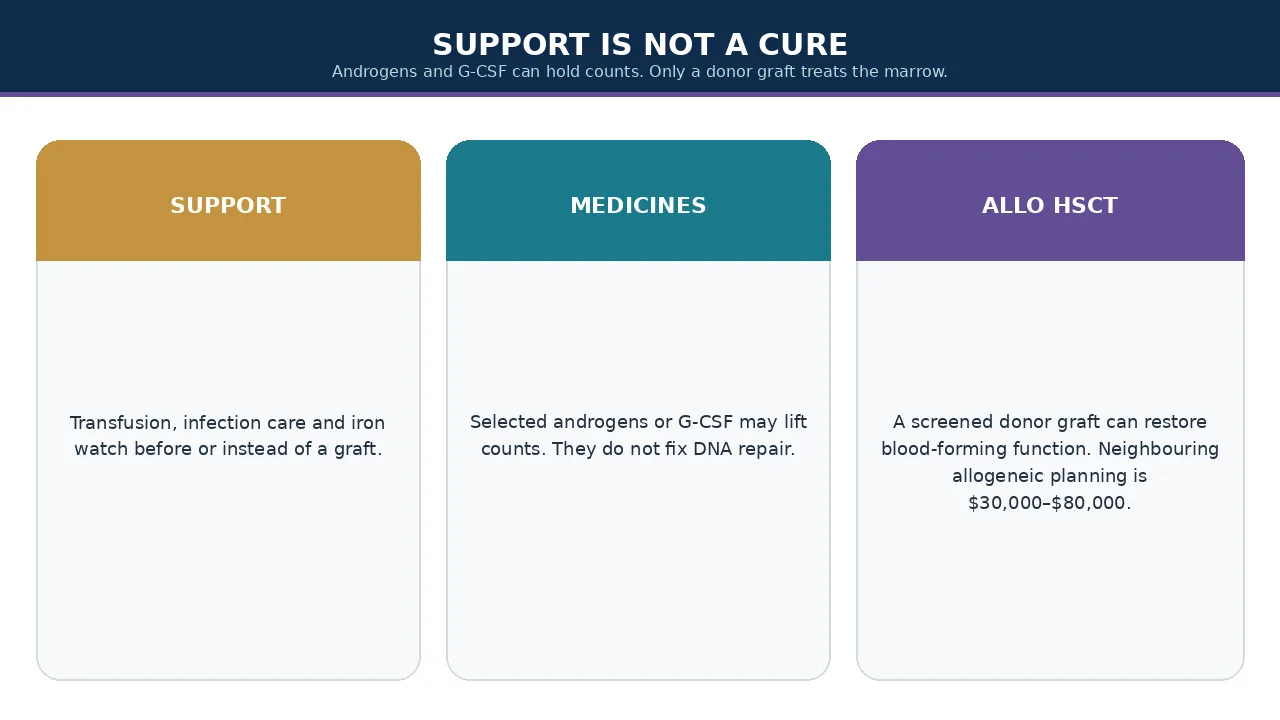
Treatment may include observation and monitoring, supportive care, blood transfusions when required, iron-overload management, androgen therapy, G-CSF in selected patients, hematopoietic stem cell transplantation, treatment of MDS or AML, cancer surveillance, management of congenital and endocrine complications, and genetic counselling with family screening.
Supportive treatment
Red-cell transfusions may be required when anaemia becomes clinically significant. Platelet transfusions may be given when counts are dangerously low or significant bleeding occurs. Patients with neutropenia may require rapid evaluation and treatment of fever or infection. Repeated transfusions can cause iron accumulation in the liver, heart and endocrine organs. Transfusion history and iron status are important, particularly when a patient is being evaluated for HSCT. The EBMT specifically emphasises iron-overload management in inherited marrow-failure disorders.
Androgen therapy
Androgens have historically been used to improve blood counts in some patients. Examples include oxymetholone, danazol and other synthetic androgens depending on regional practice. GeneReviews notes that oral androgens may produce haematologic improvement in approximately half of individuals, although response is variable and treatment carries potential toxicity. Androgen therapy is not a cure. Potential concerns include liver toxicity, abnormal liver growths, virilisation, lipid abnormalities and other hormone-related adverse effects. There is no live GAF androgen sheet.
G-CSF therapy
Granulocyte colony-stimulating factor may be considered in selected patients with significant neutropenia. It can increase neutrophil production in some patients. G-CSF does not correct the underlying DNA-repair defect and is not a definitive treatment. There is no live GAF G-CSF sheet.
Ask which supportive line is being named
Hematopoietic stem cell transplantation
HSCT is the only established curative treatment for the haematologic manifestations of Fanconi anemia. The procedure replaces the patient's abnormal blood-forming stem-cell system with healthy donor hematopoietic stem cells. It can potentially correct bone marrow failure, severe cytopenias and the haematologic component of the disease. It does not eliminate the underlying genetic defect in other tissues. Patients remain at risk for FA-associated solid tumours and other non-haematologic complications.
When is HSCT recommended?
Important indications may include progressive bone marrow failure, significant transfusion dependence, severe neutropenia, progressive pancytopenia, MDS, AML, failure or dependence on medical therapy, and other clinically significant marrow-failure complications. The exact timing should be decided by a specialist transplant team. The EBMT Handbook emphasises that transplantation should be performed at specialised centres because patients with Fanconi anemia have unusual sensitivity to treatment-related toxicity.
Timing matters because patients can accumulate transfusion-related iron overload, infections, marrow abnormalities, MDS or leukemia and organ complications. Recent multicenter data involving 813 children with Fanconi anemia undergoing first HSCT reported a 5-year overall survival of 83%, with outcomes influenced by donor type, disease status, age and conditioning approach. Those international results should not be interpreted as a guaranteed outcome for an individual patient.
Donor selection
A healthy, appropriately screened matched sibling is often an important donor option. Neighbouring matched sibling donor transplant planning is $28,000–$70,000. If there is no suitable sibling, a matched unrelated donor may be considered. Neighbouring matched unrelated donor transplant is $40,000–$95,000. Alternative approaches may include haploidentical donors, other partially matched family donors, or cord blood in selected circumstances. Neighbouring haploidentical stem cell transplant is $35,000–$85,000.
Donor selection must account for both HLA compatibility and the possibility that a family member could carry the genetic disorder.
Neighbouring allogeneic stem cell transplant planning is $30,000–$80,000. Neighbouring pediatric bone marrow transplantation is $28,000–$75,000. Adult floors are not a substitute because a brochure says they treat all ages. Transplant lists sit on Bone Marrow Transplant in India. Inherited-marrow-failure lists also sit on Thalassemia Treatment in India and Sickle Cell Anemia Treatment in India.
Conditioning and the transplant journey
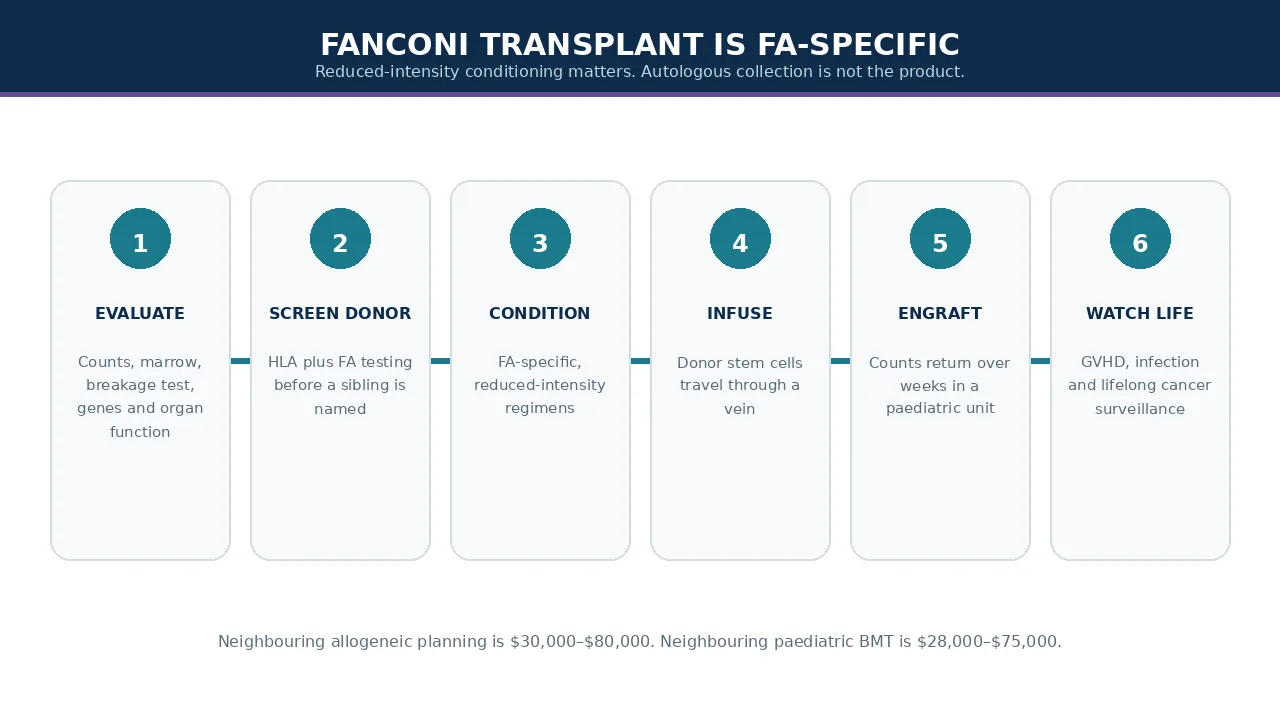
In Fanconi anemia, conditioning is particularly challenging because the cells are unusually sensitive to DNA-damaging agents. Patients can experience severe toxicity from conventional chemotherapy and radiation. Reduced-intensity and FA-specific conditioning strategies are commonly considered in experienced programmes. The EBMT specifically highlights the increased susceptibility of FA patients to alkylating chemotherapy and radiation-induced toxicity.
The broad journey includes detailed evaluation, donor selection, carefully selected conditioning, intravenous stem-cell infusion, engraftment, early post-transplant monitoring for infection, graft failure, GVHD, organ toxicity and bleeding, and long-term follow-up. GVHD can affect skin, liver, gastrointestinal tract and other organs. Prevention and treatment should be managed by an experienced transplant team.
Ask whether a screened donor graft is being named
MDS, AML and cancer surveillance
Fanconi anemia increases the risk of MDS and AML. If MDS or AML develops, treatment becomes considerably more complex because FA cells are unusually sensitive to chemotherapy and radiation. GeneReviews recommends that chemotherapy for FA-associated MDS/AML be coordinated with a centre experienced in Fanconi anemia, with transplantation planning considered before chemotherapy whenever appropriate. Conventional chemotherapy regimens cannot simply be applied in the same manner as for patients without an inherited DNA-repair disorder.
MDS-treatment and AML-treatment pages are not live. Leukemia lists sit on Leukemia Treatment in India. Lymphoma lists sit on Lymphoma Treatment in India. Myeloma lists sit on Multiple Myeloma Treatment in India.
Long-term cancer surveillance is essential. Patients have increased risks of head and neck squamous-cell carcinoma, esophageal cancer, genital-tract cancers, skin cancers, liver cancers in certain settings, and breast and other cancers associated with particular FA genes. HSCT does not remove the underlying solid-tumour susceptibility.
GeneReviews recommends CBC monitoring every three to four months in stable patients, with more frequent evaluation when clinically necessary, alongside ongoing surveillance for MDS and multiple cancers. Monitoring may also include bone-marrow morphology and cytogenetics, oral and ENT examination, dermatology, endocrine assessment, audiology, ophthalmology, age-appropriate reproductive care, liver monitoring especially with androgen therapy, nutrition and genotype-specific cancer surveillance.
Fanconi anemia treatment cost in India
There is no reliable single Fanconi-anemia package that applies to every patient. GAF publishes neighbouring USD partner ranges for the named modality.
| Treatment component | Neighbouring GAF USD planning range | Typical stay or cadence |
|---|---|---|
| Bone marrow biopsy | $300–$900 | Day-care sampling |
| Precision oncology / genetic panels | $2,000–$7,000 | Outpatient when a named panel is booked |
| Hematopoietic stem cell transplantation | $24,000–$70,000 | 4–10 weeks in a paediatric unit |
| Bone marrow transplantation umbrella | $25,000–$70,000 | 4–8 weeks; not a substitute allogeneic quote |
| Matched sibling donor transplant | $28,000–$70,000 | 6–10 weeks with a parent nearby |
| Pediatric bone marrow transplantation | $28,000–$75,000 | 6–12 weeks with a parent nearby |
| Allogeneic stem cell transplant | $30,000–$80,000 | Typically 6–10 weeks nearby |
| Haploidentical stem cell transplant | $35,000–$85,000 | 6–10 weeks nearby |
| Matched unrelated donor transplant | $40,000–$95,000 | 6–12 weeks nearby |
Androgens, G-CSF, DEB/MMC testing, HLA family testing, transfusion cycles and infection admissions are hospital-priced. A transplant quotation should be prepared after reviewing diagnosis, age, disease status, donor situation and previous treatment. For international patients it is useful to request a written estimate separating hospital charges, professional fees, donor-related costs, medicines, blood products, ICU charges, additional investigations and possible complication-related costs.
Request an itemised Fanconi-anemia estimate
Why specialised care matters
A patient with Fanconi anemia may require coordinated care from a paediatric haematologist, bone-marrow-transplant specialist, geneticist, pathologist, transfusion-medicine specialist, infectious-disease team, paediatric intensivist when necessary, endocrinologist, ENT specialist, dentist or oral-medicine specialist, dermatologist, gynaecologist or urologist, nutritionist, physiotherapist and psychosocial support. A centre that performs many conventional transplants is not automatically the right centre for every Fanconi anemia patient. Specific experience with FA and other inherited marrow-failure syndromes is particularly important.
Live GAF haematology hospital lists sit in Delhi NCR, Mumbai, Bengaluru, Chennai and Hyderabad. Pune, Kolkata, Vellore, Ahmedabad and Chandigarh are not live catalogue cities.
Families should ask whether the centre regularly treats Fanconi anemia and inherited marrow-failure syndromes, whether it has paediatric BMT expertise, whether it can coordinate genetic testing, whether it understands FA-specific conditioning, whether it can manage serious infections and ICU complications, and whether long-term cancer surveillance is planned.
International patient journey
Families travelling to India should ideally arrange a comprehensive review before travel. Useful documents include CBC trends, marrow reports, cytogenetic or FISH results, DEB/MMC chromosome-breakage results, genetic testing reports, HLA typing, previous transfusion history, infection history, previous medicines, imaging, previous transplant evaluations and MDS/AML reports if applicable. A chronological medical summary is particularly useful.
Diagnostic evaluation may take days to weeks. If HSCT is required, the overall process can extend over several weeks or months, including donor work-up, pre-transplant testing, conditioning, hospitalisation and early follow-up. Long-term monitoring continues for years.
Genetic counselling, diet and vaccination
The inherited genetic condition itself cannot be prevented after conception. Genetic counselling can help families understand the inheritance pattern, carrier status, recurrence risk, testing of siblings, reproductive options, prenatal testing and preimplantation genetic testing where appropriate. Most forms are autosomal recessive, while RAD51-related disease can be autosomal dominant and FANCB-related disease is X-linked.
There is no specific diet that cures Fanconi anemia. Maintain adequate calories and protein, assess iron before taking iron supplements, and follow safe food practices during severe immunosuppression. Iron supplements should not be started simply because a patient has anaemia. Repeated transfusions can contribute to iron overload.
Vaccination decisions should be individualised according to age, immune status, current treatment, transplant status and the local schedule. After HSCT, vaccination schedules are generally rebuilt according to transplant-centre protocols.
Emergencies
High fever, chills, uncontrolled bleeding, sudden breathlessness, chest pain, fainting or sudden confusion belongs in a local emergency department first. WhatsApp at +91 90443 46292 is for planned coordination, not emergency care. A coordinator can also open WhatsApp.
Questions to ask
- Does the centre regularly treat Fanconi anemia and inherited marrow-failure syndromes?
- Has chromosome-breakage testing been performed?
- Has the FA gene been named?
- Have siblings been screened before anyone is named as a donor?
- Is allogeneic HSCT recommended now, or is supportive care the current product?
- What FA-specific conditioning is planned?
- What is the neighbouring GAF USD range for the named graft?
- How will MDS, AML and solid-tumour surveillance be organised after counts recover?
- How long should an international family remain in India?
- What follow-up continues after returning home?
Send those answers with the reports
Frequently asked questions
Is Fanconi anemia curable? There is currently no treatment that removes the underlying genetic defect from all affected tissues. HSCT is the established curative treatment for the hematologic manifestations of Fanconi anemia, but congenital abnormalities and the underlying predisposition to solid cancers remain.
Is bone marrow transplant necessary for every Fanconi anemia patient? No. The decision depends on marrow function, disease progression, transfusion requirements, infections, MDS/AML status, donor availability and overall clinical circumstances.
What age is best for Fanconi anemia transplant? There is no universal age. Recent transplant data suggest that younger patients with marrow failure can have better outcomes than patients transplanted later, but timing must be individualised.
Can Fanconi anemia be treated without a transplant? Yes, in selected patients. Supportive treatment, androgen therapy and G-CSF may be used depending on the clinical situation. These treatments do not cure the underlying haematologic disease.
Can a sibling donate bone marrow? A sibling may be a potential donor, but the sibling must undergo appropriate HLA and medical or genetic evaluation before donation.
Can Fanconi anemia develop into leukemia? Yes. Patients with Fanconi anemia have an increased risk of MDS and AML.
Does Fanconi anemia increase cancer risk after transplant? Yes. HSCT can correct the haematologic manifestations but does not remove the underlying predisposition to solid tumours. Long-term cancer surveillance remains necessary.
Can an adult have Fanconi anemia? Yes. Although many patients develop marrow failure during childhood, Fanconi anemia can sometimes be diagnosed in adolescence or adulthood, especially when the presentation is atypical.
Is Fanconi anemia inherited? Yes. The inheritance pattern depends on the particular gene involved. Most forms are autosomal recessive, while some forms have autosomal-dominant or X-linked inheritance.
Can Fanconi anemia be diagnosed through genetic testing alone? Genetic testing can establish the diagnosis in appropriate circumstances, but chromosome-breakage testing using DEB/MMC remains an important diagnostic method. Some patients may require testing using another tissue if blood testing is inconclusive because of mosaicism.
Is Fanconi anemia the same as aplastic anemia? No. Aplastic anemia describes bone marrow failure, whereas Fanconi anemia is a specific inherited disorder that can cause bone marrow failure. Identifying FA is important because management, transplant preparation and long-term surveillance differ.
How much does Fanconi anemia treatment cost in India? There is no single package. Neighbouring allogeneic transplant planning is $30,000–$80,000. Neighbouring paediatric BMT planning is $28,000–$75,000. Androgens, G-CSF and breakage testing are hospital-priced.
Can international patients come to India for Fanconi anemia treatment? Yes. International patients can seek evaluation at specialised Indian haematology and BMT centres. Medical records, genetic reports, marrow results, transfusion history and HLA information should ideally be reviewed before travel.
Key takeaways
- Fanconi anemia is an inherited DNA-repair disorder and an important cause of inherited bone marrow failure.
- Diagnosis commonly involves DEB/MMC chromosome-breakage testing and genetic testing.
- HSCT is the only established curative treatment for the haematologic manifestations of FA.
- Transplantation requires specialised conditioning because FA patients are unusually sensitive to DNA-damaging treatment.
- A matched sibling can be an important option, but donor selection requires careful genetic and HLA evaluation.
- Androgens and G-CSF may provide haematologic support in selected patients but are not curative.
- Patients require lifelong surveillance even after successful transplantation.
- Neighbouring GAF USD sheets name the booked graft. There is no live Fanconi, androgen or DEB package.
Medical disclaimer
This page is intended for education and international-treatment planning. Fanconi anemia is a complex inherited disorder, and treatment decisions — including whether and when to perform HSCT — must be made by a specialist team after reviewing the individual patient's genetic results, blood counts, marrow findings, donor status and overall health.
High fever during neutropenia, uncontrolled bleeding, sudden breathlessness or sudden confusion belongs in a local emergency department, not on WhatsApp.
Pediatric-BMT, matched-sibling, haploidentical, genetic-testing, MDS-treatment and AML-treatment pages are not live on this site. Use this pillar page plus the named modality sheets.
Sources
- GeneReviews: Fanconi Anemia — diagnosis, androgens, HSCT and lifelong surveillance.
- Fanconi Cancer Foundation clinical care guidelines — multidisciplinary FA care.
- EBMT Handbook: Fanconi anemia and hereditary marrow-failure syndromes — FA-specific conditioning and donor selection.
- Outcomes of HSCT in 813 paediatric patients with Fanconi anemia — multicenter survival context, not an individual prediction.
- Indian single-centre Fanconi anemia HSCT experience — published Indian transplant series.
- Haploidentical HSCT with PTCy in Fanconi anemia — Indian alternative-donor experience.
- GAF allogeneic stem cell transplant cost sheet — live partner planning range $30,000–$80,000.
- GAF pediatric bone marrow transplantation cost sheet — live partner planning range $28,000–$75,000.
- GAF matched sibling donor transplant cost sheet — live partner planning range $28,000–$70,000.
- GAF bone marrow transplantation cost sheet — live partner planning range $25,000–$70,000.
Treatment Process
- 1
Share reports
The family provides CBC trends, marrow, DEB/MMC, genetics, HLA and transfusion notes before anyone books travel.
- 2
Virtual haematology opinion
A haematologist reviews whether the case is supportive care or an FA-specific allogeneic transplant.
- 3
Name the pathway
The team writes androgens, G-CSF or a screened donor graft as separate products.
- 4
Itemized estimate
There is no single Fanconi package. Neighbouring allogeneic transplant is $30,000–$80,000. Neighbouring paediatric BMT is $28,000–$75,000.
- 5
Travel to India
Stable planned cases travel after records review. Fever during neutropenia is a local emergency.
- 6
Repeat essential tests
The receiving unit confirms breakage testing, genetics, infection status and donor screening after arrival.
- 7
Deliver the named pathway
Supportive care or FA-specific conditioning proceeds only after the gene and donor status are named.
- 8
Response review
Counts, graft function or medicine response decide whether another line is honest.
- 9
Lifelong plan
The family leaves with infection rules, cancer-surveillance dates and a remote-follow-up plan.