Treatment Overview

Autologous Bone Marrow Transplant (Auto-BMT), more precisely called Autologous Hematopoietic Stem Cell Transplantation (Auto-HSCT or ASCT), is an advanced treatment in which a patient's own blood-forming stem cells are collected, preserved and later returned after high-dose chemotherapy.
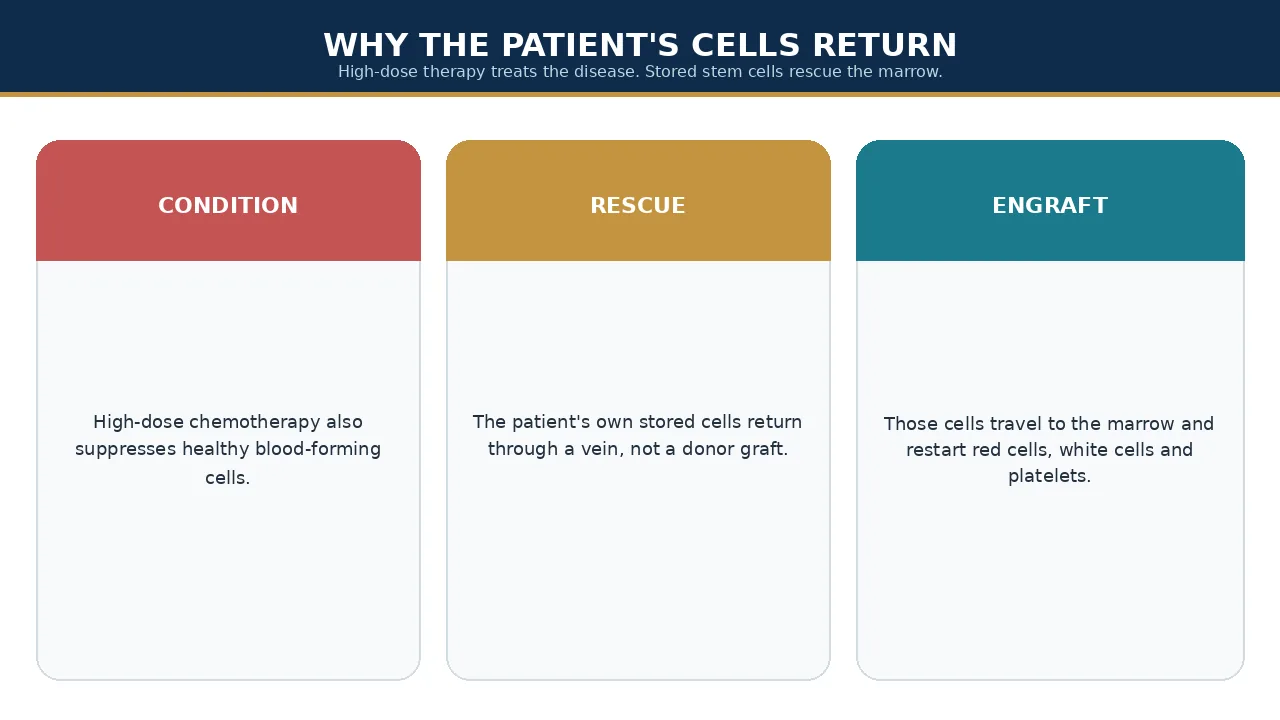
The purpose of the transplant is not simply to replace the bone marrow. The patient's stem cells act as a rescue system after intensive treatment that destroys both cancer cells and healthy blood-forming cells. Once infused, the stored stem cells travel back to the bone marrow and begin producing new blood cells.
In India, autologous transplantation is an established option for selected patients with multiple myeloma, Hodgkin lymphoma, non-Hodgkin lymphoma and certain other cancers or diseases. The exact indication, timing and conditioning regimen depend on the diagnosis, response to previous treatment, age, organ function, disease biology and overall fitness.
There is no separate GAF autologous-BMT package beyond the named autologous sheet. Neighbouring autologous stem cell transplant planning is $18,000–$48,000, typically 3–5 weeks in or near the unit. Comparable US autologous planning is $140,000–$320,000. The neighbouring bone marrow transplantation umbrella is $25,000–$70,000 and is not a substitute autologous quote when ASCT has already been named. Neighbouring allogeneic stem cell transplant is $30,000–$80,000 — a donor graft, not this product. Neighbouring haploidentical stem cell transplant is $35,000–$85,000. Neighbouring chemotherapy is $1,500–$8,000+. Neighbouring CAR-T cell therapy is $80,000–$180,000 when a named cellular product is actually available. Neighbouring bone marrow biopsy is $300–$900. These are planning ranges from partner hospital cost sheets, not hospital quotations.
An autologous transplant is a complex medical treatment, not a routine day-care infusion. A transplant specialist should determine whether it is appropriate for an individual patient.
International patients comparing haematologists commonly start with city lists in Delhi NCR, Mumbai, Bengaluru, Chennai and Hyderabad. Autologous-transplant lists sit in Delhi NCR, Mumbai, Bengaluru, Chennai and Hyderabad. Bone-marrow-transplantation lists include Delhi NCR and Mumbai. Partner haematology hospitals are listed in the same five cities. City cost sheets include Delhi NCR autologous stem cell transplant and Mumbai bone marrow transplantation. Kolkata, Vellore, Pune, Ahmedabad and Chandigarh may appear in published institutional facts. They are not live GAF catalogue cities.
What is autologous bone marrow transplant?
An autologous bone marrow transplant uses the patient's own hematopoietic stem cells. These cells are collected before high-dose chemotherapy, processed, frozen and stored under controlled conditions. The patient then receives intensive treatment designed to eliminate as much of the disease as possible. Because that treatment also severely suppresses the bone marrow, the stored stem cells are subsequently infused back.
The stem cells then migrate to the bone marrow and begin producing red blood cells, white blood cells and platelets. This process is called engraftment.
Autologous transplant vs allogeneic transplant
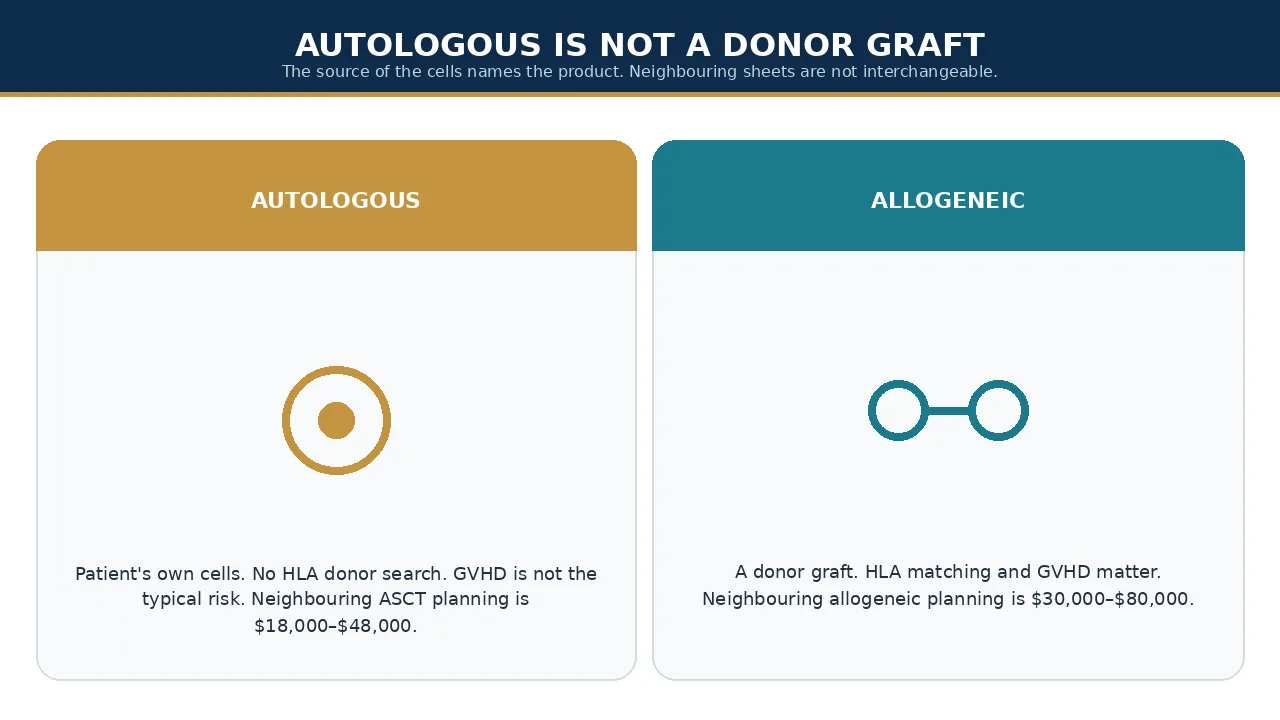
The most important distinction is the source of the stem cells.
| Feature | Autologous transplant | Allogeneic transplant |
|---|---|---|
| Stem-cell source | Patient's own cells | Donor cells |
| Donor required | No | Yes |
| HLA matching | Not required in the same way as donor transplantation | Important |
| Graft-versus-host disease | Not a typical concern | Important risk |
| Main purpose | Enable high-dose therapy and marrow recovery | Replace or restore haematopoiesis and, in some diseases, provide a donor immune anti-cancer effect |
| Immunosuppression | Generally less extensive | Often required |
| Neighbouring GAF USD planning | $18,000–$48,000 | $30,000–$80,000 |
| Common examples | Multiple myeloma, selected lymphomas | Leukemia, aplastic anemia and selected other disorders |
Autologous transplantation therefore differs fundamentally from a donor or allogeneic stem cell transplant. Allogeneic lists sit on Bone Marrow Transplant in India and Aplastic Anemia Treatment in India. Leukemia lists sit on Leukemia Treatment in India. An allogeneic-BMT treatment page is not live on this site.
Ask whether the named product is autologous or allogeneic
Why is autologous transplant done?
High-dose treatment can be more effective against certain cancers, but it can also severely damage the bone marrow. The patient's previously collected stem cells are returned afterward to restore blood production. NCI describes stem-cell transplantation as a way of restoring the body's ability to make blood cells after very high-dose cancer treatment.
This means the transplant itself is not usually what directly kills the cancer. The intensive conditioning treatment is an important part of the anti-cancer strategy, while the stem cells help the marrow recover.
Diseases treated with autologous stem cell transplant
Multiple myeloma
Multiple myeloma is one of the most established indications for autologous stem cell transplantation. For suitable patients, ASCT may be used after induction therapy to deepen the response and prolong the period before the disease progresses.
Factors considered include age, physical fitness, kidney function, heart and lung function, cytogenetic risk, response to induction, minimal residual disease assessment where appropriate, previous treatment and patient preference.
NCI evidence reviews support the role of autologous transplantation in appropriately selected patients, while newer drug combinations and maintenance treatments have changed how transplant is incorporated into the overall plan. The International Myeloma Foundation notes that ASCT can improve progression-free survival in appropriate patients, while overall survival comparisons depend on the treatment strategy and subsequent therapies.
Usually, ASCT is not a cure for myeloma. Multiple myeloma is generally considered a chronic, treatable blood cancer. The objective is often a deep response and a longer remission. Patients may subsequently receive maintenance therapy. Myeloma lists sit on Multiple Myeloma Treatment in India. Neighbouring maintenance therapy planning is $4,000–$18,000.
Hodgkin lymphoma and non-Hodgkin lymphoma
Autologous stem cell transplantation has an important role in selected patients with relapsed or refractory Hodgkin lymphoma. Typically the patient first receives salvage treatment. If the disease responds sufficiently, high-dose therapy followed by ASCT may be considered. Newer treatments, including targeted therapies and cellular therapies, have expanded options, so a patient should not assume that every relapse automatically requires ASCT.
ASCT may also be considered for selected patients with certain types of non-Hodgkin lymphoma, particularly in the relapsed setting when the disease responds to salvage treatment. The approach depends on subtype, previous therapy, duration of first remission, response to salvage, disease biology, fitness and alternative treatments. EBMT recommendations increasingly consider ASCT alongside other approaches, including CAR-T therapy, depending on subtype and setting.
Hodgkin-lymphoma and non-Hodgkin-lymphoma treatment pages are not live on this site. Lymphoma lists sit on Lymphoma Treatment in India. Neighbouring CAR-T cell therapy is $80,000–$180,000 when a named product is actually available. That sheet is not an ASCT quote.
Other conditions
Autologous transplantation can have applications beyond myeloma and lymphoma, including selected solid tumours and other diseases in specialised circumstances. It should not be promoted as a general treatment for every cancer or blood disorder. The indication must be established by a specialist transplant team.
Inherited marrow-failure lists sit on Thalassemia Treatment in India and Sickle Cell Anemia Treatment in India. Those diseases typically use allogeneic grafts, not autologous rescue.
Ask whether ASCT is being named for this diagnosis
Who may be eligible?
There is no single age or blood-test cutoff. Doctors evaluate the patient as a whole.
Disease-related factors. Exact diagnosis, stage, molecular or cytogenetic risk, response to initial or salvage treatment, disease burden, previous treatments and whether the disease is sensitive to chemotherapy.
Patient-related factors. Age, performance status, nutritional status, kidney, liver, heart and lung function, previous infections, other medical conditions and the ability to tolerate intensive chemotherapy.
NCI notes that younger, medically fit patients generally tolerate high-dose treatment more readily, but selected older adults can also undergo autologous transplantation when appropriately assessed. Age alone should therefore not decide eligibility.
Evaluation before transplant
The exact work-up varies according to the disease, but may include:
Blood tests. Complete blood count, kidney and liver function, electrolytes, infection screening, disease-specific markers, and blood-group testing where appropriate.
Heart and lung assessment. ECG, echocardiogram and other cardiac testing when indicated. Some patients require pulmonary function testing, chest imaging and additional respiratory assessment.
Disease assessment. PET-CT, CT, MRI, bone-marrow examination, serum or urine tests, protein studies, molecular or cytogenetic testing, and minimal residual disease testing when appropriate. Neighbouring bone marrow biopsy is $300–$900. Neighbouring precision oncology is $2,000–$7,000 when a named panel plus clinic visit is the product.
Infection evaluation. Because intensive chemotherapy can temporarily suppress immunity, the team carefully evaluates existing or previous infections.
Send pathology, PET-CT and organ-function reports
Step-by-step process
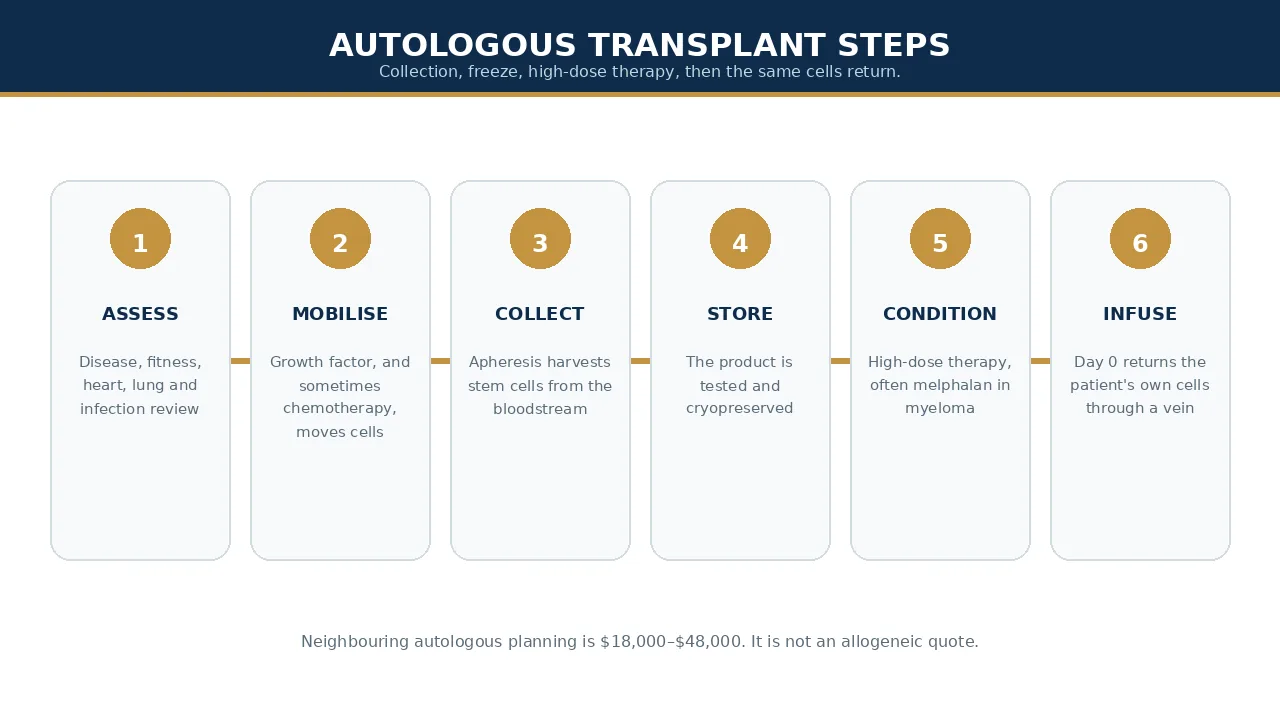
The treatment is a series of stages rather than a single procedure.
Consultation and transplant assessment
The haematologist or transplant specialist determines whether ASCT is appropriate. The doctor reviews the diagnosis, previous treatment, response, organ function and overall fitness. This is also the stage to understand why transplant is recommended, expected benefits, alternatives, major risks, expected hospital stay, timeline, financial implications and follow-up.
Stem-cell mobilisation
Most blood-forming stem cells remain inside the bone marrow. Before collection, medicines encourage them to move into the bloodstream. Growth-factor medicines such as G-CSF may be used. In some patients, chemotherapy is combined with growth-factor treatment. Mobilisation agents such as plerixafor may be used when clinically appropriate. Neighbouring chemotherapy is $1,500–$8,000+ when a mobilisation or salvage cycle is the named product. There is no live GAF G-CSF or plerixafor sheet.
Stem-cell collection
Once enough stem cells are circulating, they are collected through apheresis. Blood leaves the patient's body, passes through a cell-separation machine and the required stem cells are collected. The remaining blood components are returned. A collection session can take several hours, and some patients need more than one session.
Most patients do not describe apheresis as a painful procedure. Mobilisation injections and prolonged apheresis can cause discomfort, fatigue or other temporary effects. Some patients may require a temporary or longer-term central venous access device.
Processing and storage
After collection the stem-cell product is tested, processed, prepared for storage, cryopreserved at very low temperatures and stored until transplantation. The transplant team verifies the product before it is returned.
Conditioning therapy
The patient receives high-dose chemotherapy, sometimes called conditioning therapy. The exact regimen depends on the disease. High-dose melphalan is widely used as conditioning for autologous transplantation in multiple myeloma. Because high-dose therapy also damages normal blood-forming cells, the previously collected stem cells are required for marrow recovery.
Stem-cell infusion — Day 0
After conditioning, the patient's stored stem cells are thawed and infused through an intravenous line or central venous catheter. The process resembles a blood transfusion more than a surgical operation. Patients are closely monitored for reactions. The actual infusion is generally not considered major surgery.
Engraftment
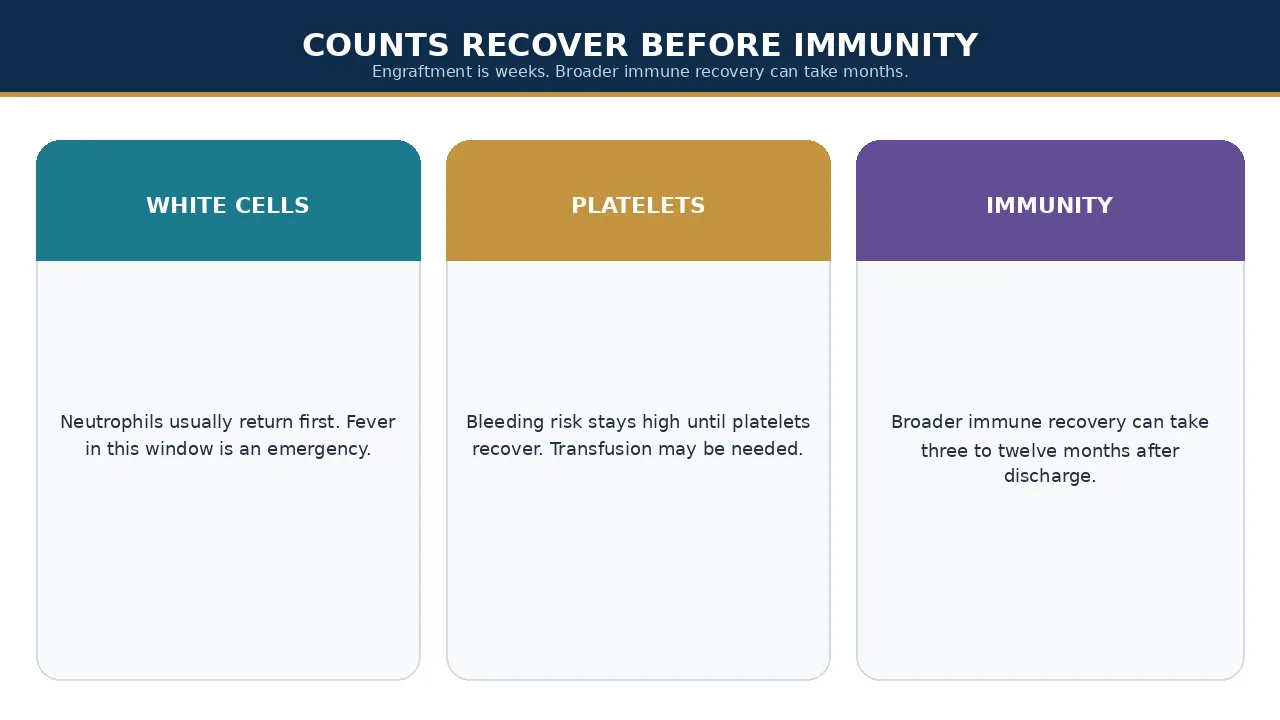
After infusion the stem cells travel to the bone marrow and begin producing white cells, red cells and platelets. Until blood counts recover, the patient remains vulnerable to infection, anaemia and bleeding. Daily or frequent blood-count monitoring is therefore an important part of transplant care.
Recovery and discharge
The patient may require antibiotics or antiviral and antifungal medicines, blood or platelet transfusions, growth-factor injections, IV fluids, electrolyte replacement, anti-nausea medication, pain management and nutritional support. Discharge depends on clinical stability, blood-count recovery and the centre's protocol. Some centres keep patients hospitalised through the highest-risk period; others may use carefully selected outpatient or early-discharge models.
Ask for a phase-by-phase autologous timeline
How long does autologous transplant take?
The overall journey is considerably longer than the stem-cell infusion itself: pre-transplant evaluation, mobilisation, collection, conditioning, transplant, engraftment, early recovery and follow-up.
Neighbouring GAF autologous stay is typically 3–5 weeks in or near the unit. UCLH describes approximately four weeks of hospitalisation for the high-dose treatment and early recovery phase in its patient pathway, although actual duration varies. Broader immune recovery can take months. Cleveland Clinic notes that complete immune recovery after autologous transplantation can take approximately three to twelve months.
| Stage | Approximate timing |
|---|---|
| Medical evaluation | Several days to weeks |
| Induction or salvage therapy, if required | Disease dependent |
| Mobilisation | Several days |
| Stem-cell collection | Usually one or more apheresis sessions |
| Stem-cell storage | Until transplant |
| Conditioning | Usually several days |
| Stem-cell infusion | Usually Day 0 |
| Engraftment | Commonly around 1–3 weeks, but variable |
| Early recovery | Several weeks in or near the unit |
| Broader immune recovery | Several months |
These are general ranges rather than promises. The treating centre should provide the patient's individualised schedule.
Side effects and emergencies
Side effects are mainly related to mobilisation, high-dose conditioning and the period of low blood counts. Patients may experience fatigue, nausea, vomiting, loss of appetite, taste changes, mouth ulcers or mucositis, diarrhoea, hair loss, weakness, fever, low blood counts and increased infection risk.
During neutropenia the immune system is severely weakened. The patient may require protective isolation measures, antibiotic treatment, antiviral medication, antifungal prophylaxis, strict hand hygiene, careful food and water precautions, and avoidance of people with active infections.
High-dose chemotherapy can damage the lining of the mouth and digestive tract. Platelets can fall significantly; some patients require platelet transfusions.
Longer-term complications can include persistent fatigue, fertility problems, premature menopause, bone-health problems, cataracts, organ-specific complications, secondary cancers and persistent or recurrent infections. The individual risk depends on age, previous treatment, conditioning regimen, disease and other medical factors.
Autologous transplantation has become an established procedure, but it is not risk-free. India has national guidance for hematopoietic cell transplantation. ICMR lists its National Guidelines for Hematopoietic Cell Transplantation (2021) among its official guidelines.
Fever during neutropenia, uncontrolled bleeding, sudden breathlessness or sudden confusion belongs in a local emergency department first. WhatsApp at +91 90443 46292 is for planned coordination, not emergency care. A coordinator can also open WhatsApp.
What is the success rate?
There is no single success rate for autologous bone marrow transplantation. A number such as “90% success” is misleading unless it specifies the disease, stage, age, risk group, response before transplant, transplant year, definition of success and length of follow-up. The goals of ASCT for multiple myeloma differ from those for relapsed Hodgkin lymphoma. Patients should ask their transplant centre for disease-specific outcome data.
Autologous transplant for myeloma and lymphoma
For transplant-eligible myeloma patients, treatment often follows diagnosis, induction, response assessment, mobilisation, collection, high-dose therapy, ASCT and maintenance. ASCT remains an important component for many transplant-eligible patients, although modern anti-myeloma therapies have made strategies more sophisticated than simply chemotherapy followed by transplant. In selected patients, stem cells may also be collected and stored for possible future use even when the transplant is not performed immediately.
For lymphoma, transplant decisions depend on subtype and response to salvage treatment. For some relapsed lymphomas, ASCT remains an important consolidation strategy. Modern options such as CAR-T and other targeted treatments can change the preferred sequence. Lymphoma patients should ideally be evaluated at a centre experienced in both transplantation and modern cellular therapies.
Autologous bone marrow transplant cost in India
There is no single reliable autologous package that applies to every patient. GAF publishes neighbouring USD partner ranges for the named modality. Published Indian hospital headlines are not current GAF partner quotations.
| Treatment component | Neighbouring GAF USD planning range | Typical stay or cadence |
|---|---|---|
| Bone marrow biopsy | $300–$900 | Day-care sampling |
| Chemotherapy / mobilisation or salvage cycles | $1,500–$8,000+ | Outpatient cycles over 3–6 months |
| Maintenance therapy | $4,000–$18,000 | Extended outpatient medicines |
| Autologous stem cell transplant | $18,000–$48,000 | Typically 3–5 weeks in or near the unit |
| Bone marrow transplantation umbrella | $25,000–$70,000 | 4–8 weeks; not a substitute ASCT quote |
| Allogeneic stem cell transplant | $30,000–$80,000 | 6–10 weeks; a different donor product |
| CAR-T cell therapy | $80,000–$180,000 | Apheresis plus 3–6 weeks nearby when a named product is available |
The bill can increase with prolonged hospitalisation, ICU care, infection treatment, extra apheresis sessions, blood products and complications. Two patients undergoing “autologous transplant” may have very different costs because their underlying diseases and clinical needs differ.
Request an itemised autologous-transplant estimate
After discharge, diet and travel
Leaving the hospital does not finish the journey. Follow-up may include blood tests, disease-response assessment, infection monitoring, medication adjustment, nutritional assessment, transfusion support, fatigue management, vaccination planning and disease-specific maintenance. Mayo Clinic notes that patients may remain at increased risk of infection and other complications after transplantation.
Nutrition becomes particularly important during recovery. Patients may experience reduced appetite, nausea, taste changes, mouth sores, diarrhoea and weight loss. Focus on protein, calories, fluids and food-safety precautions while immunity is suppressed. Do not use herbal medicines without discussing them with the treating haematologist.
A patient should not plan an immediate return flight simply based on the date of stem-cell infusion. Before returning home the treating team generally needs to assess blood-count recovery, infection risk, current medicines, need for transfusions, disease status, central-line status, access to emergency care and follow-up arrangements. For international patients it is often sensible to plan accommodation close to the treating hospital during early recovery.
Where autologous transplant is treated
India has dedicated haematology departments, bone-marrow-transplant units, stem-cell laboratories, apheresis facilities, blood banks, molecular diagnostic services, intensive-care support and infection-control systems. For an international patient, transplant volume, specialist expertise, laboratory infrastructure, infection-control protocols and the ability to manage complications matter more than an advertised headline price.
Live GAF haematology hospital lists sit in Delhi NCR, Mumbai, Bengaluru, Chennai and Hyderabad.
Pune, Kolkata, Vellore, Ahmedabad and Chandigarh are not live catalogue cities. They may appear only as published institutional or accreditation facts.
Patients should ask how many autologous transplants the unit performs, whether collection and cryopreservation are in-house, whether 24-hour transplant support and ICU care are available, what happens if collection is inadequate, and how long an international patient should remain in India.
International patient journey
A remote review can begin before travel. Useful documents include a passport or identification details, pathology, bone-marrow biopsy where applicable, immunohistochemistry, cytogenetic or FISH reports, molecular reports, PET-CT, CT or MRI, previous chemotherapy details, discharge summaries, current medication list, CBC and biochemistry, kidney and liver function, previous transplant records if applicable, and previous treatment-response reports. Do not send only a diagnosis such as “myeloma” or “lymphoma.”
Autologous transplant vs chemotherapy alone
The choice is not simply between transplant and no treatment. Modern plans can include combination drug therapy, immunotherapy, targeted therapy, chemotherapy, stem-cell transplantation, maintenance therapy, CAR-T therapy in selected diseases and clinical trials. For some diseases ASCT is an established component. For others its role may be limited or evolving.
Hodgkin-lymphoma, non-Hodgkin-lymphoma, allogeneic-BMT, CAR-T-treatment, haematology-treatment and autologous-BMT-cost pages are not live on this site. Use this pillar page plus the named modality sheets. Fanconi anemia lists sit on Fanconi Anemia Treatment in India.
Questions to ask
- Why are you recommending an autologous transplant for me?
- What is the objective — cure, consolidation, or longer remission?
- What alternatives do I have?
- What happens if I do not undergo transplant?
- How well has my disease responded to treatment?
- Am I medically fit for high-dose chemotherapy?
- How many stem cells do you expect to collect?
- What happens if collection is inadequate?
- What conditioning regimen will I receive?
- How long will I remain in hospital?
- What are my major risks?
- What complications are most likely in my situation?
- What is the expected recovery period?
- Will I require maintenance treatment afterward?
- How will you monitor for relapse?
- When can I return to work?
- When can I travel internationally?
- What will the estimated treatment cost include on neighbouring GAF USD sheets?
- What costs are excluded from the quotation?
- What follow-up will I need after returning home?
Send those twenty answers with the reports
Frequently asked questions
Is autologous bone marrow transplant painful? The transplant infusion itself is generally not a surgical procedure and is similar to an intravenous infusion. The high-dose chemotherapy and recovery period can cause significant side effects, including nausea, fatigue, mouth sores and weakness.
Is autologous transplant better than allogeneic transplant? They are different treatments used for different clinical situations. Autologous transplantation uses the patient's own cells, while allogeneic transplantation uses donor cells. The appropriate type depends on the disease and treatment objective.
Does autologous transplant require a donor? No. The patient's own stem cells are collected and returned.
Is bone marrow removed during an autologous transplant? Usually, modern autologous transplantation uses blood-forming stem cells collected from the bloodstream by apheresis. The phrase “bone marrow transplant” is still commonly used, but direct bone-marrow harvesting is not required for most modern autologous procedures.
How are stem cells collected? Stem cells are generally mobilised into the bloodstream and then collected through an apheresis machine.
How many days does stem-cell collection take? Some patients can collect enough cells in one session, while others require multiple collection sessions. The duration depends on mobilisation response and the number of cells required.
How long does the transplant itself take? The stem-cell infusion is generally completed within hours, although monitoring continues throughout the procedure and afterward.
How long does it take for the bone marrow to recover? Engraftment commonly occurs within the first few weeks, but recovery varies. Broader immune recovery can take several months. Neighbouring GAF autologous stay is typically 3–5 weeks in or near the unit.
Can a 60-year-old have an autologous transplant? Potentially, yes. Age alone does not determine eligibility. Fitness, organ function, disease status and the patient's overall medical condition are important.
Can a 70-year-old have an autologous transplant? Selected fit patients may be considered. NCI notes that appropriately selected fit patients older than 70–75 may undergo autologous transplantation in multiple myeloma.
Is autologous transplant curative for multiple myeloma? It can produce deep and prolonged responses, but multiple myeloma is generally considered treatable rather than routinely curable with ASCT alone.
Can lymphoma be cured with autologous transplant? For selected lymphoma patients, ASCT can provide durable disease control and may contribute to cure. The likelihood depends heavily on lymphoma subtype, treatment response and other clinical factors.
Can the cancer return after autologous transplant? Yes. Transplant does not guarantee that cancer will never return. Long-term follow-up is therefore essential.
What happens if the disease relapses after transplant? Treatment depends on the original diagnosis, time to relapse, previous therapy and current disease characteristics. Options may include drug therapy, targeted therapy, immunotherapy, CAR-T therapy where available, another transplant in selected cases, or a clinical trial.
Can stem cells be stored for future use? Yes. In some treatment plans, additional stem cells may be collected and cryopreserved for potential future use.
How much does autologous bone marrow transplant cost in India? Neighbouring GAF autologous stem cell transplant planning is $18,000–$48,000. Neighbouring BMT umbrella planning is $25,000–$70,000 and is not a substitute autologous quote. Actual costs can differ with diagnosis, medicines, hospital, length of stay and complications.
Can international patients undergo autologous transplant in India? Yes. Indian hospitals treat international patients, but eligibility and travel timing must be determined after review of the patient's medical records.
Key takeaways
- Autologous BMT uses the patient's own blood-forming stem cells after high-dose therapy.
- It plays an especially important role in multiple myeloma and selected lymphomas.
- The pathway is assessment, mobilisation, collection, cryopreservation, conditioning, infusion, engraftment, recovery and long-term follow-up.
- Neighbouring GAF autologous planning is $18,000–$48,000. Allogeneic and CAR-T sheets are different products.
- Fever during neutropenia belongs in a local emergency department, not on WhatsApp.
- International patients should start with a specialist review of complete medical records rather than choosing a hospital from the diagnosis alone.
At a glance
- Treatment: Autologous hematopoietic stem cell transplantation
- Also called: Auto-HSCT, ASCT, autologous BMT, autologous stem-cell transplant
- Stem-cell source: Patient's own stem cells
- Common indications: Multiple myeloma, Hodgkin lymphoma, selected non-Hodgkin lymphomas and other specific indications
- Collection method: Peripheral blood stem-cell collection through apheresis
- Conditioning: High-dose chemotherapy, regimen dependent on disease
- Transplant: Intravenous stem-cell infusion
- Hospitalisation: Neighbouring GAF planning is typically 3–5 weeks in or near the unit
- Major early concern: Infection during the low blood-count period
- Recovery: Blood counts recover over weeks; immune recovery may take months
- Cost in India: Neighbouring GAF autologous planning is $18,000–$48,000
Medical disclaimer
This page is intended for patient education and medical-travel information. Eligibility, transplant timing, conditioning regimen, expected outcomes and treatment costs must be determined by the treating haematology or transplant team after reviewing the patient's individual medical records.
Fever during neutropenia, uncontrolled bleeding, sudden breathlessness or sudden confusion belongs in a local emergency department, not on WhatsApp.
Sources
- NCI stem cell and bone marrow transplants for cancer — how autologous rescue works after high-dose therapy.
- NCI plasma cell neoplasms / multiple myeloma treatment PDQ — role of ASCT in myeloma.
- NCI definition of autologous stem cell transplant — patient's own cells.
- EBMT clinical practice recommendations — contemporary transplant practice.
- International Myeloma Foundation: autologous stem cell transplant — mobilisation, collection and myeloma-specific ASCT.
- ICMR National Guidelines for Hematopoietic Cell Transplantation — Indian HCT guidance.
- Cleveland Clinic autologous stem cell transplant — process, side effects and immune recovery.
- Mayo Clinic bone marrow transplant — follow-up and infection risk.
- GAF autologous stem cell transplant cost sheet — live partner planning range $18,000–$48,000.
- GAF bone marrow transplantation cost sheet — live partner planning range $25,000–$70,000.
Treatment Process
- 1
Share reports
The patient provides pathology, PET-CT, marrow, organ-function and previous-treatment notes before anyone books travel.
- 2
Virtual transplant opinion
A transplant specialist reviews whether ASCT, allogeneic graft or a non-transplant line is the honest product.
- 3
Name the pathway
The team writes mobilisation, collection, conditioning and autologous infusion as one named ASCT product.
- 4
Itemized estimate
There is no separate autologous-BMT package. Neighbouring autologous transplant is $18,000–$48,000. Neighbouring BMT is $25,000–$70,000.
- 5
Travel to India
Stable planned cases travel after records review. Fever during neutropenia is a local emergency.
- 6
Repeat essential tests
The receiving unit confirms disease status, organ function and infection screening after arrival.
- 7
Collect and condition
Mobilisation, apheresis, cryopreservation and high-dose therapy proceed only after fitness is named.
- 8
Infuse and watch counts
Day 0 returns the patient's own cells. Engraftment and infection watch decide discharge timing.
- 9
Return home
The patient leaves with medicine lists, infection rules, warning signs and a remote-follow-up plan.