
This is the symptoms hub for the prostate cluster. After symptoms, the next questions are usually diagnosis: PSA, MRI, biopsy and PSMA PET, active surveillance, treatment options, treatment without surgery, Robotic Prostatectomy in India, radiation, brachytherapy and Prostate Cancer Treatment in India.
International patients comparing surgical oncologists and radiation oncologists commonly start with Delhi NCR, Mumbai, Bengaluru, Chennai and Hyderabad.
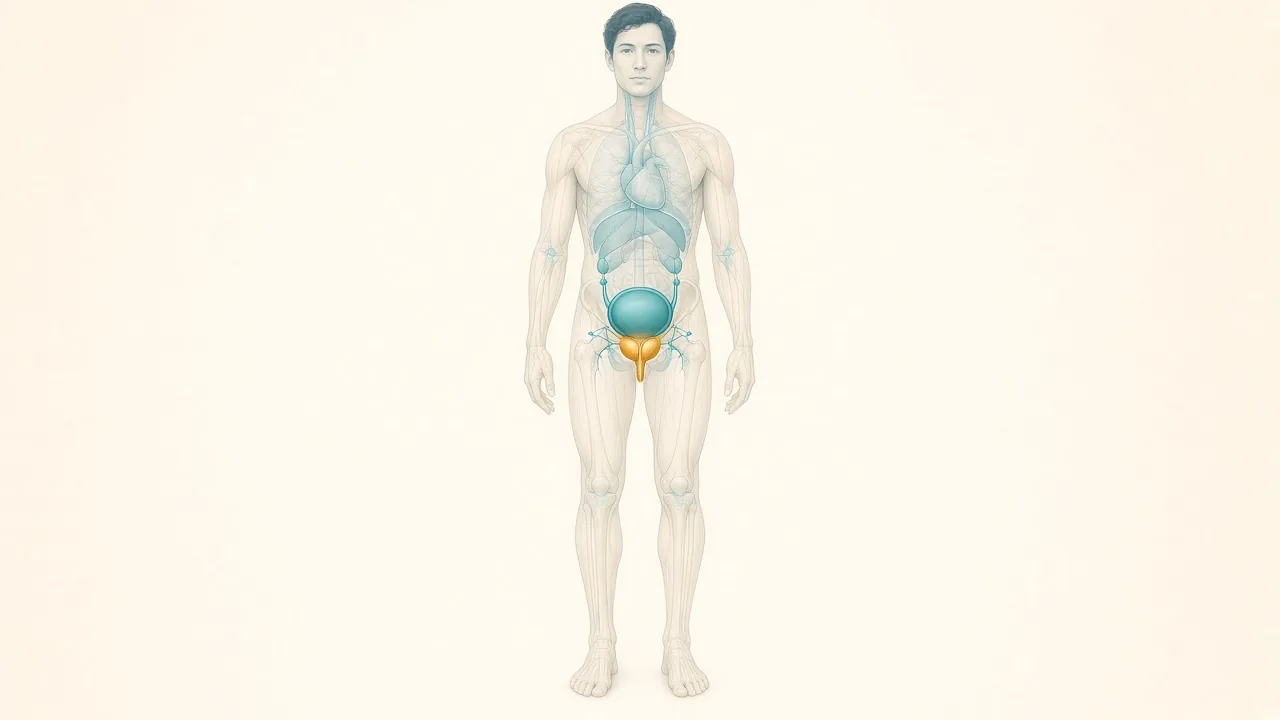
What Is Prostate Cancer?
Prostate cancer develops when cells in the prostate begin growing abnormally and uncontrollably.
The prostate is a small gland located below the bladder and in front of the rectum. It surrounds part of the urethra, the tube that carries urine out of the bladder. The prostate also contributes fluid to semen.
Because of its location, prostate problems can affect urination, bladder emptying, sexual function and ejaculation.
However, prostate cancer does not always cause these problems.
In fact, early prostate cancer usually has no noticeable symptoms.
That is why prostate cancer can sometimes be found through screening or investigation before a man feels that anything is wrong. See how prostate cancer is diagnosed.
What Are the Early Symptoms of Prostate Cancer?
The short answer is: there may be none.
This is different from many conditions in which symptoms appear soon after a disease begins.
Early prostate cancer often develops in the outer part of the prostate. A tumor may therefore grow for some time without pressing significantly on the urethra.
As a result, a man can have prostate cancer while urinating normally, having no pain, having no sexual symptoms and feeling completely healthy.
The absence of symptoms does not mean that prostate cancer is impossible.
Why Doesn't Early Prostate Cancer Usually Cause Symptoms?
The prostate surrounds part of the urethra, but much of the gland lies away from the urinary passage.
Many prostate cancers begin in the peripheral or outer areas of the prostate.
A small tumor in this region may not interfere with urine flow.
Symptoms may become more noticeable if the tumor grows larger, it affects the urethra, it extends into nearby structures, it causes inflammation or other local effects, or it spreads beyond the prostate.
This is one reason urinary symptoms are not a reliable way to detect early prostate cancer.
The Most Common Symptoms Associated With Prostate Cancer
When prostate cancer does cause symptoms, urinary changes are among the symptoms that may occur.

1. Difficulty Starting Urination
You may notice that it takes longer than usual for urine to start flowing.
You might have to wait before the stream begins, strain to urinate, or push to initiate the stream.
This can happen when the prostate or another condition affects the urethra.
However, difficulty starting urination is much more commonly associated with benign prostate enlargement than prostate cancer.
2. Weak Urine Flow
A weak or slow urine stream can be another urinary symptom.
You may notice that the stream is weaker than it used to be, urination takes longer, the stream becomes intermittent, or you need to strain to keep it going.
Again, this is not specific to cancer. BPH is a very common cause of weak urinary flow in older men.
3. Stop-and-Start Urination
Some men notice that the urine stream starts, stops, then starts again.
This may occur when urine flow is obstructed or the bladder is having difficulty emptying.
Possible causes include BPH, prostate cancer, urethral narrowing, bladder problems and other urinary conditions.
Persistent changes should be evaluated rather than assumed to be a normal part of aging.
4. Frequent Urination
Needing to urinate more frequently can occur with prostate problems.
Some men notice that they urinate more often during the day, need to make frequent bathroom trips, or cannot comfortably go as long between urinations as before.
Frequency is common in BPH and other urinary conditions, so it is not a specific sign of prostate cancer.
5. Frequent Urination at Night
Repeatedly waking up to urinate is called nocturia.
You might find yourself waking once, twice, three times, or several times each night.
Nocturia becomes more common with age and may be caused by BPH, bladder problems, medications, fluid intake, sleep disorders or other conditions.
It can occur with prostate cancer as well, but it should not be considered a cancer-specific symptom.
6. Urgency to Urinate
Urinary urgency means feeling that you need to urinate suddenly and strongly.
Urgency can occur with prostate and bladder conditions. It may also occur with urinary infections or overactive bladder.
If urgency is new, persistent or accompanied by pain, fever or blood in the urine, medical evaluation is important.
7. Feeling That the Bladder Has Not Emptied
Another possible symptom is the feeling that urine remains in the bladder after urination.
You may finish urinating but still feel pressure, need to urinate again shortly afterward, or produce only a small amount when you go again.
This can occur when the bladder is not emptying properly. BPH is a common cause, but persistent bladder-emptying problems deserve evaluation.
8. Pain or Burning During Urination
Pain or burning while urinating is called dysuria.
It can occur with prostate cancer, but infection and inflammation are much more common explanations.
Possible causes include urinary tract infection, prostatitis, urethral problems, bladder conditions, sexually transmitted infections and other urinary disorders.
If burning is accompanied by fever, chills, pelvic pain or difficulty passing urine, prompt medical assessment is appropriate.
9. Blood in the Urine
Blood in the urine is called hematuria.
You may see pink urine, red urine, brownish urine, or small amounts of blood that are visible only on testing.
Blood in the urine can have many causes, including urinary infection, kidney stones, prostate conditions, bladder problems, kidney disease, prostate cancer, and bladder or kidney cancer.
Visible blood in the urine should not simply be attributed to an enlarged prostate or aging. It should be medically evaluated.
10. Blood in the Semen
Blood in semen is called hematospermia.
It can be alarming to see, but it is not usually caused by prostate cancer.
Possible causes include infection, inflammation, prostate or seminal-vesicle conditions, recent procedures and other benign causes.
However, persistent or recurrent blood in semen—particularly in an older man or when accompanied by other urinary symptoms—should be discussed with a doctor.
The American Cancer Society and CDC list blood in the semen among possible symptoms associated with prostate cancer.
11. Painful Ejaculation
Some men may experience pain during or immediately after ejaculation.
Possible causes include prostatitis, infection, inflammation, prostate or pelvic conditions and other urological problems.
Painful ejaculation is not specific to prostate cancer. If it is persistent or recurrent, a urologic evaluation can help identify the cause.
12. Erectile Dysfunction
Difficulty getting or maintaining an erection can occur in men with prostate cancer.
But erectile dysfunction is not usually an early or specific sign of prostate cancer.
It can result from diabetes, cardiovascular disease, high blood pressure, hormonal problems, medication side effects, psychological factors, nerve or blood-vessel problems, and prostate disease.
Advanced prostate cancer can contribute to erectile problems, and treatment for prostate cancer can also affect sexual function. See robotic prostatectomy and radiation for treatment-related sexual effects.
13. Persistent Pain in the Back, Hips or Pelvis
Persistent pain in the lower back, hips, pelvis, spine or ribs can occur in advanced prostate cancer when cancer has spread to the bones.
This is very different from ordinary occasional back pain.
Cancer-related pain may persist, gradually worsen, have no obvious injury-related explanation, and occur alongside other symptoms.
The American Cancer Society and NCI identify persistent back, hip or pelvic pain as a possible symptom of advanced prostate cancer.

14. Unexplained Weight Loss
Losing weight without deliberately changing your diet or activity can be a warning sign of many illnesses, including some cancers.
For prostate cancer, unexplained weight loss is more concerning when it occurs alongside other symptoms or known advanced disease.
A small change in weight over a short period does not automatically indicate cancer. But persistent unexplained weight loss deserves medical evaluation.
15. Persistent Tiredness or Weakness
Advanced prostate cancer can sometimes cause significant fatigue.
Possible reasons include advanced cancer itself, anemia, chronic illness, treatment side effects, sleep problems and poor nutrition.
The NCI notes that advanced prostate cancer can sometimes cause symptoms related to anemia, including tiredness, dizziness, shortness of breath or pale skin.
Fatigue is common in many noncancerous conditions, so it is not a specific prostate cancer symptom.
16. Numbness or Weakness in the Legs
This is an important warning sign when it occurs with known or suspected prostate cancer.
If prostate cancer spreads to the spine, a tumor can potentially place pressure on the spinal cord or nerves.
This can cause leg weakness, numbness, tingling, difficulty walking, and changes in bladder or bowel control.
The American Cancer Society identifies weakness or numbness in the legs or feet and loss of bladder or bowel control as possible consequences of spinal cord compression from advanced prostate cancer.
This is an emergency presentation, not a WhatsApp planning question. Seek urgent local care first, then a specialist can review records.
Prostate Cancer Symptoms by Stage
Symptoms do not correspond perfectly to Stage 1, 2, 3 or 4.
A man with early-stage disease may have no symptoms. A man with locally advanced disease may have urinary or sexual symptoms. A man with metastatic disease may have bone pain or other symptoms caused by spread.
Therefore, symptoms alone cannot determine prostate cancer stage.
Stage 1 Prostate Cancer Symptoms
Stage 1 prostate cancer often has no symptoms.
It may be detected because of PSA testing, an abnormal prostate examination, investigation of another prostate problem, or a biopsy performed after an abnormal screening result.
Stage 2 Prostate Cancer Symptoms
Stage 2 disease is still generally localized to the prostate. Many men remain symptom-free.
Some may experience weak urine flow, increased urinary frequency, nocturia or difficulty starting urination. These symptoms are often caused by BPH rather than the cancer itself.
Stage 3 Prostate Cancer Symptoms
When prostate cancer extends outside the prostate or affects nearby structures, symptoms may become more noticeable.
Possible symptoms include difficulty urinating, blood in urine or semen, erectile difficulties, pelvic discomfort and other urinary changes.
However, some men with locally advanced prostate cancer still have few or no symptoms.
Stage 4 Prostate Cancer Symptoms
Stage 4 prostate cancer may involve nearby lymph nodes or distant spread. Symptoms depend on where the cancer has spread.
Possible symptoms include persistent back, hip, pelvic or bone pain, leg weakness or numbness, difficulty walking, bladder or bowel-control problems, unexplained weight loss, significant fatigue and urinary problems.
Not every patient with Stage 4 disease has all of these symptoms. See Prostate Cancer Treatment in India for how metastatic disease is planned.
Bone Pain and Prostate Cancer
The bones are one of the common sites where prostate cancer can spread.
When prostate cancer reaches the bones, symptoms can include persistent pain in the spine, pelvis, hips or ribs.
Bone metastases can also weaken bones and increase the risk of fractures.
Persistent or unexplained bone pain in a man with known prostate cancer should therefore be reported to the treating team. PSMA PET may be used in selected patients to look for spread.
Can Lower Back Pain, Hip Pain or Pelvic Pain Mean Prostate Cancer?
It can, but most lower back pain is not caused by prostate cancer.
Common causes include muscle strain, disc problems, arthritis, poor posture, nerve compression and physical activity.
Back pain becomes more concerning when it is persistent, progressive, unexplained, associated with known prostate cancer, accompanied by weakness or numbness, or associated with bladder or bowel changes.
Hip pain can occur when prostate cancer has spread to the bones, but it is much more commonly caused by musculoskeletal problems such as arthritis, tendon disorders or injuries.
Pelvic pain can occur with prostate cancer, prostatitis, urinary infection, BPH, bladder conditions, pelvic-floor problems, musculoskeletal conditions and other urological disorders.
Persistent pelvic, hip or back pain should be evaluated rather than self-diagnosed.
Can Prostate Cancer Cause Urinary Problems?
Yes. But urinary symptoms are much more commonly caused by noncancerous prostate conditions, especially BPH.
This is because BPH becomes common with age and can physically narrow the urethra.
Possible urinary symptoms include weak stream, difficulty starting, stop-start flow, frequent urination, nocturia, urgency and incomplete emptying.
The same symptoms can occur with prostate cancer, which is why symptoms alone cannot distinguish the two conditions.
Prostate Cancer vs BPH: How Are the Symptoms Different?
This is one of the most common questions.
| Symptom | Prostate cancer | BPH |
|---|---|---|
| Weak urine stream | Possible | Very common |
| Difficulty starting | Possible | Very common |
| Frequent urination | Possible | Very common |
| Night-time urination | Possible | Very common |
| Incomplete emptying | Possible | Common |
| Urgency | Possible | Common |
| Blood in urine | Possible | Can occur |
| Blood in semen | Possible | Can occur |
| Persistent bone pain | Possible in advanced disease | Not typical |
| Weight loss | Possible in advanced disease | Not typical |
| Leg weakness/numbness | Possible in advanced spinal disease | Not typical |
This table should not be used to diagnose the cause of symptoms.
The important point is that urinary symptoms overlap considerably between prostate cancer and benign prostate conditions.
Prostate Cancer vs Prostatitis
Prostatitis is inflammation of the prostate. It can produce symptoms that look very different from typical early prostate cancer.
Prostatitis may cause pelvic pain, painful urination, painful ejaculation, urinary frequency, urgency, fever or chills in some cases, and difficulty urinating.
Prostate cancer usually does not cause fever as a typical early symptom.
If urinary symptoms occur suddenly with fever, chills or significant illness, medical assessment should be prompt.
Are Urinary Symptoms Always Prostate Cancer?
No.
Difficulty urinating, weak flow and frequent urination are among the most common reasons older men see a doctor. BPH is a common cause.
Other possibilities include prostatitis, urinary infection, bladder dysfunction, urethral stricture, certain medications and neurological conditions.
The NCI specifically notes that symptoms attributed to prostate cancer can also occur with benign prostate conditions and other urinary problems.
When Should You See a Doctor?
You should arrange a medical evaluation if you develop:
- New or persistent difficulty urinating
- A noticeably weaker urine stream
- Repeated night-time urination that is new or worsening
- Difficulty emptying your bladder
- Blood in urine
- Blood in semen that is persistent or recurrent
- Persistent pelvic pain
- Persistent back or hip pain
- New erectile problems along with other prostate symptoms
- Unexplained weight loss
- Persistent unexplained fatigue
You do not need to wait until symptoms become severe.
The NCI advises seeing a doctor when symptoms persist rather than waiting for them to resolve on their own.

When Is Prostate Cancer Evaluation More Important?
The threshold for discussing symptoms with a doctor may be lower if you have known risk factors.
- Older age
- A father, brother or son with prostate cancer
- A strong family history of prostate, breast, ovarian or pancreatic cancer
- Certain inherited genetic variants, including BRCA1 or BRCA2
- Black or African ancestry
Risk factors do not mean that a person has prostate cancer. They mean that the overall risk may be higher and that screening discussions may be appropriate.
The NCI identifies age, family history, inherited gene changes and race/ethnicity among prostate cancer risk factors.
When Is a Prostate Cancer Symptom an Emergency?
Some symptoms require more urgent attention — local emergency care first, not delayed travel planning.
Difficulty passing urine at all
Complete inability to urinate can represent acute urinary retention. This requires prompt medical care.
New leg weakness or numbness
In a person with known or suspected prostate cancer, new weakness or numbness in the legs can indicate spinal cord or nerve compression.
Loss of bladder or bowel control
This can also be a sign of significant neurological compression and requires urgent assessment.
Severe or rapidly worsening back pain
Especially when accompanied by leg weakness, numbness, difficulty walking, bladder changes or bowel changes. These symptoms should not be ignored.
Can Prostate Cancer Cause Painful Urination, Blood in Urine or Blood in Semen?
It can, but painful urination is more often associated with infection, inflammation or other urinary conditions.
If painful urination is accompanied by fever, chills, blood in urine, pelvic pain or difficulty passing urine, you should seek medical assessment.
Visible blood in urine should be evaluated even if it happens only once. Causes include infection, kidney stones, prostate conditions, bladder disease, kidney disease and cancer.
Blood in semen can occur, but it is usually caused by infection, inflammation, recent procedures, or prostate or seminal-vesicle conditions. Persistent or recurrent blood in semen should be discussed with a healthcare professional.
Can Prostate Cancer Cause Constipation, Sexual Problems, Fatigue, Weight Loss or Fever?
Constipation is not considered a typical early symptom of prostate cancer. Advanced disease involving the pelvis or certain treatments can affect bowel function. Constipation is much more commonly caused by diet, dehydration, medications, reduced activity, irritable bowel syndrome and other gastrointestinal conditions.
Possible sexual symptoms include erectile dysfunction, painful ejaculation, blood in semen and changes in ejaculation. Sexual problems are common and have many possible causes. Prostate cancer itself, advanced disease and prostate cancer treatment can all affect sexual function in different ways.
Advanced prostate cancer can cause fatigue, but tiredness is extremely common and can result from poor sleep, anemia, stress, depression, infection, thyroid disorders, diabetes, medication and other chronic conditions.
Unintentional weight loss can occur with advanced cancer, but losing weight can also result from many noncancerous causes.
Fever is not a typical early symptom of prostate cancer. A fever with urinary symptoms is more suggestive of infection or inflammation and requires medical evaluation.
Can Prostate Cancer Be Detected Before Symptoms Appear?
Yes.
This is one of the most important reasons prostate cancer screening and risk-based evaluation are discussed.
A man may have prostate cancer without any symptoms.
Depending on age and individual risk, a doctor may discuss PSA blood testing, digital rectal examination, additional risk assessment, MRI, and biopsy when indicated.
Screening has both potential benefits and harms, so the decision should be individualized rather than based simply on age or symptoms. The test sequence is covered in Prostate Cancer Diagnosis.
PSA and Prostate Cancer Symptoms
PSA and symptoms answer different questions.
A man can have high PSA + no symptoms, or urinary symptoms + normal PSA.
Neither situation alone establishes or excludes prostate cancer.
PSA can be elevated because of prostate cancer, BPH, prostatitis, infection and other prostate-related factors. Similarly, urinary symptoms can occur without cancer.
This is why doctors combine symptoms, PSA, examination, imaging and biopsy when necessary.
What Tests Are Used When Prostate Cancer Is Suspected?
If symptoms or risk factors raise concern, the doctor may consider several tests.
- **Medical history** — urinary and sexual symptoms, pain, duration, family history, previous PSA tests, medications and previous prostate problems.
- **Physical examination** — a digital rectal examination may be considered.
- **PSA blood test** — information about prostate health, not a cancer diagnosis by itself.
- **Urine testing** — may help identify infection or other urinary causes.
- **Prostate MRI** — can identify areas suspicious for clinically significant prostate cancer and help guide biopsy.
- **Prostate biopsy** — tissue for cancer type, Gleason score, Grade Group and other pathological features.
The full pathway is in Prostate Cancer Diagnosis: PSA, MRI, Biopsy and PSMA PET.
What Happens After an Abnormal PSA?
An abnormal PSA does not automatically mean cancer.
The next step may involve reviewing previous PSA values, checking for infection or inflammation, reviewing medications, repeating PSA when appropriate, considering additional biomarkers, performing prostate MRI, and considering biopsy if indicated.
The exact pathway depends on the patient's individual risk.
Why Symptoms Alone Cannot Diagnose Prostate Cancer
Many prostate cancer symptoms overlap with common benign conditions.
Weak urine stream could be BPH, prostatitis, urethral narrowing or prostate cancer. Frequent urination could be BPH, overactive bladder, diabetes, infection or prostate cancer. Back pain could be muscle strain, arthritis, disc disease or advanced prostate cancer.
This overlap is why self-diagnosis based on symptoms is unreliable. The purpose of symptoms is to identify when medical assessment may be needed.
What Does an Early Prostate Cancer Diagnosis Often Look Like?
There is no single presentation.
Some men are diagnosed because PSA is elevated, a screening test is abnormal, MRI shows a suspicious lesion, or a biopsy is performed for another reason.
Others are investigated because of urinary symptoms, blood in urine, blood in semen or persistent pain.
The absence of symptoms does not make a prostate cancer diagnosis impossible.
Can Prostate Cancer Be Treated If Found Early?
Many localized prostate cancers can be treated or monitored effectively, depending on their Grade Group, stage and overall risk.
Treatment or management may include active surveillance, radical prostatectomy, external beam radiation, brachytherapy, or other treatments for selected disease characteristics.
If treatment follows evaluation, GAF Healthcare planning ranges in India include radical prostatectomy $7,000–$18,000, EBRT $1,000–$6,000+, IMRT $6,500–$14,500 and hormone therapy $1,000–$4,500. City pages such as Delhi NCR prostatectomy use the same national ranges unless a hospital issues a verified quotation.
The appropriate approach depends on the cancer's biology and extent, not symptoms alone. Compare surgical hospitals in Delhi NCR and Mumbai.
Prostate Cancer Symptoms: What Men Should Remember
The most important message is simple: do not wait for symptoms to appear before thinking about prostate cancer risk.
Early prostate cancer often produces no symptoms.
When symptoms do appear, they may include urinary changes, blood in urine or semen, sexual problems, or—particularly with advanced disease—persistent back, hip or pelvic pain.
But these symptoms are not specific to cancer. BPH, prostatitis, infections and other conditions can cause very similar problems.
The right response to a concerning symptom is not panic. It is evaluation.
Prostate Cancer Symptoms: Quick Checklist
If you have any of the following, consider discussing them with a doctor. Having one or more of these symptoms does not mean you have prostate cancer. Persistent or unexplained symptoms deserve medical attention.
Urinary symptoms
- Difficulty starting urination
- Weak urine stream
- Stop-start flow
- Frequent urination
- Urgency
- Frequent urination at night
- Incomplete bladder emptying
- Difficulty urinating
Sexual symptoms
- Erectile difficulty
- Painful ejaculation
- Blood in semen
Other symptoms
- Blood in urine
- Persistent pelvic pain
- Persistent back pain
- Persistent hip pain
- Unexplained weight loss
- Persistent fatigue
- Leg weakness or numbness
Frequently Asked Questions
What is the first sign of prostate cancer?
There is often no first symptom. Early prostate cancer usually does not cause noticeable symptoms. When symptoms occur, urinary changes such as weak flow, difficulty starting urination or frequent urination may occur.
Can you have prostate cancer without symptoms?
Yes. In fact, most prostate cancers do not cause symptoms when they are early.
What are the most common symptoms of prostate cancer?
Possible symptoms include difficulty urinating, weak or interrupted urine flow, frequent urination, nocturia, incomplete bladder emptying, blood in urine or semen, painful urination and, in advanced disease, persistent back, hip or pelvic pain.
Does prostate cancer cause frequent urination?
It can, but frequent urination is much more commonly caused by conditions such as BPH or bladder problems.
Does prostate cancer cause frequent urination at night?
It can, but nocturia is also very common with BPH and other conditions.
Is a weak urine stream a sign of prostate cancer?
It can occur with prostate cancer, but BPH is a much more common cause of weak urinary flow in older men.
Is blood in urine a sign of prostate cancer?
Blood in urine can occur with prostate cancer, but it has many other causes. Visible blood in urine should be medically evaluated.
Is blood in semen a sign of prostate cancer?
Blood in semen can occur with prostate cancer, but infection, inflammation and other benign causes are more common explanations.
Can prostate cancer cause back pain?
Advanced prostate cancer can cause persistent back pain, particularly when cancer has spread to the bones. Most back pain, however, is caused by other conditions.
Can prostate cancer cause hip pain?
Yes. Hip pain can occur when prostate cancer spreads to the bones. But common orthopedic conditions are much more frequent causes of hip pain.
Can prostate cancer cause erectile dysfunction?
It can, particularly with advanced disease, but erectile dysfunction has many other causes and is not a specific early sign of prostate cancer.
Can prostate cancer cause painful urination?
It can, but infection and inflammation are more common causes of painful urination.
Can prostate cancer cause weight loss?
Unintentional weight loss can occur with advanced cancer, but it has many other possible causes.
Can prostate cancer cause fatigue?
Advanced prostate cancer can cause significant fatigue, but tiredness is common in many other medical conditions.
Can prostate cancer cause fever?
Fever is not a typical early symptom of prostate cancer. Fever with urinary symptoms may suggest infection or inflammation and should be evaluated.
Are urinary symptoms more likely to be BPH or prostate cancer?
Urinary symptoms such as weak flow, difficulty starting and frequent urination are very commonly caused by BPH. However, prostate cancer can cause similar symptoms, so persistent changes should be evaluated.
Can prostate cancer be found before symptoms appear?
Yes. Many prostate cancers are detected through PSA testing or other evaluation before symptoms develop.
Should I get a PSA test if I have prostate symptoms?
A doctor may recommend PSA testing depending on your age, symptoms, risk factors and examination findings. PSA can provide useful information but cannot diagnose prostate cancer by itself.
Does a normal PSA rule out prostate cancer?
No. Prostate cancer can occur even when PSA is not elevated.
What should I do if I have urinary symptoms but a normal PSA?
Discuss the symptoms with a doctor. BPH, prostatitis, urinary infection, bladder problems and other conditions can cause urinary symptoms even when PSA is not elevated.
When should I see a urologist?
Consider seeing a urologist if urinary symptoms persist, worsen, recur, or are accompanied by blood in the urine or semen, persistent pelvic/back pain, abnormal PSA or other concerning findings.
When is prostate cancer an emergency?
New inability to urinate, new leg weakness or numbness, loss of bladder or bowel control, or severe rapidly worsening back pain—particularly in someone with known or suspected prostate cancer—requires urgent medical evaluation.
Related Prostate Cancer Resources
This article is the symptoms hub. Other cluster pages keep their own search intent:
- [Prostate Cancer Diagnosis](/blogs/prostate-cancer-diagnosis-psa-mri-biopsy-psma-pet) — PSA, MRI, biopsy and PSMA PET after symptoms or an abnormal test.
- [Active Surveillance for Prostate Cancer](/blogs/active-surveillance-prostate-cancer) — who can defer treatment if cancer is found early.
- [Prostate Cancer Treatment Options](/blogs/prostate-cancer-treatment-options-india) — how teams choose first treatment.
- [Prostate Cancer Treatment Without Surgery](/blogs/prostate-cancer-treatment-without-surgery) — radiation, hormone therapy and other options.
- [Robotic Prostatectomy in India](/blogs/robotic-prostatectomy-in-india) — if surgery is chosen.
- [Radiation Therapy for Prostate Cancer](/blogs/radiation-therapy-for-prostate-cancer) — IMRT, IGRT and SBRT.
- [Brachytherapy for Prostate Cancer](/blogs/brachytherapy-for-prostate-cancer) — internal radiation.
- [Prostate Cancer Recurrence After Surgery](/blogs/prostate-cancer-recurrence-after-surgery) — rising PSA after prostatectomy, not first symptoms.
- [Prostate Cancer Diet](/blogs/prostate-cancer-diet) — eating during later treatment.
- [Prostate Cancer Treatment in India](/treatments/prostate-cancer-treatment-in-india) — staging and the wider pathway.
How GAF Healthcare Can Help
GAF Healthcare coordinates international patients who have new urinary symptoms, visible blood, an abnormal PSA, or persistent back or hip pain and need a second look in India. Share a written list of symptoms and dates, every PSA value, MRI files if you have them, and any biopsy report. A coordinator can arrange review with a uro-oncologist and, when staging is the question, a radiation oncologist. Emergencies such as inability to pass urine or new leg weakness need local urgent care first.
Medical Disclaimer
This article is intended for general educational purposes only and does not replace medical consultation, diagnosis or treatment.
Symptoms described here can occur because of prostate cancer, but they can also result from benign prostate enlargement, prostatitis, urinary infection, bladder conditions and many other causes.
If you have persistent, worsening or unexplained symptoms, consult a qualified healthcare professional. If you have sudden inability to urinate, new leg weakness or numbness, loss of bladder or bowel control, or severe rapidly worsening back pain, seek urgent medical care.
Top 5 Sources
- NCI — Understanding Prostate Changes — how BPH, prostatitis and cancer can share urinary symptoms.
- American Cancer Society — Signs and Symptoms of Prostate Cancer — early silent disease and advanced warning signs.
- CDC — Symptoms of Prostate Cancer — urinary, sexual and advanced symptoms.
- NHS — Symptoms of Prostate Cancer — when to see a GP and overlapping benign causes.
- NCI — Prostate Cancer Treatment (PDQ) — risk factors, evaluation and why symptoms do not stage the cancer.
Last reviewed against the cited sources: September 2026.