
Treatment Overview
Hip replacement surgery in India is an established orthopaedic procedure used to relieve severe hip pain and restore mobility when the hip joint has been damaged by osteoarthritis, avascular necrosis, rheumatoid arthritis, fractures, developmental abnormalities, or other conditions.
The surgery, also called hip arthroplasty, removes damaged portions of the ball-and-socket joint and replaces them with artificial components. Depending on the diagnosis, bone stock and previous operations, a patient may require a total hip replacement, hip resurfacing, or revision hip replacement.
For international patients, India offers access to experienced joint-replacement surgeons, accredited hospital infrastructure, multiple implant options, rehabilitation services and comparatively competitive treatment costs. The exact plan and price depend on the diagnosis, implant, surgical approach, hospital, room category, medical condition and whether one or both hips require surgery.
GAF Healthcare planning ranges for total hip replacement are $6,000–$13,000 (typically 4–7 nights). Hip resurfacing is $6,500–$14,000 (4–7 nights). Revision hip replacement is $10,000–$20,000 (5–10 nights). Neighbouring total knee replacement is $5,500–$12,000 (4–7 nights). These are planning ranges from partner hospital cost sheets, not hospital quotations.
International patients comparing orthopaedic surgeons commonly start with Delhi NCR, Mumbai, Bengaluru, Chennai and Hyderabad. Partner orthopaedic hospitals in Delhi NCR, Mumbai and Bengaluru are a typical first filter. City cost sheets for the same procedure include Delhi NCR, Mumbai, Bengaluru, Chennai and Hyderabad.
The neighbouring joint pathway is published as Knee Replacement Surgery in India. Sports-ligament injuries of the knee sit on ACL Surgery in India. Hip-preservation keyhole work sits on Hip Arthroscopy Surgery in India. Limb reconstruction and stature lengthening sit on Limb Lengthening Surgery in India.
Medical note: Hip replacement is a major surgical procedure. The decision to undergo surgery should be made after assessment by an orthopaedic or joint-replacement surgeon. This page is intended for educational purposes and does not replace individual medical advice.
What Is Hip Replacement Surgery?
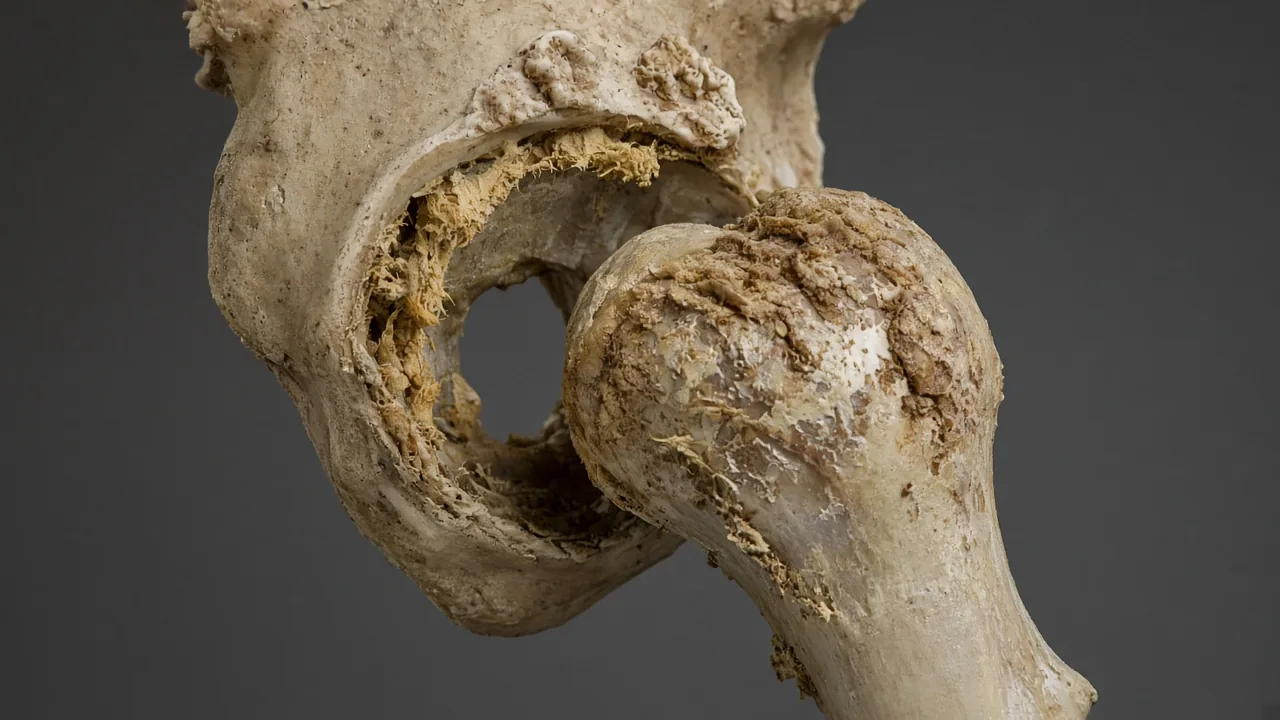
Hip replacement, also called hip arthroplasty, is an operation in which damaged portions of the hip joint are removed and replaced with artificial components.
The hip is a ball-and-socket joint.
- The ball is the femoral head at the upper end of the thigh bone
- The socket is the acetabulum in the pelvis
Healthy cartilage allows these surfaces to move smoothly. When cartilage and underlying bone become severely damaged, the joint can become painful and stiff. Walking, climbing stairs, sitting, putting on shoes or getting in and out of a vehicle may become increasingly difficult.
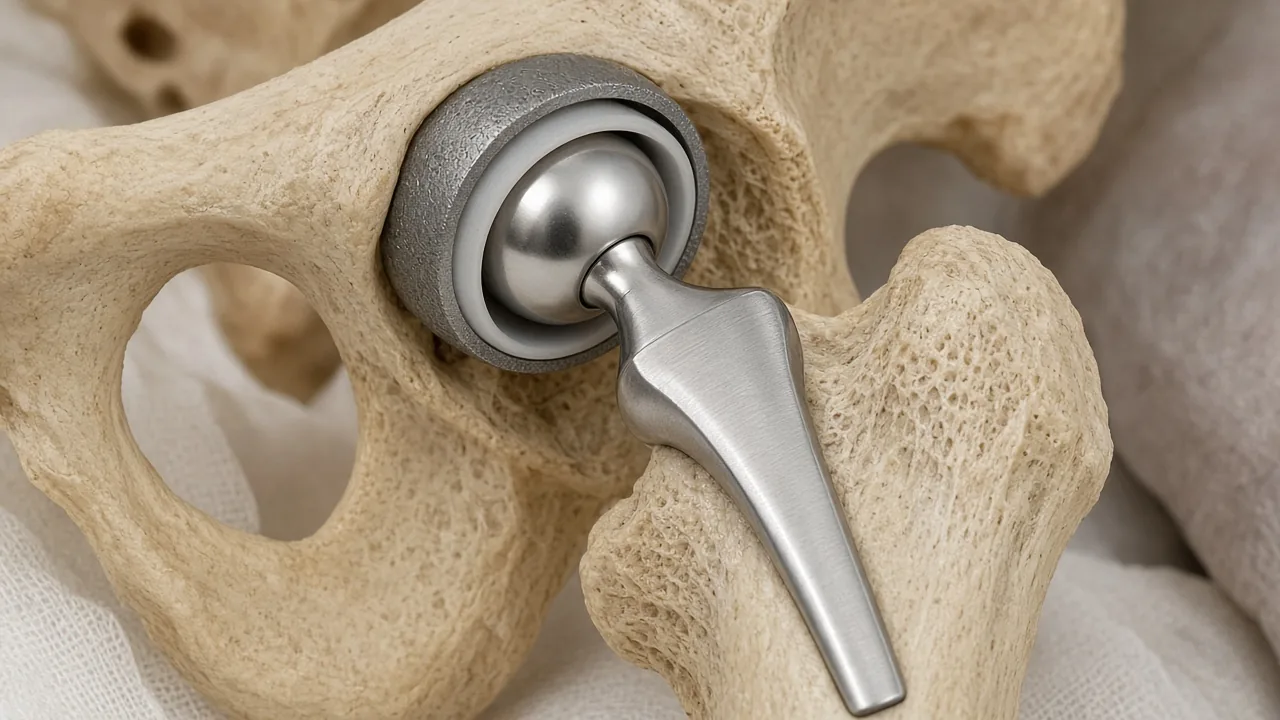
During a total hip replacement, the damaged femoral head is replaced with an artificial ball and the damaged socket is replaced with an artificial cup. The components can use combinations of metal, ceramic and polyethylene.
The primary goal of hip replacement is to reduce pain and improve mobility and quality of life.
When Is Hip Replacement Surgery Needed?
Hip replacement is generally considered when hip disease produces significant symptoms and non-surgical treatment is no longer providing adequate relief.
NICE recommends considering referral for joint replacement when symptoms such as pain, stiffness, reduced function or progressive deformity substantially affect quality of life and non-surgical management is ineffective or unsuitable. The NICE joint-replacement guideline covers primary hip, knee and shoulder replacement. The timing of surgery remains an individual clinical decision.
Common reasons for hip replacement include:
1. Advanced osteoarthritis
Osteoarthritis gradually damages the cartilage covering the hip joint. Symptoms may include groin pain, hip or thigh pain, stiffness, difficulty walking, pain while climbing stairs, reduced range of motion, difficulty putting on socks or shoes, pain after prolonged activity, night pain and reduced independence.
2. Avascular necrosis
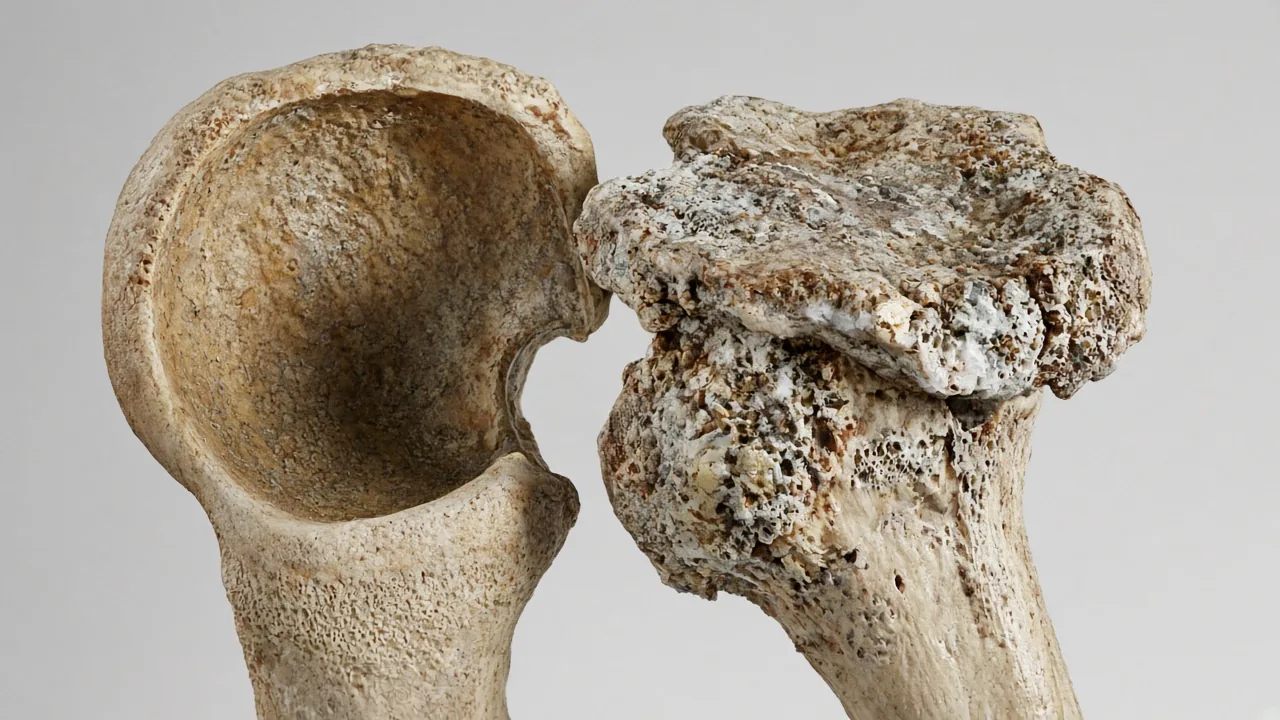
Avascular necrosis, also known as osteonecrosis, occurs when the blood supply to the femoral head becomes compromised. The bone can weaken and eventually collapse. Hip replacement may become necessary when the femoral head has significantly collapsed or the joint has developed advanced arthritis.
3. Rheumatoid arthritis
Inflammatory arthritis can progressively damage cartilage and bone. When severe hip destruction causes persistent pain and functional limitation, hip replacement may be considered.
4. Hip fracture
Certain severe hip fractures cannot be adequately treated with fixation. Depending on the fracture pattern, age, bone quality and functional status, a partial or total hip replacement may be considered. Partial replacement (hemiarthroplasty) is a different operation from the GAF total hip replacement sheet and is quoted after case review.
5. Developmental dysplasia of the hip
Abnormal development of the hip can cause altered joint mechanics and early arthritis. Hip replacement in these patients may require more complex planning because the anatomy can differ substantially from a standard hip.
6. Post-traumatic arthritis
Previous fractures or significant injuries can damage the hip and eventually lead to painful arthritis.
7. Failed previous hip surgery
Some patients require replacement or revision hip replacement after previous hip procedures. Revision is a different and generally more complex operation than primary hip replacement. GAF planning: $10,000–$20,000, typically 5–10 nights.
Ask whether total hip replacement is appropriate
WhatsApp +91 90443 46292 with hip X-rays
Hip Replacement vs Conservative Treatment
Hip replacement is not automatically the first treatment for hip pain.
Depending on the underlying diagnosis, treatment may include exercise therapy, physiotherapy, weight management where appropriate, activity modification, walking aids, pain medicines, anti-inflammatory medicines where medically appropriate, treatment of the underlying disease, injections in selected patients, and other joint-preserving procedures in carefully selected cases.
The decision to proceed to surgery should consider pain, function, quality of life, imaging, underlying disease, general health and the patient's goals.
Patients should not be excluded from consideration for joint replacement solely because of age, sex, smoking, comorbidities or obesity. These factors can influence surgical risk, but the decision should be individualised.
Types of Hip Replacement Surgery
There is no single hip replacement procedure suitable for every patient.
1. Total hip replacement
Total hip replacement (THR), also called total hip arthroplasty (THA), is the most common form. Both major parts of the joint are replaced:
- Femoral head → artificial femoral component
- Acetabulum → artificial socket component
It is commonly used for advanced arthritis and other conditions affecting both sides of the joint. GAF planning: $6,000–$13,000, typically 4–7 nights.
2. Partial hip replacement
A partial hip replacement, also called hemiarthroplasty, generally replaces the femoral head while leaving the natural acetabulum intact. It is frequently considered in certain hip fractures, particularly in older adults.
The choice between hemiarthroplasty and total hip replacement depends on fracture type, age, pre-injury mobility, cognitive and functional status, acetabular condition and overall health. There is no separate GAF hemiarthroplasty sheet: planning starts from the total hip replacement range and the hospital quotes after case review.
3. Hip resurfacing
Hip resurfacing preserves more of the patient's femoral bone. Instead of removing the entire femoral head, the damaged surface is reshaped and covered with an implant.
It can be considered for selected younger, active patients, but it is not appropriate for everyone. Bone quality, anatomy, sex, age, diagnosis and implant-related considerations all matter. NICE TA304 addresses total hip replacement and resurfacing arthroplasty. GAF planning: $6,500–$14,000, typically 4–7 nights.
4. Revision hip replacement
Revision hip replacement replaces or repairs components from a previous hip replacement. It may be necessary because of implant loosening, infection, dislocation, fracture around the implant, wear, component failure or significant bone loss.
Revision surgery is generally more complex than primary hip replacement. GAF planning: $10,000–$20,000, typically 5–10 nights. Neighbouring revision knee replacement is a different joint and a different sheet ($9,000–$18,000).
5. Bilateral hip replacement
Selected patients may undergo simultaneous or staged replacement of both hips. There is no separate GAF bilateral sheet: planning starts from the total hip replacement range of $6,000–$13,000 per hip. Two hips are not automatically double a single-hip package. The decision depends on age, general health, anaesthetic risk, severity of both hips, blood-loss considerations and rehabilitation capacity.
Compare total hip replacement and hip resurfacing
Hip Replacement Surgical Approaches
The surgeon can reach the hip joint through different approaches. The most commonly discussed approaches include:
- Posterior approach
- Direct anterior approach
- Direct lateral approach
- Anterolateral approach
The choice depends on the surgeon's expertise, the patient's anatomy, diagnosis and surgical requirements.
Direct anterior approach
The anterior approach accesses the hip from the front. It is sometimes described as a muscle-sparing approach because it can avoid cutting certain major muscles, although it is still a major joint replacement procedure.
Potential advantages and disadvantages should be discussed with the surgeon rather than assuming that one approach is universally superior. GAF cost sheets treat access as a named surgical choice, not a guaranteed faster-recovery product.
Robotic Hip Replacement Surgery in India
Robotic-assisted hip replacement uses computer-based planning and robotic assistance to help the surgeon execute the planned implant positioning.
The technology can involve:
- Preoperative imaging
- Three-dimensional planning
- Patient-specific surgical planning
- Computer-assisted positioning
- Robotic assistance during bone preparation and implant placement
Robotic assistance does not mean that a robot independently performs the operation. The orthopaedic surgeon remains responsible for the surgical procedure.
There is no separate GAF robotic hip sheet. Planning starts from the total hip replacement range of $6,000–$13,000; robotic assistance is quoted after case review. Neighbouring robotic knee replacement is a different joint with a published sheet of $7,000–$15,000.
The availability and usefulness of robotic assistance should be assessed according to the patient's anatomy and clinical needs rather than technology alone.
Ask about robotic-assisted hip replacement
Hip Implant Options
One of the most important decisions in hip replacement is the selection of the implant. A hip replacement generally contains several components.
Femoral component
The artificial stem is inserted into the femur and supports the new femoral head.
Femoral head
The artificial ball can be manufactured from materials such as ceramic or metal.
Acetabular cup
The artificial socket replaces the damaged acetabular surface.
Bearing surface
The bearing is the interface where the ball moves against the socket liner. Common combinations include ceramic-on-polyethylene, metal-on-polyethylene, ceramic-on-ceramic and other modern bearing configurations.
The appropriate implant depends on age, bone quality, activity level, diagnosis, anatomy, previous surgery, surgeon experience, implant evidence and track record, expected longevity and cost. A more expensive implant is not automatically the right implant.
Cemented vs Cementless Hip Replacement
Hip implants can be fixed to bone in different ways.
Cemented fixation
Bone cement is used to secure the component.
Cementless fixation
The implant is designed to achieve biological fixation as bone grows onto or into the implant surface.
Hybrid fixation
Different components may use different fixation methods.
The choice depends on age, bone quality, anatomy, fracture situation, surgeon experience and implant design. There is no single fixation method appropriate for every patient.
How Is Hip Replacement Surgery Performed?
A typical total hip replacement follows several stages.
- Preoperative assessment — symptoms, medical history, previous surgeries, current medicines, allergies, mobility, hip examination, imaging, blood tests, and cardiac or other medical assessment when required. Patients taking anticoagulants or other medicines may need specific instructions before surgery.
- Anaesthesia — general anaesthesia, regional/spinal anaesthesia, or regional anaesthesia with sedation, decided by the anaesthetist.
- Surgical exposure — the surgeon accesses the hip through the selected surgical approach.
- Removal of the damaged femoral head.
- Preparation of the femur to accommodate the implant.
- Preparation of the acetabulum to receive the artificial socket.
- Implant placement — the surgeon assesses leg length, stability, range of motion, implant position and joint mechanics.
- Closure and transfer to the recovery area.
A conventional total hip replacement generally takes around 1–2 hours, although more complex procedures can take longer. GAF partner-hospital planning for total hip replacement notes typically 4–7 nights in hospital.
Tests Before Hip Replacement Surgery
Preoperative investigations depend on age, health and hospital protocol.
Blood investigations may include complete blood count, kidney function, liver function where appropriate, blood glucose, coagulation testing when indicated, and blood grouping/crossmatch when required.
Imaging may include X-ray of the pelvis and hip, specialised imaging in complex cases, and CT in selected patients.
Medical evaluation, depending on the patient's health, may include ECG, chest evaluation, cardiology assessment, anaesthesia assessment, diabetes optimisation and other specialist clearance.
Patients with significant medical conditions may need optimisation before surgery.
Preparing for Hip Replacement Surgery
Preparation can influence recovery. Before surgery, patients may be advised to stop or modify certain medicines under medical supervision, control diabetes, stop smoking, optimise nutrition, treat active infections, maintain appropriate physical activity, strengthen muscles where possible, arrange transportation, prepare the home environment and arrange assistance during the initial recovery period.
Do not independently stop blood thinners or other prescribed medicines. Medication changes should only be made according to the treating team's instructions.
International patients should ideally send hip X-rays, MRI/CT if available, diagnosis, previous treatment, medical history, current medications, previous surgery records and blood reports before travel.
Share records for a hip replacement opinion
Recovery After Hip Replacement Surgery
Recovery is progressive rather than instantaneous.
First 24 hours. Depending on the patient's condition, physiotherapy may begin soon after surgery. Patients may start sitting, standing, walking with assistance, ankle exercises and breathing exercises.
Days 1–3. Patients may gradually walk with a walker or crutches, perform prescribed exercises, use the toilet with assistance, move around their room and learn precautions appropriate to their surgical approach. Some enhanced-recovery protocols aim for earlier discharge; GAF partner-hospital planning for total hip replacement is typically 4–7 nights.
Week 1–2. The focus is usually on wound care, pain management, walking, home exercises and preventing complications.
Weeks 2–6. Patients generally work toward increasing walking distance, reducing dependence on walking aids, improving strength, improving hip movement and returning to routine activities.
2–3 months. Many patients experience substantial improvements in pain, walking, independence and daily activities.
3–6 months. Strength and endurance can continue improving.
6–12 months. Some patients continue to experience gradual improvement in strength, confidence and function.
Recovery varies considerably according to age, muscle strength, medical conditions, surgical complexity, preoperative mobility and rehabilitation.
Hip Replacement Recovery Timeline
| Period | Typical focus |
|---|---|
| Day 0–1 | Pain control, mobilisation, physiotherapy |
| Days 1–3 | Walking with assistance, stairs where appropriate, discharge planning |
| Typical GAF stay | 4–7 nights after total hip replacement; 5–10 nights after revision |
| Week 1–2 | Wound care, walking, home exercises |
| Weeks 2–6 | Progressive strengthening and increasing independence |
| Around 6 weeks | Many patients resume more normal daily activities, depending on recovery |
| 2–3 months | Significant functional improvement for many patients |
| 3–6 months | Continued strength and endurance recovery |
| 6–12 months | Ongoing improvement can continue |

Physiotherapy After Hip Replacement
Physiotherapy is a central component of recovery.
A rehabilitation programme may include ankle pumps, quadriceps exercises, gluteal strengthening, hip abductor strengthening, progressive walking, balance exercises, stair training and functional movement training.
The rehabilitation programme should be individualised. Patients should not assume that more exercise always means faster recovery.
When Can You Walk After Hip Replacement?
Many patients begin walking within a day of surgery, with assistance and according to the surgeon and physiotherapist's instructions.
The initial walking aid may be a walker, crutches or a cane. The progression depends on surgical stability, pain, strength, balance, age, general health and surgeon instructions.
The objective is not simply to walk as quickly as possible but to regain safe and functional mobility.
When Can You Drive After Hip Replacement?
Driving should only resume when the surgeon considers the patient medically and physically ready and the patient can safely control the vehicle.
The timeline depends on surgical side, transmission type, pain, reaction time, strength, mobility, medication and local driving requirements. Many patient resources recommend waiting several weeks and confirming fitness to drive with the treating clinician.
When Can You Return to Work?
Return to work depends heavily on the occupation.
Desk-based work. Some patients may return within several weeks.
Physically demanding work. A longer recovery may be necessary. Jobs involving heavy lifting, construction, climbing, repetitive bending or prolonged standing may require a longer rehabilitation period.
The surgeon should determine the appropriate timeline based on recovery.
Exercise After Hip Replacement
Low-impact activities are generally easier to accommodate after successful recovery. Often suitable activities may include walking, swimming after the wound has healed, stationary cycling, cycling, low-impact strengthening and golf, depending on recovery and surgeon advice.
High-impact activities may increase mechanical stress on the replacement. Examples include repeated jumping, high-impact running, contact sports and activities with a high risk of falling.
The appropriate activity level should be individualised.
Hip Replacement Complications and Risks
Hip replacement is a commonly performed operation, but it is major surgery and carries potential complications.
Important risks include:
- Infection — around the wound or deep around the implant. Deep infection may require additional surgery.
- Blood clots — deep vein thrombosis can occur after joint replacement. A clot can sometimes travel to the lungs and cause a pulmonary embolism. Blood-thinning medication, compression methods and early mobilisation may be used depending on individual risk.
- Dislocation — the artificial joint can dislocate. Risk varies according to surgical approach, implant design, patient factors and postoperative behaviour.
- Leg-length difference — small differences may occur. Surgeons carefully assess leg length during the operation, but achieving exact equality is not always possible.
- Nerve or blood-vessel injury — uncommon but possible.
- Fracture — around the implant, particularly in patients with poor bone quality.
- Implant loosening or wear over time.
- Persistent pain — although hip replacement is intended to relieve pain, some patients can experience ongoing discomfort.
- Revision surgery — some patients eventually require another operation to replace or repair components.
NHS patient information on complications of a hip replacement covers these risks. CDC notes that surgical-site infections can involve implanted material and may sometimes require additional medical care or surgery.
Warning Signs After Hip Replacement
Patients should seek medical advice urgently if they develop increasing wound redness, pus or drainage, high fever, worsening hip pain, significant swelling, new calf pain or swelling, sudden shortness of breath, chest pain, sudden inability to bear weight, or a visibly shortened or abnormal leg position.
Emergency symptoms are not a WhatsApp question. Chest pain, sudden shortness of breath or a swollen painful calf after surgery can indicate a pulmonary embolism and should be assessed in a local emergency department.
How Long Does a Hip Replacement Last?
Modern hip replacements are designed for long-term use.
The NHS states that a hip replacement can last at least 15 years, while actual longevity varies between individuals.
Longevity depends on implant design, bearing surface, patient age, activity level, body weight, bone quality, implant positioning, surgical technique, infection and trauma. A younger patient may eventually require revision simply because they have more years of implant use ahead of them.
Hip Replacement Cost in India
The cost of hip replacement surgery in India varies considerably. GAF Healthcare planning ranges from partner hospital cost sheets are the figures used on this site — not rupee brochure quotes.
| Treatment | GAF planning range in India | Typical stay |
|---|---|---|
| Total hip replacement — one hip | $6,000–$13,000 | 4–7 nights |
| Hip resurfacing | $6,500–$14,000 | 4–7 nights |
| Revision hip replacement | $10,000–$20,000 | 5–10 nights |
| Partial hip / hemiarthroplasty | Quoted after case review from the total-hip sheet | Depends on fracture and medical plan |
| Robotic-assisted hip replacement | Quoted after case review from the total-hip sheet | 4–7 nights as a planning token |
| Bilateral (both hips) | Quoted after case review from the single-hip sheet | Depends on simultaneous vs staged surgery |
| Total knee replacement (neighbouring joint) | $5,500–$12,000 | 4–7 nights |
| Robotic knee replacement | $7,000–$15,000 | 4–7 nights |
| Partial knee replacement | $4,500–$10,000 | 3–5 nights |
| Revision knee replacement | $9,000–$18,000 | 5–10 nights |
| Additional rehabilitation | Depends on duration and facility | — |
| International travel, visa, hotel | Not normally included in the surgical sheet | — |
These figures are indicative planning ranges, not fixed package prices. City sheets for the same total-hip procedure include Delhi NCR, Mumbai, Bengaluru, Chennai and Hyderabad. Neighbouring knee arthroplasty sits on total knee replacement ($5,500–$12,000) and the knee replacement treatment pathway.
GAF partner-hospital comparison for total hip replacement lists a typical US range of $40,000–$80,000 against the India planning range of $6,000–$13,000. International patients should not compare prices alone.
Request a hip replacement cost estimate
WhatsApp +91 90443 46292 for an itemised hip replacement estimate
What Determines the Cost of Hip Replacement in India?
Several variables can significantly change the final price:
- Type of implant — different implant systems and bearing surfaces have different prices.
- Surgical technique — conventional, anterior, computer-assisted and robotic procedures may have different costs.
- One hip vs both hips — bilateral surgery naturally requires more resources.
- Primary vs revision surgery — revision is generally considerably more complex.
- Hospital and city — costs vary between hospitals and between Delhi NCR, Mumbai, Bengaluru, Chennai and Hyderabad.
- Room category — general ward, twin sharing, private room, deluxe room or suite.
- Length of stay — additional hospitalisation can increase the final bill.
- Medical conditions — diabetes, heart disease, kidney disease, obesity and other conditions may require additional investigations or monitoring.
- Rehabilitation — extended physiotherapy, home rehabilitation and equipment can add to the overall cost.
- Complications — unexpected complications can substantially increase the final expense.
Compare partner orthopaedic hospitals in Chennai and Hyderabad as well as Delhi NCR, Mumbai and Bengaluru.
What Is Usually Included in a Hip Replacement Package?
A hospital package may include some or all of surgeon fee, anaesthetist fee, operating-room charges, implant, hospital room, nursing, routine medications, routine investigations and physiotherapy during admission. Package inclusions differ by hospital.
Before accepting a quotation, ask for a written breakdown covering implant brand, implant model, bearing surface, surgeon fees, anaesthesia, room category, number of included hospital days, investigations, physiotherapy, medicines, follow-up, complication-related charges and additional-day charges.
Hip Replacement Cost in India vs Other Countries
India is frequently considered by international patients because hip replacement costs can be substantially lower than in several high-cost healthcare markets.
A cost comparison should include surgeon expertise, hospital accreditation, implant quality, anaesthesia, nursing, infection control, rehabilitation, length of stay, medical coordination, accommodation, travel and follow-up after returning home — not headline surgery prices alone.
The cheapest surgical quote is not necessarily the lowest overall cost once travel, accommodation, rehabilitation and follow-up are included.
Why Do International Patients Choose India for Hip Replacement?
India has developed a large ecosystem for orthopaedic and joint-replacement care.
Experienced orthopaedic specialists. Many Indian hospitals have dedicated joint-replacement surgeons, orthopaedic trauma specialists, arthroplasty teams, physiotherapists and rehabilitation specialists.
Advanced hospitals. Large tertiary hospitals can provide modern operating theatres, advanced imaging, intensive care facilities, blood-bank support, infection-control systems and rehabilitation services.
Implant choice. Patients may have access to multiple implant systems and bearing options.
Competitive treatment costs. Treatment can be less expensive than in several Western healthcare systems, although prices vary significantly.
International-patient services. Major hospitals often have dedicated international-patient departments for appointment coordination, medical records, treatment estimates, visa documentation, airport transfers, accommodation, language assistance and post-treatment coordination.
Best Cities in India for Hip Replacement Surgery
Patients commonly consider the five GAF catalog cities:
- Delhi NCR — Delhi, Gurugram, Noida and Faridabad have a large concentration of tertiary hospitals and orthopaedic specialists. Filter Delhi NCR hospitals.
- Mumbai — a major healthcare destination with multiple joint-replacement centres.
- Bengaluru — a major concentration of tertiary hospitals and healthcare technology.
- Chennai — large tertiary hospitals and established international-patient infrastructure.
- Hyderabad — multiple advanced orthopaedic and joint-replacement centres.
Other Indian cities also run joint-replacement programmes. The right city should be selected based on the surgeon, hospital, diagnosis and complete treatment plan rather than city name alone. GAF catalog pages cover Delhi NCR, Mumbai, Bengaluru, Chennai and Hyderabad.
Hospitals for Hip Replacement in India
India has multiple hospitals offering joint replacement surgery. Examples include major hospital networks such as Apollo Hospitals, Fortis Healthcare, Medanta, Max Healthcare, Manipal Hospitals, Artemis Hospitals, Narayana Health and other accredited tertiary and specialty orthopaedic hospitals.
These should not be treated as a ranking. The appropriate hospital should be evaluated based on the orthopaedic department, surgeon experience in hip arthroplasty, primary vs revision expertise, implant options, infection-control standards, rehabilitation support, ICU and emergency backup, international-patient support and a transparent cost estimate.
Filter orthopaedic hospitals by city rather than by brochure claims.
How to Choose a Hip Replacement Surgeon in India
When comparing orthopaedic surgeons, ask:
- How frequently do you perform hip replacements?
- Do you perform primary and revision hip replacements?
- Which surgical approach do you recommend, and why is it appropriate for my anatomy?
- Which implant do you recommend — manufacturer, model, bearing, fixation, expected longevity and evidence?
- Why is this implant suitable for me?
- What are my specific risks given age, bone quality, weight, diabetes, heart disease, previous surgery and other conditions?
- What is the expected rehabilitation plan after discharge?
Experience with hip arthroplasty is more relevant than a generic orthopaedic title.
Find a hip replacement surgeon in India
Hip Replacement for International Patients
For an international patient, treatment planning begins before travelling to India.
- Send medical records — hip X-rays, MRI/CT if available, diagnosis, previous treatment, medical history, current medications, previous surgery records and blood reports.
- Remote medical assessment — the hospital or medical facilitator coordinates a specialist opinion.
- Cost estimate — an indicative treatment estimate from the hospital.
- Visa and travel documentation according to Indian immigration rules.
- Arrival in India — airport transfer, hospital appointment, accommodation, translation and medical coordination.
- In-person evaluation — the surgeon reassesses the patient and confirms the treatment plan.
- Surgery after medical clearance.
- Rehabilitation — physiotherapy begins during hospitalisation and continues after discharge.
- Return home when the treating team determines the patient is medically fit to travel.
Long-distance air travel soon after major orthopaedic surgery requires specific planning because of blood-clot risk.
Plan an international hip replacement journey
How Long Should an International Patient Stay in India?
The medical recovery period and medical-tourism stay are not necessarily the same.
A patient may need time for preoperative consultation, investigations, medical clearance, surgery, hospital recovery, physiotherapy, follow-up and travel clearance.
The appropriate length of stay should therefore be planned with the treating hospital. It is risky to schedule a return flight based solely on a generic "7-day" or "10-day" package. GAF planning for total hip replacement notes typically 4–7 nights in hospital; the overall stay in India is usually longer.
Hip Replacement: Total vs Partial vs Resurfacing
| Feature | Total hip replacement | Partial replacement | Hip resurfacing |
|---|---|---|---|
| Femoral head | Replaced | Replaced | Preserved/resurfaced |
| Acetabulum | Replaced | Usually preserved | Resurfaced |
| Common use | Advanced arthritis | Selected fractures | Selected younger/active patients |
| Bone preservation | Moderate | Moderate | Greater femoral-head preservation |
| Suitable for everyone? | No | No | No |
| Revision possibility | Yes | Yes | Yes |
| Implant choice | Multiple options | Multiple options | Specialised |
| GAF planning | $6,000–$13,000 | Quoted after case review | $6,500–$14,000 |
| Typical stay | 4–7 nights | Depends on the case | 4–7 nights |
| Decision | Individualised | Individualised | Highly selective |
Hip Replacement vs Hip Resurfacing
Hip resurfacing preserves more femoral bone but is not appropriate for every patient.
Factors that can influence suitability include age, bone quality, sex, diagnosis, femoral-head size, anatomy, activity level and implant considerations.
Total hip replacement remains the more commonly used operation for advanced hip disease.
What Should You Ask Before Surgery?
Use this checklist during your consultation.
Diagnosis. What exactly is causing my hip pain? Is my arthritis advanced? Do I need surgery now?
Procedure. Do I need total hip replacement or another procedure? Which surgical approach will you use? Why is it appropriate for me?
Implant. Which implant are you recommending? Which bearing surface? Cemented or cementless? What evidence supports this implant? What is its expected longevity?
Recovery. When will I walk? How long will I stay in hospital? When can I drive? When can I return to work? How much physiotherapy will I need?
Risks. What complications am I personally at risk for? What is the possibility of dislocation? What is the infection-prevention protocol? What happens if the implant loosens?
Cost. What exactly is included? Is the implant included? Are medicines included? Are physiotherapy sessions included? What happens if I need additional hospital days?
Frequently Asked Questions About Hip Replacement Surgery in India
The FAQs below summarise the questions international patients ask most often. The same answers are stored as structured FAQ data for this page.
Is hip replacement surgery safe? Hip replacement is a commonly performed operation, but it is major surgery and has potential risks including infection, blood clots, dislocation, fracture, nerve injury, implant wear and revision surgery.
What is the success rate of hip replacement? A single universal "success rate" can be misleading because success can mean different things: pain relief, walking ability, patient satisfaction, implant survival or avoidance of revision surgery. Patients should ask their surgeon about outcomes relevant to their specific situation rather than relying on a generic percentage.
How painful is hip replacement surgery? Pain is expected after surgery, but modern pain-management strategies aim to control it while allowing early mobilisation. Pain usually decreases progressively during recovery.
How soon can I walk after hip replacement? Many patients begin walking with assistance very early after surgery, sometimes on the day of surgery or the following day, depending on their medical condition and surgical protocol.
Can I climb stairs after hip replacement? Yes. Patients are commonly taught how to use stairs safely before discharge when appropriate.
Can I sit on the floor after hip replacement? This depends on hip mobility, surgical approach, surgeon instructions and individual recovery. Do not assume that deep squatting or sitting cross-legged is safe immediately after surgery.
Can I sleep on my side after hip replacement? Patients are generally given individualised instructions regarding sleeping positions. The timing of sleeping on the operated side depends on wound healing, comfort and surgeon advice.
Can I bend after hip replacement? Certain patients may initially need to avoid excessive hip flexion or specific positions. Restrictions can vary according to surgical approach and surgeon protocol.
Can I cross my legs after hip replacement? Patients may initially be advised to avoid crossing the legs, depending on their procedure and dislocation precautions.
Can I travel after hip replacement? Travel is possible after recovery, but timing depends on the type of travel and the patient's medical condition. Long-distance flights require particular consideration because surgery increases blood-clot risk. The treating surgeon should clear international air travel. Sudden chest pain, breathlessness or a swollen painful calf after travel is an emergency-department problem, not a WhatsApp question.
Is robotic hip replacement better than conventional hip replacement? Robotic assistance provides additional planning and intraoperative technology, but it does not automatically make the procedure appropriate for every patient. There is no separate GAF robotic hip sheet; planning starts from the total hip range of $6,000–$13,000.
Is anterior hip replacement better? The direct anterior approach has potential advantages in selected patients, but no surgical approach is universally best.
How much does a hip replacement cost in India? GAF planning ranges are approximately $6,000–$13,000 for total hip replacement, $6,500–$14,000 for hip resurfacing and $10,000–$20,000 for revision. Actual quotations vary by hospital, surgeon, implant, room category, medical condition and complexity.
What is the cost of hip replacement in Delhi? Use the Delhi NCR total hip replacement cost sheet. Patients should obtain a current written quotation from the hospital.
Is hip replacement covered by insurance in India? Hip replacement may be covered by health insurance when medically indicated, subject to the specific policy, waiting periods, exclusions, network status and authorisation requirements. Patients should confirm coverage directly with their insurer and hospital.
Can both hips be replaced at the same time? Selected patients may undergo simultaneous bilateral hip replacement. Bilateral surgery is not appropriate for everyone. Planning starts from the single-hip sheet of $6,000–$13,000.
Is hip replacement possible at an older age? Age alone does not determine eligibility. Overall health, functional status, bone quality, medical conditions and expected benefit are important.
Can hip replacement be performed in younger patients? Yes. Younger patients may require hip replacement because of avascular necrosis, severe developmental dysplasia, inflammatory arthritis, post-traumatic arthritis or congenital hip problems. Implant choice and long-term planning become particularly important because younger patients may live many years with the implant.
Key Takeaways
- Total hip replacement is the most common form of hip arthroplasty.
- Advanced osteoarthritis is one of the most common reasons for surgery.
- Avascular necrosis, fractures, rheumatoid arthritis and developmental abnormalities can also require hip replacement.
- Not every patient with hip arthritis needs immediate surgery.
- The decision should consider symptoms, quality of life, imaging and response to non-surgical treatment.
- Implant selection should be individualised rather than based simply on price.
- Robotic assistance is an option for selected patients and does not replace the surgeon. There is no separate GAF robotic hip sheet.
- Physiotherapy and early safe mobilisation are important parts of recovery.
- Complications include infection, blood clots, dislocation, fracture, implant loosening and the possible need for revision surgery.
- GAF planning for total hip replacement in India is $6,000–$13,000 for one hip; hospital quotations vary.
- International patients should plan treatment, recovery, rehabilitation and travel together rather than viewing surgery as an isolated procedure.
- The right surgeon and implant should be selected based on the patient's diagnosis, anatomy, medical condition and long-term needs.
How GAF Healthcare Can Help International Patients
GAF Healthcare coordinates international patients who need a total, resurfacing or revision hip replacement plan in India. Share hip X-rays, symptom duration, previous treatments, medicines, diabetes or cardiac history and whether one or both hips are involved. A coordinator can introduce an orthopaedic surgeon in Delhi NCR or Mumbai, then help collect an itemised quotation covering the implant, stay, physiotherapy and planned duration.
If you are considering hip replacement surgery in India, the most useful first step is to obtain an orthopaedic assessment based on your medical records and recent hip imaging. A treatment estimate should ideally specify diagnosis, recommended procedure, surgical approach, implant manufacturer/model, surgeon, hospital, expected hospital stay, rehabilitation, estimated total cost, follow-up plan and additional-cost conditions.
Request a hip replacement treatment plan
Share records for a surgery review
WhatsApp +91 90443 46292 with X-rays and both-hip questions
Message a coordinator on WhatsApp
Request a cost review on WhatsApp
Medical Disclaimer
This page is intended for educational and medical-tourism information purposes only. Hip replacement is highly individualised. The choice of operation, implant, surgical approach, robotic assistance and duration of stay depends on imaging, bone stock, previous treatment, overall health and other clinical factors. The information on this page should not replace consultation with a qualified orthopaedic surgeon. Emergency symptoms belong in a local emergency department.
Sources used for this guide
- NICE NG226 — Osteoarthritis in over 16s: diagnosis and management — referral for joint replacement when symptoms substantially affect quality of life.
- NICE NG157 — Joint replacement (primary): hip, knee and shoulder — recommendations for primary joint replacement.
- NICE TA304 — Total hip replacement and resurfacing arthroplasty — technology appraisal for THR and resurfacing.
- NHS — What is a hip replacement? — indications, implant lifespan of at least 15 years and expected outcomes.
- NHS — How a hip replacement is done — surgical process and approaches.
- NHS — Recovering from a hip replacement — hospital recovery, walking, physiotherapy and return to activities.
- NHS — Complications of a hip replacement — infection, DVT, dislocation and other complications.
- CDC — Surgical Site Infection Basics — surgical-site infections and infection prevention.
- NABH — Hospital Accreditation Programme — hospital quality, patient-safety and accreditation standards in India.
- GAF Healthcare total hip replacement cost sheet — indicative USD planning ranges; costs vary by hospital, city and surgical plan.
Last reviewed against the cited sources: September 2026.
Treatment Process
- 1
Share medical records
The patient provides hip X-rays, symptom history, medicines, and any MRI, CT, cardiac or previous surgical reports.
- 2
Orthopaedic review
A joint-replacement surgeon reviews osteoarthritis, avascular necrosis, dysplasia or fracture and whether replacement is actually indicated.
- 3
Procedure selection
The team decides total hip replacement, hip resurfacing, partial replacement or revision, and simultaneous versus staged surgery if both hips are involved.
- 4
Medical optimisation
Blood tests, cardiac clearance, diabetes control and infection screening are completed before an elective implant.
- 5
Itemized estimate
The hospital quotes implant, stay, physiotherapy and any robotic assistance from GAF cost sheets — not a brochure package.
- 6
Travel to India
The patient allows time for in-person examination, surgery, inpatient physiotherapy and travel clearance.
- 7
Surgery
The planned hip replacement is performed under the treating surgeon and anaesthesia team.
- 8
Early mobilisation
Physiotherapy begins in hospital. Many patients start assisted walking soon after surgery.
- 9
Rehabilitation
Walking, abductor strengthening and hip precautions continue after discharge until the team clears travel.
- 10
Return home
The patient leaves with a written summary covering the implant, physiotherapy plan and how follow-up should continue at home.