

Treatment Overview
Breast reduction surgery in India, also called reduction mammoplasty, is a surgical procedure that removes excess breast fat, glandular tissue and skin to make the breasts smaller, lighter and more proportionate to the body. The procedure can also reshape and lift the breasts, reposition the nipples and reduce the size of the areola when required.
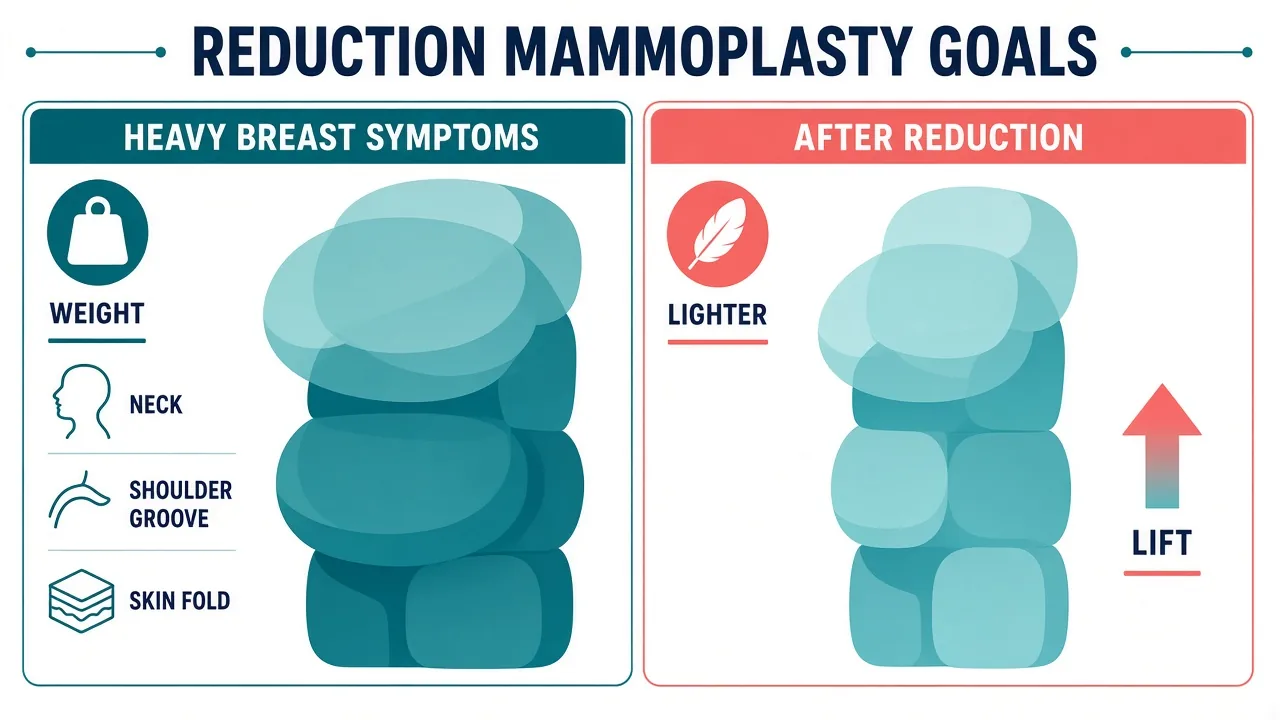
For women with very large or heavy breasts, breast reduction is not always about appearance. The weight of the breasts can contribute to chronic neck, shoulder and upper-back pain, bra-strap grooves, skin irritation beneath the breasts and difficulty exercising. Breast reduction surgery can address both the physical burden and concerns about breast shape and proportion.
Named partner planning for breast reduction is $3,200–$6,800, typically 1–4 nights. Neighbouring breast lift is $3,000–$6,500 (typically 1–3 nights) when position, not tissue weight, is the honest brief. Neighbouring breast augmentation is $3,000–$6,500 (typically 1–3 nights) when volume is being added, not removed. Neighbouring liposuction is $1,500–$4,200 (typically day-care to 2 nights) when fatty contouring is named separately. Neighbouring gynecomastia surgery is $1,800–$4,200 (typically 1–2 nights) and is a male-chest product, not female reduction mammoplasty. Neighbouring breast reconstruction is $6,000–$18,000 (typically 4–8 nights) after mastectomy. Combined mommy-makeover lists sit on Mommy Makeover in India and are quoted after review. These are planning ranges from partner hospital cost sheets, not hospital quotations.
India has become an important destination for patients seeking plastic and reconstructive surgery because treatment is available across major cities through experienced plastic surgeons and multidisciplinary hospitals. However, the right surgeon, hospital standards, surgical technique and postoperative follow-up are more important than choosing a destination based on price alone.
International patients comparing cosmetic surgeons commonly start with breast-reduction lists in Delhi NCR, Mumbai, Bengaluru, Chennai and Hyderabad. Partner cosmetic surgery hospitals in Delhi NCR, Mumbai and Bengaluru, and in Chennai and Hyderabad, are a typical first filter. City cost sheets include Delhi NCR, Mumbai, Bengaluru, Chennai and Hyderabad. Kolkata, Pune, Ahmedabad, Chandigarh, Kochi and Jaipur may have aesthetic-surgery services, but they are not live GAF catalog cities on this site.
Medical note: Breast reduction is major surgery. Rapid swelling, fever, wound opening, darkening of nipple or skin, breathlessness or calf swelling belongs in a local emergency department, not in a WhatsApp message.
Breast Reduction at a Glance
| Factor | What patients should know |
|---|---|
| Medical name | Reduction mammoplasty |
| Purpose | Reduce volume, reshape and often lift the breast |
| GAF reduction sheet | $3,200–$6,800; typically 1–4 nights |
| Neighbouring breast lift | $3,000–$6,500; typically 1–3 nights |
| Neighbouring liposuction | $1,500–$4,200; day-care to 2 nights |
| Neighbouring gynecomastia | $1,800–$4,200; male-chest product |
| Specialist | Qualified plastic surgeon |
| Scars | Permanent; usually fade and soften |
| Emergency | Rapid swelling, fever, wound opening, darkening nipple or skin, breathlessness or calf swelling belongs in a local emergency department |
What Is Breast Reduction Surgery?
Breast reduction surgery, medically known as reduction mammoplasty, is a plastic surgery procedure designed to decrease breast volume and reshape the breasts.
During surgery, the plastic surgeon removes a planned amount of excess breast tissue, fat and skin. The remaining breast tissue is then reshaped to create a smaller and more proportionate breast. The nipple and areola are usually moved to a higher position while remaining connected to their blood supply and nerves.
The procedure can therefore involve three objectives:
- Reduction — removing excess breast volume
- Lift — raising breast tissue and the nipple to a more appropriate position
- Reshaping — creating a breast contour that is proportionate to the patient's body
For some patients, liposuction may be used as an additional technique, particularly where excess fatty tissue contributes significantly to breast volume. However, liposuction alone is not appropriate for every patient because it does not remove excess skin or directly reshape glandular breast tissue. Named liposuction lists sit on Liposuction in India.
Ask whether reduction is appropriate
Why Do Women Choose Breast Reduction Surgery?
Very large breasts can affect everyday life in ways that go beyond appearance.
The physical weight of the breasts can place additional stress on the neck, shoulders and upper back. Some women develop grooves where bra straps press into the shoulders. Others experience persistent irritation or rashes underneath the breasts, particularly in warm or humid weather.
Large breasts can also make running, exercising, swimming or participating in sports uncomfortable.
Common reasons for considering breast reduction include chronic neck pain, shoulder pain, upper-back pain, bra-strap indentations, skin irritation beneath the breasts, difficulty exercising, difficulty finding properly fitting clothing, feeling that the breasts are disproportionately large, breast heaviness, postural discomfort and difficulty performing certain daily activities.
Breast reduction can also have an emotional and lifestyle component. Some patients feel self-conscious about their breast size or find that their clothing choices and physical activities are restricted.
Breast Reduction Surgery for Medical and Cosmetic Reasons
Breast reduction is sometimes described as cosmetic surgery, but the reason for surgery can be medical, functional, aesthetic or a combination of these.
For example, a woman with very large breasts who experiences persistent neck and back pain may seek surgery primarily for symptom relief. Another patient may have less physical discomfort but want a breast size that is more proportionate to her body.
The distinction can also matter when discussing insurance coverage. Insurance policies differ, and coverage may depend on medical necessity, documentation of symptoms, the amount of tissue expected to be removed and the individual insurer's criteria.
GAF planning ranges are self-pay partner sheets. Patients should check their own insurance policy rather than assuming that breast reduction will automatically be covered.
Who Is a Good Candidate for Breast Reduction Surgery?
Breast reduction is highly individualized. There is no single breast size, cup size or body measurement that automatically determines whether someone should have the operation.
A patient may be considered suitable when the breasts are disproportionately large or heavy, breast size is interfering with physical activity, there is persistent neck, shoulder or upper-back discomfort, bra straps cause painful shoulder indentations, there is recurrent irritation beneath the breasts, the patient wants a smaller and more proportionate breast shape, general health is adequate for surgery, expectations about the outcome are realistic, the patient understands that scars will remain, and smoking or nicotine use is addressed before surgery because nicotine can interfere with blood flow and wound healing.
A consultation with a qualified plastic surgeon is essential because candidacy depends on anatomy, medical history, breast composition, skin quality, desired reduction and other individual factors.
When Should Breast Reduction Surgery Be Delayed?
Breast reduction may need to be postponed in certain circumstances.
A surgeon may recommend waiting if the patient is planning significant weight loss, because substantial changes in body weight can alter breast size and shape.
Pregnancy may also be an important consideration. Pregnancy and breastfeeding can change breast volume and shape after surgery. In addition, although some surgical techniques preserve the ability to breastfeed, breastfeeding cannot be guaranteed after breast reduction.
Patients should also discuss smoking or vaping, diabetes, obesity, blood-clotting problems, previous breast surgery, previous breast biopsies, current medications, allergies, family history of breast cancer, and previous mammograms or breast imaging.
Breast Reduction Surgery Techniques
There is no single breast reduction technique that is ideal for every patient.
The surgeon selects the approach based on breast size, breast shape, amount of tissue to be removed, skin quality, degree of sagging, nipple position and the desired result.
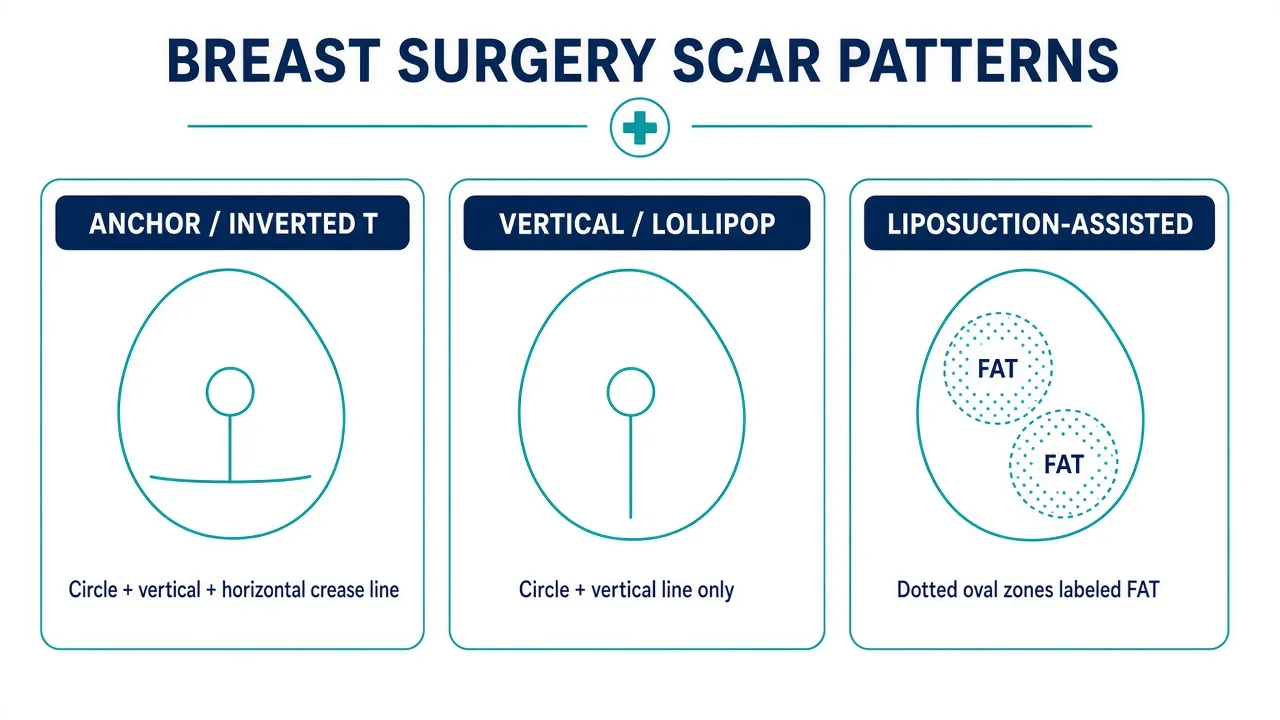
1. Anchor or inverted-T breast reduction
The anchor-shaped incision is one of the most commonly used approaches for larger reductions.
The incision generally extends around the areola, vertically downward from the areola, and horizontally along the breast crease.
This approach can provide significant tissue removal and extensive reshaping. It may be particularly useful when the breasts are very large or significantly drooping and substantial skin removal is necessary.
The trade-off is a longer scar pattern compared with some short-scar techniques.
2. Vertical or lollipop breast reduction
The vertical technique generally involves an incision around the areola and a vertical incision extending downward from the areola. It avoids the horizontal incision along the breast crease.
This technique may be appropriate for selected patients with moderate breast enlargement and suitable skin characteristics.
3. Liposuction-assisted breast reduction
Liposuction can sometimes be used to remove fatty tissue from the breast.
It may be useful for carefully selected patients whose breast volume is predominantly fatty and who have relatively good skin elasticity.
However, liposuction does not remove significant excess skin and cannot reposition the nipple in the same way as conventional reduction mammoplasty. Adjunct liposuction is quoted from the neighbouring liposuction sheet after review; it is not a substitute reduction price.
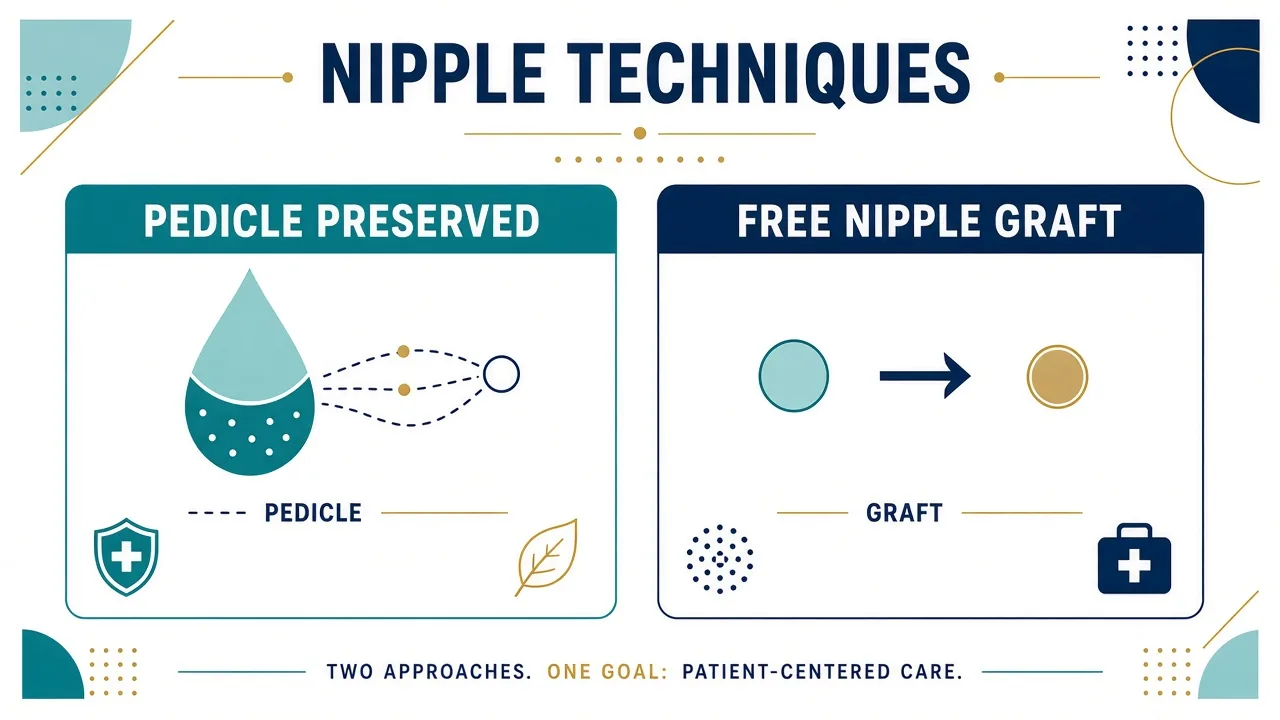
4. Free nipple graft technique
In cases involving extremely large or very pendulous breasts, the surgeon may determine that a free nipple graft is required.
In this approach, the nipple and areola are removed from their original position and grafted onto the newly shaped breast.
This can permit substantial reduction, but the technique has important consequences, including loss of normal nipple sensation and inability to breastfeed from the operated breast.
It is therefore generally reserved for selected cases where the surgeon believes the benefits outweigh the limitations.
Share photographs for a technique review
How Is Breast Reduction Surgery Performed?
Breast reduction is generally performed under general anaesthesia.
Step 1: Anaesthesia
The patient receives anaesthesia to ensure comfort throughout the procedure. General anaesthesia is commonly used.
Step 2: Surgical marking
Before surgery, the surgeon marks the breasts while the patient is standing or sitting. These markings help determine incision position, nipple position, amount of tissue to remove, breast symmetry and final breast shape.
Step 3: Incisions
The surgeon makes the planned incisions according to the selected technique.
Step 4: Removal of excess tissue
Excess skin, glandular breast tissue and fat are removed. The amount removed from each breast may differ because natural breast asymmetry is common. Pathology of the specimen should be confirmed in writing if it is part of the quotation.
Step 5: Reshaping
The remaining breast tissue is rearranged and shaped to create a smaller, lifted breast.
Step 6: Repositioning the nipple
The nipple and areola are generally moved upward to a more appropriate position while remaining connected to their blood and nerve supply, unless a free nipple graft is planned.
Step 7: Closing the incisions
The incisions are closed using sutures and, depending on the surgeon's technique, surgical tape or other wound-closure materials. The resulting scars are permanent but generally become less noticeable with time.
How Long Does Breast Reduction Surgery Take?
The duration depends on the amount of tissue being removed, breast size, degree of sagging, surgical technique, whether liposuction is added and whether additional procedures are performed.
A breast reduction operation commonly takes around 2–4 hours, although some procedures may be shorter or longer.
Patients should ask their surgeon for an individualized estimate rather than planning around a fixed operating time.
What Tests Are Needed Before Breast Reduction Surgery?
The preoperative assessment depends on age, medical history and individual risk factors.
A surgeon may request a physical examination, blood tests, general preoperative investigations, breast imaging when appropriate, mammography depending on age, history and clinical findings, ECG or other medical tests when indicated, and anaesthesia assessment.
Patients should provide their surgeon with previous mammograms, breast biopsy reports or other relevant breast investigations.
Preoperative planning also includes reviewing medications and supplements. Aspirin, certain anti-inflammatory medicines and some supplements may increase bleeding risk and should only be stopped or changed under medical advice.
Breast Reduction Surgery Recovery
Recovery varies from patient to patient.
During the first few days, patients commonly experience swelling, bruising, tenderness, tightness, temporary changes in breast sensation and fatigue.
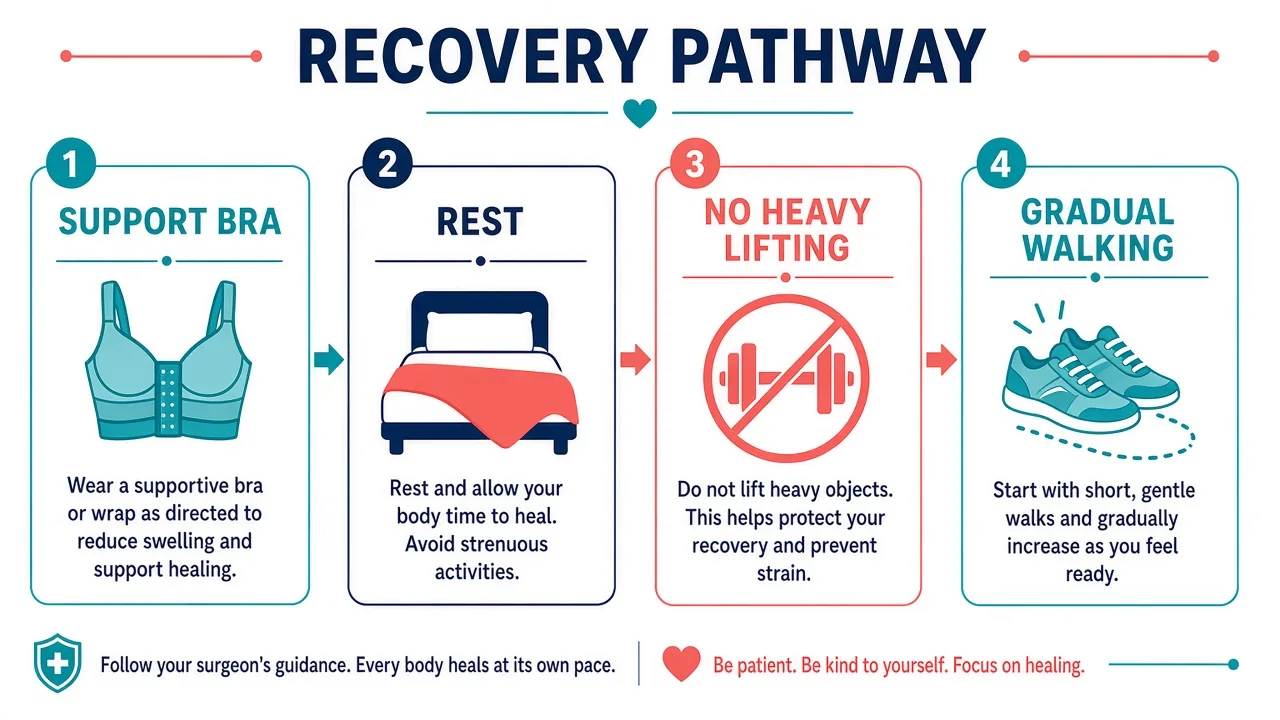
A surgical or supportive bra may be recommended to support the breasts and control swelling.
Some patients have temporary drains, although their use depends on the surgeon and the operation.
GAF stay planning is typically 1–4 nights. International patients should not plan travel from the shortest published stay.
Typical recovery timeline
| Period | What patients may experience |
|---|---|
| First few days | Pain, swelling, bruising and tightness |
| Week 1 | Rest, wound care and restricted physical activity |
| Weeks 2–3 | Increasing comfort; some patients may return to desk-based work if cleared |
| Weeks 4–5 | Gradual increase in activity under medical guidance |
| Around week 6 | Many patients can progressively resume exercise if healing is satisfactory |
| Several months | Swelling continues to settle and scars gradually mature |
| 6–12 months | Breast shape and scars may continue to evolve |
The American Society of Plastic Surgeons notes that full recovery can take several months even though patients often begin feeling considerably better much earlier.
Plan an international reduction stay
When Can I Return to Work After Breast Reduction?
The answer depends on the nature of your work.
Someone with a desk-based job may be able to return relatively early if pain is controlled and healing is progressing normally.
People whose work involves heavy lifting, repetitive arm movements, physical labour, long periods of standing, or sports or strenuous activity may need more time away from work.
Your surgeon should determine when you can safely return to your particular occupation.
When Can I Exercise After Breast Reduction?
Walking is generally encouraged early during recovery because gentle movement can support general recovery.
However, strenuous exercise, running, heavy lifting and upper-body workouts should be avoided until the surgeon permits them.
A common timeframe for gradually returning to more strenuous activity is around 4–6 weeks, but this is not a universal rule.
Returning to exercise too early can place stress on healing tissues and incisions.
Breast Reduction Scars
Scarring is one of the most important subjects to discuss before breast reduction surgery.
Depending on the technique, scars may occur around the areola, vertically below the areola and along the breast crease.
An anchor or inverted-T technique creates the most extensive of these common scar patterns.
Scars are permanent, although they generally become softer and less noticeable over time.
Scar appearance depends on genetics, skin type, surgical technique, wound healing, infection or wound complications, sun exposure and postoperative scar care.
Does Breast Reduction Surgery Affect Breast Sensation?
Breast and nipple sensation can change following surgery.
Some patients experience temporary numbness, increased sensitivity or altered sensation. In some cases, sensation may remain permanently different.
The likelihood depends on the surgical technique, amount of tissue removed, anatomy and individual healing.
Very extensive reductions involving a free nipple graft result in loss of normal nipple sensation.
Can You Breastfeed After Breast Reduction Surgery?
Breastfeeding after reduction mammoplasty is an important consideration for women who may want children in the future.
Some breast reduction techniques preserve more of the milk-producing tissue and ducts than others, so breastfeeding may remain possible.
However, no surgeon can guarantee that breastfeeding will be fully preserved.
Patients planning future pregnancy should discuss this specifically with their plastic surgeon before choosing a surgical technique.
Risks and Complications of Breast Reduction Surgery
Breast reduction is a major surgical procedure and carries potential risks.
Possible complications include bleeding, infection, haematoma, seroma, wound-healing problems, delayed healing, thick or prominent scars, breast asymmetry, changes in breast or nipple sensation, persistent pain, changes in nipple position, partial or complete loss of nipple or skin tissue due to compromised blood supply, difficulty or inability to breastfeed, need for revision surgery, and blood clots and other complications associated with major surgery.
The risk profile varies according to the patient's health, smoking status, breast size, surgical technique and other factors.
A surgeon should explain the risks that are particularly relevant to your case rather than relying only on general statistics.
Revision lists are quoted after review; there is no separate GAF revision-reduction sheet.
Breast Reduction Surgery Results
The reduction in breast size is visible soon after surgery, but the breasts will initially be swollen and may not represent the final shape.
Over the following weeks and months, swelling decreases, breast tissue settles, incisions mature, scars gradually soften and breast shape becomes more natural.
Breast reduction can provide long-lasting reduction in breast volume and may relieve physical symptoms caused by heavy breasts. However, the breasts can change again because of pregnancy, weight fluctuations, ageing and hormonal changes.
Breast Reduction Before and After: What Should You Expect?
Before-and-after photographs can be useful during a consultation, but they should be interpreted carefully.
Two patients can undergo the same procedure and achieve noticeably different results because of differences in breast size, breast shape, skin elasticity, body proportions, tissue composition, amount of reduction, nipple position, surgical technique and healing response.
Ask to see photographs of patients with anatomy and starting breast size similar to yours.
A photograph should be used to understand what may be achievable, not as a promise of an identical result.
Breast Reduction Surgery Cost in India
Named GAF partner planning for breast reduction is $3,200–$6,800, typically 1–4 nights. Comparable US self-pay planning on the same sheet is $8,000–$16,000. These are planning ranges, not hospital quotations.
Consumer rupee averages from mixed hospital marketing pages are not used as GAF quotations.
Typical factors affecting cost
| Cost factor | Why it matters |
|---|---|
| City | Live GAF sheets currently cover five catalog cities |
| Hospital | Facility, operating theatre and inpatient charges differ |
| Surgeon | Professional fees vary |
| Amount of reduction | Larger reductions may require more extensive surgery |
| Surgical technique | Anchor, vertical and free-nipple-graft work differ |
| Anaesthesia | Confirm whether anaesthesia is included |
| Hospital stay | GAF planning is typically 1–4 nights |
| Additional procedures | Liposuction adjunct uses the neighbouring sheet |
| Investigations | Imaging and laboratory testing vary |
| Postoperative care | Medicines, garments and follow-up may be additional |
Request a named-procedure cost estimate
WhatsApp +91 90443 46292 for an itemised reduction estimate
What should a breast reduction quote include?
Before comparing prices, ask whether the quotation includes the plastic surgeon's fee, anaesthesia, operating theatre, hospital charges, preoperative investigations, specimen pathology, postoperative medicines, support bra, follow-up visits, emergency care if required, and the revision policy where applicable.
A very low quotation may not be directly comparable with a comprehensive hospital package.
Breast Reduction Surgery Cost in Major Indian Cities
Live GAF city sheets currently cover Delhi NCR, Mumbai, Bengaluru, Chennai and Hyderabad. Pune, Kolkata, Ahmedabad, Kochi and Jaipur are not live GAF catalog cities on this site.
Rather than choosing a city purely on cost, international patients should consider the surgeon's qualifications, hospital accreditation, pathology arrangements, anaesthesia facilities and postoperative support.
Is Breast Reduction Surgery in India Safe?
The safety of breast reduction surgery depends on considerably more than the country where the operation is performed.
Important factors include qualifications and training of the plastic surgeon, experience with breast reduction procedures, hospital accreditation and surgical facilities, the anaesthesia team, preoperative assessment, sterile operating environment, emergency support, postoperative monitoring, follow-up arrangements, and patient health and risk factors.
Patients travelling internationally should also consider what happens if a complication occurs after returning home.
A low-cost quotation should therefore never be the only factor used to select a surgeon or hospital.
How to Choose a Breast Reduction Surgeon in India
Catalog surgeons currently tagged to breast-reduction lists include Dr. Anup Dhir and Dr. Nooreyezdan Shahin in Delhi NCR; Dr. Hemang Sanghvi in Mumbai; Dr. Lokesh Suryanarayanan and Dr. S Narayanamurthy in Chennai; and Dr. Srinivas S Jammula in Hyderabad. Mumbai catalogs currently have a limited dedicated reduction tag beyond Dr. Sanghvi; a neighbouring starting point is Dr. Vinod Ranvir Vij. Bengaluru catalogs currently tag neighbouring breast-augmentation lists rather than a dedicated reduction tag; starting points include Dr. Naveen Rao and Dr. Pradeep Y V. Hyderabad neighbouring breast-surgery lists include Dr. Guru Prasad Reddy. A catalog tag is not a volume, outcome or ranking claim.
Catalog hospitals currently affiliated with those tagged lists include Indraprastha Apollo Hospital and Fortis Memorial Research Institute in Delhi NCR; Wockhardt Hospital, Mumbai and Gleneagles Hospital, Mumbai in Mumbai; Apollo Hospitals, Bannerghatta Road in Bengaluru; Apollo Hospital, Chennai and MGM Healthcare, Chennai in Chennai; and Yashoda Hospitals, Secunderabad and Apollo Hospital, Jubilee Hills in Hyderabad.
Find a breast-reduction specialist in India
WhatsApp +91 90443 46292 to match a reduction surgeon
- Cosmetic surgery hospitals in Delhi NCR
- Cosmetic surgery hospitals in Mumbai
- Cosmetic surgery hospitals in Bengaluru
- Cosmetic surgery hospitals in Chennai
- Cosmetic surgery hospitals in Hyderabad
Questions to Ask Your Plastic Surgeon
- What plastic surgery qualifications do you hold?
- How frequently do you perform breast reduction surgery?
- Which technique do you recommend for me?
- Why is this technique appropriate for my anatomy?
- How much tissue do you expect to remove?
- Where will the surgery be performed?
- What type of anaesthesia will be used?
- How long will I need to stay in hospital?
- What scars should I expect?
- Could the surgery affect nipple sensation?
- Could it affect breastfeeding?
- What complications are most relevant to me?
- What happens if a wound-healing problem occurs?
- How long should I remain in India after surgery?
- Who will provide follow-up after I return home?
- Can I see before-and-after cases similar to mine?
Breast Reduction Surgery for International Patients
Step 1: Send medical records and photographs
Provide medical history, previous breast imaging, medications and relevant photographs for preliminary assessment.
Step 2: Plastic surgeon review
A surgeon reviews the available information and determines whether an in-person consultation is appropriate.
Step 3: Treatment plan
The patient receives a proposed surgical plan, including the expected technique and investigations.
Step 4: Cost estimate
The hospital or medical facilitator provides an estimate from the named sheet.
Step 5: Travel planning
Patients coordinate flights, accommodation and transportation according to the surgeon's recommended timeline.
Step 6: In-person consultation
The final technique and tissue-removal plan should be confirmed after physical examination.
Step 7: Surgery and recovery
The patient undergoes surgery and remains under postoperative medical supervision.
Step 8: Follow-up before travel
The treating team determines whether the patient is medically fit to travel. For long-distance flights, clot-prevention advice should be discussed explicitly.
Plan a breast-reduction treatment journey
How Long Should International Patients Stay in India?
GAF hospital planning is typically 1–4 nights; additional hotel nights for review are separate from the surgical stay.
Patients should not book their return flight solely according to a generic internet timeline.
The treating surgeon should confirm when travel is appropriate.
Breast Reduction vs Breast Lift
Named lift lists sit on Breast Lift in India.
| Feature | Breast reduction | Breast lift |
|---|---|---|
| Main objective | Reduce breast volume | Raise and reshape breast |
| Removes breast tissue | Usually yes | Usually limited |
| Removes excess skin | Often | Often |
| Changes breast size | Yes | Usually little change |
| Repositions nipple | Often | Often |
| Helps heavy-breast symptoms | Often | Less predictable if volume remains |
| GAF sheet | $3,200–$6,800 | $3,000–$6,500 |
Breast reduction commonly includes a lifting effect because excess tissue and skin are removed and the remaining breast is reshaped.
Some patients may also require a separate or additional breast lift depending on their anatomy and desired outcome. Combined work is quoted after review.
Breast Reduction vs Breast Liposuction
Liposuction and surgical breast reduction are not interchangeable.
Liposuction primarily removes fat.
Reduction mammoplasty can remove fat, glandular breast tissue and excess skin while reshaping and repositioning the breast.
Liposuction may be considered when breast volume is predominantly fatty and skin quality is favorable, but patients with significant glandular tissue or substantial sagging generally require a surgical reduction technique.
Breast Reduction vs Breast Augmentation
These procedures have opposite primary objectives.
Breast augmentation increases breast volume, usually using implants or fat transfer. Named lists sit on Breast Augmentation in India.
Breast reduction decreases breast volume by removing tissue, fat and skin.
Can Breast Reduction Correct Breast Asymmetry?
Breast asymmetry is common even before surgery.
During breast reduction, the surgeon can modify the amount of tissue removed from each side and reshape the breasts to improve symmetry.
However, perfect symmetry cannot be guaranteed.
Does Breast Reduction Help Back Pain?
For patients whose back, neck or shoulder discomfort is related to the weight of very large breasts, reducing breast volume may relieve some of that physical burden.
However, not every source of back pain is caused by breast size. Patients with significant back pain should therefore have the cause evaluated rather than assuming that breast reduction will resolve all back symptoms.
Does Breast Reduction Help With Skin Rash Under the Breasts?
Large, heavy breasts can create a warm and moist fold beneath the breast where skin irritation may occur.
Reducing breast size can decrease the amount of skin-to-skin contact and improve the mechanical burden in the breast fold.
Persistent rashes should still be evaluated medically because infections, dermatitis and other skin conditions can have different causes.
Neighbouring Breast Procedures
Reduction is one breast list. Neighbouring GAF sheets that patients sometimes compare, and that must not be used as a reduction quotation unless that is the named procedure, include:
- Breast Lift in India — named lists sit on breast lift at $3,000–$6,500
- Breast Augmentation in India — named lists sit on breast augmentation at $3,000–$6,500
- Liposuction in India — named lists sit on liposuction at $1,500–$4,200
- Gynecomastia surgery — $1,800–$4,200, typically 1–2 nights
- Mommy Makeover in India — combination lists quoted after review
- Breast Reconstruction Surgery in India — named lists sit on breast reconstruction at $6,000–$18,000
Lift lists raise position. Augmentation lists add volume. They are not a substitute reduction price.
Warning Signs After Breast Reduction
Contact your surgeon promptly, and seek urgent care in a local emergency department if you experience severe or rapidly increasing pain, sudden breast swelling, significant bleeding, fever, increasing redness, wound separation, unusual skin discoloration, darkening of the nipple, shortness of breath, chest pain, or significant swelling in an arm or leg.
Do not wait for a WhatsApp reply if those symptoms develop.
Frequently Asked Questions About Breast Reduction Surgery in India
Is breast reduction surgery available in India?
Yes. Breast reduction, or reduction mammoplasty, is performed by qualified plastic surgeons at hospitals and specialist surgical centres across India.
How much does breast reduction surgery cost in India?
Named GAF partner planning is $3,200–$6,800, typically 1–4 nights. Combined lift, liposuction-adjunct and gynecomastia lists are quoted separately.
Is breast reduction surgery painful?
Some pain, tenderness and tightness are expected after surgery. Pain medication and postoperative support garments can help manage discomfort. Pain levels vary between patients.
How many hours does breast reduction surgery take?
Many procedures take around 2–4 hours, although the duration can vary according to surgical complexity.
How long does breast reduction recovery take?
Initial recovery generally takes several weeks. Many patients gradually return to normal activities over approximately 4–6 weeks, while swelling and scar maturation continue for several months.
Will breast reduction leave scars?
Yes. Breast reduction requires incisions, so permanent scars should be expected. The exact pattern depends on the surgical technique.
Can breast reduction remove all breast sagging?
Breast reduction usually includes reshaping and lifting, so it can substantially improve breast position. However, the degree of lift depends on anatomy, skin quality and the technique used.
Can I breastfeed after breast reduction?
Breastfeeding may remain possible after some techniques, but it cannot be guaranteed. Extensive reductions involving free nipple grafting eliminate normal breastfeeding ability from the operated breast.
Will my nipples lose sensation?
Temporary or permanent changes in nipple sensation are possible. The risk varies according to the surgical technique and individual anatomy.
Can breast reduction correct uneven breasts?
It can improve asymmetry by removing different amounts of tissue from each breast and reshaping them. Perfect symmetry cannot be guaranteed.
Can breast reduction be combined with a breast lift?
Yes. In practice, breast reduction inherently involves a lifting and reshaping component, although the exact approach varies according to the patient's anatomy.
Can breast reduction be combined with liposuction?
In selected patients, liposuction can be used as an adjunct to remove fatty tissue or improve contour and is quoted from the neighbouring liposuction sheet.
Is breast reduction permanent?
The reduction in breast tissue is long-lasting, but breast size and shape can change with pregnancy, major weight changes, ageing and hormonal changes.
Is breast reduction surgery safe?
Like all major surgery, breast reduction carries risks. Safety depends on patient health, surgeon experience, surgical facility, anaesthesia, technique and postoperative care.
Can teenagers undergo breast reduction?
Breast reduction can sometimes be performed in adolescents when breast development and the patient's circumstances make surgery appropriate. Because breasts can continue developing, the timing should be discussed carefully with a qualified specialist.
Can men undergo breast reduction surgery?
Male breast reduction is usually performed for gynecomastia and may involve liposuction, tissue removal or both. Neighbouring gynecomastia surgery is $1,800–$4,200 and is a different clinical pathway from female reduction mammoplasty.
Which city in India is best for breast reduction?
There is no single best city. Delhi NCR, Mumbai, Bengaluru, Chennai and Hyderabad are live GAF catalog cities. Choose a named plastic surgeon who already performs reduction mammoplasty.
Key Takeaways
- Breast reduction surgery, or reduction mammoplasty, can reduce breast volume while reshaping and lifting the remaining breast tissue.
- It may be considered by women experiencing physical symptoms such as neck, shoulder and back discomfort, bra-strap grooves, skin irritation or difficulty exercising because of very large breasts.
- GAF partner planning is $3,200–$6,800, typically 1–4 nights. Neighbouring lift is $3,000–$6,500. Neighbouring gynecomastia is $1,800–$4,200.
- Recovery takes several weeks, while swelling and scars can continue to improve for months.
- Rapid swelling, fever, wound opening, darkening nipple or skin, breathlessness or calf swelling belongs in a local emergency department.
Share photographs, symptoms, imaging and a description of the change you want before making travel arrangements. A case-specific surgical opinion is more useful than a brochure cup-size package.
Request a breast-reduction treatment plan
Share photographs for a reduction review
Message a coordinator on WhatsApp
Request a cost review on WhatsApp
Why Choose GAF Healthcare for Breast Reduction Surgery in India?
GAF Healthcare assists international patients in coordinating medical treatment in India and can help simplify the process from initial enquiry to hospital coordination.
Support may include identification of appropriate hospitals and plastic surgeons, medical-record coordination, online consultation assistance, treatment-cost coordination, hospital appointment scheduling, travel and medical-tourism assistance, airport and local transportation coordination, accommodation assistance, interpreter support where required, and post-treatment coordination.
The treating surgeon remains responsible for the medical diagnosis, surgical recommendation and clinical care.
Share your treatment goals, medical history and relevant photographs for an initial assessment. The treating plastic surgeon can then determine whether reduction is appropriate and recommend the most suitable treatment plan.
Top 10 Medical Sources
- Mayo Clinic — Breast reduction surgery — indications, surgery, recovery and risks.
- American Society of Plastic Surgeons — Breast reduction — procedure overview and candidacy.
- American Society of Plastic Surgeons — Breast reduction procedure — incision patterns, tissue removal and nipple repositioning.
- American Society of Plastic Surgeons — Breast reduction candidates — candidacy and factors considered before surgery.
- American Society of Plastic Surgeons — Breast reduction recovery — postoperative recovery and activity guidance.
- American Society of Plastic Surgeons — Preparing for breast reduction — preoperative planning.
- NHS — Female breast reduction — patient information on surgery, recovery, risks and breastfeeding.
- Cleveland Clinic — Breast reduction — reduction mammoplasty overview.
- GAF Healthcare breast reduction — partner USD planning range of $3,200–$6,800 and typical 1–4 night stay.
- GAF Healthcare breast lift — neighbouring mastopexy sheet when position, not tissue weight, is the product.
Last reviewed against the cited sources: October 2026.
Medical Disclaimer
This page is intended for general educational purposes and should not replace an examination, diagnosis or individualized medical advice from a qualified plastic surgeon.
Breast reduction surgery is an individualized procedure. Suitability, technique, risks, recovery and expected results vary from patient to patient. Any decision regarding surgery should be made after an appropriate medical assessment and informed discussion of benefits, alternatives and potential complications.
If you develop rapid swelling, fever, wound opening, darkening of nipple or skin, severe one-sided pain, breathlessness or calf swelling, seek urgent medical attention in a local emergency department.
Treatment Process
- 1
Share photographs and history
The patient provides breast photographs, symptoms, imaging reports and any previous breast-surgery notes.
- 2
Virtual consultation
A plastic surgeon reviews whether reduction, lift, liposuction adjunct or a staged combination is the honest brief.
- 3
Confirm the technique
The team writes the likely scar pattern, pedicle versus free nipple graft, and whether liposuction belongs on a separate quote.
- 4
Itemized estimate
Named breast reduction is $3,200–$6,800. Combined lift, liposuction-adjunct and gynecomastia lists are quoted after review.
- 5
Travel to India
Stable planned cases travel after records review. Rapid swelling, fever, wound opening or breathlessness is a local emergency.
- 6
In-person examination
The surgeon measures volume, ptosis and nipple position after arrival and confirms the final plan.
- 7
Reduction mammoplasty
Excess tissue, fat and skin are removed, the breast is reshaped and the nipple-areola complex is repositioned.
- 8
Support bra and early review
A surgical bra is commonly applied. GAF stay planning is typically 1–4 nights.
- 9
Return home
The patient leaves with wound-care instructions, pathology notes where obtained, warning signs and a plan for remote follow-up.