

Treatment Overview
Breast reconstruction surgery in India is a specialized reconstructive procedure used to restore the shape and appearance of the breast after mastectomy, and in selected cases after breast-conserving cancer surgery. Reconstruction may be performed during the same operation as mastectomy or later, after cancer treatment and healing.
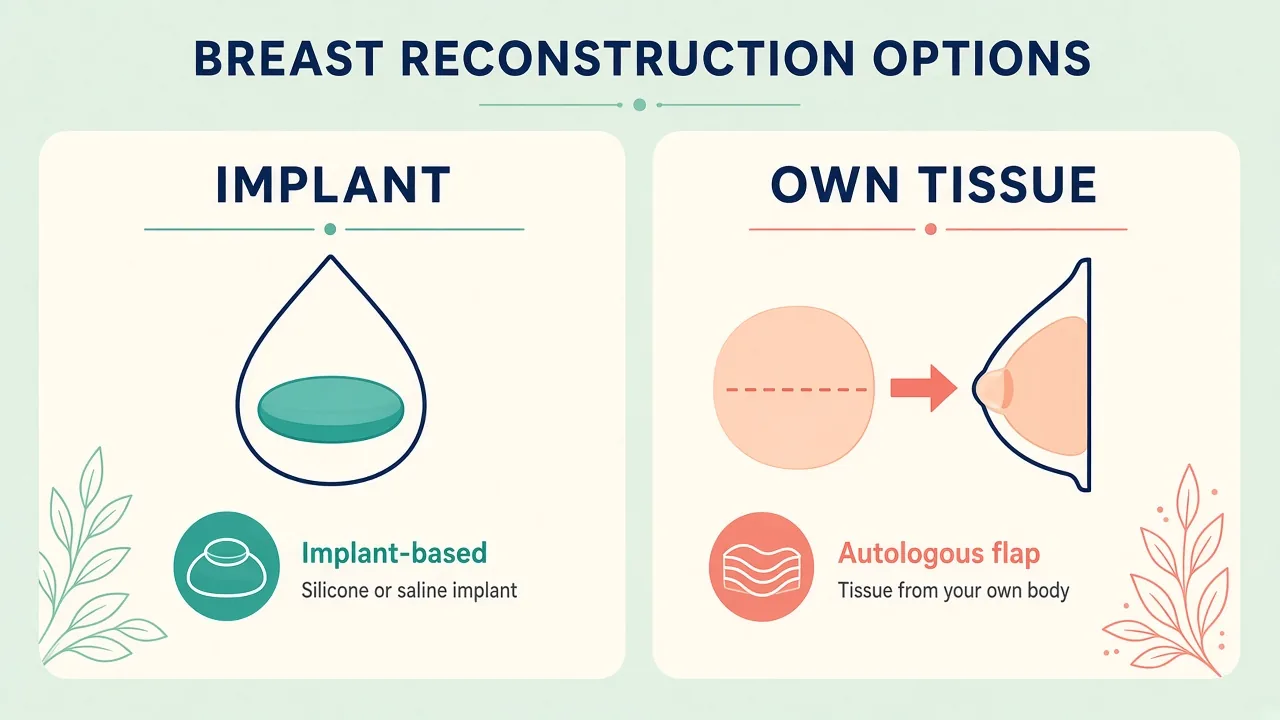
The two broad approaches are implant-based breast reconstruction and autologous breast reconstruction, which uses the patient's own tissue from another part of the body. Some patients have a combination of both techniques.
The right approach depends on the type of breast cancer surgery, whether radiation therapy is required, breast and body anatomy, previous operations, general health, personal preferences and the availability of suitable donor tissue. There is no single reconstruction technique that is appropriate for every patient.
Named partner planning for breast reconstruction is $6,000–$18,000, typically 4–8 nights. Neighbouring mastectomy is $4,500–$10,000 (typically 3–6 nights) and is a separate oncologic product unless a quotation explicitly includes both. Neighbouring nipple-sparing mastectomy is $5,500–$12,000 (typically 3–6 nights). Neighbouring oncoplastic breast surgery is $4,500–$11,000 (typically 2–5 nights) when conservation plus reshaping is the honest brief. Neighbouring breast-conserving surgery is $3,500–$8,000 (typically 1–3 nights). Neighbouring sentinel lymph node biopsy is $2,000–$5,500 (typically 1–2 nights). Neighbouring microvascular free flap reconstruction is $10,000–$24,000 (typically 8–14 nights) and is a different named product — it must not be used as a DIEP quotation unless that is the sheet the hospital actually names. Neighbouring fat transfer is $2,000–$5,500 (typically 1–3 nights) for contour refinement. Neighbouring breast lift is $3,000–$6,500 (typically 1–3 nights) when ptosis, not reconstruction after mastectomy, is the product. Neighbouring chemotherapy is $1,500–$8,000+. Neighbouring external beam radiotherapy is $1,000–$6,000+. Staged implant exchange, nipple reconstruction, later fat grafting and conversion from implant to flap are quoted after records review. These are planning ranges from partner hospital cost sheets, not hospital quotations.
For international patients considering treatment in India, the decision should be made jointly by the breast cancer team and a reconstructive plastic surgeon. The treatment plan should be finalized before travel whenever possible, particularly if reconstruction is expected to involve microsurgery or multiple stages.
The oncology pathway sits on Breast Cancer Treatment in India. A longer companion explainer is Breast Reconstruction After Mastectomy. International patients comparing surgical oncologists commonly start with reconstruction lists in Delhi NCR, Mumbai, Bengaluru, Chennai and Hyderabad. Partner surgical oncology hospitals in Delhi NCR, Mumbai and Bengaluru, and in Chennai and Hyderabad, are a typical first filter. City cost sheets include Delhi NCR, Mumbai, Bengaluru, Chennai and Hyderabad. Kolkata, Pune, Ahmedabad, Chandigarh, Kochi and Jaipur may have reconstructive services, but they are not live GAF catalog cities on this site.
Important: reconstruction is real surgery. Sudden colour change or cooling of a flap, fever, wound opening, implant exposure, rapidly increasing swelling, breathlessness or calf swelling belongs in a local emergency department, not in a WhatsApp message.
Breast Reconstruction at a Glance
| Factor | What patients should know |
|---|---|
| Purpose | Restore breast form after mastectomy or a selected conservation defect |
| Does not treat cancer | Cancer surgery, chemotherapy and radiation remain separate products |
| Timing | Immediate with mastectomy, or delayed months to years later |
| Main options | Implant-based, autologous flap, or hybrid |
| GAF reconstruction sheet | $6,000–$18,000; typically 4–8 nights |
| Neighbouring mastectomy | $4,500–$10,000; typically 3–6 nights |
| Neighbouring oncoplastic surgery | $4,500–$11,000; typically 2–5 nights |
| Specialist | Reconstructive plastic surgeon with the breast cancer team |
| Emergency | Flap colour change, fever, wound opening, implant exposure, breathlessness or calf swelling belongs in a local emergency department |
What Is Breast Reconstruction Surgery?
Breast reconstruction is surgery designed to recreate a breast mound after breast tissue has been removed or significantly altered.
It is most commonly associated with mastectomy for breast cancer. However, reconstructive or oncoplastic procedures can also be used in selected patients following breast-conserving surgery when a substantial defect or asymmetry remains.
Reconstruction does not remove cancer and does not replace chemotherapy, radiation therapy, hormone therapy or other cancer treatments when those treatments are medically indicated.
Instead, it is one component of comprehensive breast cancer care on Breast Cancer Treatment in India.
The reconstruction may aim to restore breast volume, shape, position and symmetry. Depending on the patient's circumstances, reconstruction can also involve surgery on the opposite breast to improve symmetry. Neighbouring breast lift and breast reduction sheets apply only when that is the named symmetry product.
Ask whether reconstruction is appropriate
Why Is Breast Reconstruction Done?
After a mastectomy, the breast mound may be completely removed. Some patients choose to remain flat, use an external breast prosthesis or undergo reconstruction.
Breast reconstruction can provide a new breast contour and may help some patients feel more comfortable with their appearance after cancer surgery.
The decision is personal.
Some women prefer immediate reconstruction, while others want to complete cancer treatment first. Others may decide that reconstruction is not right for them.
There is no requirement to undergo reconstruction after mastectomy.
A patient can discuss reconstruction, delayed reconstruction, external prostheses or aesthetic flat closure with the breast cancer team.
Who May Need Breast Reconstruction?
Breast reconstruction may be considered for patients who have undergone or are expected to undergo:
- Total mastectomy
- Skin-sparing mastectomy
- Nipple-sparing mastectomy in appropriately selected cases
- Bilateral mastectomy
- Risk-reducing mastectomy in selected high-risk patients
- Previous mastectomy without reconstruction
- Breast-conserving surgery resulting in significant contour deformity
- Reconstruction after complications from a previous reconstruction
- Revision of an existing reconstructed breast
- Reconstruction following radiation-related tissue changes
The decision is individualized and depends on the cancer treatment plan, anatomy and overall health.
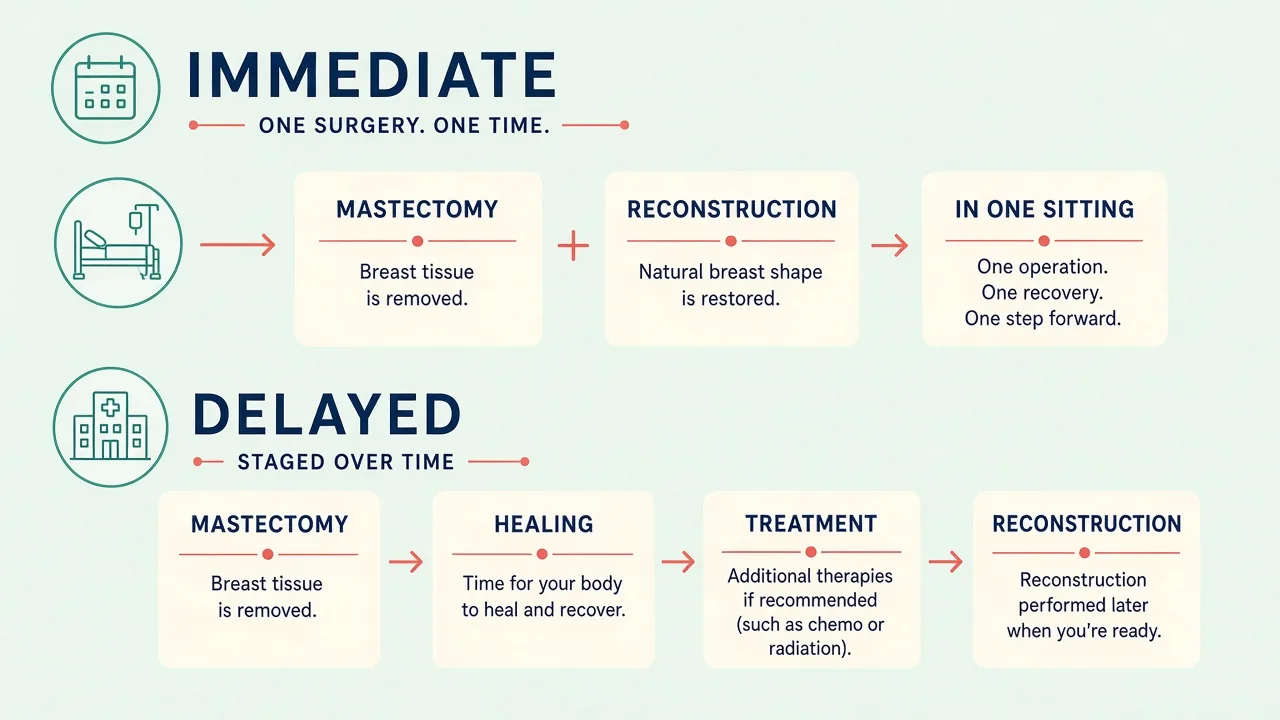
Immediate vs Delayed Breast Reconstruction
One of the first decisions is when reconstruction should take place.
Immediate Breast Reconstruction
Immediate reconstruction begins during the same operation as the mastectomy.
The breast surgeon removes the breast tissue, and the reconstructive surgeon then begins rebuilding the breast.
Potential advantages include preserving more of the breast skin envelope and avoiding a separate initial reconstruction operation.
Immediate reconstruction can be performed using an implant, tissue expander, flap or selected combined techniques.
However, immediate reconstruction is not appropriate for every patient.
The anticipated need for radiation, cancer stage, skin condition, medical risks and the type of mastectomy can all influence the decision.
Delayed Breast Reconstruction
Delayed reconstruction is performed after the mastectomy.
It may take place months or even years later.
Some patients choose delayed reconstruction because they want to complete chemotherapy or radiation first. Others may initially be uncertain about reconstruction.
Delayed reconstruction can also be considered when the chest tissues need time to heal or when previous radiation makes immediate reconstruction less suitable.
Delayed reconstruction does not mean that reconstruction will be less successful in every patient. The appropriate approach depends on the individual circumstances.
What Are the Main Types of Breast Reconstruction?
Breast reconstruction can broadly be divided into:
- Implant-based reconstruction
- Autologous tissue reconstruction
- Combined or hybrid reconstruction
- Fat grafting and secondary contour correction
- Nipple and areola reconstruction
The reconstructive surgeon may use one or several of these approaches over different stages.
Implant-Based Breast Reconstruction
Implant reconstruction uses a breast implant to create the breast mound.
A silicone implant is commonly used, although the exact device depends on the surgical plan and regulatory availability.
In some patients, the implant can be placed during the initial operation.
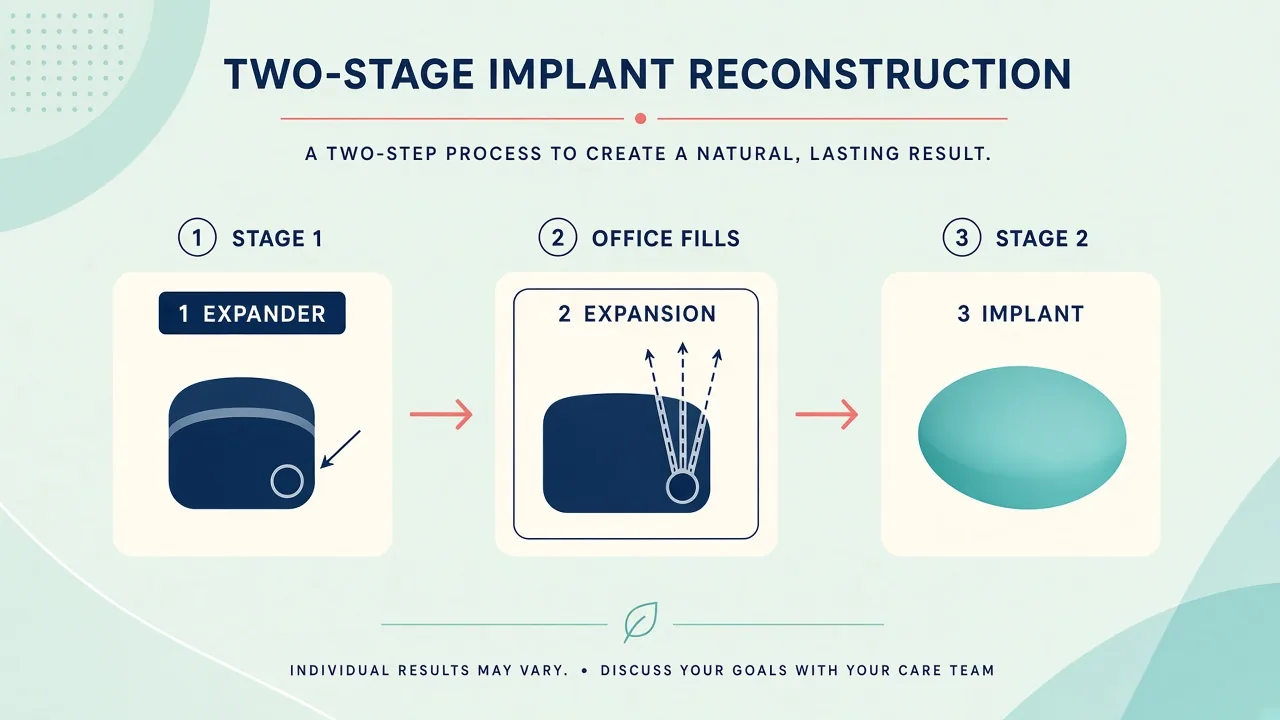
In others, the surgeon first places a tissue expander.
What is a tissue expander?
A tissue expander is a temporary device that gradually creates space for the final implant.
The expander is placed beneath the skin and/or chest tissues and progressively filled during follow-up appointments.
Once the tissues have expanded sufficiently, a second operation may replace the expander with the permanent implant.
This is known as two-stage implant reconstruction. The second-stage exchange is quoted after review unless the named package already includes it.
Advantages of implant reconstruction
- Does not require tissue to be taken from another part of the body
- Usually involves a shorter operation than free-flap reconstruction
- Avoids a donor-site scar associated with flap surgery
- May provide a relatively straightforward reconstructive pathway
- Can be appropriate for selected patients requiring immediate reconstruction
Limitations
Implant reconstruction may be affected by radiation, thin skin, infection, wound-healing problems or insufficient soft-tissue coverage.
Implants can also require future procedures because they are not lifetime devices.
Autologous Breast Reconstruction
Autologous reconstruction uses the patient's own tissue.
The tissue may contain skin and fat and, depending on the technique, muscle and blood vessels.
The tissue is transferred to the chest and shaped to create a breast mound.
A tissue flap may come from the:
- Abdomen
- Back
- Upper thigh
- Buttock
- Other suitable donor site
Some procedures use microsurgery to reconnect the flap's blood vessels to vessels in the chest.
Autologous reconstruction can provide a soft breast mound using living tissue.
It can also be useful when radiation has damaged the chest tissues or when an implant is not the preferred option.
DIEP Flap Breast Reconstruction
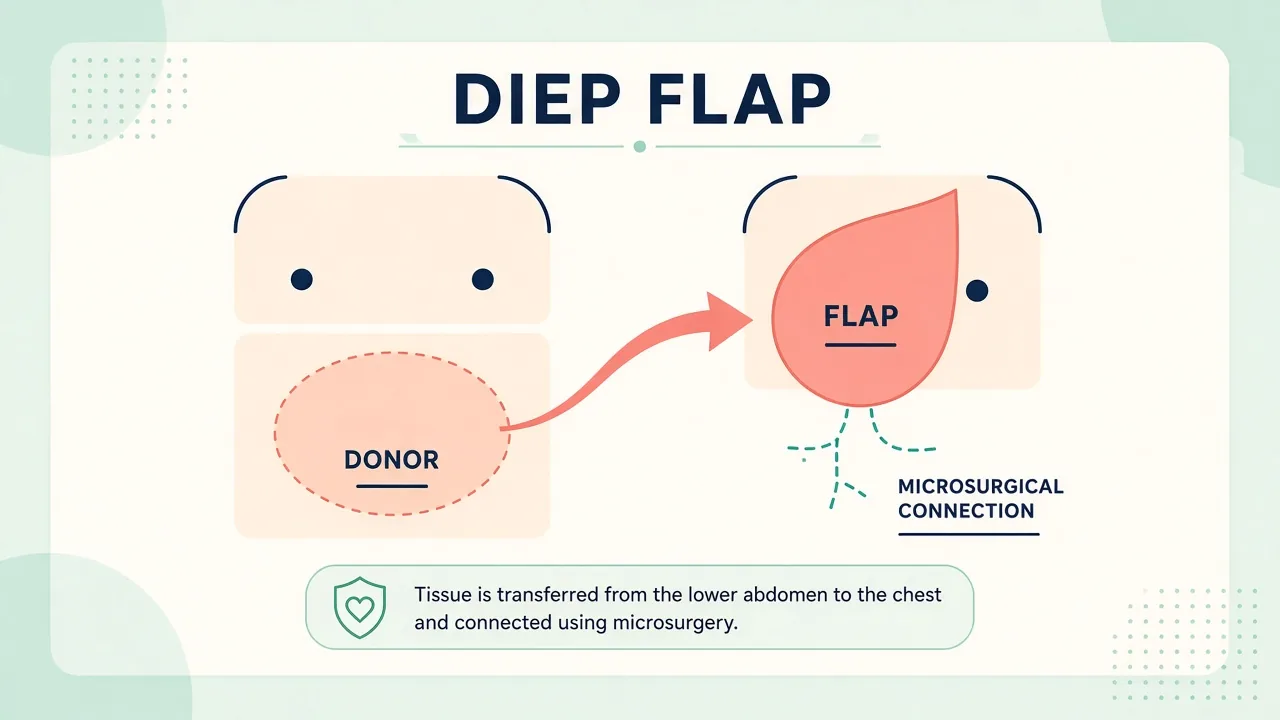
DIEP flap reconstruction is one of the best-known microsurgical techniques for breast reconstruction.
DIEP stands for Deep Inferior Epigastric Perforator.
The surgeon transfers skin and fat from the lower abdomen while preserving the abdominal muscles.
The blood vessels supplying the flap are disconnected and microsurgically connected to blood vessels in the chest.
Because the abdominal muscle is generally preserved, DIEP reconstruction differs from traditional muscle-containing abdominal flaps such as some TRAM procedures.
DIEP reconstruction is technically demanding and requires a team experienced in microsurgery.
There is no separate GAF DIEP sheet. Named DIEP work is quoted from breast reconstruction after records review. Neighbouring microvascular free flap reconstruction is a different product and must not be used as a DIEP price unless the hospital names that sheet.
The American Society of Plastic Surgeons has published evidence-based guidance specifically addressing autologous breast reconstruction using DIEP and TRAM abdominal flaps.
Share records for a DIEP or implant review
TRAM Flap Reconstruction
A TRAM flap, or transverse rectus abdominis myocutaneous flap, uses tissue from the lower abdomen.
Unlike a muscle-sparing DIEP flap, a traditional TRAM flap includes a portion of the rectus abdominis muscle.
TRAM reconstruction may be performed as a pedicled flap or as a free flap depending on the technique.
Because abdominal tissue is used, the procedure can create an additional scar and involves recovery at the donor site.
The choice between DIEP, TRAM and other flap techniques depends on anatomy, previous abdominal surgery, blood-vessel anatomy and the surgeon's assessment.
Latissimus Dorsi Flap
The latissimus dorsi flap uses tissue from the upper or lateral back.
It may include skin, fat and part of the latissimus dorsi muscle.
The tissue remains connected to its blood supply and is moved to the breast area.
A latissimus dorsi flap may sometimes be combined with an implant to provide sufficient volume.
It can be particularly useful in selected patients who do not have adequate abdominal tissue or who have previously undergone abdominal surgery.
Other Autologous Flaps
Specialized reconstructive centres may also offer other perforator or free-flap techniques.
Examples include:
- PAP flap — profunda artery perforator flap
- TUG flap — transverse upper gracilis flap
- SGAP flap — superior gluteal artery perforator flap
- IGAP flap — inferior gluteal artery perforator flap
- SIEA flap — superficial inferior epigastric artery flap
These procedures are not suitable for everyone. There is no separate GAF sheet for PAP, TUG, SGAP, IGAP or SIEA; they are quoted after review from the named reconstruction list.
The choice depends on the amount and distribution of available tissue, blood-vessel anatomy, previous surgery and the surgeon's microsurgical expertise.
Implant vs Autologous Breast Reconstruction
There is no universal winner between implants and autologous reconstruction.
The choice should be based on the patient's clinical situation and priorities.
| Factor | Implant reconstruction | Autologous reconstruction |
|---|---|---|
| Tissue source | Implant | Patient's own tissue |
| Donor-site surgery | No | Yes |
| Operation | Usually shorter | Usually longer |
| Microsurgery | Usually not required | Required for free flaps |
| Abdominal donor site | No | Used for DIEP/TRAM |
| Radiation considerations | Important | Important |
| Number of stages | May require multiple stages | May also require revisions |
| Long-term implant issues | Possible | No breast implant required |
| Recovery | Often shorter initially | Usually longer |
| Feel | Depends on tissues and implant | Often soft and tissue-like |
| Scarring | Chest/breast scars | Breast + donor-site scar |
| Future revision | Sometimes required | Revisions may also be needed |
A large systematic review involving more than 55,000 patients found differences between implant-based and autologous reconstruction in patient-reported aesthetic outcomes and costs, while overall safety outcomes were broadly comparable in the analyzed studies. These findings do not mean one method is suitable for every patient.
Breast Reconstruction After Radiation Therapy
Radiation therapy is an important part of reconstructive planning.
Radiated tissues may become less elastic and may have reduced capacity for wound healing.
Radiation can also affect the appearance and feel of an implant reconstruction and may increase the risk of certain complications.
For this reason, some patients who require post-mastectomy radiation may be advised to consider delayed autologous reconstruction or a staged approach.
However, immediate reconstruction can still be appropriate in selected patients.
The decision should be made before mastectomy because the anticipated cancer treatment can influence the reconstruction strategy.
Neighbouring external beam radiotherapy is $1,000–$6,000+ and is planned by the radiation team, not as a reconstruction add-on.
Can Breast Reconstruction Be Done After Lumpectomy?
Yes.
Most patients undergoing a routine lumpectomy do not require formal breast reconstruction.
However, when a large amount of tissue has been removed, the breast can develop a visible indentation or asymmetry.
In selected patients, oncoplastic surgery can combine cancer surgery with plastic-surgery techniques to reshape the breast.
Secondary procedures such as fat grafting, tissue rearrangement or other reconstructive techniques may also be considered after healing.
Neighbouring lumpectomy is $3,500–$8,000. Neighbouring oncoplastic breast surgery is $4,500–$11,000.
Oncoplastic Breast Surgery
Oncoplastic surgery combines breast cancer surgery with reconstructive or plastic-surgery principles.
For example, a surgeon may remove a cancerous area and simultaneously reshape the remaining breast tissue.
In some patients, breast reduction or mastopexy techniques may be incorporated.
The opposite breast may also be adjusted to improve symmetry.
Oncoplastic surgery is different from reconstruction after complete mastectomy, but both fall within the broader field of reconstructive breast surgery.
Breast Reconstruction Procedure: Step-by-Step
The exact sequence depends on the reconstruction technique.
Step 1: Breast Cancer Evaluation
The breast cancer team first determines the diagnosis and treatment plan.
This may involve breast imaging, biopsy reports, pathology, tumour staging, lymph-node assessment, genetic testing when indicated, review of chemotherapy plans and review of radiation requirements.
Reconstruction should be planned around cancer treatment rather than separately from it.
Step 2: Reconstructive Consultation
A reconstructive plastic surgeon assesses breast size and shape, skin quality, chest-wall anatomy, previous scars, body habitus, available donor tissue, previous abdominal or chest surgery, smoking status, medical conditions and expected radiation treatment.
Step 3: Selecting the Technique
The team discusses implant-based, flap-based or combined reconstruction.
The surgeon should explain the expected number of operations, recovery, scars, risks and possible future revisions.
Step 4: Mastectomy
If reconstruction is immediate, mastectomy and reconstruction may occur during the same operation.
The breast surgeon performs the cancer operation.
The reconstructive surgeon then begins reconstruction.
Step 5: Reconstruction
Depending on the technique, the surgeon may insert an implant, place a tissue expander, transfer a flap, perform microsurgical vessel connections, shape the breast mound, reposition the nipple when appropriate, or improve symmetry.
Step 6: Monitoring and Hospital Recovery
After surgery, patients are monitored for bleeding, infection, wound healing, fluid accumulation, blood supply to the reconstructed tissue, pain, blood clots and other surgical complications.
Free-flap patients require particularly careful monitoring of the transferred tissue.
GAF stay planning is typically 4–8 nights. Complex free-flap admissions may sit toward the longer end, or on the neighbouring microvascular sheet when that is the named product.
Step 7: Secondary Procedures
Breast reconstruction is sometimes a process rather than a single operation.
Later procedures may include implant exchange, fat grafting, scar revision, breast reshaping, symmetry surgery, nipple reconstruction and areola tattooing. These are quoted after review unless already itemized.
Nipple and Areola Reconstruction
Nipple reconstruction is often performed after the breast mound has healed and stabilized.
Depending on the patient's anatomy and treatment, options can include surgical nipple reconstruction or three-dimensional medical tattooing.
Some patients undergoing nipple-sparing mastectomy may retain the natural nipple and areola if the cancer operation allows it.
Nipple preservation is not appropriate for every patient and depends on factors such as tumor location, breast anatomy and oncological safety.
Fat Grafting After Breast Reconstruction
Fat grafting uses fat harvested from another part of the body.
The fat is processed and injected into selected areas of the reconstructed breast.
It may be used to improve contour, correct small depressions, improve symmetry, refine the reconstructed breast, or improve soft-tissue coverage in selected situations.
Fat grafting may require more than one session because some of the transferred fat can be reabsorbed.
It is generally considered a refinement procedure rather than a substitute for every form of breast reconstruction.
Neighbouring fat transfer is $2,000–$5,500.
Who Is a Candidate for Breast Reconstruction?
Potential candidates may include patients who have undergone or are planning mastectomy, have adequate general health for surgery, understand the reconstruction process, have realistic expectations, have completed or planned their cancer treatment appropriately, have suitable tissue for the selected reconstruction, and are willing to undergo the required follow-up.
However, reconstruction may need to be postponed or modified in some patients.
Factors that may increase surgical risk include smoking, obesity, poorly controlled diabetes, significant cardiovascular disease, previous radiation, previous abdominal surgery, certain medications, poor nutritional status, active infection and previous reconstruction complications.
These factors do not automatically rule out reconstruction. They need to be assessed by the treating team.
Breast Reconstruction Risks and Complications
Like any major operation, breast reconstruction carries risks.
General surgical risks include bleeding, infection, blood clots, anaesthesia-related complications, delayed wound healing, seroma, hematoma and scarring.
Implant-related complications include implant infection, implant rupture, capsular contracture, implant displacement, skin or tissue breakdown, implant exposure, and the need for implant removal or replacement.
Flap-related complications include poor blood supply, partial tissue loss, complete flap loss, fat necrosis, donor-site complications, abdominal weakness or hernia in selected abdominal-flap procedures, blood clots and bleeding.
The NCI specifically notes that implant reconstruction can be associated with infection, seroma, hematoma, implant rupture and capsular contracture, while autologous reconstruction can involve donor-site problems, bleeding, blood clots and tissue necrosis.
Does Breast Reconstruction Affect Cancer Treatment?
Breast reconstruction is planned alongside cancer treatment.
It generally does not eliminate the need for chemotherapy, radiation therapy, hormone therapy or targeted treatment when those are indicated.
Radiation therapy can affect the reconstructed breast and may influence the timing and type of reconstruction.
The cancer treatment plan therefore needs to be established before the final reconstructive strategy is selected.
Does Breast Reconstruction Affect Cancer Recurrence?
Breast reconstruction is intended to restore breast form rather than treat the cancer itself.
A reconstructed breast does not provide immunity against recurrence.
After mastectomy, patients continue to require follow-up according to their breast cancer treatment plan.
The surveillance approach depends on the type of surgery, remaining breast tissue, cancer characteristics and recommendations from the oncology team.
After mastectomy, routine mammography is generally not performed on the reconstructed breast, while the remaining natural breast may continue to require mammographic surveillance.
Recovery After Breast Reconstruction
Recovery varies considerably between techniques.
An uncomplicated implant-based reconstruction may have a shorter initial recovery than a microsurgical free flap.
Free-flap reconstruction generally requires a longer operation and closer postoperative monitoring.
During recovery, patients may experience pain or tightness, swelling, bruising, temporary numbness, reduced shoulder movement, fatigue, and abdominal or donor-site discomfort after flap surgery.
The reconstructive team may recommend physiotherapy to improve shoulder mobility and strength.
Physical therapy can also be useful after donor-site procedures.
Plan an international reconstruction stay
How Long Does Breast Reconstruction Take?
The duration depends on the technique.
A straightforward implant procedure is generally shorter than a free-flap reconstruction.
Microsurgical procedures such as DIEP reconstruction can take several hours because tissue must be harvested, shaped and connected to new blood vessels.
The duration also changes when reconstruction is combined with mastectomy, lymph-node surgery or procedures on the opposite breast.
Patients should ask the hospital for the expected operating time and planned length of admission rather than relying on a generic number.
Breast Reconstruction Cost in India
The cost of breast reconstruction in India varies substantially because breast reconstruction is not one standardized operation.
Named GAF partner planning for breast reconstruction is $6,000–$18,000, typically 4–8 nights. Comparable US self-pay planning on the same sheet is $25,000–$70,000. These are planning ranges, not hospital quotations.
An implant-based reconstruction and a microsurgical DIEP flap have very different operating requirements.
The hospital, surgeon, implant or tissue-expander requirements, number of stages, room category, cancer surgery and postoperative monitoring can all affect the final bill.
Consumer rupee averages from mixed hospital marketing pages are not used as GAF quotations.
Indicative cost factors
| Cost factor | How it can affect the bill |
|---|---|
| Implant reconstruction | Usually less resource-intensive than complex free-flap surgery |
| Tissue expander | May create a second-stage procedure |
| DIEP/free flap | Requires microsurgery and longer operating time |
| TRAM flap | Includes abdominal tissue and may involve muscle |
| Latissimus dorsi flap | Uses tissue from the back and may be combined with an implant |
| Bilateral reconstruction | Usually requires more surgical work |
| Mastectomy | May be billed separately unless specifically included |
| Lymph-node surgery | May be separately charged |
| Implant brand | Different implant systems have different costs |
| Radiation | Can change timing and reconstructive strategy |
| Hospital category | Private-room and premium-campus costs may be higher |
| Length of stay | GAF planning is typically 4–8 nights |
| Revision procedures | Often not included in the primary surgery quotation |
What should be included in a breast reconstruction quotation?
Before travelling to India, ask for a written estimate that clearly states whether it includes the reconstructive surgeon fee, breast surgeon/oncologic surgery, anaesthesia, operating-room charges, implant or tissue expander, microsurgery charges, hospital room, nursing, medicines, blood products if required, diagnostic tests, ICU/HDU monitoring, follow-up consultations, drains and dressings, second-stage surgery, nipple reconstruction, fat grafting and treatment of complications.
A low initial quotation may not remain the lowest overall cost if major components are excluded.
Request a named-procedure cost estimate
WhatsApp +91 90443 46292 for an itemised reconstruction estimate
Breast Reconstruction Cost in Major Indian Cities
Live GAF city sheets currently cover Delhi NCR, Mumbai, Bengaluru, Chennai and Hyderabad. Pune, Kolkata, Ahmedabad, Kochi and Jaipur are not live GAF catalog cities on this site.
Published estimates can differ significantly between hospitals inside the same GAF planning band. Compare the contents of the quotation, not simply the headline price.
For international patients, the total medical-tourism budget should also account for accommodation, local transportation, flights, visa requirements and the recommended length of stay — especially after free-flap monitoring.
Breast Reconstruction in India for International Patients
India is a major destination for international patients seeking complex cancer and reconstructive surgery.
Patients travelling from Africa, the Middle East, Central Asia and other regions should plan the entire treatment journey rather than only the operation.
Before travelling
Send the hospital:
- Biopsy report
- Histopathology
- Immunohistochemistry
- Mammography
- Breast ultrasound
- MRI when performed
- CT/PET-CT when relevant
- Previous operative notes
- Chemotherapy records
- Radiation records
- Medication list
- Medical history
- Previous surgical reports
A reconstructive surgeon can then assess whether an implant, tissue expander, DIEP flap, latissimus dorsi flap or another approach may be feasible.
During the India visit
The patient may require specialist consultation, review of pathology, imaging review, breast surgical consultation, reconstructive surgery consultation, anaesthesia assessment, surgery, hospital recovery, follow-up and travel clearance.
For complex flap reconstruction, patients should allow sufficient time for postoperative monitoring before planning international travel.
Plan a reconstruction treatment journey
How to Choose a Breast Reconstruction Surgeon in India
The most important question is not simply whether a hospital performs "breast reconstruction."
Ask about the specific technique required for your case.
Questions to ask include whether the surgeon performs implant reconstruction, whether the team performs DIEP or other free-flap reconstruction, how frequently the team performs microsurgical breast reconstruction, who performs the microsurgery, whether breast surgery is coordinated with plastic surgery, how reconstruction is planned if radiation is required, what happens if the reconstruction develops a complication, how many stages are expected, whether nipple reconstruction is included, whether the opposite breast requires symmetry surgery, and what postoperative follow-up is available.
A hospital's accreditation can provide useful information about institutional standards, but accreditation alone does not establish that a particular surgeon or centre is the right choice for a specific reconstruction.
Catalog surgeons currently tagged to breast-reconstruction lists include Dr. Ananya Deori and Dr. Soumya Khanna in Delhi NCR; Dr. Charudatta Chaudhari and Dr. Tushar Jadhav in Mumbai; Dr. S Narayanamurthy and Dr. Chepauk Ramesh in Chennai; and Dr. Srinivas S Jammula and Dr. Sasikanth Maddu in Hyderabad. Bengaluru catalogs currently tag neighbouring breast-surgery lists rather than a dedicated reconstruction tag; starting points include Dr. Naveen Rao and Dr. Pradeep Y V. A catalog tag is not a volume, outcome or ranking claim.
Catalog hospitals currently affiliated with those tagged lists include Medanta - The Medicity, Indraprastha Apollo Hospital and Apollo Athenaa Women's Cancer Centre in Delhi NCR; Apollo Hospitals, Navi Mumbai and Gleneagles Hospital, Mumbai in Mumbai; Apollo Hospitals, Bannerghatta Road in Bengaluru; Apollo Hospital, Chennai and MGM Healthcare, Chennai in Chennai; and Yashoda Hospitals, Secunderabad and Yashoda Hospitals, Somajiguda in Hyderabad.
Find a reconstruction specialist in India
WhatsApp +91 90443 46292 to match a reconstruction surgeon
- Surgical oncology hospitals in Delhi NCR
- Surgical oncology hospitals in Mumbai
- Surgical oncology hospitals in Bengaluru
- Surgical oncology hospitals in Chennai
- Surgical oncology hospitals in Hyderabad
Breast Reconstruction: Questions to Ask Your Doctor
Before consenting to surgery, consider asking:
About the cancer
- What type and stage of breast cancer do I have?
- Will I need radiation?
- Will I need chemotherapy before or after surgery?
- Is mastectomy necessary?
- Is nipple-sparing or skin-sparing surgery appropriate?
About reconstruction
- Am I a candidate for immediate reconstruction?
- Would delayed reconstruction be safer or more appropriate?
- Should I consider an implant or my own tissue?
- Is DIEP reconstruction suitable for me?
- Do I have enough abdominal tissue?
- Will previous surgery affect my options?
About recovery
- How long will I stay in hospital?
- When can I return to normal activities?
- When can I fly internationally?
- Will I need physiotherapy?
- How many operations should I expect?
About cost
- Is the implant included?
- Is the mastectomy included?
- Is lymph-node surgery included?
- Are future procedures included?
- What happens financially if a complication occurs?
- Are follow-up consultations included?
Breast Reconstruction vs Breast Prosthesis
Not every patient wants reconstructive surgery.
An external breast prosthesis can be placed inside a bra and provide an alternative to reconstruction.
Some patients prefer this because it avoids another operation.
Others choose aesthetic flat closure.
The decision should be based on what feels appropriate for the individual patient.
Breast Reconstruction and Body Image
Breast reconstruction can change the physical appearance of the chest, but it does not necessarily reproduce the exact appearance or sensation of a natural breast.
Patients should expect some degree of numbness, altered sensation, scarring, asymmetry, differences in shape, and differences in breast temperature or softness.
Some sensation may return over time, but recovery varies.
The goal is reconstruction of the breast contour, not a guarantee of an identical natural breast.
Patient-reported outcomes are an important part of evaluating reconstruction. Systematic reviews have found differences in satisfaction and quality-of-life measures between reconstruction approaches, although individual outcomes vary considerably.
How Long Does Breast Reconstruction Last?
The answer depends on the reconstruction type.
An autologous reconstruction uses living tissue and does not involve a breast implant.
Implant reconstruction involves a manufactured device that may eventually require replacement or revision.
Implants are not considered lifetime devices.
Patients should therefore understand that reconstruction may involve future monitoring and, in some cases, additional surgery.
Can Breast Reconstruction Fail?
Yes, although failure is not inevitable.
Implant reconstruction can develop infection, severe wound problems or implant exposure that may require removal.
Free-flap reconstruction can experience loss of blood supply and, in rare cases, complete flap loss.
If reconstruction fails, alternative reconstructive options may sometimes remain available.
A 2026 systematic review of conversion from implant reconstruction to autologous reconstruction reported that patients may undergo conversion because of implant-related complications or dissatisfaction, illustrating that reconstruction can sometimes evolve over time rather than follow a single fixed pathway.
Neighbouring Breast Procedures
Reconstruction is one breast list. Neighbouring GAF sheets that patients sometimes compare, and that must not be used as a reconstruction quotation unless that is the named procedure, include:
- Mastectomy — $4,500–$10,000, typically 3–6 nights
- Nipple-sparing mastectomy — $5,500–$12,000, typically 3–6 nights
- Oncoplastic breast surgery — $4,500–$11,000, typically 2–5 nights
- Lumpectomy — $3,500–$8,000, typically 1–3 nights
- Sentinel lymph node biopsy — $2,000–$5,500, typically 1–2 nights
- Microvascular free flap reconstruction — $10,000–$24,000, typically 8–14 nights
- Fat transfer — $2,000–$5,500, typically 1–3 nights
- Breast Lift in India — named lists sit on breast lift at $3,000–$6,500
- Chemotherapy — $1,500–$8,000+
- External beam radiotherapy — $1,000–$6,000+
Oncology lists treat cancer. Cosmetic lift lists treat ptosis. They are not a substitute reconstruction price. Augmentation lists sit on Breast Augmentation in India.
Warning Signs After Breast Reconstruction
Patients should seek urgent medical assessment in a local emergency department if they experience sudden colour change, cooling or mottling of a reconstructed flap, high or persistent fever, wound opening, implant exposure, rapidly increasing swelling, severe one-sided pain, sudden shortness of breath, chest pain, fainting, or marked swelling of one calf.
Some complications can be emergencies. Do not wait for a WhatsApp reply if those symptoms develop.
Breast Reconstruction in India: Frequently Asked Questions
Is breast reconstruction available in India?
Yes. Breast reconstruction is performed at specialized cancer and reconstructive centres in India, including centres with plastic and reconstructive microsurgery services.
What is the cost of breast reconstruction surgery in India?
Named GAF partner planning is $6,000–$18,000, typically 4–8 nights. Implant-based reconstruction, DIEP flap surgery and staged reconstruction should not be treated as equivalent procedures for pricing purposes.
Is breast reconstruction included in the cost of mastectomy?
Not necessarily. Mastectomy and reconstruction may be performed during the same operation, but they are distinct surgical components. The quotation should explicitly state whether both are included.
Which is better: implant or DIEP flap reconstruction?
There is no universally appropriate option. Implants may avoid donor-site surgery and generally involve a shorter operation. DIEP reconstruction uses the patient's own tissue and can be useful in selected patients, particularly when soft-tissue replacement is important. The choice depends on anatomy, cancer treatment, radiation, donor tissue and personal priorities.
Can breast reconstruction be done immediately after mastectomy?
Yes. Immediate reconstruction is performed during the same operation as mastectomy. However, the option depends on the patient's cancer treatment plan, anatomy and medical circumstances.
Can reconstruction be done years after mastectomy?
Yes. Delayed reconstruction can be performed months or even years after mastectomy.
Can I have breast reconstruction after radiation?
Yes. However, radiation can influence the choice and timing of reconstruction. Some patients may benefit from autologous tissue reconstruction after radiation, while selected patients may undergo immediate or staged implant reconstruction.
Does breast reconstruction affect chemotherapy?
Reconstruction is coordinated with the cancer treatment plan. The need for chemotherapy and its timing are determined by the cancer team. The reconstructive plan may need to be modified depending on when systemic therapy is required.
How long does breast reconstruction surgery take?
It depends on the technique. Implant reconstruction generally requires less operating time than complex free-flap microsurgery. A DIEP flap can require several hours because the tissue must be harvested and its blood vessels microsurgically connected.
How long do I need to stay in an Indian hospital?
GAF planning is typically 4–8 nights. Simple implant-based procedures may require fewer inpatient days than complex free-flap reconstruction. Your hospital should provide a specific expected stay before travel.
Is breast reconstruction painful?
Pain, tightness and discomfort are common after major surgery. The amount of discomfort depends on the procedure and donor site. Pain-management medication is normally provided.
Will the reconstructed breast have sensation?
Sensation is often reduced after mastectomy and reconstruction. Some sensation may return over time, but the degree varies between patients. A reconstructed breast should not be expected to have exactly the same sensation as a natural breast.
Will breast reconstruction leave scars?
Yes. Breast reconstruction produces surgical scars. Flap procedures also create a donor-site scar, such as on the abdomen, back or thigh depending on the technique. Scars generally change over time but do not completely disappear.
Can both breasts be reconstructed?
Yes. Bilateral reconstruction may be performed for patients undergoing bilateral mastectomy. If only one breast is reconstructed, surgery on the opposite breast may sometimes be considered to improve symmetry.
Can nipple reconstruction be done?
Yes. Nipple reconstruction and areola tattooing can be performed as later stages when appropriate.
Can breast reconstruction be done without implants?
Yes. Autologous reconstruction uses the patient's own tissue. DIEP, TRAM and latissimus dorsi flaps are examples.
Is DIEP flap reconstruction available in India?
DIEP reconstruction is available at specialized reconstructive centres in India. Because it is microsurgical, patients should specifically confirm the surgeon's experience with free-flap breast reconstruction rather than assuming that every hospital offering breast reconstruction performs DIEP surgery.
Can I travel to India alone for breast reconstruction?
For complex reconstruction, travelling with a companion may be advisable. The appropriate travel plan depends on the operation, hospital stay, postoperative support and the surgeon's advice regarding air travel.
When can I fly after breast reconstruction?
There is no single safe interval for every patient. The appropriate timing depends on the operation, wound healing, mobility, blood-clot risk and postoperative condition. International patients should obtain written clearance from their treating surgeon before booking a return flight.
Which city in India is best for breast reconstruction?
There is no single best city. Delhi NCR, Mumbai, Bengaluru, Chennai and Hyderabad are live GAF catalog cities. Choose a named reconstructive team that already performs the technique you need, coordinated with the breast cancer pathway.
Key Takeaways
- Breast reconstruction restores breast form after mastectomy or selected breast cancer operations.
- It does not treat the cancer itself.
- Reconstruction can be immediate or delayed.
- Implant-based and autologous reconstruction are the two major approaches.
- DIEP flap reconstruction uses abdominal skin and fat while generally preserving the abdominal muscle.
- TRAM reconstruction uses abdominal tissue and includes muscle depending on the technique.
- Latissimus dorsi reconstruction uses tissue from the back.
- Radiation therapy can significantly influence reconstructive planning.
- Some patients require multiple operations.
- Nipple and areola reconstruction can usually be considered as a later stage.
- Fat grafting may be used to refine contour or correct asymmetry.
- Recovery varies considerably between implant and flap reconstruction.
- GAF partner planning is $6,000–$18,000, typically 4–8 nights. Neighbouring mastectomy is $4,500–$10,000.
- International patients should obtain an itemized quotation before travelling.
- Reconstruction should be planned jointly by the breast cancer and reconstructive teams.
- Sudden flap colour change, fever, wound opening, implant exposure, breathlessness or calf swelling belongs in a local emergency department.
Share pathology, imaging, operative notes and radiation plans before making travel arrangements. A case-specific reconstructive opinion is more useful than a brochure reconstruction package.
Request a reconstruction treatment plan
Share records for a reconstruction review
Message a coordinator on WhatsApp
Request a cost review on WhatsApp
Why Choose GAF Healthcare for Breast Reconstruction in India?
GAF Healthcare assists international patients in coordinating medical treatment in India and can help simplify the process from initial enquiry to hospital coordination.
Support may include identification of appropriate hospitals and reconstructive surgeons, medical-record coordination, online consultation assistance, treatment-cost coordination, hospital appointment scheduling, travel and medical-tourism assistance, airport and local transportation coordination, accommodation assistance, interpreter support where required, and post-treatment coordination.
The treating surgeon remains responsible for the medical diagnosis, surgical recommendation and clinical care.
Share your pathology, imaging and reconstructive goals for an initial assessment. The treating plastic surgeon, working with the breast cancer team, can then determine whether reconstruction is appropriate and recommend the most suitable plan.
Top 10 Medical Sources
- National Cancer Institute — Breast reconstruction after mastectomy — reconstruction options, timing and what reconstruction can and cannot do.
- National Cancer Institute — Breast cancer surgery PDQ — mastectomy, conservation and reconstructive context.
- American Society of Plastic Surgeons — Breast reconstruction — overview of implant and autologous pathways.
- American Society of Plastic Surgeons — Breast reconstruction procedure — surgical steps and staged work.
- ASPS — Autologous breast reconstruction with DIEP or pedicled TRAM flaps — evidence-based abdominal-flap guidance.
- National Cancer Institute — Breast cancer treatment PDQ — how reconstruction sits inside cancer treatment.
- PubMed — systematic reviews comparing implant-based and autologous reconstruction, including patient-reported outcomes.
- NHS / Cambridge University Hospitals — Breast reconstruction — patient information on reconstruction choices.
- Tata Memorial Centre — Plastic and reconstructive surgery — Indian cancer-centre reconstructive services including breast reconstruction.
- GAF Healthcare breast reconstruction — partner USD planning range of $6,000–$18,000 and typical 4–8 night stay.
Last reviewed against the cited sources: October 2026.
Medical Disclaimer
This page provides general educational information about breast reconstruction surgery in India. It is not a diagnosis or individualized treatment recommendation.
Breast reconstruction is highly individualized. The appropriate procedure, timing and hospital stay depend on the patient's cancer diagnosis, previous treatment, anatomy, medical condition and reconstructive goals.
Patients should consult a qualified breast surgeon, surgical oncologist and reconstructive plastic surgeon before making treatment or travel decisions.
Cost figures are indicative planning estimates and should not be treated as hospital quotations.
If you develop sudden flap colour change, fever, wound opening, implant exposure, rapidly increasing swelling, breathlessness or calf swelling, seek urgent medical attention in a local emergency department.
Treatment Process
- 1
Share pathology and imaging
The patient provides biopsy, histopathology, imaging, operative notes and any chemotherapy or radiation records.
- 2
Oncology and reconstructive review
A breast cancer team and a reconstructive plastic surgeon review whether implant, expander, DIEP or delayed work is the honest brief.
- 3
Confirm timing and technique
The team writes immediate versus delayed timing and whether mastectomy, radiation or second-stage work belongs on a separate quote.
- 4
Itemized estimate
Named breast reconstruction is $6,000–$18,000. Combined mastectomy, DIEP complexity and revision lists are quoted after review.
- 5
Travel to India
Stable planned cases travel after records review. Flap colour change, fever, wound opening or breathlessness is a local emergency.
- 6
In-person examination
The reconstructive surgeon assesses skin, donor tissue and radiation effects after arrival and confirms the final plan.
- 7
Reconstruction
An implant, expander or autologous flap is used to recreate the breast mound, with microsurgery when a free flap is planned.
- 8
Monitoring and early review
Flap perfusion or implant coverage is watched closely. GAF stay planning is typically 4–8 nights.
- 9
Return home
The patient leaves with wound-care instructions, warning signs and a plan for remote follow-up after clearance to travel.