
Treatment Overview
Breast augmentation in India, also called augmentation mammoplasty, is a cosmetic breast surgery performed to increase breast volume, improve breast shape and restore breast fullness. It can be performed using silicone or saline breast implants, or in selected patients using their own fat through fat transfer.
For many women, the goal is not simply to have larger breasts. It may be to restore volume lost after pregnancy or breastfeeding, improve breast symmetry, enhance naturally small breasts, or create a breast shape that feels more proportionate to the rest of the body.
Named partner planning for breast augmentation is $3,000–$6,500, typically 1–3 nights. Neighbouring breast lift is $3,000–$6,500 (typically 1–3 nights) when ptosis, not volume, is the honest brief — including combined lift-plus-implant work, which is quoted after review rather than as a bundled augmentation price. Neighbouring breast reduction is $3,200–$6,800 (typically 1–4 nights). Neighbouring fat transfer is $2,000–$5,500 (typically 1–3 nights) when modest autologous volume is the product. Neighbouring liposuction is $1,500–$4,200 (typically day-care to 2 nights) when donor-site contouring is named separately. Neighbouring breast reconstruction is $6,000–$18,000 (typically 4–8 nights) after mastectomy and must not be used as a cosmetic augmentation quotation. Neighbouring gynecomastia surgery is $1,800–$4,200 (typically 1–2 nights) and is a male-chest product. Implant removal, implant exchange and revision lists are quoted after records review. These are planning ranges from partner hospital cost sheets, not hospital quotations.
India has established plastic surgery centres, experienced plastic surgeons and hospitals equipped to perform cosmetic and reconstructive breast procedures. However, choosing breast augmentation should be based on the surgeon's qualifications, implant selection, surgical planning, safety standards, follow-up arrangements and your individual anatomy — not simply the quoted price.
International patients comparing cosmetic surgeons commonly start with breast-augmentation lists in Delhi NCR, Mumbai, Bengaluru, Chennai and Hyderabad. Partner cosmetic surgery hospitals in Delhi NCR, Mumbai and Bengaluru, and in Chennai and Hyderabad, are a typical first filter. City cost sheets include Delhi NCR, Mumbai, Bengaluru, Chennai and Hyderabad. Kolkata, Pune, Ahmedabad, Chandigarh, Kochi and Jaipur may have aesthetic-surgery services, but they are not live GAF catalog cities on this site.
Medical note: Breast augmentation is elective surgery. Results vary between patients, and breast implants are not lifetime devices. Rapid swelling, fever, wound opening, severe one-sided pain, implant exposure, breathlessness or calf swelling belongs in a local emergency department, not in a WhatsApp message.
Breast Augmentation at a Glance
| Factor | What patients should know |
|---|---|
| Medical name | Augmentation mammoplasty |
| Purpose | Increase or restore breast volume and contour |
| Main options | Silicone or saline implants, or selected fat transfer |
| GAF augmentation sheet | $3,000–$6,500; typically 1–3 nights |
| Neighbouring breast lift | $3,000–$6,500; typically 1–3 nights |
| Neighbouring fat transfer | $2,000–$5,500; typically 1–3 nights |
| Implants | Not lifetime devices |
| Specialist | Qualified plastic surgeon |
| Emergency | Rapid swelling, fever, wound opening, implant exposure, breathlessness or calf swelling belongs in a local emergency department |
What Is Breast Augmentation?
Breast augmentation is a surgical procedure designed to increase breast volume and improve breast contour. The medical term is augmentation mammoplasty.
The most common approach involves placing an implant inside a surgically created pocket within the breast area. Depending on the patient's anatomy and surgical plan, the implant may be positioned beneath the breast tissue, beneath the pectoral muscle or in another appropriate tissue plane.
Another option is fat-transfer breast augmentation, in which fat is removed from another area of the body, processed and injected into the breasts. Fat transfer may provide a more modest increase in volume and is not suitable for everyone.
Breast augmentation is different from a breast lift.
A breast lift, or mastopexy, primarily raises and reshapes breast tissue that has become droopy. It does not necessarily create a significant increase in breast volume. Named lift lists sit on Breast Lift in India.
If a woman has both loss of volume and significant breast drooping, the surgeon may discuss breast augmentation with mastopexy. Combined work is quoted after records review.
Ask whether augmentation is appropriate
Why Do Women Choose Breast Augmentation?
Patients choose breast augmentation for different reasons, and there is no single definition of an ideal breast shape.
Common reasons include:
- Naturally small or underdeveloped breasts
- Loss of breast volume after pregnancy
- Changes following breastfeeding
- Loss of volume following significant weight loss
- Differences in breast size or shape
- Developmental breast asymmetry
- Desire for increased breast fullness
- Desire to improve body proportions
- Reconstruction or correction following certain breast conditions — reconstruction after mastectomy sits on Breast Reconstruction Surgery in India
The Indian Association of Aesthetic Plastic Surgeons describes breast augmentation as an option for women with naturally small breasts, loss of volume following weight loss or pregnancy, and noticeable breast asymmetry.
The most important consideration is that the desired result should be discussed realistically with the surgeon. Breast augmentation can increase volume and alter contour, but it cannot guarantee a particular appearance.
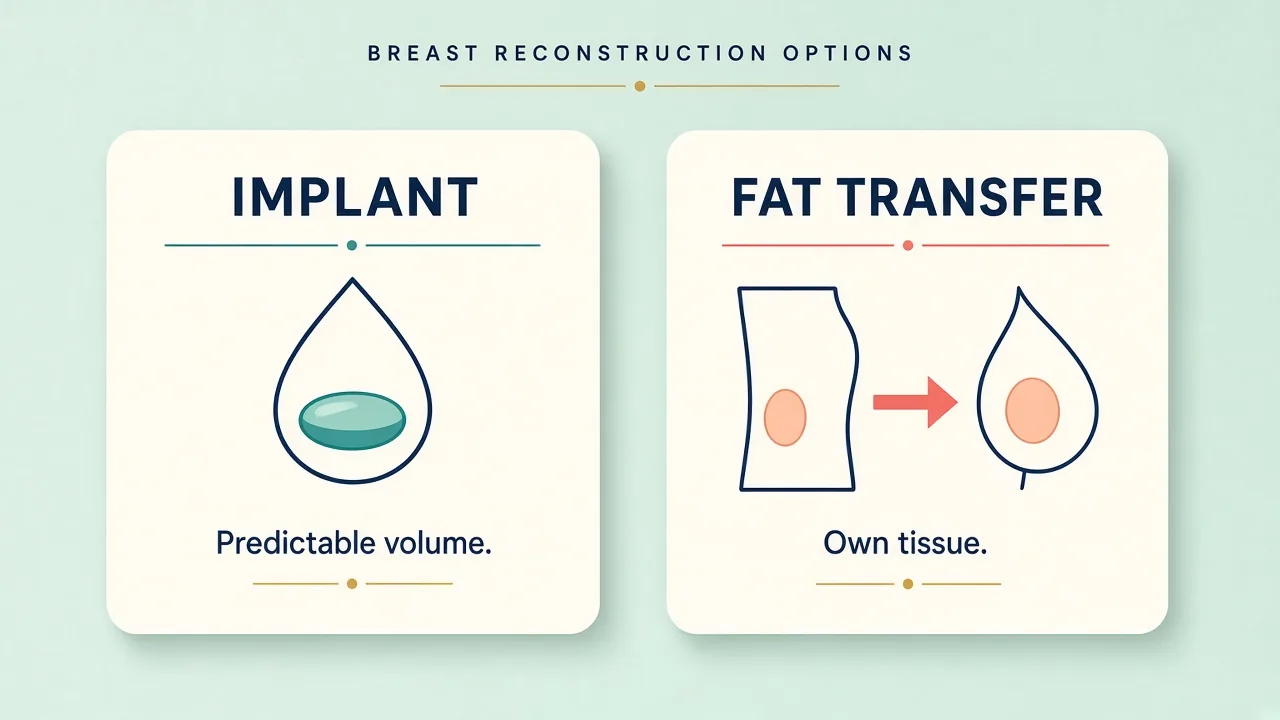
Breast Augmentation With Implants vs Fat Transfer
There are two major approaches to breast augmentation.
| Feature | Breast implants | Fat transfer |
|---|---|---|
| Material | Silicone gel or saline | Patient's own fat |
| Increase in volume | Usually more predictable | Usually more modest |
| Donor-site surgery | No | Yes |
| Body contouring benefit | No | Fat may be removed from abdomen, thighs or another area |
| Implant-related complications | Possible | No implant-related complications |
| Suitable for everyone? | No | No |
| Future procedures | Possible | Additional sessions may sometimes be required |
| Shape control | Highly customizable | More limited |
| Main advantage | Predictable volume enhancement | Uses the patient's own tissue |
| GAF planning | $3,000–$6,500; 1–3 nights | Neighbouring fat transfer $2,000–$5,500; 1–3 nights |
Fat transfer is sometimes attractive to patients who want to avoid an implant. However, not all transferred fat survives permanently, and the amount that can safely be transferred depends on the patient's anatomy and available donor fat. Neighbouring liposuction is a different mapped product when donor-site contouring is named separately.
Your plastic surgeon can determine whether implants, fat transfer or a combination approach is appropriate.
Breast Implant Types
Silicone Breast Implants
Silicone gel implants contain a cohesive silicone gel inside an outer shell.
They are widely used for breast augmentation and are available in different shapes, profiles and sizes.
Modern cohesive silicone implants are designed to maintain their shape while providing a breast-like feel. However, the exact feel and appearance depend on the implant, the amount of natural breast tissue covering it, implant placement and individual healing.
The FDA notes that breast implants are not lifetime devices and that patients should understand the possibility of additional surgery over time.
Saline Breast Implants
Saline implants contain sterile saline solution.
If a saline implant ruptures, the saline is generally absorbed by the body and the breast usually loses volume as the implant deflates. A change in breast size or contour may make rupture clinically apparent.
Round Implants
Round implants can provide increased fullness, particularly in the upper portion of the breast.
They are available in different diameters and profiles, allowing the surgeon to select an implant based on chest width, existing breast tissue and the desired degree of projection.
Anatomical or Teardrop-Shaped Implants
Anatomical implants are designed with a more tapered shape.
The choice between round and anatomical implants depends on individual anatomy, the surgeon's assessment, implant characteristics and the desired appearance.
The implant's shape alone does not determine whether the result will look natural. Soft-tissue coverage, implant size, placement and surgical technique are also important.
How Is Breast Implant Size Selected?
Choosing the implant size is one of the most important parts of breast augmentation planning.
A common mistake is to select an implant based solely on a desired cup size.
Cup sizes are not standardized between manufacturers and bra brands. A specific implant volume can also produce very different results in two women with different chest widths, breast tissue and skin elasticity.
Your surgeon may assess chest width, existing breast volume, breast-base diameter, skin quality, breast position, nipple position, breast asymmetry, rib-cage shape, amount of natural tissue coverage, desired projection, lifestyle and physical activity, and whether a breast lift is also required.
The goal should be a medically appropriate implant that fits your anatomy and your desired aesthetic outcome.
Share photographs for an implant-size review
Breast Implant Placement
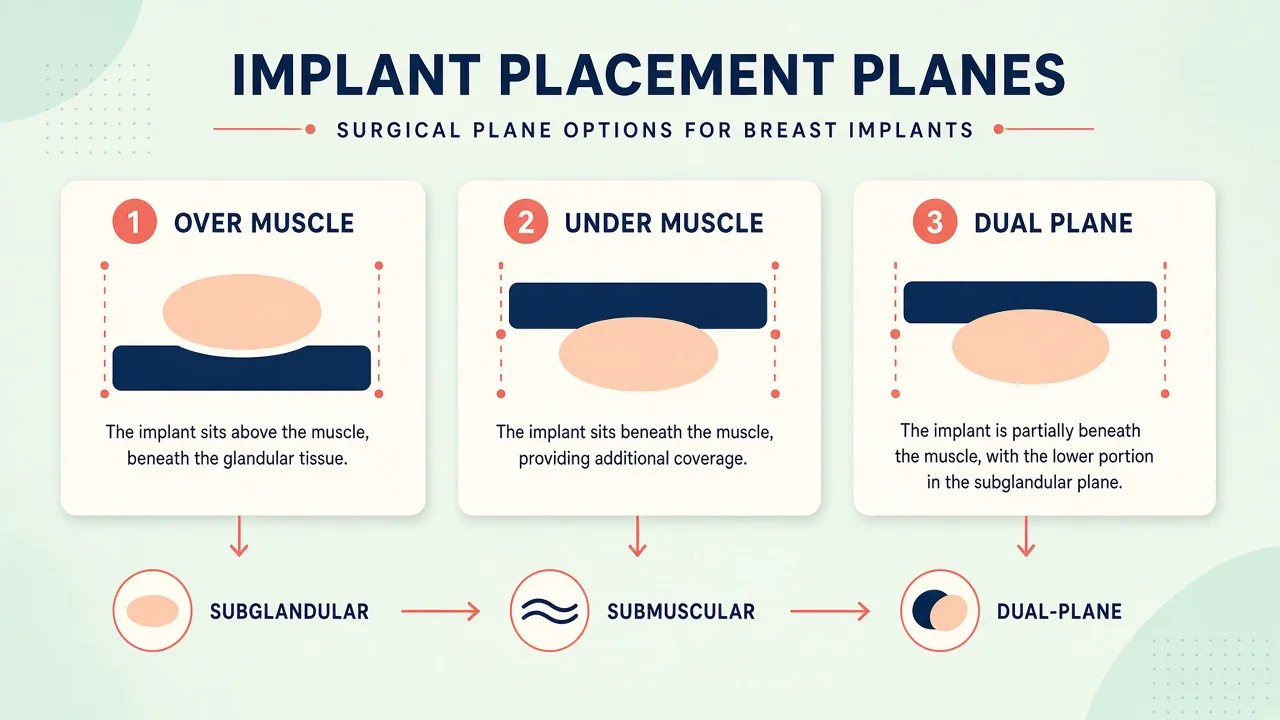
Breast implants can be placed in different tissue planes.
Subglandular Placement
The implant is placed behind the breast tissue and above the pectoral muscle.
This approach may be suitable for selected patients with sufficient natural breast tissue.
Submuscular Placement
The implant is positioned beneath the pectoral muscle.
This can provide additional soft-tissue coverage in patients with limited natural breast tissue, although it can also have specific effects on movement and implant appearance.
Dual-Plane Placement
A dual-plane technique combines elements of submuscular and subglandular positioning.
The precise technique is selected according to the patient's anatomy, degree of tissue coverage, breast shape and surgical objectives.
The Indian Association of Aesthetic Plastic Surgeons notes that implant placement may be subglandular, submuscular or subfascial depending on available tissue and individual anatomy.
Breast Augmentation Incisions
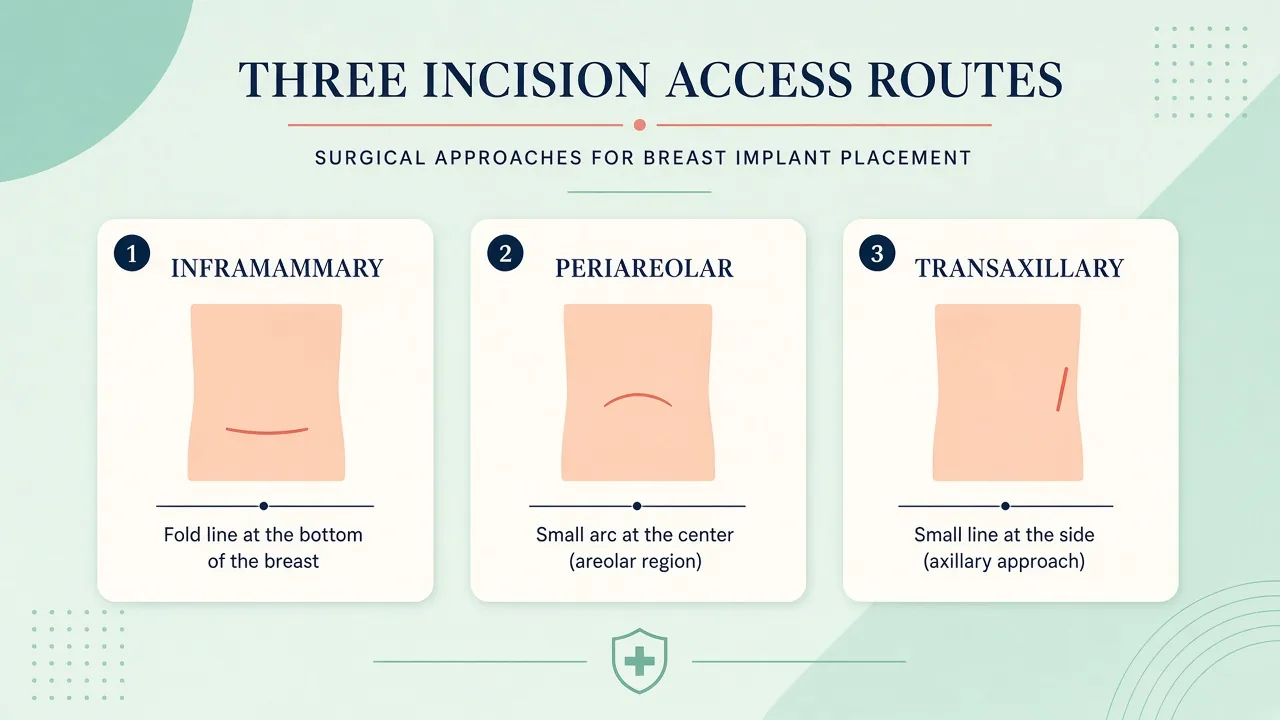
The surgeon needs an incision through which the implant can be inserted.
Inframammary Incision
The incision is made in the natural fold beneath the breast.
This approach provides direct access to the breast pocket and is commonly used.
Periareolar Incision
The incision is placed around the edge of the areola.
Its suitability depends on the size and anatomy of the areola and other individual factors.
Transaxillary Incision
The incision is made in the armpit area.
This approach avoids an incision directly on the breast but requires the surgeon to work through a different access route.
The choice of incision depends on anatomy, implant type, surgical technique and surgeon experience.
Who Is a Good Candidate for Breast Augmentation?
A suitable candidate generally has realistic expectations and is medically appropriate for elective surgery.
Breast augmentation may be considered if you are unhappy with naturally small breasts, have lost breast volume after pregnancy or weight loss, have breast asymmetry, want greater breast fullness, are at a stable weight, understand the potential benefits and risks, are willing to attend follow-up appointments, and understand that implants may require future surgery.
The FDA's patient guidance identifies several circumstances that require particular caution, including active infection, untreated breast cancer or precancerous breast disease, pregnancy and nursing. Certain medical conditions and smoking can also increase surgical risk or affect healing.
A qualified plastic surgeon should assess your individual suitability rather than relying on an online checklist alone.
Who May Not Be Ready for Breast Augmentation?
Breast augmentation may need to be postponed or reconsidered if you are pregnant, are breastfeeding, have an active infection, have an untreated breast abnormality, have certain uncontrolled medical conditions, smoke and are not prepared to stop around surgery, have unrealistic expectations, are undergoing another major medical treatment, or have not yet reached an appropriate stage of physical development.
A history of breast cancer, previous breast surgery, radiation therapy or significant breast abnormalities requires individual assessment.
If there is a personal or strong family history of breast cancer, discuss this with your surgeon before surgery. Additional breast evaluation may be recommended.
Breast Augmentation Consultation in India
A good consultation should be more than simply selecting an implant size.
Your surgeon should discuss your goals, examine your breasts and chest wall, review your medical history and explain the available surgical approaches.
The consultation may include medical and surgical history, medication review, smoking history, breast examination, assessment of asymmetry, measurement of breast dimensions, discussion of implant options, implant placement, incision planning, discussion of breast lift if required, expected recovery, possible complications, long-term implant monitoring, breast cancer screening and the potential need for revision surgery.
The FDA requires patient risk information and a device-specific patient decision checklist for breast implants marketed in the United States; the broader principle is useful regardless of where surgery takes place: patients should understand the specific device, its risks and the possibility of future procedures before consenting.
Tests Before Breast Augmentation
Preoperative testing depends on your age, health, medical history and surgeon's protocol.
Possible assessments include blood tests, general medical evaluation, pregnancy testing when clinically appropriate, breast examination, breast imaging when indicated, ECG or other investigations for selected patients, and anaesthesia assessment.
Not every patient needs every test.
If you have breast symptoms, a previous breast abnormality, a personal history of breast cancer or other risk factors, the surgeon may recommend additional breast imaging before surgery.
How Breast Augmentation Surgery Is Performed
Breast augmentation is generally performed in an operating theatre under anaesthesia.
Step 1: Anaesthesia
The anaesthesia team administers the planned form of anaesthesia and monitors you throughout the procedure.
Step 2: Incision
The surgeon creates an incision at the selected location.
Step 3: Creating the Implant Pocket
A carefully planned pocket is created in the appropriate tissue plane.
Step 4: Implant Placement
The selected implant is positioned inside the pocket.
Step 5: Symmetry Assessment
The surgeon checks the position and overall breast symmetry before closing the incision.
Step 6: Closing the Incision
The incision is closed in layers and dressed.
The operation commonly takes approximately one to two hours, although the duration can vary according to technique and additional procedures.
GAF stay planning is typically 1–3 nights. Some mapped cases may be day-care; others remain overnight depending on the operation, medical condition and hospital protocol. International patients should not plan travel from the shortest published stay.
Recovery After Breast Augmentation
Recovery is different for every patient.
Immediately after surgery, the breasts may feel tight, swollen or uncomfortable. The breasts may also appear higher or firmer than expected during the early healing period.
ASPS notes that acute pain often decreases within the first several days, while soreness and swelling can continue for weeks. Patients should follow their surgeon's individual instructions for activity and wound care.
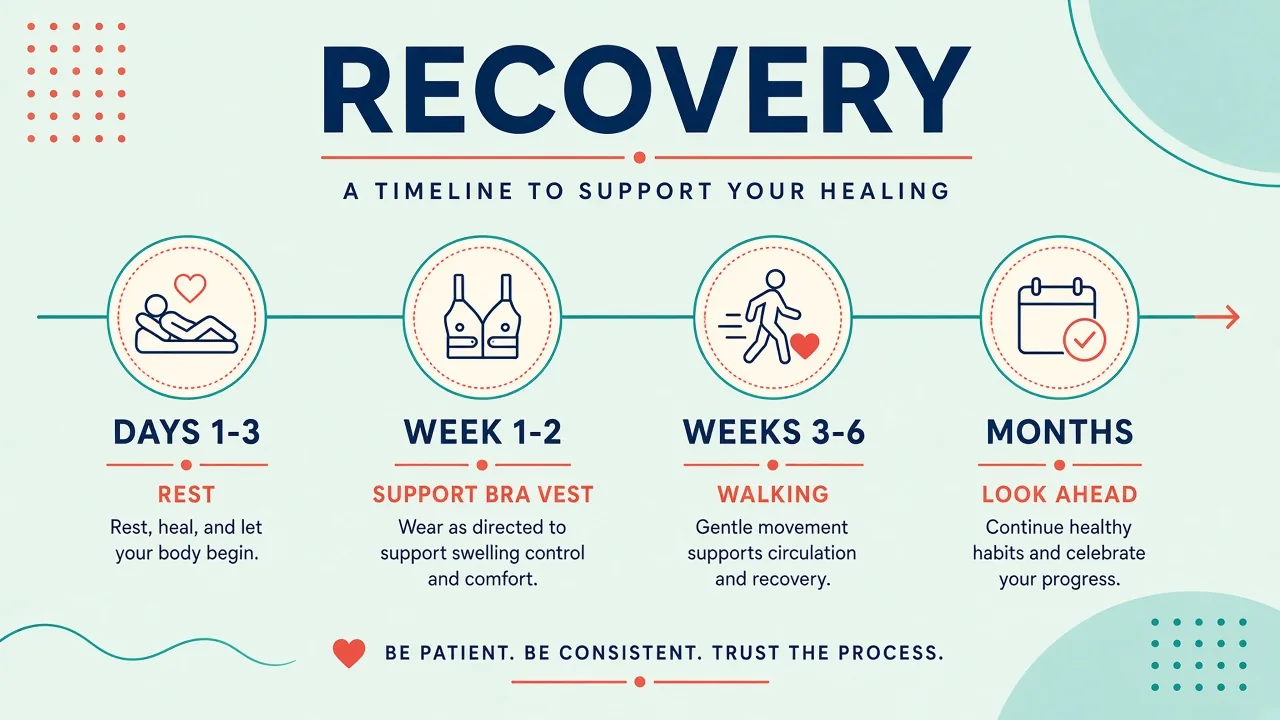
Typical recovery timeline
| Period | What patients may experience |
|---|---|
| First few days | Swelling, tightness, bruising, mild-to-moderate pain, reduced arm movement |
| First 1–2 weeks | Many patients gradually return to desk-based or light activities if cleared |
| Weeks 3–6 | Activity is generally increased progressively |
| Several months | Breasts settle; scars mature; final appearance should not be judged immediately |
Plan an international augmentation stay
When Can You Return to Work?
Return to work depends on the type of job you have.
For an office-based job, some patients may return relatively quickly if pain and swelling are manageable.
A physically demanding job may require a longer period away from work.
Do not use a fixed internet timeline as a substitute for your surgeon's advice.
Exercise After Breast Augmentation
Light movement is generally encouraged after surgery to reduce prolonged inactivity, but strenuous exercise should be avoided during early healing.
Your surgeon may restrict heavy lifting, chest exercises, running, high-impact activities, swimming and extensive arm movements.
The return to exercise should be gradual.
Patients who participate in weight training or contact sports should specifically discuss their exercise routine with their plastic surgeon.
Breast Augmentation Risks and Complications
Breast augmentation is surgery and carries risks.
Potential complications include infection, bleeding, hematoma, seroma, changes in nipple or breast sensation, persistent pain, visible or unfavorable scarring, implant malposition, breast asymmetry, rippling or wrinkling, implant rupture or leakage, capsular contracture, need for revision surgery and implant removal.
ASPS and the FDA both emphasize that patients should understand these risks before deciding to undergo implant surgery.
A complication does not necessarily mean that the original surgery was performed incorrectly. Some complications can occur even when surgery is performed appropriately.
What Is Capsular Contracture?
After an implant is placed, the body naturally forms scar tissue around it.
This scar capsule is expected.
In capsular contracture, the capsule becomes abnormally tight or firm and can alter the appearance or feel of the breast.
Possible symptoms include increasing firmness, tightness, distortion, discomfort or pain, and change in breast shape.
Treatment depends on the severity and may involve observation, medication in selected circumstances or revision surgery. Revision lists are quoted after review; there is no separate GAF implant-revision sheet.
What Happens if a Breast Implant Ruptures?
Implant rupture means the outer shell of the implant has developed a tear or defect.
With saline implants, rupture generally causes the implant to deflate as the saline is absorbed.
Silicone implant rupture can be more difficult to detect because the silicone gel may remain within the surrounding capsule. Some ruptures may therefore be clinically silent.
For this reason, long-term monitoring is important.
The FDA recommends ultrasound or MRI surveillance for asymptomatic patients with silicone implants beginning approximately 5–6 years after implantation and every 2–3 years thereafter, although individual recommendations should be discussed with the treating clinician.
Breast Implant-Associated Cancer: What Patients Should Know
Patients should also understand the uncommon cancers that have been associated with breast implants.
One is breast implant-associated anaplastic large cell lymphoma (BIA-ALCL), a rare type of lymphoma associated particularly with certain textured implants.
The FDA and ASPS also discuss reports of other very rare cancers involving the capsule around breast implants, including breast implant-associated squamous cell carcinoma.
These conditions are uncommon, but they are important enough to discuss before surgery.
Seek medical evaluation if you develop persistent swelling, a new breast lump, unexplained pain, significant changes in breast shape or other unusual breast symptoms.
Breast Implant Illness
Some patients report systemic symptoms after receiving breast implants, sometimes referred to collectively as breast implant illness (BII).
Reported symptoms can include fatigue, cognitive complaints, muscle or joint pain and skin symptoms.
The relationship between these symptoms and breast implants remains an area of ongoing medical discussion and research. ASPS recognizes these patient-reported symptoms while emphasizing that patients with concerns should discuss them with an appropriately qualified clinician.
Do Breast Implants Increase the Risk of Breast Cancer?
Breast implants do not eliminate the possibility of developing breast cancer.
Patients should continue age- and risk-appropriate breast cancer screening after augmentation.
It is important to tell the mammography facility that you have breast implants. Special imaging techniques may be used to improve visualization of breast tissue.
Breast implant evaluation and breast cancer screening are not the same thing.
The oncology pathway sits on Breast Cancer Treatment in India when cancer treatment, not cosmetic volume, is the product.
Can You Breastfeed After Breast Augmentation?
Many women are able to breastfeed after breast augmentation, but breastfeeding outcomes can vary.
Factors that may influence breastfeeding include surgical technique, incision location, changes to the nipple or areola, existing breast anatomy, individual milk production, and previous pregnancy and breastfeeding history.
Breast augmentation should therefore not be presented as guaranteeing either normal or impaired breastfeeding.
If future pregnancy and breastfeeding are important to you, discuss this with your surgeon before surgery.
Pregnancy After Breast Augmentation
Breast augmentation does not prevent pregnancy.
However, pregnancy can change the breast.
Changes in breast size, skin elasticity, breast tissue and weight can affect the appearance of augmented breasts after pregnancy.
Some women may subsequently choose revision surgery or a breast lift if significant changes occur.
Breast Augmentation and Breast Lift: What Is the Difference?
Breast augmentation primarily adds volume.
Breast lift primarily raises and reshapes the breast.
If the breasts have significant sagging, simply inserting a large implant may not provide the desired result.
In such cases, the surgeon may recommend augmentation mastopexy, which combines an implant with a breast lift.
The Indian Association of Aesthetic Plastic Surgeons specifically notes that severe drooping cannot always be corrected with augmentation alone.
Named lift lists sit on Breast Lift in India at $3,000–$6,500. Combined work is quoted after review.
Breast Augmentation Cost in India
Named GAF partner planning for breast augmentation is $3,000–$6,500, typically 1–3 nights. Comparable US self-pay planning on the same sheet is $6,500–$15,000. These are planning ranges, not hospital quotations.
Consumer rupee averages from mixed hospital marketing pages are not used as GAF quotations.
Typical factors affecting cost
| Cost factor | Why it matters |
|---|---|
| Implant brand | Different manufacturers and implant models have different prices |
| Implant type | Silicone, saline and other implant options vary in cost |
| Implant size/profile | Selection depends on anatomy and device |
| Surgeon experience | Professional fees vary |
| Hospital | Facility, operating theatre and inpatient charges differ |
| Anaesthesia | Confirm whether anaesthesia is included |
| Diagnostic tests | Preoperative investigations may add to the total |
| Breast lift | Additional mastopexy uses the neighbouring lift sheet |
| Revision surgery | Quoted after review |
| Length of stay | GAF planning is typically 1–3 nights |
| Postoperative care | Medicines, garments and follow-up may be additional |
What should a breast augmentation quote include?
Before comparing prices, ask whether the quotation includes the plastic surgeon's fee, implant cost, anaesthesia, operating theatre, hospital or day-care charges, preoperative investigations, postoperative medicines, support garment, follow-up visits, emergency care if required, and the revision policy where applicable.
A very low quotation may not be directly comparable with a comprehensive hospital package.
Request a named-procedure cost estimate
WhatsApp +91 90443 46292 for an itemised augmentation estimate
Breast Augmentation Cost in Major Indian Cities
Live GAF city sheets currently cover Delhi NCR, Mumbai, Bengaluru, Chennai and Hyderabad. Pune, Kolkata, Ahmedabad, Kochi and Jaipur are not live GAF catalog cities on this site.
Rather than choosing a city purely on cost, international patients should consider the surgeon's qualifications, hospital accreditation, implant availability, anaesthesia facilities and postoperative support.
Breast Augmentation in India for International Patients
Step 1: Send medical records and photographs
Provide medical history and relevant photographs for preliminary assessment.
Step 2: Plastic surgeon review
A surgeon reviews the available information and determines whether an in-person consultation is appropriate.
Step 3: Treatment plan
The patient receives a proposed surgical plan, including the expected procedure and investigations.
Step 4: Cost estimate
The hospital or medical facilitator provides an estimate from the named sheet.
Step 5: Travel planning
Patients coordinate flights, accommodation and transportation according to the surgeon's recommended timeline.
Step 6: In-person consultation
The final implant choice should be confirmed after physical examination and discussion with the surgeon.
Step 7: Surgery and recovery
The patient undergoes surgery and remains under postoperative medical supervision.
Step 8: Follow-up before travel
The treating team determines whether the patient is medically fit to travel.
For international patients, postoperative follow-up is particularly important because returning home immediately after surgery can make management of complications more difficult.
Plan a breast-augmentation treatment journey
How Long Should International Patients Stay in India?
GAF hospital planning is typically 1–3 nights; additional hotel nights for review are separate from the surgical stay.
Patients should not book their return flight solely according to a generic internet timeline.
International patients should also have a clear postoperative contact number, written discharge instructions, details of prescribed medicines, information about wound care, a plan for follow-up, instructions about warning symptoms, copies of relevant medical records, and implant documentation and device information.
How to Choose a Breast Augmentation Surgeon in India
Catalog surgeons currently tagged to breast-augmentation lists include Dr. Anup Dhir and Dr. Aditya Aggarwal in Delhi NCR; Dr. Hemang Sanghvi and Dr. Vinod Ranvir Vij in Mumbai; Dr. Naveen Rao and Dr. Pradeep Y V in Bengaluru; Dr. Lokesh Suryanarayanan and Dr. S Narayanamurthy in Chennai; and Dr. Guru Prasad Reddy and Dr. Srinivas S Jammula in Hyderabad. A catalog tag is not a volume, outcome or ranking claim.
Catalog hospitals currently affiliated with those tagged lists include Medanta - The Medicity and Indraprastha Apollo Hospital in Delhi NCR; Apollo Hospitals, Navi Mumbai, Wockhardt Hospital, Mumbai and Gleneagles Hospital, Mumbai in Mumbai; Apollo Hospitals, Bannerghatta Road in Bengaluru; Apollo Hospital, Chennai and MGM Healthcare, Chennai in Chennai; and Apollo Hospital, Jubilee Hills and Yashoda Hospitals, Secunderabad in Hyderabad.
The NHS similarly recommends that patients ask about the surgeon's qualifications, experience, complication rates, implant manufacturer and follow-up arrangements before undergoing breast enlargement.
Find a breast-augmentation specialist in India
WhatsApp +91 90443 46292 to match an augmentation surgeon
- Cosmetic surgery hospitals in Delhi NCR
- Cosmetic surgery hospitals in Mumbai
- Cosmetic surgery hospitals in Bengaluru
- Cosmetic surgery hospitals in Chennai
- Cosmetic surgery hospitals in Hyderabad
Questions to Ask Your Plastic Surgeon
- Are you a qualified plastic surgeon?
- How frequently do you perform breast augmentation?
- Which implant manufacturers do you use?
- Why are you recommending this particular implant?
- Which implant placement do you recommend for me?
- Where will the surgery be performed?
- What type of anaesthesia will be used?
- What complications should I understand before surgery?
- What happens if an implant ruptures?
- How will you manage capsular contracture?
- What follow-up will I need?
- What happens if I am unhappy with the result?
- What are the expected additional costs if revision surgery becomes necessary?
- How should I continue breast cancer screening after surgery?
Questions to Ask About the Breast Implant
- What is the implant manufacturer?
- What is the implant model?
- Is it silicone or saline?
- What is its shape, profile and surface?
- Why is this implant appropriate for my anatomy?
- How should the implant be monitored?
- What is the manufacturer's warranty or replacement policy?
- What documentation will I receive after surgery?
The FDA emphasizes that patients should receive information about the specific breast implant being used and understand its risks and benefits before surgery.
Neighbouring Breast Procedures
Augmentation is one breast list. Neighbouring GAF sheets that patients sometimes compare, and that must not be used as an augmentation quotation unless that is the named procedure, include:
- Breast Lift in India — named lists sit on breast lift at $3,000–$6,500
- Breast reduction — $3,200–$6,800, typically 1–4 nights
- Fat transfer — $2,000–$5,500, typically 1–3 nights
- Liposuction in India — named lists sit on liposuction at $1,500–$4,200
- Breast Reconstruction Surgery in India — named lists sit on breast reconstruction at $6,000–$18,000
- Gynecomastia surgery — $1,800–$4,200, typically 1–2 nights
Lift lists raise position. Reconstruction lists restore form after mastectomy. They are not a substitute augmentation price. Mommy-makeover combination lists sit on Mommy Makeover in India. Reduction lists sit on Breast Reduction Surgery in India.
Warning Signs After Breast Augmentation
Contact your surgeon promptly, and seek urgent care in a local emergency department if you experience sudden or rapidly increasing swelling, significant bleeding, fever, increasing redness, severe or worsening pain, pus or abnormal wound discharge, implant exposure, sudden breast asymmetry, new persistent breast swelling, significant change in breast shape, a new breast or armpit lump, sudden shortness of breath, or marked swelling of one calf.
The NHS advises patients to contact their treating clinic when unexpected pain, unusual swelling, burning sensations or skin-color changes occur. Do not wait for a WhatsApp reply if those symptoms develop.
Breast Augmentation vs Breast Lift vs Fat Transfer
| Procedure | Main purpose | Implant required? |
|---|---|---|
| Breast augmentation | Increase breast volume | Usually |
| Breast lift | Raise and reshape drooping breasts | Not necessarily |
| Breast augmentation + lift | Increase volume and lift breast | Usually |
| Fat-transfer augmentation | Increase volume using patient's fat | No |
| Breast reconstruction | Recreate breast after mastectomy or tissue loss | Sometimes |
A plastic surgeon can determine which procedure matches your anatomy and goals.
Frequently Asked Questions About Breast Augmentation in India
Is breast augmentation safe?
Breast augmentation can be performed safely in appropriately selected patients, but it is still major surgery and has potential complications. These include infection, bleeding, capsular contracture, implant rupture, changes in sensation, pain and the possibility of revision surgery.
What is the average cost of breast augmentation in India?
Named GAF partner planning is $3,000–$6,500, typically 1–3 nights. A personalized quotation is necessary because implant choice and additional procedures can substantially change the cost.
Which implant is better: silicone or saline?
Neither is universally better for every patient. Silicone and saline implants have different characteristics, benefits and potential complications. The appropriate choice depends on your anatomy, goals and the surgeon's assessment.
Do breast implants look natural?
They can produce a natural-looking result, but the appearance depends on implant size, shape, profile, placement, existing breast tissue, skin quality and surgical technique.
How long do breast implants last?
Breast implants are not lifetime devices. Some patients may have implants for many years without major problems, while others may require earlier revision because of rupture, capsular contracture, malposition or other changes.
Is breast augmentation painful?
Some discomfort, tightness and soreness are expected after surgery. Pain generally decreases during the first several days, but swelling and tenderness can continue longer.
How soon can I return to work?
Patients with desk-based work may return relatively quickly, but the appropriate timing depends on recovery. Physically demanding work usually requires more time. Follow your surgeon's individual restrictions.
Can breast implants rupture?
Yes. Implant rupture is a recognized complication. Saline rupture often causes visible deflation, while silicone rupture can sometimes be silent and may require ultrasound or MRI for detection.
Do I need MRI after breast augmentation?
Not every patient needs an MRI immediately after surgery. For asymptomatic patients with silicone implants, FDA recommendations call for ultrasound or MRI beginning approximately 5–6 years after implantation and then every 2–3 years. Your doctor may recommend different imaging if symptoms or concerns arise.
Can I have a mammogram after breast augmentation?
Yes. Breast cancer screening can still be performed after breast augmentation. Tell the imaging facility that you have breast implants because additional views or specific techniques may be required.
Can I breastfeed after breast augmentation?
Many women can breastfeed after augmentation, but breastfeeding ability varies. Discuss your future pregnancy and breastfeeding plans with your surgeon before choosing the surgical technique.
Can breast augmentation correct uneven breasts?
It can improve breast asymmetry, although perfect symmetry cannot be guaranteed. The surgeon may use different implant sizes or techniques depending on the difference between the breasts.
Can breast augmentation be combined with a breast lift?
Yes. When a patient has both loss of volume and significant drooping, augmentation may be combined with mastopexy and quoted after review.
How long does breast augmentation surgery take?
The procedure commonly takes around 1–2 hours, although the duration varies with the technique and whether other procedures are performed.
Is breast augmentation permanent?
The increase in breast volume can be long-lasting, but implants themselves are not lifetime devices. Pregnancy, ageing, weight changes and implant complications can alter the appearance over time.
Is breast augmentation available for international patients in India?
Yes. International patients should arrange sufficient time for consultation, surgery, recovery and postoperative review before returning home.
Which city in India is best for breast augmentation?
There is no single best city. Delhi NCR, Mumbai, Bengaluru, Chennai and Hyderabad are live GAF catalog cities. Choose a named plastic surgeon who already plans the implant, plane and incision you need.
Key Takeaways
- Breast augmentation can increase breast volume, restore lost fullness and improve breast proportions using implants or, in selected patients, fat transfer.
- The most important considerations include the surgeon's qualifications, your anatomy, implant selection, surgical technique, hospital facilities, anaesthesia, expected outcome, complication management and long-term follow-up.
- Breast implants are not lifetime devices. Patients should understand the possibility of future imaging, implant replacement, removal or revision surgery before proceeding.
- GAF partner planning is $3,000–$6,500, typically 1–3 nights. Neighbouring lift is $3,000–$6,500. Neighbouring reconstruction after mastectomy is $6,000–$18,000.
- Rapid swelling, fever, wound opening, implant exposure, breathlessness or calf swelling belongs in a local emergency department.
Share photographs, medical history and implant goals before making travel arrangements. A case-specific surgical opinion is more useful than a brochure cup-size package.
Request a breast-augmentation treatment plan
Share photographs for an augmentation review
Message a coordinator on WhatsApp
Request a cost review on WhatsApp
Why Choose GAF Healthcare for Breast Augmentation in India?
GAF Healthcare assists international patients in coordinating medical treatment in India and can help simplify the process from initial enquiry to hospital coordination.
Support may include identification of appropriate hospitals and plastic surgeons, medical-record coordination, online consultation assistance, treatment-cost coordination, hospital appointment scheduling, travel and medical-tourism assistance, airport and local transportation coordination, accommodation assistance, interpreter support where required, and post-treatment coordination.
The treating surgeon remains responsible for the medical diagnosis, surgical recommendation and clinical care.
Share your treatment goals, medical history and relevant photographs for an initial assessment. The treating plastic surgeon can then determine whether augmentation is appropriate and recommend the most suitable treatment plan.
Top 10 Medical Sources
- U.S. FDA — Breast implants — patient decision checklist, safety requirements and long-term considerations.
- U.S. FDA — Risks and complications of breast implants — recognized complications and emerging safety information.
- American Society of Plastic Surgeons — Breast augmentation — procedure overview and candidacy.
- American Society of Plastic Surgeons — Breast augmentation safety — surgical risks and implant-related complications.
- American Society of Plastic Surgeons — Breast augmentation recovery — postoperative recovery and activity guidance.
- American College of Radiology — Breast implant evaluation — imaging guidance for implant evaluation versus cancer screening.
- Indian Association of Aesthetic Plastic Surgeons — Breast augmentation — implant techniques, candidacy and recovery information.
- ISAPS — Breast augmentation — implant types, placement and surgical approaches.
- NHS — Breast enlargement (implants) — patient information on surgery, recovery, risks and breast screening.
- GAF Healthcare breast augmentation — partner USD planning range of $3,000–$6,500 and typical 1–3 night stay.
Last reviewed against the cited sources: October 2026.
Medical Disclaimer
This page is intended for general educational purposes and should not replace an examination, diagnosis or individualized medical advice from a qualified plastic surgeon.
Breast augmentation is an elective surgical procedure. Suitability, implant choice, technique, risks, recovery and expected results vary from patient to patient. Any decision regarding surgery should be made after an appropriate medical assessment and informed discussion of benefits, alternatives and potential complications.
If you develop rapid swelling, fever, wound opening, implant exposure, severe one-sided pain, breathlessness or calf swelling, seek urgent medical attention in a local emergency department.
Treatment Process
- 1
Share photographs and history
The patient provides breast photographs, medical history, imaging reports and any previous breast-surgery notes.
- 2
Virtual consultation
A plastic surgeon reviews whether implants, fat transfer, a lift or a staged combination is the honest brief.
- 3
Confirm implant plan
The team writes the likely implant type, size range, plane and incision, and whether a lift belongs on a separate quote.
- 4
Itemized estimate
Named breast augmentation is $3,000–$6,500. Combined lift, revision and implant-exchange lists are quoted after review.
- 5
Travel to India
Stable planned cases travel after records review. Rapid swelling, fever, wound opening or breathlessness is a local emergency.
- 6
In-person examination
The surgeon measures chest width, tissue coverage and nipple position after arrival and confirms the final implant.
- 7
Augmentation
The selected implant is placed in the planned pocket, or fat is transferred in selected autologous cases.
- 8
Support garment and early review
A surgical bra is commonly applied. GAF stay planning is typically 1–3 nights.
- 9
Return home
The patient leaves with implant documentation, wound-care instructions, warning signs and a plan for remote follow-up.