
14 paediatric cardiology specialists in our India network are listed for asd closure surgery, across 3 cities (Delhi NCR, Mumbai, Hyderabad), at 11 hospitals, with 3–42 years of listed experience among them.
This page lists the paediatric cardiology doctors in our directory for asd closure surgery in India, drawn from hospitals including Fortis Escorts Heart Institute, Artemis Hospital, Marengo Asia Hospitals, Max Super Speciality Hospital, Saket and others. Doctors are listed across Delhi NCR, Mumbai, Hyderabad. Each listing links through to the doctor's full profile page.
GAF Healthcare currently lists 14 paediatric cardiology specialists for asd closure surgery across 11 hospitals in Delhi NCR, Hyderabad, Mumbai, with 3–42 years of listed experience. Treatment costs vary by hospital, surgeon and individual case, with a typical hospital stay of 3–7 days.
Ask us about asd closure surgery in India
Share a few details and our care coordination team will get back to you with next steps.
 Featured
Dr. Krishna Subramony Iyer
- 42+ years of experience in Paediatric Cardiac Surgeon
- Performs ASD Closure Surgery
- Chairman & Head of Paediatric and Congenital Heart Surgery, Fortis Escorts Heart Institute, New Delhi, India — Present
- Paediatric Cardiac Surgeon, Fortis Escorts Heart Institute, New Delhi, India — 42+ years of experience
- ASD Closure Surgery
- Arterial Switch Operation (ASO) for Transposition of Great Arteries
- Tetralogy of Fallot (TOF) Repair
- Atrial Septal Defect (ASD) Surgical Closure
- Ventricular Septal Defect (VSD) Repair

Dr. Krishna S Iyer
- 35+ years of experience in Pediatric Cardiac Surgeon
- Performs ASD Closure
- Executive Director – Pediatric & Congenital Heart Surgery, Fortis Escorts Heart Institute, New Delhi
- Associate Professor – Department of CTVS, All India Institute of Medical Sciences (AIIMS), New Delhi
- ASD Closure
- Arterial Switch Operation (for TGA)
- Double-Switch Operation
- Tetralogy of Fallot Repair
- VSD Closure (Open and Catheter-Based)
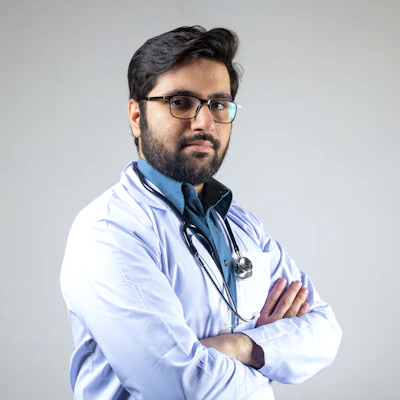
Dr. Rajesh Sharma
- 30+ years of experience in Pediatric Cardiac Surgeon
- Performs ASD Closure Surgery
- Program Clinical Director – Paediatric (Ped) Cardiac Surgery, Marengo Asia Hospitals, Faridabad
- Senior Consultant — Pediatric Cardiac Surgery, Indraprastha Apollo Hospital, New Delhi
- ASD Closure Surgery
- Arterial switch operation (d-TGA)
- Double-switch operation (CCTGA)
- Fontan and cavopulmonary connection
- Biventricular repair for complex congenital defects
Dr. Kulbhushan Singh Dagar
- 29+ years of experience in Pediatric Cardiac Surgeon
- Performs ASD Closure Surgery
- Principal Director, Chief Surgeon & Head – Neonatal & Congenital Heart Surgery, Max Super Speciality Hospital, Saket, New Delhi
- Director, Paediatric Cardiac Programme, Lotus Children's Hospital, Hyderabad
- ASD Closure Surgery
- Neonatal open-heart surgery for complex congenital defects
- Arterial switch operation
- VSD and ASD closure (open and device)
- Tetralogy of Fallot total correction
Dr. Vikas Kohli
- 28+ years of experience in Pediatric Cardiac Surgeon
- Performs ASD Closure Surgery
- Senior Consultant, Pediatric Cardiac Surgery, Apollo Hospitals Indraprastha, New Delhi
- 28+ years of clinical experience in pediatric cardiac care and congenital heart disease management
- ASD Closure Surgery
- Congenital Heart Defect Repair Surgery
- Tetralogy of Fallot (TOF) Repair
- Patent Ductus Arteriosus (PDA) Ligation
- Pediatric Cardiac Catheterization
Dr. Gaurav Kumar
- 27+ years of experience in Pediatric Cardiac Surgeon
- Performs ASD Closure Surgery
- Senior Consultant, Pediatric Cardiac Surgery, Indraprastha Apollo Hospital, New Delhi — Present
- Consultant Pediatric Cardiac Surgeon, Apollo Hospitals, Delhi — Multiple years
- ASD Closure Surgery
- Surgical closure of atrial septal defects (ASD)
- Surgical closure of ventricular septal defects (VSD)
- Device-based closure of ASD and VSD
- Tetralogy of Fallot (TOF) repair
Dr. Sunil Kumar Swain
- 19+ years of experience in Pediatric Cardiac Surgeon
- Performs ASD Closure Surgery
- Senior Consultant — Pediatric Cardiac Surgery, Apollo Hospital, Jubilee Hills, Hyderabad
- Consultant Pediatric Cardiac Surgeon, Continental Hospital, Hyderabad
- ASD Closure Surgery
- Arterial Switch Operation (ASO)
- Tetralogy of Fallot (TOF) Repair
- Ventricular Septal Defect (VSD) Closure
- Atrial Septal Defect (ASD) Closure
Dr. Ankit Garg
- 18+ years of experience in Pediatric Cardiac Surgeon
- Performs ASD Closure Surgery
- Senior Consultant – Pediatric Cardiac Surgery, Max Super Speciality Hospital, Saket, New Delhi – Present
- Consultant – Pediatric Cardiology, Amrita Hospital, Faridabad
- ASD Closure Surgery
- Device Closure of Atrial Septal Defect (ASD)
- Device Closure of Ventricular Septal Defect (VSD)
- Device Closure of Patent Ductus Arteriosus (PDA)
- Balloon Pulmonary Valvotomy
Dr. Bhushan Chavan
- 18+ years of experience in Pediatric Cardiac Surgeon
- Performs ASD Closure Surgery
- Consultant, Pediatric Cardiac Surgery — Apollo Hospitals, Mumbai, Present
- 18+ years of clinical experience in pediatric cardiology and cardiac surgery
- ASD Closure Surgery
- ASD Device Closure (Atrial Septal Defect)
- VSD Device Closure (Ventricular Septal Defect)
- PDA Device Closure (Patent Ductus Arteriosus)
- Pediatric Echocardiography and Fetal Cardiac Imaging
Dr. Aseem R Srivastava
- 15+ years of experience in Paediatric Cardiac Surgeon
- Performs ASD Closure Surgery
- Chief of Pediatric Cardiothoracic Surgery, Artemis Hospital, Gurugram
- Clinical Instructor — Robotic and Minimally Invasive Cardiac Surgery, East Carolina Heart Institute, USA
- ASD Closure Surgery
- Arterial switch operation (transposition of great arteries)
- Tetralogy of Fallot total correction
- Fontan and cavopulmonary connection
- VSD and ASD closure
Dr. Mahendra Narwaley
- 15+ years of experience in Paediatric Cardiac Surgeon
- Performs ASD Closure Surgery
- Additional Director of Cardio Thoracic Vascular Surgery, Fortis Memorial Research Institute, Gurgaon
- Lead Paediatric Cardiac Surgeon, Fortis Memorial Research Institute, Gurgaon
- ASD Closure Surgery
- Arterial switch operation for transposition of great arteries
- Ventricular septal defect (VSD) closure
- Atrial septal defect (ASD) closure
- Fontan procedure for single ventricle disease
Dr. Sharmil Kanna
- 12+ years of experience in Pediatric Cardiac Surgeon
- Performs ASD Closure Surgery
- Specialist — Pediatric Cardiac Surgery, Apollo Hospitals Indraprastha, New Delhi, India
- ASD Closure Surgery
- Atrial Septal Defect (ASD) Surgical Closure
- Ventricular Septal Defect (VSD) Surgical Closure
- Patent Ductus Arteriosus (PDA) Ligation
- Tetralogy of Fallot (TOF) Repair Surgery
Dr. Sheikh Mohd Murtaza
- 12+ years of experience in Pediatric Cardiac Surgeon
- Performs ASD Closure Surgery
- Consultant, Pediatric Cardiac Surgery — Sarvodaya Hospital, Faridabad, India
- Training in Cardiothoracic and Vascular Surgery — AIIMS, New Delhi
- ASD Closure Surgery
- Atrial Septal Defect (ASD) Surgical Closure
- Ventricular Septal Defect (VSD) Surgical Closure
- Tetralogy of Fallot Repair
- Bidirectional Glenn Procedure
Dr. Punya Pratap Kujur
- 3+ years of experience in Pediatric Cardiac Surgeon
- Performs ASD Closure Surgery
- Consultant — Pediatric Cardiac Surgery at Gleneagles Global Hospitals, Mumbai, Parel
- Assistant Professor at Seth G.S. Medical College & K.E.M. Hospital, Mumbai
- ASD Closure Surgery
- ASD Device Closure (Percutaneous)
- VSD Device Closure (Percutaneous)
- PDA Device Closure (Catheter-based)
- Glenn Procedure (Bidirectional Cavopulmonary Anastomosis)
ASD Closure in India: What Families Should Know
Closing an atrial septal defect is among the more predictable things done in children's heart care. That shifts what a family should be asking about: not whether it can be done, but whether it needs doing at all, and by which route.
1. Both Routes Under One Roof
Most atrial septal defects in children can be closed with a device through a catheter, and some need surgery. Which applies depends on the type of defect and its edges rather than on preference.
The large Indian units offer both. That matters, because a centre that only performs one will tend to recommend the one it performs. Ask which route they advise for your child and why, and ask what the other would involve.
2. Imaging That Settles the Question
Whether a device will hold depends on the rim of tissue around the defect and on the type of defect it is. That is an imaging question, answered by detailed echocardiography and sometimes a scan from inside the oesophagus under anaesthesia.
Ask whether the defect is the type suited to a device, and what the imaging showed about its edges.
3. Willingness to Recommend Waiting
Many small defects close on their own during the first years of life, and some larger ones never cause trouble. A unit that says your child does not need anything done yet is giving you the most valuable answer available.
Ask directly whether closure is needed now, and what would change that.
4. Elective Timing Works in Your Favour
Unlike newborn heart surgery, ASD closure is usually planned rather than urgent. That means you can choose the season, plan around school, and take time over the decision.
5. Language and Reports
Clinical work at the major centres runs in English, so you can read the echo reports and carry home a discharge summary your own paediatrician can act on. Interpreters for Arabic, Bengali, Russian, French and Kiswahili are available at most of these hospitals.
6. Cost and Stay
Costs in India are generally lower than in Europe, North America or the Gulf, and the two routes differ substantially in both cost and length of stay. A device closure is a short trip. Surgery is not.
Atrial Septal Defect in Children: A Parent's Guide
1. When to Seek Medical Advice
An atrial septal defect is rarely an emergency, but some signs need assessment rather than the next routine appointment.
Arrange an urgent appointment if your child has:
-
Breathlessness on feeding or on exertion beyond what other children of the same age show
-
Poor weight gain, or falling off their growth line
-
Repeated chest infections
-
Unusual tiredness, or reluctance to keep up with play
-
Palpitations, or episodes of a racing heart
Go to an emergency department for blue discolouration of the lips or tongue, severe breathlessness, fainting, or a child who becomes unusually drowsy or unresponsive. These are uncommon with an isolated atrial septal defect and suggest something else is going on, which is exactly why they need looking at.
2. Most Children With an ASD Are Well
Now the reassurance, and it is substantial.
Many children with an atrial septal defect have no symptoms at all. They grow normally, play normally, and the defect is found because a doctor hears a murmur or because an echocardiogram was done for another reason.
That is the usual picture, not the exception. If your child has just been diagnosed and seems entirely well, that is consistent rather than surprising, and it does not mean the diagnosis is wrong or that something is being missed.
It also means there is usually time. Decisions about an atrial septal defect are rarely made in a hurry.
3. What an Atrial Septal Defect Is
The heart has two upper chambers separated by a wall. An atrial septal defect is a hole in that wall.
Because pressure is higher on the left, blood crosses from left to right through the hole and goes round the lungs a second time instead of out to the body. The lungs and the right side of the heart therefore handle more blood than they were designed for.
Children usually tolerate that well, which is why so many have no symptoms. The consequences accumulate over decades rather than years, which is the argument for closing a significant defect in childhood rather than leaving it.
4. Not All ASDs Are the Same
This matters more than most families are told, because the type determines whether a device can be used at all.
Secundum defects sit in the middle of the wall and are the commonest by a wide margin. Most are suitable for closure with a device through a catheter, provided the edges are adequate.
Primum defects sit lower down and involve the valves between the upper and lower chambers. These need surgery, and the valve usually needs attention at the same time.
Sinus venosus defects sit high up near where a large vein enters, and often come with veins from the lung draining into the wrong chamber. These need surgery, and the vein drainage is corrected at the same operation.
A patent foramen ovale is not the same thing as an atrial septal defect. It is a flap that most people are born with and that usually seals; in children it rarely needs treating.
If you have been told your child has a hole in the heart, ask which type. The answer determines everything that follows.
5. Many Small Defects Close on Their Own
Small secundum defects frequently close spontaneously during the first years of life, and monitoring rather than treating is the correct approach in that situation.
Where a defect is small and the right side of the heart is not enlarged, the usual plan is periodic echocardiography to see what happens. That is active management, not neglect.
Ask what size your child's defect is, whether the right side of the heart is enlarged, and what the team expects over the next two years. Ask also what would make them recommend closure.
6. When Closure Is Recommended, and at What Age
Closure is generally advised where the defect is large enough to be sending a significant volume of blood the wrong way, and where the right side of the heart has enlarged as a result.
When that is the case, closure is typically planned in the preschool years, often between three and five, though it is done earlier where a child is failing to gain weight or is symptomatic. Waiting until then allows small defects to close on their own and allows a child to grow large enough for the simplest route.
Closing a significant defect in childhood generally gives a better long-term result than leaving it into adult life, which is the reason for treating a child who has no symptoms at all.
Ask why the recommended timing is what it is, and what waiting another year would cost.
7. Device or Surgery: What Decides
Not preference, and not cost. Three things.
The type of defect. Only secundum defects are suitable for a device. Primum and sinus venosus defects need surgery.
The rims. A device has to anchor against a rim of tissue around the hole. Where a rim is thin or absent, particularly near important structures, a device is not safe and surgery is the better option.
The size. Very large defects, and defects in a small child, may exceed what a device can hold.
Ask which of these applies to your child. If a device has been ruled out, ask which of the three was the reason, because that is a concrete answer rather than a judgement call.
8. What Device Closure Involves
A thin tube is passed from a vein in the groin up to the heart, and a device shaped like two small discs is opened across the defect, one on each side. Tissue grows over it during the following months and it becomes part of the wall.
There is no chest incision and no heart-lung bypass machine. It is done under general anaesthesia in a child, with imaging guidance throughout, and usually takes an hour or two.
Most children stay one night, occasionally two. Medication to reduce the chance of clot forming on the device is usually given for a period afterwards, and there is normally advice about dental care and infection prevention for some months.
9. What Surgical Closure Involves
The hole is closed with a patch, often taken from the lining around the child's own heart, or occasionally stitched directly where it is small enough.
It is done on cardiopulmonary bypass. The chest may be opened at the front, or through the right side in some units, and where the defect is a primum or sinus venosus type the associated valve or vein problem is corrected at the same time.
Ask which approach is planned and whether the breastbone will be divided, because that determines the restrictions afterwards.
10. Risks
Both routes are well established, and risk is lower than for most operations in this cluster. It is not zero, and the risks differ between the two.
No percentages appear below. Figures vary by defect type, size, the child's age and how long children were followed. Ask your unit for their own results and the definitions behind them.
After device closure
Injury to the vein in the groin used for access, and bruising there, are the commonest minor problems. A small residual leak around the device sometimes remains and usually needs no action.
Rhythm disturbances can occur, most of them temporary. The device moving from position is uncommon and would need retrieval. Erosion of the device into surrounding tissue is rare but serious, and is the main reason follow-up imaging is done in the months after the procedure.
After surgery
Bleeding, infection, fluid around the heart or lungs, and rhythm disturbances are all recognised. Rhythm problems involving the upper chambers are relatively common after this particular operation and are usually temporary.
Inflammation of the lining around the heart in the weeks afterwards is a recognised and treatable complication seen more often after this operation than after some others. It typically causes chest pain, fever and tiredness, and it needs assessing rather than waiting out.
11. The Outlook Here Is Good
Worth saying plainly, because it is unusual in this cluster.
Where an isolated atrial septal defect is closed in childhood with a good result, most children go on to normal activity, normal school and normal adult life, with life expectancy in the normal range. There is no ongoing restriction on sport for most.
The reason for closing it in childhood rather than adulthood is precisely this. Defects left into adult life carry a greater risk of rhythm problems and raised lung pressures, and closing them later does not fully undo that.
So a child treated at four is in a better position than an adult treated at forty, which is why an operation is recommended for a child who has no symptoms.
12. Recovery
The two routes differ sharply.
After device closure
Most children go home the next day. The groin site needs care for a few days, and vigorous activity and contact sport are restricted for a period, commonly a few weeks. School return is usually quick.
Medication to prevent clot formation on the device continues for some months, and there is normally advice about antibiotic cover for dental work during that period. Ask for both in writing.
After surgery
Intensive care or high-dependency monitoring initially, then a ward stay while drains and lines come out. Total hospital stay in an uncomplicated case is commonly under a week to around ten days.
Where the breastbone was divided, do not lift a small child under the arms for roughly six to eight weeks, lifting from the bottom instead. Activity is restricted for that period, and school return is staged.
Both routes
Watch for chest pain, fever or unusual tiredness in the weeks afterwards and report it rather than assuming it is normal recovery. That is the pattern that suggests inflammation around the heart, which is treatable when caught.
13. How Long You Will Be in the Country
These figures are estimates rather than published guidance for this condition, so ask your unit for their own.
For device closure, plan on roughly one to two weeks in the country. That allows for assessment on arrival, the procedure with a night or two in hospital, and a review with an echocardiogram before flying.
For surgical closure, plan on around three to four weeks. Expect up to ten days in hospital in an uncomplicated case, then two to three weeks of outpatient review.
Clearance to fly is written and conditional in both cases. Ask for the expected timeline in writing before booking a return flight.
14. Cost, and What It Excludes
We publish no figure. Device closure and surgery differ substantially, and within device closure the device itself is a significant part of the cost.
Ask for the estimate itemised in writing, then check whether each of these sits inside it:
-
The device itself, and whether the price varies by device size or manufacturer
-
Imaging on arrival, including a scan from inside the oesophagus if needed
-
Conversion to surgery, in the uncommon event a device cannot be placed safely once the procedure has begun
-
Extended intensive care, for the surgical route
-
Medication for the months after a device is placed
-
Accommodation after discharge, and a stay for both parents
-
Reviews after you return home
Ask about conversion specifically. It is uncommon, but a family that has budgeted for a catheter procedure and ends up needing surgery is in a difficult position, and it is better to know the figure in advance.
15. Follow-up, and When It May End
This is one of the few conditions in this cluster where follow-up may actually finish.
After a device, expect imaging at intervals over the first months and a year, checking that the device is in position, that tissue has grown over it and that no leak remains. After surgery, expect review over a similar period.
Where the result is good, the defect was isolated and the right side of the heart returns to normal size, many children are eventually discharged from cardiology follow-up altogether. Ask whether that is likely in your child's case and what would keep them under review.
Before leaving the country, collect the procedure or operation report stating what was done and, for a device, which device and what size, the discharge summary, imaging, a medicine list with the stop date, and the follow-up schedule.
The device details matter years later if your child needs any other procedure, so keep them somewhere you will find them.
16. Choosing a Team
Weigh these:
-
Whether the unit offers both device closure and surgery
-
Annual volume of paediatric device closures, asked separately from adult figures
-
Whether they perform imaging from inside the oesophagus to assess rims, and whether it is routine
-
What they do if a device cannot be placed safely once the procedure has started
-
Whether the intensive care is paediatric and cardiac, for the surgical route
-
Whether they can retrieve a displaced device, and how
-
Follow-up arrangements from your home country
-
Whether they will tell you plainly that your child needs nothing done yet
17. Questions to Ask Before You Consent
Ask for written answers, particularly if you are travelling.
-
Which type of atrial septal defect does my child have?
-
How large is it, and is the right side of the heart enlarged?
-
Is there a realistic chance it closes on its own?
-
Does my child need this closed now, and what happens if we wait a year?
-
Is a device suitable, and if not which of the rims, type or size ruled it out?
-
Which device would you use, and what size?
-
What happens if the device cannot be placed safely once you have started?
-
How long will my child need medication afterwards, and what about dental cover?
-
What restrictions on sport and activity, and for how long?
-
How long in the country before you would clear my child to fly?
-
What follow-up will be needed, and is discharge from cardiology likely in due course?
-
What happens, and who pays, if a complication develops while we are still in India?
18. Travelling With a Child From Abroad
Because ASD closure is usually elective, this is one of the few paediatric cardiac trips a family can plan properly. Choose the season, work around school terms, and take time over the decision.
Medical visa arrangements allow accompanying attendants, generally up to two, applied for alongside your child's visa with a hospital invitation letter and cost estimate. Some nationalities must apply in person at an embassy rather than online.
Country guides covering flights, visa documents and costs:
Where device closure is available closer to home, use it. This is a procedure that does not require travelling far if a competent service exists nearby, and the argument for travel is strongest where only surgery is offered locally and a device would suit your child.
19. Looking Wider
For children's heart conditions generally, see paediatric heart specialists in India.
For the surgical pathway across other defects, the children's heart surgery overview covers what an operation involves.
Medical Review
Medically reviewed by: Dr. Shabnam
Credentials: BDS, 5 Years of experiences in writing and reviewing medical content.
Last reviewed: July 2026
Prepared with reference to published paediatric cardiology guidance and peer-reviewed literature on atrial septal defect closure.
Content review: Abdul Azeem, MA (Public Health specialisation). Editorial review only, not clinical review.
What is ASD Closure Surgery?
Surgical or catheter-based closure of atrial septal defects in children. Device closure using Amplatzer occluder avoids open-heart surgery in most cases.
Who may be considered?
ASD Closure Surgery may be considered after a qualified specialist reviews your reports and medical history. Suitability varies from person to person and must be assessed by your treating doctor.
How does it work?
The exact approach, preparation, and aftercare plan are selected after a specialist reviews the patient's records, diagnosis, and treatment goals.
Standard treatment pathway
Case dependentThe exact approach, preparation, and aftercare plan are selected after a specialist reviews the patient's records, diagnosis, and treatment goals.
Comprehensive Investigations
Required investigations vary with the patient's diagnosis, medical history, treatment approach, and hospital protocol. Our team confirms the appropriate checklist after reviewing the clinical records.
Treatment / Procedure Estimate
Stay in India
Usually Included in Hospital Package
- Clinical assessment and treatment planning, as confirmed in the personalised plan
- The procedure and hospital services specifically listed in the confirmed package
Usually Not Included
- Travel, accommodation, visa, and other non-clinical services unless explicitly included in the quote
- Additional investigations or treatment outside the confirmed plan
Recovery and follow-up
Recovery and follow-up vary by procedure and individual health. Your treating team should provide personalised instructions before and after travel.
Risks
Risks vary by procedure and individual health. Ask the surgeon to explain the risks specific to you before deciding.
Alternatives
Non-surgical options or other procedures may be available depending on the diagnosis. Discuss the alternatives, risks and benefits with a qualified specialist.
Costs shown are indicative planning estimates based on typical pricing across leading Indian hospitals. They are not a quote — actual pricing depends on your case complexity, hospital choice, and length of stay. Share your reports for a personalized estimate.
How we selected these doctors
A doctor appears on this page when their listed specialty maps to Paediatric Cardiology and their profile names asd closure surgery (or a matching term) among the procedures they perform. Doctors are not ranked by a proprietary "best" score — the order follows years of listed experience (highest first), the same field shown on each doctor's profile. This page does not display aggregate star ratings.
Other paediatric cardiology procedures
Leading Hospitals for ASD Closure Surgery in India
 🇮🇳 New Delhi, India
 🇮🇳 Faridabad, India
 🇮🇳 New Delhi, India
 🇮🇳 New Delhi, India
 🇮🇳 Gurgaon, India
 🇮🇳 Parel, Mumbai, India🇮🇳 Chennai, India
 🇮🇳 Faridabad, India
 🇮🇳 Hyderabad, India
Doctors in specific cities
Curious what asd closure surgery might cost for your case? Use our cost calculator for a personalized estimate.
How GAF Healthcare selects doctors
Doctors may be included when they meet relevant criteria for asd closure surgery. This is a transparent listing methodology, not a clinical recommendation or paid ranking:
Relevant specialty
paediatric cardiology expertise is mapped from the doctor's listed specialty and profile information.
Procedure relevance
asd closure surgery is listed among the doctor's procedures or areas of expertise, using matching terms where appropriate.
Hospital affiliation
The doctor is currently affiliated with a recognised hospital in the GAF directory. Hospital details and availability can change, so confirm them before booking.
Professional experience
Experience is displayed from the doctor's available professional profile and is used as the ordering signal when the page lists doctors.
Data verification
Doctor and hospital information is checked against the records available to GAF and updated when new information is supplied. It is not a substitute for confirming credentials directly.
No paid ranking
Being featured does not automatically mean the doctor is ranked number one. GAF does not sell position on this page.
How GAF Healthcare Assists in Choosing the Best Doctor for ASD Closure Surgery in India
Discover the Top Doctors for ASD Closure Surgery in India
This page lists 14 paediatric cardiology specialists who perform asd closure surgery across 11 hospitals in India, so you can compare experience and hospital affiliation in one place.
Support When You Need It Most
Share your medical reports with us on WhatsApp or email. Our medical team reviews them and comes back with a recommended doctor, hospital and treatment plan for your case.
Transparent, All-Inclusive Costs
We provide a single, itemised quote covering the doctor's fee, hospital charges and stay — no hidden fees, and there's no charge for requesting an estimate. Use our cost calculator alongside this page for a first estimate.
Visa, Travel and Stay Coordination
Once you choose a doctor, we help arrange the medical visa invitation letter, hotel or serviced-apartment booking near the hospital, airport pickup and transport to your appointments.
On-the-Ground and Language Support
A dedicated, language-speaking companion can accompany you to appointments, and our team stays in touch after you return home to check on your recovery.
Patient Success Story
Frequently asked questions about ASD Closure Surgery in India
What is an atrial septal defect?
Will my child's ASD close on its own?
Does every ASD need closing?
Are all ASDs the same?
At what age should an ASD be closed?
Can the hole be closed without open-heart surgery?
What does device closure involve?
What are the risks of device closure?
What are the risks of surgical closure?
What is the long-term outlook after ASD closure?
How long will we need to stay in India?
How much does ASD closure cost in India?
Will my child need medication after a device is placed?
Will my child need lifelong follow-up?
How are the doctors on this page chosen and ordered?
Contact us to report an inaccuracy on this page.