
1. What Are Peritoneal Metastases?
Peritoneal metastases occur when cancer cells spread from their original location to the peritoneum — a thin membrane inside the abdomen that lines the abdominal wall and covers many abdominal organs. Cancer cells may form tumour deposits across different areas of the abdomen.
The condition is sometimes called peritoneal carcinomatosis, particularly when multiple tumour deposits are present. The term peritoneal metastases is preferred in modern clinical discussions because it describes the spread without implying a particular number or pattern of deposits.
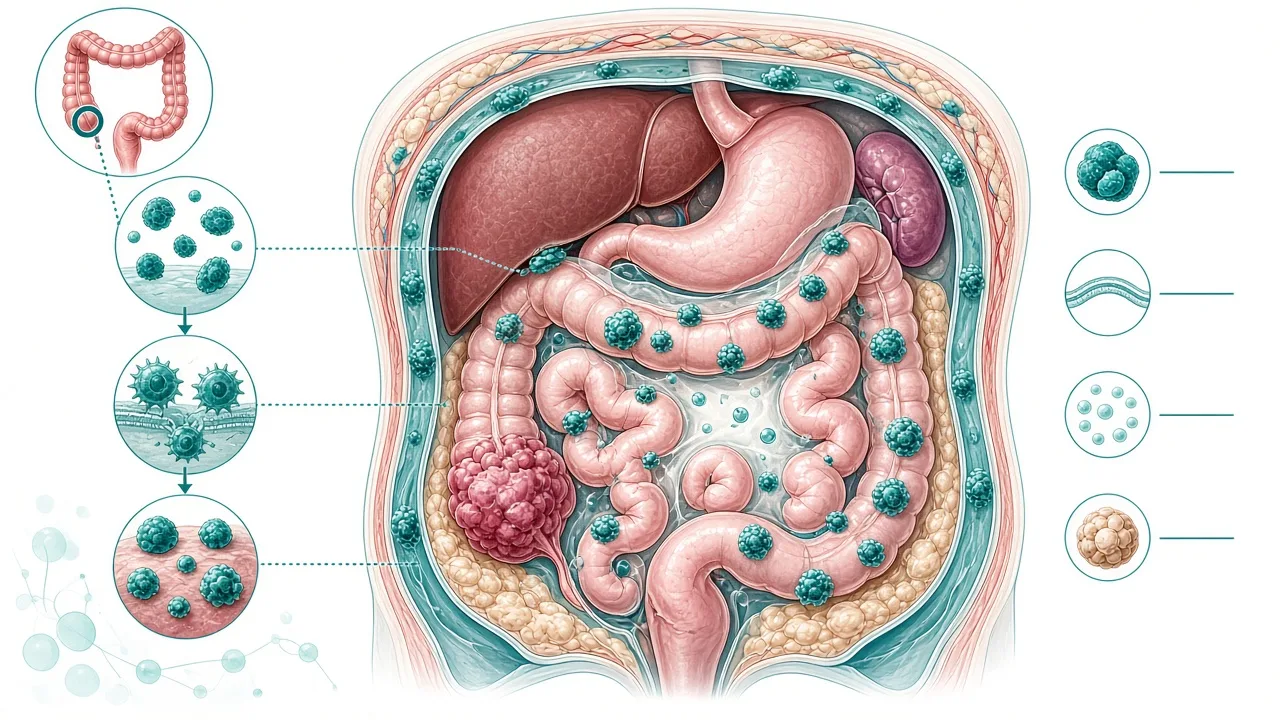
2. Which Cancers Can Spread to the Peritoneum?
Several cancers can spread to the abdominal lining. The treatment approach differs according to the primary site.
Colorectal cancer
Colorectal cancer may spread to the peritoneum through direct extension, lymphatic or blood circulation, or by detaching from the original tumour. Peritoneal metastases may be detected at the time of first diagnosis or appear later. Selected patients may be assessed for cytoreductive surgery.
Ovarian cancer
Ovarian cancer commonly involves the peritoneal surfaces. Treatment may include surgery and systemic chemotherapy. In selected circumstances, HIPEC may be considered as part of a specialist treatment strategy for carefully selected patients.
Stomach, appendix and other cancers
Gastric cancer can spread to the peritoneum. Some appendiceal tumours produce mucus that accumulates inside the abdomen (pseudomyxoma peritonei). Selected patients with appendiceal malignancies may be considered for cytoreductive surgery combined with HIPEC. Peritoneal metastases can also develop from pancreatic, gallbladder, bile duct, small bowel, endometrial and other cancers.
3. How Does Cancer Spread to the Abdominal Lining?
- **Direct extension:** A tumour may grow through the wall of an abdominal organ and reach nearby peritoneal surfaces.
- **Transcoelomic spread:** Cancer cells detach from the original tumour, move through fluid in the abdominal cavity and attach to the peritoneum.
- **Lymphatic spread:** Cancer cells travel through lymphatic channels and reach other areas.
- **Bloodstream spread:** In some cases, cancer cells travel through the blood and establish deposits in distant tissues including the peritoneum.
4. Are Peritoneal Metastases the Same as Stage 4 Cancer?
Peritoneal metastases often indicate metastatic disease. For many cancers, this corresponds to stage IV, but staging depends on the original tumour's classification system. A stage IV diagnosis does not automatically mean that no active treatment is possible. Some patients may be considered for treatment intended to achieve prolonged disease control or even curative intent in selected situations.
5. What Are the Symptoms of Peritoneal Metastases?
Some patients have no obvious symptoms during the early stages. Others develop abdominal or digestive problems.
- Persistent abdominal bloating or increasing abdominal size
- Abdominal discomfort or pain
- Reduced appetite and early fullness after small meals
- Unexplained weight loss
- Nausea or vomiting
- Constipation or changes in bowel habits
- Fluid accumulation in the abdomen (ascites)
- Fatigue and weakness
6. How Are Peritoneal Metastases Diagnosed?

Diagnosis involves confirming the presence of cancer, identifying its origin and determining how extensively it has spread. For international patients considering treatment in India, sharing previous reports and original imaging files before travel can help specialists assess what further investigations may be required.
- **Contrast-enhanced CT scan** — commonly used to evaluate disease extent. Very small deposits may not always be visible.
- **MRI** — may provide additional information about soft tissue involvement and disease distribution.
- **PET-CT** — helps identify metabolically active deposits. Not all peritoneal tumours show significant uptake.
- **Diagnostic laparoscopy** — minimally invasive camera examination of the abdominal cavity. Useful when imaging alone does not provide enough information.
- **Biopsy and histopathology** — confirms cancer type, origin and tumour characteristics.
- **Molecular testing** — depending on cancer type, may include RAS/BRAF, HER2, MSI/MMR and other biomarkers.
7. What Is the Peritoneal Cancer Index (PCI)?
The PCI is a scoring system used to assess the extent of tumour deposits within the abdominal cavity. The abdomen and pelvis are divided into 13 regions, each scored on the size of the largest deposit. Total scores range from 0 to 39. A higher score generally indicates greater disease burden.
8. Can Peritoneal Metastases Be Treated?
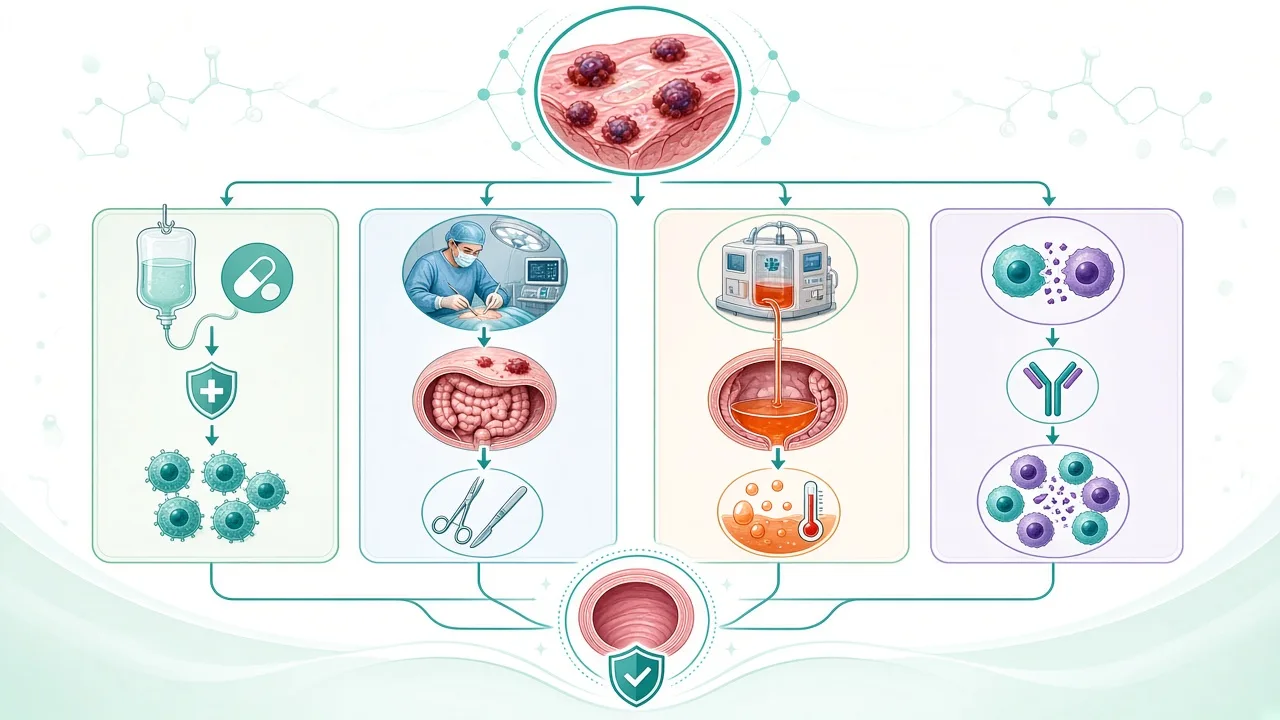
Yes, treatment is possible for many patients. However, the appropriate treatment and its objectives vary significantly depending on the original cancer, disease extent and patient health.
A. Systemic chemotherapy
Systemic chemotherapy uses medicines that circulate through the bloodstream. It may be used before surgery, after surgery, when surgery is not appropriate, or to control metastatic disease. The drug combination depends on the primary cancer and its molecular characteristics.
B. Targeted therapy and immunotherapy
Targeted therapy works on specific molecular features of cancer. For example, colorectal cancer treatment may be guided by RAS, BRAF and HER2 status. Immunotherapy may benefit patients whose tumours are mismatch repair-deficient or microsatellite instability-high. Testing is necessary to establish whether these treatments are relevant.
C. Cytoreductive surgery (CRS)
Cytoreductive surgery aims to remove visible tumour deposits from the peritoneal surfaces. It may involve peritonectomy, omentectomy, bowel resection and removal of other involved structures. The aim is to achieve complete or near-complete removal of visible disease.
D. HIPEC
HIPEC stands for Hyperthermic Intraperitoneal Chemotherapy. It involves circulating heated chemotherapy inside the abdominal cavity, usually after cytoreductive surgery, to treat microscopic residual cancer cells. HIPEC is not suitable for every patient with peritoneal metastases. Its role varies by primary cancer, evidence base, disease burden and treatment protocol.
E. PIPAC and supportive care
PIPAC (Pressurised Intraperitoneal Aerosol Chemotherapy) is a laparoscopic technique still under investigation for several cancer types. When surgery or other disease-directed treatments are unlikely to provide meaningful benefit, supportive and palliative care can help manage pain, ascites, nausea, bowel symptoms, nutrition, fatigue and emotional distress.
9. When Can Surgery Be Considered for Peritoneal Metastases?
Cytoreductive surgery may be considered for carefully selected patients. The decision is based on the primary cancer type, disease distribution and location of deposits (not just total PCI), response to systemic therapy, small bowel involvement, disease outside the abdomen, and patient fitness. The 2025 consensus guideline emphasises early referral to a peritoneal surface malignancy centre and a selective approach to surgery.
10. Does Every Patient Need HIPEC After Cytoreductive Surgery?
No. CRS and HIPEC are related but distinct treatment components. CRS does not automatically require HIPEC. The evidence varies by cancer type. Selected patients with pseudomyxoma peritonei and advanced ovarian cancer may be assessed for CRS-HIPEC. Colorectal peritoneal metastases require careful consideration — the ASCO guideline recommends against adding oxaliplatin-based HIPEC to CRS in this setting. A specialist should explain the evidence for the patient's particular diagnosis.
11. Treatment Planning in India
India has specialist oncology services and teams involved in the management of selected peritoneal surface malignancies. The INDEPSO-ISPSM consensus recommendations address patient selection, diagnostic work-up, systemic treatment, surgery and follow-up for peritoneal malignancies.
- **Medical record review** — specialist team reviews original diagnosis, pathology, imaging, surgery and chemotherapy history.
- **Specialist consultation** — surgical oncologist and medical oncologist assess the patient's condition and options.
- **Additional diagnostic evaluation** — updated imaging, biopsy, pathology review, molecular testing or diagnostic laparoscopy.
- **Multidisciplinary discussion** — the case is reviewed by a multidisciplinary tumour board.
- **Individual treatment recommendation** — clear explanation of proposed treatment, objective, benefits, risks and alternatives.
- **Cost estimate and admission planning** — patient-specific estimate based on planned treatment and expected stay.
12. Peritoneal Metastases Treatment Cost in India
There is no single cost for treating peritoneal metastases. The total expense depends on the original cancer, the treatment required and the patient's clinical condition. A patient receiving systemic chemotherapy may have a very different cost profile from someone undergoing extensive cytoreductive surgery with HIPEC.
13. Recovery After Peritoneal Metastases Surgery
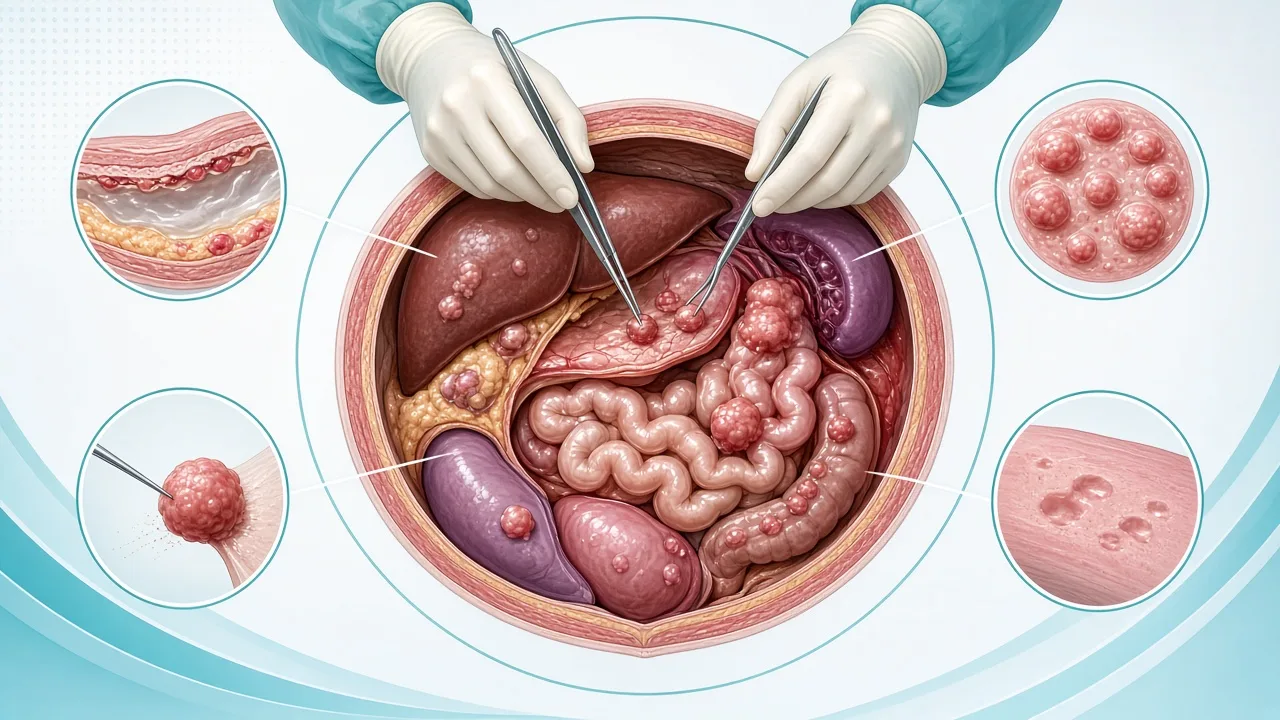
Recovery depends on the treatment performed. After CRS-HIPEC, patients may require intensive care or high-dependency monitoring, pain management, intravenous fluids, nutritional support, monitoring of kidney function and blood counts, wound care, physiotherapy and gradual mobilisation. Some patients need several weeks to regain strength. Full recovery can take months. International patients should not plan their return journey around a fixed number of days.
14. Can Peritoneal Metastases Come Back After Treatment?
Yes. Recurrence is possible after treatment, including after CRS-HIPEC. The risk depends on original cancer type, tumour biology, initial disease burden, completeness of surgery and response to systemic treatment. The treating team should provide a written follow-up plan — particularly important for patients returning to another country after treatment in India.
15. How Can International Patients Seek Treatment in India?
Patients from Tanzania, Kenya, Ethiopia, Uganda, Zambia, Nigeria, Iraq and other countries may consider India for specialist cancer assessment. For peritoneal metastases, it is particularly important to obtain a medical opinion before travelling because some treatment options involve complex surgery and prolonged recovery.
GAF Healthcare assists international patients with the coordination of medical treatment in India — including collection and organisation of medical reports, coordination of specialist consultations, hospital opinions and estimates, appointment coordination, medical visa documentation support, airport transfers, accommodation and interpreter arrangements. Clinical decisions remain with the treating doctors.
16. Frequently Asked Questions About Peritoneal Metastases
What are peritoneal metastases?
Peritoneal metastases occur when cancer spreads to the peritoneum, the thin membrane lining the abdominal cavity. They often originate from cancers of the colon, rectum, stomach, ovary or appendix.
Are peritoneal metastases the same as peritoneal carcinomatosis?
The terms are closely related. Peritoneal carcinomatosis is commonly used to describe cancer deposits across the peritoneal surfaces. Peritoneal metastases is a broader term for cancer that has spread to the peritoneum.
Do peritoneal metastases mean stage 4 cancer?
For many primary cancers, peritoneal spread represents metastatic or stage IV disease. The formal stage depends on the original cancer and its staging system. A specialist should confirm the stage.
Can peritoneal metastases be treated?
Yes. Treatment may include systemic chemotherapy, targeted therapy, immunotherapy, surgery, HIPEC in selected circumstances and supportive care. The right approach depends on the original cancer and extent of disease.
Can peritoneal metastases be cured?
Some carefully selected patients may receive treatment with curative intent, particularly when complete surgical removal of visible disease is possible. However, cure cannot be guaranteed and depends on tumour type and individual clinical factors.
Which cancers commonly spread to the peritoneum?
Colorectal, ovarian, stomach and appendix cancers are the most common causes. Pancreatic, gallbladder, bile duct and other abdominal or pelvic cancers can also spread to the peritoneum.
What are the symptoms of peritoneal metastases?
Symptoms may include abdominal swelling, bloating, pain, ascites, reduced appetite, early fullness, weight loss, nausea and changes in bowel habits. Some patients have few symptoms initially.
What is malignant ascites?
Malignant ascites is fluid accumulation in the abdominal cavity associated with cancer. It may cause abdominal swelling, discomfort, early fullness and breathlessness. Fluid examination can help establish its cause.
How are peritoneal metastases diagnosed?
Doctors may use CT, MRI, PET-CT, ultrasound, biopsy and histopathology. Diagnostic laparoscopy may be recommended to examine the abdominal cavity and assess disease distribution directly.
What is the Peritoneal Cancer Index?
PCI is a scoring system that measures the extent and distribution of tumour deposits in 13 abdominal and pelvic regions. The total score ranges from 0 to 39 and helps specialists assess disease burden and surgical feasibility.
What is cytoreductive surgery?
Cytoreductive surgery is an operation intended to remove visible tumour deposits from the peritoneal surfaces. It may involve removing affected peritoneal tissue and, when necessary, parts of involved organs.
Does every patient undergoing CRS need HIPEC?
No. The decision to add HIPEC depends on the primary cancer, clinical evidence, disease distribution and the patient's circumstances. CRS does not automatically require HIPEC.
Is HIPEC suitable for colorectal peritoneal metastases?
HIPEC has a selective and debated role. The ASCO guideline recommends against adding oxaliplatin-based HIPEC to CRS in this setting. Patient selection and the specific protocol matter. It should not be presented as routine.
Can ovarian cancer spread to the peritoneum?
Yes. Ovarian cancer commonly involves the peritoneal surfaces. Treatment may include surgery and systemic chemotherapy, with HIPEC considered in selected clinical circumstances.
Is HIPEC surgery available in India?
Yes. Specialist surgical oncology teams in India are involved in CRS-HIPEC and peritoneal surface malignancy management. Patients should verify that the specific hospital and surgeon have experience with their cancer type.
How much does peritoneal metastases treatment cost in India?
Costs vary according to the primary cancer, investigations, medicines, surgery, HIPEC requirements, hospital stay and postoperative care. A written estimate should be requested after the hospital reviews the patient's medical records. There is no single fixed price.
Can peritoneal metastases return after surgery?
Yes. Recurrence is possible after surgery, including after CRS-HIPEC. Follow-up with the treating oncology team is essential.
Can international patients travel to India for a specialist opinion?
Yes. Patients can arrange specialist consultations in India. Sharing scan images, pathology reports, chemotherapy records and operation notes before travel helps the team assess the case more effectively.
Medical Sources and Further Reading
- Consensus Guideline for the Management of Colorectal Cancer With Peritoneal Metastases (2025). pubmed.ncbi.nlm.nih.gov/40558054/
- INDEPSO-ISPSM Consensus on Colorectal Peritoneal Metastases (2024). pubmed.ncbi.nlm.nih.gov/39637347/
- Consensus Guideline for Gastric Cancer With Synchronous Peritoneal Metastases (2024). acsjournals.onlinelibrary.wiley.com/doi/10.1002/cncr.35870
- Multi-Society Guideline on CRS and HIPEC (2024). doi.org/10.1002/jso.27991
- ASCO Guideline: Treatment of Metastatic Colorectal Cancer (2023). pmc.ncbi.nlm.nih.gov/articles/PMC10506310/
Medical Disclaimer: This article is for educational purposes only and does not replace medical consultation. It should not be used to make treatment decisions without advice from a qualified oncologist or surgical oncologist. Eligibility, prognosis and treatment costs must be assessed individually.