
Treatment Overview
Rhinoplasty in India is surgery to reshape, resize or reconstruct the nose. It may be planned for appearance, for nasal breathing, or to address structural problems after injury, a birth difference or previous surgery.
It is often called a nose job or nose reshaping. Depending on anatomy and goals, a surgeon may change the nasal bridge, tip, nostrils, overall size or proportions. In selected patients it is combined with septoplasty or other functional nasal work so airflow is considered alongside form.
Rhinoplasty is highly individualized. Open versus closed access, grafting and whether revision or reconstruction is needed depend on facial proportions, skin, cartilage, breathing, previous operations and the amount of structural change required. Named partner planning for rhinoplasty is $2,500–$5,500, typically 1–3 nights. Neighbouring septoplasty is $1,500–$3,800 (day-care or overnight). Neighbouring facelift is $4,000–$9,500 (typically 1–4 nights). Neighbouring blepharoplasty is $1,500–$3,800 (day-care or overnight). Neighbouring otoplasty is $1,500–$3,500 (day-care or overnight). Neighbouring neck lift is $3,500–$7,800 (typically 1–4 nights). Neighbouring FESS is $2,000–$5,200 (typically 1–3 nights) when sinus disease is a separate brief. Neighbouring balloon sinuplasty is $2,000–$5,000 (day-care or overnight). Revision rhinoplasty, rib or ear grafts, and combined septorhinoplasty beyond a listed primary case are quoted after records review. These are planning ranges from partner hospital cost sheets, not hospital quotations.
For international patients, planning can include a virtual consultation, medical evaluation, surgeon matching, hospital coordination, scheduling, and assistance with travel and local arrangements. International patients comparing cosmetic surgeons commonly start with rhinoplasty lists in Delhi NCR, Mumbai, Bengaluru, Chennai and Hyderabad. Partner cosmetic surgery hospitals in Delhi NCR, Mumbai and Bengaluru, and in Chennai and Hyderabad, are a typical first filter. City cost sheets include Delhi NCR, Mumbai, Bengaluru, Chennai and Hyderabad. Kolkata, Pune, Ahmedabad, Chandigarh and Kochi may have nasal-surgery services, but they are not live GAF catalog cities on this site.
Important: rhinoplasty is not a same-week tourist procedure and cannot guarantee a celebrity nose or perfect symmetry. Heavy bleeding, severe pain, fever, breathing difficulty, visual symptoms or rapidly worsening swelling belongs in a local emergency department, not in a WhatsApp message.
Rhinoplasty in India at a Glance
| Factor | What patients should know |
|---|---|
| Procedure | Reshape, resize or reconstruct the nose |
| Access | Open or closed, chosen from anatomy and goals |
| Anaesthesia | Usually general anaesthesia |
| Duration | Often 1.5–3 hours; revision or graft work can take longer |
| GAF rhinoplasty sheet | $2,500–$5,500; typically 1–3 nights |
| Neighbouring septoplasty | $1,500–$3,800; day-care or overnight |
| Main specialist | Plastic, facial plastic or appropriately trained ENT surgeon |
| Early recovery | Often 1–2 weeks before routine public-facing work |
| Final contour | Months to about a year or longer |
| Emergency | Heavy bleeding, breathing difficulty, fever or rapidly worsening swelling belongs in a local emergency department |
What Is Rhinoplasty?
Rhinoplasty is surgery that changes the shape or structure of the nose.
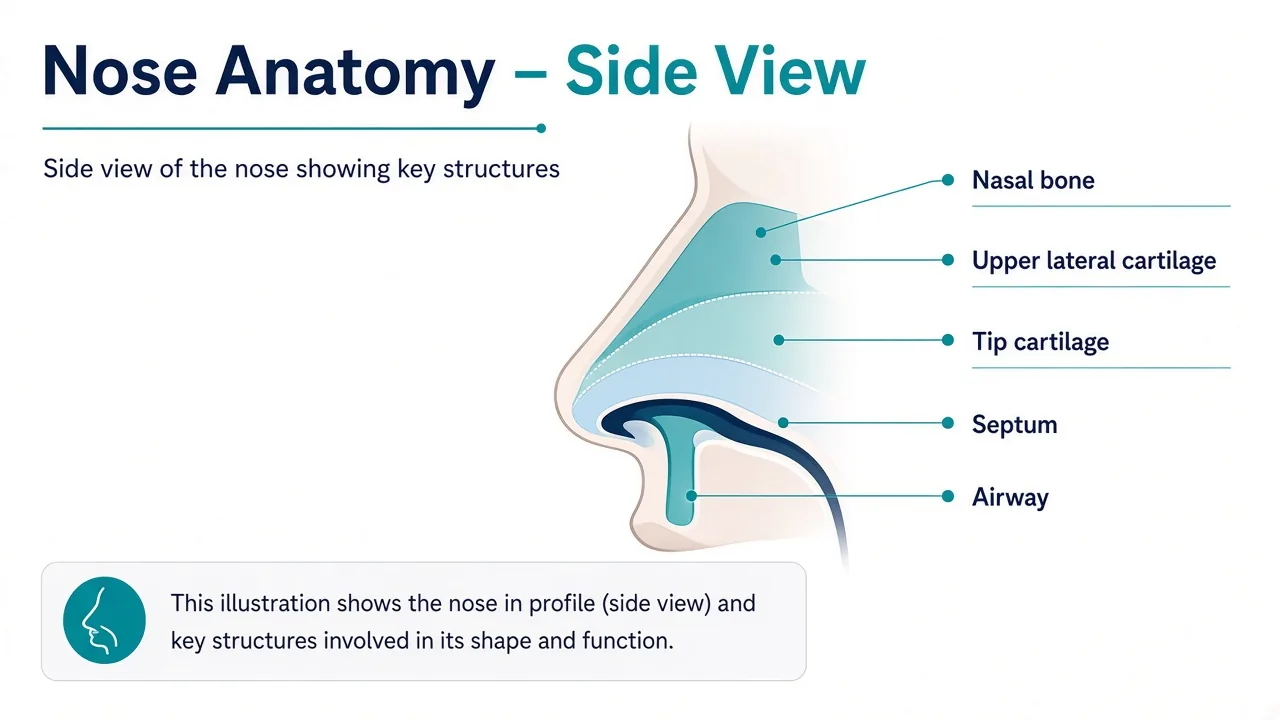
The nose is made of bone, cartilage, soft tissue and skin. A rhinoplasty surgeon may reshape or reposition these structures for a functional or aesthetic outcome.
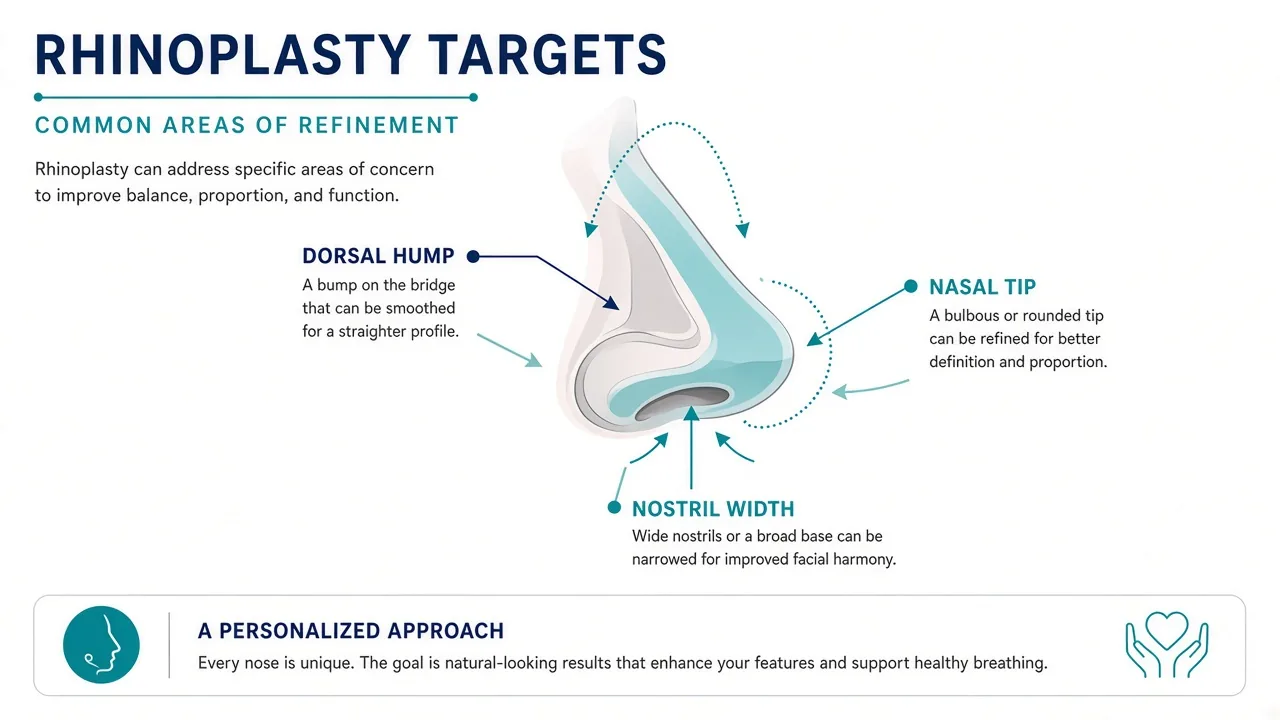
Depending on anatomy and objectives, surgery may reduce a nasal hump, refine the tip, change width, modify the nostrils, straighten a crooked nose, support weak structures or correct a deviated septum.
The aim is not simply to make the nose smaller. In many cases, successful rhinoplasty is about creating better facial balance while maintaining or improving nasal function.
Ask whether rhinoplasty is appropriate
Why Do People Have Rhinoplasty?
Rhinoplasty may be performed for several different reasons.
Cosmetic reasons
A patient may be unhappy with a large or small nose, a prominent dorsal hump, a wide nasal bridge, a broad or bulbous nasal tip, a drooping or overly prominent tip, wide or asymmetric nostrils, a crooked or asymmetric nose, an imbalance between the nose and other facial features, or changes after previous nasal trauma.
Rhinoplasty can modify these characteristics while taking overall facial proportions into account.
Functional reasons
Some patients seek rhinoplasty because they have difficulty breathing through the nose.
The underlying problem may involve a deviated septum, nasal valve narrowing, structural weakness, previous trauma or other anatomical factors.
When appearance and breathing problems occur together, a surgeon may recommend a functional rhinoplasty or septorhinoplasty rather than treating appearance alone.
Reconstructive reasons
Rhinoplasty may also reconstruct nasal structures affected by trauma, previous surgery, congenital abnormalities, structural collapse, tissue loss or previous unsuccessful rhinoplasty.
Reconstructive surgery can be considerably more complex than a straightforward primary cosmetic rhinoplasty and is quoted after records review.
What Can Rhinoplasty Change?
Depending on anatomy, rhinoplasty can address several aspects of the nose.
Nasal bridge
The surgeon may reduce a dorsal hump, straighten the bridge or alter its width.
Nasal tip
The tip can be refined, reshaped, supported or repositioned depending on the underlying cartilage.
Nostrils
The size, width or shape of the nostrils can sometimes be modified.
Overall nasal size
The nose can sometimes be reduced or augmented to create better facial proportions.
Nasal projection
The relationship between the nasal tip and the rest of the face can be changed.
Nasal symmetry
Rhinoplasty can improve significant asymmetry, although complete facial or nasal symmetry cannot be guaranteed because natural human faces are not perfectly symmetrical.
Breathing
When structural obstruction is contributing to breathing difficulty, appropriate nasal surgery can sometimes improve airflow.
Types of Rhinoplasty
There is no single rhinoplasty technique that is suitable for every patient.
The surgical approach is selected according to anatomy, goals and the changes required.
1. Open rhinoplasty
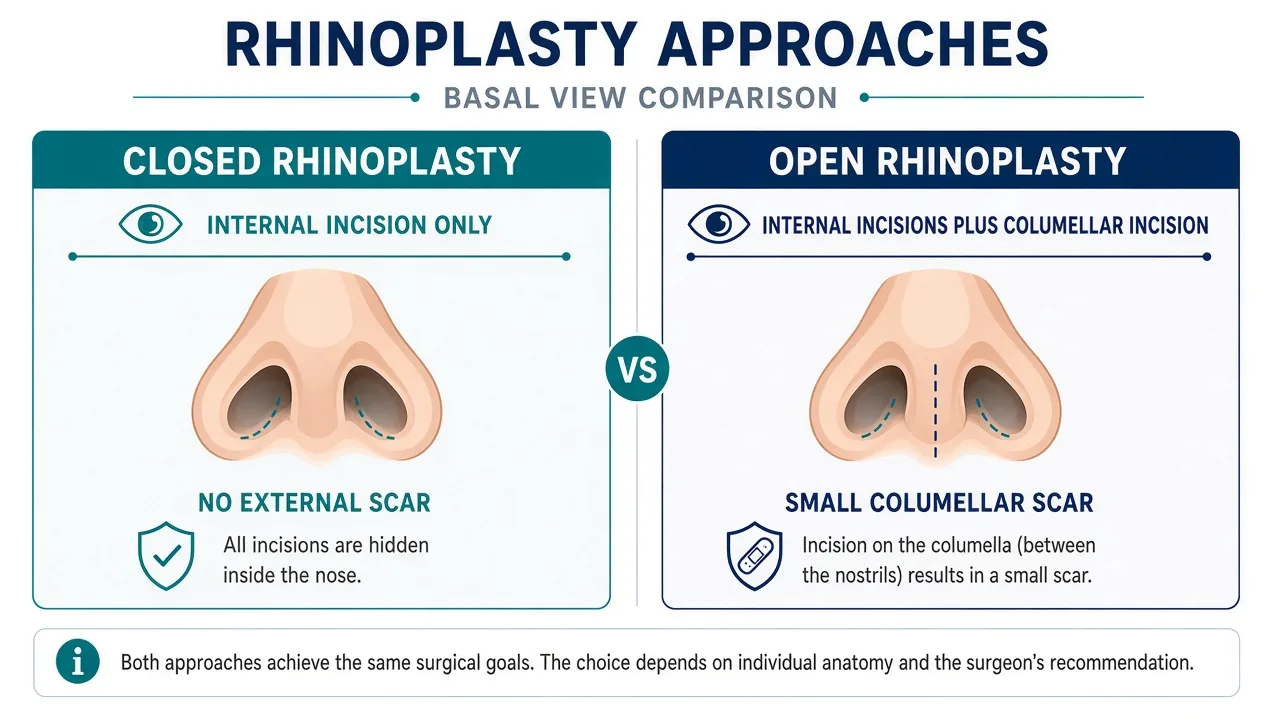
In an open rhinoplasty, the surgeon makes an incision across the columella, the small strip of tissue between the nostrils, in addition to internal nasal incisions.
This allows greater exposure of the underlying nasal framework.
Open rhinoplasty may be particularly useful when detailed structural modification, tip refinement, grafting or revision surgery is required.
A small external scar can occur, although the incision is designed to be discreet.
2. Closed rhinoplasty
In closed rhinoplasty, the surgical incisions are made inside the nostrils.
There is no external columellar incision.
Closed rhinoplasty can be suitable for selected patients where the required changes can be performed effectively through an internal approach.
The choice between open and closed rhinoplasty should be based on anatomy and surgical requirements rather than simply the desire to avoid an external incision.
3. Functional rhinoplasty
Functional rhinoplasty focuses on improving nasal function, particularly breathing, when structural abnormalities contribute to obstruction.
It may be combined with procedures such as septoplasty.
4. Septorhinoplasty
Septorhinoplasty combines correction of the nasal septum with reshaping or reconstruction of the external nose.
It may be considered when a patient has both a deviated septum and external nasal deformity. Combined work beyond a listed primary rhinoplasty is quoted after review.
5. Revision rhinoplasty
Revision rhinoplasty is performed after a previous rhinoplasty when further structural, functional or aesthetic correction is required.
Revision surgery can be technically more difficult because previous surgery may have altered the cartilage, bone, soft tissue and available graft material.
Additional cartilage from the ear or rib may sometimes be required in complex cases. There is no separate GAF revision-rhinoplasty sheet; these cases are quoted after records review.
6. Reconstructive rhinoplasty
Reconstructive rhinoplasty is performed to restore nasal structure after trauma, congenital abnormalities, previous surgery or tissue loss.
It may require more extensive reconstruction than cosmetic rhinoplasty and is quoted after review.
Share photographs for a rhinoplasty review
Open vs Closed Rhinoplasty
| Feature | Open rhinoplasty | Closed rhinoplasty |
|---|---|---|
| Incision | Internal incisions plus a small columellar incision | Internal incisions |
| External scar | Small columellar scar possible | No external incision |
| Surgical exposure | Greater | More limited |
| Tip surgery | Often useful for complex tip work | Suitable for selected cases |
| Complex reconstruction | Often advantageous | May be unsuitable for some cases |
| Revision surgery | Frequently used depending on anatomy | Selected cases |
| Swelling | May be more pronounced around the tip initially | May be less in some patients |
| Choice | Based on anatomy and surgical goals | Based on anatomy and surgical goals |
Neither approach is universally better. The appropriate technique depends on what needs to be changed and how much structural access the surgeon requires.
Who Is a Good Candidate for Rhinoplasty?
A suitable candidate generally has a specific and realistic understanding of what they would like to change.
Candidates may include people who are dissatisfied with the shape or proportions of their nose, have a nasal hump or broad nasal bridge, have a bulbous, drooping or asymmetric nasal tip, have wide or asymmetric nostrils, have a crooked nose, have breathing difficulties related to nasal structure, have deformity following trauma, require reconstructive nasal surgery, or need revision after previous rhinoplasty.
A surgeon will also consider general health, medications, previous operations, healing history, smoking or vaping, nasal breathing and expectations.
Rhinoplasty is not simply a procedure for producing a particular celebrity or social-media appearance. The surgeon must consider the patient's individual facial proportions and anatomy.
Rhinoplasty for Men and Women
Rhinoplasty is performed in both men and women.
The surgical plan should be individualized rather than applying the same nasal proportions to every patient.
A surgeon may consider facial proportions, nasal width, nasal projection, tip characteristics, forehead and chin relationship, skin thickness, existing facial asymmetry, breathing function and patient expectations.
The goal is generally a nose that looks appropriate for the individual's face rather than a standardized nose shape.
Ethnic Rhinoplasty
Ethnic rhinoplasty refers to rhinoplasty performed with consideration of the patient's ethnic and anatomical characteristics.
The objective is not to erase ethnic identity.
Instead, the surgeon evaluates the nasal structure, facial proportions, skin and cartilage characteristics and the patient's own goals.
This can be particularly important for patients from South Asia, the Middle East, Africa and other regions where nasal anatomy and aesthetic preferences may differ.
The surgical plan should therefore be personalized rather than based on a generic concept of an “ideal nose.”
What Happens During Rhinoplasty?
Although every procedure is different, rhinoplasty generally follows several stages.
1. Consultation and assessment
The surgeon discusses the patient's goals and medical history.
The nose is examined from the front, side and other angles. Internal nasal examination may also be required, particularly when breathing problems are present.
Photographs are commonly taken to assist with surgical planning.
2. Surgical planning
The surgeon determines which structures need to be reduced, reshaped, repositioned or supported.
Depending on the case, the plan may involve bone reshaping, cartilage reshaping, cartilage grafting, tip refinement, dorsal hump reduction, nasal osteotomies, septoplasty, nasal valve reconstruction, or alar or nostril modification.
3. Anaesthesia
Rhinoplasty may be performed under general anaesthesia or, in selected situations, intravenous sedation with local anaesthesia.
The anaesthetic approach depends on the procedure and the patient's circumstances.
4. Surgical access
The surgeon uses either an open or closed approach.
5. Reshaping
Bone and cartilage are carefully modified according to the surgical plan.
Cartilage grafts may be used when additional structural support is required.
Septal cartilage is commonly used when available. Ear cartilage or rib cartilage may be considered in selected complex cases and is quoted after review.
6. Closing and supporting the nose
The skin and soft tissues are repositioned.
Internal splints or an external nasal splint may be used to support healing.
7. Recovery
The patient is monitored in a recovery area following surgery.
GAF planning is typically 1–3 nights. Some hospital protocols use same-day discharge or overnight observation after selected cases. International patients should not plan travel from the shortest published stay.
How Long Does Rhinoplasty Take?
A straightforward rhinoplasty commonly takes approximately 1.5 to 3 hours, although surgical duration varies significantly.
Complex revision rhinoplasty, reconstructive procedures, grafting or combined functional surgery can take longer.
The surgeon should provide an estimated duration after assessing anatomy and the planned procedure.
Rhinoplasty Recovery in India
Recovery after rhinoplasty occurs in stages.
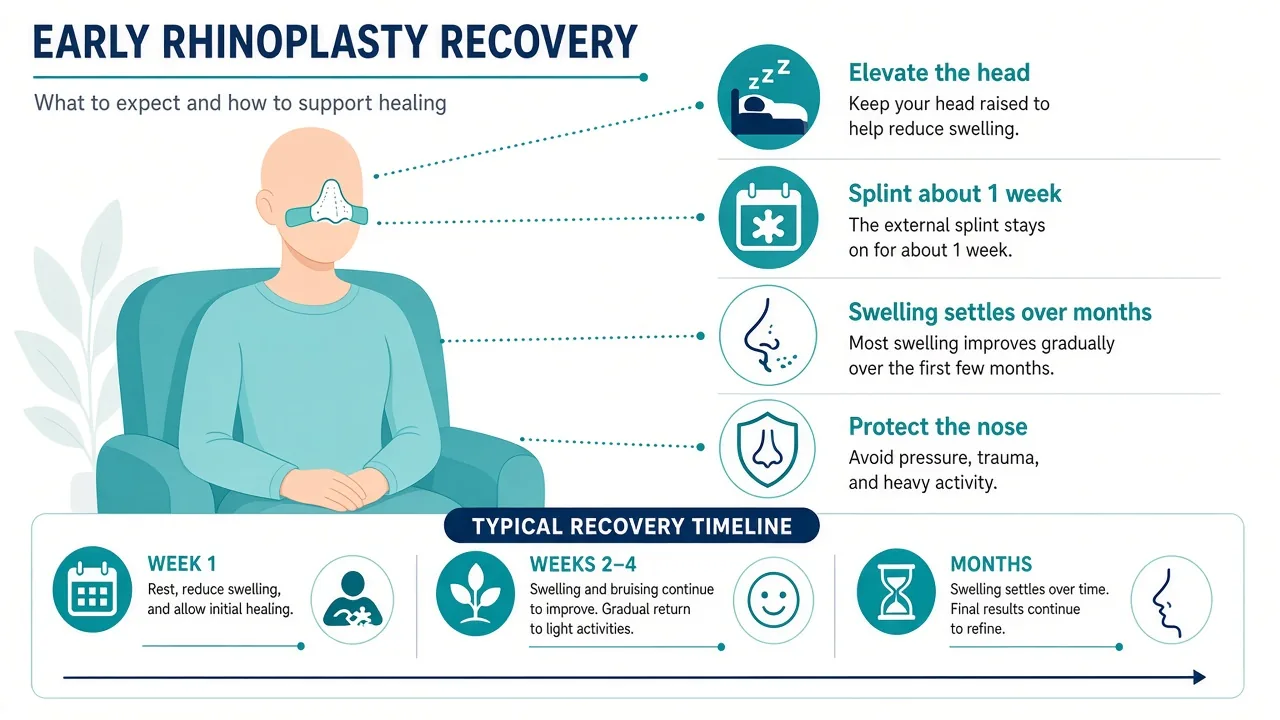
The first week is usually the most noticeable period of swelling, bruising and nasal congestion.
A splint may remain over the nose for approximately one week.
Patients may experience nasal congestion, mild pain or discomfort, swelling, bruising around the eyes, temporary numbness, minor drainage or nosebleeds, and difficulty breathing through the nose initially.
These effects generally improve as healing progresses.
Typical recovery timeline
| Period | What patients may experience |
|---|---|
| First 1–3 days | Swelling, congestion, mild discomfort and drainage |
| Around 1 week | Splint may be removed; early bruising begins improving |
| 1–2 weeks | Many patients can return to routine work depending on recovery |
| 3–4 weeks | Most visible bruising has generally improved |
| 4–6 weeks | Strenuous activity may gradually resume if cleared by the surgeon |
| Several months | Swelling continues to settle and nasal contour becomes clearer |
| Around 1 year or longer | Final refinement may continue, particularly in complex cases |
Recovery varies considerably from patient to patient. The nose can continue changing as swelling resolves, and the final appearance may not be apparent immediately after surgery.
Plan an international rhinoplasty stay
When Can I Return to Work After Rhinoplasty?
Many patients need approximately one to two weeks away from work, particularly if their work is public-facing or physically demanding.
Patients with desk-based work may sometimes return earlier.
The timing depends on swelling, bruising, discomfort, the nature of work and the surgeon's instructions.
International patients should generally allow enough time in India for the initial postoperative review before planning their return journey.
When Can I Exercise After Rhinoplasty?
Strenuous exercise should generally be avoided during the early recovery period.
Running, weight training, contact sports and activities that could increase blood pressure or expose the nose to trauma may need to be restricted for several weeks.
The surgeon should determine when specific activities can safely resume.
When Will I See the Final Rhinoplasty Result?
The initial change can be visible soon after surgery, but it is not the final result.
Swelling gradually decreases over several months.
Some residual swelling, particularly around the nasal tip, can persist much longer.
Mayo Clinic notes that most swelling may resolve within about a year, while other specialist guidance notes that complete healing can continue beyond that depending on the patient and procedure.
This is why patients should avoid judging the final result during the first few weeks.
Is Rhinoplasty Painful?
Rhinoplasty is generally associated with discomfort rather than severe pain.
The experience varies between patients and depends on the extent of surgery.
Pain medication prescribed by the surgical team can usually help manage postoperative discomfort.
Congestion and the feeling of pressure may be more noticeable than pain during the first few days.
Rhinoplasty Risks and Complications
Rhinoplasty is a surgical procedure and does not have a zero-risk outcome.
Potential complications include bleeding, infection, anaesthesia-related complications, persistent swelling, numbness or altered sensation, scarring, nasal asymmetry, difficulty breathing, change in sense of smell, septal perforation, unsatisfactory cosmetic outcome, poor wound healing and the need for revision surgery.
Septal perforation is uncommon but may require additional treatment and may not always be completely correctable.
Patients should discuss individual risk factors with their surgeon before deciding on surgery.
Heavy bleeding, severe pain, fever, breathing difficulty, visual symptoms or rapidly worsening swelling should be assessed in a local emergency department.
Can Rhinoplasty Affect Breathing?
Yes.
This is an important consideration because the nose has both aesthetic and functional roles.
Removing too much structural support or altering the nasal framework without adequately considering airflow can affect breathing.
For patients who already have nasal obstruction, the surgeon should evaluate the internal nasal anatomy before surgery.
When appropriate, rhinoplasty may be combined with septoplasty or other functional nasal procedures to address structural obstruction.
For this reason, a good rhinoplasty consultation should not focus only on appearance.
Rhinoplasty and Septoplasty: What Is the Difference?
| Rhinoplasty | Septoplasty |
|---|---|
| Changes the external shape or structure of the nose | Straightens the internal nasal septum |
| May be cosmetic, functional or reconstructive | Primarily performed to improve nasal airflow |
| Can modify bridge, tip, nostrils and nasal proportions | Focuses on the septum |
| May improve breathing when structural problems are addressed | Primarily targets obstruction caused by septal deviation |
| GAF planning $2,500–$5,500; typically 1–3 nights | GAF planning $1,500–$3,800; day-care or overnight |
| May be combined with septoplasty | May be combined with rhinoplasty |
When both external deformity and internal obstruction are present, a combined septorhinoplasty may be appropriate. Combined work is quoted after review rather than as two brochure prices added together.
Rhinoplasty Cost in India
Named GAF partner planning for rhinoplasty is $2,500–$5,500, typically 1–3 nights. Comparable US self-pay planning on the same sheet is $8,000–$18,000. These are planning ranges, not hospital quotations.
The total bill still varies because there is no single standard procedure. Factors include type of rhinoplasty, primary versus revision surgery, surgeon experience, hospital or surgical facility, anaesthesia, complexity, cartilage grafts, whether septoplasty or other functional correction is required, preoperative investigations, length of stay, postoperative consultations and any additional treatment required because of complications.
There is no separate GAF revision-rhinoplasty sheet. Ear or rib grafts, revision after previous surgery, and combined septorhinoplasty beyond a listed primary case are quoted after records review.
Consumer rupee averages for mixed “nose surgery” listings are not used as GAF quotations.
Indicative rhinoplasty cost structure
| Cost component | What it may include |
|---|---|
| Surgeon fee | Consultation, surgical planning and procedure |
| Hospital/facility fee | Operating theatre and facility charges |
| Anaesthesia | Anaesthetist and anaesthesia-related charges |
| Investigations | Blood tests, imaging or other assessments when required |
| Grafts | Additional cartilage harvesting and reconstruction when required; quoted after review |
| Hospital stay | Room, nursing and postoperative monitoring; GAF planning is typically 1–3 nights |
| Medicines | Prescribed postoperative medication |
| Follow-up | Postoperative consultations and assessments |
For an accurate rhinoplasty cost in India, the patient should obtain an individualized quotation after medical assessment.
Request a named-procedure cost estimate
WhatsApp +91 90443 46292 for an itemised rhinoplasty estimate
Rhinoplasty Cost in Major Indian Cities
Costs can vary between hospitals, surgeons and procedures inside the same GAF planning band.
Live GAF city sheets for rhinoplasty currently cover Delhi NCR, Mumbai, Bengaluru, Chennai and Hyderabad. Pune, Kolkata and Ahmedabad are not live GAF catalog cities on this site.
For international patients, a medical-travel quotation may potentially include surgeon consultation, preoperative evaluation, surgery, anaesthesia, hospital stay, medicines, follow-up consultation, airport transfer, local transportation, accommodation and medical visa assistance where applicable.
The exact inclusions should always be confirmed before booking treatment.
Why Do International Patients Consider Rhinoplasty in India?
India has a large healthcare ecosystem with hospitals, specialist surgeons and dedicated medical-travel infrastructure.
For international patients, the decision should not be based on price alone.
Important considerations include the surgeon's relevant rhinoplasty experience, hospital or surgical facility standards, anaesthesia support, availability of postoperative care, ability to manage complications, communication and language support, follow-up arrangements after returning home, transparency of the quotation, and whether the surgeon regularly performs the specific type of rhinoplasty required.
A lower quoted price does not necessarily mean a lower-risk or better-suited operation.
How to Choose a Rhinoplasty Surgeon in India
Choosing the surgeon is one of the most important decisions in rhinoplasty.
Patients should consider relevant training in plastic surgery, facial plastic surgery or otorhinolaryngology/ENT, how frequently the surgeon performs rhinoplasty, experience with revision or reconstructive cases when those are required, an appropriately equipped and accredited facility with suitable anaesthesia and emergency support, before-and-after photographs as a style reference rather than a guarantee, and enough consultation time to understand what can and cannot be changed, the proposed technique, risks, recovery, total estimated cost and follow-up.
Mayo Clinic and NHS guidance similarly emphasize surgeon qualifications, experience, facility standards, expectations and discussion of complications when choosing a rhinoplasty provider.
Catalog surgeons currently tagged to rhinoplasty lists include Dr. Aditya Aggarwal and Dr. Anup Dhir in Delhi NCR; Dr. Charudatta Chaudhari and Dr. Kiran Naik in Mumbai; Dr. Naveen Rao and Dr. Krishna Shama Rao in Bengaluru; Dr. Chepauk Ramesh and Dr. Lokesh Suryanarayanan in Chennai; and Dr. Guru Prasad Reddy and Dr. Sanjeev Sasmith B in Hyderabad. A catalog tag is not a volume, outcome or ranking claim.
Catalog hospitals currently affiliated with those tagged lists include Medanta - The Medicity and Indraprastha Apollo Hospital in Delhi NCR; Apollo Hospitals, Navi Mumbai and Gleneagles Hospital, Mumbai in Mumbai; Gleneagles Hospitals, Bengaluru and Apollo Hospitals, Bannerghatta Road in Bengaluru; Apollo Hospital, Chennai and MGM Healthcare, Chennai in Chennai; and Apollo Hospital, Jubilee Hills and Yashoda Hospitals, Somajiguda in Hyderabad.
Find a rhinoplasty specialist in India
WhatsApp +91 90443 46292 to match a rhinoplasty surgeon
- Cosmetic surgery hospitals in Delhi NCR
- Cosmetic surgery hospitals in Mumbai
- Cosmetic surgery hospitals in Bengaluru
- Cosmetic surgery hospitals in Chennai
- Cosmetic surgery hospitals in Hyderabad
Questions to Ask Your Rhinoplasty Surgeon
Before proceeding, consider asking:
- What changes can realistically be achieved in my nose?
- Will my breathing be affected?
- Do I need functional nasal surgery as well?
- Would you recommend open or closed rhinoplasty for me, and why?
- Will I need cartilage grafts?
- Where would the graft cartilage come from?
- What type of anaesthesia will be used?
- How long will the operation take?
- How many nights should I plan in hospital? GAF planning is typically 1–3 nights.
- When will my splint be removed?
- How long should I remain in India?
- When can I return to work?
- When can I exercise?
- What complications should I be aware of?
- What happens if I am dissatisfied with the result?
- What follow-up care will I receive after returning home?
- What is included in the quoted price?
- Are additional procedures, grafts or hospital charges excluded?
These questions can make the consultation much more useful and help prevent misunderstandings.
Rhinoplasty Before Surgery: How to Prepare
Your surgeon will provide personalized instructions.
Depending on your circumstances, preparation may include medical history review, physical examination, nasal examination, photographs, preoperative blood tests or other investigations, medication review, discussion of smoking or vaping, anaesthesia assessment, review of previous nasal surgery and discussion of expectations.
Tell your surgeon about all medicines, supplements and medical conditions.
Do not stop prescribed medicines unless your treating team specifically advises you to do so.
If you smoke or vape, discuss this with your surgeon because nicotine exposure can interfere with healing.
What to Expect After Rhinoplasty
Immediately after surgery, the nose may be swollen and congested.
A splint may be placed over the nose, and some patients may have internal splints.
You may experience bruising around the eyes.
The surgical team may advise you to keep your head elevated, avoid blowing your nose, sneeze with your mouth open, avoid strenuous exercise, protect the nose from accidental trauma, avoid pressure from spectacles when advised, follow wound-care instructions, take prescribed medicines as directed and attend scheduled follow-up appointments.
These instructions vary according to the exact procedure.
What Should I Avoid After Rhinoplasty?
Your surgeon may advise avoiding contact sports, heavy exercise, bending or strenuous activity during the early period, blowing the nose, pressure on the nose, unapproved medications or supplements, smoking and vaping, and activities that could cause accidental nasal trauma.
Do not follow generic online recovery instructions in place of your surgeon's postoperative plan.
Rhinoplasty for International Patients
For patients travelling to India, rhinoplasty involves more than arranging surgery.
A typical medical travel journey may include:
Step 1: Share medical information
Provide photographs, previous medical records, previous nasal surgery details and a description of your concerns.
Step 2: Virtual consultation
The surgeon can review the available information and determine whether an in-person evaluation is appropriate.
Step 3: Treatment planning
The surgeon develops a preliminary plan based on the consultation.
Step 4: Travel planning
The medical-travel team can help coordinate the hospital appointment, accommodation and local logistics.
Step 5: In-person assessment
The surgeon performs a physical examination after arrival in India.
The final surgical plan should be confirmed after this assessment.
Step 6: Surgery
The patient undergoes the planned procedure in an appropriately equipped facility.
Step 7: Early follow-up
Postoperative examinations are essential during the initial recovery period.
Step 8: Return home
International patients should plan sufficient time in India for postoperative review before travelling home.
Step 9: Continued follow-up
Follow-up may continue remotely with the treating surgeon and, where appropriate, a local doctor after the patient returns home.
Plan a rhinoplasty treatment journey
How Long Should an International Patient Stay in India for Rhinoplasty?
The appropriate duration depends on the procedure, the surgeon's postoperative protocol and the patient's recovery.
Patients should generally avoid planning an immediate return flight after surgery.
A typical medical travel plan should allow time for surgery, early postoperative observation, splint removal, wound assessment, surgeon review and clearance for travel.
The exact schedule should be confirmed with the treating surgeon before travel. GAF hospital planning is typically 1–3 nights; additional hotel nights for splint removal and review are separate from the surgical stay.
Does Rhinoplasty Leave a Scar?
Closed rhinoplasty does not involve an external incision.
Open rhinoplasty involves a small incision across the columella.
The resulting scar is generally designed to be discreet, but scar formation varies between individuals.
Patients should ask their surgeon where the incision will be placed and what type of scar can reasonably be expected.
Can Rhinoplasty Improve a Crooked Nose?
Yes, rhinoplasty can sometimes improve a crooked or asymmetric nose.
However, crooked noses can involve multiple structural components, including the nasal bones, septum and cartilage.
Correction can therefore be more complex than simply changing the external appearance.
A detailed examination is necessary to determine whether rhinoplasty, septoplasty or septorhinoplasty is appropriate.
Can Rhinoplasty Correct a Deviated Septum?
Rhinoplasty itself and septoplasty are different procedures.
If a deviated septum is contributing to nasal obstruction, septoplasty may be performed.
When external nasal deformity and internal septal deviation coexist, the procedures may be combined as a septorhinoplasty.
The appropriate approach depends on the patient's anatomy and symptoms.
Can Rhinoplasty Be Done After a Nose Injury?
Yes.
Trauma can change the shape and internal structure of the nose.
Depending on the timing and severity of the injury, treatment may involve fracture management, septal correction, rhinoplasty or reconstructive surgery.
A specialist assessment is particularly important when an injury has caused both cosmetic deformity and difficulty breathing.
Can Rhinoplasty Be Repeated?
Revision rhinoplasty is possible, but it is usually more complex than primary rhinoplasty.
Previous surgery may have removed cartilage, altered nasal support, created scar tissue, changed the anatomy or reduced available graft material.
Additional cartilage from the ear or rib may sometimes be needed.
Because the nose continues to heal and change after surgery, surgeons commonly recommend waiting until sufficient healing has occurred before considering revision surgery. Mayo Clinic notes that when a second operation is required, patients may need to wait at least a year.
Revision cases are quoted after records review.
Rhinoplasty Results: What Is Realistic?
Rhinoplasty can produce meaningful changes, but it cannot guarantee perfection.
The result is influenced by bone structure, cartilage strength, skin thickness, healing response, existing asymmetry, surgical technique, previous surgery and postoperative care.
Even small structural changes can have a noticeable effect on facial appearance.
The objective should be a well-planned improvement that is appropriate for the individual's anatomy rather than an expectation of absolute symmetry or perfection.
Neighbouring Facial and Nasal Procedures
Rhinoplasty is one facial-plastic list. Neighbouring GAF sheets that patients sometimes compare, and that must not be used as a rhinoplasty quotation, include:
- Facelift — $4,000–$9,500, typically 1–4 nights
- Blepharoplasty in India — named lists sit on blepharoplasty at $1,500–$3,800, day-care or overnight
- Otoplasty — $1,500–$3,500, day-care or overnight
- Neck lift — $3,500–$7,800, typically 1–4 nights
- Septoplasty — $1,500–$3,800, day-care or overnight
- FESS — $2,000–$5,200, typically 1–3 nights
- Balloon sinuplasty — $2,000–$5,000, day-care or overnight
Sinus lists treat sinus disease. They are not a substitute rhinoplasty price. Body-contouring lists sit on Liposuction in India.
Is Rhinoplasty Safe?
Rhinoplasty is routinely performed by appropriately trained surgeons, but it remains surgery with potential complications.
Safety depends on appropriate patient selection, an experienced surgical team, proper preoperative evaluation, suitable anaesthesia, an accredited or appropriately equipped facility, careful surgical planning, postoperative monitoring and timely management of complications.
Patients should discuss their individual risk profile rather than relying on generalized statements about safety.
When Should You Contact the Hospital After Rhinoplasty?
Patients should follow the emergency instructions given by their surgical team.
Unexpected or concerning symptoms such as significant bleeding, severe pain, fever, breathing difficulty, visual symptoms or rapidly worsening swelling should be reported promptly.
Do not wait for a routine follow-up appointment if you develop symptoms that your surgical team has identified as requiring urgent attention.
These symptoms belong in a local emergency department, not in a WhatsApp message.
Rhinoplasty in India: Frequently Asked Questions
Is rhinoplasty the same as a nose job?
Yes. “Nose job” is a common informal term for rhinoplasty.
How long does rhinoplasty take?
Many rhinoplasty operations take approximately 1.5–3 hours, but complex or revision procedures can take longer.
How many days should I stay in India after rhinoplasty?
The appropriate duration depends on the operation and postoperative progress. International patients should allow enough time for early surgical review and splint removal before travelling home. GAF hospital planning is typically 1–3 nights, plus additional hotel nights for review.
Is rhinoplasty painful?
Most patients experience manageable discomfort rather than severe pain. Individual experiences vary.
Does rhinoplasty improve breathing?
It can when breathing difficulty is caused by structural abnormalities that are appropriately treated during surgery.
What is the difference between rhinoplasty and septorhinoplasty?
Rhinoplasty focuses on reshaping or reconstructing the nose. Septorhinoplasty combines nasal reshaping with correction of the nasal septum.
Is open rhinoplasty better than closed rhinoplasty?
Neither is universally better. The appropriate approach depends on the patient's anatomy and the surgical changes required.
Will there be a visible scar?
Closed rhinoplasty has no external incision. Open rhinoplasty involves a small columellar incision that generally heals as a discreet scar.
When can I return to work?
Many patients require about one to two weeks, although recovery varies.
When can I exercise?
Strenuous exercise and contact activities generally need to be restricted during the early healing period. Your surgeon should determine when you can safely resume them.
When will the final result be visible?
Swelling gradually decreases over months, and the final contour may continue refining for approximately a year or longer in some patients.
Can rhinoplasty be performed after previous nose surgery?
Yes. This is called revision rhinoplasty, but it is generally more technically demanding and is quoted after review.
Can rhinoplasty correct a broken nose?
It can be used to correct residual structural or cosmetic problems following nasal trauma.
Can rhinoplasty be combined with septoplasty?
Yes. This combination is commonly referred to as septorhinoplasty when both structural nasal shape and septal problems are addressed.
Is rhinoplasty covered by insurance?
Cosmetic rhinoplasty is generally treated differently from surgery performed for medically necessary functional problems. Coverage depends on the insurance policy and indication. Patients should confirm coverage directly with their insurer.
How much does rhinoplasty cost in India?
Named GAF partner planning is $2,500–$5,500. A personalized quotation still depends on the exact procedure, surgeon, hospital and complexity. Revision and graft cases are quoted after review.
Can international patients have rhinoplasty in India?
Yes. International patients can arrange consultations and treatment in India, but the surgical plan should be confirmed after an appropriate medical assessment.
Which city in India is best for rhinoplasty?
There is no single best city. Delhi NCR, Mumbai, Bengaluru, Chennai and Hyderabad are live GAF catalog cities. Choose a named plastic, facial plastic or ENT surgeon who already operates the anatomy you need.
Why Choose GAF Healthcare for Rhinoplasty in India?
For an international patient, arranging surgery in another country can involve many decisions beyond choosing a hospital.
GAF Healthcare can help coordinate the medical travel journey, including identifying suitable hospitals and specialists, sharing medical information with the treating team, arranging consultations, coordinating treatment estimates, assisting with appointment scheduling, supporting hospital coordination, airport and local transportation assistance, accommodation coordination, assistance during the patient's stay and post-treatment coordination.
The treating surgeon remains responsible for the medical diagnosis, surgical recommendation and clinical care.
Our role is to make the medical travel process more organized and easier to navigate.
How to Start Your Rhinoplasty Treatment Journey in India
If you are considering rhinoplasty in India, you can begin with a remote medical assessment.
Share your age, your main concern, whether you have difficulty breathing, previous nose surgery if any, previous nasal injury if any, relevant medical history, current medications, recent photographs of your nose from different angles, and your preferred treatment timeline.
The treating specialist can then determine whether an online consultation is appropriate and what additional information may be required before planning surgery.
A final surgical recommendation should always be made after an appropriate clinical assessment.
Request a rhinoplasty treatment plan
Key Takeaways
- Rhinoplasty is surgery to reshape, resize or reconstruct the nose.
- It may be performed for cosmetic, functional or reconstructive reasons.
- Rhinoplasty can address the bridge, tip, nostrils, overall nasal proportions and selected structural breathing problems.
- Open and closed rhinoplasty are different surgical approaches; neither is universally appropriate for every patient.
- Septoplasty may be combined with rhinoplasty when a deviated septum contributes to breathing problems.
- Revision rhinoplasty can be significantly more complex than primary rhinoplasty and is quoted after review.
- GAF partner planning is $2,500–$5,500, typically 1–3 nights. Neighbouring septoplasty is $1,500–$3,800.
- Initial recovery commonly takes several weeks, while swelling can continue settling for many months.
- Final nasal refinement may take approximately a year or longer in some patients.
- Rhinoplasty carries potential risks, including bleeding, infection, breathing problems, asymmetry, altered sensation and the possibility of revision surgery.
- International patients should allow adequate time in India for postoperative assessment before travelling home.
- Choosing an appropriately trained and experienced surgeon is more important than selecting a procedure based solely on price.
- Heavy bleeding, breathing difficulty, fever or rapidly worsening swelling belongs in a local emergency department.
Share photographs, a breathing history and any previous operative notes before making travel arrangements. A case-specific surgical opinion is more useful than a brochure rhinoplasty package.
Share photographs for a rhinoplasty review
Message a coordinator on WhatsApp
Request a cost review on WhatsApp
Top 10 Medical Sources
- Mayo Clinic — Rhinoplasty — overview, indications, preparation, procedure, recovery, results and risks.
- American Society of Plastic Surgeons — Rhinoplasty — indications, nasal reshaping and functional considerations.
- American Society of Plastic Surgeons — Rhinoplasty procedure — open and closed approaches, cartilage grafting, septal correction and surgical steps.
- American Society of Plastic Surgeons — Rhinoplasty safety — potential risks and complications.
- NHS — Nose reshaping (rhinoplasty) — procedure, recovery, risks and practical patient guidance.
- ENT Health / American Academy of Otolaryngology–Head and Neck Surgery — Nasal surgery — functional nasal surgery, septoplasty, breathing and septorhinoplasty.
- Indian Association of Aesthetic Plastic Surgeons — Rhinoplasty today — contemporary rhinoplasty concepts and individualized treatment planning.
- Cleveland Clinic — Rhinoplasty — candidacy, recovery and realistic expectations.
- GAF Healthcare rhinoplasty — partner USD planning range of $2,500–$5,500 and typical 1–3 night stay.
- GAF Healthcare septoplasty — neighbouring functional septal sheet of $1,500–$3,800.
Last reviewed against the cited sources: October 2026.
Medical Disclaimer
This page is intended for educational and medical-travel information. It does not replace an examination, diagnosis or individualized advice from a qualified plastic surgeon, facial plastic surgeon or ENT specialist. Surgical suitability, technique, risks, recovery and cost can differ substantially between patients.
Patients should obtain an individualized assessment from a qualified surgical team before making treatment decisions.
If you develop heavy bleeding, severe pain, fever, breathing difficulty, visual symptoms or rapidly worsening swelling, seek urgent medical attention in a local emergency department.
Treatment Process
- 1
Share photographs and history
The patient provides nose photographs from several angles, a breathing history and any previous nasal surgery or injury notes.
- 2
Virtual consultation
A plastic, facial plastic or ENT surgeon reviews whether an in-person assessment is appropriate.
- 3
Confirm the plan
The team writes whether the brief is primary cosmetic work, functional or septorhinoplasty, revision or reconstruction.
- 4
Itemized estimate
Named rhinoplasty is $2,500–$5,500. Grafts, revision and combined septal work are quoted after review rather than bundled as a brochure nose-job price.
- 5
Travel to India
Stable planned cases travel after records review. Heavy bleeding, breathing difficulty or rapidly worsening swelling is a local emergency.
- 6
In-person examination
The surgeon examines the external nose and airway after arrival and confirms the final surgical plan.
- 7
Rhinoplasty
Open or closed access is used to reshape bone and cartilage, with grafts when structural support is required.
- 8
Splint and early review
An external splint is often worn for about a week. GAF stay planning is typically 1–3 nights.
- 9
Return home
The patient leaves with wound instructions, warning signs and a plan for remote follow-up after clearance to travel.