

Treatment Overview
Blepharoplasty in India is eyelid surgery to remove or reposition excess skin, muscle and fat around the upper and/or lower eyelids. It may be planned for appearance, to create a less tired look, or for function when excess upper-eyelid skin interferes with the field of vision.
The procedure is highly individualized. The surgeon evaluates eyelid skin, fat, muscle, brow position, the ocular surface and overall facial anatomy before deciding how much tissue should be removed or repositioned. Named partner planning for blepharoplasty is $1,500–$3,800, typically day-care or overnight. Neighbouring rhinoplasty is $2,500–$5,500 (typically 1–3 nights). Neighbouring facelift is $4,000–$9,500 (typically 1–4 nights). Neighbouring otoplasty is $1,500–$3,500 (day-care or overnight). Neighbouring neck lift is $3,500–$7,800 (typically 1–4 nights). Neighbouring fat transfer is $2,000–$5,500 (typically 1–3 nights) when volume, not skin excess, is the brief. Neighbouring oculoplastic surgery is $1,200–$4,000 (outpatient or 1 night) when lid, orbit or lacrimal work is more than a listed cosmetic eyelid case. Neighbouring eyelid reconstruction is $1,500–$5,000 (typically 1–2 nights) and must not be used as a cosmetic blepharoplasty quotation. Brow lift, true ptosis repair and revision after previous eyelid surgery are quoted after records review. These are planning ranges from partner hospital cost sheets, not hospital quotations.
India is considered by international patients because consultation, surgery and postoperative monitoring can sit inside multispecialty partner hospitals. The choice of surgeon should rest on qualifications, relevant eyelid or oculoplastic experience, facility standards and the patient's anatomy rather than price alone.
International patients comparing cosmetic surgeons commonly start with blepharoplasty lists in Delhi NCR, Mumbai, Bengaluru, Chennai and Hyderabad. Selected oculoplastic lists also sit under ophthalmology in Delhi NCR. Partner cosmetic surgery hospitals in Delhi NCR, Mumbai and Bengaluru, and in Chennai and Hyderabad, are a typical first filter. City cost sheets include Delhi NCR, Mumbai, Bengaluru, Chennai and Hyderabad. Kolkata, Pune, Ahmedabad, Chandigarh and Kochi may have eyelid-surgery services, but they are not live GAF catalog cities on this site.
Important: blepharoplasty is real surgery around the eye, not a minor cosmetic add-on. Severe or rapidly increasing eye pain, sudden vision change, significant bleeding or rapidly worsening swelling belongs in a local emergency department, not in a WhatsApp message.
Blepharoplasty in India at a Glance
| Factor | What patients should know |
|---|---|
| Procedure | Upper eyelids, lower eyelids, or both |
| Purpose | Remove or reposition excess skin, muscle and/or orbital fat |
| Anaesthesia | Local with or without sedation, or general anaesthesia |
| GAF blepharoplasty sheet | $1,500–$3,800; typically day-care or overnight |
| Neighbouring rhinoplasty | $2,500–$5,500; typically 1–3 nights |
| Neighbouring oculoplastic surgery | $1,200–$4,000; outpatient or 1 night |
| Main specialist | Plastic, facial plastic or oculoplastic surgeon |
| Early recovery | Often 10–14 days before many patients are publicly presentable |
| Final contour | Weeks to months |
| Emergency | Severe eye pain, sudden vision change or rapidly increasing swelling belongs in a local emergency department |
What Is Blepharoplasty?
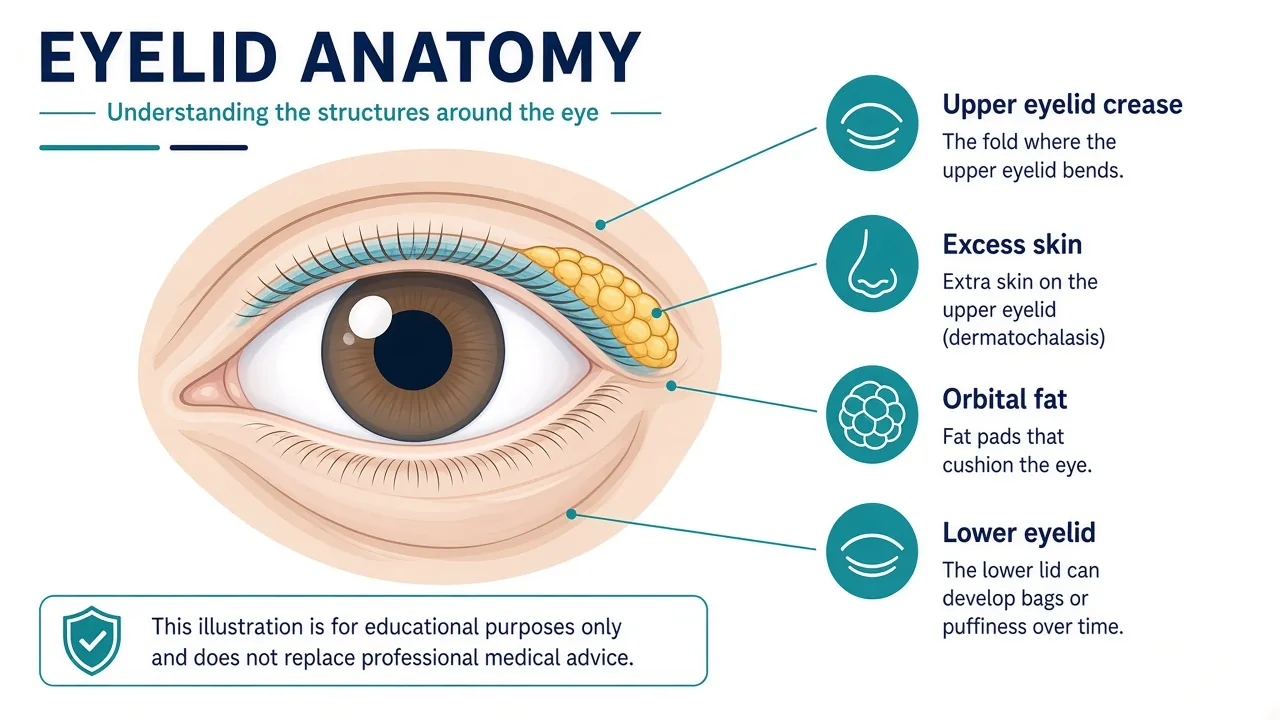
Blepharoplasty is surgery performed on the eyelids. It can involve removing excess skin, selectively removing or repositioning fat, and addressing other tissues that contribute to a heavy, puffy or aged eyelid appearance.
The operation may involve the upper eyelids, lower eyelids or both.
Upper blepharoplasty commonly addresses excess or lax upper-eyelid skin. Lower blepharoplasty may address lower-eyelid bags, excess skin and the relationship between eyelid fat and surrounding tissues.
Blepharoplasty is not a procedure in which as much skin or fat as possible is removed.
Modern eyelid surgery generally aims to preserve or restore an appropriate eyelid contour while maintaining eyelid function and protecting the ocular surface. The exact amount of tissue treatment depends on anatomy.
Ask whether blepharoplasty is appropriate
Why Do People Have Blepharoplasty?
The reasons can be cosmetic, functional or both.
Common concerns include excess skin on the upper eyelids, hooded or heavy-looking upper eyelids, upper-eyelid skin affecting peripheral vision, puffy upper eyelids, bags beneath the eyes, excess lower-eyelid skin, certain forms of lower-eyelid laxity, age-related changes around the eyes, asymmetry between the eyelids, and a tired appearance around the eyes.
Upper blepharoplasty can have functional benefits in appropriately selected patients. Published systematic reviews have reported improvements in visual field and some vision-related quality-of-life outcomes after upper blepharoplasty.
Types of Blepharoplasty in India
1. Upper blepharoplasty
Upper blepharoplasty treats the upper eyelid.
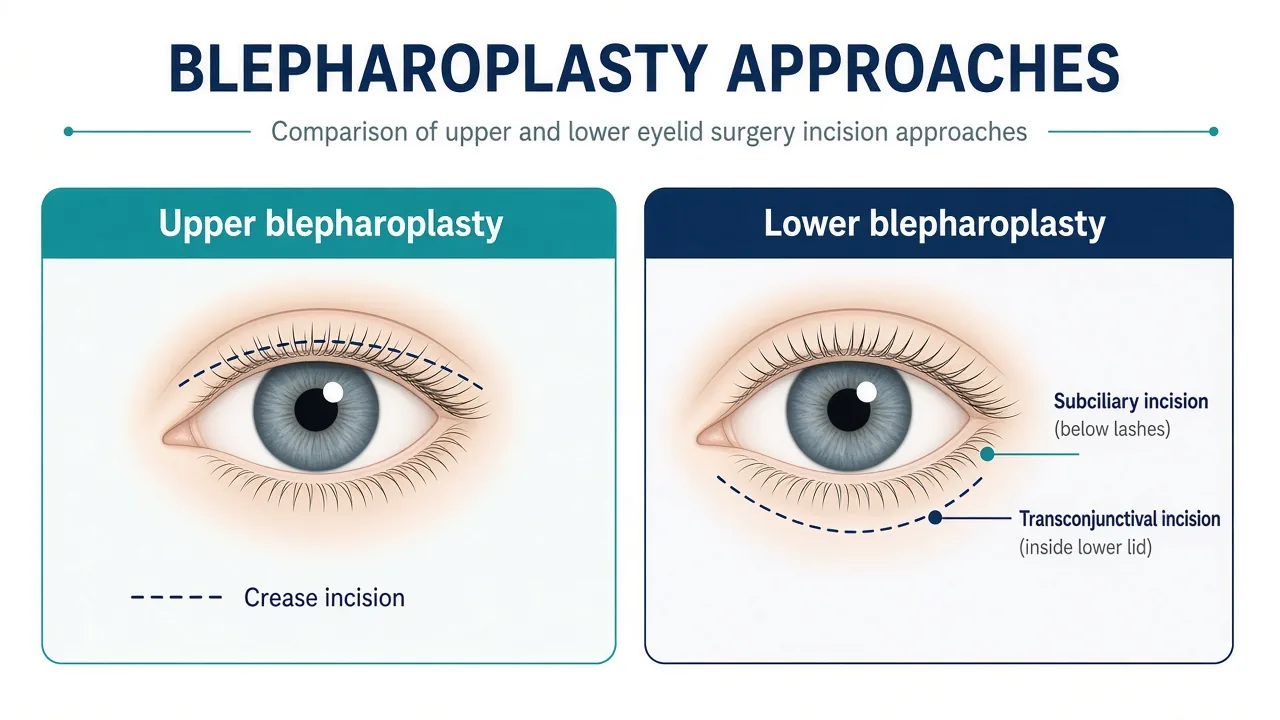
The surgeon typically places the incision within the natural upper-eyelid crease. Depending on anatomy, excess skin may be removed and selected fat or muscle may be addressed.
The goal is not simply to create a larger eyelid opening. The surgeon must consider the brow, eyelid crease, skin quality, fat distribution and eyelid function.
Upper eyelid surgery may be performed for cosmetic reasons or because excess skin is contributing to visual-field obstruction.
2. Lower blepharoplasty
Lower blepharoplasty focuses on the lower eyelid and under-eye region.
It may be used to address prominent fat, lower-eyelid bags and selected cases of excess skin.
Depending on anatomy, the surgeon may use an incision just below the eyelashes or an incision inside the lower eyelid, known as a transconjunctival approach.
Lower eyelid surgery requires particularly careful planning because the lower eyelid helps protect the eye and maintain the relationship between the eyelid and the eyeball.
3. Upper and lower blepharoplasty
Some patients have changes in both the upper and lower eyelids.
In such cases, combined upper and lower blepharoplasty may be considered.
The advantage of combining procedures is that the surgeon can assess the entire periorbital region as one anatomical unit. Combining procedures may also affect operating time, recovery and the quotation. Combined work remains on the named blepharoplasty sheet when it is still a listed eyelid case; added brow, ptosis or reconstructive work is quoted after review.
4. Functional blepharoplasty
Blepharoplasty is not always purely cosmetic.
In some patients, excess upper-eyelid skin can interfere with peripheral vision. When visual function is affected, eyelid surgery may be considered for a functional indication.
Assessment may include visual-field testing and examination of the eyelids and brow.
Whether treatment qualifies for insurance coverage depends on the patient's country, insurer and the medical indication. Cosmetic eyelid surgery is generally treated differently from medically necessary surgery.
5. Cosmetic blepharoplasty
Cosmetic blepharoplasty is performed primarily to improve the appearance of the eyelids and surrounding eye area.
Typical concerns include hooded upper eyelids, excess upper-eyelid skin, under-eye bags, puffy lower eyelids and age-related eyelid changes.
A consultation is important because not every concern around the eyes is caused by excess eyelid skin.
Brow descent, true eyelid ptosis, tear-trough hollowing and midface changes can create an appearance that may not be corrected adequately by standard blepharoplasty alone.
Share photographs for a blepharoplasty review
Blepharoplasty vs Ptosis Surgery
These procedures are often confused.
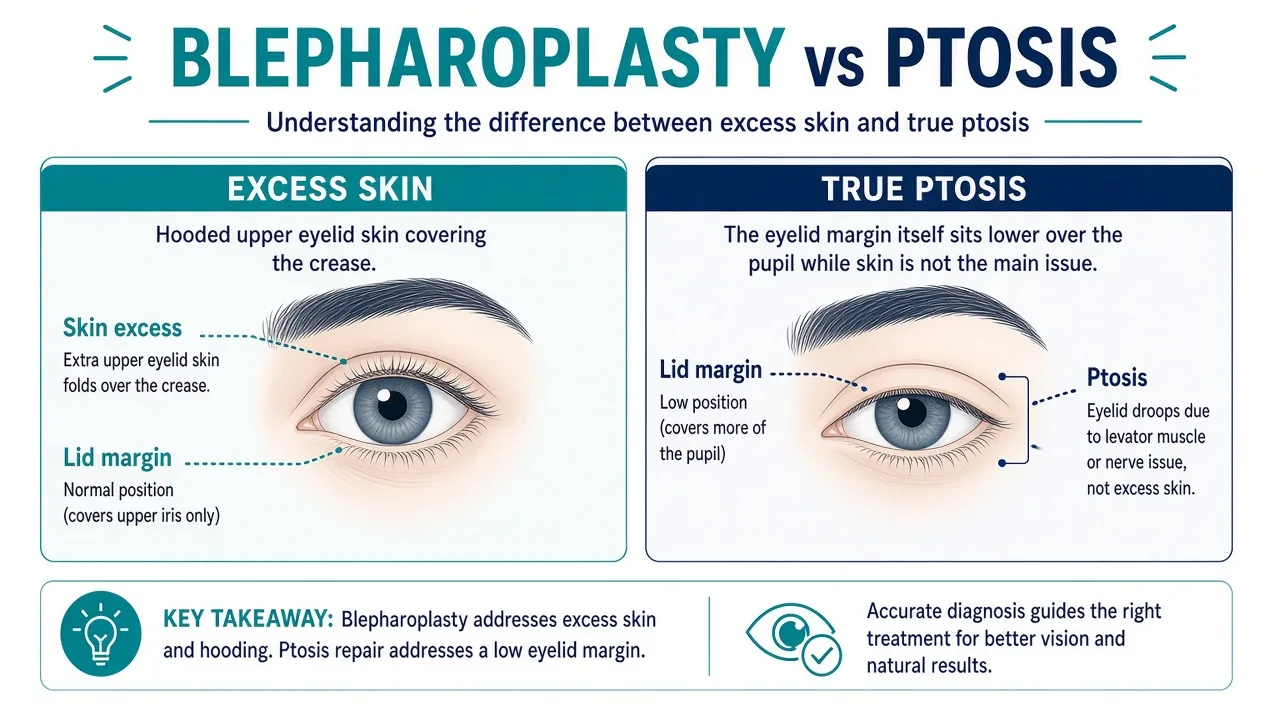
Blepharoplasty primarily addresses excess eyelid skin and/or other tissues contributing to eyelid contour.
Ptosis surgery addresses drooping of the upper eyelid caused by dysfunction or weakness involving the eyelid lifting mechanism. There is no separate GAF ptosis-repair sheet; that work is quoted after records review.
A patient can have both excess skin and true ptosis.
Treating only the excess skin may not adequately address the underlying eyelid position. A careful examination is therefore important before surgery. Mayo Clinic notes that blepharoplasty may sometimes be combined with ptosis surgery when the upper eyelid itself is drooping.
Who Is a Candidate for Blepharoplasty?
A suitable candidate generally has a clearly defined concern that can reasonably be addressed by eyelid surgery and understands both the benefits and limitations of the procedure.
Factors considered during assessment include general health, eye health, eyelid anatomy, tear-film and dry-eye symptoms, brow position, eyelid position, skin excess, fat distribution, previous eye or eyelid surgery, smoking status, medications, and expectations.
The American Society of Plastic Surgeons describes appropriate candidates as generally healthy individuals without serious conditions that could impair healing, with realistic goals and without serious eye conditions.
Who May Need Additional Evaluation Before Blepharoplasty?
Extra caution may be required if a patient has significant dry eye, previous eyelid surgery, previous eye surgery, eyelid laxity, difficulty completely closing the eyes, eyelid ptosis, brow ptosis, thyroid-related eye disease, significant ocular surface disease, bleeding disorders, medications that increase bleeding risk, poorly controlled medical conditions, or smoking or nicotine use.
This does not automatically mean surgery cannot be performed.
It means the surgeon may need additional assessment or treatment before proceeding.
Blepharoplasty Consultation in India
A good consultation should be more than a discussion about removing excess skin.
The surgeon should examine the eyelids and surrounding structures and determine what is actually causing the patient's concern.
The consultation may include medical history, eye history, previous surgeries, medication review, dry-eye assessment, eyelid examination, brow assessment, evaluation of eyelid position, assessment of skin excess, assessment of orbital fat, photographic documentation, discussion of surgical options, discussion of risks, recovery planning and expected outcome.
Patients should also tell the surgeon about contact lens use, allergies, previous laser eye surgery and any history of dry or irritated eyes.
How Is Blepharoplasty Performed?
The exact operation differs according to whether the upper eyelid, lower eyelid or both are treated.
Step 1: Surgical planning
The surgeon marks the eyelids before surgery.
Measurements and markings help determine the incision location and the amount of tissue that may need to be treated.
The objective is to create a natural eyelid contour rather than simply remove the maximum possible amount of tissue.
Step 2: Anaesthesia
Blepharoplasty may be performed using local anaesthesia, often with sedation, or under general anaesthesia depending on the operation and patient.
The choice depends on the extent of surgery, the patient's health, surgeon preference and hospital protocols.
Step 3: Upper eyelid incision
For upper blepharoplasty, the incision is generally placed within the natural eyelid crease.
This allows the resulting scar to be concealed within an anatomical fold once healed.
The surgeon then addresses the amount of excess skin and, where appropriate, underlying tissue.
Step 4: Lower eyelid surgery
For lower blepharoplasty, the incision may be made beneath the eyelashes or through the inside of the lower eyelid.
The approach depends on anatomy and whether the primary concern involves skin, fat or other lower-eyelid changes.
Lower blepharoplasty has evolved considerably, with techniques increasingly emphasizing appropriate fat preservation or repositioning rather than indiscriminate fat removal.
Step 5: Closure
The incisions are closed using fine sutures or another appropriate closure technique.
Some sutures may need to be removed during follow-up, while others may dissolve or be managed according to the surgical technique.
How Long Does Blepharoplasty Take?
The duration depends on upper versus lower surgery, one or both eyelids, surgical technique, whether fat repositioning is required, whether ptosis or brow surgery is performed simultaneously, and whether another facial procedure is combined.
A simple upper blepharoplasty is generally less extensive than combined upper-and-lower eyelid surgery.
Your surgeon should provide an individualized estimate after examination.
Recovery After Blepharoplasty
Recovery is usually manageable, but the eyes can look swollen or bruised during the first several days.
Common early symptoms include swelling, bruising, mild discomfort, tightness, temporary blurred vision, watery eyes, light sensitivity, dry or irritated eyes, and temporary numbness around the eyelids.
These symptoms generally improve progressively.
GAF stay planning is typically day-care or overnight. International patients should not plan travel from the shortest published stay.
The American Society of Plastic Surgeons recommends following individualized postoperative instructions, including appropriate wound and eye care, medication use and follow-up.
Blepharoplasty recovery timeline
| Period | What patients may experience |
|---|---|
| First 24–48 hours | Swelling and bruising are usually most noticeable; cool compresses and head elevation may be advised |
| First week | Bruising begins to settle; strenuous activity is typically restricted |
| Around 10–14 days | Many patients become considerably more presentable |
| Several weeks | Residual swelling decreases and contour looks more settled |
| Several months | Final appearance becomes clearer as scars mature |
Mayo Clinic advises avoiding strenuous activities such as heavy lifting, swimming, jogging and aerobics for about a week unless the treating surgeon gives different instructions.
The American Society of Plastic Surgeons notes that many patients are presentable in approximately 10–14 days, while final healing can take several months.

Plan an international blepharoplasty stay
What Should You Avoid After Blepharoplasty?
Your surgeon's instructions should take priority, but common postoperative precautions may include avoiding rubbing the eyes, avoiding strenuous exercise during the initial recovery period, avoiding swimming until cleared, avoiding smoking, protecting the eyes from excessive sun and wind, avoiding contact lenses until permitted, taking prescribed medication as instructed, and attending scheduled follow-up appointments.
Mayo Clinic specifically recommends avoiding eye rubbing, strenuous activity and smoking during recovery and advises protecting healing eyelid skin from sun and wind.
When Can I Return to Work After Blepharoplasty?
The answer depends on your occupation and how quickly swelling and bruising resolve.
People working remotely may return to computer-based work relatively quickly if they feel comfortable.
People whose work involves frequent public interaction may prefer more time because bruising can remain visible for several days.
Physically demanding jobs may require a longer restriction on strenuous activity.
Your surgeon should provide the specific timeline based on your operation.
Does Blepharoplasty Hurt?
Blepharoplasty is generally associated with discomfort rather than severe pain.
During surgery, anaesthesia is used to prevent pain.
After surgery, patients may experience tightness, soreness, swelling, mild pain or eye irritation.
Severe or rapidly increasing eye pain after surgery should not be considered normal and requires prompt assessment in a local emergency department.
Risks and Complications of Blepharoplasty
Blepharoplasty is commonly performed, but it is still surgery around a highly sensitive anatomical area.
Potential complications include bleeding, infection, swelling, bruising, dry eyes, eye irritation, temporary visual changes, difficulty closing the eyes, eyelid asymmetry, lid lag, ectropion, scarring, changes in skin sensation, need for revision surgery, injury to deeper structures and rare visual complications.
The American Society of Plastic Surgeons specifically lists dry eyes, difficulty closing the eyes, ectropion, infection, bleeding, lid lag, unfavorable scarring and temporary or permanent visual changes among potential risks.
Rare but serious complications affecting vision have been reported. Patients should therefore treat eyelid surgery as real surgery rather than a minor cosmetic treatment.
Blepharoplasty and Dry Eye
Dry eye deserves particular attention before eyelid surgery.
Some patients experience temporary dryness or irritation after blepharoplasty.
The relationship between surgical technique and ocular-surface symptoms is complex, and patients with pre-existing dry eye should discuss this explicitly with their surgeon.
Recent research continues to evaluate the functional and ocular-surface effects of upper blepharoplasty. A 2025 systematic review and meta-analysis of randomized trials found differences between some surgical techniques in relation to postoperative lagophthalmos, while overall patient satisfaction remained high in the included studies.
This is one reason individualized surgical planning matters.
Blepharoplasty for Asian and Darker Skin Types
Eyelid anatomy varies substantially between individuals and populations.
Patients of Asian, African, Middle Eastern and South Asian backgrounds may have different eyelid crease patterns, skin characteristics, pigmentation and soft-tissue anatomy.
The surgical plan should therefore be individualized rather than based on a single standardized eyelid shape.
The objective should be an appropriate result for the patient's own facial anatomy and expectations.
Blepharoplasty for Men
Blepharoplasty is not limited to women.
Men may undergo upper or lower eyelid surgery for both functional and cosmetic reasons.
The surgical design may differ because male and female eyelid and brow characteristics can differ, and surgeons generally consider the patient's natural facial anatomy when planning the procedure.
The goal should be to maintain a natural appearance rather than create an artificially altered eyelid shape.
Blepharoplasty Before and After
Before-and-after photographs can help patients understand a surgeon's approach.
However, photographs should be interpreted carefully.
Look for patients with similar eyelid anatomy, similar skin quality, similar age range, similar upper or lower eyelid concerns, and similar ethnic and facial characteristics.
A photograph does not guarantee that the same result will be achievable for another patient.
The American Society of Plastic Surgeons notes that results can be long-lasting but that optimal results are not guaranteed in every case and revision surgery may sometimes be necessary.
How Long Do Blepharoplasty Results Last?
Blepharoplasty results can be long-lasting.
However, surgery does not stop the natural aging process.
The skin, muscles, soft tissues and brow continue to change with age.
Some patients may maintain their improvement for many years, while others may develop additional eyelid or brow changes over time.
Sun protection and good postoperative care can help protect the result.
Blepharoplasty Cost in India
Named GAF partner planning for blepharoplasty is $1,500–$3,800, typically day-care or overnight. Comparable US self-pay planning on the same sheet is $4,000–$9,000. These are planning ranges, not hospital quotations.
The total bill still varies because upper, lower and combined cases are not identical. Factors include which lids are treated, surgeon experience, hospital or facility, anaesthesia, diagnostic assessment, associated procedures, medications, follow-up and medical-travel extras.
There is no separate GAF brow-lift or ptosis-repair sheet. True ptosis surgery, brow lift, revision after previous eyelid surgery, and eyelid reconstruction beyond a listed cosmetic case are quoted after records review. Neighbouring oculoplastic surgery is $1,200–$4,000 when the brief is already more than cosmetic contouring.
Consumer rupee averages for mixed hospital marketing pages are not used as GAF quotations.
Typical factors affecting cost
| Cost factor | Why it matters |
|---|---|
| Upper eyelid surgery | Usually different in complexity from lower-lid surgery |
| Lower eyelid surgery | May involve fat repositioning and additional structural work |
| Upper + lower surgery | More extensive procedure |
| Surgeon experience | Specialist eyelid or oculoplastic expertise can influence fees |
| Hospital | Hospital and facility charges vary |
| Anaesthesia | Depends on the anaesthesia plan |
| Diagnostic assessment | Additional eye or visual testing may be required |
| Associated procedures | Brow lift or ptosis surgery is quoted after review |
| Follow-up | Number and duration of follow-up visits vary |
| Medical travel | Flights, lodging and local transport sit outside the surgical sheet |
A low quoted price should not be the only consideration. The eyes and eyelids are functionally important structures, and appropriate surgical expertise matters.
Request a named-procedure cost estimate
WhatsApp +91 90443 46292 for an itemised blepharoplasty estimate
Approximate Blepharoplasty Cost Components in India
A patient's quotation may contain surgeon fee, hospital or operating-room charges, anaesthesia fee, preoperative investigations, consultation, medications, surgical supplies, follow-up appointments and additional procedures if required.
Ask for a written estimate that clearly states what is included.
For international patients, also ask whether airport transfers, accommodation, local transportation, interpreter services and postoperative reviews are included in the medical-travel package.
Blepharoplasty Cost in Major Indian Cities
Costs can differ between hospitals inside the same GAF planning band.
Live GAF city sheets currently cover Delhi NCR, Mumbai, Bengaluru, Chennai and Hyderabad. Pune, Kolkata, Ahmedabad and Kochi are not live GAF catalog cities on this site.
A patient-specific quotation after photographs, medical history and, where necessary, in-person examination is more useful than a brochure city average.
Is Blepharoplasty in India Safe?
Blepharoplasty is an established surgical procedure, but safety depends on appropriate patient selection, surgical planning, surgeon expertise, anaesthesia, facility standards and postoperative care.
No responsible medical provider should describe eyelid surgery as completely risk-free.
The American Society of Plastic Surgeons emphasizes that patients should understand potential complications before consenting to eyelid surgery.
For international patients, it is particularly important to establish who will provide postoperative care and what happens if a complication develops after returning home.
How to Choose a Blepharoplasty Surgeon in India
When evaluating a surgeon, consider relevant qualifications, how frequently the surgeon performs upper and lower blepharoplasty, oculoplastic experience for complex eyelid, orbital or functional concerns, the hospital or surgical facility and its emergency support, before-and-after cases with similar anatomy, a discussion of risks and limitations, and follow-up arrangements after you return home.
Catalog surgeons currently tagged to blepharoplasty lists include Dr. Nooreyezdan Shahin and Dr. Anita Sethi in Delhi NCR; Dr. Hemang Sanghvi and Dr. Kiran Naik in Mumbai; Dr. Krishna Shama Rao in Bengaluru; Dr. Chepauk Ramesh and Dr. E Ravindra Mohan in Chennai; and Dr. (MAJ) Nirjhar Ghosh and Dr. Vinay R in Hyderabad. A catalog tag is not a volume, outcome or ranking claim.
Catalog hospitals currently affiliated with those tagged lists include Indraprastha Apollo Hospital and Max Super Speciality Hospital, Saket in Delhi NCR; Wockhardt Hospital, Mumbai and Gleneagles Hospital, Mumbai in Mumbai; Gleneagles Hospitals, Bengaluru in Bengaluru; Apollo Hospital, Chennai and Gleneagles HealthCity, Chennai in Chennai; and KIMS Hospitals, Secunderabad in Hyderabad.
Find a blepharoplasty specialist in India
WhatsApp +91 90443 46292 to match a blepharoplasty surgeon
- Cosmetic surgery hospitals in Delhi NCR
- Cosmetic surgery hospitals in Mumbai
- Cosmetic surgery hospitals in Bengaluru
- Cosmetic surgery hospitals in Chennai
- Cosmetic surgery hospitals in Hyderabad
Questions to Ask Your Blepharoplasty Surgeon
Before proceeding, consider asking:
- Am I a suitable candidate for blepharoplasty?
- Do I need upper, lower or combined surgery?
- Is my concern caused by excess skin, fat, brow position or eyelid ptosis?
- Will I need a visual-field examination?
- Do I have dry-eye risk factors?
- Which surgical technique do you recommend and why?
- Will you remove or reposition lower-eyelid fat?
- What type of anaesthesia will be used?
- Where will the surgery be performed?
- How long will the procedure take?
- How much swelling and bruising should I expect?
- When can I return to work?
- When can I exercise?
- When can I fly?
- How long should I remain in India?
- What complications should make me contact you immediately?
- What happens if I need revision surgery?
- What exactly is included in the quotation?
Blepharoplasty for International Patients
If you are travelling to India for blepharoplasty, planning should include more than the operation itself.
Before travelling, send recent photographs, medical history, previous eye surgery details, current medications, known allergies, previous blepharoplasty history, information about dry eye, contact lens use and relevant medical reports.
The surgeon may need an in-person examination before confirming the final treatment plan.
Plan a blepharoplasty treatment journey
How Long Should International Patients Stay in India?
The appropriate stay depends on the type of surgery, whether upper or lower eyelids are treated, whether other procedures are combined, recovery progress, the surgeon's follow-up protocol and fitness to travel.
Patients should not book a return flight based solely on a generic recovery timetable.
GAF hospital planning is typically day-care or overnight; additional hotel nights for review are separate from the surgical stay. The treating surgeon should confirm when travel is appropriate.
Can I Travel by Air After Blepharoplasty?
Air travel after surgery should be discussed with the operating surgeon.
The appropriate timing depends on the extent of surgery, postoperative findings and individual risk factors.
International patients should ideally plan enough time in India for the surgeon to assess early healing before returning home.
Blepharoplasty vs Non-Surgical Alternatives
Not every under-eye or eyelid concern requires surgery.
Depending on the underlying problem, alternatives may include dermal fillers, laser skin resurfacing, chemical peels, energy-based skin treatments, injectable treatments, medical treatment of allergies or inflammation, and lifestyle measures for temporary under-eye puffiness.
These treatments address different problems.
Fillers may improve volume loss but cannot simply reproduce the effect of removing significant excess eyelid skin. Neighbouring fat transfer is $2,000–$5,500 when volume, not skin excess, is the honest brief.
Mayo Clinic notes that treatments such as laser resurfacing, chemical peels and fillers may help selected patients with under-eye concerns, depending on their cause.
Blepharoplasty vs Brow Lift
Sometimes what looks like excess upper-eyelid skin is partly caused by a low brow.
A brow lift raises the position of the eyebrow, whereas blepharoplasty directly addresses the eyelid.
Some patients may benefit from one procedure, while others may require a combination.
There is no separate GAF brow-lift sheet. Combined brow work is quoted after records review.
The distinction is important because removing too much upper-eyelid skin when brow descent is a major contributor may not produce the desired result.
Blepharoplasty vs Eye Bag Treatment
“Eye bags” can have several causes.
They may involve prominent orbital fat, skin laxity, tear-trough hollowing, midface changes, fluid retention, allergies or aging-related tissue changes.
The appropriate treatment cannot be determined from the phrase “eye bags” alone.
A specialist assessment helps identify the actual anatomical cause.
Neighbouring Facial and Eyelid Procedures
Blepharoplasty is one eyelid list. Neighbouring GAF sheets that patients sometimes compare, and that must not be used as a blepharoplasty quotation unless that is the named procedure, include:
- Rhinoplasty in India — named lists sit on rhinoplasty at $2,500–$5,500, typically 1–3 nights
- Facelift — $4,000–$9,500, typically 1–4 nights
- Otoplasty — $1,500–$3,500, day-care or overnight
- Neck lift — $3,500–$7,800, typically 1–4 nights
- Fat transfer — $2,000–$5,500, typically 1–3 nights
- Oculoplastic surgery — $1,200–$4,000, outpatient or 1 night
- Eyelid reconstruction — $1,500–$5,000, typically 1–2 nights
Reconstruction and oculoplastic lists treat different briefs. They are not a substitute cosmetic eyelid price. Body-contouring lists sit on Liposuction in India.
What Results Can You Expect?
The expected result depends on the starting anatomy and surgical plan.
Potential improvements include less excess upper-eyelid skin, a more defined eyelid crease, reduction of selected eyelid bags, a smoother lower eyelid contour, improved visual field in appropriately selected functional cases, and a more rested appearance.
The objective should be improvement while maintaining natural eyelid function.
A surgeon should never promise a particular facial appearance or guarantee perfect symmetry.
Can Blepharoplasty Improve Vision?
It can in selected patients.
When excess upper-eyelid skin obstructs the superior or peripheral visual field, removing the obstructing tissue can improve the visual field.
Systematic-review evidence has reported functional benefits including increased visual field and improvements in some vision-related quality-of-life measures after upper blepharoplasty.
However, blepharoplasty does not treat every cause of reduced vision.
If the problem is caused by the eye itself, optic nerve disease, refractive error or another condition, eyelid surgery may not improve vision.
Can Blepharoplasty Correct Dark Circles?
Not necessarily.
Dark circles can result from pigmentation, thin skin, visible blood vessels, tear-trough shadowing, orbital anatomy, skin laxity, or allergies or rubbing.
Blepharoplasty primarily treats structural eyelid changes.
If pigmentation is the primary concern, another treatment approach may be more appropriate.
Can Blepharoplasty Remove Under-Eye Bags Permanently?
Blepharoplasty can produce long-lasting improvement in appropriately selected patients.
However, aging continues.
The tissues around the eyes will continue to change over time, and new puffiness or laxity can develop.
The American Society of Plastic Surgeons describes eyelid-surgery results as long-lasting while emphasizing that natural aging continues.
What Happens If the Eyelids Are Asymmetrical?
Some degree of natural facial asymmetry is common.
The two eyes may differ in brow height, eyelid crease, skin excess, fat distribution, eyelid position and orbital anatomy.
Surgery can improve asymmetry in some patients, but perfect symmetry cannot be guaranteed.
The surgeon should identify pre-existing asymmetry before surgery so that expectations are realistic.
Revision Blepharoplasty
A revision blepharoplasty is surgery performed after a previous eyelid operation to address a residual or new problem.
Reasons for revision may include persistent skin excess, asymmetry, scarring, eyelid malposition, contour irregularity, under-correction, over-correction, or changes associated with further aging.
Revision surgery can be more complex because previous surgery changes the normal anatomy.
There is no separate GAF revision-blepharoplasty sheet. These cases are quoted after records review.
Red Flags After Blepharoplasty
Patients should seek urgent medical assessment in a local emergency department if they develop severe or rapidly increasing eye pain, sudden vision loss or major vision changes, significant bleeding, rapidly increasing swelling, difficulty breathing, chest pain, or other symptoms specifically identified by the surgical team.
Mayo Clinic advises patients to seek immediate medical attention for severe new eye pain, bleeding or vision problems after blepharoplasty.
Do not wait for a WhatsApp reply if those symptoms develop.
Blepharoplasty in India: Frequently Asked Questions
Is blepharoplasty safe?
Blepharoplasty is an established surgical procedure, but it has potential complications. Safety depends on appropriate patient selection, surgical technique, anaesthesia, facility standards and postoperative monitoring.
What is the cost of blepharoplasty in India?
Named GAF partner planning is $1,500–$3,800, typically day-care or overnight. Actual quotations still vary according to the lids treated, surgeon, hospital, anaesthesia and whether additional procedures are required.
Is blepharoplasty performed under local or general anaesthesia?
It can be performed under local anaesthesia, often with sedation, or under general anaesthesia depending on the procedure and patient.
How long does blepharoplasty take?
The duration varies according to whether upper, lower or combined eyelid surgery is performed and whether additional procedures are included.
How painful is blepharoplasty?
Most patients experience discomfort, tightness and swelling rather than severe pain. Individual experiences vary.
How long does swelling last after blepharoplasty?
Swelling generally decreases during the first several days and weeks. Bruising and swelling may remain visible for around 10–14 days or longer in some patients, while final healing can take several months.
When can I return to work?
Some people return to non-strenuous work relatively quickly, while others prefer to wait until visible bruising and swelling have reduced. Your surgeon should provide an individualized recommendation.
When can I exercise after blepharoplasty?
Strenuous exercise is generally restricted during early healing. Mayo Clinic advises avoiding strenuous activities for about a week unless the surgeon gives different instructions.
Can blepharoplasty improve peripheral vision?
Yes, in appropriately selected patients whose visual-field obstruction is caused by excess upper-eyelid tissue.
Can blepharoplasty treat dark circles?
Only if the dark appearance is substantially related to structural factors that the surgery can address. Pigmentation and vascular causes generally require different treatment.
Can men undergo blepharoplasty?
Yes. Men undergo both upper and lower eyelid surgery for cosmetic and functional reasons.
Does blepharoplasty leave scars?
Incisions create scars, but upper-eyelid incisions are generally placed within the natural crease. Lower-eyelid scars depend on the surgical approach. Scars usually mature and become less noticeable over time.
Can blepharoplasty correct droopy eyelids?
It depends on the cause. Excess skin can be treated with blepharoplasty, while true eyelid ptosis may require ptosis surgery, which is quoted after review.
How long do blepharoplasty results last?
Results can be long-lasting, but natural aging continues and further eyelid or brow changes can occur.
Can I combine blepharoplasty with another procedure?
In selected patients, blepharoplasty may be combined with procedures such as brow lift, facelift, rhinoplasty or ptosis surgery. Combinations beyond a listed eyelid case are quoted after review.
How soon can international patients return home?
There is no universal timetable. International patients should remain in India long enough for appropriate postoperative assessment and should obtain clearance from their treating surgeon before travelling.
Which city in India is best for blepharoplasty?
There is no single best city. Delhi NCR, Mumbai, Bengaluru, Chennai and Hyderabad are live GAF catalog cities. Choose a named plastic, facial plastic or oculoplastic surgeon who already operates the eyelid anatomy you need.
Why Choose GAF Healthcare for Blepharoplasty in India?
For an international patient, arranging surgery in another country can involve many decisions beyond choosing a hospital.
GAF Healthcare can help coordinate identifying suitable hospitals and specialists, sharing medical information with the treating team, arranging consultations, coordinating treatment estimates, assisting with appointment scheduling, supporting hospital coordination, airport and local transportation assistance, accommodation coordination, assistance during the patient's stay and post-treatment coordination.
The treating surgeon remains responsible for the medical diagnosis, surgical recommendation and clinical care.
Our role is to make the medical travel process more organized and easier to navigate.
Planning Blepharoplasty Treatment in India
A typical international-patient pathway may look like this:
Step 1: Initial enquiry
Share your treatment goals, medical history and photographs.
Step 2: Medical review
The clinical team reviews the information and determines whether an in-person consultation is required before providing a definitive recommendation.
Step 3: Surgeon consultation
The surgeon examines your eyelids and surrounding anatomy and discusses the available options.
Step 4: Treatment plan
The proposed procedure, anaesthesia, hospital, recovery period and estimated cost are discussed.
Step 5: Travel planning
International patients arrange flights, accommodation and local transportation based on the recommended treatment schedule.
Step 6: Surgery
The procedure is performed after final assessment and informed consent.
Step 7: Postoperative care
Follow-up appointments assess healing and identify complications early.
Step 8: Return home
The treating team advises when travel is appropriate and provides postoperative instructions for continued care.
Request a blepharoplasty treatment plan
Key Takeaways About Blepharoplasty in India
- Blepharoplasty is eyelid surgery involving the upper eyelids, lower eyelids or both.
- It can address excess skin, selected fat-related changes and certain functional problems.
- Upper and lower blepharoplasty are different procedures and should not be treated as interchangeable.
- Not every eye bag, dark circle or droopy eyelid requires blepharoplasty.
- Brow position and true eyelid ptosis should be assessed before upper-eyelid surgery.
- Dry eye and ocular-surface health are important considerations.
- Recovery commonly involves swelling and bruising during the first days and weeks.
- Many patients become publicly presentable in around 10–14 days, although complete healing can take longer.
- GAF partner planning is $1,500–$3,800, typically day-care or overnight. Neighbouring oculoplastic surgery is $1,200–$4,000.
- Surgery can have functional benefits in appropriately selected patients with visual-field obstruction.
- Results can be long-lasting, but aging continues.
- There is no completely risk-free eyelid surgery.
- International patients should plan for postoperative assessment before returning home.
- Severe eye pain, sudden vision change or rapidly increasing swelling belongs in a local emergency department.
Share photographs, a dry-eye history and any previous eyelid operative notes before making travel arrangements. A case-specific surgical opinion is more useful than a brochure eyelid package.
Share photographs for a blepharoplasty review
Message a coordinator on WhatsApp
Request a cost review on WhatsApp
Top 10 Medical Sources
- Mayo Clinic — Blepharoplasty — overview, indications, surgical approaches, recovery and risks.
- American Society of Plastic Surgeons — Eyelid surgery — types of eyelid surgery, indications and expected outcomes.
- American Society of Plastic Surgeons — Eyelid surgery safety — potential complications and safety considerations.
- American Society of Plastic Surgeons — Eyelid surgery recovery — postoperative recovery and care recommendations.
- StatPearls — Upper eyelid blepharoplasty — clinical overview, anatomy, indications and complications.
- Indian Journal of Ophthalmology — Lower eyelid blepharoplasty — lower-eyelid anatomy and surgical approaches.
- PubMed — Functional outcomes of upper eyelid blepharoplasty — visual-field and functional outcomes.
- PubMed — Upper eyelid blepharoplasty techniques — systematic review of surgical techniques and results.
- NHS — Eyelid surgery — patient information covering indications, risks and expectations.
- GAF Healthcare blepharoplasty — partner USD planning range of $1,500–$3,800 and typical day-care or overnight stay.
Last reviewed against the cited sources: October 2026.
Medical Disclaimer
This page is intended for general educational purposes and should not replace an examination or consultation with a qualified plastic surgeon, facial plastic surgeon or oculoplastic specialist. Blepharoplasty is a surgical procedure and individual suitability, technique, risks, recovery and cost vary from patient to patient.
Treatment recommendations should be made after appropriate clinical assessment. Patients should discuss their medical history, medications, eye health, expectations and potential complications directly with their treating surgeon.
If you develop severe eye pain, sudden vision change, significant bleeding or rapidly increasing swelling, seek urgent medical attention in a local emergency department.
Treatment Process
- 1
Share photographs and history
The patient provides eyelid photographs, a dry-eye and vision history, and any previous eyelid or eye surgery notes.
- 2
Virtual consultation
A plastic, facial plastic or oculoplastic surgeon reviews whether an in-person assessment is appropriate.
- 3
Confirm the plan
The team writes whether the brief is upper, lower or combined eyelids, and whether brow or ptosis work belongs on a separate quote.
- 4
Itemized estimate
Named blepharoplasty is $1,500–$3,800. Reconstruction, ptosis repair and brow lift are quoted after review rather than bundled as a brochure eyelid price.
- 5
Travel to India
Stable planned cases travel after records review. Severe eye pain, sudden vision change or rapidly increasing swelling is a local emergency.
- 6
In-person examination
The surgeon examines the lids, brow, ocular surface and eyelid position after arrival and confirms the final plan.
- 7
Blepharoplasty
Upper crease, lower lash-line or transconjunctival access is used to treat selected skin, muscle or fat.
- 8
Early review
Vision, lid closure, swelling and wounds are checked. GAF stay planning is typically day-care or overnight.
- 9
Return home
The patient leaves with lubrication advice, warning signs and a plan for remote follow-up after clearance to travel.