
Last updated: 13 September 2026 · Content curated by Dr. Shabnam Choudhary · Medically reviewed by Dr. Saffiyyah Chaudhary
Quick Answer
Peritoneal Dialysis in India is typically planned at $6,000–$14,000 / year. The cost may cover the named specialist, stated sessions or procedure time, listed laboratories and the stored stay, while extra access work, ICU nights, pathology or another modality depend on the written scope. The stored stay is Training 3–7 nights, then home, but monitoring and travel timing are individualized.
Major price drivers are capd versus apd, training length, peritonitis treatment, catheter insertion sitting. A different modality, extra consumable or an unexpected admission can materially change the bill.
- India cost range
- $6,000–$14,000 / year
- Typical starting point
- $6,000
- Typical hospital stay
- Training 3–7 nights, then home
- Procedure time
- Training often 3–7 days; thereafter exchanges are daily at home
- Recovery
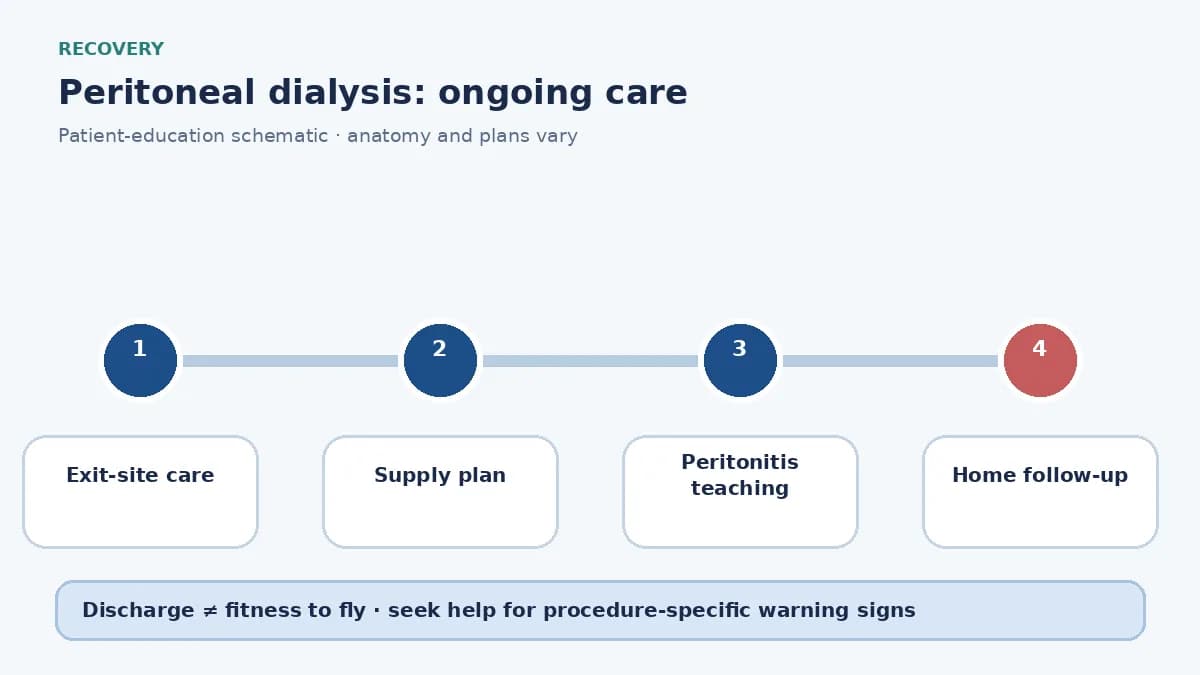
- After training, care is ongoing rather than a wound-healing week. Flying waits on exit-site status, a supply plan and the team's peritonitis teaching.
Major cost factors: capd versus apd, training length, peritonitis treatment, catheter insertion sitting. International patients should also budget for accommodation, airport transfers, a medical visa, medicines and follow-up.
Often quoted separately: changed scope; complications; premium consumables; extended aftercare; travel and living.
Why request a cost through GAF rather than a hospital?
Writing to one campus gets you that campus’s package. A GAF request is reviewed against your records and returned as suitable doctor and hospital options with an indicative, itemised estimate. There is no obligation to book.
- Doctor review first. The number follows a reading of your imaging, test results and clinical records, not a brochure range.
- Hospital options. You can compare listed campuses before you travel, instead of starting over with each international desk.
- International-patient coordination. Visa letters, records routing and companion logistics sit with the same request.
Peritoneal dialysis uses the peritoneal membrane and a catheter to exchange dialysis fluid at home or in hospital, when residual function and training already write PD rather than in-centre HD. It may be considered for selected ESKD when a team judges that CAPD or APD is appropriate, the abdomen can host a catheter and a helper can learn exchanges.
Assessment includes residual urine output, hernia or prior abdominal surgery, vision and whether a training week is already funded. This is not hemodialysis and not CRRT. CAPD catheter insertion is a neighbouring access slug. The stored $6,000–$14,000 / year is an annual planning band, not a one-time implant price.
Dialysis fluid is instilled through a peritoneal catheter, dwells, then drains. CAPD uses manual exchanges; APD uses a cycler overnight. Infection-prevention steps are part of the product. Selection among CAPD, APD / cycler PD, Urgent-start PD depends on kidney function, disease and the treating team's assessment, not on a package label.
The catalog supplies $6,000–$14,000 / year for India, $50,000–$90,000 / year for a United States self-pay reference and Training 3–7 nights, then home for broad planning. These values are not city tariffs, medical acceptance, outcome forecasts or final bills.
What Is Peritoneal Dialysis?
Peritoneal dialysis uses the peritoneal membrane and a catheter to exchange dialysis fluid at home or in hospital, when residual function and training already write PD rather than in-centre HD.
Dialysis fluid is instilled through a peritoneal catheter, dwells, then drains. CAPD uses manual exchanges; APD uses a cycler overnight. Infection-prevention steps are part of the product.
This is not hemodialysis and not CRRT. CAPD catheter insertion is a neighbouring access slug. The stored $6,000–$14,000 / year is an annual planning band, not a one-time implant price.

When Is Peritoneal Dialysis Considered?
It may be considered for selected ESKD when a team judges that CAPD or APD is appropriate, the abdomen can host a catheter and a helper can learn exchanges.
Suitability depends on individual assessment by a qualified nephrologist and, where relevant, transplant surgery, interventional radiology, critical care or a multidisciplinary team. This page cannot diagnose a reader or recommend a personal treatment.
How the operation is performed, recovery and variations →
Peritoneal Dialysis cost in India
The $6,000–$14,000 / year value is GAF's stored national planning range for peritoneal dialysis. It should be replaced by an itemized quotation tied to a named nephrologist experienced in home PD, campus, modality or access plan and monitoring assumption.
Cost can change with capd versus apd, training length, peritonitis treatment, catheter insertion sitting, home supply logistics. A different session count, extra access sitting or a combined ICU list describes a different episode.
Compare estimates line by line. Do not derive separate Delhi NCR, Mumbai, Bengaluru, Chennai or Hyderabad prices from this national range, and keep flights, lodging, companion costs, long-term medicines and dialysis continuity visible.
Planning Range ≠ Final Hospital Quotation. A qualified nephrology team must review records, kidney function and alternatives before an itemized offer is meaningful.
Peritoneal Dialysis cost breakdown in India
Component prices are rarely published as a public tariff. The lines below describe what typically sits inside a surgical estimate, not a dollar amount for each row.
- Clinical assessment
- Named nephrology consultation, records review and treatment-focused examination when explicitly listed.
- Treatment episode
- Specialist, stated sessions or procedure time, standard consumables and recovery-room or ICU care within the written scope.
- Laboratories and tests
- Stated blood tests and listed imaging or pathology only; unlisted HLA, immunofluorescence or cultures are extra.
- Routine aftercare
- Standard medicines, observation and stated early follow-up only when itemized.
- Documentation
- Discharge summary, prescription and pathology or access details where applicable.
- Listed training and fluid
- Only the stated bags, cycler days and teaching sessions.
Planning range or quotation?
The $6,000–$14,000 / year figure is an indicative planning range. A final hospital quotation is itemised, issued after a consultant reviews your records, and still subject to what is found clinically.
Get a Personalized Cost Estimate
What is usually included in a Peritoneal Dialysis package?
No two hospitals draw the line in the same place, so read an estimate for what it excludes as carefully as for what it covers. The pattern below is what listed campuses typically bundle into a surgical estimate for this procedure. Anything not written into your estimate should be assumed to be extra until the hospital confirms otherwise.
Usually included
Usually included
Clinical assessment
Named nephrology consultation, records review and treatment-focused examination when explicitly listed.
Usually included
Treatment episode
Specialist, stated sessions or procedure time, standard consumables and recovery-room or ICU care within the written scope.
Usually included
Laboratories and tests
Stated blood tests and listed imaging or pathology only; unlisted HLA, immunofluorescence or cultures are extra.
Usually included
Routine aftercare
Standard medicines, observation and stated early follow-up only when itemized.
Usually included
Documentation
Discharge summary, prescription and pathology or access details where applicable.
Usually included
Listed training and fluid
Only the stated bags, cycler days and teaching sessions.
May be charged separately
May be separate
Changed scope
Extra sessions, a different modality, a new access or another procedure found after arrival.
May be separate
Complications
Unplanned tests, ICU extension, re-intervention, prolonged stay or readmission unless expressly covered.
May be separate
Premium consumables
Additional dialyzers, PD fluid, catheters or pathology panels beyond the written estimate.
May be separate
Extended aftercare
Long-term medicines, ESA or iron therapy, remote review or follow-up beyond the included period.
May be separate
Travel and living
Flights, visa, local transport, lodging, meals, companion costs and personal expenses.
May be separate
Home fluid after departure
Months of bags in another country are a different supply chain.
Catalog inclusions listed for this pathway: nephrology consultation and records review; named consultant on camera before travel; labs, biopsy, access or hla work as indicated; dialysis, access or transplant plan as quoted; discharge summary to your home physician.
What can increase the cost?
These are the drivers that actually move a bill for this operation, in rough order of how often they do it. Most of them are clinical decisions rather than commercial ones, which is why an honest estimate is written after a records review rather than before it.
- CAPD versus APD
- Cycler rental and fluid volume change the annual invoice.
- Training length
- A longer hotel-plus-ward week is not inside a brochure bag count.
- Peritonitis treatment
- Admission and intraperitoneal antibiotics are extra unless named.
- Catheter insertion sitting
- Neighbouring CAPD-catheter slug if that is a separate invoice.
- Home supply logistics
- Fluid delivery after return is rarely inside an India package.
Approaches to Peritoneal Dialysis
Dialysis fluid is instilled through a peritoneal catheter, dwells, then drains. CAPD uses manual exchanges; APD uses a cycler overnight. Infection-prevention steps are part of the product. The options below are clinical strategies, not consumer upgrades.
A named nephrologist experienced in home PD should explain which route fits the individual's kidney function and condition, and what finding could change or cancel it.
Swipe to compare surgical approaches →
| Approach | Relative complexity | GAF planning range | Notes |
|---|---|---|---|
| CAPD | Selected from kidney function, diagnosis, risk and follow-up needs | No separate GAF sheetRelative complexity only | Daytime manual exchanges when a trained patient or helper already exists. |
| APD / cycler PD | Selected from kidney function, diagnosis, risk and follow-up needs | No separate GAF sheetRelative complexity only | Overnight automated exchanges; the machine and fluid volume are material lines. |
| Urgent-start PD | Selected from kidney function, diagnosis, risk and follow-up needs | No separate GAF sheetRelative complexity only | Selected when a new catheter must be used before full healing. |
Planning ranges appear only where GAF Healthcare already publishes a cost sheet for that operation. Other rows describe relative clinical complexity and should not be read as prices.
What Peritoneal Dialysis can and cannot address
This is not hemodialysis and not CRRT. CAPD catheter insertion is a neighbouring access slug. The stored $6,000–$14,000 / year is an annual planning band, not a one-time implant price.
A consultation should separate the intended target — residual kidney function, volume control, access, histology or transplant immunology — from disease that may still need another modality, medicines or an operation on a neighbouring Urology sheet.
No page can promise dialysis independence, graft survival or a complication-free course.
Risks and Considerations after Peritoneal Dialysis
Risks include peritonitis, exit-site or tunnel infection, catheter malfunction, hernia, ultrafiltration failure and the later need to switch to HD.
This is not an exhaustive consent list and assigns no probability. Risk depends on residual kidney function, anticoagulation, infection, emergency versus planned timing and the actual technique.
After training, care is ongoing rather than a wound-healing week. Flying waits on exit-site status, a supply plan and the team's peritonitis teaching. A lower price does not reduce the need for laboratory or dialysis backup.
Recovery and travel after Peritoneal Dialysis
Stored Training 3–7 nights, then home is usually a training admission, then home PD. After training, care is ongoing rather than a wound-healing week. Flying waits on exit-site status, a supply plan and the team's peritonitis teaching.
International patients should distinguish a single session or procedure, hospital stay, recommended days in India and longer-term kidney care at home. Discharge is not the same as fitness to fly.
A named PD programme must exist after return for bag supply and peritonitis advice. Flights should remain flexible until the team confirms access stability, fluid status, bleeding risk and travel fitness.
Peritoneal Dialysis cost: India vs other medical tourism destinations
India and United States values use stored GAF catalog ranges. Other countries require quotations because comparable, procedure-specific packages are not reliably available in the catalog.
A meaningful comparison holds clinician, licensed facility, modality or access, session count, ICU, complication terms and follow-up constant. Recurring dialysis figures are not one-time theatre packages unless the estimate says so.
Swipe to compare destinations →
| Country | Approximate cost | Relative cost position | Important cost considerations |
|---|---|---|---|
| India | $6,000–$14,000 / year | Baseline | GAF catalog planning range. The stored India figure is a national planning range. It does not establish candidacy, dialysis frequency, access type, ICU nights or a final quotation. |
| Turkey | Confirmation requiredIndicative planning estimate* | Higher than India | Quotation required. Compare the exact renal replacement or access sitting, laboratory bundle, medicines and follow-up rather than a headline kidney package. |
| Thailand | Confirmation requiredIndicative planning estimate* | Higher than India | Depends on procedure and hospital. International coordination does not establish dialysis-slot continuity, CRRT capability or transplant-clinic handover after return. |
| United Arab Emirates | Confirmation requiredIndicative planning estimate* | Higher than India | Quotation required. Professional, facility, consumable, ICU, laboratory and follow-up charges may be billed separately. |
| Singapore | Confirmation requiredIndicative planning estimate* | Higher than India | Varies significantly. Request a self-pay estimate tied to the actual modality, access and monitoring plan rather than a general nephrology package. |
| Germany | Confirmation requiredIndicative planning estimate* | Higher than India | Varies significantly. Eligibility, professional billing, consumable scope and post-travel nephrology follow-up require direct confirmation. |
| United Kingdom | Confirmation requiredIndicative planning estimate* | Higher than India | Private self-pay varies. Overseas patients should verify acceptance, quote boundaries, emergency access and who reviews laboratories or immunosuppression after return. |
| United States | $50,000–$90,000 / year | ≈7× India | Stored self-pay reference. Facility, specialist, consumable, ICU and follow-up charges may be billed separately; $50,000–$90,000 / year is a comparison range, not a bundled quotation. |
International comparisons are indicative and may not represent identical packages. Modality, session count, access, ICU nights, complications, currency and length of stay can change the final amount.
Why do international patients consider India for peritoneal dialysis?
Some international patients evaluate India for access to a named nephrologist experienced in home PD, dialysis or ICU infrastructure and a national self-pay planning range below the stored United States reference. Price alone is not a clinical reason to travel.
The relevant questions are individualized acceptance, licensed facility, dialysis-slot or ICU backup, access or laboratory capability where relevant and continuity after return.
No provider is ranked and no outcome is promised. Unstable pulmonary oedema, untreated infection, inadequate records or safer established care near home may make travel inappropriate.
Hospitals and nephrology centres for Peritoneal Dialysis in India
Cards follow exact live entity relationships for Peritoneal Dialysis. A general nephrology or accreditation label does not establish current case acceptance, dialysis-slot backup or outcomes.
Indraprastha Apollo Hospital
 JCI Accredited
 NABH Accredited
- Radiation Oncology
- Surgical Oncology
- Medical Oncology
- Hematology
5 listed doctors for this pathway
Languages listed: English, Hindi
Apollo Hospital, Jubilee Hills, Hyderabad
- JCI Accredited
- NABH Accredited
- Radiation Oncology
- Surgical Oncology
- Medical Oncology
- Hematology
3 listed doctors for this pathway
Languages listed: English, Telugu, Hindi
Apollo Hospitals, Bannerghatta Road
- JCI Accredited
- NABH Accredited
- Radiation Oncology
- Surgical Oncology
- Medical Oncology
- Hematology
2 listed doctors for this pathway
Languages listed: English, Kannada, Hindi
Apollo Hospitals, Navi Mumbai
- JCI Accredited
- NABH Accredited
- Radiation Oncology
- Surgical Oncology
- Medical Oncology
- Hematology
1 listed doctor for this pathway
Languages listed: English, Hindi, Marathi
Artemis Hospital
- JCI Accredited
- NABH Accredited
- DHADHA
- Radiation Oncology
- Surgical Oncology
- Medical Oncology
- Hematology
3 listed doctors for this pathway
Languages listed: English, Hindi
BLK-Max Super Speciality Hospital
- JCI Accredited
- NABH Accredited
 NABL Accredited
- Radiation Oncology
- Surgical Oncology
- Medical Oncology
- Hematology
1 listed doctor for this pathway
Languages listed: English, Hindi
Fortis Memorial Research Institute
- JCI Accredited
- NABH Accredited
- NABL Accredited
- Radiation Oncology
- Surgical Oncology
- Medical Oncology
- Hematology
2 listed doctors for this pathway
Languages listed: English, Hindi
Fortis Hospital, Noida
- JCI Accredited
- NABH Accredited
- NABL Accredited
- Radiation Oncology
- Surgical Oncology
- Medical Oncology
- Hematology
1 listed doctor for this pathway
Languages listed: English, Hindi
Peritoneal Dialysis hospitals in India · Talk to a treatment coordinator
Peritoneal Dialysis specialists in India
Profiles are drawn dynamically only when Peritoneal Dialysis appears in an exact current CMS procedure relationship. Verify specialty scope, availability and campus; placement is not a ranking, volume or outcome claim.

Dr. Alka Bhasin
Nephrology
28+ years Experience
Kidney Transplantation · Peritoneal Dialysis · Hemodialysis
English, Hindi
Dr. Amar Vilas Kulkarni
Nephrology
25+ years Experience
Chronic Kidney Disease · Hemodialysis · Peritoneal Dialysis
English, Hindi, Marathi
Dr. Aswini Dutt T
Nephrology
14+ years Experience
Chronic Kidney Disease · Diabetic Nephropathy · Dialysis
English, Telugu, Hindi
Dr. Chandrasekaran Venkataraman
Nephrology
22+ years Experience
Deceased Donor Kidney Transplantation · Kidney Transplantation · Continuous Renal Replacement Therapy (CRR…
English, Tamil, Hindi
Dr. A Anitha
Nephrology
20+ years Experience
Chronic Kidney Disease · Diabetic Nephropathy · Dialysis
English, Kannada, Hindi
Dr. Ashwini Goel
Nephrology
43+ years Experience
Chronic Kidney Disease Management · Acute Kidney Injury Management · Hemodialysis
English, Hindi
Dr. Amit Langote
Nephrology
10+ years Experience
Chronic Kidney Disease Management · Pre-Kidney Transplant Evaluation · Post-Kidney Transplant Follow-up
English, Hindi, Marathi
Dr. Dilip M Babu
Nephrology
24+ years Experience
Chronic Kidney Disease · Diabetic Nephropathy · Hemodialysis
English, Telugu, Hindi
Peritoneal Dialysis doctors in India (65 listed) · Get a personalized cost estimate
Peritoneal Dialysis cost by city in India
Delhi NCR, Mumbai, Bengaluru, Chennai and Hyderabad retain $6,000–$14,000 / year because no verified city tariffs are stored. Their pages address distinct airport, geography, climate, lodging and follow-up logistics without inventing local prices.
Doctor and hospital cards resolve only from CMS entities carrying the exact Peritoneal Dialysis relationship. Missing mappings leave cards empty rather than borrowing generic nephrology entities.
Swipe to compare Indian cities →
Delhi NCR
$6,000–$14,000 / year
India planning band — not a city quote
Typical stay Training 3–7 nights, then home
No verified Delhi NCR-only tariff is stored for peritoneal dialysis. Use $6,000–$14,000 / year as the national planning range until a named provider issues an itemized estimate; it is not a city price.
11 hospitals · 28 doctors
Mumbai
$6,000–$14,000 / year
India planning band — not a city quote
Typical stay Training 3–7 nights, then home
No verified Mumbai-only tariff is stored for peritoneal dialysis. Use $6,000–$14,000 / year as the national planning range until a named provider issues an itemized estimate; it is not a city price.
5 hospitals · 13 doctors
Bengaluru
$6,000–$14,000 / year
India planning band — not a city quote
Typical stay Training 3–7 nights, then home
No verified Bengaluru-only tariff is stored for peritoneal dialysis. Use $6,000–$14,000 / year as the national planning range until a named provider issues an itemized estimate; it is not a city price.
2 hospitals · 3 doctors
Chennai
$6,000–$14,000 / year
India planning band — not a city quote
Typical stay Training 3–7 nights, then home
No verified Chennai-only tariff is stored for peritoneal dialysis. Use $6,000–$14,000 / year as the national planning range until a named provider issues an itemized estimate; it is not a city price.
2 hospitals · 4 doctors
Hyderabad
$6,000–$14,000 / year
India planning band — not a city quote
Typical stay Training 3–7 nights, then home
No verified Hyderabad-only tariff is stored for peritoneal dialysis. Use $6,000–$14,000 / year as the national planning range until a named provider issues an itemized estimate; it is not a city price.
5 hospitals · 17 doctors
Costs vary considerably by hospital, specialist, clinical complexity, insurance, room or day-care category, and what is included in the package.
Choosing a city for peritoneal dialysis
What should international patients budget beyond the nephrology treatment?
A complete peritoneal dialysis trip budget extends beyond $6,000–$14,000 / year. Include remote review, tests outside the estimate, companion travel, nearby lodging, medicines, extra dialysis sessions and a complication contingency.
Travel should follow written clinical acceptance and an itemized estimate. A visa invitation or directory profile is not medical clearance.
- Records review
- Assessment includes residual urine output, hernia or prior abdominal surgery, vision and whether a training week is already funded.
- Specialist assessment
- It may be considered for selected ESKD when a team judges that CAPD or APD is appropriate, the abdomen can host a catheter and a helper can learn exchanges. This is not hemodialysis and not CRRT. CAPD catheter insertion is a neighbouring access slug. The stored $6,000–$14,000 / year is an annual planning band, not a one-time implant price.
- Treatment and alternatives
- Discuss CAPD, APD / cycler PD, Urgent-start PD, medicines and what could alter the plan.
- Itemized estimate
- Match clinician, campus, modality or access, consumables, ICU, laboratories, exclusions and emergency terms.
- Arrival reassessment
- Repeat examination, blood tests, imaging or biopsy only when clinically indicated before final consent.
- Treatment and monitored recovery
- Dialysis fluid is instilled through a peritoneal catheter, dwells, then drains. CAPD uses manual exchanges; APD uses a cycler overnight. Infection-prevention steps are part of the product. Stored Training 3–7 nights, then home is usually a training admission, then home PD.
- Discharge and nearby review
- After training, care is ongoing rather than a wound-healing week. Flying waits on exit-site status, a supply plan and the team's peritonitis teaching. Confirm medicines, warning signs and emergency contacts.
- Handover home
- A named PD programme must exist after return for bag supply and peritonitis advice. Carry the prescription, access or pathology details where relevant.
- Treatment episode$6,000–$14,000 / year
- Pre-operative testsOften inside the estimate — confirm
- Hospital stayTraining 3–7 nights, then home typically bundled
- Additional procedures or extended careQuoted separately if advised
- Accommodation for companionVaries by city and length of stay
- Local transportationAirport and daily hospital transfers
- FlightsDepends on origin
- Medical visaFee set by the issuing consulate
Planning estimate — not a hospital quotation.
Get a Personalized Treatment Estimate
What does medical travel for peritoneal dialysis in India involve?
The sequence below is how a records-first pathway normally runs. The order matters: everything before arrival exists so that you are not making decisions in an unfamiliar hospital corridor with a suitcase beside you.
Submit relevant records
Residual urine volume; Prior abdominal surgery notes; Hernia examination; Helper availability.
Obtain specialist review
A named nephrologist experienced in home PD assesses indication, kidney function, alternatives and travel suitability.
Clarify goals and uncertainty
Discuss symptoms, prior treatment and what this pathway cannot promise.
Confirm individualized candidacy
It may be considered for selected ESKD when a team judges that CAPD or APD is appropriate, the abdomen can host a catheter and a helper can learn exchanges.
Compare itemized estimates
Hold modality, access, session count, laboratories, medicines and emergency terms constant.
Plan flexible travel
Arrange documents, refundable travel, a capable companion and lodging near the exact campus.
Repeat assessment after arrival
Assessment includes residual urine output, hernia or prior abdominal surgery, vision and whether a training week is already funded.
Complete informed consent
Review alternatives, risks include peritonitis, exit-site or tunnel infection, catheter malfunction, hernia, ultrafiltration failure and the later need to switch to hd. and the possibility that the plan changes.
Undergo the planned treatment
Dialysis fluid is instilled through a peritoneal catheter, dwells, then drains. CAPD uses manual exchanges; APD uses a cycler overnight. Infection-prevention steps are part of the product.
Complete monitored recovery
Stored Training 3–7 nights, then home is usually a training admission, then home PD. Establish access stability, fluid targets and activity limits.
Attend nearby follow-up
After training, care is ongoing rather than a wound-healing week. Flying waits on exit-site status, a supply plan and the team's peritonitis teaching. Obtain explicit fitness-to-fly advice.
Transfer care home
A named PD programme must exist after return for bag supply and peritonitis advice. Share the report and emergency plan with the local clinician.
Documents to prepare
- Residual urine volume
- Prior abdominal surgery notes
- Hernia examination
- Helper availability
- Current medicines, allergies and recent blood tests where relevant
- Nephrology notes and any available creatinine, eGFR, electrolytes, urinalysis or dialysis prescriptions
- Biopsy, HLA, crossmatch, immunosuppression or previous transplant records where relevant
- Passport and companion information needed for travel and consent
Clinical detail
How the procedure is performed
Dialysis fluid is instilled through a peritoneal catheter, dwells, then drains. CAPD uses manual exchanges; APD uses a cycler overnight. Infection-prevention steps are part of the product.
Relevant options include CAPD, APD / cycler PD, Urgent-start PD; they are not interchangeable package names.
Stored Training 3–7 nights, then home is usually a training admission, then home PD. Training often 3–7 days; thereafter exchanges are daily at home.

Main variations
- CAPD
- Daytime manual exchanges when a trained patient or helper already exists.
- APD / cycler PD
- Overnight automated exchanges; the machine and fluid volume are material lines.
- Urgent-start PD
- Selected when a new catheter must be used before full healing.
Preparation
Assessment includes residual urine output, hernia or prior abdominal surgery, vision and whether a training week is already funded.
The receiving team should reconcile anticoagulants, blood pressure medicines, immunosuppression and any access or transplant history before a date is fixed.
Follow fasting and medicine-hold instructions from the treating team. Report fever, access bleeding, severe breathlessness or another material change before travel.
Hospital stay and recovery
Stored Training 3–7 nights, then home is usually a training admission, then home PD. After training, care is ongoing rather than a wound-healing week. Flying waits on exit-site status, a supply plan and the team's peritonitis teaching.
Access care, fluid targets and activity limits are stated. Written instructions take priority over generic travel advice.
Risks include peritonitis, exit-site or tunnel infection, catheter malfunction, hernia, ultrafiltration failure and the later need to switch to HD.
A named PD programme must exist after return for bag supply and peritonitis advice. Seek urgent help for cloudy bags, fever, severe abdominal pain or a leaking exit site; use the treating team's emergency thresholds.
How to compare Peritoneal Dialysis quotes from Indian hospitals
Print these and work through them on the video call. A house that answers without hedging is telling you something useful about how it will behave when something goes wrong.
- Why is peritoneal dialysis being considered, and what medical or surgical alternatives were discussed?
- How were my creatinine, eGFR, dialysis records and previous access or transplant operations assessed?
- Who is the named nephrologist experienced in home PD, and at which exact campus will treatment occur?
- Does the quotation use the exact name Peritoneal Dialysis?
- Which consultations, blood tests, imaging and dialysis sessions are included?
- Are specialist, facility, consumable and recovery-room or ICU fees included?
- Is this an outpatient session, a day-care procedure or an admission, and what finding would change it?
- Are access devices, PD fluid, dialyzers or biopsy pathology assumed, and are manufacturer details provided?
- Would extra sessions, a different modality or another procedure change the quotation?
- How many ward or ICU nights and which room category are included?
- How are extra nights, bleeding, infection, access failure or a complication billed?
- Which discharge medicines and dietary reviews are included?
- Is pathology, immunofluorescence or HLA testing included if those studies are taken?
- When can I fly, walk, work or resume other activity?
- Which follow-up visits, laboratories or dialysis slots are included?
- How are complications handled after I leave India?
- When and by whom will fitness to fly be assessed?
- What prescription, access or pathology details and emergency contacts will I receive?
- Which costs are explicitly excluded?
- Who will coordinate care with my clinician after I return home?
- Is this CAPD or APD?
- How many training nights are included?
- Are home bags after discharge included?
Frequently asked questions
How much does peritoneal dialysis cost in India?
Peritoneal Dialysis is typically planned at $6,000–$14,000 / year. This stored national range is not a quotation; kidney function, access, session count, ICU, laboratories and written terms determine the final amount.
What is peritoneal dialysis?
Peritoneal dialysis uses the peritoneal membrane and a catheter to exchange dialysis fluid at home or in hospital, when residual function and training already write PD rather than in-centre HD.
When is peritoneal dialysis considered?
It may be considered for selected ESKD when a team judges that CAPD or APD is appropriate, the abdomen can host a catheter and a helper can learn exchanges.
Is nephrology treatment in India automatically cheaper?
It may cost less than some self-pay markets, but quotations are not automatically comparable. Compare exact scope, clinician, facility, consumables, ICU and follow-up.
What assessment is needed before treatment?
Assessment includes residual urine output, hernia or prior abdominal surgery, vision and whether a training week is already funded.
What happens during the treatment or procedure?
Dialysis fluid is instilled through a peritoneal catheter, dwells, then drains. CAPD uses manual exchanges; APD uses a cycler overnight. Infection-prevention steps are part of the product.
How long does peritoneal dialysis take?
Training often 3–7 days; thereafter exchanges are daily at home. Actual timing depends on kidney function, findings during the episode and the clinical course.
How long is the hospital stay?
Stored Training 3–7 nights, then home is usually a training admission, then home PD. Discharge is based on clinical criteria, not a package calendar.
What are the important risks?
Risks include peritonitis, exit-site or tunnel infection, catheter malfunction, hernia, ultrafiltration failure and the later need to switch to HD.
When can an international patient fly home?
There is no fixed flight day. After training, care is ongoing rather than a wound-healing week. Flying waits on exit-site status, a supply plan and the team's peritonitis teaching. The treating team must document travel fitness.
Which Indian cities offer this treatment?
Delhi NCR, Mumbai, Bengaluru, Chennai and Hyderabad have relevant nephrology ecosystems, but actual availability requires an exact clinician and campus confirmation.
What follow-up is needed after returning home?
A named PD programme must exist after return for bag supply and peritonitis advice. The plan should name who reviews laboratories, access, dialysis or immunosuppression.
Dr. Shabnam Choudhary, BDS, is a dental professional who graduated from Al-Ameen Medical College, Bijapur, Karnataka. She contributes to the curation and development of medically informative healthcare content, helping ensure that information is structured clearly and presented in a patient-friendly manner.
Content Curator
Dr. Shabnam Choudhary
BDS
Al-Ameen Medical College, Bijapur, Karnataka
Rajiv Gandhi University of Health Sciences (RGUHS), Bengaluru
Dr. Saffiyyah Chaudhary, BDS, is a dental professional who graduated from Al-Ameen Medical College, Bijapur, Karnataka. She provides medical review of healthcare content to help ensure that clinical information is accurate, understandable, and appropriately presented for patients and their families.
Medically Reviewed By
Dr. Saffiyyah Chaudhary
BDS
Al-Ameen Medical College, Bijapur, Karnataka
Rajiv Gandhi University of Health Sciences (RGUHS), Bengaluru

Related treatment costs
CAPD Catheter Insertion cost in India
$1,000–$2,800 · stay 1–3 nights
Hemodialysis cost in India
$8,000–$18,000 / year · stay Three sessions a week typical
Percutaneous Renal Biopsy cost in India
$400–$1,200 · stay Day-care or 1 night
Cost note
Cost ranges on this page are for preliminary planning and comparison only. The final treatment cost depends on the patient's diagnosis, treatment plan, hospital, doctor, procedure complexity and other clinical factors. A personalized quotation should be obtained before making treatment or travel decisions.
This page is general information about treatment costs and pathways. It is not a diagnosis, a treatment recommendation or a substitute for an individualised medical opinion. Decisions about whether this procedure is appropriate for you belong to a qualified doctor who has reviewed your records.
Last updated 13 September 2026. Cost data is maintained separately from this article and refreshed as listed campuses revise their planning ranges.
Peritoneal Dialysis cost sheet · All treatment costs in India · Nephrology costs