
Women with diabetes can receive effective breast cancer treatment when glucose and comorbidities are managed alongside oncology care. Related: surgery, chemotherapy, hormone therapy, treatment.
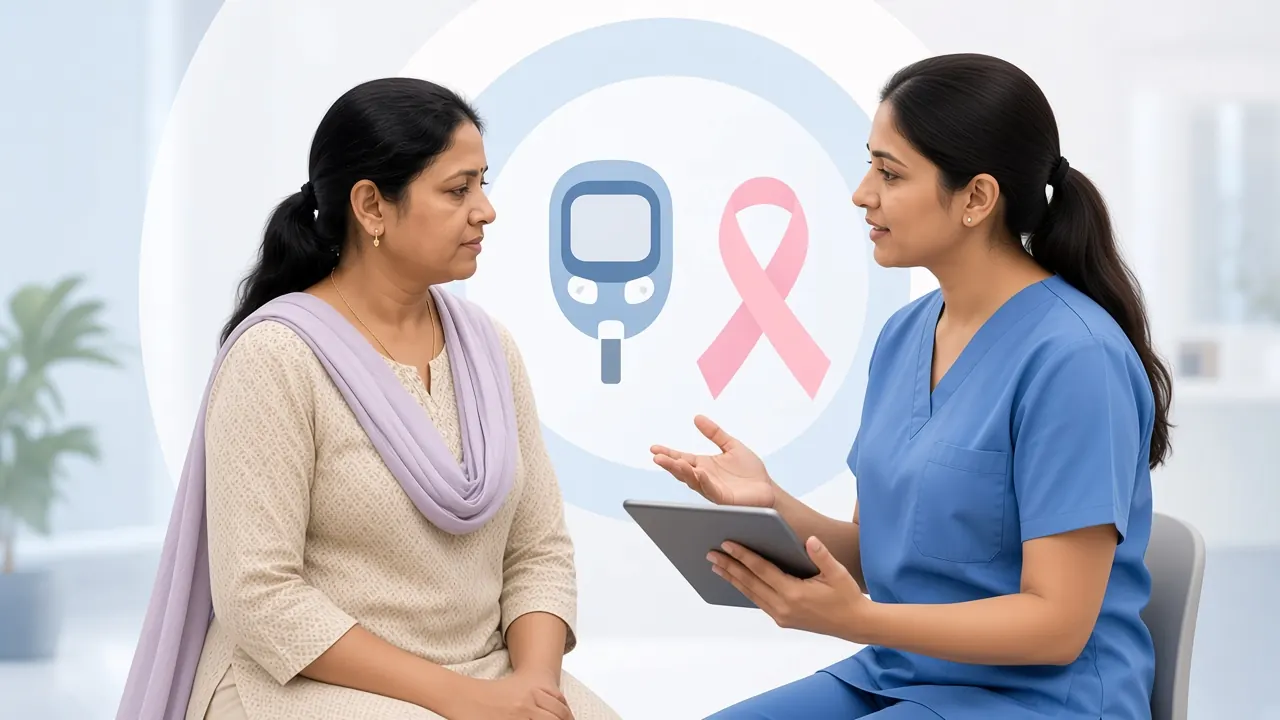
Is There a Connection?
Research links type 2 diabetes and breast cancer, especially after menopause, via shared factors: age, obesity, inactivity, insulin resistance and inflammation. Most women with diabetes will not get breast cancer; many breast cancer patients do not have diabetes.
How Treatment Affects Blood Sugar

- **Corticosteroids** (e.g. dexamethasone) raise glucose via insulin resistance and hepatic glucose output
- **Chemotherapy** alters appetite, hydration and activity
- **PI3K inhibitors** (e.g. alpelisib) can cause marked hyperglycaemia
- **Immunotherapy** rarely causes immune-mediated insulin-deficient diabetes
Surgery With Diabetes

Diabetes does not automatically prevent lumpectomy, mastectomy, sentinel node procedures or selected reconstruction. Poor control can impair healing and raise infection risk. Do not unnecessarily delay cancer surgery — balance optimisation with urgency.
| Assessment | Why it matters |
|---|---|
| HbA1c | Average glucose over recent months |
| Glucose checks | Current control |
| Kidney function | Medicines and anaesthesia |
| Blood pressure / heart | Surgical risk |
| Medication review | Plan fasting and peri-op changes |
Medicines such as metformin or SGLT2 inhibitors may need peri-operative holds per protocol. Never change diabetes medicines independently.
Chemotherapy, Radiation and Hormone Therapy
Diabetes alone does not mandate chemo dose cuts. Steroid days often need more glucose checks and sometimes temporary insulin. Radiation is usually feasible with skin/wound attention. Endocrine therapy continues when indicated with metabolic monitoring. See chemotherapy, radiation, hormone therapy.
Recovery, Monitoring and Diet

- Watch wound infection signs and fever during neutropenia risk periods
- Document baseline neuropathy before neurotoxic chemo
- Cardiac review when HER2 therapy or cardiotoxic regimens are used
- Individualise glucose monitoring; HbA1c alone misses day-to-day swings
Diet: adequate protein, controlled carbohydrate quality/portioning, fluids; adjust for nausea. No single “cancer + diabetes diet” cures either disease.
Treatment and Cost in India
| Cost component | What may be included |
|---|---|
| Cancer consultation | Surgeon and oncology visits |
| Diabetes consultation | Endocrinology / diabetology |
| Diagnostics | Imaging, biopsy, pathology |
| Pre-op assessment | Cardiac, kidney, anaesthesia |
| Surgery / systemic / radiation | As per plan |
| Named pathway | GAF planning range in India | Notes |
|---|---|---|
| Precision oncology | $2,000–$7,000 | Selected genetic / biomarker pathways |
| Lumpectomy | $3,000–$7,500 | Breast-conserving surgery when suitable |
| Mastectomy | $4,500–$10,000 | Selected surgical pathways |
| Chemotherapy | $1,500–$8,000+ | When systemic therapy is indicated |
| Hormone therapy | $1,000–$4,500 | Hormone receptor-positive settings |
Diabetes may add consultations and monitoring — ask whether these are in the written estimate. See the breast cancer cost guide.
Carry cancer + diabetes records (HbA1c, medicines/insulin, kidney/heart reports). International patients. Specialists: medical oncology, surgical oncology, radiation oncology.
Checklist
- Share full diabetes history and HbA1c
- Ask about steroid/glucose effects
- Get written peri-op medicine instructions
- Know infection and severe hyperglycaemia warning signs
- Plan oncology + diabetes follow-up
Frequently Asked Questions
Does diabetes increase breast cancer risk?
Some studies show a modest link with type 2 diabetes after menopause; shared risk factors matter. Diabetes does not cause every breast cancer.
Can diabetic women have surgery?
Yes, after assessing glucose control and complications.
Does high sugar affect recovery?
Poor control can delay healing and raise infection risk.
Can chemotherapy raise blood sugar?
Yes — especially with corticosteroids such as dexamethasone.
Can diabetic women receive hormone therapy?
Yes; monitor metabolic health during long-term therapy.
Is radiation safe?
Diabetes does not automatically block radiation; monitor skin and healing.
Can treatment cause new diabetes?
Some targeted drugs (e.g. PI3K inhibitors) and rarely immunotherapy can cause hyperglycaemia or new-onset diabetes.
Should medicines stop before surgery?
Some need temporary holds (e.g. selected SGLT2 inhibitors). Follow the treating team — do not self-stop.
What HbA1c is required?
No single universal cut-off; balance control vs cancer urgency.
Can insulin be used with chemotherapy?
Yes; many patients need temporary insulin around steroids.
Does diabetes make cancer more aggressive?
Not automatically — subtype, grade and stage drive behaviour.
Can international patients travel?
Often yes after fitness-to-travel and medication planning.
What glucose symptoms need urgent care?
Thirst, polyuria, vomiting, confusion, rapid breathing — seek urgent help.
Should supplements be started?
Not without oncology approval.
Does diabetes determine prognosis?
Comorbidities can affect outcomes; individual prognosis depends on many factors.
Conclusion
Managing diabetes is part of helping patients receive appropriate cancer care safely — not a separate afterthought.
Medical Sources and References
Medical disclaimer: Educational only. Do not change diabetes or cancer medicines without your treating team.